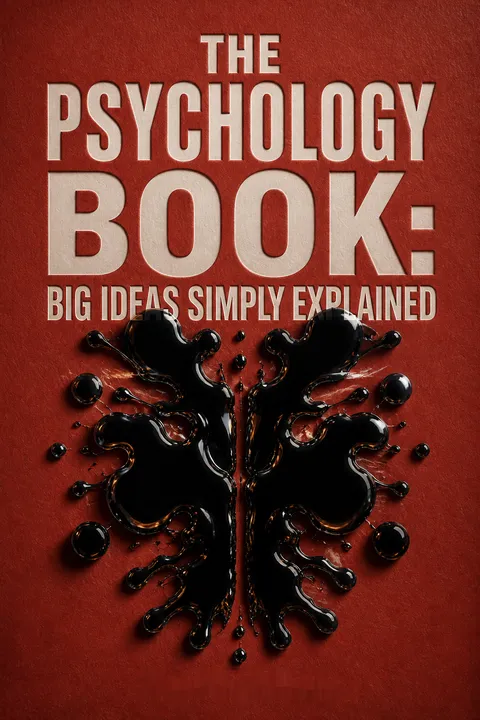


Key Takeaways
Treat psychology as a changing science, not a single theory of mind.
A science takes shape. Psychology grew from philosophical questions about consciousness, knowledge, and the self, then became a scientific discipline as researchers developed ways to observe and test mental life. Wilhelm Wundt opened the first experimental psychology laboratory in Leipzig in 1879. His work brought controlled study to questions such as sensation and memory, though early reliance on introspection made some results difficult to verify independently.
Schools overlap, not simply replace. William James described consciousness as a continuous stream, while later behaviorists focused on observable action and psychoanalysts on unconscious conflict. Cognitive, social, developmental, and personality psychology added further lenses. The field’s history is not a neat march toward one final answer: older ideas persist, are revised, and sometimes return in new forms.
What's valuable about this history is its reminder that psychology’s methods shape the questions it can answer. Experiments can isolate a response, while interviews can uncover a person’s meaning, and neither alone captures the whole. The field is strongest when its methods match the claim being made. A laboratory result may establish that a response occurs under controlled conditions, but it does not automatically explain how a person behaves across relationships, cultures, or a lifetime.
Use behavior as evidence, but do not mistake measurability for the whole mind.
Learning becomes testable. Ivan Pavlov found that dogs could learn to salivate to a signal repeatedly paired with food. This is classical conditioning: a previously neutral cue comes to trigger a learned response. Edward Thorndike’s puzzle-box experiments suggested that actions followed by satisfying outcomes become more likely, while fruitless actions fade. B.F. Skinner developed this consequence-based approach as operant conditioning. John B. Watson extended conditioning to human emotion, controversially using an infant in the Little Albert experiment.
Behavior has limits as an explanation. Edward Tolman’s maze studies suggested that rats learned routes even before rewards appeared, while Konrad Lorenz documented behavior shaped by instinct and critical periods. These findings complicated the idea that all learning is merely a mechanical response to the environment. The behaviorist legacy is a rigorous way to test claims, not proof that private thought is irrelevant.
The behaviorist turn made psychology more accountable by demanding observable evidence and repeatable procedures. That discipline remains useful whenever a theory risks explaining every outcome after the fact. Yet a visible action is not a complete account of the person who performs it. A lever press, a frightened reaction, and a deliberate choice may look measurable, but understanding them requires attention to learning history, expectation, and purpose. Watson’s infant study also illustrates that scientific ambition needs ethical limits.
Treat memory as reconstruction, not a recording.
Recall is selective. Hermann Ebbinghaus tested memory with lists of meaningless syllables and found that forgetting was especially rapid soon after learning. His work helped make memory measurable, but later studies showed that remembering involves more than storing a perfect copy. George Armitage Miller proposed that working memory can hold only a limited number of chunks, or meaningful groupings of information. Endel Tulving distinguished episodic memory, recollections of particular events, from semantic memory, general facts and knowledge.
Confidence is not proof. Frederic Bartlett found that people retold unfamiliar stories in ways shaped by what already made sense to them. Elizabeth Loftus showed that the wording of questions and later suggestions can alter reports of an event. This does not mean every vivid or traumatic memory is false. It means recollection can be affected by context, expectation, and later information.
Memory research changes how testimony, personal history, and everyday certainty should be interpreted. A recollection can feel vivid without being a flawless record, and confidence alone cannot establish accuracy. The practical lesson is not to distrust every memory, but to distinguish the event remembered from the evidence supporting its details. This matters in classrooms and courts alike, where questions can unintentionally shape the answer they appear merely to collect.
Read distress through inner conflict, learned thought, and lived conditions.
Therapy offers competing maps. Freud argued that symptoms can express conflicts outside conscious awareness, and used methods such as free association and dream interpretation to explore them. Later approaches shifted attention. Carl Rogers treated the client as an active authority on personal experience and emphasized acceptance rather than judgment. Albert Ellis argued that events do not dictate emotional reactions by themselves: beliefs about events matter, so irrational conclusions can be challenged. Viktor Frankl emphasized finding meaning even amid suffering.
No single map explains everyone. Karen Horney criticized the pressure of internalized shoulds, while R.D. Laing and Ignacio Martín-Baró stressed the social conditions surrounding distress. These approaches differ in what they treat as central: unconscious conflict, present beliefs, relationships, or an oppressive environment. The book presents therapy as an evolving attempt to understand suffering and help people change, not as one universally successful recipe.
The strongest implication is pluralism with standards. A person’s distress may involve habits of thought, painful relationships, bodily states, or conditions beyond individual control. Choosing a useful therapeutic lens requires understanding the problem rather than forcing every problem into a preferred theory. At the same time, an explanation can feel compelling without demonstrating that its treatment works. Compassion and scientific evaluation need not compete: each protects patients from a different kind of failure.
Change the situation before declaring a person naturally obedient or cruel.
Groups alter judgment. In Solomon Asch’s line-comparison experiments, participants sometimes gave an answer they knew was wrong because the rest of the group agreed on it. Roughly one-third of answers on critical trials followed the group’s error, and most participants conformed at least once. Stanley Milgram found that many volunteers continued administering what they believed were increasingly severe electric shocks when instructed by an authority figure. The study’s deception and distress raise serious ethical concerns, but its results made obedience a major research question.
Context is part of behavior. Kurt Lewin’s field theory treats action as emerging from the interaction between a person and the psychological environment. Philip Zimbardo’s prison study similarly showed how assigned roles and institutional power can shape conduct, though its small, artificial setting limits broad conclusions. Before calling someone inherently weak or cruel, examine the pressures, incentives, and rules surrounding the action.
This shift from judging character to examining context is a powerful safeguard against simplistic explanations of harm. It also has limits: situations influence people, but do not erase individual agency or responsibility. The useful question is not whether character or context matters, but how they interact. In practical settings, changing incentives, roles, and opportunities for dissent may prevent misconduct more reliably than relying on good intentions alone.
Let children learn by acting, while adults provide a secure base.
Development is active. Jean Piaget argued that children do not think like incomplete adults. They build understanding through interaction with the world, moving through sensorimotor, preoperational, concrete operational, and formal operational stages. Lev Vygotsky placed more weight on social guidance, arguing that learning develops through interaction with adults and peers. Together, these views suggest that children need both opportunities to explore and help suited to their developing abilities.
Early bonds matter. John Bowlby described attachment as a biologically grounded bond that helps an infant feel safe enough to engage with the world. Harry Harlow’s monkey studies found that infants sought comforting contact, not only food. Mary Ainsworth’s Strange Situation observations identified different patterns of infant response to separation and reunion. These ideas influenced child care and education, though research also shows that attachment can involve multiple caregivers and that cultural practices vary.
The developmental perspective rejects two easy mistakes: treating children as miniature adults, and assuming that independence means leaving them without support. Exploration is easier when care is dependable, while guidance works best when it respects the learner’s current capacities. The balance matters in classrooms as well as homes. Stage models are useful maps, but they should not be treated as rigid timetables that turn ordinary differences in pace into deficits.
Measure personality across situations, not with one permanent label.
Traits describe patterns. Gordon Allport distinguished dominant traits from common characteristics and more situation-specific tendencies. Hans Eysenck proposed broad personality dimensions, while Raymond Cattell separated fluid intelligence, the ability to reason through unfamiliar problems, from crystallized intelligence, knowledge and skills accumulated through experience. Alfred Binet cautioned that an intelligence test captures performance at a particular time, not a fixed measure of human potential.
Context complicates the score. Walter Mischel found that personality tests were weak predictors of behavior across differing situations, urging psychologists to examine how people and circumstances interact. The book also traces the nature versus nurture debate from Francis Galton’s studies of heredity to later accounts of environmental influence. Galton’s eugenic conclusions show the danger of turning measured differences into claims about human worth. Tests can describe performance, but they should not become destiny.
Measurement is useful when it clarifies a question, and dangerous when a score is mistaken for an essence. A person may be dependable in one setting and uncertain in another because roles, stakes, and relationships differ. The same caution applies to intelligence: tests can predict some forms of performance without defining the whole person. Responsible assessment treats scores as bounded evidence, asks what a test actually measures, and avoids converting group averages into judgments about individuals.
Build well-being through connection, meaningful effort, and room to grow.
A good life is active. Carl Rogers described well-being as an ongoing process rather than a final state. Abraham Maslow placed self-actualization near the top of a hierarchy of needs, while Martin Seligman distinguished pleasurable, engaged, and meaningful forms of happiness. Mihály Csíkszentmihályi used the term flow for deep absorption in an activity that challenges a person’s skills. These accounts differ, but all move beyond treating mental health as simply the absence of symptoms.
Purpose connects the pieces. Erich Fromm emphasized individuality and the capacity to love without erasing another person’s independence. Viktor Frankl argued that finding meaning can make suffering more bearable. Seligman observed that deeply happy people tended to be socially connected. The combined picture is practical: cultivate relationships, choose demanding work that matters, and remain open to experience. None guarantees happiness, but each offers a route toward a fuller life.
The book’s humanistic thread broadens psychology from repairing distress to asking what makes life worth inhabiting. Connection, competence, and purpose are not interchangeable, and people may need different combinations at different times. The framework also deserves a material caveat: meaning and flow are harder to pursue when basic security is absent. A serious account of well-being therefore connects personal agency with the social conditions that make agency possible.
Analysis
The book’s central strength is its refusal to let psychology collapse into one explanatory language. Its historical arc moves from philosophical questions about mind and self, through laboratory methods and behaviorism, toward cognition, social influence, development, personality, and therapeutic practice. The result is a map of a field whose disagreements are productive: each school makes some features visible while obscuring others. Conditioning explains how consequences shape action, but not the meaning a person assigns to an action. Inner narratives illuminate experience, but can become difficult to test. Social research exposes the force of groups, while developmental work reminds readers that capacities change over time.
The reference-book format necessarily compresses the history into named thinkers and memorable claims. That makes the ideas accessible, but it can imply that psychology advances by replacing one school with another, or that a striking experiment settles a broad question. The actual pattern is more provisional. Findings depend on samples, methods, and definitions, and several famous studies in the book raise questions about ethics and generalizability. A responsible reader should distinguish a useful model from a universal law, and a suggestive case from strong evidence.
The most durable lesson is methodological humility. Mental life is not directly observable in the same way as a lever press, yet it is not beyond disciplined investigation. Researchers infer it through converging evidence: behavior, reports, experiments, development, and context. For readers, this means using psychological concepts as tools rather than labels. A person is not reducible to a diagnosis, a trait score, a childhood story, or a social role. The book’s breadth is its argument: understanding people requires multiple levels of explanation, and the best account is the one that remains open to revision when the evidence changes.
Review Summary
The Psychology Book receives mostly positive reviews for its comprehensive overview of psychological concepts and thinkers. Readers appreciate its accessible explanations, engaging visuals, and broad coverage of the field. Many find it useful as an introduction or refresher for psychology students and general readers alike. Some criticize its simplicity or potential inaccuracies, but most consider it a valuable resource for understanding key psychological ideas and their historical context. The audiobook narration by Cassandra Campbell is praised for its clarity and expressiveness.
People Also Read




Glossary
Classical conditioning
Learning through paired cuesA learning process in which a previously neutral signal comes to produce a response after repeated pairing with something that naturally produces that response. Pavlov demonstrated the process when dogs learned to salivate to a sound associated with food. The learned signal is called a conditioned stimulus, and the learned response is a conditioned response.
Operant conditioning
Learning through consequencesA form of learning in which the consequences of an action change how likely that action is to occur again. B.F. Skinner studied how behavior could be strengthened by positive consequences or by removing an unpleasant condition, and weakened when it no longer produced the expected outcome. The organism acts on its environment, and the resulting consequences shape future behavior.
Cognitive dissonance
Tension from inconsistent beliefsThe uncomfortable psychological tension that arises when a person holds beliefs, attitudes, or actions that conflict. Leon Festinger argued that people are motivated to reduce this inconsistency, sometimes by changing a belief, and sometimes by interpreting new evidence so it fits existing convictions. His study of a failed doomsday prediction showed how commitment can strengthen belief instead of weakening it.
Episodic memory
Memory for personal eventsA form of long-term memory for personally experienced events, including their circumstances and sequence. Endel Tulving distinguished it from semantic memory, which stores general facts and knowledge. Episodic recall can feel like mentally revisiting an earlier moment, and details may be prompted by cues such as a place, sound, or smell connected with the original experience.
Attachment theory
How early bonds shape securityJohn Bowlby’s account of the emotionally significant bond between an infant and caregiver. Attachment behavior helps keep an infant close to a protective figure, while a dependable bond can provide security for exploration. Mary Ainsworth studied different patterns of infant response to separation and reunion. Later work emphasizes that children can form meaningful attachments to multiple caregivers.
Field theory
Behavior shaped by person and situationKurt Lewin’s model of behavior as an outcome of the interaction between a person and the psychological environment at a particular time. The field includes forces that encourage change and forces that resist it. Lewin applied this approach to group behavior and organizational change, arguing that a situation must be understood as a whole rather than through isolated factors.
Theory of mind
Understanding other mindsThe capacity to recognize that other people have thoughts, intentions, and perspectives that may differ from one’s own. Simon Baron-Cohen used this concept in explaining social and communication difficulties associated with autism. His account links these difficulties to reduced ability to infer other minds, though it is one influential theory rather than a complete explanation of autism.
Fluid and crystallized intelligence
Reasoning ability and learned knowledgeRaymond Cattell’s distinction between two broad aspects of intelligence. Fluid intelligence is the ability to reason and solve unfamiliar problems without relying on previously learned content. Crystallized intelligence consists of accumulated knowledge, skills, and judgment developed through experience. Cattell proposed that these abilities follow different patterns across the lifespan.
Flow
Deep absorption in a challengeMihály Csíkszentmihályi’s term for a state of intense involvement in an activity. People describe being absorbed, focused, and less aware of time or themselves. Flow is most likely when the task presents a meaningful challenge that matches the person’s skills. The concept became influential in positive psychology and in discussions of satisfying work and recreation.
Zeigarnik effect
Unfinished tasks stay accessibleBluma Zeigarnik’s finding that people may remember interrupted or incomplete tasks better than tasks they have finished. Her experiments compared recall of completed and interrupted activities, building on an observation that waiters remembered unpaid orders especially well. The proposed explanation is that an unfinished task remains mentally active, though the effect depends on circumstances and is not a universal rule.
FAQ
What's The Psychology Book about?
- Comprehensive Overview: The Psychology Book by Nigel C. Benson offers a detailed overview of psychological concepts, theories, and key figures throughout history.
- Branches of Psychology: It covers various branches, including behaviorism, cognitive psychology, and psychoanalysis, providing a broad understanding of the field.
- Accessible Format: The book is designed to be easily understood, with complex ideas presented in a clear and engaging manner, often accompanied by illustrations and summaries.
Why should I read The Psychology Book?
- Broad Understanding: It provides a solid foundation in psychology, covering essential theories and practices that shape our understanding of human behavior.
- Historical Context: The book places psychological theories within their historical context, enriching the reader's appreciation of the field.
- Engaging Presentation: With visual aids and concise explanations, it’s suitable for both beginners and those looking to refresh their knowledge.
What are the key takeaways of The Psychology Book?
- Diverse Perspectives: Emphasizes the diversity of psychological perspectives, from behaviorism to humanistic psychology, offering unique insights into human behavior.
- Role of the Unconscious: Highlights the importance of the unconscious mind in shaping behavior, as discussed by Freud and later psychoanalysts.
- Environmental Influence: Discusses how behavior is shaped by environmental factors, a key concept in behaviorism, applicable to various life aspects.
What are the best quotes from The Psychology Book and what do they mean?
- Freud on the Unconscious: “The unconscious is the true psychical reality.” This emphasizes the unconscious mind's role in understanding behavior.
- Hall on Adolescence: “Adolescence is a new birth.” Reflects the transformative nature of adolescence as a significant developmental stage.
- Lashley on Learning: “Learning is just not possible.” Challenges the notion that learning can be easily quantified, pointing to its complexities.
How does The Psychology Book explain behaviorism?
- Observable Behavior Focus: Behaviorism focuses on observable behaviors rather than internal mental states, emphasizing environmental influence.
- Key Figures: Highlights John B. Watson and B.F. Skinner, who demonstrated how behavior can be conditioned, laying the foundation for behavioral therapy.
- Conditioning Concepts: Explains classical (Pavlov) and operant conditioning (Skinner) as fundamental concepts illustrating behavior learning and modification.
How does The Psychology Book explain the unconscious mind?
- Freud’s Model: Outlines Freud’s model, including the conscious, preconscious, and unconscious, with the latter holding repressed memories and drives.
- Behavioral Influence: Discusses how the unconscious manifests in dreams and slips of the tongue, revealing hidden thoughts and feelings.
- Therapeutic Implications: Emphasizes accessing the unconscious through techniques like free association and dream analysis to resolve internal conflicts.
What is the significance of the collective unconscious in The Psychology Book?
- Jung’s Concept: Describes the collective unconscious as shared memories and archetypes part of the human experience.
- Archetypes: Explains archetypes as universal symbols and themes appearing across cultures, shaping our understanding of experiences.
- Behavioral Influence: The collective unconscious guides interactions with the world, enhancing self-awareness and personal growth.
How does The Psychology Book address the nature vs. nurture debate?
- Historical Overview: Provides a historical overview, highlighting key figures like Francis Galton and John B. Watson, and the debate's evolution.
- Genetic vs. Environmental: Emphasizes the crucial roles of both genetic predispositions and environmental factors in shaping behavior and personality.
- Contemporary Views: Addresses contemporary perspectives integrating both nature and nurture, recognizing their complex interplay in influencing behavior.
What is the role of therapy in The Psychology Book?
- Various Approaches: Discusses different therapeutic approaches, including psychoanalysis, behaviorism, and humanistic therapy, each offering unique methods.
- Therapeutic Goals: Emphasizes goals like increasing self-awareness, resolving conflicts, and fostering personal growth.
- Societal Impact: Highlights therapy's broader impact on society, including addressing mental health issues and improving well-being.
How does The Psychology Book define intelligence?
- Multiple Theories: Presents various theories, including Alfred Binet and Howard Gardner's, recognizing multiple intelligences beyond traditional IQ.
- Nature vs. Nurture: Addresses the debate in relation to intelligence, emphasizing genetic and environmental contributions to cognitive abilities.
- Cultural Context: Explores cultural factors shaping intelligence understanding, broadening its definition beyond standardized tests.
What is the mere exposure effect as described in The Psychology Book?
- Definition: The mere exposure effect is a phenomenon where familiarity with something increases preference for it.
- Decision-Making Influence: Suggests that repeated exposure can lead to increased liking, influencing choices in contexts like advertising and relationships.
- Social Psychology Applications: Helps explain social dynamics, such as attraction to familiar faces or brands.
How does The Psychology Book explain cognitive dissonance?
- Definition: Cognitive dissonance is the discomfort from holding conflicting beliefs, values, or attitudes.
- Behavioral Impact: Individuals are motivated to reduce discomfort by changing beliefs or rationalizing behavior, often leading to attitude changes.
- Real-World Examples: Provides examples of cognitive dissonance in everyday life, illustrating how people justify actions to align with beliefs.

Download PDF
Download EPUB
.epub digital book format is ideal for reading ebooks on phones, tablets, and e-readers.








