Key Takeaways
1. Gender is a Sociocultural Interpretation, Not Just Biology.
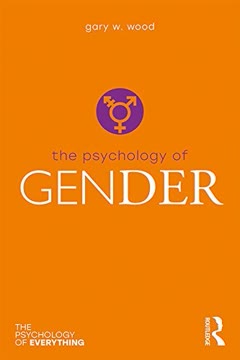
Gender is the sociocultural (and psychological) interpretation of our biological sex, that is, how we make sense of the biology in everyday life.
Beyond biology. While sex is typically assigned at birth based on physical anatomy, gender is a far more complex construct. It encompasses the roles, relationships, personality traits, attitudes, behaviors, and power dynamics that society differentially ascribes to individuals based on their perceived sex. This distinction is crucial because it highlights that gender is not merely a biological given, but a learned and evolving social phenomenon.
Lifelong expectations. From the moment of birth, the assignment of "boy" or "girl" triggers an elaborate system of societal expectations. These expectations, rooted in concepts of masculinity or femininity, dictate how individuals are expected to behave, dress, speak, and even what their aspirations should be. This "gender path" influences everything from toy choices in childhood to career paths and relationship dynamics in adulthood, shaping an individual's entire life trajectory.
Internalizing roles. Gender-role identity refers to the internalization of these societal expectations, influencing how individuals understand and accept what it means to identify as a girl, boy, woman, or man. This process begins early in childhood, with children becoming aware of their gender identity around 2.5 to 3 years of age. However, the rigid adherence to these roles is not innate; it is learned through various psychological processes, including:
- Observing and imitating others (social learning theory)
- Resolving unconscious drives and identifying with same-sex parents (psychodynamic theory)
- Actively making sense of the world through cognitive development (cognitive-developmental theory)
2. Biological Sex Itself Is Not a Simple Binary.
Overall, in typical development, there is no such thing as 100% female (‘all woman’) or 100% male (‘all man’) in biological terms.
Nature's spectrum. Despite common assumptions, biological sex is not a clear-cut binary of "male" or "female." Instead, it exists on a spectrum with significant variability and overlap across different biological markers. This includes:
- Genitals: While typically assigned at birth by visual inspection, there are strong similarities in embryonic tissue development, with the clitoris and penis sharing common origins.
- Chromosomes: Beyond the common XX (female) and XY (male), variations like XXY (Klinefelter syndrome) or X0 (Turner syndrome) exist, demonstrating that the X chromosome forms the primary platform.
- Hormones: Both males and females produce a range of hormones, with differences being more about average proportions (e.g., preponderance of estrogen/progesterone in females, androgens in males) rather than exclusive presence.
Intersex conditions. For approximately 2% of live births, individuals are born with "intersex conditions" (or variations in reproductive/sex development), where reproductive or sexual anatomy, chromosome patterns, or hormonal activity do not fit standardized definitions of biological maleness or femaleness. These conditions, such as Androgen Insensitivity Syndrome (AIS) or Congenital Adrenal Hyperplasia (CAH), further underscore the non-binary nature of biological sex.
Challenging assumptions. The existence of intersex variations fundamentally challenges the notion of absolute biological binaries. It reveals that nature does not deal in dichotomies but rather in "fuzzy approximations" and areas of ambiguity. This biological reality provides a crucial foundation for understanding why gender, as a sociocultural interpretation, is also far from a simple binary.
3. Psychological Lenses Distort Our Perception of Gender.
Everyday understanding harbours many taken-for-granted assumptions, and pop-psychology, with its comedic metaphors, aims to soothe and simplify – obscuring more than it illuminates.
Bem's lenses. Psychologist Sandra Bem identified three "lenses" through which society views gender, actively distorting our understanding rather than merely explaining it:
- Biological essentialism: Focuses on reproductive biology as the primary determinant of gender, reducing individuals to their genitals.
- Androcentrism: Centers masculinity as the norm, giving precedence to male experiences and traits.
- Gender polarization: Presents masculinity and femininity as rigid, binary opposites, where one is expressed at the expense of the other.
Cognitive shortcuts. Our brains employ "schemata" – mental structures of preconceived ideas – and "attitudes" to organize and simplify the complex world. While efficient, these shortcuts can lead to stereotypes and biases. Gender schemata, for instance, lead us to expect and remember gender-stereotypical behaviors, even distorting memories to fit the stereotype (e.g., remembering a man ironing as a woman ironing).
Binary thinking. A fundamental aspect of human cognition, especially under stress, is "binary thinking" – the tendency to categorize everything into either/or. This is reinforced by philosophical laws of thought (identity, contradiction, excluded middle) which demand clear labels and exclude ambiguity. This cognitive preference for simplicity contributes to:
- Intolerance of ambiguity: A preference for black-and-white categories, often linked to negative attitudes towards gender non-conformity and LGBTQI+ individuals.
- Prejudice: A pre-judgment that simplifies the social world into "us" and "them," often based on superficial differences.
4. Traditional Gender Stereotypes Are Detrimental to All.
The goal of a zero-sum game of gender is to provide certainty, but what are the penalties?
Rigid blueprints. Society often promotes idealized "gold standards" for "real men" and "real women," which are not merely descriptive but prescriptive, forcing individuals into narrow roles.
- The Cult of Womanhood: Emphasizes piety, purity, submissiveness, and domesticity, cultivating guilt and defining women's roles in terms of service to others and male fantasies.
- The Cardinal Pillars of Manhood: Demands "no sissy stuff," being "the big wheel" (superiority), "the sturdy oak" (self-reliance), and "give 'em hell" (power), often leading to emotional suppression and risky behaviors.
Health impacts. Adherence to these stereotypes has significant negative consequences for both physical and mental health. The "morbidity and mortality paradox" highlights that while men die younger, women experience greater morbidity.
- Men: Less likely to seek help for health issues, underestimate problems, and engage in risky behaviors (e.g., dangerous driving, higher alcohol use), leading to higher rates of accidents, violence, and successful suicides.
- Women: More likely to experience anxiety and depression related to health, face medical biases (e.g., CVD being seen as a "man's disease"), and are disproportionately affected by eating disorders due to societal pressure for "slimness."
Narrowed lives. These stereotypes limit human experience and hinder opportunities for personal growth and fulfillment. They foster a "zero-sum game" where one gender's gain is perceived as another's loss, perpetuating inequalities and preventing individuals from developing a full range of human qualities.
5. Scientific Research Reveals More Gender Similarities Than Differences.
Overall, from childhood to adulthood, males and females are more alike than different on most psychological variables.
Challenging the "different planets" myth. Despite popular belief and pop-psychology narratives, extensive meta-analyses of gender differences consistently show that men and women are far more similar than they are different across most psychological variables. Psychologist Janet Shibley Hyde's review found that over three-quarters of observed differences were either close to zero or small.
Specific findings:
- Physical abilities: Males generally throw further and faster (very large difference, d ≈ +2.00).
- Sexual attitudes: Males report higher frequency of masturbation (large, d = +0.96) and more positive attitudes towards uncommitted sex (large, d = +0.81). Sexual satisfaction, however, shows almost total overlap (d = -0.06).
- Aggression: Males show higher physical aggression (moderate to large, d ≈ +0.50), while females show higher relational aggression (moderate to large, d ≈ -0.74), but context is crucial.
- Cognitive abilities: Verbal ability shows a small female advantage (d = -0.11), and mathematical abilities show only a small male advantage (d = +0.15), with gaps narrowing over time.
- Helpfulness: Men are more likely to engage in helping behavior, but this is context-dependent, especially with surveillance (d = +0.74).
Mosaic brains. Neuroscience research, using MRI scans, further supports gender similarity, showing that human brains are not distinctly "male" or "female." Instead, most brains are unique "mosaics" of features, challenging the notion of sexually dimorphic brains. The idea that behavior changes can lead to brain changes also refutes simplistic "hardwired" arguments.
6. Patriarchy's "Dividend" Comes at a High Cost for Men.
As well as the exploitation of women, the system also thrives on the expendability of men.
Unequal benefits. Patriarchy, a system where men hold power and privilege, creates a "patriarchal dividend" – a surplus of resources and advantages for men as a group. This includes authority, respect, economic power, and control. However, this dividend is not evenly distributed, and the system also demands significant sacrifices from men.
Expendability of men. The system often positions men in high-risk, high-payoff roles, leading to their disproportionate exposure to danger and early mortality.
- Accidents and violence: Men are about three times more likely to die from violent deaths, including motor vehicle accidents, firearms-related injuries, and homicide, across all ethnic groups.
- Suicide: While women attempt suicide more often, men are more likely to succeed due to choosing more lethal methods.
- Dangerous jobs: Men comprise the majority of those in dangerous occupations, those killed in battle, and the homeless.
"Masculine pretence." The pressure to conform to masculine ideals like self-reliance and toughness often forces men to suppress emotions and avoid seeking help, leading to psychological problems. This "masculine pretence" can be seen in the reluctance to address health issues or the devastating impact of aggressive prostate cancer treatments on a man's sense of "manhood."
Rape and sexual assault. The "protection" offered to women under patriarchy often comes at the cost of control over their bodies. Sexual entitlement, a component of hegemonic masculinity, is a significant factor in sexual violence. This highlights how the patriarchal system, while granting privilege, also perpetuates cycles of violence and harm that affect everyone, including men who are pressured to conform to aggressive and dominant roles.
7. Cultural Stories Shape and Can Reshape Our Gender Realities.
We are all storytellers. We all have life stories.
Cosmological influence. Our understanding of gender is deeply embedded in cultural narratives, particularly cosmologies – accounts of how the universe came about.
- Monotheistic cosmologies (e.g., Judaeo-Christian): Tend towards rigid binaries (form/void, night/day, man/woman), emphasizing clear boundaries and forbidding ambiguity. This historical context helps explain the "laws of Western thought" and Bem's gender lenses.
- Polytheistic cosmologies (e.g., Hinduism, ancient Egyptian): Often feature female gods and intersex deities, allowing for more fluid boundaries between mortal and divine, and a more relaxed approach to gender ambiguity.
Fairy tales and archetypes. Even seemingly innocent stories like fairy tales carry coded messages about gender. Early versions of tales like "Jack and the Beanstalk" reveal themes of moving from phallocentric boyhood to a broader range of values and abilities in manhood, suggesting that the "stick" (physical prowess) is not enough. These narratives shape our subconscious gender schemata from a young age.
Rewriting the narrative. Human creativity, from ancient myths to modern science fiction and fan fiction, offers powerful tools to challenge and rewrite existing gender narratives.
- Plato's Symposium: Explains love as a search for a "soul mate" from a primal, doubled body (double-male, double-female, half-male-half-female), suggesting an original non-binary state.
- Biblical re-readings: The word "Elohim" (masculine plural for God) and "tsela" (translated as "rib" but often "side") in Genesis suggest an original androgynous human split in half, offering a more egalitarian creation myth.
- Science fiction: Authors like Ursula Le Guin explore gender-neutral or fluid societies, pushing the boundaries of linguistic and social conventions (e.g., plural pronouns like "they/them").
8. A New Psychology of Gender Embraces Fluidity and Partnership.
The aspiration is that just as many relationships in the West have moved to partnership models, so societies could in the future be based on consensus-based gylany again, too.
Beyond the "malestream." Psychology, traditionally androcentric, is evolving to challenge its biases and embrace diverse perspectives. Feminist psychology and LGBTQI+ perspectives are crucial in this shift, advocating for "new ways of knowing" that recognize multiple masculinities, female masculinities, and identities beyond binary categories.
Gylany and partnership. Riane Eisler's "Chalice and the Blade" metaphor proposes a shift from domination-based societies (blade) to partnership-based ones (chalice), characterized by:
- Democratic and egalitarian structures.
- Equal partnership between women and men.
- Rejection of abuse and violence.
- Beliefs supporting empathic and mutually respectful relations.
This concept of "gylany" (gyne + andro + lyo = to solve/resolve) offers a blueprint for a more balanced future.
Psychological roundedness. Concepts like "androgyny" (high scores on both masculine and feminine traits) and "emotional intelligence" (EI) represent a move towards a more psychologically rounded individual, valuing qualities traditionally categorized as feminine (e.g., empathy, self-awareness, social skills) as crucial for success and well-being. This redefinition of leadership, for instance, suggests a "more chalice and less blade" approach.
Positive psychology. This field focuses on human strengths and thriving, advocating for positive emotions that "broaden and build" awareness, encouraging novel thoughts and actions. This approach suggests that advancing gender politics through consensus and collaboration, rather than conflict, can lead to a more creative and democratic world.
9. Personal Inquiry is Key to a Meaningful Gender Identity.
Your gender has impact. A new paradigm of gender becomes more than black and white, right and wrong, winners and losers.
Questioning the unquestioned. Gender, often hiding in plain sight, is a "that's just the way things are" narrative that many never question. However, a critical examination of its underlying assumptions is essential for personal liberation and societal progress. This involves looking below the surface of stereotypes and reappraising how the binary gender system truly serves individuals.
Self-reflection. Understanding one's own gender identity and its impact requires deep personal inquiry. This involves:
- Self-awareness: Understanding your own feelings, thoughts, and selective attention.
- Empathy: Being able to understand what others are thinking and feeling.
- Objective self-perception: Understanding how others view you, balancing internal and external perspectives.
- World knowledge: Utilizing scientific and cultural understanding to contextualize personal experience.
Dynamic and collaborative. Gender is both a personal identity and a relationship to the social world. As societal notions of gender evolve, individuals must continuously reappraise, renegotiate, and reassert their place within it, and their relationships with others who are also undergoing this process. This is a dynamic, collaborative process of sense-making, moving beyond rigid categories.
Embracing "maybes." The future of gender lies in embracing ambiguity and the multitude of "maybes" that challenge predetermined paths. It's about recognizing that our lives are not mapped out solely by birth assignment, but by continuous choices and interpretations. By asking critical questions about our gender, its benefits, its limitations, and how we might incorporate different qualities, we contribute to a more inclusive and meaningful understanding of human identity.
Last updated: