

Key Takeaways
Question what a society calls normal when illness becomes widespread
Normal can hide harm. Maté opens with a puzzle: modern societies have extraordinary medical tools, yet chronic physical illness, addiction, and mental distress remain common. The book cites estimates that 60 percent of U.S. adults have a chronic condition and more than 40 percent have at least two. The central argument is that these patterns are not only individual failures or random misfortunes. They can also reflect the social conditions in which people live, from chronic stress and isolation to inequality and environmental damage.
Look at the water. Like fish unaware of water, people can mistake familiar conditions for healthy ones. Maté calls trauma a lasting inner wound, and argues that a culture can normalize the conditions that produce such wounds. Illness, in this view, can be a signal that the surrounding environment is out of balance, not proof that the ill person is defective.
The book’s strongest move is to change the scale of diagnosis: from the individual body to the social environment shaping it. This aligns with public health research on social determinants, which finds that income, housing, work, and social support influence health alongside clinical care. The frame is useful because it can reveal preventable causes that a prescription alone cannot address. Its danger is overreach: widespread disease does not establish that a single cultural factor caused it. Social context should broaden medical investigation, not replace careful diagnosis or evidence-based treatment.
Treat trauma as an enduring wound, not a score of bad events
The event is not the injury. Maté distinguishes trauma from the painful incident itself. Trauma, as he uses the term, is the lasting inner rupture that may follow an overwhelming event or the repeated absence of care, recognition, and emotional connection. He calls severe, identifiable harms capital-T trauma, and less obvious but persistent developmental hurts small-t trauma. The distinction is not a ranking of whose suffering counts. Both can leave a person less able to feel, trust, respond flexibly, or inhabit the present.
A childhood echo. Maté describes his infant separation from his mother during wartime. Decades later, when his wife was late meeting him, he responded with prolonged anger and withdrawal. He understood the reaction as an old abandonment alarm taking over a present-day disappointment. Understanding its origin did not excuse his behavior; it helped him notice it and take responsibility.
This account makes trauma legible without reducing it to a checklist of dramatic events. Developmental psychology likewise emphasizes that emotional security depends on repeated patterns of care, not merely on the presence or absence of a single catastrophe. The distinction can help people explore experiences they had dismissed as insignificant. At the same time, the term should not become an all-purpose explanation for every difficulty. A useful inquiry asks what happened, how it affected this person, and what else may explain the problem, rather than assigning a trauma label by default.
Read symptoms in the context of a whole life, not one organ
Mind and body interact. Maté uses the term bodymind for the inseparability of mental and physical life. Emotions, nervous-system activity, hormones, and immune function influence one another; none operates in a social vacuum. The book describes research associating prolonged stress with inflammation and changes in immune and cardiovascular function. It also introduces allostatic load, the wear and tear that can accumulate as the body repeatedly adjusts to stress.
A process, not an object. Rather than treating chronic disease only as a discrete invader, Maté asks clinicians to consider the process unfolding across a person's life. He compares cancer to a traffic jam: studying individual cars cannot explain why traffic stopped. The analogy asks what conditions permit illness to develop, while leaving room for genetics, pathogens, behavior, and medical treatment. Stress may influence risk and disease course, but it is not presented as a simple, sufficient cause of cancer or autoimmune illness.
The systems perspective is a productive corrective to fragmented care. Psychoneuroimmunology studies communication among psychological processes, the nervous system, hormones, and immunity, while biopsychosocial medicine asks clinicians to consider biological, psychological, and social factors together. These approaches make it reasonable to ask about stress and relationships during medical care. The careful distinction is between influence and cause. A correlation between stress and illness does not show that a patient's emotions produced the disease, and no patient should be led to blame themselves or substitute emotional work for indicated treatment.
Protect children's connection without teaching them to abandon themselves
Love and selfhood can collide. Maté describes attachment as a child’s need for closeness and dependable care, and authenticity as the ability to recognize and honor one's own feelings and needs. Because a young child depends on adults, the child may hide anger, sadness, or preferences if expressing them seems to threaten connection. A coping style that once helped preserve closeness can later appear as compulsive people-pleasing, perfectionism, or emotional numbness.
Build a secure foundation. Developmental psychologist Gordon Neufeld's framework identifies four irreducible needs for maturation: attachment, security, permission to feel, and free play. Maté argues that children need attuned adults, room for emotion, and unstructured play, not just instruction or behavior control. Parents are not blamed for falling short; the book stresses that isolation, financial pressure, and lack of community make responsive caregiving harder.
The attachment and authenticity tension offers a memorable way to understand why children may comply outwardly while losing touch with inner signals. It connects with attachment research, which treats secure relationships as a base for exploration rather than a reward for obedience. The framework also shifts attention from parental virtue to practical support: time, leave, childcare, and community matter. Claims about a single ideal child-rearing pattern deserve caution, since families and cultures differ. The more defensible principle is that dependable care and emotional safety support development, not that every child needs identical routines.
Ask what pain an addiction or diagnosis is trying to manage
Relief explains the pull. Maté proposes understanding addiction as a complex process involving short-term pleasure or relief, longer-term harm, and difficulty stopping. This definition includes substances and behaviors, because the central issue is a person's relationship to the activity, not simply the object involved. In interviews, people described drugs or alcohol as sources of warmth, calm, confidence, connection, or escape from unbearable feelings. That temporary benefit helps explain why warnings and shame rarely undo the compulsion.
Look beneath the label. Maté argues that addiction and some forms of mental distress can be adaptations to pain, not moral defects. A diagnosis may describe a pattern and help someone feel recognized, but it does not by itself explain the pattern's origins. The book does not reject medication; Maté recounts how Prozac helped him. Its challenge is to pair symptom relief with questions about history, relationships, stress, and present needs.
Asking what a behavior does for someone is a strong clinical question. It shifts the conversation from condemnation to function, a move also used in behavioral therapies that examine triggers, rewards, and consequences. Yet the book sometimes treats trauma as a near-universal root, stronger than the evidence can establish for every individual. Addiction has varied pathways, including biological vulnerability, social exposure, pain, and learned reinforcement. Functional understanding should complement, not displace, harm reduction, medication, or other treatments that reduce immediate danger.
Trace health disparities upstream, from cells to social conditions
Experience reaches biology. The book uses epigenetics to explain how experiences can alter gene activity without changing the underlying DNA sequence. It discusses studies in which early caregiving, prenatal stress, poverty, and discrimination were associated with differences in gene expression or stress regulation. Telomeres, protective structures at chromosome ends, serve as another example: research cited by Maté links chronic stress and caregiving strain with shorter telomeres, a marker associated with cellular aging.
Unequal burdens matter. Maté argues that racism, poverty, precarious work, and gendered caregiving distribute stress unevenly. He describes research on racial discrimination and inflammation, and on social rank and health among British civil servants. These findings support looking beyond individual habits when explaining group differences. They do not mean that biology is destiny or that social experiences determine each person's outcome. The book also notes that supportive experiences can foster resilience.
The phrase from society to cell captures a crucial insight: social arrangements can become biological exposures through stress, access to resources, and daily constraints. Epigenetics provides plausible mechanisms, but popular accounts often overstate how precisely life experience writes itself into genes or passes unchanged across generations. Associations involving telomeres also do not translate neatly into an individual's lifespan prediction. The most useful implication is political and clinical, not deterministic: reduce harmful exposures, improve material conditions, and avoid interpreting unequal outcomes as evidence of innate group differences.
Practice authenticity, agency, anger, and acceptance before crisis forces them
Four directions for healing. Maté presents four A's as principles, not a rigid cure: authenticity means recognizing one's experience; agency means having meaningful choice; healthy anger helps protect boundaries; acceptance means seeing what is happening without confusing acknowledgment with resignation. He adds five forms of compassion: ordinary empathy, curiosity about context, recognition of shared humanity, truth-telling with care, and openness to people's possibility.
Start with a small inquiry. Maté's Compassionate Inquiry approach asks people to notice where they say yes while internally wanting to say no, what bodily or emotional costs follow, and what belief makes the pattern seem necessary. A person might discover a rule such as needing to be useful to deserve care. The aim is not to condemn the rule or force instant change, but to understand its origin and create more room for choice.
This framework combines self-observation with ethical concern for others. Its emphasis on anger is particularly valuable in settings where politeness is mistaken for health: a boundary can be protective without becoming aggression. The five forms of compassion also resist two common traps, cold diagnosis and indiscriminate excusing. The approach is best understood as reflective practice, not a substitute for psychotherapy or medical care. For people with severe trauma, solitary introspection can intensify distress, so support and pacing matter as much as insight.
Build connection into institutions, not just individual coping plans
Private pain has public conditions. Maté links loneliness, insecure work, consumer pressure, racism, patriarchy, and environmental threat to disconnection and chronic stress. He argues that a culture organized around competition and consumption can frustrate needs for belonging, autonomy, competence, and meaning. His account reaches beyond families into medicine, education, law, business, and politics. A child labeled difficult, for example, may be responding to unsafe relationships or an environment that offers little support.
Change the setting. The book calls for trauma-aware healthcare, rehabilitative justice, schools that support emotional development, stronger community care, and activism that gives people collective agency. It does not present a complete policy blueprint. Its central demand is to stop treating widespread distress as a private defect when social arrangements help produce it. Individual healing matters, but it cannot by itself repair unequal or harmful institutions.
The move from personal coping to institutional design is the book's most consequential political implication. A trauma-aware school or clinic can reduce avoidable threat while preserving responsibility and standards. This also resonates with prevention science: changing exposure can help more people than relying only on downstream treatment. The critique of capitalism, however, is broad enough to risk becoming a single master explanation. A sharper analysis would distinguish which policies, workplaces, and incentives produce which harms, then test remedies rather than assuming every market institution has the same effects.
Aim for wholeness, even when cure is uncertain
Healing is not a prognosis. Maté distinguishes cure, the removal or absence of disease, from healing, a movement toward greater wholeness and connection. His stories include people whose serious illnesses prompted them to stop overworking, express grief, reconsider identity, or repair relationships. In one striking episode, Shipibo healers asked Maté to step away from leading a retreat so he could attend to his own unresolved pain. The experience became a turning point in how he understood vulnerability and spiritual life.
Do not romanticize illness. Maté presents disease as a possible teacher, not a gift anyone should seek or a guarantee of transformation. Some people recover, others do not, and many depend on medical treatment. His closing vision is a society that treats illness as both a human crisis and a signal to examine shared conditions, while supporting meaning, community, and agency regardless of outcome.
The distinction between cure and healing protects human worth from being tied to medical outcomes. Palliative care and disability frameworks similarly recognize that quality of life, connection, and agency remain meaningful when disease cannot be reversed. The teacher metaphor can help some people make meaning, but it should never be imposed on someone who is grieving, angry, or simply wants symptom relief. Anecdotes of dramatic recovery cannot establish that psychological or spiritual change cured disease. The humane version of the claim is modest: meaning may grow alongside treatment, uncertainty, and loss.
Analysis
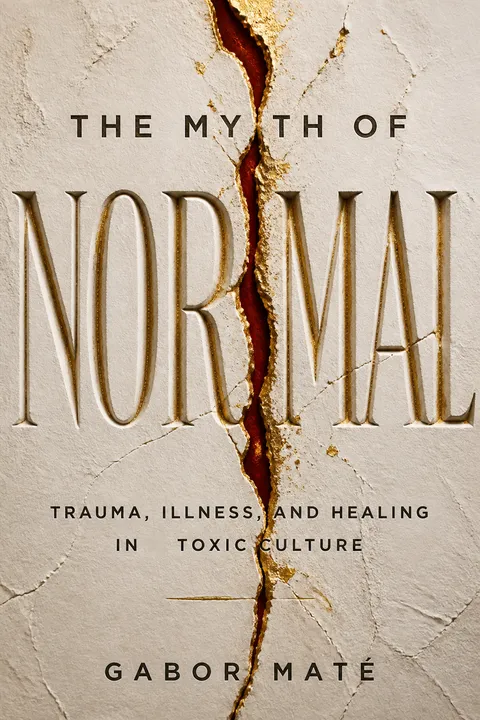
The Myth of Normal is a wide-angle argument built around a deliberate change in scale. It begins with a physician noticing that personal reactions and bodily symptoms carry histories, moves through childhood development and clinical diagnoses, then follows stress into workplaces, markets, racial and gender hierarchies, and political culture. The arc matters: Maté is not merely saying that feelings affect health. He is arguing that the supposedly separate patient, family, and society are interdependent systems, so a narrowly individual account can miss both causes and remedies.
The book's most useful conceptual shift is to regard many troubling behaviors as adaptations. Withdrawal, overwork, people-pleasing, addictive relief, and emotional shutdown may once have helped someone endure conditions they could not change. This view reduces shame while preserving responsibility: knowing why a pattern formed does not make its present effects harmless. The practical frameworks, especially the Four A's and Compassionate Inquiry, translate that interpretation into questions about bodily signals, suppressed boundaries, and inherited beliefs.
Its broadest strength is also its main evidentiary risk. Maté assembles strong reasons to take social stress, development, and relationships seriously, but individual stories and correlational studies cannot establish that trauma explains a particular cancer, autoimmune illness, or psychiatric condition. The language of disease as message can encourage attentive care, yet can slide into mind-over-matter claims or patient blame if handled carelessly. The book itself insists on avoiding blame and acknowledges medicine's achievements, but its most dramatic recovery stories can overpower those cautions.
The soundest reading is neither a rejection of biomedical care nor a claim that every illness has a decipherable emotional cause. It is a demand to widen assessment and prevention: treat symptoms, ask about lives, and change harmful conditions where possible. That synthesis gives the book enduring value. It makes normality something to investigate, not a verdict that current arrangements are healthy simply because they are familiar.
Review Summary
The Myth of Normal receives mixed reviews. Many praise Maté's holistic approach to health, connecting trauma, society, and illness. Readers appreciate his critique of Western medicine and capitalism. However, some find the book overly long, repetitive, and lacking scientific rigor. Critics argue Maté oversimplifies complex issues and relies too heavily on anecdotes. The book's exploration of childhood trauma and its lifelong effects resonates with many, while others feel it places too much blame on parents. Overall, readers find the book thought-provoking but polarizing.
People Also Read






Glossary
small-t trauma
Subtle lasting emotional injuryMaté's term for lasting inner harm that can arise from experiences that seem ordinary from the outside, such as repeated disconnection, bullying, harsh remarks, or unmet emotional needs. It is distinguished from capital-T trauma, which is associated with identifiable overwhelming events. The distinction describes kinds of experience, not a ranking of whose suffering matters.
bodymind
Unified mental and physical lifeA term associated in the book with neuroscientist Candace Pert, written as one word to emphasize that mind and body are inseparable aspects of a living person. Emotions, neural activity, hormones, and immune processes interact. The concept challenges medical approaches that treat psychological experience and physical disease as unrelated domains.
allostatic load
Wear from repeated stress adjustmentThe accumulated physiological strain that can result when the body repeatedly adapts to challenging circumstances. Maté discusses stress systems, including the HPA axis, as helping maintain internal balance. When stress is prolonged or recurrent, the effort to adapt can contribute to wear and changes in bodily regulation. The term is associated with stress researcher Bruce McEwen.
attachment and authenticity
Connection and self-trust needsMaté describes attachment as the need for closeness and reliable connection, especially crucial to a dependent child. Authenticity is the capacity to know and honor one's own feelings and needs. When a child senses that honest expression could threaten care or belonging, attachment may take priority, encouraging self-suppression that can persist as an adult coping pattern.
Addiction
Relief pursued despite lasting harmMaté's working definition describes a complex psychological, emotional, physiological, neurobiological, social, and spiritual process. It involves behavior that brings temporary pleasure or relief and craving, produces longer-term negative consequences for the person or others, and is difficult or impossible to stop. The definition includes substances and behaviors, focusing on the person's relationship to the activity.
Four A's
Principles for movement toward wholenessMaté's four healing principles are authenticity, agency, anger, and acceptance. Authenticity means recognizing one's own experience; agency means exercising meaningful choice; healthy anger protects personal boundaries; and acceptance means acknowledging present reality without confusing acknowledgment with passivity or tolerating harm. They are guideposts rather than a universal sequence or guaranteed treatment.
Compassionate Inquiry
Curious, nonjudgmental self-examinationMaté's therapeutic approach combines open-ended inquiry with compassion. It explores the beliefs, emotions, bodily signals, and earlier experiences behind present patterns without treating them as moral defects. The method aims to help people understand coping behaviors and regain choice. Maté describes it both as a professional training for therapists and as a practice of personal reflection.
Adverse Childhood Experiences (ACE) Study
Study of childhood adversity and adult healthA large study associated with physician Vincent Felitti and colleagues that examined links between childhood abuse, neglect, and household dysfunction and later health outcomes. The findings reported a graded relationship between the number of adversities and risks including addiction and illness. Maté uses the study to support attention to early experience, while its population findings do not determine any individual's outcome.
social character
Culturally reinforced personality patternA concept from Erich Fromm that Maté uses for traits common among members of a culture and suited to its expectations. Social character is distinct from an individual's full personality, though it can shape how people work, consume, compete, and relate. The concept helps explain how social norms can make harmful adaptations seem natural or admirable.
FAQ
What's The Myth of Normal about?
- Exploration of Health and Culture: Gabor Maté examines the deep connections between emotional well-being, social connectivity, and health. He argues that chronic illnesses reflect broader cultural and societal issues rather than just individual afflictions.
- Trauma and Its Impact: The book defines trauma as an "inner injury" affecting behavior and health, emphasizing its pervasive influence on mental and physical well-being in our culture.
- Holistic Approach to Healing: Maté advocates for understanding health through emotional, psychological, and social factors, suggesting that true healing requires addressing these interconnected aspects.
Why should I read The Myth of Normal?
- Insightful Perspective on Illness: The book challenges conventional views by integrating mental and physical health, encouraging readers to consider societal contributions to personal health issues.
- Empowerment Through Understanding: Understanding trauma's roots and effects can provide insights into personal and others' experiences, empowering individuals to seek healing and healthier relationships.
- Cultural Critique: Maté critiques modern health and wellness approaches, urging readers to question societal norms that may harm well-being and inspire change in their lives and communities.
What are the key takeaways of The Myth of Normal?
- Interconnectedness of Health: Health is influenced by social, emotional, and cultural contexts, not just individual concerns. Chronic illness is often a feature of societal structures.
- Role of Trauma: Trauma is a foundational aspect of many health issues, often avoided or misunderstood, and understanding it can lead to better health outcomes.
- Cultural Change for Healing: A shift in viewing health and illness is needed, advocating for a compassionate and holistic approach to health-related issues.
How does Gabor Maté define trauma in The Myth of Normal?
- Trauma as Inner Injury: Defined as a lasting rupture within the self due to difficult events, trauma is more about its impact than the events themselves.
- Pervasiveness of Trauma: Trauma is common and influences personal functioning and social relationships, encouraging reflection on personal and others' experiences.
- Impact on Health: Unresolved trauma can lead to chronic stress and illness, making it a significant contributor to various health issues throughout life.
How does The Myth of Normal address the concept of addiction?
- Addiction as a Response to Trauma: Addiction is framed as a coping mechanism for unresolved trauma, shifting the focus from moral failing to symptom.
- Cultural Factors in Addiction: Societal factors, such as materialism and isolation, significantly contribute to addiction, encouraging a broader understanding beyond individual choices.
- Pathways to Healing: Addressing underlying trauma is crucial for healing from addiction, with healing being possible when confronting root causes of suffering.
What is the relationship between stress and health in The Myth of Normal?
- Stress as a Health Hazard: Chronic stress leads to various health problems, highlighting the need to address stress in health discussions.
- Biopsychosocial Model: Health is influenced by relationships, social circumstances, history, and culture, encouraging a comprehensive understanding of health.
- Emotional Regulation: Stress affects emotional regulation, impacting physical health, with intergenerational effects seen in stressed adults and children.
What healing principles does Maté propose in The Myth of Normal?
- Authenticity: Emphasizes being true to oneself as a healing principle, leading to greater well-being and fulfillment.
- Agency: Encourages taking responsibility for one's life and choices, fostering empowerment and personal growth.
- Compassion: Highlights the role of compassion for oneself and others as essential for healing, facilitating deeper connections and promoting healing.
How does Maté suggest we reconnect with our authentic selves?
- Self-Reflection and Inquiry: Encourages asking questions like "What am I feeling?" to uncover true feelings and desires, fostering authenticity.
- Embracing Vulnerability: Emphasizes the importance of feeling and expressing emotions to reconnect with one's true self.
- Community and Connection: Supportive relationships are crucial for fostering authenticity, helping individuals feel safe to express their true selves.
How does The Myth of Normal critique modern parenting practices?
- Parenting in Isolation: Critiques isolated parenting as stressed parenting, highlighting the need for community support in raising children.
- Impact of Stress on Parenting: Parental stress negatively affects children's development, emphasizing the importance of addressing parental well-being.
- Cultural Expectations: Societal expectations often lead to a disconnect from instinctual knowledge, undermining parenting instincts.
What is Compassionate Inquiry as described in The Myth of Normal?
- Self-Reflection Method: A therapeutic approach focusing on self-exploration and understanding, encouraging open-ended questions about feelings and beliefs.
- Humility and Curiosity: Emphasizes approaching oneself with humility and curiosity for genuine exploration of one's inner world.
- Healing Through Connection: Aims to reconnect individuals with their authentic selves, addressing root causes of suffering for healing.
How does The Myth of Normal address the intersection of race, class, and health?
- Racial Disparities in Health: Discusses how systemic racism contributes to health disparities, leading to poorer outcomes for marginalized communities.
- Class and Economic Inequality: Highlights how economic status affects health, with lower-income individuals facing greater challenges.
- Intersectionality: Advocates for an intersectional approach to health, considering race, class, and gender dynamics to address health disparities effectively.
What are the best quotes from The Myth of Normal and what do they mean?
- "The entire social construct... is deeply flawed.": Critiques modern society, suggesting health issues stem from systemic problems rather than individual failings.
- "Health and illness are not random states...": Highlights that health is influenced by emotional and social environments, not purely biological.
- "Healing is not guaranteed, but it is available.": Offers hope that healing is possible through understanding and addressing root causes of suffering.
About the Author



Download PDF
Download EPUB
.epub digital book format is ideal for reading ebooks on phones, tablets, and e-readers.








