

Key Takeaways
Treat healing as daily participation, not a breakthrough someone gives you.
Change needs repetition. LePera opens with her own crisis: emotional numbness, physical symptoms, and fainting forced her to question the life she had carefully built. Years of therapy and psychological insight had not, by themselves, changed her daily patterns. Her proposed answer is active, repeated practice, beginning with small promises that rebuild trust in oneself. Ally, a woman with multiple sclerosis, started with a glass of water each morning, then added journaling and other forms of care. Her later improvement is a personal account, not proof that these practices treat MS.
Start small enough to return. Future Self Journaling asks people to notice their habitual patterns, set an intention, choose a manageable action, and keep practicing despite resistance. The goal is not a perfect streak. It is becoming someone who can count on themselves.
What's compelling is the shift from insight as an endpoint to insight as a prompt for practice. Small, completed actions can strengthen self-efficacy, the belief that one's actions can make a difference. That is a more humane model than demanding sweeping reinvention. The necessary qualification is that agency must not become blame. Illness, poverty, unsafe relationships, and unequal access to care cannot always be overcome through personal discipline. Daily practices can support healing, but they do not replace appropriate medical or psychological treatment.
Notice a thought before you let it become your next move.
Awareness creates a pause. LePera calls consciousness a state of present awareness that makes choice possible. Without it, the subconscious runs familiar routines and reactions. Jessica, a client, swung between idealizing her partner and rejecting him, then drank to dampen the distress. Each thought felt like an unquestionable truth, so her behavior shifted with it. LePera's first step is not to solve every pattern, but to observe thoughts and bodily sensations without immediately obeying them.
Practice attention briefly. While washing dishes or walking, attend to what the senses register: texture, temperature, sound, or smell. The book also describes yoga and meditation as ways to train attention. Repeated practice can make it easier to notice a reaction before it dictates behavior.
This resembles cognitive defusion, a technique in acceptance and commitment therapy in which a person notices a thought as a mental event rather than a fact or instruction. The distinction can create room for values-based action without requiring every thought to disappear. The book's appeal to intuition adds another kind of internal signal, but intuition is not automatically accurate. It can reflect learned wisdom, fear, or both. Observation is most useful when paired with curiosity and reality-testing.
Examine emotional neglect alongside obvious childhood catastrophes.
Wounds can be quiet. LePera broadens trauma beyond dramatic events, describing how repeated helplessness, emotional disconnection, or pressure to suppress a child's needs can shape adult behavior. The Adverse Childhood Experiences questionnaire records ten forms of childhood adversity, but she argues that it misses subtler emotional harms and systemic pressures such as racism. Her own low score did not explain her detachment, anxiety, and gaps in childhood memory.
Look for learned adaptations. The book describes recurring family patterns: dismissing a child's reality, failing to see or hear them, imposing a parent's ambitions, crossing boundaries, focusing heavily on appearance, or responding to feelings with outbursts or withdrawal. These patterns can teach a child to hide needs or distrust their own perceptions. The point is to investigate, not force a trauma label onto every painful memory.
The expansion makes room for experiences that a checklist may not capture, including chronic invalidation and social conditions that keep people under threat. That matters because standard measures are tools, not complete biographies. At the same time, trauma is a clinical term with varied definitions, and ordinary hardship is not automatically a trauma disorder. A useful distinction is between taking distress seriously and making a diagnosis. The book's framework is strongest as an invitation to examine patterns, not as a substitute for individual assessment.
Read bodily stress as information, not proof that danger is present.
Stress travels through the body. LePera describes how a perceived threat can activate the autonomic nervous system, which regulates involuntary functions such as breathing, heartbeat, and digestion. The body may mobilize for fight or flight, or shut down in a freeze-like response. A person can then interpret a neutral setting, such as a party, as dangerous and miss signs of friendliness. LePera uses polyvagal theory to explain how these shifts relate to social connection and regulation.
Notice the whole pattern. Chronic stress can accompany sleep problems, digestive symptoms, tension, and difficulty connecting. The book also emphasizes that racism and other oppressive conditions can impose ongoing stress. These ideas can help readers observe mind and body together, but symptoms can have many causes and deserve appropriate medical evaluation.
The practical strength is replacing moral judgment with a question about state: what is the body responding to, and what might help it settle? That stance is compatible with trauma-informed care, which prioritizes safety and avoids treating survival responses as character flaws. The caution is that polyvagal explanations are sometimes presented as more settled and comprehensive than the evidence warrants. Nervous-system language can illuminate experience, but it should not be used to diagnose a person or explain every physical illness.
Use sleep, breath, movement, and play to help your body regain flexibility.
Regulation can be practiced. LePera groups mind-body practices into top-down approaches, such as meditation that directs attention, and bottom-up approaches, such as breathwork, movement, and singing. She recommends building capacity gradually rather than overwhelming oneself. Her examples include improving sleep routines, eating nourishing foods, noticing how stress affects digestion, taking walks, practicing yoga, and making room for creative play.
Choose what fits. The book presents the gut and brain as communicating through the gut-brain axis and stresses that nutrition, rest, and stress affect how a person feels. It discusses intermittent fasting but warns that it may not suit people with a history of restricted eating or eating disorders. The larger principle is to observe how a practice affects one's body, and to adapt rather than treat any routine as universally right.
The integrated approach is useful because physical routines can support attention, mood, and a sense of agency, while psychological work can help people sustain those routines. This is a sensible alternative to treating the person as a mind detached from a body. Still, the strength of evidence differs across practices, and broad claims about gut health or specific diets should be treated cautiously. Personal experimentation is not the same as medical guidance, especially for chronic illness, disordered eating, or persistent symptoms.
Treat identity stories as hypotheses, not permanent biographies.
Beliefs filter experience. LePera defines a belief as a practiced thought grounded in experience. Early stories about being unwanted, incapable, or responsible for others can become core beliefs that shape what a person notices and how they interpret events. She describes the reticular activating system as part of the brain's filtering machinery, helping prioritize information. The filter can reinforce a familiar story, such as seeing a single criticism as proof of general unworthiness.
Separate event from meaning. LePera's anger at dirty dishes carried an old interpretation: that her partner did not consider her. The dishes were real; the meaning attached to them was shaped by childhood experience. Her practice is to notice the bodily reaction, identify the story, and consider a more accurate response instead of treating the first interpretation as fact.
This account connects well with cognitive models of schemas, which describe enduring expectations that influence attention and interpretation. It also offers a practical alternative to arguing with every thought: examine the story's origin and evidence. The brain's filtering systems are more complex than a single mechanism, however, and the book's account of the reticular activating system risks making belief confirmation sound overly direct. The useful insight remains: perception is selective, so a strongly felt interpretation can still be incomplete.
Reparent the parts of you that learned love required self-erasure.
Old needs can persist. The inner child is LePera's term for childhood needs, emotions, and coping patterns that remain active in adulthood. Anthony, a client, believed his childhood sexual abuse meant he was bad and continued to carry shame into adult life. With support, he began to understand that he had been victimized, not responsible for the abuse. The work did not erase the past; it helped him respond to painful feelings without repeating the same shame-driven coping.
Become a steadier caregiver. Reparenting means learning to identify and meet one's needs through daily action. LePera organizes it around emotional regulation, compassionate discipline, self-care, and rediscovering play. Small promises, kind self-talk, and permission to rest can build reliability. The aim is not to become perfectly self-sufficient, but to stop abandoning one's own needs as the price of acceptance.
The inner-child metaphor can make implicit needs easier to recognize, and self-compassion research broadly supports responding to distress with care rather than contempt. It also gives people a way to revisit childhood from an adult perspective. The metaphor should remain a tool, not a claim that a separate entity inside the person explains every reaction. Painful memories can be destabilizing, and some readers may benefit from a trained clinician rather than confronting severe trauma alone.
Judge relationships by safety and reciprocity, not only intensity.
Familiarity can masquerade as chemistry. LePera uses trauma bonds broadly to describe relationship patterns that repeat early attachment dynamics and restrict authentic self-expression. A relationship marked by uncertainty can feel compelling if unpredictability was familiar in childhood. Joshua and Shira illustrate an approach-withdrawal cycle: his emotional retreat intensified her fear of abandonment, and her urgent pursuit made him withdraw further. Neither person's needs were being met.
Make the pattern visible. LePera contrasts this cycle with relationships where each person can name what is happening and make room for the other's needs. She describes authentic love as safer and more mutual than an emotional roller coaster. The practical question is not simply whether a relationship feels intense, but whether it allows honesty, respect, and meaningful choice.
The distinction between arousal and security is valuable: emotional intensity alone cannot establish compatibility or care. Attachment theory offers a useful lens for understanding recurring patterns, while a partner's willingness to communicate can help interrupt them. The term trauma bonding also has a narrower use in clinical and public discussion, often involving attachment to an abusive or coercive person. Applying it to every painful relationship risks blurring important differences. Patterns deserve attention, but context, power, and safety matter.
Set limits around your behavior, not commands for someone else.
A boundary is self-protection. LePera defines boundaries as limits that clarify where one person's needs and choices end and another's begin. Susan, who felt responsible for her mother and friends, answered late-night calls and tolerated unannounced visits despite feeling angry and depleted. Her pattern left little room for her own preferences. The book distinguishes loose boundaries, such as chronic people-pleasing, from rigid boundaries that prevent closeness, and flexible boundaries that allow connection without self-abandonment.
State what you will do. A boundary is not a demand that another person change. It names a limit and the action one will take if it is crossed, such as ending a call or declining an invitation. LePera recommends practicing in lower-stakes relationships, communicating calmly, and maintaining the limit even when guilt or pushback appears.
This distinction closely tracks assertiveness: a person can control their own participation, not another person's response. That makes boundaries less like punishment and more like clear information about the conditions for continued contact. The book is right that guilt can keep people trapped in one-sided arrangements. Yet a boundary may be unsafe to announce in coercive or volatile relationships. In those cases, practical safety planning and outside support can matter more than an ideal conversation.
Let feelings rise without turning them into an identity or command.
Emotion is not instruction. LePera describes emotional maturity as the ability to notice feelings, tolerate discomfort, and respond without automatically lashing out or shutting down. She discusses a ninety-second rule, the idea that a physiological wave of emotion may pass quickly if it is not continually revived by rumination. Her broader point is that rehearsing a grievance can keep the body activated long after the initial event.
Build a flexible response. First notice sensations, such as heat, tension, or a racing heart, and name the emotion. Then choose a response suited to the moment: movement, rest, breath, grounding, writing, or asking a trusted person to listen. LePera emphasizes that people differ. The aim is not to suppress feeling, but to make room between feeling and action.
The distinction between feeling and acting is central to emotional regulation and is consistent with skills taught in approaches such as dialectical behavior therapy. The book's 90-second figure, however, should not be treated as a precise biological timer. Emotions vary in duration, and ongoing threat or repeated reminders can sustain them. The more durable lesson is that noticing a sensation without feeding an escalating story can alter how a person responds.
Build closeness that preserves two separate selves.
Connection needs autonomy. LePera calls interdependence a form of mutual connection that preserves boundaries, safety, and self-expression. In her account, healing is not complete when someone simply retreats from difficult relationships; the aim is to choose relationships from greater self-trust. Her own story illustrates the distinction: after cutting contact with her family to establish space, she later chose to reopen communication through a brief letter, without assuming what the new relationship had to become.
Seek reciprocal community. Friends, partners, and groups can help people feel supported and less alone. LePera describes finding a community through sharing her work online, and later rejoining her partner at the beach after a period of spiraling self-criticism. Connection is not proof that all relationships should be preserved. It is the possibility of being honest, separate, and still in relation.
The model avoids two familiar extremes: total self-reliance and closeness that demands conformity. Social support can buffer stress, but the quality and safety of connection matter more than the number of contacts. The book's emphasis on personal healing also sits beside a larger truth it acknowledges: individual practices cannot repair oppressive systems or guarantee access to safe communities. Interdependence is best understood as a relational ideal pursued where conditions permit, not an obligation to reconcile.
Analysis
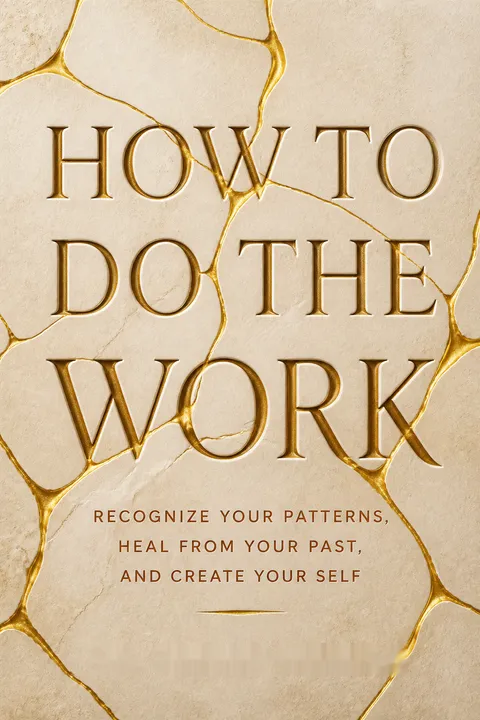
How to Do the Work is part memoir, part self-help guide, and part integrative psychology argument. Its narrative begins with LePera's physical and emotional collapse, then tracks a progression from body awareness to childhood conditioning, relationship patterns, boundaries, and community. That sequence gives the book coherence: private reactions are treated not as isolated flaws, but as learned adaptations that can be observed and revised.
Its most durable contribution is practical and ethical. Small daily practices are presented as ways to rebuild self-trust, while shame is replaced by curiosity about what a behavior once helped a person survive. The emphasis on boundaries and reciprocal relationships also prevents healing from becoming purely inward. Personal agency is linked to social connection, and the book explicitly recognizes that racism, poverty, and unequal access to care shape well-being.
The framework is also more confident than its science always warrants. Epigenetics does not mean people can choose which genes to switch on through willpower; the gut-brain relationship does not establish diet as a treatment for psychiatric conditions; and polyvagal theory is an influential but contested account, not a complete map of emotion. The broad definition of trauma can help readers name overlooked distress, but should not collapse difficult experience, clinical trauma, and PTSD into one category. Likewise, personal stories of dramatic health improvement are compelling testimony, not evidence that self-directed practices caused a disease to remit.
The book is strongest when its concepts are used as prompts rather than diagnoses: notice a reaction, ask what it protects, test whether its old meaning still fits, and choose a next step. It is less persuasive when a single mind-body explanation appears to account for complex illness. Readers can preserve its humane emphasis on practice and self-trust while combining it with evidence-based professional care and a clear-eyed view of structural constraints.
Review Summary
How to Do the Work received mixed reviews. Some readers found it helpful for understanding trauma and self-healing, praising its accessible approach and practical exercises. Others criticized it for oversimplifying complex issues, lacking scientific rigor, and potentially harmful advice. Many reviewers noted the author's problematic handling of race and marginalized communities. Some appreciated the holistic approach to mental health, while others felt it was repackaged basic psychology. The book's effectiveness seemed to vary based on readers' prior knowledge and personal experiences with trauma and therapy.
People Also Read





Glossary
Holistic Psychology
Whole-person healing approachLePera's integrative approach to wellness considers mind, body, and spirit together. It combines ideas and practices from psychology, neuroscience, mindfulness, and spirituality, and encourages people to explore patterns and conditions beneath symptoms. The book presents it as a complement to conventional care, not a reason to reject all established therapy or medicine.
Future Self Journaling
Daily change journalingA journaling practice intended to help people notice conditioned habits, set a conscious intention, identify a small action, and repeat it despite resistance. LePera presents the practice as a way to support new patterns through regular attention and follow-through. It is a self-guided exercise, not a clinical treatment protocol.
Consciousness
Awareness that enables choiceIn this book, consciousness means present awareness of one's thoughts, sensations, behavior, and surroundings. It includes the ability to observe internal experience rather than automatically identify with it. LePera argues that this awareness creates a pause in which a person can choose a response instead of repeating a conditioned pattern.
Homeostatic impulse
Pull toward familiar patternsLePera's term for the psychological and biological tendency to return to familiar routines and responses. Familiarity can feel safer than change, even when the established pattern is unhelpful. When a person tries a new behavior, this pull may appear as thoughts, agitation, tiredness, or other discomfort that encourages a return to the old routine.
Spiritual trauma
Wounding of authentic expressionLePera uses this term for repeated experiences of not feeling seen, heard, or free to express one's authentic self. In her framework, these experiences can lead a child to suppress needs and distrust personal perceptions in order to preserve important relationships. The term is part of her expanded model of childhood wounding, not a formal diagnostic category.
Emotional addiction
Dependence on familiar emotional statesLePera's term for repeatedly seeking or recreating familiar emotional activation, even when it is distressing. A person accustomed to anxiety, conflict, or uncertainty may experience calm as unfamiliar and seek situations that restore the old intensity. The concept is used to explain repeated patterns in daily behavior and relationships.
Polyvagal theory
Vagus-based stress modelA theory associated with psychiatrist Stephen Porges that emphasizes the vagus nerve and autonomic nervous system in responses to safety, threat, and social connection. LePera uses it to describe states of social engagement, mobilization, and immobilization. It is one explanatory framework for stress responses, not a definitive account of every emotional or physical symptom.
Inner child
Carried childhood needsLePera's term for childhood emotions, unmet needs, coping patterns, creativity, and playfulness that continue to influence adult life. The inner child is a metaphor for parts of experience shaped by early relationships. Attending to it means noticing old reactions with curiosity and responding from an adult perspective rather than shaming them.
Ego consciousness
Identification with self-storiesA state in which a person is closely identified with protective beliefs and personal narratives, treating disagreement or criticism as a threat to identity. In LePera's account, this can produce defensiveness, blame, rigid thinking, and emotional reactivity. Observing the story behind a reaction can create room for a more deliberate response.
Trauma bonding
Repetition of attachment patternsLePera uses trauma bonding broadly for conditioned ways of relating that repeat early attachment dynamics and can limit authentic self-expression. These patterns may involve emotional withdrawal, pursuit, enmeshment, or unmet needs. The term is also used more narrowly elsewhere for bonds formed in abusive or coercive relationships, so context matters.
Reparenting
Meeting unmet needs nowThe practice of learning to identify and meet one's physical, emotional, and personal needs through ongoing, conscious action. LePera describes it as becoming a more supportive internal caregiver through emotional regulation, compassionate routines, self-care, and play. It does not erase childhood experiences or require a person to manage serious trauma without professional support.
Interdependence
Connection with autonomyA mutual form of relationship in which people can support one another while retaining boundaries, independent needs, and authentic self-expression. LePera contrasts it with isolation and enmeshment, where connection is either absent or comes at the cost of separateness. Interdependence depends on reciprocal respect, not constant agreement.
Wise inner parent
Supportive internal caregiverA reparenting practice in which a person responds to their own emotions and needs with attention, validation, and compassion rather than criticism or dismissal. The wise inner parent represents an adult capacity to acknowledge distress and choose a helpful action. It is a guided self-reflection concept, not a literal separate personality.
FAQ
What's How to Do the Work about?
- Holistic Healing Approach: How to Do the Work by Nicole LePera introduces Holistic Psychology, integrating mental, physical, and spiritual wellness to emphasize the interconnectedness of mind, body, and soul.
- Self-Healing Empowerment: The book encourages readers to actively participate in their healing journey, providing tools to break negative patterns and heal from past traumas.
- Expanded Trauma Theory: LePera redefines trauma, highlighting how unresolved childhood experiences impact adult behavior and emotional health.
Why should I read How to Do the Work?
- Practical Tools: The book offers actionable exercises for self-reflection and healing, making it a practical guide for personal growth.
- Addresses Common Struggles: It resonates with those feeling stuck or anxious, providing insights into these feelings and how to address them.
- Community Support: LePera's #SelfHealers community offers a supportive environment for those on their healing journeys.
What are the key takeaways of How to Do the Work?
- Self-Healing Power: Individuals have the power to heal themselves through conscious awareness and daily practices.
- Mind-Body Connection: Understanding how trauma affects the body and mind is crucial, advocating for a holistic wellness approach.
- Inner Child Work: Meeting and nurturing your inner child helps address unresolved childhood traumas and emotional wounds.
What is Holistic Psychology as defined in How to Do the Work?
- Mind, Body, and Soul Integration: Holistic Psychology focuses on the interconnectedness of all aspects of a person to heal emotional wounds.
- Self-Healing Empowerment: It encourages taking responsibility for mental wellness and provides tools to create new habits and thought patterns.
- Daily Practice: Healing is a daily event, requiring consistent effort and engagement with one’s emotional and physical needs.
How does Nicole LePera define trauma in How to Do the Work?
- Expanded Trauma Definition: Trauma includes any negative life experience occurring in a state of helplessness, not just catastrophic events.
- Childhood Experiences Impact: Even minor childhood experiences can have lasting impacts on emotional health and behavior.
- Intergenerational Trauma: Trauma can be passed down through generations, affecting individuals, families, and communities.
What are some mind-body healing practices mentioned in How to Do the Work?
- Breathwork: Used to regulate the nervous system and promote relaxation, helping manage stress and anxiety.
- Yoga and Movement: Physical activities like yoga strengthen the mind-body connection and improve overall well-being.
- Nutrition Awareness: Consuming whole, nutrient-dense foods supports physical and emotional health.
What is the significance of the inner child in How to Do the Work?
- Inner Child Understanding: Represents the part of us holding childhood experiences, emotions, and unmet needs, crucial for healing.
- Healing Childhood Wounds: Nurturing the inner child helps address unresolved traumas and develop healthier emotional responses.
- Inner Child Archetypes: Identifying patterns like the caretaker or overachiever aids in personal healing.
How does How to Do the Work suggest practicing reparenting?
- Identify Your Needs: Recognize your physical, emotional, and spiritual needs to feel fulfilled and supported.
- Develop Loving Discipline: Establish routines and small promises to build trust and reliability in meeting your own needs.
- Engage in Self-Care: Prioritize activities that nourish the body and soul, such as meditation or creative pursuits.
What role does the ego play in How to Do the Work?
- Ego as Protector: Shapes identities and responses, often creating narratives that hinder personal growth.
- Witnessing the Ego: Encourages observing the ego without judgment to separate true self from constructed stories.
- Transforming Ego Stories: Provides strategies to shift negative ego stories into empowering narratives for self-acceptance.
How does How to Do the Work define emotional maturity?
- Tolerating Emotions: Involves processing a wide range of emotions without becoming overwhelmed, essential for healthy relationships.
- Flexible Responses: Emotionally mature individuals adapt responses to stress and challenges, avoiding impulsive reactions.
- Self-Accountability: Reflecting on actions and choices to understand their impact on oneself and others.
What are trauma bonds, and how are they addressed in How to Do the Work?
- Definition of Trauma Bonds: Unhealthy attachments formed through repeated cycles of emotional distress and unmet needs.
- Identifying Patterns: Recognizing trauma bond patterns and understanding their origins is crucial for breaking free.
- Healing Through Connection: Establishing healthy, interdependent relationships helps move beyond past experiences.
What are the best quotes from How to Do the Work and what do they mean?
- “Not everything that is faced can be changed, but nothing can be changed until it is faced.”: Emphasizes confronting issues to initiate healing and change.
- “You are your own best healer.”: Reinforces the idea of taking charge of one's healing journey.
- “Healing is a daily event.”: Highlights that healing requires continuous commitment and practice.
About the Author

Download PDF
Download EPUB
.epub digital book format is ideal for reading ebooks on phones, tablets, and e-readers.








