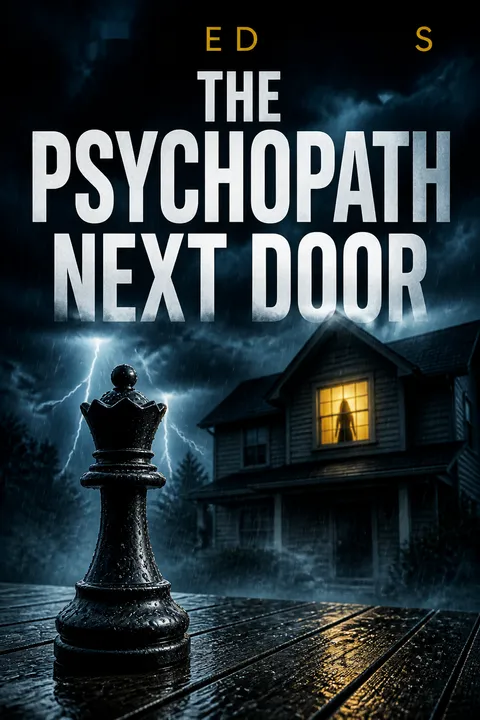


Plot Summary
Prologue
In September 2021, Fiona Smith leaves prison with money, a new address, and three names on a private list. Her closest ally, Maisie, is dead; another dangerous friend, Lucy, remains behind bars. Fiona feels no gratitude for the money Maisie left her, only satisfaction that it will finance what comes next.
On the road to the station, she comforts a neglected dog and imagines how she will punish the people who wronged her. She has no intention of warning them. Fiona plans to get close first, then strike.
The opening gives Fiona's revenge a chillingly practical shape: money, transport, and a list, rather than a burst of grief. Her fondness for the dog is not evidence of tenderness so much as an opportunity to rehearse allegiance and dominance. Maisie's death matters to Fiona as an injury to her plans and sense of power, while the language of friendship serves a private code that excludes ordinary moral limits. By placing Fiona outside prison but still oriented toward a confined list of enemies, the prologue makes freedom feel less like release than permission to resume a project.
A Stranger at Number 27
Ethan Dove has moved his family to a new South Croydon estate in the hope of giving his strained marriage and children a fresh start. One afternoon, his twelve-year-old daughter Rose arrives with Fiona Smith, the attractive Australian woman moving into the house next door. Fiona says she stepped in when two teenage brothers teased Rose after school.
Ethan thanks her and offers tea, while Rose resists his plan to confront the boys' parents. Fiona notices the girl's reluctance and meets her gaze with conspicuous warmth. At dinner, the family learns the boys are Albie and Eric, already known for trouble. Emma worries about Rose's safety; Ethan minimizes the incident, and Rose insists she can manage without being treated like a small child.
Fiona enters through a real need, not an implausible coincidence: Rose has been unsettled by bullying, and Ethan's instinct to avoid confrontation leaves space for a more forceful protector. That contrast gives Fiona immediate emotional leverage. The parents' disagreement is not simply about safety; it exposes their divided styles, with Ethan minimizing conflict and Emma anticipating harm. Rose's wish for independence makes her receptive to someone who treats her as older than twelve. The neighbor's first act therefore creates a triangle of trust in which Fiona can appear to understand Rose better than her parents do.
The Babysitter's Invitation
When Ethan and Emma hesitate over a last-minute concert, Fiona offers to watch the children, and Rose encourages them to accept. Alone with Rose, Fiona asks to see her bedroom and finds a collection of Barbies, including dolls with cut hair and burn marks. Rose describes one doll as the ruler; Fiona recognizes a childhood impulse she remembers in herself.
She lets Rose watch the horror film M3GAN, then studies the girl's delight when the doll punishes a bully. Fiona reinforces the fantasy that she can protect Rose from the boys. She also probes Dylan's reactions, steals Emma's lipstick from the bedroom, and leaves the house knowing the family has begun to trust her. Their private familiarity becomes a foothold for influence.
The babysitting arrangement converts neighborly helpfulness into access, while Fiona's attention to Rose is less nurturing than diagnostic. The dolls and the horror film provide indirect tests: Rose can reveal aggression and curiosity while still treating the conversation as play. Fiona does not openly demand loyalty; she gives Rose permission to imagine power without consequences. Meanwhile, her theft of lipstick and inspection of the parents' room show that the apparent intimacy runs in only one direction. The family reads Fiona as becoming part of their ordinary domestic life, but she is already treating their routines and belongings as information.
The Dirt Bike Trap
In the fields, Fiona sees Albie riding his dirt bike while Eric unleashes two German shepherds near Rose, Dylan, and their cockapoo, Lola. The dogs frighten Lola, and Albie circles the children on his bike before riding away with a threat. Fiona decides that the boys need to be stopped. Before dawn, she wedges a strip of wood fitted with nails into a crack in the path where Albie uses a ridge as a ramp.
The front tyre punctures during his next ride, throwing him into a tree and causing a serious head injury. Fiona removes the evidence before anyone investigates. Ethan sees blood on the trunk, while Rose's fleeting smile unsettles him. Later, Tommy accuses Dylan of causing the crash, giving Fiona's intervention a dangerous afterlife.
Fiona's violence begins as a distorted answer to a genuine threat. The boys have endangered Lola and intimidated the children, but Fiona replaces protection with private punishment, deciding that her judgment should substitute for any adult or communal response. The nail trap is especially revealing because it turns a familiar path into a hidden mechanism: harm becomes something she can arrange and then erase. Ethan's discovery of blood and Rose's brief pleasure place suspicion and moral unease inside the family before anyone knows the truth. The accident also gives Tommy a reason to target Dylan, shifting the consequences from Fiona's chosen victim onto a child who did not cause it.
The Cookie at Brockwell Park
Fiona takes Rose to Herne Hill and follows Max Gallup, the lawyer who advised her and Maisie during their prosecution. She disguises the outing as a lesson in spycraft. Rose persuades Max to let her use his bathroom, memorizes his alarm code, and takes a spare key from a hook. Fiona later enters his house at night and removes the EpiPen he carries for his severe peanut allergy.
At the park, Rose gives Max a cookie Fiona has prepared with the allergen. Max collapses and dies as Fiona watches, then she hides the remaining evidence. Rose believes the cookie was meant as a harmless prank until Fiona tells her a story about an accidental death and warns that both of them could be blamed. Rose promises to keep quiet.
Fiona's murder recruits Rose before the girl understands the full design. The child's help is disguised as play, and her successful spying gives her a taste of competence that Fiona can reward. The cookie's apparent familiarity conceals a deliberate combination of exposure and sabotage: Max's known vulnerability is paired with the removal of the device that might save him. Afterward, Fiona does not ask Rose to accept a moral argument. She makes secrecy feel like self-preservation, binding the child through fear of punishment and separation. Rose's silence is thus both a sign of Fiona's manipulation and the first consequential choice that draws her into the crime.
A Chess Game Turns Fatal
Fiona takes Rose to a Sussex pub to recover an artwork she claims Patrick Grant has kept from Maisie. The story is a cover: Patrick is the retired journalist who exposed Fiona and Maisie's poisoning scheme against wealthy Dinah Uxbridge.
Using false names and Rose's chess skill, Fiona draws Patrick into conversation and persuades him to bring them to his house for books. There, Patrick recognizes Fiona, produces a gun, and orders her toward the cellar while he prepares to call police.
Rose has overheard enough to understand that the artwork story is false. When Patrick turns away from her, she charges into him and sends him down the steep stairs; his neck breaks. Fiona stages the fall as a drunken accident, returns the gun to its cupboard, and removes traces of their visit.
The chessboard is both a social lure and a model of the scene's power struggle: Fiona believes she has arranged the pieces, but Patrick recognizes her and changes the position. Rose's intervention is not the planned act of a trained accomplice; she acts suddenly to save Fiona, showing that the relationship has already exceeded Fiona's control. The resulting death binds the pair more tightly, yet it also gives Rose knowledge that Fiona cannot fully manage. Fiona's quick staging demonstrates her capacity for concealment, while her reliance on Rose reveals the risk in making another person part of a scheme built on secrecy.
The Marriage Reopens
While helping Iris value her late husband's records, Ethan finds a rare Beatles album and brings collector Rodney Clough to inspect it. From Iris's house, he sees Emma embrace Mike, the former neighbor whose emotional affair helped drive the family from their old home.
Ethan assumes they have resumed the relationship and confides his fear to Fiona, who encourages him to wait before confronting Emma. He takes the family on a short break with the proceeds from the record sale.
There, Emma explains that she met Mike to settle her own doubts and discovered she no longer wanted him. The couple begin rebuilding their marriage. At laser tag, however, Rose unnerves Henry, a younger boy, until he falls from a platform; Ethan notices her satisfaction afterward.
The record sale briefly gives Ethan a concrete success, but the view of Emma and Mike turns it into a vantage point for renewed suspicion. Fiona profits from his insecurity by becoming his confidante, even as her advice helps Emma reclaim agency and ends the imagined affair. The holiday therefore repairs the marriage while complicating Ethan's dependence on Fiona. Rose's behavior with Henry is a separate warning: she does not simply rebel against her parents but learns how to make another child act through fear. The adults can plausibly classify this as ordinary tween conflict, which shows how easily harmful conduct can hide inside familiar family explanations.
Tommy Loses His Leverage
Tommy remains convinced that someone sabotaged Albie's bike and suspects Fiona after seeing her comfort Ethan. Fiona invites him into her house on the pretext of discussing the crash, then drugs his beer with a sedative.
While he is unconscious, she lowers his trousers, photographs him, and sends herself fabricated messages from his phone that make him appear to be sexually harassing her. When he wakes, she threatens to show the material to his wife and neighbors unless he stops investigating and stays silent about Ethan.
Tommy leaves humiliated and afraid of exposure. Fiona has not proved her innocence, but she has made the cost of pursuing her feel higher than the risk of backing down. Her scheme buys time as the family returns from its break.
Fiona defeats suspicion not by disproving it but by changing the social risk attached to speaking. The fabricated messages exploit the credibility gap between a woman reporting harassment and a man who has already behaved aggressively. Her method is calculated humiliation: Tommy's fear of exposure and sexual inadequacy is more useful to her than physical force. The scene also clarifies that Fiona's control depends on anticipating other people's self-interest. She understands what Tommy wants to protect and makes that vulnerability govern his conduct. The apparent quiet that follows is not safety; it is silence engineered through blackmail.
Iris Recognizes Fiona
Iris finally connects Fiona to the old Dinah Uxbridge case. Before leaving for Canada, she tells Rose that she remembers Fiona and asks her father to come over, warning Rose not to speak to Fiona first. Fiona has overheard the exchange from the Dove house.
She leads Rose across the street under the pretense of asking Iris a question, then forces her way inside when Iris opens the door. Iris tries to reach the phone, but Fiona blocks her and strikes her with a brass candlestick.
Rose watches without intervening as Fiona kills the woman, then helps maintain the appearance of a visit. Fiona steals Iris's jewelry and valuable records to make the death resemble a burglary, and later lets the waiting taxi leave without its passenger. Rose asks who remains on Fiona's list.
Iris's memory threatens Fiona because it can reconnect her polished neighborly identity to a public criminal past. The murder is therefore both practical and revealing: Fiona kills to preserve concealment, then uses theft to give investigators a simpler explanation. Rose's presence is crucial, not because she supplies force, but because Fiona is testing whether the girl will stand beside her when an irreversible act occurs. Iris's plea for help has no effect on Rose, who watches and then asks about the next target. The question turns Fiona's private revenge list into a shared future, even before Rose knows the full history.
The Land Rover's Owner
The story reaches back to 2019, when Fiona and Maisie were arrested for trying to poison Dinah and redirect her estate. Journalist Patrick recognized the poisoning; Max, their lawyer, advised them to plead guilty.
Maisie left Fiona a confession that took sole responsibility, but she died after provoking a violent prison attack, leaving Fiona alone with her plans. During their attempted escape, a Land Rover stalled at a traffic light and blocked their route as police approached. Years later, Fiona traced the vehicle to Ethan.
She initially believed he had driven it, then learned that Emma had been behind the wheel. She bought the house next door after the Dove family moved, intending to destroy the ordinary life they represented. Max and Patrick were the first names on her list; Ethan was the last.
The flashback reframes Fiona's neighborly arrival as a revenge operation built around a mundane accident. Emma did not knowingly betray or expose Fiona; a faulty vehicle and a stalled engine happened to obstruct an escape. Fiona nevertheless converts chance into culpability, making the Doves stand for a world that denies her the wealth and freedom she believes she deserves. Maisie's death intensifies this grievance, but Fiona's account also reveals how she edits events to protect her own superiority. The list gives random misfortune the structure of a deliberate offense, allowing revenge to feel, to Fiona, like restoring a balance rather than creating new harm.
The Phone in the Alarm
Police tape surrounds Iris's house the morning after her missed flight, and Dylan tells Ethan he saw Fiona and Rose enter it the previous night. Ethan initially resists the implication, but the timing and Rose's recent behavior deepen his doubts. He and Dylan use Rose's spare key to enter Fiona's eerily bare home, finding no photographs but discovering a small phone concealed inside a smoke alarm.
A prisoner named Lucy answers and tells Ethan that the neighbor is Fiona Woodfield, not simply Fiona Smith. Lucy says Fiona has a list that includes Ethan and demands that he visit Jamie and Kirsty Knight before she will reveal more. Ethan and Dylan leave to follow her instructions, uncertain whether Lucy is helping them or using them.
Ethan's investigation begins with a conflict between parental loyalty and evidence. He cannot accept that Rose may be involved, yet he can no longer dismiss Dylan's observations as fantasy. The empty house sharpens the unease: Fiona has built a convincing domestic surface without the personal traces that normally anchor identity. The hidden phone confirms that she maintains a concealed channel, while Lucy's conditional help introduces another manipulator into the search. Ethan's decision to obey Lucy is not trust but triage. With his wife and daughter missing, he accepts a dangerous detour because every ordinary route to certainty has closed.
Ravenhill's Abandoned Ward
Ethan and Dylan visit Jamie and Kirsty, Lucy's former enemies, and confirm that they appear safe. Lucy then identifies Fiona's obsession with Ravenhill, a disused psychiatric hospital.
Meanwhile, Fiona has taken Emma and Rose on an outing, persuaded Emma to drive into the countryside, and removed the family's location tracking from their phones. She leads them through a gap in a fence to the derelict hospital, which she imagines as a future home.
Fiona describes its history and tries to make Rose share her vision, while Emma recognizes the danger and wants to leave. Ethan and Dylan drive toward the site, following Lucy's clue. Fiona's plan depends on Rose becoming her partner and Emma disappearing from the family; the remote building offers cover for both.
Ravenhill gathers the novel's central disguises into one place: Fiona calls a ruin a home, interprets trespass as entitlement, and treats family as a useful mask. Emma's unease is grounded in what she sees, while Fiona's enthusiasm converts the asylum's history of confinement into a private fantasy of ownership. Rose is the essential uncertainty. Fiona believes shared cruelty has made them allies, but the girl's own judgment has never been fully hers to command. At the same time, Lucy's clue gives Ethan a destination without giving him control of events. The story's separate lines now converge, but none of the characters has the same understanding of what waits inside.
The Family Plan Breaks
Inside Ravenhill, Fiona tells Emma that she intends to replace her and build a new family with Ethan and Rose. She reveals that Emma drove the Land Rover that blocked the 2019 escape, then holds Rose at knifepoint to force Emma to leave. Rose bites Fiona and moves away, but when Emma tries to take her home, Rose rejects her and describes her lack of attachment to family and friends.
Fiona's plan falters as Rose seizes the knife. She slashes Emma's throat, then turns on Fiona, calling her incompetent and refusing to be mentored. Fiona tries to escape, but Rose stabs her. Ethan, arriving after hearing a scream, finds Emma and Fiona dead and Rose beside them. The daughter he had feared losing is no longer the child he thought he knew.
Fiona mistakes recognition for ownership. She sees Rose as a younger version of herself and assumes that naming Rose's emotional difference will secure loyalty. Instead, Rose uses the same framework to judge Fiona as weak and unnecessary. Emma's death makes the danger brutally concrete, but the deeper reversal is that Fiona's carefully staged family replacement produces no stable family at all. Rose's violence is neither a rescue nor a simple act of rebellion; it is an assertion of autonomy through the very harm Fiona taught her to regard as legitimate. Ethan arrives after the decisive choice, forced to confront the gap between the daughter he loves and the person who acted.
Ethan Chooses the Truth
Rose tells Ethan that Fiona killed Emma and tries to disguise her own role in Iris's death. Dylan arrives and accuses his sister, but Ethan initially cannot bear to believe him. When Rose's delay and lies make the truth unavoidable, Ethan sends Dylan back toward the police and stays with her. Rose grabs Fiona's knife and wounds Ethan as he attempts to restrain her.
He wrestles the blade away, carries her outside, and calls for help when officers arrive. Rather than protect his daughter from the consequences, he identifies her as the attacker and later testifies against her. Rose is taken into custody, while Ethan is left with a dead wife, an injured son, and the knowledge that he may never stop questioning his choice.
Ethan's final decision is not a victory over Rose but a painful act of responsibility. His first impulse is denial, shaped by years of seeing her as a child who could be redirected or protected. Evidence forces him to choose Dylan's safety and the possibility of accountability over the comfort of preserving that image. Rose's attack makes the choice bodily: Ethan must risk injury to stop her, then submit his daughter to the same legal system he once wanted to shield her from. The ending refuses easy parental certainty. He acts because he must, not because he can be sure that love, punishment, or treatment will produce a different future.
Epilogue
In prison, Lucy follows the trial of the child accused of killing Emma and Fiona and helping murder Iris. Rose denies killing her mother and presents Fiona as the guilty party, while Ethan testifies against his daughter. Lucy believes Fiona failed as Rose's mentor and imagines that she can do better.
She plans to reach Rose through the prison system, teach her how to pursue revenge, and eventually enlist her against Jamie and Kirsty. Rose is still young, Lucy thinks, and their partnership can wait. The final note is not closure but a second predator looking toward the same vulnerable child.
Lucy converts the trial into a recruitment opportunity. She interprets Rose's youth not as a reason to protect her but as time available for training, and reads Fiona's failure as a problem of technique rather than morality. The courtroom's uncertainty also matters: Rose's denial and Ethan's testimony leave competing stories in public view, while Lucy privately treats the girl's guilt as established fact. By ending on Lucy's patient ambition, the novel refuses to make Fiona's death equivalent to the end of her influence. The mentor role survives its first occupant, suggesting that harmful identities can be transmitted through recognition, attention, and promises of belonging.
Analysis
The novel builds its threat from an ordinary social arrangement: a new neighbor offers help, parents accept it, and a child gains access to a confident adult who seems to understand her better than her family does. Fiona's danger is not initially legible as danger because she performs the forms of care convincingly. She brings Rose home, babysits, shares films, and offers activities. The same acts that signal safety also create access, information, and dependency.
The story's central psychological contest concerns interpretation. Ethan sees Rose as a child passing through adolescence; Emma sees a daughter who needs boundaries; Fiona sees a possible partner. Each interpretation selects real evidence and leaves other evidence out. The novel does not treat Rose's behavior as a sudden transformation caused by a single bad influence. Her earlier cruelty, social isolation, and capacity for concealment predate Fiona, but Fiona supplies a vocabulary that makes those impulses feel like identity and entitlement. Her mentorship is therefore both exploitative and catalytic.
Fiona's revenge also reveals the difference between injury and grievance. Emma's stalled Land Rover accidentally obstructed an escape, yet Fiona converts that random event into moral blame. Her list gives the grievance order, and her staged crimes make retaliation look like competence. That pattern contrasts with Ethan's eventual choice: he cannot undo what Rose has done, but he can refuse to convert love into denial. His decision to identify his daughter does not resolve the pain or promise reform; it accepts that protection sometimes means limiting someone's power to harm.
The ending remains deliberately unsettled. Fiona is gone, but Lucy imagines a successor, and Rose's future is still contested in court and in her father's mind. The novel's bleakest suggestion is not that cruelty is inevitable, but that belonging can be used to teach it. A mentor offers recognition, a child receives an explanation for her difference, and that explanation can become a license to treat other people as instruments. The counterweight is not sentiment alone, but truthful attention, accountability, and the willingness to act before certainty becomes comfort.
Review Summary
The Psychopath Next Door is a gripping psychological thriller that explores the dark side of human nature. Readers praise Edwards' ability to create suspense and develop complex characters. The story follows a family who moves to a new neighborhood, only to encounter a seemingly friendly neighbor with sinister intentions. Many reviewers found the book fast-paced, disturbing, and difficult to put down. While some felt the ending was rushed or predictable, most appreciated the twists and turns throughout the narrative.
Characters
Ethan Dove
The watchful fatherEthan owns Rebel Records, a vinyl shop, and tries to balance its demands with his marriage to Emma and his care for their children, Dylan and Rose. He is gentle, conflict-averse, and proud of being the more relaxed parent, but his wish to keep peace can leave important problems unaddressed. The move to South Croydon is meant to give his family a fresh beginning after a breach of trust, and Ethan hopes shared routines can repair what argument has damaged. His attachment to music and collecting gives him a life beyond parenting, though he often struggles to defend that independence without feeling selfish. He wants to believe people are basically understandable, a strength that can also make him slow to recognize danger.
Fiona Smith
The charming neighborFiona is an Australian woman in her late thirties who moves into the house beside the Doves. Attractive, physically confident, and quick to offer help, she makes herself useful before the family has time to know much about her. She is observant about other people's habits and skilled at adjusting her manner to what they want to hear. Her attention to Rose is unusually intense, and she frames their growing closeness as a bond between two people who understand one another. Fiona dislikes dependence and expects the world to reward strength, but she is also drawn to alliances that give her influence. Her polished friendliness and sparse personal history make it difficult to distinguish generosity from strategy.
Rose Dove
The guarded daughterRose is Ethan and Emma's twelve-year-old daughter, newly navigating secondary school, a house move, and the push for independence that often arrives before parents feel ready. She resembles Emma but is harder to read, and she dislikes being treated as younger than she feels. Rose is clever, patient, and capable of holding back information, which makes her silences difficult for her family to interpret. She has an old interest in dolls and horror stories alongside a growing attraction to Fiona's confidence. Her relationship with her mother carries particular tension, while she remains affectionate toward Ethan in ways that can change abruptly. Rose's struggle is partly about growing up and partly about what kind of person she believes she is allowed to become.
Emma Dove
The protective motherEmma works in marketing and is mother to Dylan and Rose. She is emotionally direct, competent, and protective, often carrying the less popular work of setting boundaries while Ethan plays the easier, more permissive parent. Her marriage has been strained by a previous emotional attachment to a neighbor and by the resentment that accumulated after the Doves moved. Emma wants to keep her family safe without smothering Rose, but those aims become difficult to reconcile as her daughter insists on more freedom. She is also trying to recover an identity beyond work and motherhood. Her care is practical and affectionate, even when exhaustion makes it sound like control.
Dylan Dove
The perceptive brotherDylan is Ethan and Emma's fifteen-year-old son and Rose's older brother. He spends much of his time gaming and listening to music, but his casual manner hides a keen eye for changes in the people around him. He notices when Rose becomes difficult to read and when Fiona's expressions seem to shift outside the family's view. Dylan wants the independence of a teenager, not the responsibility of a substitute parent, yet he remains protective of his sister. His skepticism becomes important because it gives Ethan a perspective he is reluctant to accept.
Maisie Smith
Fiona's formative allyMaisie is the older woman who shaped Fiona's understanding of loyalty, concealment, and partnership. She gave Fiona a language for seeing herself as different from ordinary people and taught her the practical value of acting together. Their bond is central to Fiona's memories and to the plans she carries into the present. Maisie combines ambition with a willingness to take risks, qualities Fiona admires even when she resents being left behind. Her influence persists through the habits and justifications Fiona passes on to Rose.
Lucy Newton
The imprisoned mentorLucy is a former prison companion of Fiona's, serving a life sentence and sharing Fiona's belief that some people are made to dominate others. She is imposing, unsentimental, and accustomed to treating relationships as exchanges of leverage. Lucy wants Fiona to act on her behalf outside prison and becomes interested in the possibility of a younger person who might share their outlook. She is less a source of wisdom than a rival claimant to authority, and her certainty makes her especially dangerous.
Tommy
The volatile neighborTommy is Albie and Eric's father, a physically imposing man whose temper and pride make him difficult to approach. He is distressed by Albie's injury and searches for someone to blame, but his suspicion of Fiona is mixed with aggression and poor judgment. His insistence on answers brings danger close to her, while his vulnerability to humiliation gives her a way to silence him.
Albie
The reckless older boyAlbie is Tommy's older son and Eric's brother. He rides a dirt bike around the estate and uses it to intimidate Rose and Dylan. Brash and accustomed to provoking others, he treats danger as entertainment and his father's authority as something to challenge. His behavior makes him a credible threat to the children, even as his recklessness exposes how little control the adults around him have.
Eric
The younger brotherEric is Albie's younger brother. He joins in teasing Rose and helps manage the family's German shepherds, often following his brother's lead. His need to belong to Albie's orbit makes him part of the threat the Dove children face, though he is also a frightened boy when events turn serious.
Iris Green
The neighbor with a memoryIris is an older neighbor, a fit and sociable widow who remembers her late husband through his carefully kept record collection. She is practical, environmentally conscious, and proud of the community around her. Her trust in Ethan allows him to help her find value in the records, while her attention to Fiona's face leads her to question what she remembers. Iris is perceptive without being suspicious by nature, which makes her recognition especially consequential.
Max Gallup
The compromised lawyerMax is the lawyer Fiona and Maisie relied on during their prosecution. He knows details of their past and has a serious peanut allergy, a vulnerability that later becomes central to Fiona's scheme. His professional advice and personal history make him more than a convenient stranger to her, though he has no idea how closely she has tracked his routines.
Patrick Grant
The retired journalistPatrick is a retired journalist with a deep interest in crime reporting and chess. He once investigated the case involving Dinah Uxbridge and has a sharp memory for the people connected to it. Proud of his experience, he can be patronizing when teaching a younger player, but he is also observant and willing to act when he believes someone is in danger.
Dinah Uxbridge
The wealthy recluseDinah is an elderly, wealthy woman whose large house and lonely circumstances make her vulnerable to the attention of people seeking access to her estate. Her past links her to Patrick and to Fiona and Maisie's history. She is strong-willed, proud of her independence, and not as easy to manage as those around her assume.
Jamie Knight
Lucy's former targetJamie is one of the people Lucy wants Fiona to harm. He has built a life with Kirsty and works in home security, motivated in part by a personal understanding of how vulnerable people can feel in their own homes. His past makes him wary when strangers arrive asking about Lucy.
Kirsty Knight
Jamie's guarded partnerKirsty is Jamie's partner and part of the household Lucy remains fixated on from prison. She is not present for most of the events, but her shared history with Jamie places her within Lucy's imagined campaign of revenge. The couple's privacy and family life are precisely what Lucy wants to disrupt.
Henry
The anxious younger childHenry is an eleven-year-old boy holidaying with his parents and older sister. Outgoing and eager to make friends, he tries to spend time with Rose, who responds with a cruelty he cannot easily understand. His family offers a glimpse of a more open household, but his fear shows the damage a child's words can cause.
Keira
Dylan's observant friendKeira is Henry's older sister and a teenager who becomes close to Dylan. She notices what happens between Rose and Henry and shares her concerns with her parents. Her interest in psychology and her willingness to challenge an easy explanation give Dylan a vocabulary for behavior he has been struggling to describe.
Angela
The child psychologistAngela is Henry and Keira's mother and a child psychologist. She advises Ethan and Emma not to mistake ordinary adolescent moodiness for a disorder, while remaining attentive to the children around her. Her professional caution is sensible, but it also shows how difficult it can be to recognize an unusual danger before there is clear evidence.
Lola
The Dove family dogLola is the Doves' affectionate cockapoo. She gives Ethan and the children a source of comfort and routine, and her encounters with Albie and Eric first bring Fiona into the family's orbit. Her dependence makes her an easy target for intimidation, but she also offers moments of uncomplicated companionship.
Plot Devices
Fiona's three-name list
A private revenge mapFiona writes and erases three names on the bathroom mirror, turning revenge into a daily ritual and a fixed sequence. The list gives her actions an apparent logic: each target is connected to the collapse of her former life and Maisie's death. Its order also structures the suspense, allowing the reader to see violence escalate from a hidden trap to carefully staged deaths and, finally, a plan aimed at the Dove family. The list is less a record of justice than a device Fiona uses to make grievance feel organized and inevitable.
The peanut allergy
A vulnerability weaponizedMax's severe peanut allergy gives Fiona a way to make a killing resemble an accidental medical emergency. She uses Rose to learn his house alarm code and obtain a spare key, then enters his house and removes the EpiPen from his bag. A cookie serves as the delivery method, while Fiona's false explanation afterward makes Rose fear the legal consequences of telling her parents. The device ties together preparation, murder, and coercion, showing how Fiona turns a piece of private medical knowledge into both a weapon and a means of recruiting a child.
Chess and the mirror
Testing disguised as playChess provides Fiona with a way to observe Rose's patience, competitiveness, and response to losing while presenting their time together as harmless instruction. It later helps Fiona approach Patrick, whose own enthusiasm for the game draws him into a conversation with her and Rose. The bathroom mirror, where Fiona traces her list, works in the opposite direction: it is private, temporary, and erased before anyone else can read it. Together these motifs contrast the respectable game played in public with the secret strategy Fiona keeps for herself.
Motherhood as cover
Respectability hides accessWhen Fiona takes Rose out, strangers often assume she is the girl's mother. That assumption softens scrutiny and grants Fiona a respectable role without requiring her to explain her history. It also helps her move Rose through public spaces, approach men such as Max and Patrick, and make their outings appear ordinary. Fiona consciously treats the appearance of a mother and daughter as protection, while Rose's parents mistake the arrangement for neighborly care. The device exposes how trust is often granted through familiar social roles rather than earned through knowledge of a person's character.
The stalled Land Rover
Chance becomes a grievanceIn 2019, a Land Rover stalls at a traffic light and blocks Fiona and Maisie's escape as police move in to arrest them. Fiona later discovers that the vehicle belonged to Ethan's family and that Emma was driving. No one in the Dove family intended to interfere with the getaway, but Fiona treats the accident as a personal offense. The vehicle connects the past crime to the present-day neighbor plot, making an ordinary mechanical failure the reason she chooses the Doves as targets. It also shows how her need to assign blame transforms bad luck into a justification for revenge.
FAQ
Synopsis & Basic Details
What is The Psychopath Next Door about?
- Vengeful woman infiltrates suburbia: Fresh out of prison, Fiona moves next door to the Dove family, harboring a dark agenda connected to their past.
- Family unknowingly welcomes danger: The Doves, seeking a fresh start, find their lives subtly manipulated by Fiona's presence, unaware of her true motives.
- Psychological thriller with hidden connections: The story explores themes of manipulation, revenge, and the deceptive nature of appearances, as Fiona's plans unfold.
Why should I read The Psychopath Next Door?
- Suspenseful exploration of hidden motives: The novel keeps you guessing about Fiona's true intentions and the extent of her manipulation.
- Exploration of family dynamics under threat: The story examines how secrets and external forces can strain relationships within a seemingly normal family.
- Chilling portrayal of a manipulative character: Fiona's character is complex and unsettling, offering a glimpse into the mind of a psychopath.
What is the background of The Psychopath Next Door?
- Suburban setting amplifies unease: The story unfolds in a seemingly idyllic suburban neighborhood, contrasting with the dark secrets and intentions of the characters.
- Psychological thriller genre conventions: The novel utilizes common tropes of the genre, such as unreliable narrators and suspenseful pacing, to create a sense of unease.
- Exploration of criminal psychology: The novel delves into the mind of a psychopath, exploring their motivations, behaviors, and lack of empathy.
What are the most memorable quotes in The Psychopath Next Door?
- "Me against the world": This quote, initially associated with Maisie, encapsulates Fiona's self-perception and her willingness to act outside societal norms.
- "I'm going to get really close, little doggy. So close. And then do you know what I'm going to do? I'm going to bite.": This foreshadows Fiona's manipulative strategy of gaining trust before betraying those around her.
- "We girls have to stick together, don't we?": This seemingly innocent line reveals Fiona's manipulative tactic of creating a bond with Rose, exploiting female solidarity for her own purposes.
What writing style, narrative choices, and literary techniques does Mark Edwards use?
- First-person perspective creates intimacy: The story is primarily told from Ethan's point of view, allowing readers to experience his growing unease and paranoia firsthand.
- Foreshadowing builds suspense: Edwards uses subtle hints and clues to foreshadow future events, creating a sense of impending doom.
- Psychological realism enhances character depth: The characters are complex and flawed, with realistic motivations and behaviors, making them relatable and believable.
Hidden Details & Subtle Connections
What are some minor details that add significant meaning?
- The names of the streets: The mountain-themed street names (e.g., Snowdon Close) subtly foreshadow the escalating challenges and emotional peaks the characters face.
- Fiona's tattoo: The "M" tattoo encircled with barbed wire and flowers hints at her complex relationship with Maisie, blending beauty and danger.
- The Rolling Stones mug: Ethan giving Fiona the mug with the Rolling Stones logo subtly foreshadows the theme of rebellion and breaking social norms.
What are some subtle foreshadowing and callbacks?
- Rose's Barbie mutilation: Rose's mistreatment of her Barbie dolls foreshadows her capacity for cruelty and lack of empathy, traits that become more prominent later in the story.
- Emma's lipstick: Fiona stealing Emma's lipstick foreshadows her intention to infiltrate and disrupt Emma's life, mirroring her actions with Dinah.
- The M3GAN movie: The movie foreshadows Rose's desire for a protector and her fascination with violence, hinting at her potential to become a "killer robot" in real life.
What are some unexpected character connections?
- Iris and Dinah: Iris's connection to Dinah Uxbridge, Fiona's past victim, creates a sense of impending doom and highlights the interconnectedness of the characters' lives.
- Lucy and Fiona: The prison connection between Lucy and Fiona reveals a shared history of violence and manipulation, suggesting a deeper understanding between them.
- Ethan and the Land Rover: Ethan's ownership of the Land Rover that inadvertently led to Fiona's arrest creates a sense of tragic irony and highlights the arbitrary nature of fate.
Who are the most significant supporting characters?
- Maisie: Though deceased, Maisie's influence on Fiona is profound, shaping her worldview and driving her quest for revenge.
- Lucy: Lucy's connection to Fiona reveals a shared history of violence and manipulation, highlighting the potential for evil to spread and corrupt.
- Iris: Iris's role as a perceptive neighbor adds a layer of suspense, as she senses something amiss with Fiona and attempts to uncover her true identity.
Psychological, Emotional, & Relational Analysis
What are some unspoken motivations of the characters?
- Ethan's desire for validation: Ethan seeks validation from Fiona, stemming from his insecurities about his marriage and his own masculinity.
- Emma's guilt and desire for control: Emma feels guilty about her past affair and attempts to control Rose's life as a way to compensate for her past mistakes.
- Rose's need for power and control: Rose seeks power and control over others, stemming from a deep-seated sense of inadequacy and a desire to feel special.
What psychological complexities do the characters exhibit?
- Fiona's lack of empathy: Fiona exhibits a complete lack of empathy for others, viewing them as pawns in her game of revenge.
- Ethan's self-deception: Ethan engages in self-deception, rationalizing Fiona's behavior and ignoring red flags in order to maintain a sense of normalcy.
- Rose's psychopathic tendencies: Rose displays several traits associated with psychopathy, including a lack of remorse, manipulativeness, and a callous disregard for others.
What are the major emotional turning points?
- Ethan witnesses Emma and Mike: Ethan witnessing Emma and Mike's embrace shatters his sense of security and fuels his paranoia.
- Rose's confession to killing Patrick: Rose's confession to killing Patrick marks a turning point in her development, solidifying her descent into darkness.
- Ethan discovers Fiona's true identity: Ethan discovering Fiona's true identity shatters his perception of her and forces him to confront the danger she poses to his family.
How do relationship dynamics evolve?
- Ethan and Emma's relationship: Ethan and Emma's relationship evolves from strained and distant to tentatively hopeful, only to be shattered by Fiona's manipulations and Rose's actions.
- Fiona and Rose's relationship: Fiona and Rose's relationship evolves from mentor-mentee to a dangerous alliance, culminating in a shocking act of violence.
- Dylan and Rose's relationship: Dylan and Rose's relationship evolves from typical sibling rivalry to a deep-seated fear and distrust, as Dylan recognizes the darkness within his sister.
Interpretation & Debate
Which parts of the story remain ambiguous or open-ended?
- The extent of Rose's psychopathy: The novel leaves open the question of whether Rose is truly a psychopath or simply a troubled young girl influenced by Fiona.
- The nature of Ethan's feelings for Fiona: The novel hints at a possible attraction between Ethan and Fiona, but it remains ambiguous whether he truly reciprocates her feelings.
- The possibility of redemption: The novel offers little hope for redemption, leaving the characters trapped in a cycle of violence and despair.
What are some debatable, controversial scenes or moments in The Psychopath Next Door?
- Fiona's manipulation of Rose: Fiona's grooming and manipulation of Rose raises ethical questions about the exploitation of vulnerable individuals.
- The graphic violence: The novel contains several scenes of graphic violence, which may be disturbing to some readers.
- The portrayal of mental illness: The novel's portrayal of psychopathy may perpetuate harmful stereotypes and stigmatize individuals with mental illness.
The Psychopath Next Door Ending Explained: How It Ends & What It Means
- Rose's descent into darkness: The ending confirms Rose's descent into darkness, as she embraces her psychopathic tendencies and rejects her family.
- Ethan's tragic realization: Ethan's tragic realization that his daughter is a monster highlights the devastating consequences of unchecked evil.
- Cycle of violence continues: The ending suggests that the cycle of violence will continue, as Rose is likely to perpetuate the same patterns of manipulation and abuse she learned from Fiona.
Download PDF
Download EPUB
.epub digital book format is ideal for reading ebooks on phones, tablets, and e-readers.








