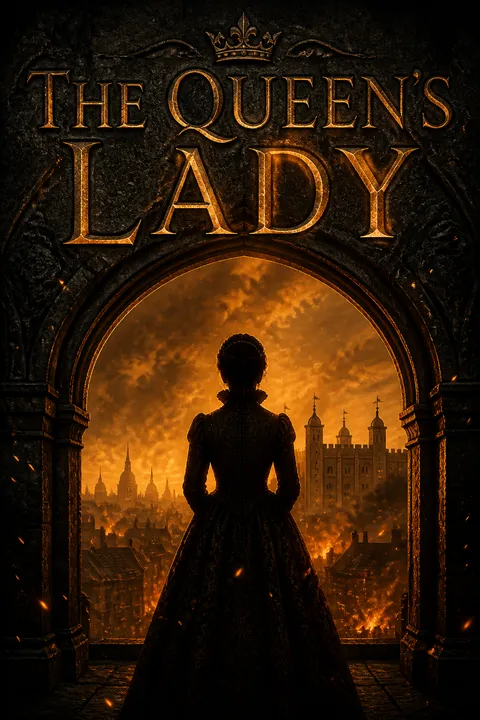


Plot Summary
The Book in the Riot
On a violent May Day in 1517, seven-year-old Honor Larke becomes lost among London’s rioters and looters. She watches a crowd dress a bound Italian merchant in stolen finery, then shove him from a high window. When a dog approaches the dying man, Honor drives it off with a pewter cup.
He gives her a small book illustrated with a blue speedwell and warns her not to show it to a priest. His serene death leaves her wondering what knowledge the book contains. Ralph Pepperton, her father’s young servant, finds Honor and carries her home. On the way, they see Undersheriff Thomas More cool the apprentices’ fury with an argument about the foreigners they have attacked.
Honor’s first act of courage is not a declaration of belief but a response to a vulnerable body in front of her. The dying merchant gives her a book she cannot read, making literacy an intimate promise before it becomes a political danger. More’s intervention offers a contrasting kind of power: he changes the crowd through reason rather than force, though the violence resumes around him. The child’s memory will hold both models in tension, as she learns that words can protect people, but can also be used to frighten and condemn them.
An Heiress Is Taken
Honor’s father, Christopher Larke, lies dying of the sweating sickness when Father Jerome Bastwick demands payment for the parish’s funeral fee. Larke refuses to surrender his sapphire ring, and Bastwick excommunicates him in front of the household, terrifying the sick man as he dies.
Bastwick then joins Sir Guy Tyrell in a fraud: they forge the arrangements that should have sent Honor’s wardship to the Crown and seize control of her inheritance. Tyrell’s men take the child from her home.
When Ralph resists, Bastwick threatens him with a knife, forcing Honor to submit. The seven-year-old is carried west with Ralph beside her, both held under threat. The foreigner’s book, left behind in her bedroom, disappears with the household’s possessions.
The same child who witnessed a peaceful death now watches religious authority weaponized against a frightened man. Bastwick’s power depends on making a financial demand feel like a verdict about the soul, then converting that terror into practical gain. Honor’s loss is therefore material and psychological at once: she is separated from her home, her inheritance, and the book that had awakened her curiosity. Ralph remains her one reliable source of safety, but Bastwick has learned to use their attachment against them.
Escape from Tyrell Court
At Tyrell Court, Honor grows up as a captive bride to Hugh Tyrell, whose marriage to her would give him control of her estate once consummated. On her twelfth birthday, Sir Guy orders the household to force the marriage bed. Lady Philippa and a servant pin Honor down while Hugh assaults her. Ralph bursts in and breaks Hugh’s neck, saving her but making himself a fugitive.
That night Honor steals money from Hugh’s purse and frees Ralph from the pillory, where his ear has been nailed. They escape on a stolen horse and ride toward London. Honor seeks the only lawyer whose name she knows: Thomas More. More brings Bastwick and Tyrell to trial, wins custody of Honor and her lands, and gives her a home and an education.
Honor’s escape is built from two forms of defiance: Ralph’s refusal to let violence proceed, and her own decision to act after the household assumes she is powerless. The rescue carries a cost, since Ralph’s protection makes him answerable to the law and forces him into hiding. More’s intervention gives Honor a rare chance to develop beyond her usefulness as an heiress. Yet the law that shelters her will later expose a deeper contradiction: the same institutions can offer justice in one case and deny it in another.
More’s Academy
More teaches Honor Latin, Greek, mathematics, and philosophy, treating her mind as seriously as his own children’s. By 1527, she is a capable scholar and helps with his legal work at Chelsea.
His household gives her a life beyond the Tyrell marriage plot, though she still misses Ralph, who left London rather than face prosecution for Hugh’s death. Queen Catherine notices Honor’s learning after Honor reads to her during an illness and invites her to become a lady-in-waiting.
More lets Honor choose between court service and marriage to a promising young lawyer. She chooses the Queen’s household. At court, she discovers a world shaped by patronage, gambling, and faction, while Henry’s pursuit of an annulment increasingly threatens Catherine’s position.
More’s education gives Honor the instruments to question authority, even as he expects learning to strengthen religious obedience. His confidence in her intelligence is genuine, but his wish to arrange her marriage shows that he still sees the social structures around women as largely fixed. Honor’s choice of court is not simply ambition. It is a first step into public life, where her scholarship becomes useful to Catherine and where the distance between official piety and political conduct is impossible to ignore.
The Kiss in the Bower
At Greenwich, Honor meets Richard Thornleigh, a confident courtier facing the loss of a hand for brawling. Anne Boleyn obtains a royal reprieve for him at the last moment. Later, at Cardinal Wolsey’s masque, Honor takes a secret letter from Catherine to the Spanish ambassador, hoping to secure the Queen’s nephew’s help. Thornleigh has overheard enough to threaten exposure.
He demands a kiss in exchange for silence, and Honor agrees because Catherine’s safety matters more than her pride. The encounter unsettles them both. Meanwhile, Cardinal Wolsey arrests Catherine’s secretary for carrying letters to the Emperor. Honor steps into the vacant role, writing for the Queen and learning how precarious their hidden communications have become.
Honor’s first encounter with Thornleigh is an exchange shaped by unequal leverage, not romantic trust. He uses her fear to bargain, while she accepts the bargain for a cause she considers just. The moment also introduces her defining habit: she will put herself at risk before allowing another person to face danger alone. Catherine’s need turns Honor’s education into covert political work, and the court’s pleasures become a screen behind which surveillance and fear operate.
Ralph at Smithfield
At a public burning in Smithfield, Honor recognizes one of the prisoners as Ralph, now living under the name Roger Pym. He is accused of distributing English Bibles and has been convicted as a relapsed heretic. Honor tries to reach the mayor, then rushes toward the stake when Ralph begins to burn. Guards drag her back as he dies in agony.
Later, Bridget Sydenham’s letter identifies Pym as Ralph and directs Honor to ask More about the case. At Chelsea, More admits that he and Bishop Tunstall interrogated Ralph, and that his own bailiff tracked him after he recanted once and returned to preaching. Honor’s trust in her guardian breaks under the knowledge that he sent Ralph to the fire.
Ralph’s death converts Honor’s private grief into a crisis of moral authority. She had assumed Bastwick was responsible, but the revelation places More, her teacher and protector, at the center of the execution. His reasoning rests on institutional duty and the danger of doctrinal disorder; Honor sees the particular man those abstractions have destroyed. The revelation does not merely make her angry at More. It forces her to confront the possibility that intelligence and kindness can coexist with cruelty when a person treats procedure as a substitute for judgment.
A Warning in the Rain
After Ralph’s execution, Honor cannot pray and vows to remember his suffering. When she overhears that Bishop Tunstall’s men plan to raid a meeting on Coleman Street, she goes to warn merchant Humphrey Sydenham.
His wife Bridget distrusts her because of her connection to More, but the raid begins before they can decide whether to flee. Brother Frish, a passionate preacher of reform, hides Honor beneath a vat while the soldiers seize the warehouse. The fugitives emerge into the rain and escape.
Frish urges Honor to use her position at court to win allies, including Thomas Cromwell, but she refuses to join the reformers. The meeting has shown her that ordinary believers risk their lives for access to scripture, whether or not she shares their doctrine.
Honor’s warning is motivated less by theological agreement than by memory: she cannot watch another person be carried toward a stake without trying to intervene. Her refusal to join Frish preserves an important distinction between solidarity and conversion. She protects people whose beliefs she does not share, then leaves the encounter with questions she cannot easily dismiss. Bridget’s suspicion also reflects the cost of association: in a world of informers and raids, a good deed is difficult to distinguish from a trap.
More’s Other Verdict
Bridget later tells Honor that Ralph used the name Roger Pym and that More can explain how he died. Honor visits More’s menagerie, where he confirms that he personally interrogated Ralph and accepted the evidence that sent him to the stake.
She challenges his defense of the Church’s authority, then leaves Chelsea unable to reconcile the teacher she loves with the judge who condemned her friend. Before setting out on the Queen’s mission to Spain, she receives news that Sydenham has been imprisoned for refusing to recant.
At a London inn, she meets Cromwell and proposes that he receive the original papal document Catherine needs, then secretly deliver it to the King. She hopes the King’s divorce will weaken the Church’s power to persecute reformers.
Honor’s plan is a moral compromise disguised as political strategy. She still loves Catherine and More, yet she chooses to sacrifice the Queen’s strongest legal evidence because she believes a change in royal marriage might produce a broader reform. Cromwell’s ambition makes him a plausible instrument, but not a trustworthy one. Her choice marks a shift from rescuing individuals in immediate danger to trying to rearrange the machinery that endangers them, a larger project with less predictable consequences.
The Brief Changes Hands
In Spain, Honor secures the original papal brief that supports Catherine’s marriage. She expects Cromwell’s agent to meet her, but the rendezvous fails. On the road, a masked rider ambushes her and takes the document; only afterward does she recognize Thornleigh, acting for Cromwell. He explains that her planned handoff would have exposed them both to the English agents and court gossip.
In 1529, the King’s hearing at Blackfriars begins, and Catherine publicly asserts that she came to Henry as a virgin and refuses the court’s authority. The legates eventually send the case to Rome. Henry is furious, while Honor keeps secret that she helped put the brief into the King’s hands, where it can be suppressed.
The stolen brief is both evidence and a test of whose future Honor is willing to shape. Thornleigh’s practical intervention prevents a foolish rendezvous, but it also completes the betrayal she designed. Catherine’s courage at Blackfriars makes the cost visible: Honor has not merely shifted a document but helped silence the Queen’s legal defense. The failed annulment intensifies Henry’s resentment and gives Cromwell an opening to redirect the conflict from Rome toward Parliament.
A Crown Against Rome
After the Blackfriars court collapses, Henry blames Wolsey and begins to consider ruling without Rome’s permission. Cromwell uses Parliament to limit Church revenues and privileges, then maneuvers toward declaring Henry supreme head of the English Church.
More becomes Lord Chancellor and makes the suppression of heresy his priority, ordering censorship and empowering officials to pursue forbidden books. Honor continues helping reformers escape through Thornleigh’s ships, while her meetings with Cromwell turn their private arrangement into a wider campaign.
She also learns that More is troubled by forbidden desire for her and punishes himself through severe religious discipline. His conflict is not only political: he fears that bodily desire and spiritual weakness could undo the self-control on which his identity depends.
The political shift is not a simple triumph for reform. Cromwell’s attack on Rome is designed to increase royal power, not necessarily to protect individual conscience, while More’s defense of the Church now operates through state coercion. Honor’s rescue work grows inside that contradiction. The private detail of More’s self-punishment complicates him further: the same man who treats heretics as threats to social order is terrified of his own body and desires. Conviction, in this novel, is never detached from appetite, fear, or the need to control oneself.
The Hold Below
As the Chancellor’s agents tighten their searches, Honor helps fugitives escape to the Low Countries with Thornleigh. When an informant reveals that Edward Sydenham is aboard the unsafe Dorothy Beale, Honor hides him in a concealed pit in the hold. She remains there with an English Bible bearing a list of fellow believers, while officials search the ship and refuse to leave.
For three days, she endures darkness, filth, thirst, and the fear that the Bible will expose everyone. Thornleigh and his crew set the ship alight to draw the inspectors away, then rescue Honor as the fire spreads. She survives, and Thornleigh restores the ship by forcing the authorities to answer for allowing it to burn in their custody.
The hold turns Honor’s principles into a physical ordeal: she could escape by revealing the names in the Bible, but refuses to purchase her life with other people’s exposure. Her endurance is not romanticized; she nearly dies, and the rescue depends on Thornleigh’s willingness to risk himself. The episode also changes their relationship. He is no longer simply a useful shipowner or an attractive adversary. He has become a partner who understands that her work can demand more than good intentions.
Love in the Fleece
Thornleigh tells Honor about his unhappy marriage to Ellen, whose recurrent despair worsened after their baby daughter died. When church officials accuse Ellen of heresy over an English prayer, she is imprisoned and frightened with threats against her husband and son. She takes her own life before Thornleigh can reach her.
Honor visits him at Great Ashwold, offers comfort, and asks him to marry her, but he rejects her in his grief, blaming himself for leaving Ellen alone. After days at the estate, he returns and accepts her love. They marry, and Honor builds a life with him and his son, Adam, while continuing rescue work and writing against the laws that made Ellen’s fear possible.
Ellen’s story makes persecution intimate before it becomes political: a rumor about a prayer becomes a threat to marriage, parenthood, and social standing. Thornleigh’s guilt arises from real absence but also from the fantasy that he could have controlled an illness through perfect attention. Honor’s proposal initially meets grief with impatience, yet her willingness to wait lets him return by choice rather than obligation. Their marriage joins love to practical work without resolving the danger outside their home.
Frish Comes Home
Cromwell asks Honor to bring Brother Frish back from exile, promising a safe-conduct and a meeting with Henry. Honor and Thornleigh quarrel over the danger, but she believes the King may genuinely consider reform.
Frish returns willingly, hoping to influence the crown, and Thornleigh’s crew brings him across the Channel. Before they reach Cromwell, officials arrest Frish at Chelmsford. A warning from Cromwell’s clerk forces Honor to flee, and Thornleigh rides to her at Bridget Sydenham’s house.
They decide to escape England, but not before a harbor officer named Leonard Legge arrives seeking refuge. Legge admits he once served the authorities and has kept evidence of Honor’s work from them. Honor agrees to help him and his family leave with them.
Honor repeats the pattern that once made her brave: she trusts a promise, accepts the risk, and assumes she can intervene before the system closes around someone else. This time the result is catastrophic. Frish’s willingness to return is real, but Cromwell’s assurances cannot protect him from the state’s machinery. Legge complicates the moral landscape again. A former informant asks for help, and Honor chooses to judge him by the actions he takes now, not only by the role he once occupied.
The Bridge Ambush
As Honor and Thornleigh ride toward the Hanseatic Steelyard, she tells him she is pregnant. They find Legge waiting with armed men, and Bastwick appears with archers. Thornleigh charges toward a blockade on London Bridge, but an arrow wounds his horse and throws him down. Legge, seeing Honor’s pregnancy, turns against Bastwick and gives her his fast Arab.
Thornleigh tries to reach her, taking arrows in the shoulder and leg before a final shaft strikes his eye. He falls from the bridge into the Thames. Honor escapes with Legge, certain she has watched her husband die. She and her unborn child reach the Low Countries, then travel with the Deurvorsts toward Münster, where she hopes to find safety among religious refugees.
The bridge compresses the novel’s competing loyalties into a single violent choice. Legge’s change of allegiance is prompted by Honor’s pregnancy, a future he recognizes as vulnerable rather than abstract. Thornleigh’s repeated attempts to reach her turn his love into action, but the scene leaves Honor with no certainty that action has saved anyone. Her flight carries both life and loss: she protects her unborn child while entering a new landscape where the promise of religious refuge will soon be tested.
The New Jerusalem
Honor and the Deurvorsts enter Münster during a victory celebration, only to discover that the Anabaptist leaders have replaced one coercive order with another. The city’s rulers seize property, destroy churches, and execute prisoners while preaching purity.
A priest’s former pupil, Pieter, survives as an outcast after the authorities drive the clergy away. Honor feeds him and shelters him, but Hermann Deurvorst rejects the child as sinful and drives them from the cathedral. Pieter leads her to a ruined house where they hide.
As food dwindles, the Prophet Matthias is killed outside the walls and Jan of Leyden takes power, ordering men to marry multiple wives. A mob later attacks Honor when she refuses a forced marriage. Pieter saves her, and they begin planning an escape.
Münster overturns Honor’s belief that changing the institution will change the use of power. The city’s leaders borrow the language of liberation while reproducing surveillance, punishment, and sexual coercion. Pieter is not merely a symbol of innocence; he has learned to survive by reading danger and acting quickly. Honor’s care for him marks a new kind of responsibility. She no longer hopes to remake the whole political order before protecting someone in reach.
The Speedwell Returns
As Münster’s rulers crown Jan of Leyden king, Honor and Pieter flee through a burning street. Honor risks returning for the book with the speedwell on its cover, then escapes with Pieter through an unguarded sally port. At a monastery, she discovers the volume is a treatise on the soul’s mortality by Giulio della Montagna, the dying Italian who gave it to her as a child.
Its argument leads her to question the afterlife and the religious fears that have justified earthly cruelty. She reaches Freiburg, where Erasmus welcomes her, and gives birth to a daughter, Isabel. When Erasmus reports that More and Bishop Fisher remain imprisoned, Honor decides she must return to England, though the choice means leaving her child in the care of friends.
The recovered book does not simply replace religious certainty with a new doctrine. It gives Honor a method: inherited belief must be tested against what people do to one another in its name. Her clarity comes through lived experience, not only the treatise’s argument. Yet the choice to return shows that intellectual freedom does not dissolve obligation. Honor can doubt the promises of heaven and still act from love, responsibility, and the wish to protect another person.
The Prisoner’s Choice
Back in England, Honor visits More in the Tower and urges him to take the oath, leave prison, and join her in Freiburg. He refuses, believing the oath would violate his conscience and endanger his soul. Their argument exposes the injuries between them: More learns that she helped reformers escape and feels betrayed by the student he thought he had taught well.
Honor reminds him that he condemned Ralph and other dissenters for refusing the same kind of submission he now rejects. When More interprets her embrace as a sexual temptation, she understands how completely his faith has shaped his identity. She stops trying to save him against his will. Bastwick, who has been waiting to punish her, appears with the Lieutenant and arrests her.
The encounter is not a reconciliation through agreement. Honor sees More clearly, including the faith that makes death preferable to what he considers a false oath; More sees the political actions she kept from him. Their roles have inverted, but neither simply becomes the other’s judge. Her decision to stop persuading him is an act of recognition, not approval. She accepts that care cannot mean taking control of another person’s conscience, even when the consequences are fatal.
The Devil at Smithfield
More is executed for treason, and Honor is sentenced to burn three days later. At Smithfield, Bastwick’s officers bind her to the stake while the crowd gathers. Then explosions and fire erupt from St. Bartholomew’s tower, where a costumed figure appears to be the Devil.
In the confusion, Jinner, Bridget Sydenham, and other people Honor once helped cut her bonds and lead her away. The spectacle is a coordinated rescue, with children disabling the guards’ horses. Legge tells Honor that Thornleigh survived the arrows and the river, though he lost an eye, and that he has spent months searching for her.
Thornleigh reaches their barge, and Honor, her husband, Adam, and their allies escape by river. Passing More’s severed head on London Bridge, Honor recognizes that the man she once hated helped make her life possible.
The rescue answers the opening image of violence with an improvised collective act. The apparent Devil is a costume, but its power comes from the authorities’ own fear of the heresy they have spent years describing. Honor survives because the people she aided remember her, while children and former enemies contribute to the plan. More’s death cannot be undone, and Thornleigh’s survival does not erase their loss. The ending instead gives Honor a harder form of resolution: she can carry gratitude and grief without letting either dictate whom she must hate.
Analysis
The Queen’s Lady follows Honor from an illiterate child to a woman who must decide what her education is for. At first, she trusts that better arguments and better laws can protect people. Her experience gradually complicates that faith: More can teach her to reason and still condemn Ralph; Cromwell can weaken Rome while strengthening royal coercion; Münster can promise religious equality and then punish dissent with the same violence. The novel refuses a clean division between enlightened reformers and corrupt traditionalists. Instead, it asks how easily people make institutions sacred when those institutions protect their own authority.
Honor’s defining virtue, compassion, is also her recurring danger. She moves toward threatened people before she has understood the whole situation, and her interventions sometimes bring the very danger she hoped to prevent. Her mistakes do not make care foolish; they show that good intentions cannot replace judgment, and that political action has consequences beyond the actor’s control. Her growth comes when she stops confusing rescue with command. She can save Pieter without deciding what his childhood means to him, and she can love More without forcing him to choose life on her terms. The novel’s most pointed contrast is between a promised afterlife and the vulnerable lives directly at hand. The speedwell book gives Honor language for questioning immortality, but it does not make her indifferent. Her commitments become more earthly, not less: a child’s safety, a husband’s love, a friend’s freedom, a teacher’s chosen conscience. More and Honor remain divided by faith, yet their relationship makes the cost of that division personal. His final death does not resolve their disagreement; her refusal to hate him does. In the closing escape, survival is neither proof of divine favor nor a victory over history. It is a fragile human achievement made possible by people who choose, again and again, to help one another.
Review Summary
The Queen's Lady receives mixed reviews, averaging 3.8/5. Many readers praise its intricate plot, vivid historical detail, and compelling protagonist Honor Larke, noting strong writing comparable to Ken Follett. The religious conflicts of Tudor England are highlighted as both a strength and weakness — some find the depth enriching, others overwhelming. Common criticisms include abrupt timeline jumps, a misleading title and blurb, and occasionally one-dimensional secondary characters. Positive reviewers particularly appreciate the nuanced portrayal of Thomas More and the seamless blending of fiction with history.
People Also Read




Characters
Honor Larke
Scholar turned rescuerHonor begins as an observant, compassionate child whose instinct is to help whoever is in immediate danger. Education under Thomas More gives her language and intellectual confidence; service to Queen Catherine puts those gifts to work in a political world. She is brave, but her courage can outrun judgment. Grief over Ralph turns into a fierce vendetta, and her efforts to transform institutions sometimes make her mistake political possibility for personal trust. Honor’s central struggle is learning to distinguish conviction from certainty. She wants to protect individuals without becoming another person who dictates what they must believe, and her search for truth repeatedly tests whether love can survive disagreement.
Richard Thornleigh
Wary captain and partnerRichard is a merchant captain, shipowner, and practiced risk-taker whose wit often conceals a restless, self-destructive streak. He initially treats danger as a game and people as bargains, but Honor’s rescue missions give his courage a purpose beyond profit or escape. His marriage to Ellen and his responsibilities to Adam complicate his attraction to Honor; he is not free to love without consequence. Richard’s blunt practicality clashes with Honor’s idealism, yet he respects her nerve and learns to support the work he once considered reckless. He values loyalty expressed through action, and his guarded tenderness emerges most clearly when he is frightened for someone he loves.
Thomas More
Teacher and moral adversaryMore is a brilliant lawyer, humanist scholar, father, and deeply devout Catholic. He gives Honor an education and treats her intellect as worthy of serious cultivation, but his confidence in Church authority leads him to defend laws that destroy people who reject its doctrines. He sees institutional unity as protection against social chaos, not merely as a source of personal power. His warmth, humor, and intellectual generosity are real, as are his capacity for coercion and his fear of moral disorder. More’s relationship with Honor becomes a contest between two forms of conscience: one grounded in inherited religious authority, the other increasingly shaped by experience and individual responsibility.
Jerome Bastwick
Ambitious churchmanBastwick is a poor-born priest whose rise through the Church is driven by a consuming hunger for status, wealth, and vindication. He understands how fear can make people surrender property, freedom, or speech, and he uses religious procedure as a route to personal advancement. Honor’s evidence once threatens the future he has built, giving his pursuit of her a private edge beneath his public claims of orthodoxy. Bastwick is not a zealot untouched by ambition. His religious language works as a tool for managing other people and disguising his appetite for power.
Ralph Pepperton
Honor’s childhood protectorRalph is a powerful, good-humored young servant whose loyalty to Honor grows from affection rather than duty. He protects her during the May Day riot, remains her anchor after her father’s death, and acts decisively when the Tyrell household threatens her. His physical courage and instinctive decency contrast with the legal and religious systems that later judge him. Ralph prefers a simple, lived morality to arguments about authority, and his refusal to betray others gives Honor a standard against which she measures both herself and the men who claim to defend the faith.
Thomas Cromwell
Architect of royal powerCromwell is a legal mind and political strategist who rises by reading institutions as mechanisms that can be reorganized. Unlike Wolsey, he prizes administration over display; unlike More, he is less troubled by changing law when a new arrangement serves the state. He recognizes Honor’s intelligence and uses her abilities, while she believes their shared opposition to Church persecution makes them allies. Their relationship rests on mutual usefulness rather than full trust. Cromwell’s talent is to turn a personal royal grievance into legislation and parliamentary pressure, but the machinery he builds can serve coercion as readily as reform.
Catherine of Aragon
Steadfast queen in exileCatherine is a disciplined, learned, deeply religious queen facing the collapse of her marriage and the threat of losing her title and daughter. Her affection for Henry persists even as she contests his effort to annul their union. She approaches the crisis through law, family loyalty, and prayer, while refusing to accept a settlement that would deny what she believes to be true. Honor becomes her reader, secretary, and confidante. Catherine’s restrained manner conceals a formidable will, and her refusal to trade conscience for comfort shapes the political and emotional stakes of Honor’s court service.
Henry VIII
King hungry for an heirHenry is charismatic, physically imposing, intellectually confident, and accustomed to having loyalty returned as obedience. His longing for a male heir and his desire to marry Anne Boleyn become fused with his interpretation of scripture and his sense of national security. He can be warm with More and vulnerable about mortality, yet his need to command leaves little room for disagreement once his will hardens. Henry’s personal crisis expands into a constitutional one because he treats resistance from Rome, Catherine, or his councillors as obstruction to the realm itself.
Anne Boleyn
Ambitious court powerAnne is quick, politically alert, and skilled at turning attention into influence. She understands the value of withholding herself from Henry while pressing him toward marriage, and she can use theatrical gestures to shape how the court sees her. Her interest in reforming the Church is intertwined with her own ascent and her resentment of entrenched clergy. She recognizes talent in Cromwell and tests his knowledge before deciding how useful he may be. Anne’s sharpness makes her more than a romantic rival; she is an active participant in the political rearrangement around the King.
Brother Frish
Reformer and preacherFrish is a former cleric and gifted preacher whose pockmarked face contrasts with the force of his voice and conviction. He believes ordinary people should read scripture in their own language and rejects the Church’s control over salvation, sacraments, and religious knowledge. His ideals make him willing to accept danger, but his hope that a powerful ruler might support reform also exposes him to political manipulation. Frish sees Honor as a potential ally because she can move between court and underground communities, while she sees in him both courage and a faith she cannot share.
Bridget Sydenham
Unyielding believer and matriarchBridget is the disciplined, clear-eyed wife of merchant Humphrey Sydenham and a committed member of the English Brethren. Her first instinct is suspicion, especially toward anyone connected to More, but she can revise her judgment when evidence and shared danger demand it. She organizes her family and community with formidable resolve, accepting deprivation as the cost of fidelity. Bridget’s strength is not sentimental. She expects people to bear consequences for their beliefs and offers loyalty through practical help rather than comforting words.
Humphrey Sydenham
Merchant and steadfast dissenterHumphrey is a prosperous merchant whose warm, trusting nature differs from his wife Bridget’s guarded severity. He helps shelter reformers and distributes forbidden books, believing that ordinary people deserve access to scripture. His faith is expressed through hospitality and a willingness to accept risk, even when Bridget questions the prudence of trusting Honor. Humphrey’s household becomes a point of contact between court politics and the underground religious network, showing how a merchant’s private convictions can place an entire family outside respectable society.
Edward Sydenham
Fearful son in flightEdward is the anxious son of Humphrey and Bridget, drawn into the family’s reforming work without sharing his parents’ composure. His fear becomes dangerous when he leaves hiding and exposes himself to a harbor informer. He is neither a martyr by temperament nor a simple coward; he is a young man struggling to act under pressures that seem larger than his strength. Honor’s attempts to protect him reveal the limits of bravery when someone is terrified and the costs of asking people to endure more than they can bear.
Leonard Legge
Informant turned allyLegge is a harbor patrolman with a rough manner, a large family, and a practical sense of what fear and poverty can make a person do. He works for the authorities while quietly sympathizing with reformers, then takes increasing risks to protect people he once helped pursue. He is not transformed into a spotless hero; he remains blunt, self-interested, and wary. His decisions matter because he recognizes Honor’s humanity at moments when duty and orders would let him look away.
Pieter
Latin-speaking survivorPieter is a clever, proud, resourceful boy raised among monks and taught Latin. In Münster, his education sets him apart from the Anabaptist rulers, while his attachment to the priest who raised him complicates Honor’s assumptions about victimhood. He can be frightened, hungry, and vain, yet he is also quick to act when Honor is threatened. Pieter’s survival depends on both learning and adaptability. His loyalty gives Honor companionship and helps her reconsider whether compassion requires people to interpret their own lives as she does.
Desiderius Erasmus
Scholar of moderationErasmus is a renowned humanist scholar who distrusts religious violence and prefers learning, friendship, and reform to factional warfare. He welcomes Honor when she reaches Freiburg and offers a stable home to her, Pieter, and her infant daughter. His tolerance has limits: he remains loyal to the Catholic Church and rejects Honor’s conclusions about immortality and religious belief. Their disagreements are affectionate but serious, revealing the difference between opposing abuses within an institution and questioning the foundations on which it rests.
Adam Thornleigh
Richard’s thoughtful sonAdam is Richard’s son, curious about ships, maps, and the stars. He is serious for his age but still capable of open admiration and affection. Honor teaches him and becomes part of his family life, while his presence reminds Richard that his choices affect more than himself. Adam’s interest in navigation echoes the adults’ search for routes through dangerous political waters, but his own character is grounded in the practical skills and warmth of a child growing toward independence.
Ellen Thornleigh
Richard’s troubled wifeEllen is a gentle, quiet woman who lives with severe episodes of melancholy that her community struggles to understand. She loves her children and can be attentive and tender, yet her illness makes ordinary domestic expectations difficult to meet. Richard often misreads her condition as a personal failure or an accusation against him, while others interpret it through superstition. Ellen’s vulnerability exposes the harm caused when illness, religious suspicion, and a woman’s limited power converge.
Jan Bockelson
Charismatic Münsterite rulerJan Bockelson is a young actor and preacher whose charm helps him consolidate authority in Münster after Matthias’s death. He presents coercive rules as divine commands and uses performance, spectacle, and confidence to keep frightened citizens invested in the city’s promised holiness. His rule demonstrates how easily a movement founded against religious hierarchy can build another hierarchy around a compelling leader.
Giulio della Montagna
Author of the hidden treatiseDella Montagna is the Italian scholar Honor encounters only briefly as a child, yet his small treatise remains a mystery she pursues for years. His argument questions the soul’s immortality and the consolations religion offers against death. The book’s importance lies not in providing Honor with a doctrine to adopt, but in giving her a framework for examining claims that people treat as certain because they long for them to be true.
Hugh Tyrell
Violent child-bridegroomHugh is Sir Guy Tyrell’s son and Honor’s child husband, raised in a household where wealth and power excuse cruelty. As he grows older, drunkenness and entitlement shape his treatment of servants and of Honor. He functions as the immediate threat behind the forced marriage designed to transfer her inheritance, revealing how legal arrangements can give violence a respectable face.
Sir Guy Tyrell
Predatory country lordTyrell is a cash-strapped landowner who uses intimidation, forced marriage, and corrupt arrangements to exploit Honor’s inheritance. He treats people and property as resources to be controlled, and relies on the remoteness of his estate to act beyond ordinary oversight. His alliance with Bastwick shows how secular greed and clerical ambition can strengthen each other.
Alma Deurvorst
Practical refugee hostAlma is Hermann Deurvorst’s wife, a capable woman who welcomes Honor and helps her through pregnancy and exile. Her kindness is practical: she offers shelter, food, and work rather than demanding explanations. In Münster, however, her family’s hopes are tested by the city’s harsh religious regime. Alma’s care gives Honor a temporary home, while the limits of that refuge remind her that generosity cannot guarantee safety.
Plot Devices
The Speedwell Book
A question carried through timeThe illustrated book given to Honor by Giulio della Montagna survives as a material link between the child she was and the questions she later asks about faith, authority, and death. For years she remembers only the blue speedwell and the dying scholar’s warning. When she finds the volume again in Münster, its argument about the soul’s mortality helps her examine beliefs built on fear of punishment and hope of eternal reward. Its function is not to settle every question for her. It gives shape to a conclusion she has begun reaching through experience: human claims about the afterlife do not excuse cruelty in this life.
The Papal Brief
Evidence turned into leverageThe document supports Catherine’s claim that the Pope validly dispensed her marriage to Henry. Its existence gives the Queen a potentially decisive answer to the King’s legal argument, but its location in Spain makes access difficult. Honor retrieves the original and secretly arranges for Cromwell to deliver it to Henry, believing the King’s divorce could help weaken the Church’s power. The document is then suppressed rather than used openly. It therefore works less as a legal solution than as a measure of Honor’s willingness to trade Catherine’s immediate interests for her larger hopes of reform.
Thornleigh’s Ships
Escape routes across the ChannelRichard’s commercial vessels become a covert network for carrying reformers and their families from England to safety in the Low Countries. Honor organizes passengers, money, and information, while Richard supplies ships, crews, and practical judgment. The same vessels bring danger: authorities inspect cargoes, informers reveal passengers, and one search traps Honor in the Dorothy Beale’s hidden hold. The ships turn an abstract commitment to conscience into specific rescues, with each crossing dependent on trust, timing, and a willingness to risk property and life.
The Royal Oath
Conscience tested by lawParliament’s oath requires subjects to recognize Henry’s authority over the English Church and to accept the succession established by his marriage to Anne. More sees the requirement as binding him to claims he cannot affirm in good conscience; Cromwell sees it as a way to secure the King’s new order. Honor first proposes an oath as a route to quiet More, without anticipating the punishment attached to refusal. Its legal wording becomes the point where private belief collides with state power, and where silence itself becomes dangerous.
Masks at Smithfield
Fear turned against authorityWhen Honor is about to be burned, her friends use theatrical costumes, smoke, and staged explosions to make the crowd believe a devil has appeared on the church tower. The spectacle disrupts the executioners and gives the rescuers time to cut Honor free. Its effectiveness depends on the fear that years of preaching and persecution have cultivated in the crowd. The rescue also gathers together people from earlier episodes, including former fugitives and families Honor helped, turning isolated acts of assistance into a network capable of acting for her.
Download PDF
Download EPUB
.epub digital book format is ideal for reading ebooks on phones, tablets, and e-readers.








