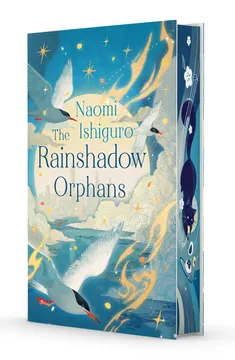


Plot Summary
The Ring in the Garden
Seventeen-year-old Toshiko Kawakami enters the Imperial Palace gardens with help from her siblings, Mei, a hacker, and Jun, their resourceful scout. Their target is Ken Saito, a Lucky Crows officer who murdered the aunt who raised them. Mei pushes Toshiko to steal Saito’s ring, which can unlock the gang’s private networks.
When the Crown Prince, Haru, catches her hiding, Toshiko invents a game that gets him to ask Saito for the ring. The boy succeeds, but the Emperor orders guards to arrest Toshiko. Cornered at the garden wall, she returns the ring, then tears Saito’s enormous pearl from its chain and escapes into the festival crowds. The theft puts her family in the Crows’ sights.
Toshiko begins by trying to prove she can be trusted with fieldwork, but the mission quickly becomes a collision between her fear of failure and her need to act against Saito. The trick with Haru is clever, but it also shows her instinct to treat danger as a problem she can improvise through. Her escape matters because it is not clean: she has failed to bring Mei the ring and has taken something whose purpose she does not understand. The family’s old grief has become an active risk. For Toshiko, courage means stepping out from hiding, though she has not yet learned what her choices will cost the people beside her.
A Pearl Takes Hold
At home, Jun makes pancakes while Mei examines the pearl, which resists every tool she tries. A black feather in Toshiko’s jacket warns them that the Crows may retaliate. Unable to sleep, Toshiko enters Mei’s lab and puts the pearl on its chain around her neck.
When she catches a falling camera-bot from across the room, she realizes the pearl has sharpened her speed and fighting skill, and lets her sense and redirect currents of air. Mei’s Birdcatcher database shows unusual Crows activity at the docks. Toshiko leaves a note for her siblings, takes knives and food, and heads out with Mochi the cat. She means to learn what the gang is doing before it can strike again.
The pearl does not give Toshiko an unrelated power; it magnifies what she has already cultivated through Hido training and physical confidence. That distinction makes the magic feel like an extension of character rather than a replacement for it. Yet the power’s immediate emotional appeal is also dangerous. After feeling helpless as a child when Reiko was killed, Toshiko reads new strength as permission to take control alone. Her decision to leave without waking Mei or Jun repeats the very isolation the family has tried to outgrow. The pearl offers agency, but it cannot teach her how to use agency responsibly.
The Squirrel in Haru’s Room
Haru spends the Turning Leaf night locked in his room as punishment for reaching toward Saito’s pearl. His mother, Emperor Asayo, treats his curiosity as weakness and dismisses his dead father as a failure. When a maple leaf taps his window, Haru answers it, and a glowing autumn-colored squirrel appears in his room. He names the creature Risu and welcomes it as a friend.
The next morning, Haru tells Kei, the servant who cares for him, what he saw. Kei explains that Sun Spirits are beings formed from Sola, the life force moving through nature, and that dragons are the most powerful among them. Haru’s ability to perceive them suggests a world far larger than the Palace’s controlled routines.
Haru’s first encounter with Risu is not simply a discovery of magic. It grows from a child’s attempt to make contact in a life organized around punishment and performance. His mother measures him against an ideal heir, while Risu responds to his loneliness without demanding usefulness. Kei gives Haru language for what he experienced, but does not flatten its mystery into a lesson. The scene establishes a contrast between authority that insists on control and a form of attention that allows another being to appear. Haru’s sensitivity, initially treated as childishness, becomes a way of noticing what political power has trained others to ignore.
Bluejay Lifts the Crate
At the docks, Theo, a young refugee from Eardland, struggles to carry the Lucky Crows’ sealed crates. Their contents give him a sickening hum, unlike any energy he has sensed before. The Santos brothers mock him, but when the Captain, Eleanor Minami, shoves a crate toward him, Theo instinctively uses his Gift to stop it in midair.
He then lifts another crate by guiding the energy in its wooden frame. The Captain knows he can speak Navishian and summons him to the Shadow Column. Theo has spent months hiding his abilities and living as a low-ranking Crow, but the mysterious cargo and the Captain’s attention threaten the safety of that disguise.
Theo’s reflexive rescue of himself is also a disclosure. He has survived by concealing what makes him unusual, yet the Gift emerges whenever danger leaves him no time to manage how others see him. His response to the crates anticipates the larger connection between his sensitivity and the strange mineral inside them. The Captain’s recruitment is not a straightforward opportunity: it is another powerful person deciding that Theo’s difference is useful. His longing to belong and his fear of being exposed pull in opposite directions, making his new status less a promotion than a tighter form of dependence.
The Warehouse’s Sleeping Cargo
Following the Birdcatcher’s alerts, Toshiko slips into the docks warehouse and overhears two Crows discussing a powerful mineral brought from Muralania. A scientist worries that storing so much of it together is unsafe. When she is spotted, Toshiko allows the Crows to capture her and take her to Saito’s gambling den, hoping to learn more.
She burns the black feather she carried, then fights Saito and his followers with her knives and the pearl’s enhanced speed. Saito wounds her, but she escapes through the Crescent’s fences with Mochi. In the struggle, she learns he recognizes her from the night Reiko was killed. His lack of remorse hardens her anger, but she is now injured and the gang knows who she is.
Toshiko’s choice to let herself be captured is a calculated risk, but the encounter with Saito makes clear how little control she actually has over the terms of that risk. The pearl can make her faster, not invulnerable, and her body records the cost of confronting the man who shaped her childhood. Saito’s memory of Reiko does not offer recognition or repair; he remembers the event without granting it moral weight. That distinction wounds Toshiko more deeply than simple forgetfulness might. She reaches the Crescent carrying both evidence of the Crows’ operation and a sharper question: whether revenge should mean hurting Saito or changing the system that keeps replacing him.
Mailee’s Bigger Board
In the Crescent, Toshiko finds Mailee, the healer who once cared for Jun. Mailee treats her shoulder and learns that she went after Saito for revenge. Instead of condemning her, Mailee asks what winning would actually mean.
She also reports that the Crows have been measuring land and taking soil samples, while Crescent residents have begun disappearing and sometimes return unable to remember what happened. Toshiko leaves the café thinking beyond Saito’s personal violence.
At Rainshadow University, she watches the city’s noon broadcast and sees the Emperor announce ALISE, a new kind of learning service-bot powered by a recently acquired mineral. The promise of a huge factory makes Toshiko wonder whether the Crescent is the land the Crows intend to clear.
Mailee’s counsel changes the scale of Toshiko’s thinking without dismissing her anger. Revenge, as Mailee frames it, is not a matching act of violence but a strategic interruption of what the opponent wants. Her observations connect the gang’s land surveys to the disappearances and the sealed mineral, giving Toshiko evidence to assemble rather than a target to strike blindly. The University broadcast deepens that connection: the city presents technological progress as public benefit while leaving its costs vague. Toshiko’s longing to belong among the students now collides with a sharper understanding that the polished city may be built by dispossessing the people she left behind.
The Stolen Book Stranger
At Golden Moon Square, Toshiko notices a blue-eyed young man slipping into the University library during the Emperor’s broadcast. After he emerges with a stolen book, she confronts him.
He is Theo, an outsider who refuses to behave like a compliant citizen, though he warns her that the Crows and Imperial Guard punish rule-breaking. The broadcast has announced ALISE, humanlike bots meant to replace workers and serve citizens, but the Emperor still leaves the factory’s location unclear.
Toshiko connects the proposed scale of the LIFE-Hub with Mailee’s report about the Crescent. Her siblings agree that the ore warehouse and land surveys may be part of one plan. They decide to attend the Palace launch party in disguise to learn where the factory will be built.
The first meeting between Toshiko and Theo is shaped by mutual recognition without trust. Each sees the other violating Rainshadow City’s rules, but neither knows whether this resemblance signals solidarity or danger. Their encounter is brief because both have learned that visibility can be costly. The ALISE announcement places that fragile human contact inside a larger political argument: the Emperor describes artificial labor as liberation for citizens while openly treating foreign and undocumented workers as disposable. Toshiko’s suspicion that the Crescent is the factory site turns technological novelty into a land question. Progress is no longer an abstract promise; it may require removing the only home many people have.
The Sensei’s Hourglass
While the Kawakamis prepare disguises for the Palace party, Theo meets the Sensei, the hidden leader of the Lucky Crows, and Ken Saito. The Sensei identifies the pearl as a stolen dragon artifact and orders Theo to befriend the Kawakamis, recover it, and kill them with an explosive.
Theo refuses to accept that he is a killer, but the Sensei knows he caused a death in Eardland and tempts him with dragon tears that could erase one person’s memories. Saito implants an Hourglass Tracker in Theo’s neck. It will poison him after a week, or sooner if it detects him revealing his mission. Theo leaves with a deadline, a threat, and a weapon, forced to approach people he has been ordered to betray.
The Sensei turns Theo’s shame into leverage by offering not forgiveness but erasure. The promised dragon tears appeal to his wish to undo the harm he caused, while the tracker makes refusal physically dangerous. This is coercion tailored to a person who already believes he has forfeited the right to choose freely. Theo’s assignment also complicates the Kawakamis’ resistance: their possible ally is being pushed toward them by an enemy who knows their vulnerabilities. The scene establishes the book’s recurring distinction between choice and mere survival. Theo can still make decisions, but the Sensei has rigged their consequences to make obedience feel like the only livable option.
Rain at the Palace Party
At the ALISE launch, Toshiko and Jun attend as a Vilmian heiress and her uncle, while Mei enters disguised as a steward with Mochi hidden in a laundry bag. Toshiko and Jun overhear Crows discussing a barge carrying people from the Crescent to poisoned Hanasaki Island. Theo, now pretending to be a guest, dances with Toshiko and senses the pearl beneath her disguise.
His attempt to summon a delicate shower brings heavy rain instead, washing away her make-up. Haru uses the confusion to steal the pearl from her. The Emperor’s humanlike bots identify Mei, who damages one with her scanner before guards arrest her. Jun is also taken. Toshiko slips into the Palace, where she is caught and brought before the Emperor.
The party’s glittering presentation fractures under the pressure of what its guests overhear and what its technology can detect. The ALISEs are not merely decorative symbols of a future workforce; one identifies a fugitive, and Mei’s attempt to disable it produces signs of pain that unsettle her certainty about where machinery ends and personhood begins. Theo’s rain is meant as a gift, but its force exposes Toshiko, demonstrating how good intentions can still create danger when power is poorly understood. Haru’s theft is a child’s attempt to reclaim a game, yet it moves the pearl into the hands of someone whose choices now affect several adults and two trapped siblings.
The Palace Turns Hostile
In a soundproof room, Saito and his granddaughter Hana bind Haru and reveal a plan to kill the Emperor and make him a controllable successor. Shadow creatures loosen his ropes, letting him escape. Meanwhile, the injured Emperor has Toshiko searched and offers her citizenship if she gives up the pearl, but Toshiko refuses to trade her siblings for safety or let the Crescent be cleared.
When the Emperor threatens torture, a plant pot knocks down a guard, and Toshiko escapes. Theo finds her and leads her through the Palace. In a hidden cupboard, he shows her the Gift, which lets him manipulate energy. Toshiko tells him she is Toshiko, not the Vilmian heiress, and asks him to help reach the Crescent. He agrees, concealing his real mission.
The Palace’s two crises reveal different failures of authority. The Emperor’s offer treats belonging as a private favor she can grant to one obedient prisoner, while her proposed torture exposes the violence beneath that favor. Haru, meanwhile, discovers that Saito intends to turn his title into a puppet’s costume. His escape depends on the same invisible spirits his mother’s world excludes. Theo’s disclosure of the Gift creates a fragile intimacy with Toshiko, but his concealment of the mission keeps that trust structurally unequal. Each character is seeking refuge from a system that claims to protect them, yet the people most capable of helping one another are still working with incomplete knowledge.
The Pearl Leaves Again
At Mailee’s café, Toshiko and Theo join Ren’s small resistance as the group learns the Crows have already emptied the Crescent’s southern corner. Hundreds of residents have been forced onto a barge for Hanasaki Island, and more barges wait offshore.
Haru arrives with Kei and describes Saito’s attempted coup. The resistance prepares to defend the remaining homes, though most volunteers lack weapons or training. Toshiko gives the pearl to Theo, believing it may strengthen his Gift.
He recoils from the responsibility, takes the pearl, and runs into the night. His departure leaves the resistance short of the one power that might change the odds. Haru dreams of the dragon family and recognizes Saito as the man who stole the young dragon Kiri’s pearl.
The resistance forms from people who have been taught, by repeated dispossession, to expect that no one will help them. Toshiko’s decision to give Theo the pearl is an act of trust, but it is also a demand that he face the power he has spent years fearing. His flight exposes the difference between admiring courage and accepting its cost. Haru’s dream supplies a new moral frame for the pearl: it is not simply an instrument that grants abilities, but something taken from a living being and needed by a child. The object’s history now binds the Crescent’s political struggle to a family separated across the sea.
The Crescent Under Fire
Mei hacks into the Crows’ communications and locks their ore warehouse, but the Imperial Guard’s assault on that site pushes the gang to attack the Crescent before sunset. Toshiko trains volunteers when two Crows ambush the group; one wounds a fighter, forcing her to send a warning to Ren.
The battle spreads through burning homes. Jun tends the injured and is captured by the Santos brothers, while Ava leads the Jetsam against the gang and is badly wounded. Her effort frees some prisoners before other Crows retake them.
Haru rides Hiranaya, the dragon he saw in his dreams, over the fighting. He asks her to protect the Crescent’s people. As Hiranaya’s lightning strikes the Crows, the defenders regain hope, though the battle remains deadly and disordered.
The attack exposes the limits of preparation: Mei’s technical sabotage buys leverage but also accelerates the confrontation, while Toshiko’s brief training cannot turn civilians into a prepared army overnight. The resistance’s strength lies less in military parity than in its ability to regroup around mutual aid. Jun helps the wounded, Ava risks herself for prisoners, and Ren continues directing the defense. Haru’s choice to ride Hiranaya makes him responsible for violence as well as rescue. Lightning can change the balance, but it does not distinguish neatly between justice and harm; Haru must confront the fact that protecting one community can require actions that leave bodies on the ground.
Theo Faces the Sensei
As the battle rages, Toshiko faces Saito without the pearl. He corners her and threatens her until she reveals that Theo has taken it and lives in the Crescent. Elsewhere, Theo gives the pearl to the Sensei, hoping to save his own life without killing the Kawakamis. She keeps the tracker active and explains that the pearl can help Saito command living bots.
When Theo attacks, she restrains him with Sola, then summons paper birds and a humanlike Yurei bot to strangle him. Theo uses the Gift to break the restraints, repels the birds, and unravels the Sensei’s cardigan pocket to free the pearl. He escapes with it, but she activates the tracker’s poison. His survival is now uncertain, and he has finally chosen to oppose her openly.
Theo’s return to the Sensei is not a simple surrender. He is trying to preserve his life while refusing the part of the bargain that would make him a murderer. That compromise cannot hold: the Sensei sees the pearl as a tool for command, and Theo sees the consequences of his compliance in the very beings she intends to control. His improvised escape demonstrates that the Gift is not only force; careful attention to how energy flows lets him redirect power used against him. Yet he wins no freedom from the tracker. The scene makes his ethical turn costly and incomplete, leaving him with a real choice but no safe option.
Two Leaders Fall
The Emperor arrives with the Imperial Army and throws her sword at Saito, wounding him and freeing Haru from his grasp. Saito later attacks Hiranaya with a dragon-poisoned knife and drags Haru into the fight; Haru uses Kei’s pocketknife to cut Saito’s throat. With the Crows wavering, the Emperor orders her archers to fire, then falls when Mei shoots an arrow into her throat.
Her horse crushes her as it panics. General Mori and the soldiers bow to Haru as Emperor. Haru orders them to drive the Crows away, not kill them, while Ren rallies the Crescent’s defenders. The Crows are forced back, but the day’s victory leaves the community with casualties, wounded leaders, and an Empire suddenly in a child’s hands.
The deaths of Saito and Asayo do not resolve the conflict by themselves; they remove the figures through whom violence had been organized. Haru’s killing of Saito is self-defense, but it also ends his childhood innocence about authority and its consequences. Mei’s arrow is more deliberate: she names the accumulated exclusions and grief behind her act, turning private loss into political judgment. Haru’s first order as Emperor, not to kill the Crows unnecessarily, distinguishes his rule from the revenge that has shaped the battle. Yet the scene refuses to make this choice clean. He inherits power through bloodshed and must govern people who have every reason to distrust it.
The Barge Comes Home
After the Crows retreat, the café becomes a field hospital. Jun uses the pearl to heal critical wounds, while Toshiko and Theo assist with the injured. Mei takes control of the remaining barges’ navigation systems, but cannot reach the first vessel already headed toward Hanasaki Island. Theo returns with the pearl and tries to turn that barge through wind and tide.
His effort falters until Haru, Hiranaya, Toshiko, Jun, Kei, and the Keeper’s Children join hands with the Sun Spirits, sharing the strain. Together they turn the vessel toward shore. The prisoners overthrow the Crows aboard, and Mailee returns among them. Jun then heals Hiranaya enough to travel. He gives the pearl back, and she departs for Muralania to reunite with Kiri.
The rescue succeeds through distributed effort rather than a single hero’s mastery. Theo’s Gift nearly sinks the barge when he tries to force the sea, but the chain of people and spirits helps him understand power as cooperation, not domination. The scene gathers the novel’s forms of care into one action: Mei’s hacking, Jun’s healing, Toshiko’s trust, Haru’s spiritual perception, and the prisoners’ mutiny all matter. Returning the pearl to Hiranaya corrects an earlier theft, but it also means the humans must release a source of power they could have kept using. Their survival depends on recognizing that not every valuable thing belongs to them.
A Future Beyond the River
Haru rejects Hiranaya’s offer to use her tears to erase the battle from his memory, choosing to carry what he has seen into his rule. He plans a Parliament and asks the Kawakamis to travel among the islands as ambassadors.
Mei stays to lead the Crescent’s rebuilding, while Toshiko and Jun consider the voyage, including a visit to Muralania. The family honors Reiko, the Keeper, and the Crescent’s spirits together. Meanwhile, the Sensei finds Theo on the Shadow Column steps.
She reveals that the missing Crescent residents supplied cells for her organic Yurei soldiers and offers him an antidote in exchange for helping her seize the Palace’s other artifacts and gather the bots on poisoned Hanasaki Island. Theo tosses a coin to decide, but lunges to save the vial when it falls. His next choice remains unresolved.
The ending offers repair without pretending that grief can be edited away. Haru refuses magical forgetting because the painful knowledge of the Crescent’s history is part of what he must govern. The Kawakamis’ possible voyage extends their family’s work beyond the city, while Mei’s decision to remain makes rebuilding an equally consequential form of action. The Sensei’s return prevents victory from becoming closure. Her revelation that vanished residents were used to create organic soldiers recasts the earlier disappearances as deliberate extraction, and Theo’s response remains morally unsettled. He has opposed her, yet still longs to live. The book closes not with a solved choice but with the pressure of choosing again.
Analysis
The novel makes citizenship a material question: who is allowed a home, a medical treatment, a job, or the right to remain on the island? The Keeper’s Crescent is not merely an excluded population waiting for rescue. Its residents have built institutions of their own, from Mailee’s clinic and café to Ren’s resistance, and these practices of care give the community a history and political identity the Empire refuses to recognize. The plot’s central struggle is therefore not simply to defeat Saito or prevent one factory. It is to challenge a system that converts people into labor, land into commodity, and life into a resource to be engineered.
Magic sharpens that argument rather than escaping it. The pearl amplifies talents already present, while Sola makes interdependence perceptible. When Theo tries to force the sea, he nearly sinks the barge; when the people and spirits share the effort, they bring it home. This contrast does not claim that cooperation removes conflict. The battle leaves deaths, lasting injuries, and political uncertainty. Instead, it suggests that power becomes more sustainable when it is distributed and answerable to those it affects.
The characters’ ethical choices remain deliberately imperfect. Toshiko learns that revenge can mean changing the conditions that made Reiko vulnerable, but her trust in Theo exposes her to betrayal. Haru takes authority before he is ready and refuses to erase the memories that might teach him how to rule differently. Mei acts against the Emperor and then turns toward rebuilding, while Jun’s healing is powerful but finite. Theo’s final bargain with the Sensei keeps the ending open: he may want to live, yet survival could pull him back toward the machinery he has opposed. Hope here is not a clean victory. It is the difficult work of keeping choices alive after inherited systems have made nearly every choice dangerous.
Review Summary
Reviews for The Rainshadow Orphans are mixed, averaging 3.54/5. Positive readers praise its whimsical world-building, found-family themes, and Japanese-inspired magic blended with cyberpunk elements. Critics frequently cite slow pacing, excessive info-dumping, and a juvenile YA tone despite adult marketing. Many note the 640-page length feels bloated for a two-day story. Multiple reviewers DNF'd due to flat characters, choppy prose, and too many POV switches. The Studio Ghibli comparison drew both agreement and disappointment, with some feeling the whimsical elements were overshadowed by political intrigue.
Characters
Toshiko Kawakami
The daring field sisterToshiko is the youngest of the Kawakami siblings, a skilled climber and Hido-trained fighter raised by Reiko in the Keeper’s Crescent. She is loyal, impulsive, and hungry to prove that she can protect her family rather than remain the child they must protect. Her courage often appears first as action, before she has fully measured the consequences. That instinct makes her an effective scout, but it can also draw others into danger. Toshiko is especially sensitive to exclusion because she has long wanted access to the education and ease enjoyed by Rainshadow City’s citizens. She is driven by family loyalty and a growing desire to make the Crescent safer for everyone who calls it home.
Mei Kawakami
The brilliant hackerMei is Toshiko’s older sister in every way that matters, a gifted hacker who prefers her technology lab to dangerous fieldwork. She is sharp-tongued, theatrical, and fiercely protective, often disguising anxiety beneath jokes, immaculate styling, and a formidable confidence. Her technical skill gives the siblings access to information and systems that exclude them, while her affection for Mochi and her family reveals a softer loyalty beneath the bravado. Mei tends to see problems as systems that can be cracked, which makes her powerful but sometimes impatient with uncertainty. She is driven by a refusal to let the city’s rules define what her family can do.
Jun Kawakami
The family’s healerJun is the Kawakamis’ adopted brother, a careful cook, gifted observer, and patient maker of disguises. He was once helped through illness by Mailee, and that experience shaped his instinct to notice what other people need before they ask. His quietness is not passivity: Jun gathers information through conversation, improvises under pressure, and tries to keep his sisters safe without demanding recognition. He is also a talented healer whose compassion is grounded in practical attention to pain. Family loyalty is central to him, but he must balance his protective instincts with the wider obligations that arise when others rely on him.
Theo
The exiled energy readerTheo is a refugee from Eardland who lives among the undocumented people of the Keeper’s Crescent and hides an ability he calls the Gift. He can sense and redirect the energy moving through objects and the natural world. Curious and observant, he is also guarded, shaped by the knowledge that revealing himself once brought violence and exile. His memories of Susanna and the death he caused make him vulnerable to anyone offering a way to undo the past. Theo wants to survive, but he is not content with survival alone; he is drawn to questions about how his abilities might be used and what kind of person he can still become.
Haru Soramoto
The perceptive young heirHaru is the ten-year-old Crown Prince of Rainshadow City, raised inside the Palace under his mother’s demanding standards. He is lonely, curious, and unusually perceptive about the emotional atmosphere of people and places. Stories, games, and his friendship with Kei offer relief from a life in which he is expected to perform maturity rather than grow into it. Haru’s ability to see Sun Spirits emerges from this attentiveness, connecting his private sensitivity to a larger world. He wants to please his mother, but also has a strong instinct for kindness and fairness. His central challenge is learning what responsible authority looks like without repeating the control he has known.
The Sensei
The hidden gang leaderKnown to her granddaughter as Eleanor Minami, the Sensei leads the Lucky Crows from behind the polished machinery of Rainshadow City. She is an elderly former teacher of Sola, outwardly gentle and grandmotherly, but highly strategic and willing to turn people into instruments of her plans. Her expertise in energy manipulation gives her a confidence that makes her underestimate the moral resistance of those she considers manageable. She values talent, curiosity, and loyalty, but largely as resources to be directed. Her interest in the city’s new technologies and the possibilities beyond them reveals an ambition larger than the Crows’ ordinary criminal empire.
Ken Saito
The Crows’ feared enforcerKen Saito is a senior Lucky Crows officer, once known in the Crescent as the Captain. His polished suits and conspicuous jewelry sit uneasily beside the brutality with which he enforces the gang’s authority. He is controlled, observant, and practiced at making violence feel like routine business. Saito’s relationship with the Sensei is built on loyalty and dependence, while his history with Reiko and the Kawakamis ties his power to the family’s deepest wound. The dragon pearl is important to him both as an instrument of influence and as a way to suppress the memories that trouble him.
Emperor Asayo Soramoto
The polished autocratAsayo Soramoto rules the Rainshadow Archipelago with a carefully managed public image and a firm belief in centralized control. She presents herself as a modernizer, especially through her plans for the LIFE-Hub, and expects her son to embody the legacy she is building. Her polish conceals a trained fighter and a ruler who regards people beyond the circle of citizenship as expendable. Asayo’s relationship with Haru is marked by high expectations and little emotional openness. She is driven by a desire to secure the Empire’s future and prove herself worthy of the authority inherited from her father, even when her methods deepen the injustices she claims to solve.
Kei
Haru’s trusted caretakerKei is the Palace servant who has become Haru’s closest companion and guide. She enjoys games and stories, treats his questions seriously, and gives him a source of warmth amid the Palace’s strict routines. Originally from Muralania, she carries knowledge of Sun Spirits and dragons that the Rainshadow establishment has largely forgotten. Kei is practical and affectionate, but her loyalty is not merely professional; she is willing to risk her position to protect Haru. Her bond with Ren adds a private history and an enduring connection to the Crescent.
Ren
The Crescent’s organizerRen is a Muralanian living in the Keeper’s Crescent and one of the community’s central organizers. He is serious, thoughtful, and committed to protecting people who have few reliable sources of safety. His relationship with Kei is affectionate and rooted in a shared past, while his leadership is marked by an awareness of how vulnerable the Crescent’s residents are. Ren does not mistake courage for military strength; he knows that the people he asks to resist are largely civilians. He is driven by the conviction that a community can defend itself without becoming another version of the powers threatening it.
Mailee
The Crescent’s healerMailee is a former nurse who became the Keeper’s Crescent’s most dependable healer and the proprietor of its welcoming café. She treats people according to need rather than their ability to pay, and refuses to rely on the addictive painkiller sold by the Crows. She once helped Jun recover from illness and remains a trusted elder to the Kawakamis. Mailee is blunt without being cruel, and her experience makes her a practical strategist as well as a caregiver. She understands that survival is not the same as victory and pushes younger people to define what a just outcome would actually require.
Auntie Reiko
The siblings’ chosen parentReiko adopted Toshiko, Mei, and Jun in the Keeper’s Crescent and raised them as a family despite their different histories. She taught them through everyday lessons, stories, and the idea that they could choose how to live rather than simply be carried by circumstance. Her warmth and firmness remain central to the siblings’ sense of identity. Reiko is remembered through the family’s shared practices, especially their belief that they must protect one another. Her legacy motivates the Kawakamis to ask whether protecting their own family can also mean taking responsibility for a wider community.
Hiranaya
The turquoise dragonHiranaya is a powerful dragon from Muralania and the mother of Kiri. As a Sun Spirit, she can channel Sola through the pearl at her throat and command forces of air, water, and lightning. Her great strength is paired with a strong attachment to her child and a capacity for patience with humans who have harmed her. Hiranaya’s arrival links the Crescent’s immediate struggle to a much older world of spirits and dragons. She is formidable without being simply a weapon; her choices reflect care, grief, and responsibility for the beings who depend on her.
Kiri
The young dragonKiri is Hiranaya’s young dragon child, whose pearl is taken from Muralania. Haru encounters him through dreams and senses his vulnerability beneath his vivid scales and large, bright eyes. Kiri’s separation from his mother gives the pearl a personal history beyond its usefulness to humans. He represents a life directly affected by the same appetite for resources that drives the Empire and the Crows.
Hana Minami
The Sensei’s capable granddaughterHana is the Sensei’s granddaughter and a high-ranking operative within the Lucky Crows. She is disciplined, self-assured, and physically skilled, with a reputation for handling difficult assignments. Her dark glasses and composed manner make her hard to read, even when she is carrying out dangerous work. Hana’s relationship with her grandmother combines personal affection with professional loyalty. She is accustomed to acting decisively within the Sensei’s plans and rarely reveals what she thinks beyond the demands of the moment.
Ava
The Jetsam fighterAva is a former Lucky Crows member who returned to the Crescent and became part of the loose community called the Jetsam. Her gang tattoos mark a past that many residents distrust, while her fighting skill makes her valuable in a crisis. Ava is direct, proud, and unwilling to pretend that the Crescent’s residents have many safe choices. She knows the Crows from the inside and understands the danger of opposing them. Her offer to help the resistance puts her between two communities that have reason to doubt her.
General Mori
The cautious Imperial commanderGeneral Mori is a senior Imperial Guard officer who has long been close enough to the Palace to know Haru as a child. He is measured and concerned about the lives of his soldiers, often questioning the Emperor’s appetite for force even when he cannot safely oppose her outright. Mori’s professionalism is tempered by compassion, and he is one of the few military figures who treats Haru as a person rather than merely an heir. He represents the possibility that institutions can contain people with different moral judgments, even when the institution itself is compromised.
Hiroto and Daichi Santos
The ambitious Crow brothersHiroto and Daichi Santos are brothers and low-ranking members of the Lucky Crows, both shaped by the loss and displacement connected to Hanasaki Island. Hiroto is more reserved and capable of hesitation, while Daichi is more openly eager to impress the gang and advance. Their rivalry and shared history complicate the easy assumption that every Crow is equally committed to cruelty. They are outsiders on Rainshadow Island who have chosen a dangerous route toward security and status.
Risu
Haru’s golden spirit friendRisu is a small Sun Spirit who appears to Haru as a vivid, autumn-colored squirrel with golden eyes. He offers companionship when Haru is isolated and later guides him toward someone he trusts. Risu is playful, watchful, and tied to a particular place in the Palace gardens. His presence helps Haru understand that life and personality exist beyond the human systems that govern the city.
Rei
The living Yurei prototypeRei is an early Yurei, an organic body animated through Sola and designed by the Sensei’s scientists. She has humanlike features and a capacity for expression that unsettles people who encounter her as a machine. Her existence raises difficult questions about how personhood is recognized, especially when someone has been created for another person’s purpose. Rei is new to the world and eager to understand it, but her apparent innocence does not erase the coercive process that made her.
Plot Devices
The Dragon Pearl
A stolen current of powerThe pearl belongs to Kiri, Hiranaya’s young dragon child, and can conduct Sola, the life force flowing through the natural world. In a human bearer, it amplifies existing strengths rather than granting the same ability to everyone: Toshiko’s movement and fighting, Jun’s healing, and Haru’s perception of Sun Spirits all become more powerful. The Lucky Crows seek it for their plans, while the Kawakamis initially see it as a means of survival and resistance. Its history as a theft makes its eventual return morally important. The pearl also exposes the difference between using power to dominate and entering a shared flow of energy.
Sola and Sun Spirits
The world’s living currentSola is the energy that animates natural life and moves through people, animals, plants, air, water, and stone. Most people cannot perceive it directly, but Theo senses its vibrations, Haru sees the Sun Spirits formed from it, and the dragon pearl helps others channel it. The Gift is Theo’s natural capacity to read and influence these flows. Sola can support healing, movement, weather, and communication, but it is not a simple instrument of control. The story’s most successful uses come when people attend to its patterns and work together, rather than trying to force it into obedience.
The Hourglass Tracker
A poison-backed leashThe Sensei implants a small tracker beneath Theo’s skin to keep him under control during his mission against the Kawakamis. It monitors his location and is designed to release poison after a set period, or earlier if it detects words that suggest he is revealing his orders. The device turns Theo’s fear of death and his guilt about the past into tools of coercion. Even when he disobeys the Sensei, the threat remains active and limits his ability to seek help. It makes his acts of resistance costly, while preserving an unresolved question about whether he can ever become free of her influence.
The LIFE-Hub
A factory built on removalThe Emperor’s LIFE-Hub is presented as a way to manufacture ALISE bots that can learn, perform labor, and serve citizens. Its operation depends on draconic ore from Muralania, a mineral rich in Sola. The promised factory requires vast land, and the Crescent’s surveys and forced removals reveal who is expected to pay for it. The Sensei’s competing plans expand the danger from service-bots to an army of living machines. The LIFE-Hub brings technology, labor exploitation, land rights, and political power into the same conflict, making its location and control central to the resistance.
The Birdcatcher
A map of hidden activityMei’s Birdcatcher database tracks hacked Crows’ Comms-Discs and scans the City Web for references to the gang. Its map turns scattered movements and alerts into a readable picture of activity across Rainshadow City. It directs Toshiko to the docks, where the Crows are unloading their mysterious cargo, and later supports the siblings’ efforts to understand the gang’s reach. The tool represents Mei’s characteristic method: she cannot see every danger directly, but she can build a system that makes patterns visible. It also has limits, since Saito’s movements remain difficult to trace and networks can be disrupted.
Download PDF
Download EPUB
.epub digital book format is ideal for reading ebooks on phones, tablets, and e-readers.








