

Plot Summary
Edinburgh’s False Stone
Kierse McKenna, a young thief with Fae blood, enters Edinburgh’s South Bridge vaults with Graves, the powerful New York warlock she loves. They hope to steal the Stone of Fal, the last of four Celtic artifacts they need, while Graves’s team distracts the local warlock. Inside the vault, Kierse finds Lorcan Flynn, her Druid soulmate, holding what appears to be the stone.
Their argument exposes the old wound between Lorcan and Graves: once close as brothers, they became enemies after Graves killed Lorcan’s sister. Kierse takes the stone, only to discover it has no magic. The real Stone of Fal remains missing, and the counterfeit has brought her two rivals together without solving the binding Lorcan forced on her.
The false stone turns a familiar heist into a test of trust and agency. Kierse is not simply caught between two powerful men; she is trying to recover the means to undo a magical choice made without her consent. The counterfeit sharpens that frustration by making liberation seem tangible, then removing it from reach. Lorcan’s presence also complicates her hatred: he is both the person who violated her autonomy and the person whose magic is woven into her. The scene establishes the novel’s central conflict as a contest over who gets to define Kierse’s future.
Archie’s Golden Circle
When the Edinburgh warlock Archie Blair wakes, he catches Kierse, Graves, and Lorcan in his home and conjures three demons to kill them. Kierse’s Spear of Lugh helps her fight, but she is losing ground when instinct makes her stop time completely, a power Lorcan had sealed away. The pause lets her cripple one demon and gives her a chance to absorb Archie’s protective circle.
The magic overwhelms her, yet the circle collapses and Archie dies. Lorcan’s power-sharing has briefly restored Kierse’s abilities, including her control over absorption, but he shuts her down again as soon as the crisis passes. Graves now knows a wisp killed a warlock, a revelation that could expose Kierse to a lethal history of persecution.
Kierse’s victory is also an ethical shock. She saves herself by using a power she barely understands, and the result is a death she did not intend. The episode makes power feel inseparable from responsibility: skill cannot protect her from consequences when her abilities have been restricted and then abruptly amplified. Lorcan’s intervention confirms that he can help her, but his control over when she can access that help preserves the original violation. The scene therefore refuses an easy distinction between rescue and coercion. Both can arrive through the same bond, and Kierse must decide what to do with that fact.
Bram Knows Her Mother
Graves calls Bram, a Scottish monster hunter who once served as Kierse’s father Adair’s closest friend, to help conceal Archie’s body. Bram recognizes Kierse as Shannon and Adair’s daughter, then embraces her and recounts how the couple helped raise him. Kierse learns that her parents were loved, not the distant figures her damaged memories had suggested, and that Bram’s hunting clan had tried to protect their family from the Fae council and the Fae Killer.
She longs to visit her ancestral home, but the danger surrounding Archie’s death keeps her in Edinburgh. Bram offers to help with her search for her parents’ killer. Their reunion gives Kierse a living connection to the family history she has spent years trying to recover.
Bram’s recognition gives Kierse more than useful information: it returns her parents to her as people with friendships, loyalties, and a place in the world. That inheritance arrives beside grief, because she can imagine the childhood she never had but cannot reclaim it. Her decision to stay on the hunt rather than visit the McKenna lands shows how survival has trained her to postpone comfort until a threat is handled. Bram’s offer matters precisely because it is not a solution. It gives her a relationship that can endure beyond the immediate crime scene.
Kingston Opens London
Graves’s old mentor, Kingston, arrives in Edinburgh and insists on taking him and Kierse through a portal to London. There, he offers to teach Kierse portal magic, one of the abilities the cauldron gave her outside Lorcan’s binding. His lessons begin with city walks and visualization, though Kierse can manage only a flickering doorway.
Graves trusts Kingston enough to reveal that Kierse has a second ability, while still concealing that she is a wisp. After they return to New York, Kingston investigates Archie’s death and learns that the warlock’s magic was drained. He recognizes the signature of a wisp and suspects Graves has brought a supposedly extinct predator into his home, planting danger beneath the friendly lessons.
The London lessons make trust a practical risk rather than a private feeling. Graves lets another person train Kierse because her independence matters more than his instinct to guard her, yet the secret that makes that trust fragile remains hidden. Kingston’s hospitality is genuine enough to disarm her, but his investigation shows how quickly affection can become surveillance. Portaling also gives Kierse a new image of freedom: a door she can create herself. For now, it appears only in flashes, mirroring the larger question of whether she can make a choice that remains her own.
The Ash Door Appears
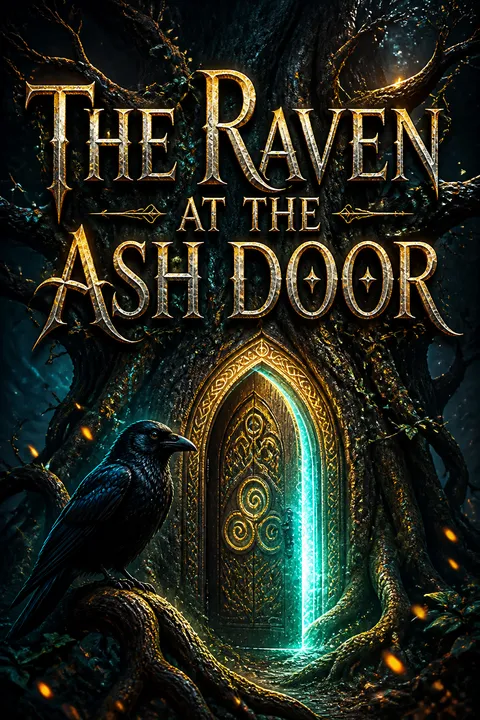
Back in New York, Kierse visits the Brooklyn headquarters of Niamh, the Druid who now holds Lorcan’s former throne, and her friends Gen and Ethan. They show her that their shared sacred tree has grown dramatically and now bears a door in its trunk. Kierse recognizes it as the Ash Door, though neither her friends nor Niamh can open it.
The door appeared around the time Kierse first managed to form a portal, but she cannot tell what caused it. Meanwhile, Lorcan’s bond intrudes on her time with Graves, and she hides how strongly it affects her. She begins searching for an explanation while the city grows more unstable, with the Men of Valor recruiting monsters and gaining influence over the subway system.
The Ash Door gives physical form to a problem Kierse has treated as private: her power is connected to other people and forces, not simply owned by her. It emerges from a triskel, a shared practice rooted in friendship, which contrasts with the imposed bond that governs her relationship with Lorcan. Yet the door stays shut, so connection alone does not equal access. The surrounding political unrest widens the stakes. Kierse’s struggle for control takes place in a city where monsters are also contesting who may move freely and who must submit to someone else’s rules.
Dallas Dies in Vegas
Laz and Schwartz identify Dallas Llewellyn, a warlock whose ability to locate magic users could lead them to the Fae Killer, the person responsible for Kierse’s parents’ deaths. Kierse and Graves infiltrate the Bellagio, but Dallas is already dead in her office, where incense and herbs have failed to hide the decay.
They find no phone, only a note linking her to Rosetta Davis, a Las Vegas witch. Rosetta admits Dallas suffered frightening gaps in memory and says her mentor was trying to help. A tarot reading for Graves points toward regret and the need to face the past. The investigation yields no killer, but Rosetta’s account suggests someone powerful has been manipulating Dallas’s mind.
Dallas’s death converts an investigation into a study of missing memory. The clues do not yet reveal who is responsible, but they make forgetting itself look engineered rather than incidental. That distinction matters to Kierse, whose own history was hidden by a spell and whose present is constrained by a bond. Graves’s tarot reading deepens his personal stakes without solving the case: his reflex is to read loss as proof that he deserves isolation. The chapter links their mysteries through the question of who controls another person’s inner life, and whether knowledge can repair harm once the truth arrives.
Kingston’s Name in Dallas’s Notes
Back in New York, Walter breaks into Dallas’s computer files while Laz and Schwartz review the Bellagio footage. Her notes describe a visitor who arrived repeatedly, left her frightened, and seemed connected to bloody memories of killing Fae. The visitor is Kingston. The timing of his visits matches Dallas’s memory lapses, suggesting he used persuasion to erase what she remembered.
Graves accepts that the evidence points to his mentor, even though Kingston trained him and has been one of his oldest companions. Dallas’s final notes identify Kingston as the Fae Killer. Kierse and Graves decide not to confront him immediately. They need to protect Kierse, understand what Kingston knows, and prepare for his arrival at the coming convocation.
The evidence makes intimacy an obstacle to clear judgment. Graves has to treat a mentor as a suspect, while Kierse must believe that the trusted teacher who helped her in London may be dangerous. Dallas’s notes also give memory a political dimension: erasure protected a killer by disabling his witness. The couple’s decision to delay confrontation is not indecision but a recognition that emotional certainty is not the same as strategic readiness. Their plan depends on resources, allies, and a fuller account of what happened, all of which complicate the simple desire to punish the person responsible.
A Deal Beneath Visage
Gregory Amberdash invites Kierse, but not Graves, to a gala at his headquarters in the old Visage building. To get Graves inside, he negotiates with vampire leaders Reyna and Beckham Anderson, whose family once fought the Syndicate and has history with him. Graves offers a rare potion in exchange for access to Visage’s sealed tunnels.
Reyna accepts, while Beckham agrees to stand aside. Their daughter Lyra helps arrange the meeting despite her friction with Alexander Batiste, known as Quint, the Syndicate heir. The bargain gives the team a route into the building and reveals how old alliances still govern the city. Kierse also receives an invitation that suggests Amberdash wants her personally.
The Anderson meeting reveals that cooperation in this world is built from debts, not sudden reconciliation. Graves can secure passage because he knows what others need, but he also recognizes that his past behavior has made every offer suspect. Reyna’s willingness to negotiate creates a narrow opening, while Beckham’s protectiveness shows how political conflict becomes familial when Lyra is drawn into danger. The scene broadens the story beyond the love triangle: the same city that constrains Kierse’s freedom is held together by bargains among powerful groups, and every alliance carries its own private history.
The Amulet Breaks
At Amberdash’s gala, a hidden magical dampener suppresses Kierse’s restored powers and prevents monsters from transforming. She and Lorcan recognize several enemies, including Nova, who killed Kierse’s friend Nate, and Jason, her former abusive mentor. While Lorcan watches the party, Kierse slips into Amberdash’s office and steals his ledger.
She is nearly caught, but portals out, draining her magic and collapsing. Amberdash then publicly exposes Graves as an uninvited guest and stages a beating with trolls, a goblin, a shifter, and Nova. Kierse tears the amulet from Amberdash’s neck and smashes it. Transformations return and Graves can use magic again, but the shock leaves Kierse powerless, while the stone remains with Amberdash.
The gala turns the city’s political factions into a literal audience for violence. Amberdash wants to demonstrate that he can dictate the rules, and Graves’s attackers become a spectacle meant to make resistance look futile. Kierse’s destruction of the amulet interrupts that display, but it costs her the very powers she has fought to reclaim. Her action is neither a clean victory nor a failed one: it frees everyone else while leaving her exposed. The ledger, stolen during the chaos, offers a different kind of leverage, showing how information and force remain intertwined in a struggle for power.
Graves Sends Her Away
After Graves sees the bond’s intensity during their escape, he accuses Kierse of choosing Lorcan and orders her out of his brownstone. She insists that she loves Graves, but leaves anyway, hurt by his mistrust and by her own unwanted feelings for Lorcan. At the Brooklyn bank, she finds the Ash Door has opened into the tree’s trunk.
Though she cannot open it, touching the tree restores some magic. Gen and Niamh comfort her, and the friends attempt to rebuild their triskel connection. Kierse falters when power-sharing with Ethan recalls Lorcan’s training. The rejected bond, the damaged romance, and the door’s mysterious response now converge around her need to reclaim control.
The breakup exposes a painful asymmetry: Kierse is trying to manage a bond she did not choose, while Graves sees its effects and mistakes them for preference. His fear of repeating past harm turns into an accusation that wounds her more than the supernatural constraint itself. The Ash Door’s response offers no easy escape, but it does establish that Kierse’s own tree can restore her. Her attempt to reconnect with Gen and Ethan shows that intimacy is not inherently coercive. The emotional task is learning to distinguish bonds that sustain agency from bonds that replace it.
George in Sansara
When Graves goes alone to the Goblin Market to rescue George, Kierse joins him. They find the entrance to Sansara with help from the goblin Rio and discover George in a hidden room with Maya, Jason’s lieutenant. Maya says the sacred tree has bound Jason and the tree together, so killing him could destroy Sansara.
As Graves and Kierse leave with George, Jason arrives and shoots him. Kierse opens a portal to Vale’s home, where Vale uses his hidden healing magic to close the wound. Graves later apologizes for driving Kierse away and asks her to return. She accepts, and the reunited team prepares to steal the Stone of Fal and stop Kingston.
The rescue forces Kierse to hold two truths at once: Jason is dangerous, and the tree he has corrupted may still matter to people who depend on it. Maya’s loyalty to Sansara complicates any simple plan for revenge. George’s gunshot turns that moral debate into an immediate physical emergency, and Kierse’s portal is the difference between death and survival. Graves’s apology follows the rescue, not a sudden resolution of the bond. The scene restores their partnership because he acknowledges his harm and she chooses to return, while leaving their larger conflict unresolved.
The Team Holly Plan
Kierse and Graves assemble their allies for a plan to steal the stone during the Monster Treaty convocation. When the team is fired from its temporary jobs and their access collapses, Kierse proposes using the security response against itself: she will create a convincing threat, forcing delegates to evacuate while the stone is left unattended.
Lyra will carry it out in her oversized bag, and the others will cover the handoffs. Their preparation also includes Walter learning to hold a force field against Kierse’s portals, while Kierse practices persuasion. Bram joins them to confront the killer of his friends. The plan gives each ally a role and marks Graves’s shift from using people as tools to trusting them as a team.
The plan’s importance lies as much in its authorship as its mechanics. Kierse proposes the central tactic after the original arrangement fails, shifting from skilled operator to strategist. Graves accepts that contribution instead of reclaiming control, and the team’s varied abilities become mutually dependent rather than disposable. Walter’s training similarly turns self-doubt into a practical obstacle the group can address together. Yet the plan remains fragile: the people they are trying to outmaneuver know they are coming, and political distrust has already undermined their access. Collaboration here is meaningful precisely because it cannot guarantee safety.
Kingston’s Last Room
At the Morgan Library Halloween party, Graves lures Kingston into a hidden room with Kierse, Bram, and Walter positioned to block his escape. Graves uses a ruby charm to prevent Kingston from persuading the group, while Lorcan confronts him with the Sword of Truth. Kingston admits he began killing Fae after Saoirse, Lorcan’s wife, escaped his attempt to kill her; he then helped hunt her people to protect himself and his supremacy.
The sword confirms he has killed Fae. Lorcan beheads him, but Kingston’s lover Andrew escapes through a portal. Outside, Jason attacks Walter and flees. The group has killed a guilty man, but whether Kingston was the killer who murdered Kierse’s parents remains uncertain.
Kingston’s confession explains his violence without excusing it. He converts rejection and fear into a theory of hierarchy, then treats that theory as permission to destroy an entire people. The Sword of Truth establishes a crucial distinction between factual guilt and the group’s broader assumption: Kingston has killed Fae, but the wording does not prove he was responsible for the whole genocide. Lorcan’s revenge is personal and justified by his family’s loss, yet the escape of Andrew and the attack on Walter show that killing one perpetrator does not close the network of harm.
Jason’s Iron Cuffs
Jason lures Kierse outside the party, restrains her with enchanted iron cuffs, and takes her away in a van. The cuffs silence her magic and the bond, so she breaks her own thumb to force one hand free, only to be recaptured. Jason reveals that Amberdash supplied the cuffs and was meant to receive Kierse alive.
He also tells her Kingston was not the singular Fae Killer responsible for her parents’ deaths. As Jason boasts about his own plans, Kierse draws her father’s knife from her dress and kills him. Graves and Lorcan find her, and together they remove the cuffs. Their evidence points to Amberdash: daffodil markings link his wards to Dallas’s records, and a wraith’s feeding may explain her memory loss.
Kierse’s escape is a hard-won act of bodily agency. The iron does not merely restrain her; it cuts her off from every supernatural connection she has relied on, forcing her to use pain and physical ingenuity instead. Jason’s confession reorders the investigation at the worst possible moment, showing how easily a correct fact can sustain a false conclusion. Her decision to kill him ends a long history of abuse, but it does not bring uncomplicated relief. The clues that redirect suspicion toward Amberdash make survival only the beginning of a more dangerous reckoning.
Lorcan Takes the Stone
At the convocation, Kierse enters the Secretariat through a borrowed staff identity, slips through the vents, and reaches the assembly after security evacuates the delegates. She takes the Stone of Fal and passes it to Lyra, who carries it out. But Lorcan’s ally Maureen diverts the van and delivers the stone to him in Brooklyn, where he uses it to reclaim the Oak throne from Niamh.
Lorcan offers the stone to Kierse, who asks it to break their bond. It refuses, insisting that the bond feels right and that she must find another way to reclaim her power. With Graves beside her, Kierse turns instead to Nuala, her sacred tree, and draws power from their triskel.
The heist succeeds tactically and fails politically. Kierse outmaneuvers the assembly’s security, but Lorcan’s network turns her victory into a seizure of authority. The stone’s refusal is especially unsettling because it does not deny her pain; it simply privileges its own judgment about what feels right. That is the same logic that has underpinned Lorcan’s coercion, now spoken by an ancient authority. Kierse’s turn toward Nuala matters because it shifts the search for power away from an external artifact and toward a relationship she helped create with her friends.
Faerie Floods the Bank
Nuala answers Kierse through her triskel and directs her to open the Ash Door. The doorway reveals Faerie, the homeland of the Fae, and its magic pours into Kierse. She draws on it to break the bond, but the bond proves stronger than her control. The magic overwhelms her, roots Gen and Ethan to the floor, and throws the others across the bank.
Kierse begins to burn out. Lorcan takes some of the power through their connection, but Graves walks into the storm and closes the door himself. The surge drains him completely. Kierse falls, rushes to his body, and finds no pulse. She has failed to break the bond, and the man she loves has died saving her.
Faerie offers Kierse both belonging and an almost limitless resource, but the scene refuses to treat homecoming as a cure. The power she wants becomes dangerous when she tries to force a bond apart through sheer magnitude. Her triskel is a source of strength, yet her friends are also physically endangered by the scale of her choice. Graves’s sacrifice makes the conflict intimate and irreversible: he closes the door to save her, accepting the cost she could not bear to pay. The episode asks whether freedom pursued without limits can reproduce the very harm it seeks to escape.
The Geas Rewrites Them
Lorcan admits that his bond with Graves lets him restore the Holly King, but he refuses until Kierse pledges herself to Lorcan and forgets her relationship with Graves. Kierse binds the bargain to the Stone of Fal. Lorcan uses its power to revive Graves, and Kierse seals the geas with a kiss, losing her memories of loving Graves.
Reality reshapes around the promise: Kierse now sees Graves as an enemy, while Lorcan and Graves alone remember their former lives. In the closing interlude, Graves follows her to the convocation as the vote breaks the Monster Treaty, leaving the city on the brink of renewed conflict. He plans to find a way through the geas and win her back.
The ending turns a rescue into a moral and narrative trap. Kierse chooses the bargain freely, but the choice is made under impossible pressure: let Graves remain dead or surrender the relationship that gives her life meaning. The geas preserves his body by altering her memory, separating survival from recognition. Its force lies not only in supernatural compulsion but in the rewritten social world that makes the new version feel ordinary to Kierse. Graves’s final pursuit continues the book’s question about whether love can survive without memory, while the Treaty’s collapse widens private catastrophe into public danger.
Analysis
The novel makes consent its central political and romantic problem. Kierse lives under several systems that claim authority over her: a magical bond, a city divided by monster factions, a history that concealed her parents, and ancient artifacts that judge what she should want. Her strongest resistance is not a simple rejection of intimacy. She loves Graves, develops feelings for Lorcan, and relies on friends whose magic is shared. The distinction is whether connection preserves her ability to choose. The triskel offers reciprocity; the bond imposed by Lorcan turns care into control, even when the care is sincere.
The story also treats memory as a form of power. Graves can enter and erase minds, Dallas’s recollections are manipulated, and Kierse’s own history has been hidden from her. The late revelation about Amberdash shows how evidence can be accurate yet misleading: Kingston has killed Fae, but the group mistakes that truth for proof that he is the singular killer they seek. The distinction is costly, because revenge can reach a guilty person without reaching the full cause of harm.
Graves and Lorcan are not clean opposites. Both have committed violence, both mourn families, and both believe they are protecting Kierse. Their difference is not that one is free of control, but that Graves increasingly accepts her decisions while Lorcan continues to treat fate as authority. Yet Graves’s fear can still become accusation, and Kierse must challenge him as well as the more obvious antagonist. The ending refuses closure on both the intimate and civic scales. Kierse saves Graves by accepting a geas that erases their relationship from her memory, while the Monster Treaty breaks around them. Love survives as a commitment in Graves’s mind, but not as shared recognition. The final image is therefore not a recovered happily-ever-after. It is a test of whether care can become ethical when one person remembers what the other cannot, and whether a society can survive after its fragile promise of coexistence has failed.
Review Summary
The Raven at the Ash Door receives mostly positive reviews, with readers praising the heists, found family dynamics, Graves' character development, and the sizzling romance. However, many are frustrated by the series extension beyond a trilogy, feeling the plot is being unnecessarily dragged out. Lorcan's manipulative behavior and disregard for Kierse's choices provokes strong reader annoyance. The cliffhanger ending — involving a memory loss trope — divided readers, with some feeling shocked and desperate for the next book, while others found it predictable or lazy.
Characters
Kierse McKenna
The defiant last wispKierse is a gifted thief whose Fae heritage gives her dangerous abilities, including absorbing magic and manipulating time. Raised without knowledge of her family, she learned to survive through quick judgment, audacity, and an instinct for escape. She distrusts authority because people who claimed to protect her have repeatedly tried to control her. Her relationship with Graves offers chosen intimacy, while her bond with Lorcan forces her to distinguish desire from consent. Kierse’s humor and appetite for risk conceal grief and a deep fear of being left alone. She is driven by loyalty to her friends, a need to uncover her parents’ history, and an insistence that her future belongs to her.
Graves
The wary Holly KingGraves is the ancient warlock who rules New York and whose magic grants access to other people’s memories. He is brilliant, formidable, and practiced at using secrets to maintain control, but Kierse draws out a softer capacity for trust and care. His history with Lorcan is marked by loyalty, violence, and guilt, especially over the death of Lorcan’s sister. Graves often interprets his past as proof that he deserves isolation, even as his actions show a fierce commitment to those he loves. Books, carved birds, and carefully maintained wards express his desire to make a refuge in a life shaped by conflict. Kierse challenges him to see himself beyond his worst deeds.
Lorcan Flynn
The possessive Oak KingLorcan is a centuries-old Druid and the Oak King, tied to the coming of spring and to the people he once ruled. He is charismatic, politically capable, and deeply attached to family, especially the wife and children he lost. His conviction that fate has joined him to Kierse makes him both tender and dangerous: he experiences the bond as sacred, while she experiences its imposition as a theft of choice. Lorcan’s grief fuels his enduring hatred of Graves, but his history with his former friend complicates that rivalry. He wants his people and throne restored, and he believes love, destiny, and protection can justify actions Kierse refuses to accept.
Niamh
The steadfast Druid queenNiamh is the Druid who holds the Oak throne after Lorcan’s removal. A skilled leader with a sharp tongue, she balances political responsibility with a long personal history involving Lorcan and his late wife. She supports Kierse through magical crises without pretending that the answers are simple. Niamh understands the power of bonds and the risks of a divided Druid community, while her loyalty to Kierse sometimes puts her at odds with Lorcan.
Genesis
The perceptive High PriestessGen, often called Genesis, is Kierse’s close friend and a High Priestess with a limited but meaningful gift of sight. Her warmth and sensitivity make her one of Kierse’s emotional anchors, and her connection to the sacred triskel helps ground their shared magic. Gen is learning to set boundaries around what she perceives, especially as her romantic relationship deepens. She offers care without demanding that Kierse become easier to understand.
Ethan
The loyal Druid friendEthan is Kierse’s longtime friend, a Druid whose plant magic reflects his patient, practical nature. He trains with the Brooklyn Druids and shares a close, affectionate relationship with Gen and Kierse. His humor keeps tense situations human, but he is also willing to stand beside his friends when magic or violence puts them at risk. His connection to the sacred tree makes him an important part of the triskel.
Walter Rodriguez
The shield-building apprenticeWalter is Graves’s young warlock apprentice, a gifted technologist whose magic creates force fields. He is reserved, methodical, and often more comfortable with computers than people. Graves’s demanding mentorship has left him wary of failure, but Walter continues to test the limits of his abilities. His surveillance and security skills make him essential to the team’s heists, while his desire to earn Graves’s respect gives his work a personal cost.
Kingston
The cultured warlock mentorKingston is Graves’s former mentor, a powerful London warlock with abilities in persuasion and portaling. He surrounds himself with art, history, and ceremony, and treats instruction as an experience rather than a set of rules. His long friendship with Graves gives him unusual access to the warlock’s past, though the two differ sharply in how they view humans and change. Kingston’s easy charm can make his company feel welcoming, even when his certainty about his own judgment is difficult to challenge.
Gregory Amberdash
The ambitious wraith leaderAmberdash is a powerful wraith and a political force behind the Men of Valor. He feeds on the vitality of others and surrounds himself with attendants who give him access to that power. A practiced host and strategist, he knows how to make a threat look like an invitation. His long professional relationship with Kierse is built on favors and work, but his vision for monster rule conflicts with her belief that humans and monsters must share the city.
Jason
The ruthless thief-masterJason is the criminal who trained Kierse in thieving and taught her to read marks, locks, and opportunities. His charisma masks a controlling and abusive nature; he expects loyalty while treating other people as pieces in his schemes. As a rogue Druid connected to Sansara, he has built influence through a community that offers refuge to some of the people he manipulates. Kierse’s history with him is intimate and painful, which makes every encounter a test of whether she can act beyond the survival habits he taught her.
Bram
The McKenna family hunterBram is a Scottish monster hunter and the closest friend of Kierse’s father, Adair. Raised alongside the McKennas, he regards Kierse as family and carries grief over the loss of the people who once protected him. His practical knowledge and steady affection offer Kierse a rare connection to her parents’ lives. Bram remains committed to hunting monsters who endanger others, even in a world where monsters are publicly known.
Maya
The devoted Sansara lieutenantMaya is Jason’s second-in-command and a persuasive young woman whose ability to draw answers from people serves the Sansara community. Her loyalty is rooted less in Jason than in the sacred tree that gave her purpose and belonging. She believes the tree and its followers deserve protection, even when that belief places her in conflict with Kierse. Maya’s practical compassion and devotion to the tree make her harder to classify than a simple ally or enemy.
George
The steadfast getaway driverGeorge is Graves’s trusted driver and a dependable member of the heist crew. His dry humor eases the tension around Graves, and his loyalty extends beyond simply doing his job. George is observant, capable under pressure, and willing to protect Kierse when she is in danger. He helps turn Graves’s isolated operations into a team effort.
Lyra Anderson
The fearless vampire heiressLyra is the vampire daughter of Reyna and Beckham Anderson. Glamorous, confident, and quick-witted, she is far more willing to enter dangerous schemes than her parents would prefer. Her sharp social instincts make her useful in a room full of monsters, while her complicated history with Alexander Batiste reveals a more vulnerable side. Lyra values her independence and often makes her own choices before anyone can decide what is safe for her.
Rosetta Davis
The guarded witch herbalistRosetta is an experienced witch, herbalist, and healer whose potions and knowledge are valued across magical communities. She understands how to untangle spells and treats her work with a mix of skill and theatrical presentation. Rosetta is careful about what she tells clients, protecting both her practice and the people who seek her help. Her long career has taught her to recognize when a personal problem is part of a larger magical design.
Andrew
Kingston’s devoted museAndrew is Kingston’s longtime companion and a muse whose magic supports creative inspiration. He is gentle, affectionate, and accustomed to Kingston’s close attention. His sheltered position around the older warlock leaves him with an incomplete view of the dangers surrounding them.
Maureen
Lorcan’s watchful lieutenantMaureen is a Druid and one of Lorcan’s most loyal officers. Blunt, capable, and suspicious of Graves, she takes her responsibilities to Lorcan and the Druid community seriously. Her personal history with Graves has made her wary of his intentions.
Vale
The market’s hidden healerVale lives in the Goblin Market and favors medieval clothing, weapons, and a solitary routine. Beneath his guarded manner, he has enough healing magic to help friends in desperate circumstances. His history with Graves is built on favors repaid and a shared understanding of loss.
Quint
The vampire heir in exileQuint, whose given name is Alexander Batiste, is the son of the vampire Syndicate leader. He moves between inherited status and a more independent life, and his strained history with Lyra makes their meetings charged. He can be self-interested, but he is not indifferent to the danger around her.
Archie Blair
Edinburgh’s conjuring warlockArchie is the territorial warlock of Edinburgh, known for evocation and for summoning supernatural creatures to do his bidding. He values control over his home and magical boundaries. His reputation and private vault make him a formidable obstacle to anyone seeking the Stone of Fal.
Dallas Llewellyn
The troubled magic trackerDallas is a warlock whose ability to locate magical people makes her valuable to investigators and dangerous to anyone hiding. She struggles with periods of memory loss and seeks help from both her mentor and a witch. Her uncertain recollections complicate the search for the truth.
Nate O’Connor
The fallen city advocateNate was an elected representative and a friend to Kierse and Graves. He believed that humans and monsters could share civic life, and his death leaves a profound absence in their circle. His wife Maura is expecting their child.
Reyna Anderson
The formidable vampire matriarchReyna is Lyra’s mother and a leader in the Anderson family. Elegant and politically experienced, she understands the costs of old conflicts and protects her daughter without denying her independence. Her dealings with Graves are shaped by a difficult shared history.
Beckham Anderson
The protective vampire patriarchBeckham is Lyra’s father and a powerful vampire leader. He is protective of his family and distrustful of Graves, whose past dealings have left lasting resentment. Beneath his intimidating presence, he defers to Reyna’s judgment in negotiations.
Isolde
The brownstone’s steady heartIsolde is a valued member of Graves’s household, known for her cooking and her warm attention to Kierse. She keeps the brownstone feeling like a home rather than a warlock’s fortress. Her concern for the people who live and work there makes her a quiet source of stability.
Plot Devices
The Stone of Fal
The promise-binding artifactThe Stone of Fal is one of four ancient objects associated with the Tuatha de Danann. It can proclaim a rightful ruler and bind promises, or geasa, with divine force. Kierse seeks it because she hopes it can undo Lorcan’s magical binding, while rival leaders covet its authority. The stone’s judgment is not neutral: it interprets the bond as right and refuses Kierse’s request to break it. Later, Kierse uses it to bind Lorcan to a bargain that restores Graves, turning the object she hoped would grant freedom into the instrument of a new constraint.
The Soulmate Bond
A connection without consentLorcan binds his magic to Kierse’s, claiming their soulmate connection will protect her and unite them. The bond lets them sense one another, communicate mind to mind, and share power, sometimes with overwhelming pleasure. It also lets Lorcan interfere with Kierse’s access to her own magic, making intimacy difficult with Graves. The bond is emotionally complex because Kierse does develop feelings for Lorcan, but those feelings do not make the original coercion acceptable. Its repeated use forces the characters to distinguish destiny, desire, and consent.
The Ash Door
A passage to other realmsThe Ash Door appears in the sacred tree Kierse creates with Gen and Ethan. It is tied to her portal magic and to the tree’s older connections with other sacred trees and realms. At first, no one can open it, and its purpose remains unclear. The door later leads into Faerie, allowing Kierse to draw on an immense source of magic. Its promise of access is double-edged: opening it offers power and belonging, but the force it releases threatens Kierse and everyone around her.
The Sacred Triskel
Shared magic and groundingKierse, Gen, and Ethan form a triskel through their combined identities as wisp, High Priestess, and Druid. Their magic helps create a new sacred tree, later named Nuala, and gives Kierse a source of support distinct from Lorcan’s bond. The triskel can strengthen each member through shared energy, but it also makes them vulnerable to the consequences of one person drawing too much power. Its recurring role contrasts chosen cooperation with the coercive bond and offers Kierse a model of connection that depends on mutual trust.
The Four Celtic Artifacts
Power with a priceThe Spear of Lugh, Sword of Truth, Cauldron of Dagda, and Stone of Fal each carry ancient power and a remnant of the being that made them. The spear urges violence, the sword can reveal truth, the cauldron grants unusual magical possibilities, and the stone governs rulership and geasa. Their powers do not operate as simple tools; they respond to ancestry, worth, and circumstance. Their repeated appearances drive the heists and expose how characters try to use inherited objects to settle present-day disputes.
About the Author

Download PDF
Download EPUB
.epub digital book format is ideal for reading ebooks on phones, tablets, and e-readers.








