


Plot Summary
Prologue
Rayner, a powerful Ash Rider, discovers that Baroness Moranna’s hidden colony is not a refuge but a breeding ground where Fae are abused and discarded to produce magic she can use. He finds his younger sisters, Breya and Aravis, and spends years preparing to smuggle them away. When their gifts emerge, Moranna assigns Aravis to be exploited and orders Breya killed for her weak magic.
Rayner attacks the guards, but Moranna captures him and holds Aravis over him as leverage. She takes his blood, lets him leave, then curses him to forget the colony and how to find it. He crosses the island wards with his past erased, carrying only the promise that he will return.
Rayner’s first rebellion begins as a rescue plan, but Moranna has built the colony to make care itself a tool of control. She conditions him to obey, then makes his love for his sisters the pressure point that keeps him compliant. His escape is therefore both victory and defeat: he has survived, but the curse strips away the knowledge that would let him complete the rescue. The prologue also complicates his later vengeance. Rayner has served as Moranna’s executioner, and his horror at the colony’s crimes must include the possibility that he once helped enforce them without understanding who suffered.
The Scream Behind the Door
A scream leads Rayner into a chamber where two sentries and an overseer are attacking a young Fae woman. She has already shot one man in the eye with an arrow, and Rayner recognizes that she understands who he is despite his hood. He orders her to flee and use a departing merchant ship if she can, then turns on the men.
After killing two, he forces the last sentry to explain a new system: Moranna is moving young Fae through a transporting room, while her most powerful captives are hidden elsewhere. The sentry cannot tell him where Aravis is. Rayner kills him and heads for the quarters of Feris, the colony’s Marshal captain, whose position may give him the answers he needs.
The rescued captive’s arrow matters because it makes her an agent of her own survival before Rayner arrives. He does not save a passive victim; he recognizes an act of resistance and gives it room to continue. His treatment of the sentries, however, shows how thoroughly his rescue mission has been shaped by Moranna’s world. He uses terror and bodily violence as instruments, now aimed at the people who once wielded them. The transporting room expands the danger beyond Aravis: Moranna’s system is changing, and the people Rayner hopes to free may soon be moved beyond his reach.
Feris Pays Old Debts
Rayner enters Feris’s quarters and uses the arrow from the assault chamber to pin him before the captain can reach a weapon. Feris admits that Moranna has enchanted the entire island and knows whenever Rayner arrives, though she has not yet acted because she is not ready. He also confirms that the most powerful Fae are kept in a secret chamber, but he does not know where Aravis is held.
When Feris boasts that Aravis has been forced into his bed, Rayner loses control of the interrogation and tears out his heart. The killing gives Rayner no location for his sister, but it makes clear that Moranna’s safeguards are broader than the cliff wards, and that his next return must be planned around a watcher who can sense him.
Feris’s death gives Rayner a grim form of justice, but not the information he needs. The captain’s confession exposes the limit of revenge as a strategy: punishing an individual does not dismantle the structure that empowered him. Rayner’s loss of control after hearing about Aravis is psychologically legible, yet costly. His rage protects his sister in spirit while narrowing his tactical options. Moranna’s island-wide enchantment turns the setting into an active surveillance system, making every future approach a contest between her capacity to anticipate him and his ability to act without being seen.
The Oracle Sees a Brother
The story reaches back to Rayner’s search for the Oracle, after decades spent trying to recover the memories Moranna erased. High Witch Hazel Hecate catches him in the Witch Kingdoms but escorts him to the Oracle because a medallion he carries was expected.
The Oracle appears as a red-haired child, recognizes that Rayner wants more than facts about his past, and warns that restored memories will bring pain without deciding who he becomes. He drinks the elixir anyway.
His first three decades return, including the colony, Moranna, and his sisters, and the Oracle’s appearance recalls Breya. Now known as the Reaper, he resumes his mission. The chapter then returns to a Fire Court tavern, where Prince Sorin finds Rayner and asks for his help tracking a thief.
The Oracle refuses to treat memory as a simple cure. Rayner expects his past to tell him who he is, but the encounter separates biography from identity: knowing what Moranna made of him cannot dictate what he chooses next. The child’s appearance gives memory a bodily, intimate form, linking the recovered past to the sister Rayner could not save. His new title, the Reaper, grows from grief and purpose, but it also risks turning a man into a single function. Sorin’s arrival offers a counterweight: another person sees value in Rayner beyond the violence he can provide.
A Prince Offers More
Sorin explains that a thief has eluded the Fire Court for decades, but Rayner refuses to take the job while Moranna remains alive. The prince nevertheless offers help without treating it as a debt, and Rayner is unsettled by the possibility of generosity without leverage.
He gives Sorin his name and asks him to arrange a meeting with Queen Eliné. In the Black Halls, Rayner watches Sorin care for Talwyn, the young Fae princess, and sees a kind of familial tenderness he has never allowed himself to expect.
Eliné receives him privately. When Rayner describes Moranna’s power to manipulate emotions and the hidden colony, the queen recognizes the name and promises assistance, though Rayner insists that Moranna’s death must remain his responsibility.
Sorin’s offer presses against Rayner’s defensive belief that every kindness creates an obligation. His refusal is not mere stubbornness; it is a survival rule learned in Moranna’s household, where care was always a means of possession. Talwyn’s ease with Sorin gives Rayner a brief, concrete image of authority exercised through protection rather than fear. Eliné’s recognition of Moranna widens the story’s frame, suggesting that the colony belongs to a larger history of power. Yet Rayner’s insistence on personal responsibility keeps him from surrendering the one choice Moranna repeatedly took from him: who gets to decide what happens to his family.
The Queen's Blood Dagger
Eliné confirms that Moranna is not Fae and that ordinary Fae weapons cannot kill her. She explains that Moranna’s skill comes from service to a powerful being, then gives Rayner a dagger imbued with ancient magic and shows him the Mark needed to activate it. The rite carries a severe cost: the magic may take Rayner’s life along with Moranna’s.
He accepts the risk because he has already made Aravis’s safety the measure of his own survival. Eliné also offers support for the people Rayner hopes to liberate. Sorin’s earlier offer remains open, and Rayner promises to return to the prince after his own mission is finished. Armed with the dagger and its dangerous instructions, he prepares to enter the island without relying on his gifts.
The dagger converts Rayner’s willingness to die from an abstract vow into a material plan with an uncertain price. Blood magic is not a convenient power-up; it demands that the body making the choice also bear the consequences. Eliné’s warning preserves the moral weight of Rayner’s decision, while her offer to help with the liberated Fae suggests that rescue can involve more than the moment of escape. His promise to Sorin is small but significant. For the first time, Rayner imagines a future obligation that is chosen rather than imposed, even as he remains unable to picture a life beyond the mission.
Aravis Behind Stone Doors
Rayner climbs the cliffs to reach Moranna’s private balcony, conserving his magic so the island enchantment will not expose him. A smear of his blood opens a hidden passage beneath her dressing room, leading past private quarters and records to an apothecary filled with evidence of her learned magic.
Moranna catches him there and offers access to Aravis only if he wears a deathstone band that suppresses his gifts. She leads him to his sister, alive but visibly broken, then demands that Rayner return as her guard and help produce powerful offspring.
He counters with a blood vow: he will obey her, and no one will touch Aravis again. Moranna agrees. The bargain gives him access to his sister, but it restores the shape of the captivity he had escaped.
The secret passage reveals that the colony has a hidden interior, not merely hidden victims. Moranna’s private rooms, records, and apothecary show that her rule depends on knowledge as much as force. Rayner’s blood opens a door, but his blood vow closes another: he accepts renewed subordination to secure Aravis’s immediate safety. The choice is neither simple capitulation nor clean heroism. It is a calculated sacrifice made under conditions Moranna controls. Aravis’s hope fades as she watches, emphasizing the emotional cost of a bargain that protects her body while placing Rayner back inside the system that damaged them both.
The Sun Costs Everything
After returning to Moranna’s bed, Rayner uses the dagger and the Mark Eliné taught him to turn their apparent reunion into an attack. He transfers control of the island enchantment to himself, then completes the magic that consumes Moranna in black flames. The deathstone band comes loose during the struggle, but Rayner finds Aravis marked by a separate spell that will kill her if she leaves the island.
She chooses to die outside rather than return to the cliffs, and Rayner holds her on the beach as she watches the sun rise for the first time. Afterward, he sends word to the waiting merchant ships and goes back to free the remaining captives. Aravis’s death ends his rescue of her, but not his work for the people still trapped inside.
The climax dismantles Rayner’s belief that a successful rescue can restore what captivity has taken. He defeats Moranna and gains control of the island wards, yet Aravis’s separate Mark makes freedom inseparable from loss. Her choice to remain beneath the open sky is an assertion of agency, not a victory that Rayner can claim for her. The first sunrise fulfills the image he carried through years of planning, but it does so in the presence of death. Aravis’s final demand that he build a life beyond vengeance challenges the Reaper identity without erasing the real violence that formed it.
Epilogue
Six years later, Rayner serves as Sorin’s Third and works as his spy. After helping Sorin track the elusive thief Cyrus, Rayner watches the prince offer him a place in the Fire Court and the chance to become Second. Cyrus accepts, intrigued by the prince’s ability to read him.
Rayner has kept his promise to return after freeing the colony, and Sorin and the Water Prince helped find homes for the survivors and perform Aravis’s Farewell Rites. The rescued Fae are no longer his only family. Before dawn, Rayner watches the sun rise and admits that some days the nightmare still feels near, but he now faces it beside people he trusts.
The epilogue makes belonging a practice rather than a cure. Rayner has not become untouched by grief; he still measures his recovery by the day, and his memories remain part of him. What has changed is the presence of others who can carry responsibility with him. Sorin’s recruitment of Cyrus repeats the structure of Rayner’s own invitation into the court, but with a crucial difference: Cyrus is offered a place and a trial, not coerced into service. The sun returns as a daily image rather than a single promised spectacle. Rayner can now watch it without making it stand for a rescue that must undo the past.
Analysis
The Reaper makes rescue inseparable from the question of who gets to choose its terms. Moranna calls her colony protective while controlling its residents through surveillance, coercion, and the treatment of Fae as material for producing power. Her language of order hides a system that defines a person’s worth by what they can provide. Rayner’s rebellion begins when he sees the violence clearly, but the moral problem does not end there: he has already been made an instrument of the same hierarchy, and his guilt is part of what fuels his hunt.
The story gives memory a double function. Recovering the past restores Rayner’s practical ability to return for his sisters, yet the Oracle refuses the fantasy that knowledge will settle his identity. Rayner can remember what he did and still must decide what kind of person acts next. His title, the Reaper, is both a chosen weapon against Moranna’s system and a narrowing self-description that threatens to consume everything else in him.
Aravis’s final choice exposes the limits of heroic repair. Rayner can kill Moranna, free captives, and control the wards, but he cannot restore the years stolen from his sister or make freedom cost nothing. Her desire to meet death beneath the open sky is an act of agency that Rayner must honor even though it devastates him. The sunrise fulfills a promise, but not in the form he imagined.
Sorin’s court offers a different model of power: service without automatic debt, authority expressed through care, and a place for people with difficult pasts. The epilogue does not claim that friendship cures trauma. Instead, Rayner’s new bonds make it possible for him to remain more than the violence he has learned to wield. The novel’s hard-won lesson is not that nightmares vanish when evil is defeated, but that a person can choose what to build around the pain.
Review Summary
The Reaper is a dark fantasy novella that provides backstory for the character Rayner. Readers praised its emotional depth, giving insight into Rayner's past and his connection to other characters. Many found it heartbreaking yet beautifully written, with a 4.27 average rating. Some felt it was essential to the series, while others thought it could be skipped. The novella explores themes of revenge, family, and overcoming trauma, resonating strongly with fans of the Lady of Darkness series.
People Also Read






Characters
Rayner
Vengeful Ash RiderRayner is a Fae warrior whose rare Ash Rider gifts let him move through smoke and ash. Trained from childhood to serve the Southern Islands’ ruler, he learned discipline, combat, and the habit of keeping his needs hidden. He is fiercely protective of his younger sisters, but his devotion is complicated by guilt over the violence he has carried out under orders. Rayner distrusts favors because he expects every kindness to become a debt. His sharp observational skill and capacity for planning sit beside a volatile appetite for revenge. At his core, he is trying to determine whether his identity belongs to the role imposed on him or to the choices he makes for those he loves.
Moranna
The Colony's BaronessMoranna rules the hidden Fae colony beneath the Southern Islands’ cliffs. She presents her authority as protection, but she controls the population through emotional manipulation, surveillance, punishment, and the assignment of bodies to serve her aims. Her calm manners make her cruelty more destabilizing: she frames coercion as a reasonable consequence of disobedience. Moranna understands Rayner’s attachments and uses them as instruments, particularly his love for his sisters. Her desire for greater power gives her a strategic purpose beyond simple sadism. She represents a form of domination that survives by teaching its victims to call captivity safety.
Aravis
Rayner's Sheltered SisterAravis is Rayner’s older sister, a quiet and observant young Fae who has spent her life inside the cliffs. She is more cautious than her younger sister Breya and takes time to trust Rayner when he first finds her. Aravis is drawn to descriptions of the world outside, especially the sun, which she has never seen. Her life in the colony has taught her to guard her hopes, but it has not erased her ability to recognize tenderness or make her own judgments. Her relationship with Rayner rests on deep affection and the difficult knowledge that love cannot always protect someone from what has already happened.
Breya
Rayner's Curious SisterBreya is Rayner’s younger half-sister, a red-haired child with an inquisitive, lively temperament. She warms to him more quickly than Aravis does and responds to the attention he gives her with curiosity. Rayner imagines a childhood for her beyond the cliffs, filled with travel, play, and the chance to discover her own gifts naturally. Breya embodies the ordinary childhood the colony denies its young Fae, and her closeness with Rayner shows how completely his protective instincts are bound to the family he has only recently discovered.
Sorin
The Fire Court PrinceSorin is the prince of the Fire Court, a capable ruler who takes his people’s safety and recovery seriously. He first approaches Rayner for help with a long-running theft problem, but he does not make assistance conditional on being repaid. Sorin’s warmth with the young princess Talwyn and his practical attention to his court reveal a leader who understands care as part of governing. His confidence can read as arrogance, yet he is willing to hear refusal and leave a door open. He becomes an important contrast to Moranna’s possessive authority because he offers Rayner connection without claiming ownership of him.
Eliné
The Fae QueenEliné is the Fae Queen and Sorin’s Second, a poised ruler with rare knowledge of ancient magic. When Rayner describes Moranna, Eliné recognizes the danger and responds with urgency, while respecting his insistence on taking responsibility for the confrontation. She supplies him with information and a weapon rather than pretending that support can remove the cost of his choice. Eliné’s combination of political authority, magical learning, and restraint makes her a practical ally. She can help Rayner prepare, but she does not claim the right to decide what he must do.
Feris
The Marshals' CaptainFeris is captain of the Marshals who police Moranna’s colony. He represents the local machinery of her rule: a man with institutional authority who uses that position to intimidate and exploit those under his control. He is contemptuous of Rayner and trusts his rank to protect him. His confidence rests on the same hierarchy that keeps the colony functioning, making him a revealing figure even when he is not the one who designed it.
Hazel Hecate
The High WitchHazel Hecate is the High Witch of the Witch Kingdoms. She intercepts Rayner when he enters her lands without permission and makes clear that his power will not exempt him from her laws. Her decision to guide him to the Oracle follows a prior instruction, not trust in Rayner himself. Hazel is controlled, watchful, and willing to use force, but she also honors the limited obligation she has accepted.
The Oracle
Keeper of Possible FuturesThe Oracle appears differently to those who seek her and speaks of futures as possibilities altered by choice. To Rayner, she takes the form of a red-haired child whose face stirs an intimate sense of recognition. She refuses to treat his recovered memories as a complete answer to who he is, forcing him to consider whether knowing the past can settle the question of identity. Her guidance is unsettling rather than comforting, and she offers knowledge without promising that it will bring peace.
Cyrus
The Elusive ThiefCyrus is a skilled thief from the Fire Court’s port city of Aelyndee. He has spent years stealing from the wealthy and evading the prince’s investigators through quick observation and a precise understanding of people. Cyrus is wary of authority and suspicious of offers that seem too generous, but his confidence in his own judgment makes him open to a challenge. Sorin sees his talent as useful beyond theft, particularly in negotiation and court politics.
Talwyn
The Young Fae PrincessTalwyn is the young orphaned daughter of the late Queen Henna and heir to the Eastern Courts. Raised by her aunt Eliné, she is energetic, affectionate, and delighted by Sorin’s fire magic. Her easy trust in him gives Rayner a glimpse of a child cared for rather than managed as a resource.
Eliza
The Fierce GeneralEliza is a prospective general in Sorin’s forces, known by Sorin and Rayner as difficult to manage and fiercely competitive. Though she does not appear directly, the men expect her to challenge anyone who tries to take a position she believes she deserves. Her reputation hints at a court where strong personalities may have to learn to work together.
The young captive
A Defiant SurvivorThe unnamed young Fae captive resists an assault in a producing room by shooting one of her attackers with an arrow. She recognizes Rayner as the Reaper and understands that the chance to escape may be brief. Her courage gives Rayner evidence that the people inside the colony are not merely waiting to be rescued; some are already risking everything to resist.
Plot Devices
Ash Rider gifts
Travel through smokeRayner’s rare magic lets him shift through smoke and ash, conceal his movement, and reshape ash into weapons or defenses. The ability makes him an exceptional scout and assassin, but using it drains his reserves, especially when he must create ash where none exists. His powers also carry a more intimate threat: he can send ash into another body and damage it from within. The same gift that helps him reach captives and evade guards makes his violence unusually direct, tying his identity as a rescuer to the frightening methods he learned in Moranna’s service.
The island wards
Hide and expose the colonyThe enchanted cliffs conceal Moranna’s colony from the outside world, while a brand beneath a resident’s skin serves as a key through its entrance. Rayner once believed he could find a way through the wards by studying their weak points. Moranna later extends an enchantment across the whole island, allowing her to sense when he arrives. The wards explain why the colony remains isolated and why rescue depends on more than defeating its guards. They also become central to Rayner’s efforts to free the people and get them safely to the coast.
Deathstone
Suppresses magicDeathstone is a rare material that suppresses Rayner’s gifts and can drain his strength. Moranna uses a band of it to control him when he returns to the colony, forcing him to rely on negotiation and ordinary weapons rather than ash and smoke. Its presence raises the stakes whenever Rayner approaches her directly: even his most distinctive advantage can be removed. The band also makes his choices physical, turning the threat to Aravis into a restraint he must accept before he can reach her.
The Oracle's elixir
Restores lost memoriesAfter Moranna curses Rayner to forget the colony and how to return, he spends decades trying to recover his past. The Oracle offers an elixir that restores his memories but warns that knowing the past will not decide who he becomes. When Rayner drinks it, he remembers his sisters, Moranna, and the years he lost. The elixir repairs the practical gap in his knowledge and gives his vengeance its personal shape, but it does not erase the guilt or pain attached to what he remembers.
The blood magic dagger
Turns blood into powerQueen Eliné gives Rayner a dagger imbued with ancient magic and teaches him the Mark that activates it. The weapon is meant to harm a being ordinary Fae magic cannot kill, but its power may take the wielder’s life as well. Rayner later uses blood and the Mark to seize control of the island enchantment and strike at Moranna. The dagger’s cost prevents the climax from becoming a simple matter of finding a stronger weapon: Rayner must accept that the means of defeating his enemy may destroy him too.
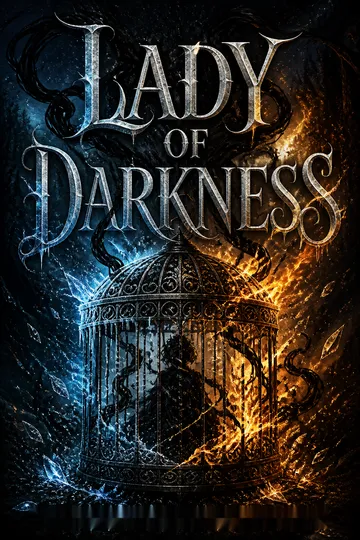
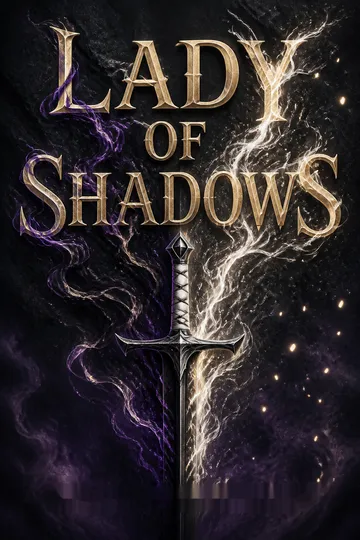
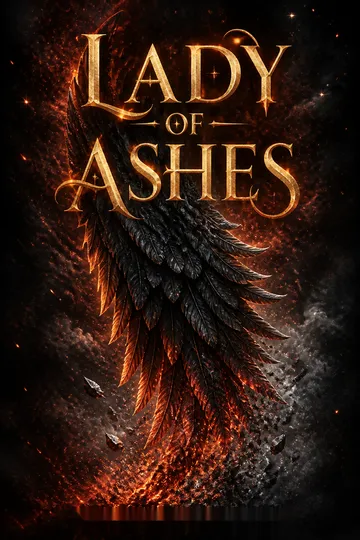
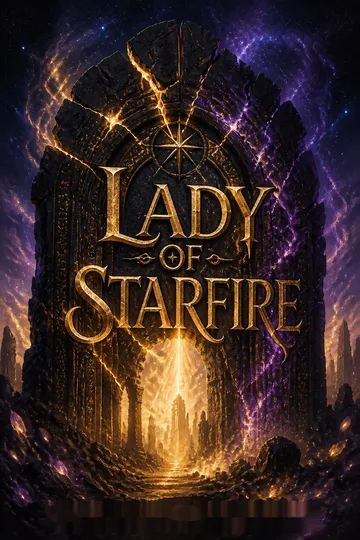
Lady of Darkness Series


About the Author
Other books by Melissa K. Roehrich


Download PDF
Download EPUB
.epub digital book format is ideal for reading ebooks on phones, tablets, and e-readers.








