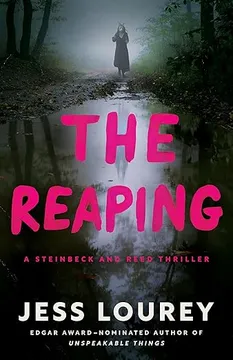


Plot Summary
Sandwich Rock Falls
At eight, Rannie Tervo slips into the woods to spy on his older brother, Pekka, and Pekka’s friend Hector. He detours to carry a turtle toward the river, then reaches their camp as the young men drink beside a fire and joke about Alku’s blood witch. A shrill cackle and a tremendous scraping sound leave Rannie dizzy and unable to call out.
The upper boulder of Sandwich Rock slides onto the tent and fire. Hector is gone. Pekka finds Rannie beside the wreckage and urges him to return to town for help, while Rannie assumes the witch caused the disaster. The brothers leave with the childhood story of a monster between them, though neither understands what happened.
The opening gives Alku’s folklore a physical event to inhabit: a boulder really does crush a tent, but the child who witnesses it cannot distinguish accident from supernatural attack. Rannie’s instinct to protect the turtle and his belief in rules make him especially vulnerable to the town’s later moral language. Pekka, meanwhile, becomes attached to Rannie’s first experience of inexplicable violence. The brothers leave the clearing with an explanation supplied by fear, not evidence. That gap between what happened and what a community teaches a child to believe becomes the novel’s central investigative problem.
A Familiar Kind of Murder
In 2023, Minnesota BCA agent Harry Steinbeck returns to the Duluth area with his new partner, investigator Evangeline Reed, after local detective Dale Emery requests forensic help. Their victim, CCTC nurse Peter Weiss, has been shot with a shotgun and suffered catastrophic damage to his head.
The crime scene was scrubbed with bleach, and the late-night pizza delivery that led to the discovery may have interrupted the killer. Emery connects the method to the unsolved 1998 murder of the Korhonen family, also treated at the Carlton County Treatment Center. Harry agrees to examine the case despite his dread of coming home. The murdered children in the old file touch the private guilt he has spent decades containing.
Harry’s return is both professional and involuntary. He accepts the case because the victims include children, yet his precise routines and insistence on evidence help him keep personal history outside the investigation. Evangeline’s instinctive attention to fear and bodily detail complements his forensic discipline, while their early teasing shows a partnership still negotiating trust. Weiss’s mutilated body creates the plot’s concrete bridge between a recent homicide and a cold case. That bridge also unsettles Harry’s carefully divided past and present: the investigation is not merely near his childhood home, it is near the life he has built to avoid remembering it.
Alku Watches Back
Harry and Evangeline drive into Alku, a remote Finnish-founded community where children dress as witches for Easter and adults watch the agents pass with unnerving stillness. The town’s main institution occupies a decaying former sanatorium: a grand school and administrative building linked by an underground tunnel to the CCTC, a secure nursing facility for violent, disabled inmates.
Psychiatrist Pekka Tervo gives the agents a history of Alku and of Jarmo and Janice Korhonen, whose family was killed in 1998. He explains that the town relies on the prison for work and income. The setting makes the town’s traditions feel inseparable from its institutions, while Harry and Evangeline leave with more questions than answers.
Alku’s atmosphere is built from ordinary structures made strange by collective behavior. The children’s costumes, the shuttered shops, the tunnel, and the inherited local ownership all suggest a town that has rehearsed its identity until outsiders appear disruptive. Pekka’s pride in the institution is not simple villainy or benevolence; he presents the prison as a compromise that keeps Alku alive. That detail matters because economic dependence gives secrecy a practical incentive. The agents are not investigating a remote killer alone. They are entering a social system in which buildings, jobs, family history, and custom reinforce one another.
The Warning at the Motel
After their first visit to the prison, Harry and Evangeline fail to speak with the incapacitated serial killer Mathias Millard. They do encounter Amon Dooley, an inmate whose terrified outburst about the blood witch alarms them, and later notice an unexplained, double-locked cell that Evangeline recognizes from a nightmare.
That evening, Rannie arrives at their motel with Max Esko and Max’s quiet younger sister, Honeybee. Rannie warns the agents that Alku is dangerous and that children can disappear during a reaping. Max tries to keep him quiet, then leads Honeybee away to the church. Harry and Evangeline understand that the children know more than the adults will tell them.
The warning arrives through people the town has taught to be dismissed: a cognitively disabled adult and children. Yet each registers danger before the investigators can translate it into evidence. Rannie’s unfiltered speech exposes the pressure of a rule system he cannot fully conceal, while Max’s attempts to restrain him show a child already managing adult secrets. Evangeline’s nightmare and the locked cell add a more intimate uncertainty, placing intuition beside forensic method without resolving which one is trustworthy. The agents’ failure to dismiss these impressions is an early act of attention, and attention becomes the scarce resource Alku’s children need.
Seven Families, One Town
The agents learn that one corporation, controlled by descendants of Alku’s seven founding families, owns every building in town. The Korhonen house has remained furnished and dusted since the family’s murder, as if its owners might return. At the church, Pihla Tervo and Hannele Virtanen control access to birth, death, marriage, and land records; Pihla gives a misleading account of Pekka and Rannie’s mother, Ansa, suggesting she died years earlier.
The children tell Harry that the Korhonen home is empty and that the whole town shovels its walk. When police research finally uncovers the dates, Ansa’s disappearance, two hikers’ deaths, and the Korhonen murders cluster within one week in 1998.
The town’s ownership structure turns family loyalty into infrastructure. Alku’s people do not merely share customs; they control housing, records, work, and the account of who belongs. The preserved Korhonen home makes the past visible while preventing it from becoming ordinary history. Pihla’s inaccurate memory of Ansa is a small, testable lie, more revealing than a dramatic denial because it shows how carefully information is managed. The sequence of deaths and disappearances makes the official idea of bad luck untenable. Collective care, such as shoveling every sidewalk, can coexist with collective concealment.
The Week Alku Broke
Flashbacks to 1998 show Rannie’s life collapsing in stages. Ansa, once the forceful keeper of Alku’s traditions, has begun drinking heavily and behaving unpredictably. On November 1, she disappears during the Kekri celebration, leaving Rannie confused and Pekka and their father unable to explain her absence.
The next day, Rannie finds two hikers dead near the school, their heads brutally damaged; the town calls it an animal attack. Their father, Nils, dies several days later, and Rannie moves in with Pekka and Pihla. On November 7, Rannie hides as masked townspeople carry guns toward the Korhonens’ home. By morning, Jarmo, Janice, and their three children are dead.
Rannie’s perspective gives the 1998 events their most unsettling quality: violence arrives inside routines he understands only partly. Ansa’s disappearance removes the person who enforced Alku’s rules, but the rules remain, now carried by others. The masked procession turns family identity into cover, allowing familiar neighbors to become an anonymous armed group. Rannie’s disability does not make him a symbol or a clue; it shapes how he processes grief, fear, and the explanations adults offer him. His inability to assemble a reliable account helps explain why the town’s version of events can survive for decades.
Shells Cross Twenty-Five Years
In Weiss’s apartment, cleaners find a 12-gauge shell casing hidden between the mattress and box spring. BCA scientists compare it with the casing recovered from the Korhonen crime scene and identify matching marks from the same shotgun.
Weiss’s brother, Richard, adds that Peter had recently received a special CCTC assignment guarding a single inmate, and that he claimed to have overheard a conversation worth money. A threatening message reached Weiss’s phone the day before his death.
Meanwhile, the agents establish a pattern of suspicious deaths in Alku stretching back to the rockfall that killed Hector in 1984 and an inmate’s head-crushing death in 1990. The crimes look less like isolated tragedies and more like a buried practice resurfacing.
The shell casing converts a community’s fog of rumor into material continuity. It cannot name a shooter by itself, but it proves that the same weapon has crossed decades, undermining the convenient theory of an unrelated drifter. Richard’s account of Weiss’s new assignment connects the victim to a secret inside the prison, while the threat on his phone supplies a motive to silence him. The timeline also reframes the opening rockfall: violence may have begun long before the Korhonens, under different descriptions. The investigators’ method is cumulative, each imperfect clue gaining force through its relation to another.
The Girl Harry Ignored
Harry’s return to Duluth brings his mother, Myrna, back into his life and pulls up the memory he has avoided: the day his ten-year-old sister, Caroline, tried to tell him she was frightened at home and described a suspicious man. Harry was eager to meet an old girlfriend and did not listen closely; Caroline disappeared that afternoon.
He has treated that failure as proof that he is unworthy of protecting children. In Alku, ten-year-old Arlie Wenner is reported missing, but local officers accept her mother’s sudden claim that she was home all along. Harry and Evangeline suspect a cover-up. Harry’s old guilt now threatens to overwhelm his judgment just as another child may be in danger.
Harry’s guilt is not vague regret; it is attached to a specific choice to prioritize a date over his sister’s account. That specificity gives his self-condemnation psychological force, but it also distorts the present by making every endangered child feel like a chance to reverse the past. Evangeline’s role is not to erase responsibility but to keep Harry from treating one failure as his entire character. Arlie’s disappearance activates the same helplessness under different circumstances: this time Harry has evidence, a partner, and a chance to act. The novel makes moral repair practical, not magical.
Children at the Trigger
As Alku’s children begin disappearing from view, the agents find a magazine hidden beneath a bed in the Korhonen house and catch Max, Honeybee, Rannie, and their friends using the empty home as a refuge. Later, lab testing finds that DNA on Weiss’s shell casing matches a member of the Esko family.
Max finally explains why: he, Arlie, Fred, and Honeybee were made to join a masked ritual called laki, in which the town’s children help punish people said to threaten Alku. Their guns were loaded with rock salt or real ammunition, without the children knowing who carried which. Max deliberately fired at a wall, then hid his casing. He reveals that Weiss was terrified, and Honeybee stopped speaking after witnessing the killing.
The revelation makes inherited violence literal: the adults do not merely pass down beliefs but recruit children into a ritual that turns obedience into participation. Max’s shell casing is both physical evidence and a record of his limited resistance. He fired away from Weiss, yet he still carries guilt because the adults made the children part of the scene. Honeybee’s silence shows trauma as an adaptation, not a puzzle to be solved by force. The children’s attempt to withdraw from laki becomes a turning point because it threatens the town’s ability to reproduce its own moral code.
The Empty Cell's Secret
Pekka appears to confess responsibility for the murders at the police station, but his statements center on communal guilt rather than a clear account of what he did. Pihla removes him before the agents can press further. Harry and Evangeline discover that Detective Emery has Alku ancestry he failed to disclose, and his certainty that Arlie was never missing deepens their distrust.
At the prison, they inspect cell 36, the empty room from Evangeline’s recurring nightmare; it smells of fresh earth, and Silas has seen Pihla emerging from it. Beyond the fence, the agents find a hidden founders’ graveyard. Meanwhile, Pihla admits that Weiss had been assigned to watch one inmate, binding the prison’s secrets to the town’s family system.
This stage narrows suspicion without yet delivering certainty. Pekka’s apparent confession sounds like a protective act, while Emery’s undisclosed family connection makes official procedure harder to trust. Cell 36 embodies the difference between a room that is physically empty and a place that holds an unspoken history. Evangeline’s dreams are not treated as proof, but her recognition of the cell compels Harry to test what she perceives. The graves beyond the fence further collapse the boundary between institution and town. Every clue suggests that Alku’s past is not buried elsewhere; it is kept close to the prison.
The Witch Leaves the Woods
Honeybee leads Harry and Evangeline through the woods to Rannie’s hidden fort, where Pekka has cornered Max with a shotgun. Pekka is the real source of the monster stories: his rare genetic condition gives him extraordinary strength, and he has used it to crush victims’ skulls. He reveals that he killed Ansa, who was pregnant, and that he considers the children a threat to Alku’s survival.
When Pekka aims at Max, Harry steps between them and takes the blast in his back. Evangeline shoots Pekka before he can fire again, then wounds Rannie when he charges her in an attempt to stop her from killing his brother. Rannie later dies from his injury, after helping hide the endangered children.
The final confrontation overturns the story’s moral map without making its harm disappear. Pekka’s strength and the veri noita legend explain how a person could be transformed into a community’s monster, but his stated devotion to Alku does not excuse his choices. Harry’s decision to shield Max directly answers the failure he has carried since Caroline vanished: he acts for the child in front of him, though the act costs him dearly. Rannie’s charge is tragic because his loyalty remains divided between the brother who raised him and the children he wants to protect. His last choice favors protection over obedience.
Daffodils After Violence
In the hospital, Harry wakes wounded but alive and remembers the detail Caroline had tried to give him: her pursuer had one blue eye and one brown eye. Evangeline reports that Arlie, Fred, Max, and Honeybee are safe, while the National Guard takes control of the CCTC.
Pihla admits that she helped conceal Pekka’s crimes, including his use of Millard as a silent confessor and his killing of Weiss after Weiss began blackmailing him. The Alku children enter temporary foster care, and Myrna volunteers to take Max and Honeybee while arranging homes for the others nearby. Harry and Myrna begin facing the damage in their family instead of preserving their old silences.
The resolution offers safety and accountability, but not a clean erasure of trauma. Harry’s recovered memory is a small fragment, not an immediate solution, yet it changes his relationship to the past from pure self-blame toward active inquiry. Myrna’s willingness to foster the Alku children complicates Harry’s inherited image of her without undoing the harm she caused Caroline. Pihla’s confession reveals how caretaking can become complicity when preserving a family structure matters more than protecting its vulnerable members. The daffodil passed between characters becomes a gesture of care that children can give as well as receive.
Epilogue
At the Steinbeck mansion, Evangeline considers how the Alku case has brought Harry back into contact with his mother and with children who need protection. She also recognizes how much of herself she has kept hidden, including visions connected to the commune where Frank Roth raised her.
The details of Caroline’s abduction align with Frank: he drove a green four-door car, had black hair, a practiced smile, and mismatched eyes. Evangeline realizes that the man Harry has searched for may be the same man who once controlled her life. The case is closed, but Caroline’s disappearance has become a living lead.
The epilogue converts parallel trauma into a new investigative possibility. Harry’s guilt has centered on what he failed to hear, while Evangeline has kept her own knowledge compartmentalized; neither has yet fully connected their histories. Her recognition of Frank Roth does not solve Caroline’s disappearance, but it changes the emotional meaning of the case from an old wound to an active question. The final turn also complicates intimacy: shared secrets can resemble closeness while still keeping people apart. Evangeline’s insight creates the possibility of a more honest partnership, but the book ends before either the truth or the cost of pursuing it is known.
Analysis
The Reaping asks how a community turns care into a defense of cruelty. Alku’s residents do not describe themselves as villains; they preserve jobs, family ties, traditions, and a town they believe cannot survive without its secrecy. Their moral failure is therefore structural as well as personal. The rule that family must never be betrayed gives every member a reason to protect the system, while the town’s children inherit both its rituals and its silences. Pekka’s violence becomes possible not because nobody loves him, but because love is defined as concealment and compliance.
Harry’s story offers a counterpoint. He has built a life around evidence and self-control, yet his private discipline has also hardened into self-punishment. He mistakes responsibility for total blame because that belief gives his guilt a shape and a task. His choice to protect Max does not undo his failure to hear Caroline, but it demonstrates that one past failure need not govern every later moral decision. Evangeline’s role is similarly precise: she does not absolve Harry or solve his pain for him. She helps him see where responsibility belongs, including where it does not.
The children make the book’s ethical argument concrete. Max and the others are not simply innocent symbols; they are frightened participants who must decide whether to repeat what adults call tradition. Max’s confession begins the collapse of Alku’s protective story, while Honeybee’s silence records the cost of what she witnessed. Rannie’s loyalty becomes tragic when he must choose between his brother and the children he wants to save. The novel’s ending offers neither complete justice nor a healed past. It offers a more honest beginning: children removed from danger, a mother and son willing to talk, and a clue that may reopen Caroline’s case.
Review Summary
The Reaping receives generally positive reviews, averaging 4.06 stars. Readers praise the atmospheric setting of the creepy Finnish town of Alku, Minnesota, the dynamic between protagonists Van Reed and Harry Steinbeck, and the shocking ending. Many note it offers deeper insight into Harry's backstory. While some feel it doesn't quite match the first book, The Taken Ones, in pacing or excitement, most find it entertaining and creepy. The cliffhanger epilogue left readers eagerly anticipating a third installment.
Characters
Harry Steinbeck
Methodical forensic agentA senior BCA forensic scientist who trusts evidence, routine, and controlled distance. Harry’s polished appearance and exacting habits help him work through violent scenes, but they also protect him from a family history he cannot resolve. His partnership with Evangeline challenges his belief that safety depends on keeping people at arm’s length. He is especially attentive to child victims, though that concern carries a private burden. His strength lies in patience and scientific rigor; his vulnerability lies in treating responsibility as the same thing as blame.
Evangeline Reed
Instinctive cold-case agentA former Minneapolis homicide detective, Evangeline reads people and environments with unusual speed. Her childhood under a controlling commune leader taught her to distrust respectable surfaces and to notice the danger others dismiss. She uses humor, mess, and self-reliance to keep others from defining her, yet she is particularly gentle with people who have survived trauma. Her investigative instincts sometimes outrun what she can prove, creating friction with Harry’s scientific discipline. Their partnership gives her a rare chance to be known without surrendering control.
Randolph Tervo
Gentle giant of AlkuKnown as Rannie, Pekka’s younger brother is a large, affectionate man with fragile X syndrome and a moderate intellectual disability. He loves directions, animals, familiar routines, and the children who treat him as a friend rather than a problem. His mother’s rules and Alku’s folklore shape how he understands danger, even when he cannot sort out adult motives. Rannie’s rhymes help him manage fear, while his openness makes him both easy to underestimate and difficult to deceive. His loyalty to family is deep, but he also has a strong instinct to care for the vulnerable.
Pekka Tervo
Psychiatrist and town leaderPekka is Alku’s head psychiatrist and a central figure in its governing family. Gentle manners, round glasses, and a practiced calm make him seem like a natural caretaker. He speaks with pride about the town’s history and wants the treatment center to serve a larger purpose, not simply contain dangerous men. As Rannie’s older brother, he has long occupied the role of explainer and protector. His commitment to tradition is entwined with the practical burden of keeping Alku economically and socially intact.
Pihla Tervo
Nurse and family guardianPekka’s wife and head nurse at the CCTC, Pihla is disciplined, watchful, and accustomed to managing both patients and family tensions. Her authority is felt in the prison and in the town, where she often decides what outsiders may learn. She values the continuity of Alku and presents herself as someone who can contain disorder through firm boundaries. Her relationship with Pekka mixes professional competence with intimate loyalty.
Max Esko
Protective child witnessMax is an observant boy who looks after his younger sister, Honeybee, and often has to manage Rannie’s impulsive speech. He understands that adults control what children may say, so he weighs every disclosure against the safety of his family. His reserve is not indifference; it is a survival strategy formed in a town where belonging comes with obligations. Max’s courage emerges through small decisions, especially when silence would protect the adults more than the children.
Honeybee Esko
Quiet, watchful younger sisterHoneybee is Max’s little sister, a nearly silent child whose attention is sharper than many adults recognize. She communicates through looks, gestures, and carefully chosen gifts, showing trust only when she feels safe. Her bond with Max is a source of protection, but it also makes her highly sensitive to his fear. Honeybee’s silence should not be mistaken for passivity; she notices routes, tracks, and details that help others move through danger.
Myrna Steinbeck
Harry's formidable motherMyrna is a wealthy, socially commanding woman whose standards and moods shaped Harry and Caroline’s childhood. She prefers control to vulnerability and often treats family life as something to organize rather than share. Her intelligence and force of will are evident, but so is the loneliness beneath her polished public self. Harry’s return forces him to confront both the harm she caused and the possibility that people can change after acknowledging their damage.
Caroline Steinbeck
Harry's imaginative sisterHarry’s much younger sister is imaginative, funny, and hungry for connection. She fills her room with drawings and turns ordinary moments into elaborate stories, qualities that make the home warmer for Harry and expose how cold it can feel to her. Caroline trusts her brother and wants him to take her fears seriously. Her attachment to him is tender but not timid; she tries to speak plainly even when adults prefer to dismiss her.
Ansa Tervo
Forceful keeper of traditionThe mother of Pekka and Rannie, Ansa is a direct descendant of Alku’s founding families and a formidable presence in town life. She insists that the community place collective survival above individual preference, and she takes part in its closed deliberations. Rannie experiences her as loving and powerful, while Pekka sees the expectations she places on the family. Her later instability unsettles the household without loosening her grip on its inherited rules.
Silas Smith
Outsider inside the prisonA CCTC aide who is not descended from Alku’s founding families, Silas knows how clearly insiders and outsiders are separated. He resents the town’s treatment of workers like him and avoids volunteering information that could threaten his job. His bluntness can make him seem merely crude, but he notices more than he initially admits. Evangeline’s pressure eventually draws out details about Weiss, Pihla, and the prison’s hidden routines.
Dale Emery
Duluth homicide detectiveEmery is the local detective who brings Harry and Evangeline into the Weiss investigation. He is personable and ambitious, with strong ties to the region and a practical sense of how law enforcement depends on community relationships. His confidence sometimes slides into defensiveness, especially when the BCA agents challenge his assumptions. He wants to solve a career-defining case, but the investigation tests whether local loyalty can coexist with transparent police work.
Jarmo Korhonen
Nurse and dissenting board memberJarmo grew up in Alku, trained as a nurse, and built a family with Janice. He is respected for his skill and his place among the town’s founding families, but he questions the decision to house violent offenders at the treatment center. His concern is not abstract: he sees the institution changing the community it was meant to sustain. Jarmo’s conflict with local expectations helps define the pressure placed on anyone who considers leaving.
Janice Korhonen
Outsider who joins AlkuJanice married Jarmo after meeting him at college and moved into the close-knit world of Alku. She works at the treatment center and tries to understand its traditions, though the town’s blood-witch stories and rigid customs are unfamiliar to her. Her outsider perspective makes visible how strange local practices can appear to someone not raised within them. She is also a mother trying to make a home inside a community whose rules are older than her marriage.
Arlie Wenner
Freckled Alku schoolgirlArlie is a ten-year-old Alku girl who befriends Max, Honeybee, Fred, and Rannie. Her directness and curiosity make her a natural part of the children’s circle, even as adults try to limit what the children share with outsiders.
Fred Laine
Older child in the groupFred is a twelve-year-old friend of Max and Arlie. Shy and gentle, he becomes part of the children’s private network of trust and shared discoveries beyond adult supervision.
Amon Dooley
Prisoner with disturbing dreamsA CCTC inmate serving time for multiple murders, Amon lives with a degenerative neurological disorder and reports vivid hallucinations. His fear of the blood witch sounds like prison delusion, but it draws the agents’ attention to behavior around Mathias Millard.
Mathias Millard
Incapacitated serial killerKnown as Matty the Mallet, Millard is a notorious former serial killer now housed at the CCTC after a stroke left him profoundly disabled. His reputation shadows the prison and shapes how investigators interpret new head-crushing murders. The agents must determine whether his present condition truly rules him out.
Lou Devon
Lawyer and old friendLou, once Harry’s school friend, returned to Duluth after law school and now works for the city. She remembers his family and the town’s history, offering useful context without treating Harry’s past as gossip. Her warmth gives him a rare place to speak honestly about home.
Aimee Fleck
Pizza delivery witnessAimee delivers the late-night pizza that leads police to Weiss’s body. The snowstorm and her disturbing glimpse outside the house leave her shaken, and an investigator’s attempt to dismiss her account makes her reluctant to revisit the night.
Frank Roth
Charismatic commune leaderFrank Roth led the commune where Evangeline spent her childhood. He presented himself to the outside world as a persuasive, capable man, while his authority over the people in his care was deeply controlling. His history remains a source of fear and unresolved questions for Evangeline.
Plot Devices
The Veri Noita
Folklore conceals real violenceAlku’s blood-witch legend is taught to children as both threat and protection. It gives frightening events a ready-made explanation and makes obedience seem necessary for community safety. The story appears in church sermons, Easter customs, the children’s warnings, and the crime scenes. Its supernatural language hides human acts while also preserving memories of violence that the adults do not openly discuss. The myth’s function changes as the investigation advances: first a local superstition, then a way to describe a killer, and finally a mask for the town’s responsibility.
Laki and the Masks
Ritual turns children into participantsThe town’s masked traditions establish a visual language for collective identity. Children learn which branch masks belong to their families and when they may wear them. Under the name laki, this familiar ceremony becomes a form of vigilante punishment in which children are drawn into violence against people labeled threats to Alku. The masks hide individual faces and blur responsibility, allowing adults to present a community decision as an inherited custom. When children resist the practice, their refusal challenges the town’s method of reproducing obedience.
The Shotgun Shells
Forensic evidence links erasA shell casing hidden beneath Weiss’s mattress is matched to one collected after the Korhonen murders. The shared toolmarks connect crimes separated by twenty-five years, while DNA on the newer casing points investigators toward the Esko family. Max’s later account gives the casing a human context: some children were given rock-salt ammunition and others real shells, without knowing who held what. The evidence device therefore does more than identify a weapon. It exposes how responsibility was divided, concealed, and transferred to children.
Cell 36
A nightmare directs investigationEvangeline repeatedly dreams of an evil presence in a prison cell before she has entered the room. The double-locked cell’s earthy smell and Pihla’s unexplained visits make her intuition difficult to dismiss, even though an inspection finds it empty. The cell becomes a test of the partnership: Harry must decide whether to treat a dream as irrelevant or as a lead worth checking. Its meaning is not that instinct replaces evidence, but that a troubling perception can identify where evidence has been hidden from ordinary view.
Caroline's Unheard Clue
Guilt becomes a new leadHarry remembers that Caroline tried to describe the man who frightened her before she disappeared, but he was distracted and failed to listen. For years, he turns that lapse into a verdict against himself, which makes him hesitant to trust his own judgment around endangered children. The details return after he is shot, changing the memory from an accusation into investigative information. Evangeline’s recognition of the matching man in her own past creates a connection beyond this case, but the book leaves the lead unresolved.
About the Author


Download PDF
Download EPUB
.epub digital book format is ideal for reading ebooks on phones, tablets, and e-readers.








