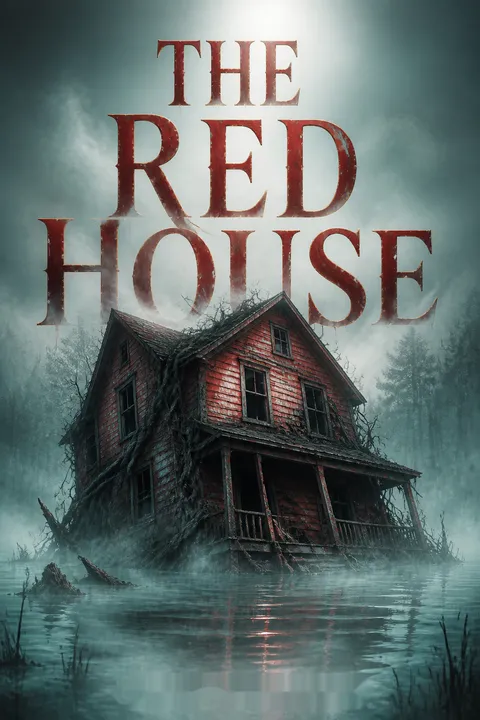


Plot Summary
The Red House Massacre
In 2002, five-year-old Celestine Flowers hears gunshots in her home on the marsh. She sees her parents bleeding, her baby brother in danger, and her teenage brother Joseph holding a gun. Her mother sends her running; Celestine hides among Joseph’s snakes. Joseph drives away, crashes, and never regains ordinary consciousness.
The surviving child’s brief, frightened account helps fix the public story: Joseph killed his family. Years later, his computer game, The Red House, becomes a cult mystery, with fans convinced it contains a secret level explaining the murders. The official account leaves one crucial question unanswered: why would a quiet, troubled teenager destroy his own family?
The opening makes childhood perception both the story’s first evidence and its most unstable foundation. Celestine can describe terror, blood, and familiar clothes, but a five-year-old cannot reliably reconstruct a complex crime. The public turns her frightened impression into certainty because it supplies a legible villain and closes a disturbing case. The game then keeps the question alive, converting a private family catastrophe into public entertainment. From the start, the novel asks who gets believed, and what happens when a child’s partial witness becomes an adult world’s complete explanation.
A Name Left Behind
Twenty years later, Celestine lives as Eve Taylor in Ashbourne, where she keeps people at a distance and finds steadier company in animals than in crowds. At the bookshop where she works, a fan of the old game grabs her boss Marcus; Eve and his greyhound, Moomin, drive the man away. Then Eve’s grandmother, Peggy, asks her to come to the Red House.
Peggy reveals that she has terminal cancer and brings Eve into the room where Joseph lies, still requiring constant care. Peggy wants him kept safe there after she dies, and Eve reluctantly promises to oversee it. The request forces Eve back toward the family she has tried to leave behind, just as the secrecy surrounding her old identity begins to crack.
Eve’s chosen name is not simply an escape from notoriety. It lets her build a life in which relationships are based on ordinary work, animals, and repeated routines rather than the spectacle of her childhood. Peggy’s request ruptures that arrangement by joining care for Joseph to the site of the murders. Eve’s promise is made under emotional pressure, before she understands what the responsibility means. Her reluctance is not cruelty: it is a defense against a brother who embodies both the family she lost and the person she has been taught to fear.
The Promise Breaks
After Peggy collapses, Eve agrees not to report the fall, respecting her grandmother’s fear of losing control over her own life. Peggy also asks Eve to protect Joseph from people who would see no value in his life. The next day, Uncle Gregory calls: Peggy has drowned in the Red House pool.
He moves Joseph to Greenacres nursing home and urges Eve to accept the doctors’ proposal to withdraw food and water. Grieving, isolated, and unsure what Peggy meant, Eve signs the paperwork. She tells herself Joseph’s death would end a burden and let her rebuild her life. At the clinic, she records a visit with him, intending to use the video later to quiet her doubts about the decision.
The promise becomes ethically dangerous because Eve has inherited responsibility without inheriting Peggy’s knowledge. Grief narrows her choices: Gregory offers certainty, while the clinic presents withdrawal as a reasonable medical decision. Eve’s agreement is therefore neither simple malice nor clear consent to a moral outcome; it is a decision made in the fog of shock. The video matters because it turns care into sustained attention. Eve has spent years avoiding Joseph, yet the act of recording him forces her to look closely enough to notice what everyone else has missed.
The Eye-Flick Test
Watching her recording, Eve notices Joseph’s eyes flick upward whenever she mentions his snakes. She returns to Greenacres and tests the movement deliberately. Joseph answers that he recognizes her, appears not to remember the night of the murders, and signals that he wants to die.
The signal is too limited to interpret safely, and Eve leaves without resolving what he means. Soon, a young man outside the nursing home tells her he saw two cars leave the Red House on the night of the killings. The revelation unsettles the case’s settled story.
Eve then visits Joseph’s former friend Nate Armitage, who confirms that a hidden level exists in the game and may require Joseph’s missing notebook. Nate locks Eve in a hot enclosure with snakes to force a confession about an old attack on him.
Eve’s face blindness has trained her to study tiny movements that other people overlook; here, a perceived deficit becomes an instrument of recognition. But noticing a signal is not the same as understanding it. Joseph’s eye movement carries too many possible meanings, and Eve’s desire to respect his wishes risks turning ambiguity into a verdict. The second-car witness similarly reopens a case without solving it. Nate’s cruelty brings the novel’s competing forms of interpretation into focus: Eve searches for evidence, while Nate tries to force a story that will confirm his old grievance.
Peggy's Secret Alphabet
With help from Serena, Marcus’s fiancée and a longtime player of Joseph’s game, Eve finds his illustrated notebook concealed among Peggy’s belongings. Its coded notes connect to the game’s puzzles. A key Peggy left behind opens a cupboard containing letter charts arranged so Joseph could select letters with eye movements.
Peggy had created a slow but workable way to communicate with him and kept it secret. At Peggy’s funeral, her friend Liz reveals that Peggy had been frightened near the end and may not have died by accident. The next morning Eve and Serena find Liz at the bottom of a quarry. Liz is dead, making her warning feel less like grief-fueled suspicion and more like a lead someone wanted silenced.
Peggy’s charts transform the meaning of her devotion. What seemed to Eve like a private refusal to let Joseph go may have been informed by communication she could not bring herself to share. The hidden apparatus also exposes the cost of secrecy: Peggy’s care protected Joseph from scrutiny, but it left Eve to make decisions without crucial facts. Liz’s death tightens the moral pressure. The past is no longer only an unanswered mystery; someone may still be acting to keep its answer buried.
The Game Blames Joseph
Serena admits she is The Seeker, the gamer publicly pursuing Joseph’s hidden level. She and Eve return to Nate, whose car was sabotaged before he could meet Serena. Using Joseph’s notebook, Nate opens a passage in the 2003 game.
Eve’s close attention to small physical differences helps identify the right figure among thousands of near-identical reflections. The game then stages a shooting in her childhood home: a figure in Joseph’s black clothes and baseball cap appears to fire at her parents.
The scene shocks Eve and seems to support the accusation she has carried since childhood. Yet the faces are blurred, and the game’s cryptic instruction points toward seeing people as a child would. The apparent answer deepens the uncertainty instead of ending it.
The game offers a vivid image, not a neutral recording. Its emotional force tempts Eve, Serena, and Nate to mistake representation for proof, especially because the figure wears Joseph’s recognizable clothes. Yet the blurred faces and child-centered clue make the scene a critique of visual certainty. Eve’s observational skill can detect details others miss, but it cannot restore an identity she never reliably perceived. The game’s real function is not to settle guilt in a single dramatic reveal; it makes the investigators confront the assumptions through which they have been reading the past.
Tapes Beneath the Lies
Old cassette tapes hidden in Peggy’s desk preserve Eve talking to Joseph as a child. In one recording, she describes being bullied; later clues suggest Peggy may have monitored these conversations.
Eve’s aunt Della admits that her father, Andrew, had a volatile marriage with Essie, while family friend Julie describes Andrew as controlling and says Essie feared him. Eve’s other grandmother, Nora, recalls that Joseph loved animals and refused to hunt.
Eve also learns that Joseph and Nate deliberately spread foot-and-mouth disease among the family’s sheep, perhaps hoping the loss would help Essie leave Andrew. These disclosures overturn the polished image of a happy household and give Joseph’s dark game imagery a context beyond teenage violence.
The tapes make listening itself morally complicated. Eve believed she could confide in Joseph because he could not judge or intervene; Peggy’s recording means that private refuge may have been overheard. The adults’ competing stories show how family loyalty can disguise control as protection. Their omissions have left Eve with an artificial binary: perfect parents or a monstrous brother. Learning about Essie’s distress and Andrew’s behavior does not prove who committed the murders, but it gives the family’s tragedy a history instead of treating it as an inexplicable eruption.
The Shooter's Other Face
Nate and Serena decode another section of the game and replay the murder from above. This time, Joseph is visible without the gun: he rushes at the shooter and wrestles the weapon away after the shots are fired. His anguish at the bodies suggests he arrived too late to prevent the killings, not that he caused them.
Eve then tracks down Millie, mother of Essie’s former boyfriend Stephen, who disappeared in February 2002. Millie recalls that Stephen owned a large vehicle and had once fought Andrew over Essie. Eve searches the red pool and retrieves Stephen’s rucksack, including a blue-and-yellow pottery bird Essie made for him. The clues now point to an unrecognized man among the dead and a living person who vanished.
The second perspective revises the first without making the game infallible. By changing the viewpoint, Joseph’s role shifts from apparent shooter to witness and rescuer, while the matching clothes explain how the earlier image misled Eve. The physical evidence gives that reinterpretation weight: Stephen’s keepsake in the pool links a missing person to the Red House. Still, Eve is assembling a case from imperfect memories, coded art, and concealed objects. The novel keeps inference distinct from certainty, even as the pattern begins to look unmistakable.
A Lover in the Marsh
A final account reconstructs the night of the murders. Andrew returned to find Essie preparing to leave with Stephen, who was Benji’s biological father. Andrew shot Stephen, then Essie and the baby during the struggle. Joseph seized the gun and fled in Stephen’s car; Andrew set fire to the bedroom and escaped in a pickup.
Andrew’s mother Peggy and brother Gregory helped identify Stephen’s body as Andrew, allowing the real killer to disappear while Joseph, who was found with the gun and blood, became the accepted culprit. Eve has reached this truth through the game and Stephen’s belongings, but her father appears at the Red House before she can take her evidence to the police.
The reconstruction reveals that the original misidentification was not a single investigative error. It was sustained by an alliance of family members, by physical evidence that looked persuasive, and by the public’s readiness to accept Joseph as the obvious culprit. Andrew’s violence also emerges from a domestic history that the family had concealed. The false account gave the survivors a way to manage an unbearable crime, but its cost fell unevenly: Joseph lost his freedom, Eve lost her family history, and the actual killer gained decades of impunity.
The Folly's Locked Cell
The man Eve believes is Andrew claims he has something to show her at the flooded folly. He takes her across the marsh, pushes her down steps into a water-filled basement, and seals the door. Eve forces a stone loose to let the water rise high enough to reach a window, then swims out and navigates the dangerous banks by directions Nate supplied.
Near the Red House, she collapses in the mud. Serena, Marcus, Zack, and Moomin reach her before the impostor can drown her. Eve fights back as he tries to force her under; the marsh takes him. Only afterward does Andrew’s account reveal that the attacker was Gregory, pretending to be Andrew, and that Eve had killed her uncle in self-defense.
The marsh changes from an atmospheric threat into a landscape Eve can read and use. Her survival depends on knowledge gathered from others, physical endurance, and a willingness to trust her own perception despite its limits. The concealed identity of the attacker repeats the novel’s central danger in its most intimate form: a familiar voice and a plausible story can disguise a stranger’s intentions. Eve’s violence is not framed as triumph without cost. It is the desperate act of someone pushed toward death, followed by a choice to live with an unresolved secret.
The Father Behind Marcus
The group hides Gregory’s body and car in the marsh rather than report Eve’s self-defense, fearing the police will not believe them. A month later, Eve lives at the Red House, where the animal sanctuary has found a home.
Joseph has recovered from pneumonia after learning he was not the killer; he is beginning to use advanced communication aids. Zack is close to Eve, and Serena, pregnant and still engaged to Marcus, joins them at the pool.
Gregory’s apparent confession tells police Joseph was innocent, but the final account exposes another deception: Marcus is Andrew, Eve’s surviving father, who changed his appearance, bought the bookshop, arranged Eve’s job, and manipulated people around her. He remains in her life without telling her who he is.
The ending offers practical repair but withholds moral cleanliness. Joseph receives the truth and a chance at communication; the sanctuary gives Eve’s home a purpose beyond its history. Yet Eve’s new security rests partly on concealment, while Andrew continues to control events under the identity of Marcus. His paternal language masks surveillance, sabotage, and self-interest. The novel therefore refuses to equate survival with healing or love with safety. Eve has escaped one family’s false story, but the person closest to her is still constructing another.
Analysis
The Red House is built around a simple but consequential problem: people must act on partial knowledge, yet family loyalty and public appetite keep turning those fragments into certainty. Eve’s face blindness makes this problem literal. She cannot use the social shortcut most people trust, so she notices gestures and physical differences while remaining vulnerable to mistaken identities. Her condition is neither a magical solution nor a mere limitation; it exposes how much ordinary judgment depends on confidence rather than accuracy.
The novel’s investigative structure mirrors Joseph’s trapped state. He has a mind but almost no means of expressing it, so others interpret his eyes, his game, and his history for him. The early eye signal is especially important because Eve misreads it while sincerely trying to honor his wishes. Care is shown as more than affection: it requires patient communication, sustained attention, and a willingness to admit uncertainty. Peggy’s devotion matters, but her secrecy also deprives Eve of the information needed to care responsibly.
The family’s official story protects Andrew and Gregory at Joseph’s expense. It also gives Eve a stable, if devastating, account of her childhood: a loving household destroyed by one anomalous son. Evidence of Essie’s fear and Andrew’s control dismantles that comforting contrast. The revelation does not make the past simpler. It shows how violence can be hidden by respectability, how relatives can cooperate in a lie for money or loyalty, and how a child’s testimony may be turned into a verdict she never understood.
The ending resists a clean moral release. Eve saves herself and Joseph receives a chance at treatment, but she and her friends conceal Gregory’s death, while Andrew remains close under Marcus’s identity. The sanctuary offers a concrete new use for the Red House, not an erasure of its history. Eve’s future depends on the truth she has recovered, but it is still shadowed by a father who calls manipulation protection. Survival, the novel suggests, is not the same as safety, and love cannot be trusted merely because it uses the language of care.
Review Summary
The Red House follows Eve, who witnessed her brother Joseph allegedly murder their family twenty years ago before crashing into a coma. Now an adult, Eve investigates the truth behind the massacre. Reviews are mixed: many praise the atmospheric setting, clever twists, and shocking ending, rating it highly. However, critics cite an overloaded plot with too many coincidences, especially in the second half, repetitive writing, and an occasionally frustrating protagonist. The video game element intrigued readers. Most agree the book is gripping despite pacing issues, with several reviewers shocked by unexpected revelations.
People Also Read


Characters
Eve Taylor
The hidden survivorEve is the adult name Celestine Flowers chose after surviving the Red House murders. She works in a bookshop, volunteers at an animal sanctuary, and relies on routines that keep strangers from asking about her past. Prosopagnosia makes it difficult for her to recognize faces, so she studies voices, hair, gait, and small physical details instead. Her guardedness protects her from publicity and rejection, but it also leaves her isolated and reluctant to ask for help. Eve is observant without being infallible: she knows how easily a confident story can outrun the evidence. Her deepest need is not simply to learn what happened, but to find a way to belong without surrendering control of her own identity.
Joseph Flowers
The silent brotherJoseph is Eve’s older brother, a gifted young game designer whose life is defined by the night his family died and the catastrophic car crash that followed. For years, the public has treated him as the obvious killer, while his unresponsive state prevents him from answering questions. Before the tragedy, he was withdrawn, angry, and drawn to computers, but also protective of animals and deeply attached to his younger sister. His creative work carries fragments of family tensions that the adults around him failed to discuss. Joseph’s inability to communicate makes other people’s interpretations especially powerful, turning his body into contested evidence and his game into a possible form of testimony.
Peggy Flowers
The steadfast grandmotherPeggy is Eve’s grandmother and Joseph’s caregiver, a practical, determined woman who has devoted years to keeping the Red House and its vulnerable inhabitants going. She believes family obligations do not disappear when a relative becomes difficult to love, and she resists letting others decide that Joseph’s life has no value. Her affection for Eve is unusually accepting; she offers comfort without demanding the correct performance of grief. Peggy’s loyalty is a shelter, but her instinct to protect also leads her to keep information from Eve. She is shaped by losses she rarely explains and by the conviction that care is something one does, even when the reasons are painful.
Andrew Flowers
Eve's troubled fatherAndrew is a farmer and the father Eve remembers only through other people’s accounts and the traces he left behind. He is described as capable, intellectual, and hardworking, yet his family life carries strains that relatives and acquaintances interpret very differently. His frustration with the farm and his concerns about his children become part of the history surrounding the murders. Because Eve has no clear memories of him, she must build a picture from testimony, objects, and clues in Joseph’s game. Andrew’s absence makes him unusually easy for others to idealize, condemn, or use as an explanation for events they do not understand.
Marcus
The bookshop refugeMarcus is Eve’s long-haired, unconventional boss, whose bookshop gives her a rare sense of safety and ordinary purpose. He is patient with her reserve and attentive when she is distressed, often offering practical comfort rather than pressing her to explain herself. His relationship with Serena changes the rhythms of his friendship with Eve, stirring her fear of being left behind. Marcus seems gentle and unthreatening, a man who prefers books, cooking, and conversation to confrontation. His familiar presence becomes one of the anchors Eve relies on as the mystery pushes her back toward public attention.
Serena
The relentless gamerSerena is Marcus’s fiancée, a technically skilled gamer drawn to Joseph’s famous and baffling creation. She is curious, energetic, and more willing than Eve to pursue a difficult question through codes and game mechanics. Her interest can initially make her seem detached from the human cost of the mystery, but she proves capable of changing course when the investigation becomes dangerous. Serena also carries the effects of a controlling past relationship, which complicates her response to commitment and protection. Her intelligence and candor make her both a valuable collaborator and a challenge to Eve’s habit of keeping everyone at arm’s length.
Nate Armitage
Joseph's gaming partnerNate is Joseph’s former friend and collaborator, the programmer who helped complete and release The Red House. He has built a private, comfortable life around technology, games, and carefully controlled surroundings. A severe acid attack left lasting damage to his face, and his belief about who caused it has shaped his distrust of Eve. Nate is brilliant, proud, and difficult to approach, but his long history with Joseph gives him knowledge no other investigator can supply. His attachment to Joseph’s work is personal as well as technical, making him reluctant to let outsiders examine the game’s code.
Gregory Flowers
The rigid uncleGregory is Andrew’s brother and Eve’s uncle, a businessman who values order, reputation, and practical decisions. He and his wife raised Eve after the murders, but she experienced their care as conditional and their judgments as difficult to escape. Gregory favors ending Joseph’s life-support because he sees the decision as both humane and financially sensible. He is proud of his place in the local community and uncomfortable with emotional uncertainty. His guarded manner makes it hard to tell where family concern ends and self-interest begins.
Della Flowers
Eve's exacting auntDella is Gregory’s wife and Eve’s aunt, a polished, capable woman who likes domestic order and tends to comment on details such as Eve’s appearance. She helped raise Eve, but their relationship carries the strain of a child who felt scrutinized rather than fully understood. Della believes she acted in Eve’s best interests, even when that meant withholding difficult truths. Her account of the family reflects both affection and loyalty to her husband, leaving Eve to decide how much of it she can trust.
Liz Dagenham
Peggy's closest companionLiz is an artist and Peggy’s intimate friend, a lively woman who has shared galleries, conversations, and plans for a fuller life with her. Her warmth is edged with independence, and she is willing to speak plainly even when other relatives would rather keep the peace. Liz’s knowledge of Peggy’s private fears gives Eve another route into the past, beyond the official family narrative. She represents a life Peggy might have chosen for herself, as well as a kind of companionship Eve is only beginning to imagine.
Julie
Essie's old confidanteJulie was a friend of Eve’s mother, Essie, and runs a small holiday cottage in Marshpool. She is welcoming, affectionate, and more willing than the family to discuss the emotional reality of Essie’s marriage. Her memories complicate the account Eve grew up hearing, though Julie is careful about what she knows directly and what she only suspects. She offers Eve a glimpse of a woman who had private fears, loyalties, and plans beyond her role as mother and wife.
Nora
Essie's watchful motherNora is Essie’s mother and Eve’s maternal grandmother. Her poor eyesight and long absence from Eve’s childhood have made her seem remote, but she retains memories of Essie’s early relationships and Joseph’s gentler traits. Nora speaks haltingly, often circling painful subjects rather than naming them outright. Her recollections help Eve see that family history is not a single story handed down intact; it is assembled from people who each remember only part.
Zack
The recognizable strangerZack is a regular at Eve’s bookshop, a dry-stone waller with an oak-leaf tattoo on his cheek. The distinctive mark makes him easy for Eve to recognize, and his unforced manner gives their early encounters a rare ease. He listens without treating her vulnerability as a problem to solve, and his interest in birds and the natural world offers common ground. Zack’s kindness matters to Eve precisely because she expects relationships to end in betrayal or misunderstanding.
Mary
The sanctuary's backboneMary runs the struggling animal sanctuary where Eve volunteers. She is fiercely devoted to its animals, blunt with people, and resourceful enough to climb a tree after a stranded cat. Financial strain and the sanctuary’s dependence on donations keep her under pressure. Her clashes with Eve arise from practical consequences rather than personal malice, and her shared affection for animals gives them a bond that does not require polished conversation.
Essie Flowers
Eve's absent motherEssie is Eve and Joseph’s mother, remembered by others as loving but privately troubled. Her relationships with her children and husband are described through contradictory family accounts, making her history central to Eve’s search for the truth.
Stephen
Essie's first loveStephen was Essie’s boyfriend before Andrew and remained a significant figure in the memories of his mother, Millie. His past with Essie and his sudden disappearance connect two families whose histories had seemed separate.
Dr Patel
Joseph's care physicianDr Patel oversees Joseph’s care at Greenacres. She must balance medical obligations, family preferences, and the question of what Joseph would want. Her cautious professionalism becomes increasingly responsive when Eve provides evidence that Joseph may be aware.
Plot Devices
The Red House game
A coded crime sceneJoseph’s computer game becomes both an object of public obsession and an indirect record of his inner life. Its hidden level contains imagery and puzzles shaped by the marsh, the house, the family’s animals, and the events surrounding the murders. Nate’s programming knowledge and Serena’s gaming skill help reveal its structure, while Eve’s attention to small visual details solves a puzzle they cannot. The game does not offer a simple confession. Its shifting viewpoints and blurred faces force the investigators to reconsider what they think they saw.
Eve's face blindness
Identity without facesEve’s prosopagnosia prevents her from reliably recognizing faces, a condition she hides because she fears others will exploit it or mistake it for indifference. She compensates by observing hair, gait, ears, voices, and other identifying details. The condition affects her childhood relationships and adult social life, but it also gives her an unusual advantage when the game asks her to distinguish subtly different figures. Most importantly, it makes her old identification of the shooter less reliable than the family and police assumed.
Joseph's notebook
A map into the hidden levelJoseph’s illustrated exercise book combines drawings, game concepts, personal material, and coded passages. Peggy conceals it among her belongings, and Eve later discovers it while searching the Red House. Serena recognizes that some of its images and instructions correspond to game mechanics, while Nate deciphers a passage directing them toward the hidden zone. The notebook gives the three investigators a way into Joseph’s design, but its clues remain ambiguous until connected with testimony and physical evidence.
Peggy's communication aids
A voice made from eye movementsPeggy’s concealed letter charts divide the alphabet into increasingly small groups so Joseph can select letters with a deliberate eye movement. The method is slow, but it provides a path from a single yes signal toward full words. Peggy’s system reveals that she had tried to communicate with Joseph beyond ordinary bedside conversation. The cassette tapes in her desk preserve Eve speaking to him as a child, adding another layer of family memory and showing how much of Eve’s private life adults may have heard.
The red pool
A marshland hiding placeThe eel-filled pool beside the Red House is part of the family’s landscape and part of Eve’s childhood fears. Peggy insists it should not be drained, a preference Eve initially takes as sentimentality. Later, the pool yields a rucksack that links the house to Stephen’s disappearance. Its murky water literalizes the family’s buried history, while the eels that deter visitors help keep evidence hidden in plain sight.
Download PDF
Download EPUB
.epub digital book format is ideal for reading ebooks on phones, tablets, and e-readers.








