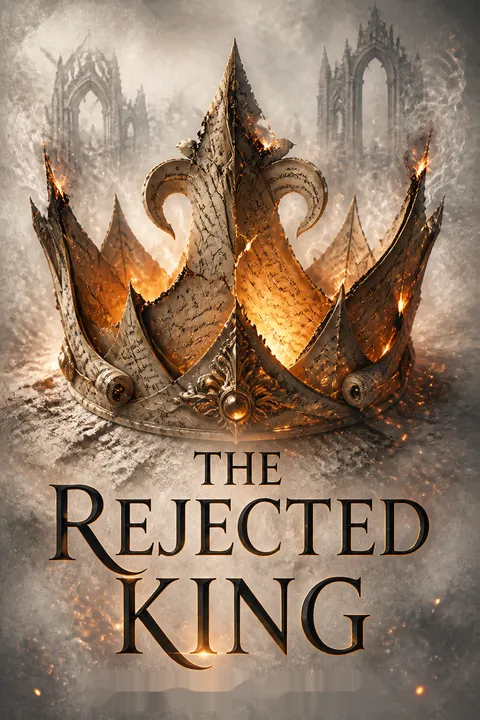


Plot Summary
A Keepsake Beneath Ash
In Montana in 2055, after decades of disaster have left the world burning, Danny Jakes and his wife, Emily, face a wildfire closing around their farm. They have survived volcanic eruption, climate upheaval, nuclear war, and other catastrophes, but now Danny fears they will not escape. Before they flee, he buries a steel safe containing their wedding rings, a photograph, and other treasured objects.
Emily gives up her ring reluctantly; Danny insists they may someday return. The story then leaps two centuries into the rebuilt kingdoms, where old technologies and rigid social divisions shape daily life. The buried safe will connect their last act of hope to the choices of a young king and a woman he has yet to meet.
The opening makes an intimate marriage the book’s first measure of value, set against a civilization that has repeatedly mistaken survival for a complete life. Danny’s insistence on preserving ordinary keepsakes is not proof that he denies danger. It is a way of refusing to let catastrophe dictate what deserves remembrance. The safe turns private love into a message sent across generations, while the later society’s class rules and political rituals suggest that recovery has rebuilt institutions more quickly than it has recovered human priorities.
The Wrong Bed
King Davin Parkins returns from a Council of Essentials where the other six rulers approve his transporter design, but only for the ruling class. He wants technology and opportunity to reach ordinary people too, even as his subjects criticize his failed projects and question his youth.
Exhausted, he stops at the Morreck Inn, where a mix-up leaves him sharing a bed with Emree Dutson, a young traveler who believes she is dreaming about her longtime boyfriend, Portlend. She kisses Davin before realizing the stranger is real.
When she discovers him, she drives him off with a chair, shoes, and whatever else she can reach. Davin leaves without revealing his identity, carrying the memory of a startlingly bold encounter; Emree insists to herself it will mean nothing.
The mistaken encounter strips both characters of their public identities before either knows the other’s rank or plans. Emree’s dream makes her desire seem safely imaginary; her sudden alarm restores the boundary she thought she had crossed only in sleep. Davin, meanwhile, experiences attention without the usual political calculation, which helps explain why the moment stays with him. The comedy does more than begin a romance: it establishes a recurring contrast between the selves people perform and the feelings that escape those performances.
An Interview in Gray
Back at Enderlin Castle, Davin’s mother, Queen Arillia, pushes him to hold a Promenade, the traditional week in which eligible ruling-class women court the monarch. She hopes marriage will improve his standing with a public that doubts his rule. Emree, meanwhile, travels from Kenmare to apply for the Promenade Director position, hoping the job will also bring her near Portlend, now an officer in the king’s guard.
At her interview, she recognizes Davin as the man from the inn. Their embarrassment becomes teasing, but her education and campaign experience persuade him to hire her. Emree is nineteen, working class, and determined to prove she belongs at the castle. Davin sees in her the same ambition he wishes others would recognize in him.
The interview converts an accident into a professional relationship, but neither character can pretend the past has vanished. Davin gives Emree a chance partly because she has earned it and partly because he recognizes his own struggle for legitimacy in hers. Emree’s gray clothing reflects a world where class is made visible and carefully policed; she enters the castle by mastering its expectations rather than pretending they do not exist. The Promenade begins as a political solution, yet hiring its director places the king closest to the person who may challenge that solution.
The King Behind Headlines
Emree organizes Davin’s first Promenade press briefing, advising him to emphasize his Council successes and answer questions with charm. Instead, Davin defends education reform for working-class children, an unpopular proposal rejected by the other rulers.
Emree admires his conviction, then sharply rebukes a hostile reporter who questions her qualifications. Their private conversations reveal shared interests in books and unequal access to education; Davin lends her novels, and their notes become a small, private book club.
Emree also seeks out Portlend, her childhood sweetheart, and finds him focused on military advancement rather than their reunion. When he appears in Davin’s office, Davin learns that Emree considers him her future husband. The new working relationship now carries both attraction and an existing promise.
Davin’s defense of education exposes the difference between being popular and being useful: the idea that matters most to him is precisely the one the press can frame as impractical. Emree’s defense of him is professional, but it also marks the start of an emotional allegiance built on shared values rather than royal spectacle. The books create a channel for intimacy that remains deniable, while Portlend’s return introduces a competing model of love: patient, goal-oriented, and increasingly difficult for Emree to distinguish from indefinite postponement.
Sixty Women, One Director
The Promenade opens with sixty women arriving at the castle, and Davin’s childhood friend Patrice Kenson quickly draws attention as the queen mother’s preferred match. Patrice’s closeness to Davin gives the newswriters an appealing story, while Emree manages dinners, interviews, and one-on-one outings with other candidates.
The dates produce awkward moments rather than romance, and Davin increasingly looks to Emree for the unguarded conversation he cannot find with the contestants. In the castle library, he offers two hundred books for Emree’s planned exchange for working-class children.
She is delighted, but her private life remains less secure: Portlend treats their relationship as something to resume only after he has reached his career goals. Emree continues to hope, even as Davin’s attention complicates that hope.
The Promenade’s spectacle turns women into candidates and affection into something the public can monitor. Patrice is attractive not only to Davin’s mother but to the political machinery around him, since her ruling-class pedigree makes the expected outcome easy to narrate. Emree’s book exchange offers a counter-image: access to knowledge rather than access to the throne. Her jealousy and attraction are sharpened by watching a public romance take shape, while Portlend’s distant promises leave her asking whether loyalty can become a substitute for being actively chosen.
The Safe Opens
For a Promenade outing at Enderlin’s ranch, Davin and Patrice open the pre-Desolation safe introduced at the beginning of the story. Inside are family photographs, documents, gold and silver, wedding rings, and a letter from Danny Jakes.
Danny describes the life he shared with Emily and the love he valued above wealth or status. Davin reads the letter before the newswriters, and Emree is moved by the evidence of a marriage centered on mutual devotion. Later, she visits Portlend, hoping for comfort.
Instead, he dismisses Danny’s conviction that love should come before every ambition and confirms that his own career must remain first. Emree asks whether he would choose a life with her now; his answer makes clear that they want different things, and she ends their relationship.
The safe gives the future society material proof of a love that its political customs have no language for. Danny’s account does not argue that work or duty is meaningless; it reveals what those obligations cannot replace. Emree hears the letter beside Portlend’s refusal to reorder his priorities, and the contrast lets her recognize a truth she has long softened for his sake. Her breakup is therefore not a sudden transfer of affection to Davin. It is an act of self-knowledge: she stops treating her desire to be chosen as an unreasonable demand.
A Kiss, Misread
After Emree ends things with Portlend, Davin tells her he wants a partner who shares her curiosity, ambition, and concern for working people. He is describing her, but neither openly names his feelings nor knows she is newly single. The two kiss, then Davin pulls away and apologizes, insisting the moment was improper. During an interview, he tells Fiona Rudd that he has chosen one woman and loves her.
Emree overhears the reporter interpret this as a declaration about Patrice, and assumes Davin’s kiss meant nothing. The next morning Portlend tells Davin that he and Emree had broken up before the kiss. Davin realizes he did not betray a relationship, and decides to reject the expected Promenade choice and risk his position for Emree.
The kiss brings desire into the open but leaves its meaning vulnerable to political performance. Davin retreats because law, rank, and Portlend’s presumed claim seem stronger than what he has just felt. Emree’s misunderstanding repeats the pattern that has defined her relationship with Portlend: she interprets a man’s ambiguity as evidence that she is not truly wanted. The revelation that Portlend and Emree had already separated removes one obstacle, but not the larger one. Davin must now decide whether love is merely private feeling or a reason to challenge the public rules governing his life.
A Queen Without Rank
Before the Promenade ball, Davin tells Emree he loves her and intends to choose her as queen, despite the law reserving royal marriage for the ruling class. Emree accepts the risk with him. In the grand hall, Davin names her publicly, explaining that her working-class experience would help her understand the people he serves.
Patrice and her father, High Ruler Barry Kenson, are stunned; the high rulers warn that they may force a public vote on Davin’s fitness to reign. Newswriters crowd Emree, so Davin’s guard, Millar, helps her escape.
Queen Arillia then has Portlend take Emree away, falsely presenting the departure as Davin’s instruction. She gives Emree a letter and sends her to Dakotaland, where a shop and four hundred books await. Emree leaves believing Davin has chosen his crown over her.
Davin’s announcement turns private attachment into a constitutional test. His choice challenges more than a marriage custom: it asks whether a ruler can claim to represent working people while excluding them from the highest office. The reaction exposes how quickly the established class protects its authority when symbolic inclusion becomes material. Arillia’s intervention is more intimate than the high rulers’ threat because she uses Emree’s trust and Portlend’s obedience to separate the couple. Her gift of a shop makes the deception morally complicated: she supports Emree’s work while denying her the freedom to choose her own future.
A Vote Between Them
The high rulers set a referendum for one month later, and Davin must remain at the castle to campaign. He eventually discovers that Emree is in Dakotaland, but traveling to her would cost him time during the election. He gives interviews, discusses his plans and failures honestly, and accepts that the vote is also a judgment on the possibility of a working-class queen.
Emree opens the book exchange, using the volumes Davin and Arillia provided, but cannot stop wondering why he has not come. On voting day, she hears divided opinions in the queue and fears the kingdom will reject him. At the castle, the provincial tallies fluctuate sharply. Kenmare strongly supports Davin, and New Montana’s final count gives him enough votes to remain king.
The referendum makes the political stakes measurable without making them simple. Voters are deciding whether Davin’s judgment can be trusted, but the public debate also weighs whether a working-class woman can belong beside him. His choice to campaign rather than chase Emree shows the cost of political responsibility, while her new shop gives her a life that is hers even as she waits for news. The tally’s uncertainty prevents romance from feeling like a private escape from politics. Davin can reach Emree only after the people decide whether he still has the office that made their relationship dangerous.
The Ring Comes Home
A customer at Emree’s shop tells her that Davin won the referendum and has left the castle to find her. Soon afterward, she finds her own fairy-tale collection waiting on the counter and sees Davin emerge from a nearby alley. He explains that he knew she had not chosen to leave and that he waited until the election was settled before coming.
Davin is still king, with public support above fifty percent, and working-class voters have accepted his choice. He returns a pre-Desolation wedding ring from Danny and Emily’s safe and asks Emree to marry him. Emree accepts. The ring that Danny buried as a record of enduring love becomes their engagement ring, while the book exchange gives their future a practical purpose beyond the castle.
The reunion resolves the book’s two linked promises: Emree’s dream of widening access to books and Davin’s hope that public duty need not erase private conviction. The ring is not simply a romantic token; it carries the story of another couple through a world that could not guarantee their return. Davin’s decision to wait until after the referendum distinguishes commitment from impulse, while Emree’s independent shop ensures she meets him as a person with her own work, not merely as a future queen. Their shared future joins affection to public responsibility.
Analysis
The novel places romantic choice inside a society rebuilt after catastrophe, where leaders have preserved survival rules long enough for those rules to harden into class hierarchy. Davin’s conflict is therefore not simply between love and duty. His proposed transporters and education reform show that he wants to enlarge what counts as essential, while the Promenade asks him to perform a familiar version of kingship for an audience that distrusts him. Emree’s work as director makes her both participant in and critic of that performance.
The Jakes safe supplies the story’s clearest ethical argument through an object rather than a lecture. Danny and Emily’s letter gives Davin a model of value that the political system cannot measure through approval ratings or pedigree. Emree’s response is equally important: she has to stop interpreting her needs as selfish and recognize the difference between affection and being consistently chosen. Her breakup with Portlend is not a rejection of ambition, but a refusal to let his ambitions permanently set the terms of her life.
The romance also tests whether public legitimacy can be separated from inherited privilege. Davin risks a referendum by naming a working-class woman, and the vote forces the kingdom to judge not only his competence but the boundaries of its own imagined leadership. His survival as king does not erase the risk; it shows that public opinion can change when a leader makes a choice openly and then accepts accountability for it. Emree’s book exchange offers a quieter counterpart to that political decision. It gives children access to learning one book at a time, suggesting that reform is not only a matter of laws and councils, but of who is allowed to imagine a larger future.
The ending binds these strands without making love a substitute for public work. Davin returns with the Jakes ring, Emree retains the shop she built, and their partnership joins personal devotion to shared purpose. The safe’s buried keepsakes survive because someone believed the future might care. The couple’s final choice answers that belief by preserving both the memory and the possibility of a more inclusive life.
Review Summary
The Rejected King is a light, fluffy dystopian romance that readers compare to The Selection series. Many enjoyed the witty banter between protagonists Emree and Davin, finding their relationship sweet and engaging. However, some criticized the underdeveloped world-building and characters' immaturity. The book's clean romance and quick pacing appealed to those seeking an easy, entertaining read. While some found it predictable and lacking depth, others praised its humor and charming love story. Overall, it received mixed but generally positive reviews.
People Also Read

Characters
Emree Dutson
Ambitious book loverEmree is a nineteen-year-old working-class woman from Kenmare whose education and campaign experience have given her ambitions beyond the station society expects her to occupy. She reads voraciously, dreams of opening a book exchange for children, and is willing to work hard for a place at Enderlin Castle. Her romantic imagination is shaped by fairy tales, but she is not simply waiting for rescue: she organizes, studies, advocates, and eventually has to judge whether the love offered to her matches the love she wants. Her relationship with Portlend has taught her patience, though patience can become a way of silencing her own needs. Davin’s attention matters because he sees her mind and convictions as clearly as her charm.
Davin Parkins
Idealistic young kingDavin became king after his father’s death and now governs under constant scrutiny. He believes transport, education, and other reforms can help Enderlin move beyond bare survival, but failed projects and a low approval rating have made him doubt whether effort matters without visible results. His humor and warmth emerge most easily when he is not performing for newswriters or ruling-class candidates. Davin wants to be recognized as a capable king, yet he also wants relationships free of political calculation. Emree draws out both his intellectual seriousness and his ability to laugh at himself. His central tension is whether he can remain responsible to his people while refusing to let tradition decide every private choice.
Portlend Ricks
Career-driven childhood sweetheartPortlend is an officer in Enderlin’s king’s guard and Emree’s longtime friend and sweetheart from Kenmare. He is disciplined, practical, and focused on advancing through military service. Those traits have helped him build a respected career, but they also shape how he approaches intimacy: he expects a future with Emree to wait until his ambitions are satisfied. He cares for her in his own way, yet tends to treat their relationship as a plan whose timing he controls. His presence gives Emree a familiar standard against which she can measure what she needs from love.
Queen Arillia Parkins
Protective queen motherArillia is Davin’s mother and the widow of the well-loved King Desmond. She wants her son to succeed, preserve the security of the royal household, and find the kind of stable marriage she shared with his father. Her instincts are shaped by decades inside the ruling class, where political continuity feels like a form of protection. She can be affectionate and encouraging, but her desire to manage risk sometimes leads her to decide what is best for Davin before asking what he wants. Her relationship with her son combines genuine love with the pressure of inherited expectations.
Millar
Steadfast royal guardMillar is Davin’s personal guard, a broad, dependable soldier who accompanies him through the castle and the Promenade. He is watchful without being cold and offers Emree a friendly presence among people who might otherwise leave her feeling isolated. Millar often sees the tension between Davin and Emree before they admit it themselves, but he does not interfere unnecessarily. His loyalty is practical: he protects the king, helps the people around him, and responds quickly when public attention becomes threatening.
Patrice Kenson
Royal childhood friendPatrice is the daughter of a high ruler and grew up around Davin’s family, making her an obvious choice in the eyes of Queen Arillia and the political establishment. She knows how to move comfortably through royal settings and understands the public value of a familiar match. Her history with Davin gives their connection credibility, while her confidence makes her an immediate focus of the Promenade. Patrice is not only a romantic possibility; she represents the secure, traditional future other people have already imagined for Davin.
Danny Jakes
Keeper of a last messageDanny is an older farmer facing a wildfire with his wife, Emily, in 2055. Even as catastrophe closes around them, he preserves the objects and memories that define their life together. His decision to bury a safe reflects stubborn hope and a belief that their story may matter to someone in the future.
Emily Jakes
Danny's beloved wifeEmily faces the final danger of Desolation beside Danny, carrying fear, grief, and the shared history of their long marriage. She places her wedding ring in the safe he buries, entrusting a private symbol of their bond to an uncertain future. Her love is the center of the life Danny wants remembered.
Fennish Kemp
Emree's trusted mentorFennish is the High Ruler of Kenmare and a longtime friend of Emree’s parents. His family has supported Emree’s education, and his recommendation helps her secure an interview at the castle. He once ran against Davin for king, but his political opposition does not erase his respect for the young monarch or his belief in Emree’s abilities.
Yvonne Kemp
Emree's early advocateYvonne is Fennish Kemp’s wife and one of the adults who recognized Emree’s intellectual appetite when few working-class girls had access to extended education. She helps Emree study and supports her ambitions, giving the young woman both practical opportunity and a model of generous mentorship.
Fiona Rudd
Combative royal reporterFiona is a prominent newswriter whose coverage often challenges Davin and scrutinizes the people around him. She asks pointed questions during the Promenade and understands how a romantic narrative can sway public opinion. Her reporting makes the press a force the king and Emree must continually navigate.
Barry Kenson
Powerful high rulerBarry is Patrice’s father and a High Ruler of Enderlin. He is invested in the established marriage customs and in the influence those customs preserve for the ruling class. His political opposition makes him a forceful representative of the elite resistance Davin faces.
Plot Devices
The Promenade
Courtship as public policyThe Promenade is a weeklong tradition in which eligible women from the ruling class meet the monarch through dinners and supervised activities. It is intended to produce a royal marriage, but Queen Arillia also treats it as a way to repair Davin’s public image. Newswriters observe the process, turning attraction into political theater. Emree directs the event even though her own class excludes her from participating as a candidate. This arrangement gives her influence over Davin’s schedule while reinforcing the social boundary that makes their growing relationship dangerous.
The Jakes Family Safe
A message across centuriesDanny and Emily bury a safe during the wildfire of 2055, filling it with wedding keepsakes, family records, photographs, precious metals, and a letter. Two centuries later, archaeologists find it at Enderlin’s ranch, and Davin opens it during a Promenade outing with Patrice. The letter offers evidence of a marriage rooted in shared life rather than rank or public approval. The wedding ring later becomes a personal link between the Jakeses’ remembered love and Davin and Emree’s future.
The Marriage Law
Class made legally intimateEnderlin’s tradition and law reserve royal marriage for the ruling class, making social rank part of Davin’s private life and political legitimacy. The restriction explains why Emree cannot simply be accepted as a candidate in the Promenade, and why Davin’s choice threatens his position. Because the king has authority to grant an exception, the law is not an immovable fact; it is a political arrangement that can be challenged, with consequences determined by the high rulers and voters.
Newswriter Approval
Reputation under the microscopeNewswriters report on Davin’s projects, public appearances, and romantic prospects, shaping the approval rating that threatens his reign. Their questions can frame his reform proposals as failures or his Promenade as indifference, while Emree tries to redirect coverage toward his achievements. The press also turns the final marriage choice into a public story. Its influence forces Davin to confront the difference between governing for genuine public good and performing the version of leadership most likely to win praise.
The Book Exchange
Education made tangibleEmree’s dream of a book exchange grows from her own experience receiving educational support from Yvonne Kemp. She wants working-class children to find books even when extended schooling is unavailable to them. Davin donates two hundred volumes from the castle library, and Arillia later provides two hundred more while arranging a storefront in Dakotaland. The exchange gives Emree a concrete purpose beyond the royal romance and ties Davin’s education reforms to everyday access. It also allows their eventual shared future to include service rather than only status.
Desolation Series


Download PDF
Download EPUB
.epub digital book format is ideal for reading ebooks on phones, tablets, and e-readers.








