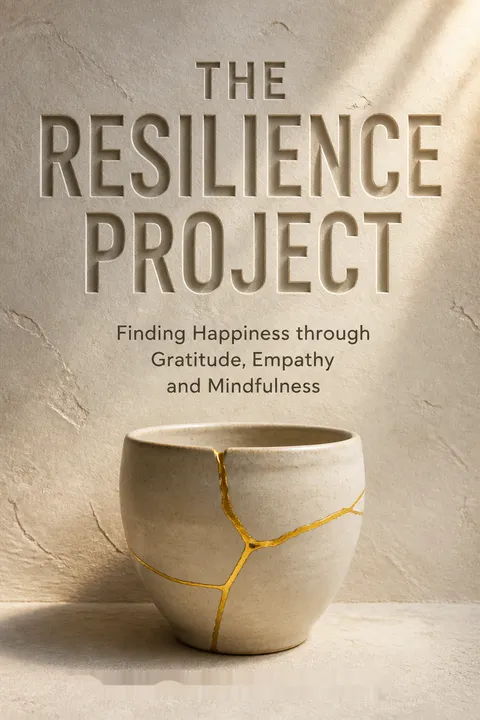


Key Takeaways
Believe the suffering you cannot see before judging the behavior.
Behavior is not the illness. As a teenager, Hugh treated his sister Georgia’s anorexia as defiance: if eating could fix it, why wouldn’t she eat? Only when she became dangerously underweight and was hospitalized did he grasp that she was ill, not choosing to torment her family. Years later, Georgia disclosed that she had been sexually abused as a young child. The book does not claim this explains every eating disorder; it shows how hidden pain can shape behavior in ways others may misread.
Empathy starts with a correction. Hugh’s regret is not that he failed to cure Georgia. He could not. It is that he withdrew from her and dismissed her suffering. When someone’s behavior seems baffling, curiosity and presence are safer starting points than blame.
The story makes an important distinction between understanding behavior and excusing harm: explanation can deepen compassion without removing the need for boundaries or treatment. It also exposes a common error in families and workplaces, where visible behavior is treated as a complete account of a person’s inner life. Georgia’s history is unusually painful, but the broader lesson is not to infer a diagnosis from a single story. Empathy is an approach to listening, not a substitute for clinical assessment, and it cannot guarantee that another person’s distress will resolve.
Use gratitude to notice what ordinary abundance has made invisible.
Attention shapes contentment. In a remote Himalayan village, Hugh met Stanzin, a boy who delighted in his worn shoes, school lunch, and friends. The school’s broken swing set looked bleak to Hugh, but the children were proud of it and invented ways to play. Stanzin’s appreciation did not mean hardship was absent; the book is careful not to suggest that poverty protects people from mental illness. His example showed Hugh how easily comfort can become background noise.
Question the “if, then” bargain. The promise that a new car, promotion, or home will finally deliver happiness tends to move the goalposts: another upgrade soon looks better. Gratitude redirects attention toward what is already present, without requiring anyone to pretend that real needs or deprivation do not matter.
This is a useful corrective to the assumption that wellbeing follows automatically from material comfort. Research on adaptation suggests that people often get used to improvements and return their attention to what remains unsatisfied, which helps explain why the “if, then” bargain keeps renewing itself. The story’s power comes from a concrete shift in attention, not a claim that hardship is secretly beneficial. Still, a vivid encounter with one community cannot establish that poverty produces happiness. Gratitude can widen perspective, but it should not be used to dismiss material inequality or unmet needs.
Write down three good things until your attention learns to find them.
Make noticing deliberate. Psychologist Martin Seligman and colleagues studied a simple exercise: each day, write down three things that went well and explain why they happened. The book reports that after a month, participants became more likely to look for positives in daily life. Another exercise, a “gratitude visit,” asks someone to write and personally deliver a thank-you letter to a person whose kindness went unacknowledged. Participants reported improved mood and fewer depressive symptoms, with some benefits lasting up to a month.
Try the small version first. Before bed, name three things that went well today. They need not be dramatic. Hugh preferred noticing good things as they happened, as Stanzin did, but writing offers a practical prompt when daily life moves too quickly for reflection.
The practice targets a genuine feature of attention: negative events can capture notice more readily than ordinary positive ones. A short written ritual gives the mind a counterweight and asks for specifics rather than vague optimism. It also resembles cognitive approaches that examine evidence for broad, negative conclusions. The useful claim is modest: repeated attention may support wellbeing, not that a journal can cure depression. The gratitude visit adds a social dimension, turning private appreciation into a message another person can receive. That makes the exercise both reflective and relational.
Turn empathy into small acts that make another person feel included.
Kindness gives empathy a form. Hugh describes empathy as understanding and sharing something of another person’s feelings. Stanzin acted on it: after Hugh hit his head on a low classroom doorway, the boy padded dangerous doorframes with scraps of cloth. At lunch, he would also leave a cricket game to join a younger child sitting alone. These gestures were modest, but they told others they were noticed and safe.
Make care observable. Hugh used simple acts in classrooms, such as arranging a soccer game so a struggling student could score goals, and inviting students to privately report kind actions. The book also cites research linking compassionate practice and acts of kindness with wellbeing and social connection. The point is not to perform grand rescues. It is to notice another person’s need and respond in a specific, proportionate way.
The strongest part of this account is its movement from an internal feeling to an observable act. Social support is not merely the belief that others care; it is also the experience of being included, helped, or remembered. Small gestures can make that care legible. The school examples also show how a group can organize kindness rather than leave it to spontaneous good intentions. A useful nuance is that empathy alone does not always produce helpful action, and emotional identification can become overwhelming. Practical compassion combines attention to another person with a response suited to the situation.
Build resilience with gratitude, empathy, and attention to the present.
GEM is Hugh’s shorthand. The Resilience Project groups three everyday practices as GEM: gratitude, empathy, and mindfulness. Gratitude notices what is already good; empathy attends to another person’s experience; mindfulness means focusing on the present moment. Hugh saw these habits modeled in Ladakh, where children voluntarily gathered for morning meditation. He initially thought sitting quietly was a waste of time, then joined in and found that he spent less time preoccupied with home and more time focused on the people around him.
Practise returning. After two weeks of meditation, Hugh noticed improved mood and mental clarity. He describes mindfulness not as emptying the mind, but as noticing when attention wanders and bringing it back. The practices are intended as everyday tools for facing life’s pressures, not as proof that people who struggle have failed to try hard enough.
GEM works as a memorable set because its elements address different parts of daily life: attention to one’s circumstances, attention to other people, and attention to immediate experience. Together, they can counter isolation and rumination without demanding a complicated routine. The framework also has a practical advantage in schools and teams, where shared exercises can create common language. Its limits matter: mindfulness can feel difficult or distressing for some people, and a brief personal improvement does not establish a universal effect. The practices are options to adapt, not moral tests or replacements for care.
Ask about distress even when silence feels safer.
A missed question can linger. Luke, a beloved cricket scorer with autism and significant social anxiety, phoned Hugh each month to ask how long remained before the season began. In September, he sounded unusually subdued. Hugh noticed the difference but did not ask whether Luke was all right. Four days later, the club learned that Luke had died by suicide. Hugh does not claim to know why Luke died or that one question would have changed the outcome.
Make room for an honest answer. The story’s lesson is not that friends can prevent every crisis. It is that awkwardness, fear of intruding, and assumptions that someone is “probably fine” can all silence a caring check-in. Ask plainly how the person is doing, then listen and offer time together. When someone may be in immediate danger, involve qualified support rather than trying to manage the crisis alone.
The restraint in this account matters. A suicide cannot responsibly be explained by one final conversation, and a friend should not be made to feel that perfect vigilance could have guaranteed a different outcome. At the same time, direct questions can open a path to disclosure that polite hints may leave closed. The practical standard is not to diagnose someone from a change in tone, but to show that concern is available and stay present for the answer. This section also reframes connection as an action: friendship sometimes means creating an opportunity to speak, not simply assuming one will arise.
Put your phone away to leave room for unscripted human connection.
Attention is contested. The book describes the “attention economy,” in which digital platforms compete for people’s time, often through features designed to encourage repeated checking. Hugh cites a 2017 Australian survey reporting that people checked their phones more than 35 times a day on average. He explains “variable schedule rewards” as unpredictable notifications or updates that keep users checking for the next interesting thing.
Make distraction less convenient. Hugh recommends removing tempting apps from the home screen, turning off notifications, deleting Facebook from a phone, and occasionally leaving the phone at home. Once without his phone in a quiet pub, he began talking with the barman, who was struggling with a breakup. The conversation might not have happened if Hugh had filled the pause by scrolling. A phone can connect people, but it can also crowd out nearby opportunities to connect.
The pub encounter makes the cost of distraction tangible: the device does not only consume minutes, it can occupy the small pauses in which conversation begins. The design perspective is valuable because it shifts the explanation from individual weakness to products competing for attention. That does not mean every user is helpless, or that online relationships are necessarily shallow. Digital spaces can provide community and support, especially for people who lack them locally. The useful question is whether a particular design choice serves the user’s purpose. Removing notifications or moving an app is a modest way to reclaim choice.
Give people a valued role, not just a place in the room.
Belonging needs participation. Beefy, a student with cerebral palsy and hydrocephalus, lost a part-time cleaning job because he could not work quickly enough. Hugh invited him to serve as water boy for his cricket club. Beefy took the role seriously, travelled to training, and soon became a cherished presence whose frank speeches could lift or humble the players. He later asked for a promotion and named the job himself: Chief Motivational Officer.
Inclusion changes the group, too. Beefy was not treated as a symbol of inspiration; he had a real task, relationships, and a voice. Years later, Collingwood Football Club invited him to help at training and speak to the players, an experience that delighted him. His story shows that inclusion is more than access. People need opportunities to contribute in ways that are meaningful to them and welcomed by others.
The club’s response illustrates a distinction often lost in discussions of inclusion: being present is not the same as being consequential. A real role can create reciprocal relationships, where the group benefits from a person’s contribution rather than framing that person only as a recipient of help. This aligns with research on belonging and self-determination, which emphasizes relatedness and agency. The story should not be reduced to an inspirational lesson about disability. Its sharper challenge is directed at institutions: identify genuine roles, adapt tasks where possible, and let the person’s own interests shape participation.
Let contribution guide your work, but set limits before purpose burns you out.
Purpose outlasts a scoreboard. Hugh once defined himself through cricket and hoped to play at the highest level. When that path narrowed, he recognized a deeper aim: helping young people and families avoid the isolation his family had experienced during Georgia’s illness. Teaching, and later The Resilience Project, gave that aim a practical form. Hugh distinguishes purpose from a goal such as winning a premiership; a goal can disappear through injury or circumstance, while a broader contribution can remain.
Meaning still needs limits. The project grew from Hugh struggling to pay for a coffee to working with hundreds of schools and sports teams. But after delivering more than 600 talks in one year, he collapsed during a presentation. His commitment had created reach, but it had also become physically unsustainable. The lesson is to serve a purpose without treating exhaustion as proof of devotion.
The distinction between goals and purpose is useful because it preserves direction when a specific outcome becomes unavailable. A purpose can organize effort across changing roles, as Hugh’s shift from aspiring cricketer to teacher demonstrates. Yet meaning can also make overwork easier to rationalize: an urgent mission may feel too important to pause. The collapse gives the narrative necessary friction. Sustainable service depends not only on personal conviction but on staffing, pacing, and financial systems. Purpose can guide decisions, but it cannot replace the operational limits that allow people and organizations to continue doing the work.
Treat resilience as support for recovery, never as proof of invulnerability.
GEM is not a cure-all. Georgia’s story ends not with a simple lesson that gratitude fixed anorexia, but with a woman who sought therapy, built daily practices, and gradually found a more peaceful relationship with her past. She writes down things that went well and meditates, but Hugh explicitly says GEM is not a silver bullet. Her recovery also involved confronting trauma and rebuilding family connection.
Use the right kind of help. Hugh presents himself as a teacher and storyteller, not a psychologist or psychiatrist. When someone disclosed serious mental health problems, he encouraged them to speak with a qualified professional. Gratitude, empathy, and mindfulness may support everyday wellbeing, but they do not diagnose or treat every condition. Resilience means having tools and relationships that help people meet difficulty, not expecting them to endure illness alone.
This qualification protects the book’s practical message from becoming a demand for self-sufficiency. Personal habits can support coping, yet mental illness may require professional treatment, social support, and changes in a person’s circumstances. The story of Georgia also resists the tidy before-and-after arc common in wellness writing: recovery involves relationships, time, and difficult conversations. The term resilience is most useful when it describes capacity supported by resources, not an obligation to withstand whatever happens. A reader who cannot meditate or feel grateful is not failing; that person may need a different tool or more substantial help.
Analysis
The book’s strongest organizing idea is not a claim that happiness can be engineered, but that attention and relationships can be practised. Hugh’s memoir gives that claim emotional force: his early failure to understand Georgia’s illness establishes the cost of interpreting visible behavior without imagining the unseen experience behind it. Stanzin then supplies a different model, not because hardship is secretly good, but because his ordinary acts of appreciation and care reveal habits Hugh had overlooked. The stories make the framework memorable by showing it at work in classrooms, clubs, and family life.
GEM is also deliberately portable. Gratitude can be written down, empathy can become a concrete act, and mindfulness can begin with noticing where attention has gone. That simplicity helps the practices travel from a school exercise to a professional sports team. Dustin Martin’s long journal streak and the classroom rituals suggest that repetition matters more than inspiration alone. The book therefore treats wellbeing less as a personality trait than as something supported by daily routines and social environments.
The evidence needs careful interpretation. The studies described support the possibility that gratitude, kindness, and mindfulness can improve some wellbeing measures, but such findings do not establish that these practices prevent or treat every mental illness. The Ladakh contrast is evocative, not a controlled comparison between cultures, and could be misused to romanticize poverty if separated from the author’s own caution. Likewise, Luke’s death cannot be reduced to one unanswered question, and Georgia’s recovery cannot be attributed to GEM alone.
The most useful reading holds both scales together. Individuals can adjust attention, make connection more intentional, and practise small acts. Schools, workplaces, families, and technology companies also shape how easy those actions are. The book is most convincing when resilience means a supported capacity to face hardship, not a demand to remain cheerful or cope alone. Its strongest ethic is relational: notice what is happening, make care visible, and know when ordinary practices are not enough.
Review Summary
The Resilience Project receives mixed reviews. Many praise its inspiring message and easy readability, finding value in its focus on gratitude, empathy, and mindfulness. However, critics argue it lacks depth, relies too heavily on sports anecdotes, and oversimplifies complex mental health issues. Some readers appreciate the personal stories, while others find them self-indulgent. The book's approach to resilience and its use of voluntourism experiences are also points of contention. Overall, readers seem divided on its effectiveness as a self-help guide versus a memoir.
People Also Read



Glossary
GEM
Three wellbeing practicesThe Resilience Project’s shorthand for gratitude, empathy, and mindfulness. Gratitude means noticing what is going well or already present; empathy means attending to another person’s experience; mindfulness means focusing on the present moment. The book presents these as repeatable practices that can support wellbeing, not as a cure for mental illness or a replacement for professional care.
Three things that went well
Daily gratitude exerciseA gratitude practice described in research by Martin Seligman and colleagues. Each day, a person writes down three events that went well and explains why each happened. The exercise encourages deliberate attention to positive experiences. The book reports that participants became more likely to notice positives after practising for a month.
Gratitude visit
Delivered thank-you letterAn exercise in which a person writes a letter to someone who has helped or shown kindness, but has not been properly thanked, then delivers the letter in person. The book describes research in which participants reported improved mood and fewer depressive symptoms after the visit, with some benefits lasting up to a month.
Negativity bias
Greater attention to negativesThe tendency for negative experiences or information to attract more psychological attention than positive experiences. The book connects this bias to the difficulty of noticing ordinary good events and presents gratitude practices as one way to deliberately broaden attention. The term describes a tendency, not a claim that people are incapable of recognizing positive experiences.
Dis Challenge
Point out what you appreciateA gratitude exercise Hugh used with students and professional athletes. For a set period, participants are asked to pause when they notice something they feel grateful for, point it out, and name it. The practice adapts Stanzin’s habit of openly noticing the shoes, food, friends, and other things he appreciated in daily life.
Attention economy
Competition for people’s attentionThe online marketplace in which platforms compete to capture and retain users’ time and attention, often because more engagement can generate more advertising revenue. The book uses the term to explain why social apps employ notifications, personalized feeds, and other features that encourage repeated checking.
Persuasive technologies
Designs that shape user behaviorDigital features designed to influence how people use an app or platform, including how often they return and how long they stay. The book discusses notifications, recommendations, auto-loading content, and rewards as examples. The term highlights that repeated phone checking is shaped not only by individual choice but also by deliberate product design.
Variable schedule reward
Unpredictable digital rewardA platform feature that offers an uncertain reward when a user checks an app, such as a new notification, message, or update. Because the user cannot know exactly when something interesting will appear, checking can become repetitive. The book compares this pattern with the unpredictable rewards used in poker machines.
FAQ
What's "The Resilience Project" about?
- Focus on Happiness: "The Resilience Project" by Hugh van Cuylenburg explores how to lead a happier, more contented, and fulfilling life through gratitude, empathy, and mindfulness.
- Personal Journey: The book is based on Hugh's experiences as a teacher in India, where he observed the happiness and resilience of underprivileged children.
- Mental Health Awareness: It addresses the contrast between the mental health struggles in developed countries and the contentment found in less privileged communities.
- Practical Tools: The book provides tools and exercises to help readers integrate gratitude, empathy, and mindfulness into their daily lives.
Why should I read "The Resilience Project"?
- Improved Wellbeing: The book offers practical advice on improving mental health and overall wellbeing through simple daily practices.
- Inspirational Stories: Hugh shares personal and moving stories, including his sister's battle with anorexia, which provide real-life context to the concepts discussed.
- Scientific Backing: The principles of gratitude, empathy, and mindfulness are supported by research and studies, making the advice credible and actionable.
- Universal Relevance: The lessons and exercises are applicable to anyone, regardless of age or background, aiming to enhance personal happiness and resilience.
What are the key takeaways of "The Resilience Project"?
- Gratitude: Focus on what you have rather than what you lack to cultivate happiness.
- Empathy: Being kind and understanding towards others can significantly boost your own happiness.
- Mindfulness: Practicing mindfulness helps you stay present and reduces stress and anxiety.
- Connection: Building strong, meaningful connections with others is crucial for mental health and resilience.
How did Hugh van Cuylenburg's experiences in India influence "The Resilience Project"?
- Observations of Happiness: Hugh noticed the happiness and resilience of children in a remote Indian village despite their lack of material wealth.
- Key Traits Identified: He identified gratitude, empathy, and mindfulness as the key traits contributing to their happiness.
- Personal Transformation: The experience was transformative for Hugh, leading him to integrate these principles into his own life and work.
- Foundation of the Project: These observations became the foundation for The Resilience Project, which aims to teach these principles to others.
What is the significance of gratitude in "The Resilience Project"?
- Focus on Positives: Gratitude involves focusing on the positives in life, which can shift your mindset from scarcity to abundance.
- Daily Practice: Hugh suggests writing down three things that went well each day to cultivate a habit of gratitude.
- Scientific Support: Research shows that practicing gratitude can improve mood, reduce symptoms of depression, and enhance overall wellbeing.
- Real-Life Examples: The book provides examples of how gratitude has positively impacted individuals, including Hugh's own experiences.
How does empathy play a role in "The Resilience Project"?
- Understanding Others: Empathy involves understanding and sharing the feelings of others, which can lead to acts of kindness.
- Oxytocin Release: Kind acts release oxytocin, the 'love hormone,' which promotes feelings of happiness and connection.
- Stanzin's Example: Hugh shares the story of Stanzin, a boy in India who exemplified empathy through his caring actions towards others.
- Practical Exercises: The book includes exercises to help readers practice empathy in their daily interactions.
What is mindfulness according to "The Resilience Project"?
- Present Moment Focus: Mindfulness is about focusing on the present moment, which can reduce stress and improve mental clarity.
- Daily Meditation: The book suggests incorporating meditation into daily routines to enhance mindfulness.
- Benefits of Mindfulness: Practicing mindfulness can lead to lower levels of stress, anxiety, and depression, and improve overall quality of life.
- Cultural Practices: Hugh observed the daily meditation practices of the villagers in India, which inspired him to include mindfulness in the project.
How does "The Resilience Project" address mental health issues?
- Personal Stories: Hugh shares personal stories, including his sister's struggle with anorexia, to highlight the impact of mental health issues.
- Practical Solutions: The book offers practical solutions through the principles of GEM (Gratitude, Empathy, Mindfulness) to improve mental health.
- Support Resources: It includes a list of mental health support services for readers who may need professional help.
- Community Impact: The project aims to create a positive impact on mental health in schools, sports teams, and workplaces.
What are some exercises from "The Resilience Project" to practice GEM?
- Gratitude Journaling: Write down three things that went well each day to cultivate gratitude.
- Empathy Letters: Write a letter to someone expressing gratitude or empathy to strengthen connections.
- Mindfulness Walks: Go for a walk and focus on three things you see, hear, and feel to practice mindfulness.
- Daily Reflection: Reflect on positive experiences and interactions to reinforce the practice of GEM.
How has "The Resilience Project" been implemented in schools and sports teams?
- School Programs: The project has been integrated into the curriculum of over 1400 schools, teaching students the principles of GEM.
- Sports Partnerships: It has been adopted by major sports teams, including AFL and NRL clubs, to enhance player wellbeing and resilience.
- Positive Feedback: The project has received positive feedback from educators, students, and athletes for its impact on mental health and performance.
- Ongoing Support: The Resilience Project provides ongoing support and resources to schools and teams to ensure the principles are effectively practiced.
What are the best quotes from "The Resilience Project" and what do they mean?
- "Focus on what you have, not what you don't have." This quote emphasizes the importance of gratitude in finding happiness.
- "Empathy is the ability to feel what another person is feeling." It highlights the role of empathy in building connections and fostering kindness.
- "Mindfulness is taking time to focus solely on the present moment." This quote underscores the benefits of mindfulness in reducing stress and improving mental clarity.
- "We are put on Earth to connect with others." It reflects the book's message about the importance of meaningful connections for mental health.
How can "The Resilience Project" help someone struggling with mental health?
- Practical Tools: The book provides practical tools and exercises to help manage stress, anxiety, and depression.
- Positive Mindset: It encourages a positive mindset through gratitude, empathy, and mindfulness practices.
- Supportive Community: The project fosters a supportive community in schools, sports teams, and workplaces to promote mental wellbeing.
- Professional Resources: It includes information on mental health support services for those who need professional help.
Download PDF
Download EPUB
.epub digital book format is ideal for reading ebooks on phones, tablets, and e-readers.








