Key Takeaways
1. Embrace Sabbath as a Gift, Not a Burden
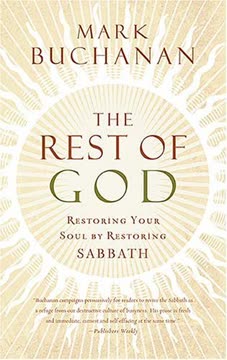
Sabbath imparts the rest of God—actual physical, mental, spiritual rest, but also the rest of God—the things of God’s nature and presence we miss in our busyness.
A necessary cure. Our pervasive culture of busyness is spiritually destructive, leading to exhaustion, irritability, and a loss of perspective. Sabbath is presented not as an archaic obligation, but as a vital refuge and a life-giving gift we cannot afford to ignore. It's a "catnap" in the sunlight of a winter's day, a small yet ample space to empty and fill ourselves.
More than a day. Sabbath is both a specific day set apart (traditionally Friday sundown to Saturday sundown for Jews, or Sunday for Christians) and an enduring attitude of the heart. It's a disposition of stillness and attentiveness to God's presence, even amidst life's chaos. This dual nature means that a "Sabbath heart" is essential to truly enter and benefit from a "Sabbath day."
An invitation to stop. The book argues that we are "dying for the rest of God," having become "whirligigs of motion" with little joy or fruit. Sabbath is God's invitation to cease our striving, to "be still, and know that I am God." This stillness allows us to receive a deeper knowing of God that cannot be pursued through busyness, offering a unique form of mending for our "clay pot" existence.
2. Redefine Work as a Sacred Calling
The maid who sweeps her kitchen is doing the will of God just as much as the monk who prays—not because she may sing a Christian hymn as she sweeps but because God loves clean floors.
Work is broken. Genesis reveals that while work was originally good, the Fall cursed the ground, making toil painful and frustrating. This explains why we often dislike our jobs, experiencing them as "a fistful of thistles." However, God's solution isn't to flee work, but to find rest in Him amidst our burdens.
All work is "the Lord's work." The common misconception that "the Lord's work" only refers to pastoral or missionary duties is challenged. Jesus's interaction with the fishermen (Luke 5) shows He elevates honest labor, making it enjoyable and profitable, before calling them to new tasks.
- Adam was a gardener, farmer, taxonomer, poet.
- Moses prayed for God to "establish the work of our hands."
- Jesus was a carpenter; Paul was a tentmaker.
Sanctity in labor. Any job that is not criminal or sinful can be a calling, a vocation from God. Martin Luther emphasized that good craftsmanship, like a shoemaker making good shoes, is Christian duty. Work done with devotion becomes worship, transforming simple tasks into sacraments of God's presence.
3. Cultivate a Sabbath Heart by Changing Your Mind
Transformation is the fruit of a changed outlook.
Mindset over circumstances. We often delay change, waiting for external circumstances to shift ("if only," "as soon as"). However, God's economy prioritizes internal transformation: "Be transformed by the renewing of your mind." The story of Jason, whose behavior changed simply by understanding his mother's love, illustrates this power of a changed mind.
Sanctifying time. A Sabbath heart sanctifies time, perceiving and receiving it differently from ordinary time. This isn't a ritual but a perspective shift, choosing to see life through a different lens. Just as Adam named animals before receiving Eve, God orchestrates interruptions to sharpen our resolve and help us recognize what truly satisfies our deepest needs.
Chronos vs. Kairos. Ancient Greeks distinguished between chronos (clock time, a gauntlet, consuming) and kairos (time as gift, opportunity, pregnant with purpose). Busyness often traps us in chronos, leading to emptiness. Orienting towards kairos means asking "What is this time for?" and discovering purpose in simple things, experiencing the sacred amidst the commonplace.
4. Trust God's Sovereignty to Find True Rest
Either God’s always at work, watching the city, building the house, or you need to try harder.
Rest as an act of faith. Unlike sleep, which our bodies eventually force upon us, Sabbath rest is resistible. True Sabbath, which empties and fills us, depends on complete confidence and trust in God's goodness and sovereignty. If we believe God works all things for good, we can relax; if not, we must constantly worry and strive.
The power of thankfulness. A Godward orientation is cultivated through thankfulness, which acts as a "secret passageway" into deeper dimensions of God's presence and character. Practicing thankfulness, even in difficult circumstances, trains us to recognize God's sufficiency, generosity, and protection, transforming our perception of life's challenges.
God makes art from junk. The story of Paul and Silas singing in prison, leading to an earthquake and the jailer's conversion, exemplifies how God can conjure good from evil. Their thankfulness, even amidst suffering, revealed a God so sovereign and good that it inspired others to trust Him. This demonstrates that when we find rest in God alone, He becomes bigger, and our problems shrink.
5. Remove the Taskmasters of Guilt and Busyness
To refuse Sabbath is in effect to spurn the gift of freedom.
Sabbath as liberation. The Deuteronomic command to observe Sabbath reminds Israel they were slaves in Egypt, denied the freedom to rest. Refusing Sabbath is akin to willingly resuming the yoke God broke, allowing internal "taskmasters" of guilt and worry to dictate our pace. These internal voices, often rooted in half-truths, convince us we cannot rest until all work is done.
The lie of endless obligation. Taskmasters thrive on the belief that our work is never done and never good enough, making rest feel undeserved or irresponsible. However, God's rest is a sheer gift, not a reward for completion. It's a "stop-work order" in the midst of unfinished tasks, given without apology or guilt, simply because God commanded it.
Trust over striving. Moses's attempt to kill a taskmaster failed; only God can truly remove them. Sabbath is about trusting God enough to relinquish control over our money, work, status, and plans for one day out of seven. It's like camping "circumcised on the plains of Jericho," vulnerable yet trusting God's protection and provision, allowing Him to wound and heal us.
6. Reject Legalism and Embrace Life-Giving Joy
If you do not go your own way, you will find your joy.
The pitfalls of legalism. Sabbath has often been corrupted by legalism, turning a gift into a gloomy tangle of rules and prohibitions. The Pharisees, who plotted murder on the Sabbath while condemning healing, exemplify this "mindless" and competitive approach. The author admits to falling into similar patterns, judging others for not adhering to his self-imposed rules.
Sabbath's golden rule. God gave broad, general prescriptions for Sabbath, not tedious details, to protect us from our tendency to clutter simple things. The "golden rule" of Sabbath is twofold:
- Cease from what is necessary (the "oughts" and obligations).
- Embrace that which gives life (what re-creates you, not just creates).
Finding true joy. This rule allows us to trade the "have-tos" for the "get-tos," pursuing activities that genuinely restore and delight us, like chopping wood for exhilaration or baking cookies with children. Jesus consistently broke man-made Sabbath rules to heal and liberate, demonstrating that Sabbath is for life and life abundant, not rigid adherence.
7. Prioritize Play as a Subversive Act of Worship
Play is subversive, really. It subverts business as usual. It subverts necessity. It subverts utility.
The death of play. Adulthood often equates play with irresponsibility, leading to a grim, utilitarian existence where everything must be justified by its usefulness. This mindset, where "the god of utility is utterly ascendant," robs us of joy and makes us "bland and sullen."
Play as re-creation. Sabbath is for play, not just passive rest. It's about engaging in "sheer, unapologetic uselessness" – producing nothing but adrenaline, laughter, and memories. C.S. Lewis's depiction of Aslan playing after his resurrection highlights play as a vital, life-affirming act that restores and makes one feel "alive in every joint and marrow."
A rumor of eternity. Play operates outside strict chronological time and utility, hinting at a world beyond our immediate concerns. It's a "foretaste and a heralding of eternity," rehearsing heaven. When we play, we nudge the border of forever, reminding us that life is more than just getting things done; it's about experiencing the fullness of God's creation.
8. Seek Restoration and Wholeness on the Sabbath
Restoration shocks the system. It alters not just our health—it alters our world.
Beyond mere rest. Sabbatical, or extended Sabbath, is not just a break but an opportunity for deep restoration. The author's own experience reveals how busyness can lead to paranoia, irritability, and a loss of care. The goal is to return "restored," not just rested, meaning a deeper healing of the soul.
"Do you want to get well?" Jesus's question to the invalid at Bethesda highlights that sickness can become a person's identity and even a strange comfort. Restoration is an "invasion" that meddles with what we've adapted to, requiring a willingness to relinquish the "privilege of sickness" and embrace the "obligations of health."
- The man with the shriveled hand had adapted.
- The woman bent double for eighteen years had adapted.
- Restoration means losing the unique status suffering bestows.
God's re-creation. Jesus's favorite day to heal was the Sabbath, deeming it most appropriate for liberation from affliction. He wasn't "working" but "setting free." This process of being set free can be challenging, as it strips away our self-made props and forces us to confront our true selves, revealing our dispensability and our identity apart from our abilities.
9. Practice Frugality to Make Feasting Meaningful
Without a fast, it’s hard to recognize a feast.
Gluttony vs. feasting. Our culture's constant overabundance has dulled our capacity for true feasting, making Sabbath meals just "one more big meal." This indiscriminate consumption means we "eat ourselves stuffed daily," losing the sense of anticipation and thankfulness that makes feasting special.
Staying hungry for God. Moses warned Israel in Deuteronomy 8 to "be careful that you do not forget the LORD your God" when they ate and were satisfied, lest their hearts become proud. Frugality in daily eating, or even occasional fasting, helps keep the "memory of hunger" alive, making true feasts (on Sabbaths, holidays) feel like gifts, not rights.
Jesus's "food." Jesus declared His "food... is to do the will of him who sent me and to finish his work." This "work" is a spiritual nourishment that replenishes rather than depletes. Sabbath helps reorient us to this kind of work, allowing us to step back and ask if what we're doing is truly God's will and if it feeds our souls.
10. Cultivate Deep Listening to Hear God's Voice
In the making of him, the element of silence was immense.
Speaking from listening. Our authority to speak, whether as authors or in daily life, is derived from our capacity to listen to God. Carl Sandburg's description of Lincoln's childhood highlights the immense role of silence in shaping a person capable of deep wisdom and leadership. Without silence, our lives become "absurd," deaf to the voice of truth.
God's questions. God often speaks through questions, not just commands, inviting us into relationship rather than merely dictating. These questions—"Where are you?", "Who told you that you were naked?", "What is it you want me to do for you?"—are designed to hook us, pry us open, and force us to confront ourselves and our desires.
Sabbath for listening. The apostle John, in exile on Patmos on the Lord's Day, "turned around to see the voice that was speaking to me," suggesting a spiritual synesthesia where God's voice was tangible. Sabbath, with its enforced stillness and aloneness, creates the necessary backdrop for cultivating this capacity to hear God's voice, making it clear enough to pierce our inner clamor.
11. Remember, Reflect, and Anticipate for a Full Identity
The future shapes you as much as the past or the present, maybe more.
Memory as identity. Memory is crucial for identity, helping us "re-member" broken pieces of our past to create wholeness. Busyness, however, erodes memory, turning it into mere nostalgia or destructive grudges. Sabbath provides the time needed to remember well, without bitterness or self-pity, reminding us of who we truly are.
Reflection in solitude. Reflection flourishes in rest and solitude, coaxing out hidden fears, longings, and truths about ourselves. Jacob's wrestling match at the Jabbok, where he was forced to reveal his name and was renamed Israel, illustrates how deep self-reflection, often painful, is essential for discovering our true identity and meeting God.
Anticipation completes the journey. Beyond remembering the past and reflecting on the present, Sabbath nurtures anticipation for the future. This "nurtured expectancy about things unseen" helps us understand who God truly is and who we are becoming in Him. Focusing on God's future—the "kingdom that cannot be shaken"—reorients our perspective, making present problems shrink and past hurts lose their power.
Last updated:
Review Summary
The Rest of God receives strong praise for its poetic, practical approach to understanding Sabbath rest, with many readers appreciating Buchanan's gentle invitation and actionable liturgies. Common criticisms include lengthy narratives, storytelling tangents, and purple prose that some found distracting. Several reviewers compared it favorably to John Mark Comer's work, though others felt Comer handled the topic better. The book resonates most with those intentionally pursuing Sabbath practices, offering both theological insight and practical implementation strategies that transformed many readers' perspectives on rest.
Similar Books