

Plot Summary
Prologue
James Willoughby abandons Oxford’s prescribed path toward the Church when anatomy awakens his appetite for practical science. He returns home to announce that he will train as a physician in Edinburgh, defying his father’s plans; that night, his father dies.
James’s family blames his rebellion, but the larger consequence is financial: his father’s gambling has left the estate near ruin. Looking back, James frames his departure as the beginning of a new life, one in which he will trade inherited respectability for knowledge, danger, and love.
The opening binds James’s independence to an inheritance he did not choose. His father’s death follows his declaration of purpose, making guilt an early shadow over ambition, while the family’s financial collapse reveals that the respectable household was already built on risk and concealment. James’s retrospective voice calls his story a resurrection before the reader knows what must die: not simply his old career plan, but his reliance on class, family, and religious certainty to tell him who he is. The framing also establishes a tension that governs the novel: scientific knowledge promises liberation, but its pursuit will demand moral compromises that James cannot neatly separate from love.
The Trunk on the Stairs
Edinburgh greets James with November rain, soot, and streets far rougher than the world he left behind. At the Hope and Anchor, his unwieldy trunk nearly crushes Charlie, a fellow medical student, who helps him carry it upstairs and brings him to meet Phillip, Luke, and Hamish.
The group’s casual fascination with a human ear on their pub table unsettles James, but their account of private anatomy schools kindles his curiosity: unlike the crowded university theatre, these schools give each student a body to study. James wants to become a physician, not return to the clerical future his father selected. His first glimpse of Edinburgh’s practical, irreverent medical culture promises the education he came north to find.
James’s entrance through a near-disaster with luggage makes independence physical before it becomes ideological. He cannot manage the trunk alone, yet accepting Charlie’s help begins a friendship that offers belonging without the family hierarchy he has left. The ear on the pub table is both an ethical shock and a sign of the city’s alternative curriculum: knowledge here is handled, not merely discussed. James still imagines science as orderly and reverent, so his fascination contains a blind spot. His desire to use his hands is sincere, but he has not yet considered whose bodies will make that education possible.
The Wax Vein Miracle
At Louis Malstrom’s open demonstration, James makes his first incision into a corpse and injects hot black wax into an artery. Watching the wax trace the vessels of a forearm transforms the anatomy diagrams he studied into visible, physical knowledge. He wants a place at Malstrom’s school, but tuition costs twenty-four pounds, beyond the allowance his elder brother now controls.
When James asks Malstrom’s assistant, Aneurin MacKinnon, about working in exchange for reduced fees, Aneurin first refuses, then recognizes that James lives above Greyfriars Kirkyard. He offers half-price tuition if James watches the sexton from his window and signals when the man leaves or returns. James accepts, believing he is helping catch grave robbers.
The wax demonstration gives James a model of science as revelation: hidden structures become legible when a skilled hand intervenes. That wonder makes him vulnerable to the bargain that follows. The tuition problem is not incidental hardship; it is the mechanism that links his education to the underground economy supplying bodies. Aneurin’s offer turns James’s domestic space into part of an investigation, while the apparently civic purpose of catching thieves keeps the moral cost out of sight. James’s first compromise therefore arrives disguised as a practical solution, allowing him to tell himself that curiosity and decency still point in the same direction.
The Window Watchman
During one night watch, James sees the sexton leave at an unusual hour and lights his lamp as arranged. A figure then throws pebbles at his window: Aneurin, trapped inside the kirkyard after a failed body snatch. James hauls him into the room with a rope, then accuses him of being the grave robber he was meant to expose.
Aneurin insists that he takes bodies, not their possessions, and explains how Edinburgh’s anatomy schools cannot obtain enough legal cadavers for their students. Mary Paterson joins them at the Pig and Swindle, where James learns she surveys funerals and warns the crew about grave defenses. Aneurin reveals a body is hidden beneath James’s window. James agrees to help retrieve it.
The episode converts James from observer to participant through a sequence of choices, not a single revelation. He lights the signal in good faith, rescues Aneurin from immediate danger, then hears an argument that reframes theft as public service. Mary’s intelligence work further shows that the trade is organized rather than impulsive, which makes the moral problem harder to dismiss as individual criminality. James’s agreement is partly coerced by the body already outside his window, but he is also drawn by the promise that his scientific ambitions matter. The scene exposes how easily a practical emergency can recruit someone into a system before he has judged it.
Malstrom's Hidden Room
James and Aneurin rig a rope over a ceiling beam and haul the concealed corpse through James’s window. They hide it in his trunk, then ride a milk cart to Malstrom’s school at dawn. While waiting for his payment, James opens a door Aneurin told him not to enter and finds a windowless room filled with dismembered bodies, jars of organs, and bones boiling over a fire.
He vomits and flees, convinced that Malstrom and Aneurin are sadists. James misses class rather than face them. His revulsion becomes a crisis of vocation: if the school’s polished lessons depend on this hidden room, he cannot tell himself that his own education is separate from its methods.
The hidden laboratory destroys the distinction James had relied on between honorable science and dirty procurement. Its secret location makes the school’s public respectability feel like a deliberate partition, not an innocent oversight. Yet the scene does not prove that the experiments are purposeless; it reveals that James lacks the knowledge to interpret what he sees. His immediate moral certainty is understandable, but it also protects him from recognizing his own complicity in moving the body. The flight marks a genuine ethical refusal, while the intensity of his response suggests that he is not merely rejecting the work. He is afraid that the work has already changed him.
The Price of Progress
At Christmastide, James discovers that his family has stopped sending his allowance and ordered him home to take a post with the East India Company. The news makes it impossible to continue his studies, and the money Aneurin still owes him for the first body would cover little more than rent. James returns to Malstrom’s, asking to join the crew as a digger.
Aneurin refuses to recruit him merely because he is desperate, then takes him through the laboratory and explains the purpose of its work: anatomical research, possible treatments, dentures for injured veterans, and skeletons sent to distant schools. James sees both the scientific value and the cost. He accepts the work, not as an innocent student but as a willing Resurrectionist.
Aneurin’s explanation does not erase the horror of the laboratory; it gives James a framework in which horror can be evaluated against consequences. The shift is psychologically persuasive because James has already experienced the power of practical anatomy, and because the family’s alternative is a life selected for him by financial necessity. His decision is therefore neither pure altruism nor simple self-interest. He wants knowledge, wages, and Aneurin’s regard. The word Resurrectionist supplies a moral identity that body snatching alone cannot offer, but it also risks laundering exploitation through noble purpose. James’s consent is real, yet it is made under severe economic pressure.
Greyfriars in the Dark
When the medical term resumes, Aneurin brings James to meet the crew at Greyfriars: the gravedigger Diggs, dockworker Thomas, and young lookout Willis. James expects to help immediately and is corrected when he digs carelessly into a coffin. Aneurin explains the method: remove only part of the soil, open the coffin at the shoulders, extract the body, return its clothes, and restore the grave so the disturbance is hard to detect.
A collar around the first corpse’s neck forces Thomas to sever its head, lowering its value and requiring the body to be sold in pieces. James nevertheless joins the labor, learns to pull the corpse from the grave, and begins earning enough to support his studies.
The grave’s choreography changes transgression from a single shocking act into skilled labor. James learns how discipline, timing, and care for the disturbed ground can coexist with the violation of a burial. His medical eye even finds knowledge in the severed body, a response that marks his growing acclimation. The corpse’s collar interrupts the crew’s efficient routine and reminds them that families actively resist the trade; the mutilation is a consequence of that resistance, not an abstract cost. James’s earnings make the arrangement materially sustainable, while his new competence gives him a place among people who initially doubted his usefulness.
The Dead Man's Alibi
On a later dig, the sexton’s unexpected appearance forces James to wheel a stolen corpse through Edinburgh instead of taking it to his room. Constable Murray stops him and uncovers the naked body. Aneurin arrives and invents an elaborate story that the dead youth is Willis, drowned and in need of revival through a galvanic battery.
Murray lets them go, then recognizes Willis alive later that night and gives chase. Aneurin and James escape through the Vaults and reach James’s room breathless and laughing. James takes Aneurin’s hands rather than letting him retreat, and Aneurin kisses him. The relationship that has grown through work and private drinking becomes openly romantic, though still hidden from the world outside their room.
The false resurrection is comic improvisation built on the same scientific language that has already drawn James into the trade. Aneurin saves the crew by turning public fascination with experimental medicine into cover, while Murray’s brief credulity exposes how badly the authorities understand the practices they police. The chase makes danger shared, and the kiss follows not as a sudden escape from the plot but as an emotional consequence of mutual reliance. James actively stops Aneurin from withdrawing, reversing the pattern in which others have dictated his life. Their intimacy begins in a space where deception has protected them, foreshadowing the difficulty of separating private truth from public survival.
Twenty Thousand Pounds
James’s attachment to Aneurin deepens, even as Aneurin grows distant while a threat closes around the Resurrectionists. James’s sister Edith arrives in Edinburgh and confronts him over his failure to return to the family.
At dinner, she reveals that Violet Witherspoon’s family wants James to court her and that her dowry could restore the Willoughbys’ fortunes. James refuses to trade medicine and Aneurin for wealth. The next morning Edith finds the two men in James’s bedchamber and threatens to tell their brother Richard unless James returns to London.
Aneurin panics and begins packing. After James reassures him, Aneurin explains that a Spanish pilgrim once blamed him for their intimacy, leading to a death sentence; a gaoler’s wife helped him escape Iona.
Edith’s proposal makes class privilege tangible as a bargain: James can rescue his family’s status if he submits his future to a marriage arranged around money and reputation. His refusal is not cost-free, since the same social machinery could expose Aneurin to mortal danger. The bedroom discovery therefore brings the public threat into the couple’s private space. Aneurin’s panic is rooted in an earlier injustice in which a wealthy man shifted blame onto a poorer partner, and his flight is a survival response rather than a lack of love. James’s choice to stay with him becomes an informed commitment to a risk he once understood only vaguely.
The White Hart Introduction
A London gang led by Crouch is tightening its hold on Edinburgh’s body trade, with Dr. Robert Knox at the center; Mary warns that the group has driven rival crews from their usual grounds, and Daft Jamie, a longtime lookout, has disappeared.
James offers to approach Knox through Hamish, who has claimed to be one of the doctor’s assistants. Hamish instead arranges for James to transport bodies for the suppliers Burke and Hare. At their White Hart meeting, James sees the pair’s unsettling manner but accepts the work to learn where their bodies come from.
He and Aneurin make a daytime delivery from their squalid Tanner’s Close lodging to Knox’s school, carrying a corpse in a tea-chest and leaving with questions about the men’s unexplained access to fresh bodies.
The conspiracy expands through a gap between visible institutions and invisible supply. Knox’s prestige attracts students, but the source of his specimens remains opaque; Crouch’s violence turns that ambiguity into a struggle over control. James’s infiltration is motivated by loyalty to his crew, yet his class presentation also makes him useful to people who would otherwise distrust him. The first delivery places him inside Knox’s operation without yet revealing its worst crime. Burke and Hare’s ordinary business arrangement is precisely what makes them difficult to read: their respectable role as suppliers conceals the possibility that the body trade has crossed from grave violation into murder.
Mary in the Chest
At Knox’s laboratory, James and Aneurin open the tea-chest and find Mary Paterson’s body inside. Knox’s assistants treat her as a valuable specimen, and Aneurin attacks one of them before James helps pull him away. Knox praises the corpse’s condition, raises its price, and orders it prepared for a ticketed demonstration.
Outside, James and Aneurin force Hamish to admit he is only Knox’s slop-boy, not a medical assistant, and demand information about Burke and Hare. Hamish says they have supplied Knox for months but knows little about their sources. Mary’s death transforms the investigation: the crew is no longer trying only to protect its livelihood from Crouch’s network. Aneurin now has to establish who killed their friend and why.
Mary’s body is the point where the novel’s central ethical tension becomes personal and irreducible. The school’s language of specimen, price, and demonstration turns a known woman into an object, while Aneurin’s violence is an attempt to stop that conversion. His attack also shows that his professed scientific discipline has limits when confronted with a person he loves. Knox’s response reveals a hierarchy in which institutional prestige can absorb almost any moral shock. Hamish’s exposed position complicates James’s assumptions about status: both men have performed identities to gain access, but one has done so for knowledge and the other for social standing among students.
Five Blue Vials
Aneurin leads James and Hamish into Knox’s cellar and opens whiskey barrels holding preserved bodies, including Mary and Daft Jamie. Knox’s intake ledger lists several Burke and Hare deliveries as deaths by alcohol-induced asphyxiation, but gives no source for the bodies.
Aneurin tests fluid from their lungs with a reagent he developed; every sample turns blue, showing no bile and undermining the stated cause of death. He also finds cracked back teeth and bruising around the victims’ noses, signs consistent with their mouths and noses being forcibly sealed.
The evidence points to deliberate suffocation. Murray refuses to act without a body and dismisses the men’s testimony as self-serving. Aneurin decides they must catch Burke and Hare with a fresh victim.
Aneurin’s investigation makes scientific procedure a counterweight to social authority: the color change, ledger marks, and physical injuries can be inspected and repeated, unlike the police’s reliance on whose testimony counts. Yet evidence alone cannot overcome class prejudice or the Resurrectionists’ compromised reputation. The blue vials are powerful because they turn an unseen crime into a visible discrepancy, but the officers choose not to treat that discrepancy as sufficient. James watches his professional identity and his criminal identity converge: the same anatomical training that makes him complicit in body procurement equips him to identify murder. The section refuses an easy opposition between science and morality; here science offers a method, not automatic justice.
The Roof Hatch
Aneurin sends Charlie and Phillip, posing as travelers, to gain Burke and Hare’s hospitality while Willis watches the house. James joins them, and the crew dumps its drinks while the hosts serve liquor and perform genial company.
When Charlie and Phillip leave to summon officers, Burke locks the door and reveals that Knox knows about James and Aneurin. The men attack; James is beaten and held at knife-point while Aneurin fights Hare. A passing constable ignores their cries. Aneurin sets his wig alight and throws it onto the straw bed, distracting the killers.
In the windowless lodging room, they haul the body of a murdered lodger, Mrs. Docherty, into the rafters as a counterweight, pick the roof hatch lock with James’s broken watch hands, and escape as Charlie returns with police.
Burke's Last Morning
Police find Mrs. Docherty’s body at the lodging house and arrest Burke and Hare. Aneurin gives the prosecution his scientific findings, now supported by a victim recovered at the scene, but the authorities offer Hare immunity in exchange for testimony against Burke. Knox is not prosecuted; his reputation and position shield him from a case the law does not pursue.
At Burke’s public hanging, the crew cannot bear the crowd’s ghoulish celebration and retreats to a wall above the Water of Leith. They drink to Mary, Daft Jamie, and the other victims, then hear the distant roar that marks Burke’s death. Aneurin pours the remaining whiskey into the river. The verdict punishes one killer, but leaves the larger machinery intact.
The legal resolution is deliberately incomplete. Aneurin’s evidence can establish a pattern, but the prosecution prefers the testimony of a compromised accomplice because the institutions of the period do not grant scientific expertise or poor victims equal standing. Burke’s hanging satisfies public appetite for spectacle while Knox escapes the same scrutiny that his students and suppliers could not. The crew’s retreat from the crowd refuses to participate in that spectacle; their private toast restores names and relationships to people whom the trial has reduced to evidence. Pouring away the whiskey gives grief a ritual form, but it cannot convert a partial conviction into full justice.
An Eye in the Watch
With the Burke case closed, James accepts an apprenticeship at Malstrom’s for the next academic year, and Charlie and Phillip are invited to join him. Summer brings a different danger: Edith still expects James to appear in London and court Violet.
James plans to discourage the match, but Aneurin reveals that a new national police service has offered him a three-month residency to apply medical science to investigations. He initially refuses to go with James, fearing their relationship will expose them, until James makes clear that choosing him is James’s own decision.
Aneurin agrees to travel. Before leaving for London, he repairs James’s father’s watch, replacing its face with a miniature portrait of his eye opposite an anatomical drawing. James then begins his examinations.
The ending resolves the opening’s question of who gets to design James’s life. His father’s watch once carried inherited authority; Aneurin transforms it into an object that joins intimacy with scientific observation, allowing James to keep memory without submitting to its demands. The London offer also complicates the familiar escape narrative: James and Aneurin do not simply flee society, but seek a place where their expertise might alter its institutions. Their agreement depends on James’s agency and Aneurin’s willingness to trust that agency. The exam’s arrival grounds their future in continued work, not in romance alone, while the watch makes their bond portable across the danger of distance and scrutiny.
Analysis
The novel’s central conflict is not a simple contest between science and religion, or between law and crime. It is a struggle over who gets to decide what counts as a human body, whose knowledge is legitimate, and which lives institutions consider worth protecting. James begins by imagining medicine as a clean calling, but discovers that its practical education depends on a supply system the law refuses to acknowledge. The Resurrectionists’ moral defense is compelling because their work can spread knowledge and improve treatment, yet that defense becomes unstable when bodies are handled for profit or when scientific prestige excuses the powerful.
Class determines how those contradictions are judged. James’s name and clothing can protect him from suspicion, while poor workers and socially marginal victims remain exposed to exploitation. Knox’s professional standing shields him where the testimony of the Resurrectionists is discounted. The police do not simply lack evidence; they decide whose evidence deserves belief. The result is a justice system that punishes a visible culprit while leaving the institution that benefited from the trade largely untouched.
James’s development is a movement from inherited obligation toward chosen responsibility. He does not become morally uncomplicated. He accepts grave robbing, deceives his family, and risks his friends, but he also learns to recognize the people hidden beneath the category of specimen. His relationship with Aneurin deepens that transformation: love is neither a cure for danger nor a private refuge untouched by politics. Because their intimacy is criminalized, affection requires deliberate consent, discretion, and mutual trust. James’s refusal of the arranged match is therefore more than romantic defiance; it is a claim to authorship over his future.
The title’s resurrection operates on several levels. Cadavers are redirected from burial into medical teaching, James remakes himself beyond his family’s script, and the pocket watch is altered rather than discarded. Yet the ending resists a triumphant claim that progress automatically redeems its costs. Burke is punished, Hare gains immunity, Knox escapes, and the victims remain the measure of what the system failed to repair. The story’s hope lies not in perfect justice, but in people who keep insisting that knowledge and affection must answer to human dignity.
Review Summary
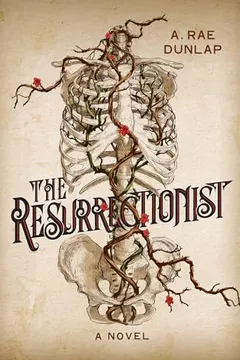
The Resurrectionist is a well-received debut historical fiction set in 1828 Edinburgh, blending true crime, dark academia, body-snatching, and queer romance. Most reviewers praised its atmospheric world-building, charming characters James and Nye, and seamless incorporation of the real-life Burke and Hare murders. Common criticisms included overuse of italics, verbose prose, pacing issues with Burke and Hare introduced too late, and plotting that felt episodic. Overall, readers found it an entertaining, gothic, and surprisingly romantic read, averaging 3.89 stars.
Characters
James Willoughby
The reluctant resurrectionistJames is a younger son raised to expect a respectable career chosen by his family, first in the Church and later in business. He is bookish, observant, physically slight, and initially more comfortable with anatomical texts than with the realities of dissection. His hunger for practical knowledge is sincere, but so is his need to belong; both make him susceptible to Aneurin’s world. James notices class distinctions yet often mistakes his own privilege for ordinary experience. His defining strength is not fearlessness but a growing willingness to make choices and accept their consequences. Science, friendship, love, and independence gradually become parts of one identity rather than competing versions of himself.
Aneurin MacKinnon
The brilliant graveyard guideAneurin is Malstrom’s assistant, dissectionist, and assemblist, a quick-thinking Scot with a Welsh name and a gift for turning danger into improvisation. He combines technical precision with theatrical charm, using jokes, disguises, and calculated lies to navigate a trade that depends on secrecy. His confidence can look like recklessness, but beneath it lies a guarded person shaped by betrayal and the need to judge whom he can trust. He believes anatomical knowledge can serve the living, though his methods force him to confront the difference between a worthy purpose and an honorable act. His artistic skill, scientific curiosity, and tenderness complicate the criminal mask he wears.
Mary Paterson
The crew's sharp-eyed scoutMary is a resourceful member of Aneurin’s circle whose intelligence work makes the crew’s cemetery operations safer. She attends funerals, reads the small protections families leave on graves, and reports hazards without joining the digging itself. Her beauty attracts attention, but she is more than a striking presence: she is observant, funny, socially agile, and able to move through settings where the men would be noticed. Mary’s warmth helps make the crew feel like a chosen family, while her clear judgment keeps that affection from becoming naïveté. She values loyalty and practical courage, and she treats danger as something to assess rather than romanticize.
Charlie
James's first Edinburgh friendCharlie is the medical student who helps James wrestle his trunk up the Hope and Anchor stairs and introduces him to Edinburgh’s informal student culture. Sociable, generous, and interested in medicine, he offers James friendship without making him earn it through family status. Charlie’s good humor can obscure his seriousness, but his loyalty becomes clearest when James needs help. He also has ambitions of his own, including presenting research to the Royal Medical Society. His willingness to join James’s dangerous plan grows from trust and intellectual curiosity, not from ignorance of the risks.
Hamish
The boastful medical go-betweenHamish is a local student connected to Dr. Knox’s school, known among his peers for bravado, macabre stories, and a talent for making himself seem more important than he is. His mockery of James begins as class antagonism, but his access to the body trade makes him useful to both sides. Hamish is not a principled guide; he follows opportunity and protects his own position. His insecurity surfaces when he leaves his familiar social setting, revealing how much of his swagger depends on an audience willing to believe his claims.
Phillip
The curious medical studentPhillip is one of James’s fellow students, a keen observer who shares the group’s fascination with anatomy and medical debate. He is more comfortable with gruesome details than James is at first, but his curiosity remains connected to learning rather than mere spectacle. Phillip’s friendship gives James a place in the student community, and his willingness to help when danger escalates shows that intellectual interest can become practical loyalty.
Luke
The genial student companionLuke is a friendly fellow medical student who helps welcome James into the Edinburgh group. He shares the students’ enthusiasm for practical training and contributes to the easy camaraderie that makes the Hope and Anchor feel like a temporary home.
Diggs
The veteran Greyfriars diggerDiggs is an older gravedigger with deep knowledge of Greyfriars and years of experience in the body trade. His roughness and skepticism make him wary of James, whom he first reads as a dandy. Beneath the brusque manner is a practical professional who understands how small mistakes can expose an entire crew. His dry humor offers a glimpse of the community’s ability to endure grim work without pretending it is genteel.
Thomas
The crew's strong carrierThomas works at the quays and lends his strength and local knowledge to the Resurrectionists’ operations. He is direct, observant, and more patient with James than his clipped manner initially suggests. Thomas understands the danger of their work and is willing to distract pursuers when the crew needs time to escape. His practical loyalty is grounded in shared labor rather than speeches.
Willis
The quick-footed lookoutWillis is a young lookout who helps the crew monitor streets and signal when danger approaches. He is sharp-tongued, impatient with being assigned lower-paid work, and far more capable than his youth suggests. His knowledge of the city and ability to move unnoticed make him a useful partner, even when he resents the role.
Louis Malstrom
The practical anatomy teacherDr. Malstrom owns a private surgical school and teaches anatomy through direct work with cadavers. He is a charismatic demonstrator and a demanding instructor who expects students to treat their subjects with care. His school represents the promise of medical education outside the limitations of the University, while his willingness to work within the body trade exposes the compromises underlying that promise.
Robert Knox
The celebrated anatomistDr. Knox is a prominent anatomy teacher whose private school draws students with dramatic demonstrations and a reputation for obtaining specimens. His confidence in his own authority shapes the atmosphere of his institution, where medical instruction can become public entertainment. Knox is an example of how professional standing affects the way others interpret a person’s methods and motives.
William Burke
The imposing body supplierBurke is a large, physically intimidating man associated with the boarding-house on Tanner’s Close. He is practiced at making strangers feel welcome when it serves his purpose, but his presence carries an undercurrent of threat. His business relationship with Knox places him inside Edinburgh’s demand for anatomical specimens.
William Hare
The shrewd boarding-house keeperHare operates the Tanner’s Close lodging house with Burke and is skilled at managing guests and controlling a room’s mood. His manner can shift from brusque to convivial, making it difficult for outsiders to know what lies beneath his hospitality. He understands how poverty and social invisibility can be used to conceal what happens under his roof.
Edith
James's formidable elder sisterEdith is James’s married sister, practical and alert to the family’s financial and social position. She believes that securing the family’s future is a form of duty, and she expects James to contribute by following a respectable path. Her composure can read as coldness, but it is also a response to a world in which women’s security depends heavily on marriage and family standing. Her assumptions clash with James’s desire to choose a life on his own terms.
Richard
The burdened family executorRichard is James’s elder brother and executor of their father’s estate. He is preoccupied with repairing the family’s finances and standing, and his decisions help shape the pressure that pushes James toward self-reliance.
James's mother
The keeper of family blameJames’s mother holds him responsible for the shame and grief surrounding his father’s death. Her belief reflects the family’s preference for a simple culprit over a fuller reckoning with the father’s gambling and the household’s hidden financial trouble.
Violet Witherspoon
The proposed society matchViolet is the daughter of a wealthy, well-connected family and becomes the focus of a proposed courtship intended to strengthen the Willoughbys’ position. James remembers her as intelligent and charming, though their acquaintance has been brief. She represents a future mapped out by other people’s calculations.
Constable Murray
The skeptical local officerMurray is a city constable who encounters James and Aneurin during their work and knows enough about the body trade to distrust them. He sees the Resurrectionists as criminals before he sees them as witnesses, and his decisions reveal how law enforcement can protect social order while neglecting people with little status.
Daft Jamie
The familiar street lookoutDaft Jamie is a well-known figure around the medical district, remembered for his songs, jokes, and long association with a cemetery crew. His familiarity to students and workers makes him more than a passing street presence, and his vulnerability reflects the dangers faced by people whose poverty leaves them with little protection.
Lord Harrison
Edith's influential husbandLord Harrison is Edith’s husband and a member of the family network that manages the Willoughbys’ social prospects. His connections help determine what opportunities are offered to James and what obligations the family expects him to accept.
Plot Devices
The legal body shortage
The engine of the tradeEdinburgh’s medical schools need far more cadavers than the law provides, since legal access is restricted to a handful of executed criminals. The shortage creates the market that supports the Resurrectionists and links James’s education to a hidden network of diggers, lookouts, drivers, sextons, and anatomists. It is not merely background history: it supplies James’s tuition bargain, gives Aneurin a moral argument for his work, and creates the competitive pressure that Knox exploits. The shortage also leaves the boundary between scientific necessity and exploitation unresolved, ensuring that each body carries both educational value and a human cost.
The window and the trunk
A route into complicityJames’s room overlooks Greyfriars Kirkyard, making his window an observation post and, later, a route for moving bodies. The rope and pulley system first brings a corpse into his chamber, while his trunk conceals it for transport to Malstrom’s. These ordinary objects turn his private lodging into part of the Resurrectionists’ operation. The trunk also carries a recurring joke and a practical danger: its monogram links the evidence to James, even as its familiar presence helps him hide what he has chosen to do. The route marks how his home, education, and criminal work cease to be separate spaces.
Mary's funeral intelligence
The crew's early warningMary attends funerals as a plausible mourner and studies the small safeguards families place on graves. She tells the crew where tokens, lookouts, mortsafes, and other defenses may interfere with an extraction. This intelligence makes the Resurrectionists’ work more precise and prevents careless disturbances from alerting families or authorities. It also establishes Mary as an active strategist whose value is not measured by physical labor. Her role connects the intimacy of the crew to the mechanics of the body trade, and her knowledge later becomes important as the group tries to understand who is threatening its members.
Aneurin's blue reagent
A chemical clue to murderAneurin develops a chemical test that helps distinguish bile in lung fluid, which would support a claim of asphyxiation after vomiting, from other compounds. When he tests samples from bodies recorded as victims of alcohol-induced asphyxiation, the reagent turns blue rather than the color expected if bile were present. Combined with damaged molars, facial bruising, and missing sources in Knox’s ledger, the result undermines the official causes of death. The reagent gives the investigation a concrete, repeatable clue, but it cannot compel the police to act. Its limits underline the difference between scientific evidence and evidence an institution is willing to recognize.
The father's pocket watch
Inheritance remade as choiceJames’s gold pocket watch is the tangible remnant of his father and the family name he is trying to escape. During the escape from Burke and Hare’s lodging house, Aneurin breaks its face and uses the hands to open a locked roof hatch. Later, he repairs the watch and gives it a new face: a portrait of his eye opposite an anatomical drawing of the eye. The object therefore changes from inherited status symbol into a keepsake of chosen intimacy and shared scientific curiosity. Its altered form makes the novel’s idea of resurrection personal: the past is not erased, but reworked into something James can carry forward.
Download PDF
Download EPUB
.epub digital book format is ideal for reading ebooks on phones, tablets, and e-readers.








