

Key Takeaways
Treat the brain's alarm as a signal, not a command.
Two modes, one mind. The book's central framework, Dual Process Reasoning (DPR), describes two interacting styles of thought. System 1 is fast, automatic, and shaped by survival, emotion, habit, and memory. System 2 is slower and deliberate, able to reflect, consider consequences, and sometimes interrupt an impulse. Both are useful: automatic responses help with familiar tasks and immediate danger, while reflection helps with complex choices and moral judgment. The author connects these systems to different brain regions, but the framework is most useful as a practical map, not a literal division into two separate brains.
A familiar story. Scrooge's fear and hurt have buried his capacity for generosity. Looking at his past, present, and possible future prompts reflection and change. The goal is not to silence instinct, but to keep it from running every decision.
The model offers a memorable pause: an intense feeling can be noticed before it becomes an action. That resembles metacognition, the capacity to observe thought rather than simply inhabit it. Its main limitation is the temptation to treat System 1 as a primitive brain module and System 2 as a distinct rational self. Emotion also informs good judgment, and deliberation can rationalize selfish choices. Used as a vocabulary for competing tendencies, rather than a complete map of the brain, the framework remains powerful.
Trace today's overreaction to yesterday's survival strategy.
Old alarm, new setting. The author calls a reaction an emotional dysfunction when its intensity is out of proportion to the present situation, often because an earlier experience taught the brain to anticipate danger. He describes being placed in a stigmatized classroom as a child, then spending decades chasing achievement to prove his worth. His fear of being trapped on airplanes also connects, in his own reflection, to childhood experiences of being held down and harmed. The adult setting differs, but the body's alarm feels familiar.
Ask what it protects. Rather than simply demanding that someone stop being anxious, controlling, or angry, the book recommends looking for the trigger, the feeling beneath it, and the pattern that follows. Understanding a reaction can make a different response possible without excusing harm it causes.
This framing replaces moral condemnation with curiosity. Trauma-informed practice similarly asks what a behavior may have helped someone survive before asking how it affects life now. That shift can reduce shame and create room for treatment. Still, a compelling personal explanation is not proof of a single cause, and not every painful reaction comes from childhood trauma. Reflection can uncover useful hypotheses, while qualified clinicians can help assess persistent distress and avoid turning a self-help model into self-diagnosis.
Repeated practice can build new neural routes at any age.
Brains keep adapting. Neuroplasticity is the brain's capacity to change its connections and functions in response to experience and practice. The author illustrates this with Cheryl Schiltz, whose balance system was damaged by an antibiotic. In an experiment, a device translated information about her position into pulses on her tongue. With repeated use, she regained balance, and some improvement remained after removing the device. The example challenges the idea that adulthood makes change impossible.
Repetition matters. The book compares frequently used neural pathways to well-traveled roads: recurring responses become easier to repeat, while less-used patterns can weaken. Practicing a pause instead of an angry outburst, for instance, gives a different response more chances to become familiar. The author recommends patience, reflection, counseling, and other sustained practices rather than expecting a single decision to erase an old habit.
The rehabilitation story makes brain adaptability concrete: the nervous system can learn to use information in new ways. It also clarifies why repetition matters more than inspiration alone. However, one striking recovery does not establish that every psychological injury can be reversed through effort, and the book sometimes makes broad claims about thoughts altering DNA that go beyond what this model can establish. Plasticity describes capacity, not guaranteed outcomes. Practice is valuable, but it can work alongside medical care and social support.
Check fear against evidence before letting it shrink your life.
Fear has a sales pitch. The book argues that advertising can identify an insecurity, intensify it, and then present a product as the solution. News cycles can have a similar effect by making vivid but uncommon dangers feel ever-present. The author groups common fears around threats to life, bodily safety, autonomy, belonging, and self-worth. Such alarms can be useful, but they do not reliably estimate the actual odds of harm.
Choose a reality check. The author recommends limiting repeated exposure to fear-focused media, checking claims against evidence, and distinguishing discomfort from genuine danger. Janet's story illustrates the stakes: after a childhood abandonment, she remained in an abusive marriage partly because being alone frightened her. She eventually left and built a different life. In situations involving abuse, safety and professional help take priority over staying to preserve appearances.
Vivid threats are easier to remember than gradual improvements, so a steady diet of alarming stories can distort what feels likely. The practical answer is not denial, but calibrated attention: seek reliable information, then make decisions based on the risk and the available options. The author's examples come from the book's 2016 context, and crime or health risks should be checked against current data. Fear can also be an accurate warning, especially in abuse; calling every alarm irrational would be dangerous.
Use love and service to answer loneliness without bargaining.
Connection gives life shape. The author treats loneliness, the longing for belonging, and awareness of death as central parts of being human. Social media may create contact without the closeness people seek. During a mission trip in South Africa, Chilton met a severely ill child living among many orphans. Holding the child, despite his professional fear of infection, shifted his sense of purpose: he understood human connection and service as more than abstract beliefs.
Give without keeping score. The book contrasts love with a transaction in which each favor carries an expectation of repayment. Its religious perspective sees service as a way to express care and find meaning, not as a strategy for recognition. The author presents loving others as a guiding purpose that can shape work, relationships, and daily choices, while acknowledging that he does not have complete answers to life's deepest questions.
The story gives an embodied answer to meaning: attention and care can make another person less alone, while also changing the person who offers them. This connects purpose to participation rather than status. Yet service should not become another performance used to earn worth, and individual generosity cannot replace reliable healthcare or social protections. Love is sustaining when it respects both the giver's limits and the recipient's dignity. For readers outside the author's faith, the same insight can be understood as solidarity between people.
Make moral choices deliberately before excuses harden into character.
Small choices accumulate. John, a child in a racially segregated South, treated newly integrated Black classmates with kindness despite pressure from relatives and peers to reject them. The author sees this as moral courage: choosing a principle over the quickest social reward. He calls the influence of earlier moral choices on later responses moral memory. Repeated actions can become habits, so repeatedly acting with fairness may make ethical conduct more natural.
Notice the excuse. People may justify inaction with claims such as everyone does it, no one was harmed, or someone else would have acted. The book warns that repeated rationalization can hide responsibility. It also recognizes that severe abuse and coercion can constrain a person's capacity to choose. Accountability, then, requires attention both to the harm done and to the conditions that shaped a person's options.
The chapter connects personal character with the social environment: John's choice mattered partly because the surrounding norms pushed in the opposite direction. Moral psychology and institutional ethics both suggest that principled behavior is easier when communities reward it rather than punish it. The book's account of responsibility is strongest when it recognizes differences in capacity and coercion. It is less convincing when moral agency appears too easily sorted into fixed categories. Accountability can be real without pretending every person had the same freedom to act.
Pair unconditional love with consequences that teach responsibility.
Care and limits belong together. The author distinguishes unconditional love, in which a child is valued for who they are, from acceptance of every behavior. Parents can remain loving while setting limits and following through with consequences when a child harms others or breaks agreed rules. In the book's example, Laura repeatedly reduces punishment after her son apologizes, and the pattern continues. Compassion for a child's stress does not require excusing cruelty.
Balance discipline with warmth. Chilton applies relationship researcher John Gottman's positive-to-negative interaction ratio to parenting, aiming for roughly five affirming interactions for each critical one. He describes play, praise, affection, and bedtime stories alongside accountability. He also warns that guilt-driven overparenting can deprive children of chances to manage difficulty independently. The point is not to make childhood harsh, but to prepare children for responsibility while keeping love secure.
The distinction between a child's worth and a child's behavior offers a useful alternative to both permissiveness and rejection. Developmentally, warmth can make limits feel safer and more predictable. The five-to-one ratio is best treated as a reminder to maintain connection, not a precise parenting formula; families and children differ. The book also relies on traditional descriptions of maternal and paternal roles that do not fit every household. Its stronger principle is broader: consistent care and boundaries can come from any responsible caregiver.
Stop assigning old injuries to new people.
Past patterns travel. The book calls differentiation the ability to remain a distinct person while staying connected to others. It identifies transference as the unconscious carrying of feelings from an important past relationship into a current one. Someone hurt by a controlling parent, for example, may interpret a new partner's disagreement as proof of the same threat. Attachment patterns formed early can also influence expectations of care and closeness.
Look at your side. The author suggests examining whether fear, insecurity, or the need to avoid loneliness is driving a relationship. He draws on the Harvard Grant Study, which followed 268 men, to note that men who described warm childhood relationships tended to have stronger later social ties. The practical lesson is to observe a person's actual behavior, maintain boundaries, and seek support rather than assuming a partner can repair an old wound.
This account explains why a present disagreement can feel much larger than its immediate stakes: it may carry the emotional weight of an earlier relationship. Naming that possibility can interrupt a self-fulfilling pattern. The Grant Study offers a long view of development, but it followed a narrow cohort of men and cannot establish that childhood warmth alone caused later outcomes. Nor should relational reflection imply that a victim is responsible for another person's abuse. Self-awareness matters alongside clear boundaries and safety.
Build sexual intimacy through honest vulnerability, not honeymoon chemistry.
Attraction changes shape. The book describes early romantic attraction as a powerful phase involving sexual desire, focused attention on a new partner, and growing attachment. The author notes that this intensity often changes as partners become familiar with each other's habits and limits. A lasting relationship cannot depend on feeling permanently new. Intimacy, as the book defines it, means emotional closeness and honest sharing, not simply sexual activity.
Talk before performing. The author argues that couples can develop intimacy by discussing hopes, fears, desires, and past experiences without ridicule or pressure. He encourages partners to move at a pace that feels safe and to seek help when trauma, illness, or conflict makes sex difficult. He also challenges the idea that sexuality belongs only to the young, citing research on sexual activity among older adults. The emphasis is on connection and mutual development, not a prescribed level of frequency or passion.
This view shifts attention from technique to communication, emotional safety, and the ability to stay curious about a partner. Those qualities can support closeness well beyond sexual relationships. The account is framed around committed monogamy and a religious ideal of sex, but its useful principles can travel across consensual relationships. Desire is also shaped by health, stress, medication, and life circumstances, so a fading sex drive is not automatically a failure of character or intimacy. Vulnerability is valuable only where it is safe.
Write your life honestly, then surrender patterns that keep you stuck.
Make the pattern visible. The author recommends writing about significant painful and joyful events, relationships, mistakes, and ambitions. Reading the story again, then asking a trusted person for perspective, can reveal a gap between the identity someone claims and the motives that repeatedly guide their choices. Chilton's own writing helped him connect relentless achievement with a childhood fear of being judged as incapable, and recognize that compassion was a deeper source of purpose.
Turn insight into practice. The book's next step is surrender: for the author, a Christian practice of entrusting old patterns to God rather than trying to control every feeling by willpower. He recommends prayer, accepting responsibility for one's part, solitude for reflection, and support from a counselor, mentor, or group. Change is described as gradual. The book does not present a single moment of insight as a substitute for repeated effort.
Writing can turn a scattered collection of memories into a story that can be examined and revised. A trusted reader adds a second perspective, which can expose strengths as well as blind spots. Still, memory is selective, and a coherent story is not necessarily a complete account of the past. The author's spiritual surrender is central to his own method, but readers need not share his theology to practice relinquishing impossible control. Professional support is especially important when reflection intensifies distress.
Forgive to release the wound, not to excuse the wrong.
Separate pardon from permission. The book presents forgiveness as a choice to loosen resentment's hold, not a claim that the offense was acceptable. After the Charleston church shooting, some victims' relatives expressed forgiveness toward the killer. The author also recounts Amish community members offering compassion to the family of a shooter who killed children. These stories illustrate a response to violence that does not depend on retaliation.
Include yourself. Forgiving oneself can also mean acknowledging a mistake without turning it into a verdict on one's whole identity. The book distinguishes guilt about an action from shame that treats the self as irredeemable. Apologies and amends may be appropriate when they do not create further harm. Forgiveness does not require renewed contact or reconciliation: a person can release bitterness while maintaining distance, seeking protection, or refusing unsafe access.
The distinction between inner release and restored relationship is crucial. It allows forgiveness to serve the injured person's well-being without erasing justice, accountability, or the need for safety. Research and clinical practice treat forgiveness as a process, not an instant obligation, and survivors may need time or professional care before considering it. In religious communities especially, pressure to forgive can silence anger or expose someone to further harm. The book's strongest formulation preserves choice: forgiveness is not the same as minimizing the injury.
Analysis
The book's strongest contribution is not a new anatomical theory of the brain. It is a practical narrative for understanding why intention and behavior can diverge. The System 1 and System 2 vocabulary gives readers a way to notice that an alarm, impulse, or defensive reaction may be understandable without being a reliable guide to the present. Chilton makes this idea memorable by linking it to his own history: humiliation in childhood, achievement as compensation, fear in confined spaces, and repeated relational conflict. His candor keeps the framework from sounding like a lecture about other people's flaws.
The book also has a coherent progression. Reflection identifies patterns, reframing places them in family, moral, cultural, and spiritual contexts, and rewiring calls for practice, support, surrender, and forgiveness. Stories of an injured son, a woman leaving abuse, a child in South Africa, and the author's marriages make the framework emotionally legible. The Christian interpretation gives these stories a shared moral horizon, while the author explicitly allows non-Christian readers to use the psychological material.
The main weakness is that a useful metaphor sometimes becomes a scientific explanation. The two systems are presented as if they map neatly onto separate brain regions and as if trauma or thought patterns can be traced directly into DNA. Modern neuroscience describes cognition as distributed and interactive, and neuroplasticity does not mean every pattern can be changed by determination. The book's account of freedom and responsibility also needs careful qualification: trauma, illness, coercion, and social conditions can narrow choice without reducing people to machines.
Read most productively, then, the framework is neither diagnosis nor proof that suffering is self-created. It is an invitation to ask what a reaction is protecting, what it costs now, and what support could make a different response possible. That stance combines agency with compassion, and its practical value survives the book's overconfident biological claims.
Review Summary
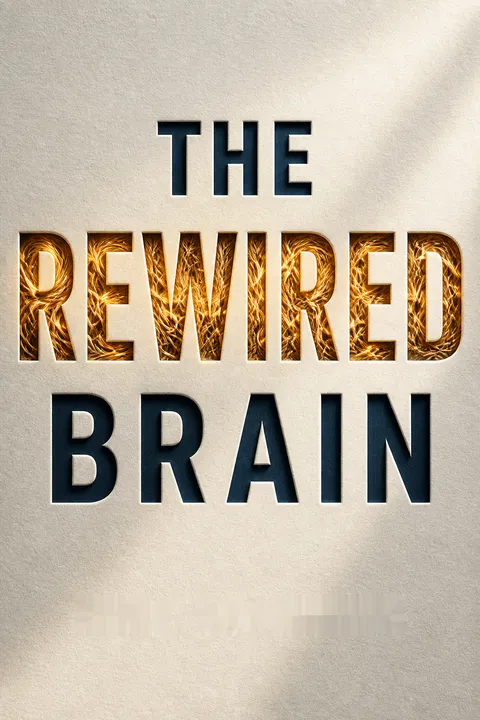
The ReWired Brain receives mixed reviews. Some readers appreciate its insights on neuroplasticity and the interplay between emotional and logical thinking systems. However, many criticize its blend of Christianity and science, finding it theologically weak or too religiously focused for a scientific book. Some praise the practical advice and personal stories, while others find it lacking in scientific depth. The writing style and structure are also criticized by some. Overall, readers are divided on its effectiveness as a self-help book and its balance of faith and neuroscience.
People Also Read









Glossary
Dual Process Reasoning (DPR)
Two interacting thought stylesThe book's model of thought as the interaction between System 1, which produces rapid, automatic responses, and System 2, which supports deliberate reflection and evaluation. Chilton uses DPR to explain how habits, emotions, and survival reactions can conflict with considered choices. It is a practical framework, not a claim that the brain consists of two independent organs.
System 1
Fast automatic responsesIn Chilton's model, System 1 generates rapid, largely unconscious reactions, feelings, intuitions, habits, and survival responses. It can help with immediate danger and familiar tasks, but it does not reliably assess whether a perceived threat is real or proportionate. The author associates it chiefly with more primitive and emotional brain regions.
System 2
Deliberate reflective thoughtIn Chilton's model, System 2 is the slower, conscious capacity for reflection, reasoning, planning, and considering consequences. It can sometimes interrupt an automatic reaction and support moral or selfless choices. The author associates it chiefly with the neocortex and frontal regions, while presenting it as a framework for understanding behavior.
Neuroplasticity
The brain's capacity to adaptNeuroplasticity is the capacity of the brain to alter its connections and organization in response to experience, practice, learning, or injury. The book uses it to explain why repeated habits become easier to perform and why new responses can be developed over time. Plasticity describes a capacity for change, not a guarantee of recovery or a claim that change is effortless.
Epigenetics
Environmental influence on gene activityEpigenetics studies changes in how genes are regulated without changing the underlying DNA sequence. Chilton uses the term to explain how life experiences and environmental conditions may influence biological processes related to brain development and behavior. The book sometimes gives thoughts and emotions a direct genetic effect; the term itself does not establish that every mental pattern produces a specific DNA change.
Emotional dysfunction
A disproportionate emotional responseChilton's term for an emotional reaction or behavior that is out of proportion to the present situation. He proposes that such patterns can arise as coping responses to painful or threatening experiences and can persist after their original context has passed. Recognizing a dysfunction is meant to prompt inquiry into its triggers and consequences, not to assign a clinical diagnosis.
Differentiation
Connectedness with a distinct selfIn the book's relationship framework, differentiation means maintaining a distinct identity while remaining emotionally connected to others. A differentiated person can express opinions, manage strong reactions, set boundaries, and care for another without surrendering personal values or independence. Chilton presents it as a protection against controlling, dependent, or fused relationship patterns.
Transference
Past feelings carried into present relationshipsTransference is the unconscious or conscious tendency to carry feelings and expectations from an important earlier relationship into a current one. A person may respond to a new partner as though that partner shared the traits of a parent or former spouse. In Chilton's account, noticing transference can help prevent old fears from dictating how someone interprets present behavior.
Moral memory
Past choices shaping future moral responsesChilton's term for the way previous responses to moral situations influence later choices. Repeated acts of fairness or selfishness can become habits and contribute to a person's character, making similar responses feel more automatic. The concept links moral development with practice, while the book also recognizes that trauma and coercive environments can constrain moral agency.
True Self
A person's core identityChilton's spiritual and psychological term for the individual identity he believes can be obscured by fear, past experience, and automatic reactions. He associates the True Self with reflection, personal strengths, meaningful purpose, love, and, in his Christian view, relationship with God. It is a philosophical and theological concept in the book, not a discrete brain structure.
FAQ
What's The ReWired Brain about?
- Focus on Transformation: The ReWired Brain by Ski Chilton explores personal transformation through understanding the brain's dual processing systems—System 1 (instinctive) and System 2 (analytical).
- Integration of Neuroscience and Faith: The book combines insights from neuroscience, psychology, and personal experiences with a Christian perspective to help readers rewire their minds for healthier living.
- Practical Guidance: It offers practical exercises and reflections to help readers identify and change negative thought patterns and behaviors, leading to a more fulfilling life.
Why should I read The ReWired Brain?
- Overcome Negative Patterns: If you struggle with negative behaviors or feelings of being stuck, this book provides a framework for understanding and changing these patterns.
- Scientific Insights: The book presents complex scientific concepts in an accessible manner, making it easier for readers to grasp how their brains work and how they can change.
- Spiritual Perspective: For those seeking a faith-based approach to mental health, it offers a unique perspective that aligns psychological insights with Christian teachings.
What are the key takeaways of The ReWired Brain?
- Dual Process Theory: Understanding System 1 and System 2 is crucial for recognizing how our thoughts and behaviors are formed, helping in identifying instinctive versus conscious choices.
- Neuroplasticity: The brain's ability to change and adapt means we can rewire our thought patterns and behaviors at any age, offering hope for significant life changes.
- Importance of Reflection: Self-reflection and awareness are emphasized as essential for understanding and altering responses to life's challenges.
How does The ReWired Brain explain the concept of dual process reasoning?
- Two Systems of Thinking: The book describes dual process reasoning as the interaction between System 1 (fast, automatic) and System 2 (slow, deliberate) thinking.
- Impact on Behavior: System 1 is driven by instinct and past experiences, while System 2 allows for more thoughtful decision-making, crucial for emotional and mental well-being.
- Practical Applications: Engaging System 2 more frequently can help override negative impulses from System 1, leading to healthier choices and behaviors.
What role does neuroplasticity play in personal change according to The ReWired Brain?
- Brain's Ability to Change: Neuroplasticity refers to the brain's capacity to reorganize itself by forming new neural connections, allowing for changes in thought patterns and behaviors.
- Rewiring Negative Patterns: By consciously engaging in new thoughts and behaviors, individuals can weaken negative circuits and strengthen positive ones.
- Empowerment Through Knowledge: Understanding neuroplasticity empowers readers to take control of their mental health and make intentional changes.
How does Ski Chilton integrate faith into the concepts of The ReWired Brain?
- Spiritual Perspective: Chilton weaves his Christian faith throughout the book, emphasizing the importance of a relationship with God in personal transformation.
- Scriptural References: The author uses Scripture to support points about human behavior and the capacity for change, connecting scientific concepts with spiritual truths.
- Hope and Healing: Faith integration offers readers hope and a sense of purpose in their journey toward healing and transformation.
What methods does Ski Chilton suggest for rewiring the brain?
- Mindfulness and Meditation: Practicing mindfulness and meditation can help engage System 2 more effectively, reducing the dominance of System 1 responses.
- Journaling: Keeping a journal aids in self-reflection and helps identify patterns in behavior, serving as a tool for understanding and change.
- Positive Affirmations: Using positive affirmations can reinforce new, healthier thought patterns, changing the brain's wiring over time.
How does The ReWired Brain address trauma and emotional pain?
- Identifying Emotional Dysfunctions: The book encourages recognizing and naming emotional dysfunctions from past traumas as the first step toward healing.
- Reframing Tragedy: Chilton discusses reframing traumatic experiences to create a new narrative, allowing individuals to move forward positively.
- Seeking Help: The author stresses the value of professional help, such as counseling or support groups, to navigate trauma and emotional pain.
What are the best quotes from The ReWired Brain and what do they mean?
- “The only thing we have to fear is fear itself.”: Highlights the paralyzing nature of fear and encourages confronting fears rather than letting them dictate actions.
- “You can’t teach an old dog new tricks.”: Challenges this cliché by presenting evidence of neuroplasticity, suggesting change is possible at any age.
- “Love is the cure to our loneliness, despair, and hopelessness.”: Emphasizes the importance of love and connection in overcoming life's challenges.
How can I apply the concepts from The ReWired Brain to my life?
- Self-Reflection Exercises: Engage with reflection questions and exercises to identify thought patterns and behaviors, facilitating personal insight and growth.
- Practice Mindfulness: Become more aware of when operating in System 1 versus System 2 to make more conscious choices.
- Seek Support: The author encourages seeking counseling or support groups as part of the change process, providing accountability and encouragement.
What is the significance of the title The ReWired Brain?
- Neuroscience of Change: Reflects the book's focus on the brain's ability to change and adapt, known as neuroplasticity, central to personal transformation.
- Empowerment: Signifies the empowerment of individuals to take control of their thoughts and behaviors, effectively "rewiring" their brains.
- Hopeful Message: Conveys a hopeful message that change is possible, regardless of past experiences or emotional struggles.
What are the common emotional dysfunctions discussed in The ReWired Brain?
- Fear and Anxiety: Excessive fear and anxiety can dominate thoughts and behaviors, leading to unhealthy coping mechanisms.
- Anger and Resentment: Addressing anger and resentment from past experiences is crucial to prevent them from controlling life.
- Addictive Behaviors: Emotional dysfunctions can lead to addictive behaviors, and understanding their root causes is crucial for recovery.
Download PDF
Download EPUB
.epub digital book format is ideal for reading ebooks on phones, tablets, and e-readers.








