


Plot Summary
Released Into Beige
Three months after Declan and Luca leave her behind in Wyoming, twenty-one-year-old Teagan Townsend is still confined to a psychiatric facility, grieving Luca and speaking with hallucinations of both men. Her orderly, Sebastian, warns that the staff may delay her release if they hear her talking to ghosts.
At her final appointment, Teagan insists she knows the men were dangerous and will not return, though the certainty is brittle. Her mother and older sister, Blakely, arrive with rules for coming home: weekly therapy, no social media or band fans, a job, and no sexual partners. Blakely wants Teagan at her wedding, but the family’s concern feels more like a demand that she become manageable than an effort to understand her.
Teagan’s recovery begins under the terms of other people’s comfort. Her family and clinicians focus on restricting access, regulating behavior, and restoring normal routines, while she is still trying to comprehend a loss that has not been allowed to become grief. Her claim that Declan and Luca never loved her is less a settled belief than a survival script she has learned to repeat. The institutional setting sharpens the contradiction: she is treated as fragile, yet asked to perform self-control before anyone has made room for her pain.
The Dress That Excludes
At home, Teagan’s father recoils from the scars on her chest, and her mother asks her to cover them. That night Teagan drinks old whiskey, sees fan messages promising the band’s return, and wakes with a vivid memory of a masked man in her room that she dismisses as a drunken hallucination.
The next day, Blakely’s bridesmaid appointment turns into a public humiliation: the dresses expose Teagan’s scars, strangers recognize her, and Blakely decides she cannot stand beside her at the wedding. At lunch, a surprise birthday song and a margarita trigger Teagan’s panic and a severe allergic reaction. She collapses and wakes in the hospital, unsure whether disturbing details in the room are real.
The family’s attempts at inclusion repeatedly expose Teagan as someone they want to accommodate only if she can be made less visible. Her scars are evidence of what happened, but her relatives treat them as a threat to the wedding’s appearance. The public birthday gesture intensifies the same mismatch: affection is offered in a form that ignores what Teagan can bear. Her collapse then blurs physical crisis and psychological instability, leaving her with no reliable way to tell whether her fear is a symptom or a warning.
Hazel Names the Lie
While Teagan recovers, a television interview with Hazel Pinault-Hollis, one of the band’s former followers, explains how Declan used attention, rules, punishment, and promises of family to draw people into the group. Hazel confirms that Layla died by suicide and that Declan and Luca buried her. The account makes Teagan recognize that she, too, was drawn into a cult and committed violence inside it.
A hospital nurse, Stacy, reveals herself as a fan, steals Teagan’s blood, and treats her as a source of supernatural power. Teagan briefly sees kiwi that is not there, then asks staff for medication. Later, she searches online for Hazel and River, finds a video that appears to show them, and uses a mailbox number to locate their Arizona home.
Hazel’s testimony gives Teagan a vocabulary for what happened, but naming manipulation does not dissolve attachment. Teagan can recognize the group’s coercive structure and still remember its tenderness as real. Stacy’s behavior shows that the cult’s influence has outgrown its original circle: fans turn Teagan’s trauma into a sacred object, making her body a site of public entitlement. Her decision to seek out River and Hazel is an attempt to reach people who share the same history, though she has not yet learned how differently they have come to understand it.
A Song From the Dead
Teagan drives to Glendale and finds River and Hazel hiding under changed appearances and wearing ankle monitors. They tell her that The Order, a powerful secret organization behind the band’s world, has been watching them. They plan to fake their deaths and escape to Canada with help from Eli, a former bandmate.
Hazel and River urge Teagan to come, but she cannot abandon the hope that Luca will return. On the drive home, Teagan sees a news report about a leaked Gods of Tomorrow song, Pretty Poisoned. Its private lyrics match a song Luca wrote for her, including details no fan could know. Convinced Luca is alive, she follows online theories about a secret concert in Los Angeles and decides to attend.
River and Hazel offer Teagan a practical form of solidarity: leave the dangerous world behind and build a life beyond its reach. She refuses not because she doubts the danger, but because grief has made reunion feel more necessary than safety. The leaked song transforms private memory into apparent proof, giving her hope a concrete signal to follow. It also exposes the trap of intimacy in this story: a message can be evidence of love, but it can also pull a vulnerable person back toward the people who hurt her.
Corn Syrup and Blood
At the supposed concert, masked figures spray the crowd with red corn syrup, prompting a crush toward the exits. Teagan escapes into an alley, where she overhears the pranksters discussing a girl left unconscious inside and their plan to hide her rather than call for help. When they recognize Teagan and move to silence her, she attacks with broken glass.
Teagan kills two men; a gold-masked stranger kills the others, then helps dispose of the bodies in barrels of acid. The unconscious girl is already dead, and they leave her for someone to find. The stranger identifies himself only through his mask and tells Teagan she is not going home. She follows him to an isolated compound.
The prank turns Teagan’s search for Luca into a scene of public panic, then strips away the fiction that violence belongs only to her former life. Her first killings in this book are impulsive, retaliatory, and mixed with exhilaration, which makes them more troubling than self-defense alone. The masked stranger is both rescuer and accomplice: he stops her from being silenced, but immediately claims control over what happens next. Teagan’s willingness to follow him reflects how sharply her choices have narrowed.
The Order’s Red Theatre
The masked man brings Teagan to an Order ceremony, where wealthy guests watch an elderly member take his own life and a kidnapped girl be murdered for ritual bloodletting. Later, the masked man kills a senator who has become a liability. He explains that Teagan must help eliminate Warren, another powerful member, and Sonia, the young woman Warren uses to lure vulnerable girls.
When Teagan resists, he shows her footage of River and Hazel and threatens to kill them if she refuses. At Warren’s house, Sonia tells Teagan she was sold to Warren as a child, but also helps keep other girls trapped. Teagan slips a blade from her hair and kills Sonia, then attacks Warren when he turns his back.
The Order’s ceremony makes visible the system that the band had romanticized: power is not mystical, but protected by wealth, ritual, and the disposal of inconvenient people. Teagan is forced into complicity through a threat against her friends, yet the scene with Sonia resists a clean moral division between victim and perpetrator. Sonia’s abuse does not erase the harm she helps sustain, just as Teagan’s own trauma does not make her killings harmless. The story insists that coercion shapes agency without making consequence disappear.
The Mask Comes Off
After Warren’s murder, Teagan recognizes the masked man’s Oscar Wilde tattoo and realizes he is Sebastian, the orderly who treated her at the hospital. Sebastian admits that his father handed him to The Order when he was six, and that he was trained through isolation and violence to become an enforcer.
When Teagan hears him speaking to Declan by phone, she tries to leave, falls down a mountainside, and is carried back to the compound. Sebastian takes off the mask and confirms his identity. Later, he drives her to her parents’ home and presents himself as a surgeon, winning their trust. Teagan, afraid she will hurt her family, agrees to disappear into The Order after Blakely’s wedding.
Sebastian’s revelation collapses the boundary Teagan relied on between the hospital and the masked world. His kindness and cruelty were not separate identities; both belonged to the same person, and that makes her earlier trust feel newly dangerous. His childhood story explains the machinery that shaped him without redeeming his choices. Teagan’s decision to join is similarly pressured: she sees it as the only way to keep her family safe and to give her violence a place, even though the price is surrendering her name and selfhood.
A Ghost Reaches Back
In Las Vegas for Blakely’s bachelorette trip, Teagan watches a man she believes is Declan disappear through a club’s emergency exit. She follows him up the stairs to the roof, finds no one, and climbs onto the ledge, convinced there is no life left for her outside The Order. Someone pulls her backward before she can jump.
The man is the real Declan, who insists that he loves her and takes her to a nearby suite. There, Teagan finds Luca alive but badly injured, walking only with a cane. She holds him and confirms that she can feel, smell, and see him as real. Luca apologizes for leaving her alone; Teagan finally learns that the hope sparked by the leaked song was not imaginary.
The rooftop scene turns Teagan’s uncertainty about reality into a life-or-death crisis. Declan’s arrival is not merely a rescue; it forces her to confront how thoroughly abandonment has altered her ability to trust what she perceives. Luca’s physical presence gives her a different kind of proof than the song could: a damaged body, familiar touch, and shared history. Yet reunion does not erase the months of harm. Relief and anger arrive together, and Teagan is not suddenly restored by being found.
A Wedding in Borrowed Time
The next morning, Teagan returns to her room and doubts whether the reunion happened, until the hotel confirms that the suite Declan used is under construction. Sebastian checks surveillance footage, discovers the hidden meeting, and accuses Teagan of lying to him. He leaves, furious that Declan has returned and that Teagan chose not to tell him.
News reports soon claim River and Hazel have died in an apparent suicide, though Teagan believes they escaped. She sends Declan and Luca a video warning them not to come for her. In Mexico for Blakely’s wedding, Teagan meets Declan in a hotel cabana. He explains why he left and admits his failures. She forgives him and agrees to leave with him and Luca after the ceremony.
Teagan’s competing attachments become impossible to keep in separate compartments. Sebastian’s surveillance turns a private reunion into a betrayal in his eyes, while Teagan’s silence was partly an effort to protect herself from the person who had controlled her. The report about River and Hazel repeats the story’s central danger: public narratives can declare people dead without knowing what happened to them. At the wedding, Teagan’s forgiveness of Declan is not a return to innocence. It is a deliberate choice made with knowledge of what he has done and what leaving will cost.
Three Brothers, One Exit
An Order assassin forces his way into the hotel room carrying the severed head of Declan’s ally. Sebastian arrives and kills him before he can kill Teagan, then removes a tracking chip from her shoulder. Declan persuades Sebastian that helping Teagan escape is the only way to keep her alive, though Sebastian refuses to leave The Order.
The next day, he draws Teagan’s blood to stage a murder scene, then attends Blakely’s wedding with her. At the reception, he admits he will miss her and loves her; they part after a dance. Sebastian drives Teagan to a hidden airstrip, where Declan and Luca are waiting. She boards the plane with them, leaving Sebastian behind as it lifts into the rain.
The final escape is built from uneasy cooperation rather than a clean victory. Sebastian saves Teagan and helps falsify her death, but he cannot abandon the institution that made him; Declan and Luca offer escape, but they have also created the conditions that drove her toward it. Teagan’s departure therefore resolves the immediate threat without resolving every attachment. Her goodbye to Sebastian acknowledges a real bond inside a relationship founded on coercion, and the plane carries her toward safety without making the past harmless.
Epilogue
Eighteen months later, Teagan lives in the Maldives with Declan, Luca, River, and Hazel. Luca is recovering from his injuries and addiction; Declan records music while keeping the family beyond the Americas, as The Order demands. They have all been declared dead. A television investigation presents Teagan as a murder victim, while Blakely raises a daughter named Evelyn after her.
Hazel brings Teagan an annotated copy of The Picture of Dorian Gray whose circled letters spell out a message of love. Teagan watches the program with her chosen family, then goes boating with them. She can still miss what she lost, but she no longer has to mistake longing for being alone.
The epilogue grants Teagan the family and daily tenderness she wanted, but only through an extreme bargain: she must remain officially dead and geographically exiled. The documentary shows how a public story can overwrite a person, turning Teagan into a case rather than a living woman, while the name Blakely gives her child preserves a private connection across that false death. River and Hazel’s return repairs one abandoned bond, and Luca’s recovery complicates the fantasy of effortless rescue. The marked book offers another intimate signal, possibly from someone outside the household, but its source remains uncertain. The ending is emotionally warm, not morally clean: Teagan’s peace rests inside a life built from secrecy, violence, and chosen loyalty.
Analysis
The novel treats belonging as both a human need and a mechanism of capture. Declan’s band offers lonely people a ready-made family, complete with rituals, rules, and selective tenderness. That attention is not therefore imaginary; its emotional force is precisely what makes it useful as control. Teagan’s difficulty is that she cannot simply reclassify what happened as false and move on. The affection mattered to her even when it served another person’s power.
Her trauma is also represented through competing forms of authority. Doctors, relatives, fans, and masked enforcers all claim to know what is best for her. Some restrict her to protect her; others exploit her, while fans turn her suffering into a religious symbol. The book’s persistent uncertainty about hallucination makes this conflict formal as well as psychological: Teagan has good reason to question her perceptions, but other people use that doubt to discredit her. Reality becomes something she must test through touch, memory, and consequences.
Violence is not offered as a simple route to empowerment. Teagan’s capacity to kill gives her a sense of agency and even pleasure, but it also narrows the futures she can imagine. The Order promises to transform that capacity into a place and purpose, yet its structure repeats the abuse that shaped Sebastian. Declan and Luca offer love and shelter, but their possessiveness and past failures remain part of the bargain. No relationship cures Teagan or makes her harmless.
The ending chooses a dark-romance form of refuge rather than conventional rehabilitation. Teagan finds a family that accepts her violent desires, but only after they disappear from public life and live under political restrictions. The final household is genuinely loving and still founded on secrecy, criminality, and unequal power. The story’s emotional claim is not that damage vanishes when love arrives, but that a person may feel less alone when others see the damage clearly and stay.
Review Summary
The Road to Ruined receives an overall 4.24/5 rating, with most readers praising its unhinged, dark, and chaotic storytelling. Many fell unexpectedly in love with the new MMC, Bone Saw/Sebastian, often preferring him over the original love interests. Common criticisms include an abrupt ending, lack of closure around Sebastian's fate, and insufficient page time for Luca and Declan. Readers consistently highlight the intense spice, blood play, and cult elements as standout features, calling it a must-read for dark romance enthusiasts.
Characters
Teagan Townsend
The wounded survivorTeagan is a young woman recovering from trauma, bereavement, and her involvement with the Gods of Tomorrow. She is observant, sharp-tongued, and drawn to danger, but her bravado often conceals a profound need for touch and belonging. She experiences hallucinations and struggles to distinguish memory, hope, and present reality. Her past has given her both a capacity for violence and a fear that she cannot live safely among ordinary people. Teagan’s central conflict is not simply whether she can return to normal life, but whether anyone can accept her without demanding that she disguise the parts of herself she finds most frightening.
Declan De Rossi
The magnetic controllerDeclan is a celebrated musician whose intelligence and charisma allow him to read what lonely people need and make himself indispensable to them. He presents a promised family as care, but his affection is entangled with control, risk, and a belief that he knows what is best for others. Teagan is drawn to his rare attention and his literary sensibility, even as she recognizes his talent for lying and manipulation. Declan’s relationship with his brother Luca and his followers reveals a man who can love intensely while still failing to protect the people who trust him.
Luca De Rossi
The tender brotherLuca is Declan’s brother and a musician whose warmth, physical attentiveness, and steady affection give Teagan a powerful sense of being cared for. He is capable of tenderness, but also of possessiveness and violence, and his loyalty to those he loves can become controlling. His history with Teagan is built around shared rituals of touch, music, and caretaking. Luca’s vulnerability and dependence make him more emotionally accessible than Declan, but they do not make him harmless. He wants to be needed, and his instinct to protect can blur into a claim of ownership.
Sebastian Torres
The masked enforcerSebastian first appears in Teagan’s life as an orderly with a dry wit and an unsettling willingness to bend the rules. He is attentive to her moods, yet his manner can turn abruptly cold or cruel. His carefully maintained anonymity suggests a life organized around concealment and obedience, while his interest in Teagan crosses boundaries that should remain firm. He is both drawn to her vitality and threatened by the needs she expresses. The contrast between his everyday demeanor and his guarded presence makes him difficult for Teagan, and the reader, to categorize.
River
The hopeful partnerRiver is Hazel’s wife and one of the people who shared the band’s inner circle. Gentle and optimistic, she tends to trust affection even after life has given her reasons for caution. Her bond with Teagan is intimate and protective, grounded in touch and mutual recognition rather than performance. River wants a life outside the band’s orbit, but her hopefulness does not prevent her from seeing danger. She represents the possibility of companionship that does not require worship or obedience.
Hazel Pinault-Hollis
The candid survivorHazel is River’s wife and a former follower of Declan. She is perceptive, blunt, and more openly angry than River about the way their devotion was used against them. Hazel can name manipulation without pretending that the feelings surrounding it were false. Her willingness to speak publicly is rooted in a desire to protect other people from the same mythology, while her guardedness reflects how unsafe the world has become for her.
Blakely Townsend
The image-conscious sisterBlakely is Teagan’s older sister, socially confident and invested in the conventional milestones of marriage and family. She has difficulty understanding Teagan’s isolation and often reacts to visible signs of trauma as a problem to manage. Beneath that discomfort is a real wish to reconnect, though she does not always know how to make it felt. Blakely’s relationship with Teagan is shaped by years of comparison, missed signals, and the pressure to keep family life looking intact.
Jennifer Townsend
The anxious motherJennifer is Teagan and Blakely’s mother. She wants to keep Teagan safe, but translates fear into rules, surveillance, and attempts to restore normal appearances. She worries about her daughter’s mental health and public reputation, often confusing control with care. Jennifer is not indifferent to Teagan, yet her practical efforts leave little room for the kind of listening Teagan needs.
Patrick Townsend
The distant fatherPatrick is Teagan and Blakely’s father. He is uncomfortable with Teagan’s visible scars and tends to respond to distress with judgment rather than curiosity. His distance adds to Teagan’s sense that her family values a manageable appearance over understanding her inner life.
Austin
Blakely’s steady fiancéAustin is Blakely’s fiancé, a practical and good-natured presence in the family. He participates in the wedding plans without sharing the sisters’ history, and his ordinary steadiness highlights how far Teagan feels from conventional domestic life.
Sonia
The compromised captiveSonia is a young woman kept in the orbit of a wealthy older man who exploits girls. She has been shaped by coercion and dependency, yet she also takes part in the machinery that traps others. Her position makes her difficult to read as either wholly innocent or simply culpable.
Warren
The protected predatorWarren is a wealthy, politically connected member of The Order. He uses his status to hide predatory behavior and assumes that people around him can be bought, controlled, or discarded.
Eli Wallace
The absent allyEli is a former member of Gods of Tomorrow whose disagreements with Declan and Luca suggest a more skeptical view of the band’s inner circle. Though absent from much of the action, he remains a possible source of help for people trying to escape.
Alana Baker
The reporting survivorAlana is another survivor of the band’s circle. Her account to law enforcement helps expose the group’s dangerous practices, though her choice places her at odds with those who want the past kept hidden.
Layla
The lost followerLayla was part of Declan’s inner circle and became a focus of his attention. Her history of fascination with suicide and the band’s rituals shadows Teagan’s understanding of what the group did to its followers.
Heidi
The vanished young womanHeidi is connected to the band’s circle and to a disappearance that draws law enforcement into its orbit. Her absence becomes one of the unresolved wounds surrounding Teagan’s time with the group.
Brady
A remembered casualtyBrady is one of the people Teagan remembers as lost through the violence surrounding the band. His memory reinforces her grief and her conviction that the group’s choices had real human costs.
Rhett
A remembered casualtyRhett is another person Teagan associates with the band’s destruction. His loss helps explain why her recovery cannot be reduced to leaving a romance behind.
Dr. Watkins
The discharge psychiatristDr. Watkins oversees Teagan’s final days at the facility. She encourages Teagan to distinguish fantasy from reality and worries that she may retreat into conspiracy beliefs once she returns home.
Dr. Miller
The outpatient therapistDr. Miller becomes Teagan’s therapist after discharge. She tries to focus their sessions on Teagan’s present needs and asks her to find constructive ways to fill her days.
Stacy
The fan in scrubsStacy is a hospital nurse whose fascination with the band’s mythology overrides her professional boundaries. Her conduct shows how Teagan’s notoriety attracts people who see her as a symbol rather than a patient.
Plot Devices
Gold masks
Anonymity as controlThe Order’s gold masks conceal individual identities and discourage ordinary relationships between its members. They also make violence look like the work of a faceless institution rather than particular people. For Teagan, the mask first appears as a possible hallucination, then as a real threat and an intimate presence. Its repeated appearances keep the boundary between fear and evidence unstable. The device also reflects how the organization erases personal histories while demanding obedience.
Hallucinations
Unstable realityTeagan’s visions of Luca, Declan, and masked figures emerge from grief, trauma, medication changes, and isolation. They comfort her, frighten her, and sometimes make her doubt whether a real event has occurred. Because she is repeatedly dismissed as mentally ill, her uncertainty becomes a vulnerability others can exploit. The device lets the story dramatize the difference between recognizing a delusion and being able to live without it. It also makes genuine reunions harder for Teagan to trust.
The leaked song
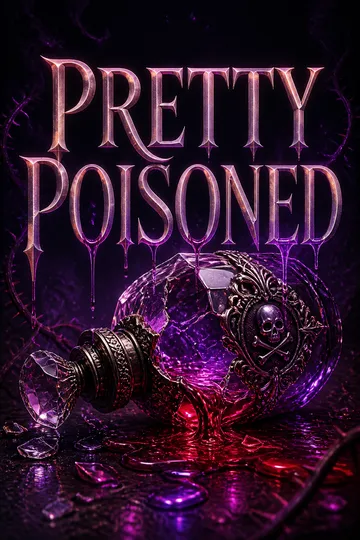
Private proof of lifePretty Poisoned carries lyrics Luca wrote for Teagan, details that make the leaked recording feel like a message intended only for her. It interrupts her attempt to accept his death and sends her toward the supposed secret concert. The song functions as both clue and emotional trigger: it gives Teagan reason to hope, but it also draws her back into fan theories and dangerous spaces. Its intimate origin becomes more important than the public debate over whether the recording is authentic.
Carved initials
Love made visibleThe letters cut into Teagan’s and her lovers’ bodies make affection visible while also preserving its violence. They serve as private declarations, souvenirs of a shared history, and reminders that devotion in this world can involve injury and possession. Teagan interprets the marks differently as her relationships change, but they remain difficult to separate from love. Their permanence contrasts with the characters’ unstable identities, false deaths, and repeated departures.
Staged deaths
Escape through erasureFaking death becomes a practical strategy for survivors who cannot safely leave The Order or the band’s public mythology by ordinary means. River and Hazel use an apparent suicide to disappear; later, Teagan’s blood is used to create a false murder scene. These deceptions protect the living by giving authorities and pursuers a finished story to believe. They also impose a cost: families must grieve, and the people who vanish surrender their names and ordinary futures.
Download PDF
Download EPUB
.epub digital book format is ideal for reading ebooks on phones, tablets, and e-readers.








