

Key Takeaways
Every hard climb is a lesson, not a referendum on your worth
A lead became a verdict. In an early account, Ilgner climbs a difficult route while worrying about falling, his partner’s opinion, and whether he looks brave. He hesitates, grips too hard, falls, then asks his partner to hide the fall from approaching friends. The rock was only part of the problem. His attention had been captured by proving himself.
Change the measure of value. The book argues that a climb’s lasting return is what it teaches, not the grade or applause. A successful ascent can teach little; a fall can reveal exactly where judgment, technique, or commitment broke down. Achievement can still be satisfying, but it should not decide a person’s worth. The better question after any attempt is what the effort showed and what can be learned from it.
The shift from proving ability to developing it resembles mastery-oriented motivation in education and sport. When people judge themselves by improvement and useful feedback, setbacks are more likely to become information than identity threats. That can make experimentation less emotionally costly. The argument is strongest when it separates human worth from performance, not when it implies outcomes do not matter. Grades, completion, and technical success still provide evidence about skill and preparation. They become harmful when treated as a complete verdict on the climber rather than one source of feedback.
Notice the story in your head before it spends your attention
Watch thought without obeying it. The Witness position is the observing stance from which a person notices thoughts and feelings without treating them as the self or as instructions. Ilgner describes how comparison, reputation, and old performances can steer a climber toward defending an image instead of solving the present problem. He calls attention consumed by self-importance or a fixed identity a power sink. Repetitive self-talk, reactive anger, and passive wishing are power leaks: they waste attention that could support action.
A pause creates options. On a hard route, a climber might hear an urgent inner command to grab a draw or give up. Observing that urge, then delaying the usual response, interrupts habit. The point is not to suppress every thought. It is to notice the thought early enough to choose what to do.
This is a practical version of metacognition, the ability to notice mental activity while it is happening. In cognitive behavioral approaches, naming a thought as a thought can weaken its automatic authority without requiring it to disappear. The climbing setting makes the lesson unusually concrete: attention is a limited resource, and rehearsing reputation or regret competes with reading the rock. Still, self-observation is not a substitute for action. A pause helps when it supports a decision, but excessive monitoring can itself disrupt fluent movement.
Use breath, balance, and broad vision to steady your climbing mind
Small adjustments change the effort. Ilgner treats posture, breathing, facial tension, and self-talk as connected parts of the bodymind, his term for the body and mind functioning as one system. A climber who holds their breath, grimaces, or overgrips may spend energy and narrow attention just when careful movement matters most. The suggested reset is physical: breathe continuously, bring the hips toward the wall, loosen the face, and look across the whole field rather than staring at one hold.
A tiny shift can matter. On Fiddler on the Roof, climber Steve Petro could perform two sections of a roof but struggled to link them. A partner noticed his hips dropped slightly during the transition. Keeping them closer to the wall helped him connect the sequences. A subtle change in attention had a visible effect on movement.
The bodymind idea fits embodied cognition: perception and action are not separate stages, since posture, breathing, and movement help shape what a person notices and attempts. Broad visual attention can also help prevent tunnel vision, while controlled breathing may steady arousal. These are useful cues because they are bodily and immediate, unlike abstract orders to feel confident. The effects should not be oversold, however. A relaxed face cannot make a dangerous placement sound, and breathing techniques support judgment rather than replace technical skill or sound belaying.
Replace vague fear with facts about the route, the fall, and yourself
Describe before deciding. Accepting responsibility means facing the situation as it is and owning one’s response to it. It does not mean claiming blame for every event. Ilgner recommends examining three parts of a climbing risk: the route, the consequences of a fall, and the climber’s relevant skills. Instead of calling a section blank or terrifying, identify visible holds, protection options, ledges, and likely fall paths. Specific information can shrink phantom fear, the vague alarm produced by an unclear threat.
A near miss exposed an omission. At Stone Mountain, Ilgner climbed far above his last protection before realizing a fall could send him onto a ledge. He had not assessed the consequences beforehand. His partner’s quick response helped prevent serious injury. The lesson is not to ignore fear, but to investigate it and make a deliberate decision while options remain.
This process resembles hazard analysis in fields such as aviation and medicine, where teams break a complicated threat into observable components before acting. Concrete descriptions can reveal whether fear points to a real hazard or an imagined one. The distinction between responsibility and blame is essential: people cannot control every cause, but they can often control preparation, communication, or the next response. A limitation is that an assessment remains incomplete. Rock, gear, and human performance are uncertain, so careful analysis reduces risk but cannot certify safety.
Trade entitlement for effort: ask what you can contribute now
Use what is available. The Giving process shifts attention from what a climber hopes to get, such as a redpoint, to what they can bring: effort, known skills, and a willingness to learn. A receiving mindset dwells on missing strength, better holds, or easier conditions. A giving mindset asks how to use the actual holds and abilities at hand.
Questions reopen a stalled problem. On Steepopolis, a route in Tennessee, Ilgner became stuck thinking he could not see protection or a way through the crux. Reframing those thoughts as questions led him to inspect a seam for gear and side pulls for movement. The change did not guarantee success. It converted passive conclusions into active searches. Expecting a chance to learn, rather than a guaranteed outcome, keeps attention with the task and leaves room for unexpected solutions.
This approach has a useful connection to problem-solving research: open questions tend to generate options, while categorical judgments can prematurely close search. It also echoes the distinction between process goals and outcome goals. A climber cannot command the final result, but can choose where to look, how to apply a skill, and whether to keep exploring. The risk is turning possibility into forced optimism. Some holds do not work, and some routes are inappropriate. Productive possibility thinking stays answerable to the facts established during assessment.
Choose the risk deliberately, then stop renegotiating mid-move
Commitment needs a boundary. The Choices process is the transition from preparation to action. Before moving into a risky section, decide whether the fall consequences are acceptable and define the part of the climb being attempted. If not, back off deliberately. If yes, commit attention to the effort instead of repeatedly debating the same decision because discomfort has arrived. Full commitment means engaging the chosen task, not promising a particular result.
Practice is not permission to gamble. The book treats falling as part of climbing and describes gradual practice in controlled settings, with appropriate protection and a competent partner. A fall can still injure or kill, especially near ledges, on runouts, or when the rope and belay system are poorly managed. The relevant skill is understanding and responding to fall consequences, not proving fearlessness. Choosing not to proceed can be the soundest choice.
Pre-commitment can reduce the cognitive burden of repeatedly reopening a settled choice, a principle also used in emergency planning and performance routines. The framework is particularly useful because it makes retreat a legitimate decision rather than a failure of nerve. But commitment must not become rigidity. New evidence, such as a loose hold or compromised protection, warrants a fresh assessment. In safety-critical activity, decisiveness is valuable only when paired with permission to update a plan in response to material changes.
Commit to movement, but let the rock revise your plan
Hold the aim, adapt the method. Ilgner distinguishes commitment to continue engaging from rigid commitment to a predetermined sequence. Once climbing, the climber can listen by staying receptive to new holds, rests, and movement options. The conscious mind may cling to a familiar technique because it feels controlled, even when another method fits the rock better. Continuous movement, relaxed breathing, and attention to balance can help keep problem-solving embodied rather than trapped in anxious commentary.
The route may contradict the plan. A dihedral may offer a layback, then a place to stem, then a crack wide enough to jam. A climber who insists on one technique can waste energy. A climber who keeps observing can change methods as features change. Intuition, in this account, is rapid information from experience and bodily perception, not a reason to disregard protection or objective danger.
Skilled movement often relies on perception and action unfolding together, rather than on a complete verbal plan prepared in advance. This is familiar in dance, music, and expert sports performance: practice builds patterns that can respond quickly to changing conditions. The book’s emphasis on intuition is most persuasive when it means trained sensitivity to cues, such as balance or a usable feature. It is less reliable if treated as infallible inner knowledge. Intuition can be biased, and technical checks remain crucial when a mistake has serious consequences.
Keep attention on the next movement, not the imagined finish
The route is lived one move at a time. The Journey process counters the urge to rush toward the top, the next rest, or the relief of being finished. Outcome-focused thinking can create both fear of failure and anxiety about losing a nearly completed ascent. Ilgner describes climbers who performed better when attention shifted from proving a redpoint to exploring the moves.
An unexpected ascent illustrates the point. Paul Piana had been working on a difficult route. When a visiting friend arrived, he climbed mainly to show the route’s movements, without expecting to complete it. He unexpectedly made the ascent. The result was not produced by pretending the goal did not matter. Rather, attention returned to the climbing itself. Staying present can make effort more fluid and make the experience easier to remember, whether or not the climb is completed.
This is close to flow theory, where absorbed attention and clear immediate tasks can reduce distracting self-evaluation. It also explains why an experience can feel richer when attention is not spent rehearsing its ending. Outcome goals still have a place: they help climbers choose projects and track progress. The useful distinction is between selecting a destination and mentally living there during the attempt. Present focus supports execution, while the result remains valuable feedback rather than the sole justification for climbing.
Analysis
The book’s central contribution is to turn mental training into a sequence of observable decisions rather than a demand to feel brave. Its practical logic runs from noticing distraction, to settling attention in the body, to describing hazards, choosing whether to proceed, and then responding to the actual climb. That progression makes the argument unusually teachable: a climber can identify a specific failure point, such as breath-holding or an unexamined fall path, instead of labeling the whole performance weak.
The most valuable tension is between control and receptivity. Preparation requires deliberate analysis, yet fluent movement requires the climber to stop narrating every action and respond to changing information. This is not a contradiction so much as a timing problem. Analysis belongs before action and at meaningful reassessment points; during a move, excessive internal commentary may interfere with trained perception. The distinction has relevance well beyond climbing, from surgery to music performance, where preparation supports flexible execution rather than scripting every moment.
The framework also needs careful interpretation. Its language about Ego and a conscious mind that misleads can illuminate self-protective habits, but these ideas are metaphors, not established psychological mechanisms in the form presented. Likewise, intuition is most dependable when grounded in relevant experience, and less so when it substitutes for evidence. The book is strongest when it asks climbers to inspect actual holds, gear, and consequences, and weaker if its spiritual vocabulary is taken to promise special access to truth.
Finally, learning and safety must remain allied. Exposure to uncertainty can improve skill, but risk is not automatically educational, and some errors have irreversible costs. The book itself warns against reckless imitation. Its most durable principle is therefore not to push harder at every boundary, but to make choices consciously, learn from the effort, and preserve the ability to climb again.
Review Summary
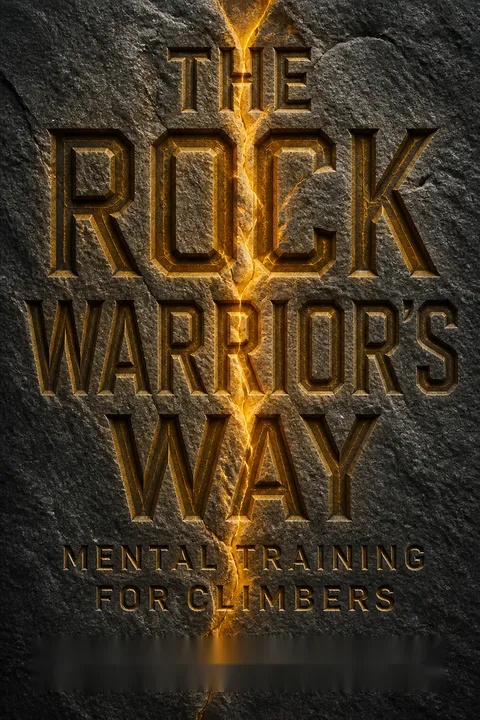
The Rock Warrior's Way receives mostly positive reviews for its insights on the mental aspects of climbing. Readers appreciate its focus on mindfulness, overcoming fear, and adopting a growth mindset. Many find the concepts applicable beyond climbing. Critics note the writing style can be pseudo-scientific and the content repetitive. Some beginners struggle with climbing-specific terminology. Overall, most climbers find value in the book's approach to mental training, though some suggest it could be condensed.
People Also Read



Glossary
Witness position
Observing thoughts without obeyingThe mental stance from which a person notices thoughts, emotions, and habitual reactions as experiences rather than as the whole self. In the book, this distance makes it possible to examine self-talk and choose whether to act on it. It is an attentional practice, not a claim that thoughts can simply be switched off.
Power sinks
Attention drained by self-imagePatterns that consume attention maintaining ego or a fixed identity. The book particularly emphasizes self-importance and attachment to personal history, such as needing to live up to a reputation as a bold climber. The energy spent defending that image is unavailable for observing the route and solving the immediate climbing problem.
Power leaks
Attention wasted through habitsUnhelpful mental or behavioral patterns that disperse attention rather than directing it toward the task. Examples include limiting self-talk, automatic reactions, unnecessary protection habits, and passive wishing or hoping. Noticing a leak is the first step toward interrupting it and reclaiming attention for deliberate action.
bodymind
Mind and body acting togetherIlgner’s term for the inseparable interaction of mental and physical processes during climbing. Thoughts influence posture, breathing, and movement, while bodily sensations and position shape attention and perception. The term highlights why changes such as relaxing the face, breathing continuously, or adjusting balance can affect both a climber’s mental state and performance.
phantom fear
Fear without a clear sourceA vague fear that arises when a climber has not clearly identified the danger or uncertainty involved. It may reflect a real hazard, or a general resistance to the unfamiliar. The book recommends investigating the situation and describing its features precisely, rather than either dismissing the fear or letting its vagueness dictate action.
unbending intent
Full commitment to chosen actionA committed decision to engage a defined climbing risk without repeatedly retreating into hesitation or second-guessing. It concerns the effort, not a guaranteed outcome or an inflexible sequence of moves. A climber can choose not to proceed; once choosing to engage, the aim is to direct attention fully into the effort while remaining responsive to new information.
The Bullet
Model of comfort and riskA diagram representing a person’s potential as a comfort zone surrounded by a risk zone. The familiar area contains experiences already understood; the surrounding area represents unfamiliar or challenging experience. The model depicts both the pull toward exploration and the resistance that keeps a person within familiar limits. Engaging an appropriate risk can expand what becomes familiar.
The Laser Beam
Model of focused attentionA diagram that adds the book’s mental-training sequence to the Bullet model. It represents attention being gathered and focused during preparation, directed through a deliberate choice, and sustained during action. The image explains how scattered attention can be concentrated into purposeful effort, without implying that focus removes objective danger.
path with heart
Choice aligned with deep valuesA personally meaningful direction guided by what a person genuinely values rather than by comparison, social approval, or the ego’s demand for achievement. In the book, this idea helps a climber examine motivation and make risk choices without relying on simple labels of success or failure. It does not mean every emotionally compelling risk is appropriate.
FAQ
What's "The Rock Warrior's Way" about?
- Mental training for climbers: "The Rock Warrior's Way" by Arno Ilgner focuses on mental training specifically designed for rock climbers, emphasizing the psychological aspects of climbing.
- Warrior philosophy: The book draws from the warrior tradition, teaching climbers to perform with mastery and calm in the face of danger, similar to a samurai in battle.
- Seven processes: It introduces a program called "the Seven Processes," which guides climbers in using attention impeccably to overcome psychological barriers.
- Personal growth: The book is not just about climbing harder but about personal growth, learning, and expanding one's comfort zone through climbing challenges.
Why should I read "The Rock Warrior's Way"?
- Improve climbing performance: The book provides tools to enhance your mental approach to climbing, which can significantly improve your performance.
- Overcome psychological barriers: It helps climbers recognize and overcome mental obstacles that limit their potential.
- Broader life application: The principles taught can be applied beyond climbing, helping you become a more skilled risk-taker in all aspects of life.
- Unique perspective: It offers a unique blend of climbing experience and timeless wisdom, making it a valuable resource for personal development.
What are the key takeaways of "The Rock Warrior's Way"?
- Attention and awareness: The book emphasizes the importance of directing attention and being aware of mental processes that affect performance.
- Love-based motivation: It encourages shifting from fear-based to love-based motivation, focusing on learning and growth rather than achievement.
- Impeccable use of attention: The concept of impeccability is central, meaning using attention flawlessly to gain self-knowledge and personal power.
- Risk-taking structure: It provides a structured approach to risk-taking, involving preparation, transition, and action phases.
What is the "Seven Processes" method in "The Rock Warrior's Way"?
- Becoming Conscious: This process involves self-observation and identifying self-limiting thought patterns.
- Life is Subtle: It focuses on collecting and centering attention, emphasizing the importance of subtleties in climbing.
- Accepting Responsibility: This process is about gathering objective information and dealing with it honestly, without blaming or wishing.
- Giving: It encourages focusing on what you can give to the effort rather than what you might receive.
How does "The Rock Warrior's Way" define personal power?
- Internal power: Personal power is defined as the ability to act effectively, venture into the unknown, and explore meaning.
- Clarity and decisiveness: It manifests as clarity of thought and decisiveness in action, emphasizing mental aspects over physical strength.
- Experiential knowledge: Power is your level of experiential knowledge, which increases by expanding your comfort zone.
- Hunter of power: A warrior is described as an impeccable hunter of personal power, constantly seeking to learn and grow.
What role does fear play in "The Rock Warrior's Way"?
- Two types of fear: The book distinguishes between survival fear, which is healthy, and illusory fear, which is not.
- Phantom fear: It addresses phantom fear, a vague fear of the unknown, and provides strategies to weaken it.
- Fear as a teacher: Fear is seen as a teacher, helping climbers understand their limits and learn from experiences.
- Falling practice: The book suggests practicing falling to become familiar with it and reduce fear, making it a part of the climbing process.
How does "The Rock Warrior's Way" suggest improving self-worth?
- Internal value system: It encourages developing an internal value system based on learning and growth rather than external achievements.
- Separate self-worth from performance: The book advises untangling self-worth from climbing performance to avoid being at the whim of external factors.
- Focus on learning: By focusing on learning, climbers can derive consistent self-worth from their dedication to growth.
- Love-based motivation: Shifting to love-based motivation helps build self-confidence and a stable core, enhancing performance.
What is the "Listening" process in "The Rock Warrior's Way"?
- Receptive mindset: Listening involves staying receptive and open to new information during a climb, minimizing conscious interference.
- Continuous movement: It emphasizes continuous climbing and breathing to maintain momentum and disengage the conscious mind.
- Intuition: The process encourages trusting intuition, allowing subconscious information to guide actions.
- Trust in the process: Climbers are advised to trust the process and remain open to learning, even in chaotic situations.
What are some of the best quotes from "The Rock Warrior's Way" and what do they mean?
- "The warrior’s goal is power." This quote emphasizes that the ultimate aim is to gain personal power through learning and growth, not just climbing achievements.
- "Death is our advisor." It suggests that awareness of mortality helps focus on what truly matters, directing actions toward meaningful pursuits.
- "The direct path to mastery is seemingly indirect." This highlights that true mastery involves a process of learning and growth, not just direct achievement.
- "Every act is a deliberate act of will." It underscores the importance of being intentional and focused in every action, even in small tasks.
How does "The Rock Warrior's Way" address the concept of falling?
- Part of the process: Falling is seen as a natural part of the climbing process, not something to be feared or avoided.
- Practice falling: The book suggests practicing falling to become familiar with it and reduce fear, making it a tool for learning.
- Safe falling: It provides guidelines for safe falling, emphasizing the importance of assessing fall consequences and practicing proper form.
- Acceptance: Climbers are encouraged to fully accept the possibility of falling, which helps focus attention on the climbing effort.
What is the "Journey" process in "The Rock Warrior's Way"?
- Focus on the present: The Journey process emphasizes keeping attention in the present moment, finding comfort and meaning in the risk.
- Avoid destination thinking: It advises against focusing on the end goal or destination, which can distract from the learning process.
- Embrace chaos: Climbers are encouraged to embrace the chaos of the risk zone, finding internal harmony amid external challenges.
- Learning and growth: The process highlights that the true goal is learning and growth, not just reaching the top of a climb.
How can "The Rock Warrior's Way" be applied beyond climbing?
- Risk-taking in life: The principles of risk-taking, preparation, and commitment can be applied to various life challenges and decisions.
- Personal growth: The focus on learning and growth is relevant to personal development in any area, not just climbing.
- Overcoming fear: Strategies for overcoming fear and building self-confidence can be used in other aspects of life, such as career or relationships.
- Mindfulness and attention: The emphasis on mindfulness and impeccable use of attention can enhance focus and effectiveness in everyday tasks.
Download PDF
Download EPUB
.epub digital book format is ideal for reading ebooks on phones, tablets, and e-readers.








