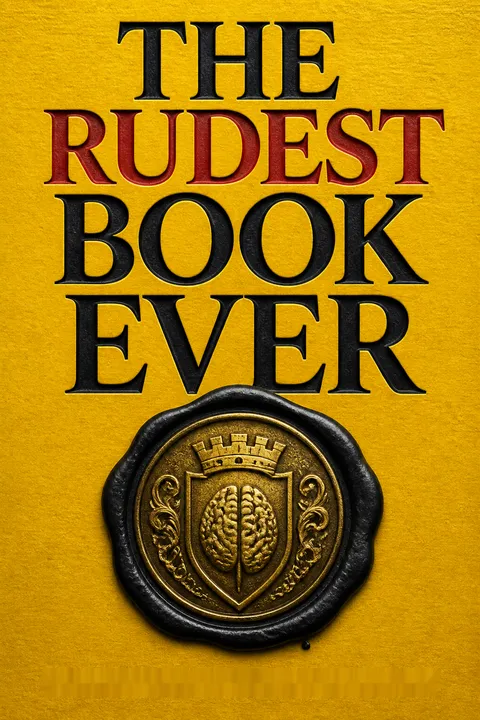


Key Takeaways
Learn how to think before inherited beliefs become your operating system.
Beliefs arrive early. Children first absorb language, attitudes, and group rules before they can evaluate them. The book calls the missing skill HOW TO LEARN: staying open to unfamiliar ideas, discarding inherited assumptions when needed, and finding new ways to solve problems. Its imagined conversation between parent and teenager exposes a common gap: adults often describe education as a route to income and status, while the teenager asks whether it should also develop judgment, ethics, and understanding.
Status proves little. A prestigious job or title may show skill, but it does not guarantee sound judgment or moral sense. The book argues that parents and teachers should cultivate inquiry rather than treat age, tradition, or achievement as proof of wisdom.
What's valuable here is the distinction between acquiring information and learning how to revise it. That distinction connects childhood development with intellectual humility: people cannot question assumptions they have never learned to notice. The book's critique of status-centered education also invites a practical question for families and schools: are learners being trained to pass tests, or to make decisions when no answer key exists? Its account of parents is deliberately provocative, but not every inherited belief is harmful. The task is not to reject tradition automatically, but to test what it teaches against experience, evidence, and the effects on other people.
Earn self-worth from your standards, not from strangers' applause.
Praise is unstable fuel. The book describes a cycle in which insecurity leads people to seek approval, then temporary reassurance makes them dependent on the next compliment. That dependence can make someone tolerate manipulation or shape their life around another person's preferences. A well-regulated self is the book's term for valuing oneself without letting outside judgment control one's choices. It does not mean ignoring useful feedback or withdrawing from relationships.
Set your own measures. The author suggests combining realistic standards for a chosen skill with attention to what brings lasting calm and satisfaction, apart from pleasing an audience. Achievement can matter because it demonstrates effort and capability; trusted relationships and deliberate kindness matter too. Praise may be appreciated, but it should not be mistaken for evidence of personal worth.
The insight is not that approval is worthless, but that it becomes dangerous when it serves as the only evidence of worth. This distinction matters because people are social: feedback can teach, encourage, and help calibrate performance. The healthier question is whether approval informs a judgment or replaces it. The book's emphasis on self-defined standards is strongest when those standards remain answerable to reality, rather than becoming a private excuse to avoid criticism. Self-respect is more durable when it can absorb honest correction without collapsing into shame.
Manage yourself like a nation with laws, intelligence, and diplomacy.
Create distance to see clearly. Solomon's Paradox describes how people can reason well about someone else's dilemma yet become confused by their own. The book's remedy is to imagine oneself as a nation and act as its leader: assess problems objectively, define principles, and decide what to protect. A personal constitution might specify boundaries and moral commitments. Self-control is the enforcement that helps those commitments survive urges and habits; self-respect grows when actions match the rules.
Keep a written record. The author proposes two notebooks: “learnings” for problems and patterns to understand, and “rules” for the boundaries or actions adopted in response. The nation's foreign policy means protecting oneself, maintaining supportive relationships, and responding to people's demonstrated behavior rather than trying to control them.
The nation metaphor turns vague self-improvement into governance: identify the issue, set a rule, and review whether the rule works. It also resembles self-distancing methods used to make emotionally charged problems easier to examine. The metaphor's risk is its martial vocabulary, which can make ordinary feelings seem like enemies to suppress. Emotions also carry information, even when they are not reliable instructions. The most useful version of the exercise treats feelings as reports to investigate, not citizens to imprison, while keeping boundaries firm when safety or dignity is at stake.
Treat people as unknown until their choices provide real evidence.
First impressions are thin evidence. The book recommends “people are weird” as a stance that combines caution with curiosity. Someone may be kind, selfish, trustworthy, or none of these in the way an observer expects. Appearance, confidence, reputation, and professional success cannot establish what a person is like in private. Words matter, but choices and repeated actions reveal more about how someone actually behaves.
Wait before investing. Attraction or admiration can fill gaps in knowledge with assumptions, creating high expectations of a person barely known. The author advises observing rather than trusting rumors, hype, or a polished public persona. This does not mean treating everyone as a threat. It means staying open to new information without confusing a persuasive presentation with a proven character.
This is a useful antidote to both cynicism and idealization. Uncertainty can preserve curiosity while preventing premature trust, a balance especially relevant in online spaces where images and confident claims are easily manufactured. The book's emphasis on behavior is practical, although isolated actions can also mislead: context, incentives, and patterns matter. A single generous gesture does not prove virtue, just as one mistake does not define an entire person. Trust is better understood as a conclusion that accumulates through consistent evidence.
Trade endless feel-good additions for durable satisfaction and inner peace.
Pleasure is not a life plan. The book distinguishes happiness, which it associates largely with adding desired experiences and possessions, from life satisfaction, which means building a stable, broadly pleasant life. Peacefulness is different again: an inner calm not directly purchased by money, status, or pleasure. The author stresses that money still matters because financial insecurity creates real stress; the target is stability, not endless accumulation.
Choose joys deliberately. Instead of chasing every new source of excitement, identify a small set of activities with lasting personal value. The book groups these as physical, intellectual, and artistic joys, such as movement, learning, or making and engaging with art. It argues that immediate rewards can crowd out future well-being, so choices should be judged by what they build over time, not only by how they feel today.
The distinction between a pleasant moment and a satisfying life helps explain why achieving a desired object may not resolve deeper discontent. The proposed categories of joy also encourage experimentation beyond consumption, toward skills and activities that absorb attention. Still, the book's contrast between happiness and satisfaction can sound sharper than lived experience warrants: pleasure, safety, relationships, and meaning often reinforce one another. A useful application is not to distrust happiness, but to ask whether a pleasure supports the life someone wants or merely postpones confronting a problem.
Build autonomy by examining your motives, not merely defending your choices.
Choice is not automatically freedom. The book argues that decisions can reflect family expectations, social norms, biology, past experiences, or the wish to be accepted. Choosing independently therefore requires more than resisting other people's advice. It requires investigating why a desire feels compelling and whether it fits one's considered priorities. The author warns that individualism without self-knowledge may only disguise conformity as personal freedom.
Look beneath the surface. Career, status, and lifestyle are visible parts of a life, but they do not explain every source of dissatisfaction. Introspection can expose approval-seeking or borrowed ambitions; therapy and other forms of help can support that work. The book also cautions against turning self-discovery into superiority. Insight does not cancel responsibilities to family, community, or others.
This account usefully separates autonomy from mere preference. A person may sincerely choose something while remaining shaped by pressures they have not examined. That does not make choice meaningless; it makes reflection part of agency. The book's inward focus needs one qualification: motives are rarely pure, and complete freedom from social influence is not a realistic standard. Autonomy can instead mean understanding competing influences well enough to endorse a decision, revise it, and accept its consequences without treating every outside influence as contamination.
Treat rejection and failure as events, not verdicts on your worth.
A refusal is not a diagnosis. Romantic rejection can feel like a judgment of attractiveness or value, but the other person may be responding to preferences and circumstances an outsider cannot know. The book connects adult reactions to rejection with attachment styles, patterns influenced by early experiences of care and security. If fear of abandonment, distrust, or dependence repeatedly harms relationships, the author recommends self-examination and professional help.
Expect losses in serious work. The book argues that people who attempt more also encounter more setbacks. A failure can reveal what to change, but it is not a final ranking of a person. The author recommends practical structure: choose a manageable number of tasks, schedule focused work, protect sleep and breaks, and review what methods are effective. Access to money, guidance, and a stable environment also shapes who gets ahead.
The reframing helps separate an outcome from an identity, a distinction that makes learning possible after disappointment. It also avoids the fantasy that confidence means never feeling hurt. The book is especially useful in recognizing that early relationships can shape later expectations, while not treating childhood as destiny. Its success advice becomes more convincing when paired with its acknowledgment of unequal resources: routines can improve execution, but they cannot erase structural barriers or guarantee equal opportunities.
Admire what people do; don't turn limited evidence into worship.
A talent is not a whole person. The halo effect is the tendency to infer other admirable qualities from one impressive trait. Someone's expertise, fame, charity, or creative work does not prove that they are wise or ethical in every part of life. The book argues that calling people heroes encourages an overly simple image, then creates disappointment when their ordinary flaws become visible.
Learn without pledging allegiance. Admiration can focus on a skill, idea, or act worth studying. Following goes further: it can mean defending a stranger, dismissing contrary evidence, or attacking critics. When new information clashes with an idealized image, cognitive dissonance can motivate people to deny, minimize, or explain away the contradiction. A healthier response is to update the picture and keep the lesson separate from the person.
The distinction between learning from a person and endorsing their whole character is especially valuable in celebrity and influencer culture, where audiences see carefully selected fragments. It protects both judgment and admiration: a flawed person can still produce meaningful work. The harder question is how to assess a public figure fairly when evidence is incomplete or contested. The book's answer, intellectual restraint, is sound. It does not require moral neutrality; it requires proportioning confidence to what is actually known.
Pause before accepting claims, and leave room for better explanations.
Knowledge needs inspection. The book describes mental “packets” of information inherited from family, groups, media, and study. Some may be accurate, incomplete, or biased. Before accepting a claim, ask where it came from, whether the speaker has relevant expertise, what evidence supports it, and what might be missing. “I don't know” is useful when it reflects a willingness to investigate rather than a refusal to think.
Make familiar ideas strange. A data tree is the book's image for a subject with many branches and evidence points, most of which one person cannot master. Defamiliarization means temporarily setting aside familiar interpretations to see a situation from a fresh angle. Creative thinking adds the possibility that a problem has options beyond the obvious ones. Together, these habits help resist simple narratives that sort people or issues into total heroes and villains.
The practical strength is the pause between hearing a claim and adopting it. That brief delay can interrupt social conformity and emotional persuasion without demanding that every person become an expert on every subject. The book's data-tree image also makes ignorance visible: knowing a few facts is not the same as understanding a field. However, “data” is not automatically neutral; evidence also requires interpretation, and experts can disagree. Good skepticism evaluates sources while remaining willing to revise its own conclusions.
Measure life beyond status: include your inner world and the natural one.
The social scoreboard is incomplete. The book divides experience into three worlds: the human world of status and social systems, the inner world of thoughts and motives, and the natural world beyond human rankings. Social comparison makes self-worth depend on selected people and selected measures, while introspection asks how a person's own mind works. Time in nature can offer a different kind of attention, less organized around achievement and evaluation.
Attention is not the same as importance. The spotlight effect describes overestimating how much other people notice or remember one's behavior. The author treats gossip similarly: it can serve social and entertainment functions, but it usually does not control the whole course of a life. The book recommends giving lasting influence to a chosen circle of people who know and care about one another.
This wider frame interrupts the assumption that public rank is the only meaningful measure of a life. Nature can provide an experience not organized around status, while attention to inner motives supports choices less dependent on comparison. The framework is most persuasive when these worlds are treated as interacting, not as substitutes: poverty, illness, or unsafe conditions cannot be dissolved by changing perspective. Social belonging also remains a genuine human need. The aim is a broader life, not an escape from material conditions or other people.
Analysis
The book's central movement is from borrowed certainty toward deliberate self-direction. It begins with a developmental claim: people absorb beliefs before they can assess them. From there, it questions the institutions that reinforce borrowed standards, including family authority, education, status, online influence, and public admiration. Its practical metaphors then turn inward. A person can govern an imagined nation, build standards independent of applause, and evaluate claims as a cautious investigator rather than a confident repeater. The final expansion beyond human comparison adds nature and inner life as alternative reference points.
The strongest thread is epistemic humility made practical. “I don't know” is not presented as intellectual surrender, but as protection against premature certainty. The advice to distinguish a person's public image from their actions, a pleasurable moment from long-term satisfaction, and an emotion from an instruction gives readers usable tests rather than a single doctrine. The book's humor and provocation serve a purpose: they unsettle assumptions that polite self-help might leave intact.
The same force creates risks. The author sometimes generalizes broadly about parents, societies, motives, and human behavior, even while arguing that judgment should be evidence-based. Its ideal of inner freedom can also sound more detached from social needs than most lives permit. The nation metaphor is memorable, but if taken literally, it may encourage treating emotions as hostile forces rather than signals. The book is most useful when its frameworks are treated as experiments, not final truths: test a standard, examine a motive, record a pattern, and revise a rule when experience contradicts it. Its deeper message is not that people can become independent of influence, but that they can become more conscious of which influences deserve authority.
Review Summary
The Rudest Book Ever receives mixed reviews, with ratings ranging from 1 to 5 stars. Supporters praise its thought-provoking content, straightforward approach, and relatable ideas for young adults. Critics argue it lacks originality, uses excessive profanity, and oversimplifies complex topics. Some find the author's tone patronizing and the writing style average. The book is seen as most beneficial for teenagers and young adults new to self-help literature, offering perspectives on self-awareness, critical thinking, and personal growth.
People Also Read



Glossary
HOW TO LEARN
Adapt and revise beliefsThe book's term for the capacities that let a person grow beyond absorbed childhood beliefs. It includes openness to unfamiliar ideas and environments, the ability to abandon outdated assumptions, and the ingenuity to find new solutions. It contrasts with simply acquiring “what to think,” or repeating inherited answers without learning how to assess them.
Well-regulated self
Worth not ruled by approvalA state in which a person can value themselves without relying on praise or judgment from the outside world. It does not mean rejecting relationships, feedback, ambition, or social participation. It means that other people's reactions do not determine whether a person feels worthy or dictate the reasons behind their choices.
Trapped self
Identity governed by othersThe condition in which a person's self-image depends heavily on how other people see them. Approval, belonging, and social expectations can shape choices and create a persistent need to satisfy others. The book presents this as a common state, not a fixed diagnosis, and contrasts it with greater independence from external judgment.
Free self
Desire without its controlThe book's description of a state in which desires and social judgments no longer control a person's identity or actions. A free self can still love people, pursue work, enjoy pleasure, and seek achievement. The distinction is that these experiences are choices rather than requirements for feeling complete.
Solomon's Paradox
Better advice for othersA name for the tendency to reason more wisely about another person's problems than about one's own. Emotional involvement can make self-assessment confusing, while distance makes another person's situation easier to examine. The book uses the idea to recommend looking at oneself as if advising someone else.
Life satisfaction
Long-term pleasant stabilityThe book's alternative to treating momentary happiness as life's main objective. It means building a stable, broadly pleasant life by choosing what to add, maintain, and refuse. Financial security, meaningful activities, and good relationships can support it. It differs from short-lived excitement and from inner peacefulness.
Three Worlds: Outside, Inside and Nature
Three sources of perspectiveA framework that separates the human-made social world, a person's inner world of thoughts and motives, and the natural world beyond human rankings. The book uses it to challenge self-worth based solely on comparison with other people. Each world offers a different way to understand experience, and none makes the others irrelevant.
Data Tree
A subject's evidence mapThe book's metaphor for the complexity of knowledge about a subject. A topic is like a tree whose branches represent subfields and whose leaves represent evidence, theories, and details. Since even experts cannot know everything in a field, the image encourages people to recognize how small their own store of information may be.
Defamiliarization
See the familiar anewA technique of temporarily setting aside familiar interpretations so that something can be considered from a fresh perspective. The book applies it to critical thinking: separate an object or event from the meanings learned through culture, status, or personal bias, then examine what is actually known and why it matters.
Arrival fallacy
Success mistaken for completionThe belief that reaching a particular goal, such as a prestigious job, relationship, or level of wealth, will make life complete. The book argues that achievements can improve circumstances but do not automatically resolve questions of meaning, emotional well-being, or self-knowledge. Treating arrival as a permanent finish line can set up disappointment.
Spotlight effect
Overestimating others' attentionThe tendency to assume that other people notice and scrutinize one's appearance, words, or behavior more than they actually do. The book uses the concept to reduce anxiety about social judgment: most people are occupied with their own concerns, so an awkward moment usually receives less attention than its subject imagines.
FAQ
What's "THE RUDEST BOOK EVER" about?
- Collection of Ideas: The book is a compilation of ideas, principles, and perspectives aimed at helping individuals navigate life.
- Avoiding Human Pitfalls: It offers insights into avoiding common human pitfalls and understanding the complexities of human behavior.
- Practical Learnings: The focus is on practical learnings rather than deep philosophical thoughts, aiming to make slight changes in perception to avoid headaches.
- Challenging Norms: The book challenges readers to question societal norms and encourages them to think independently.
Why should I read "THE RUDEST BOOK EVER"?
- Gain New Perspectives: It provides fresh perspectives on how to view and interact with the world and people around you.
- Self-Improvement: The book encourages self-improvement by understanding and accepting oneself, rather than seeking validation from others.
- Critical Thinking: It promotes critical thinking and challenges readers to question their beliefs and assumptions.
- Practical Advice: Offers practical advice on dealing with life's challenges, making it a useful guide for personal development.
What are the key takeaways of "THE RUDEST BOOK EVER"?
- Self-Understanding: Emphasizes the importance of understanding oneself and one's motivations.
- Avoiding Approval-Seeking: Advises against seeking approval from others and highlights the dangers of doing so.
- Critical and Creative Thinking: Encourages the development of critical and creative thinking skills to solve problems effectively.
- Life Satisfaction Over Happiness: Suggests focusing on life satisfaction rather than the fleeting pursuit of happiness.
What is the "You Are a Nation" concept in "THE RUDEST BOOK EVER"?
- Self-Governance: Encourages readers to see themselves as a nation, with the responsibility to govern their own emotions, habits, and decisions.
- Constitution and Self-Control: Suggests creating a personal constitution and using self-control as a policing force to maintain inner peace.
- Self-Respect and Prosperity: Highlights the importance of self-respect and how it leads to personal prosperity and contentment.
- Foreign Policy: Advises on maintaining healthy relationships and boundaries with others, akin to a nation's foreign policy.
How does "THE RUDEST BOOK EVER" define "Specialness"?
- Well-Regulated Self: Describes a state where one feels special without needing external validation, focusing on self-trust and self-control.
- Trapped Self: Most people live in this state, seeking validation from others and being controlled by external opinions.
- Free Self: A state where the concept of 'I' is dissolved, leading to inner peace and freedom from desires and external validation.
- Indifference to Praise: Encourages indifference to praise and criticism, focusing instead on personal motivations and goals.
What is the "How to Think" method in "THE RUDEST BOOK EVER"?
- Objective Analysis: Encourages analyzing information objectively, without relying on group norms or external influences.
- Critical Thinking: Emphasizes the importance of critical thinking, starting from a point of 'I don't know' rather than 'I know.'
- Avoiding Heuristics: Warns against relying on mental shortcuts and biases, advocating for a more thoughtful approach to information.
- Continuous Learning: Stresses the need for continuous learning and unlearning to adapt to new information and perspectives.
What does "THE RUDEST BOOK EVER" say about happiness and life satisfaction?
- Happiness is Additive: Describes happiness as largely about adding new things, which is not sustainable for long-term contentment.
- Life is Subtractive: Life involves losing things over time, and true satisfaction comes from understanding and accepting this.
- Focus on Life Satisfaction: Advises focusing on life satisfaction, which involves stability and understanding what truly matters.
- Peacefulness Beyond Additions: Suggests that peacefulness comes from accepting life's subtractive nature and finding contentment beyond material additions.
How does "THE RUDEST BOOK EVER" address rejections and failures?
- Rejections are Normal: Emphasizes that rejections are a normal part of life and not a reflection of personal worth.
- Learning from Failures: Encourages respecting failures as learning opportunities and not letting them define one's self-worth.
- Avoiding Arrival Fallacy: Warns against the belief that achieving certain goals will lead to permanent happiness.
- Continuous Growth: Stresses the importance of continuous growth and learning from both successes and failures.
What role do heroes and role models play in "THE RUDEST BOOK EVER"?
- No Perfect People: Asserts that there are no perfect people, only individuals with admirable traits and actions.
- Halo Effect: Warns against the halo effect, where one admirable quality leads to the assumption of overall greatness.
- Admire, Don't Follow: Encourages admiration for specific qualities without blindly following or idolizing individuals.
- Humanizing Heroes: Advises seeing heroes as human, with flaws and complexities, rather than idealized figures.
What is the "Three Worlds" concept in "THE RUDEST BOOK EVER"?
- Human World: The world created by human interactions, societal norms, and expectations.
- Inner World: The personal, introspective world where self-understanding and self-worth are developed.
- Natural World: The world of nature, offering a broader perspective and a sense of peace beyond human constructs.
- Balanced Perspective: Encourages balancing these three worlds to gain a more comprehensive understanding of life and self-worth.
How does "THE RUDEST BOOK EVER" suggest dealing with societal pressures?
- Question Norms: Encourages questioning societal norms and not blindly following them.
- Self-Autonomy: Stresses the importance of self-autonomy and making decisions based on personal values and understanding.
- Avoiding Groupthink: Warns against groupthink and the pressure to conform to societal expectations.
- Building Self-Trust: Advises building self-trust and confidence to withstand societal pressures and make independent choices.
What are the best quotes from "THE RUDEST BOOK EVER" and what do they mean?
- "I think, therefore I am, but if I think well, then who am I?" - Encourages deeper introspection and critical thinking beyond surface-level understanding.
- "Rejections are normal." - A reminder that rejections are a part of life and not a reflection of personal failure.
- "Admire, never follow." - Advises appreciating admirable qualities in others without idolizing them or losing one's individuality.
- "Life satisfaction is minimizing the pains from the subtraction of life." - Suggests focusing on long-term contentment rather than temporary happiness.
Download PDF
Download EPUB
.epub digital book format is ideal for reading ebooks on phones, tablets, and e-readers.








