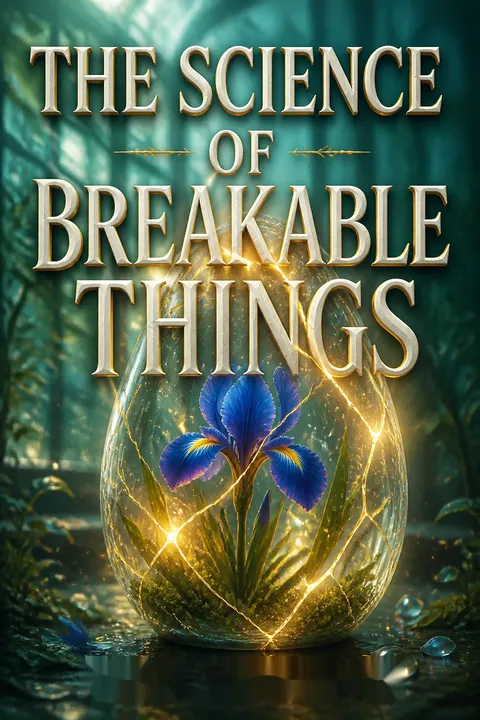


Plot Summary
The Question She Cannot Ask
Seventh-grader Natalie Napoli expects little from Mr. Neely’s yearlong science journal, until its demand for a question exposes what she cannot name at home. Her mother, Alice, a botanist who once turned kitchen lessons into experiments, has stopped working and stays behind her bedroom door.
Natalie tells herself Alice is bored, not ill, while her father, John, asks everyone to give her space. At school, Natalie’s old friend Mikayla keeps her distance, leaving Natalie closer to her exuberant best friend, Twig.
A frog dissection briefly draws Natalie into science, but the classroom discovery cannot compete with the silence waiting at home. When Mr. Neely presses her to choose a project, Natalie has no scientific question, only the feeling that Alice should be helping her find one.
The journal gives Natalie a form for observation before she has the emotional vocabulary to interpret what she sees. Her habit of listing facts is both a child’s defense and the book’s narrative engine: she can record a closed door, an untouched dinner, and a missing laugh, but cannot yet connect them to illness. John’s appeal for space is meant as protection, yet it leaves Natalie alone with explanations shaped by fear. The contrast between dissecting a frog and trying to understand her mother establishes the central limit of the scientific metaphor. Evidence matters, but human suffering cannot be solved by looking harder at its surface.
A Miracle Hidden in Blue
Searching her parents’ room for ideas, Natalie takes Alice’s old book about plants and becomes absorbed by its account of cobalt blue orchids that grew in poisoned New Mexico soil. In the neglected greenhouse, she finds their own blue flower dead.
She suspects Alice’s research partner, Dana Menzer, fired her and broke her spirit, though Natalie has mistaken fragments of adult conversations for the full story.
When Alice barely responds to Natalie’s proposal to visit the orchid field, hope turns into a plan: Mr. Neely’s science contest offers a five-hundred-dollar prize, enough, Natalie imagines, to take Alice to New Mexico and revive her interest in life. She chooses the egg-drop project, treating its prize as a route to her mother rather than a school reward.
Natalie converts helplessness into a project with measurable stages: win money, reach the flowers, restore Alice. This is not simple childish optimism. It is an attempt to make a parent’s illness answerable to effort, as though sufficient love and correct procedure could reverse it. The blue orchid carries two meanings at once: a real botanical puzzle and the miracle Natalie needs it to be. Her belief that Dana caused Alice’s withdrawal shows how a child fills gaps in adult communication with blame. The journal’s scientific method promises control, but Natalie’s hypothesis is built on incomplete evidence and an emotional need for certainty.
Operation Egg Takes Flight
Twig claims the egg project as Operation Egg and brings imaginative designs, including a basketball capsule and a marshmallow construction. Alice briefly reappears in John’s office to suggest cereal as padding, then leaves before Natalie can ask about the orchids.
Natalie keeps that advice private while early trials with Twig destroy eggs and leave a mess. Dari, a precise new classmate, joins them, first helping with science work and then offering to analyze their designs.
When the friends sneak into school to test six contraptions, a locked classroom forces them to drop the eggs through a bathroom window. Twig panics and sends them all down at once; every egg breaks, and one hits Dari. Yet the three clean up together, accept Dari’s engineering help, and leave calling themselves a team.
The failed test makes the project’s social purpose visible. Twig turns work into play, Dari brings structure, and Natalie discovers that leadership does not require knowing the answer in advance. Their first experiment fails physically, but succeeds as a test of whether they can share embarrassment and keep working. Alice’s cereal suggestion is an important fragment of connection, though Natalie cannot yet receive it without pain. The eggs also make vulnerability literal: careful construction cannot guarantee survival. By choosing to continue after the mess, the children create a form of support Natalie has not been able to ask for at home.
The Table Goes Quiet
On Thanksgiving, Alice comes downstairs, makes her family’s cran-apple pie with Natalie, and joins John and Natalie’s visiting grandmother for dinner. Her smiles and conversation briefly make the family resemble its old self, but the next morning she is shut away again.
At school, Natalie’s group tests magnets; the cold magnet lifts the most washers, unsettling Natalie’s assumption that warmth means strength. When she later tries to tell Alice about Twig and Dari, Alice cannot stay attentive, and Natalie retreats to her room, deciding that she hates her mother.
John arranges for Natalie to see a therapist, but the family’s careful silences have made even help feel like an ambush. Natalie’s anger grows from a child’s painful conclusion that Alice can show effort for others but not for her.
The Thanksgiving meal is not a cure or a false resolution; it is a brief, real moment of contact that makes the next withdrawal harder to bear. Natalie reads Alice’s limited availability as a judgment about her own worth, a common but damaging child’s inference when a caregiver is depressed. The cold magnet offers a quiet counter-image: apparent dormancy does not mean absence of capacity. Yet Natalie cannot simply transfer that lesson to her mother. John’s choice to arrange therapy without securing Natalie’s trust repeats the household pattern of adults managing distress through decisions rather than conversation. Her anger is not a failure of love; it is evidence that she still needs Alice.
A Captain Finds Her Bearings
John takes Natalie to her first appointment with Dr. Doris McKenna without making clear where they are going. Natalie resents the surprise, refuses to discuss Alice, and talks instead about the egg project.
Meanwhile, Twig’s jealousy flares when Dari joins their work, but the three settle into playful roles, with Natalie as captain, Twig as head sheriff, and Dari as mission analyst. At Dari’s home, Natalie sees Indian family portraits and learns that his parents have been trying to help him make friends.
Their welcome also makes her notice how little she knows about her Korean heritage. In Dari’s backyard, the team tests two designs: Cotton Ball Heaven breaks, but Dari’s revised Smeggs survives. Natalie celebrates, then worries that even winning may not repair her mother.
This section broadens Natalie’s idea of family and of belonging without resolving her central fear. Dr. Doris offers a safe setting, but Natalie’s refusal shows that care cannot be forced into usefulness on an adult timetable. Dari’s home gives Natalie a contrasting model of cultural visibility: his family displays its history openly, prompting her to recognize what her own family has left unspoken. On the team, playful titles let the children negotiate authority without humiliating one another. Smeggs’s survival brings genuine competence, yet Natalie immediately attaches the result to an impossible emotional outcome. Success at the experiment cannot guarantee success at saving Alice.
Christmas Cracks the Greenhouse
On Christmas morning, Alice stays in bed, and John’s effort to begin the holiday without her sends Natalie into the greenhouse. She hurls eggs into the dead plants, then sits beside John as he quietly returns the last egg to its carton.
Later, Twig arrives with a small glass frog as a gift and notices Natalie’s distress. Natalie finally tells her that Alice is depressed, explains the orchid plan, and admits she hoped the contest money could save her mother. Twig promises to keep pursuing the plan and renames it Operation Orchard.
The confession also lets Natalie recognize that Twig has been struggling with her own unreliable relationship with her father. Their friendship becomes more honest, while John and Natalie share a long embrace after Twig leaves.
The eggs in the greenhouse transform a school project into an outlet for grief. Natalie cannot damage the illness or make Alice respond, so she breaks the objects that have come to symbolize her hope. John’s refusal to throw the final egg matters because it resists both denial and retaliation; he sits with Natalie instead of trying to explain away her anger. Twig’s visit makes disclosure possible, but her impulsive promise also shows the danger of turning love into a rescue mission. Their mutual recognition deepens the friendship: Natalie is no longer only the person being comforted, and Twig is no longer only comic relief.
Luck in a Bowl
For New Year’s, Natalie asks John to make dduk, the Korean rice treat Alice and Natalie traditionally prepared with Natalie’s grandmother. The cooking brings the grandmother onto a video call, where she connects the winter-blooming Korean Fire flower to her own experience of building a life in America.
Natalie thanks her using the Korean word for grandmother, a small choice that makes her feel more fully herself. Alice comes downstairs, tastes the dduk, and listens as Natalie recounts the day’s work.
At Dr. Doris’s office, Natalie then speaks openly about Christmas and remembers Alice taking her to the arboretum when she felt lonely. The memory rekindles her belief that the egg contest and the orchids can bring her family back to what it was.
The dduk scene makes cultural inheritance something practiced rather than merely named. Natalie learns through stirring, calling her grandmother, and using a Korean term that identity can be reclaimed through ordinary acts, even in a family that has often avoided them. Alice’s presence is meaningful but partial; a smile and a few moments of listening are not proof that her depression has passed. Natalie’s remembered arboretum outing also reveals the source of her rescue fantasy: Alice once made loneliness feel survivable by giving Natalie attention and wonder. Therapy helps her tell that story, but she still treats a beautiful memory as a forecast of recovery.
Smeggs Breaks at Sixteen
At the Lancaster County egg-drop contest, Natalie, Twig, and Dari bring Smeggs, their marshmallow-and-twig design. Natalie spots rival twins using cereal, the padding Alice had once suggested, but insists their own design will win.
Their number is sixteen, leaving them to watch other eggs fall while the friends hold hands. Smeggs hits the ground and cracks apart, ending Natalie’s hope of using the prize money to take Alice to New Mexico. The cereal egg also fractures, so Alice’s suggestion was no guaranteed solution either.
Mr. Neely praises the team’s work, but Natalie cannot accept comfort and leaves. Twig and Dari follow, promise their friendship will survive the failure, and Twig insists Operation Orchard is still possible. Natalie rejects her and shuts herself away.
The contest collapses two comforting ideas at once: that a well-designed container can protect a fragile thing, and that winning can purchase recovery. The cereal egg’s fracture prevents the story from replacing Natalie’s false certainty with a different easy answer. Her fury at Mr. Neely’s praise is a response to the mismatch between school’s manageable stakes and the family crisis she has tried to manage through school. Leaving Twig is an act of self-protection, but it also shows how shame isolates her just when she most needs company. The friends’ refusal to treat one failed experiment as the end of their bond prepares Natalie for a less solitary next step.
The Lab’s False Miracle
After midnight, Natalie decides she can retrieve an orchid seed from Alice’s university lab. Twig follows despite being told not to, and Dari joins them; together they catch a late bus through the snow.
Natalie uses Alice’s keys to enter the building, guesses the alarm code incorrectly, and takes a seed from a drawer labeled for irises. In Alice’s office, a triggered alarm brings security guard Joe and Dana Menzer, Mikayla’s mother. Natalie explains the whole rescue plan.
Dana says she did not fire Alice and had kept her office intact, then tells Natalie to ask her mother about the flower. The three friends are sent home without the answer. Natalie’s journey has found not a miracle, but evidence that her assumptions about Alice and Dana may be wrong.
The break-in is the point at which Natalie’s private theory becomes an action with consequences for other people. Her procedure looks scientific, but it omits basic facts: access codes, security, and whether the seed is actually an orchid. Twig and Dari’s presence makes clear that loyalty can accompany a dangerous choice without making it wise. Dana’s correction disrupts Natalie’s clean story of a villain who caused Alice’s collapse, while the mislabeled seed leaves the botanical mystery unresolved. The scene forces Natalie to confront the limits of inference. She has gathered observations for months, but only direct conversation with Alice can supply the missing meaning.
The Truth Beneath the Iris
The next morning, Natalie tells John and Alice why she went to the lab. Alice explains that the greenhouse flower was a Blue Bearded Iris, not a Cobalt Blue Orchid; Dana had given it to Natalie as a separate project.
The orchid research ended when the team could not reproduce the flower’s unusual properties and its funding disappeared. Dana had not fired Alice. Alice had stopped going to work while depressed, and she apologizes for letting Natalie build a frightening explanation alone.
She tells her daughter that depression does not cancel her love. Natalie cries as John and Alice hold her, not as a perfect family restored, but as a family finally speaking plainly. The truth breaks Natalie’s rescue theory, yet also releases her from responsibility for curing her mother.
The revelation corrects more than a plant name. Natalie’s mistaken identification allowed her to fuse the orchid, Alice’s career, and her mother’s love into one solvable problem. Learning that the flower was an iris and that the research failed for ordinary institutional reasons strips the situation of magical causality without diminishing its emotional weight. Alice’s apology matters because it acknowledges the harm of silence, while her explanation distinguishes depression from rejection. John’s presence is also newly important: he does not supply a diagnosis as a substitute for intimacy, but supports a conversation Natalie has initiated. The family’s first honest account is painful precisely because it does not promise instant repair.
A Garden with Room to Grow
Natalie and her parents agree to keep talking, and Alice begins therapy and returns to work part-time. Grounded after the break-in, Natalie still checks on Twig and worries when Dari misses school, but the friends remain close.
At school, Natalie speaks with Mikayla, learns that their friendship fractured through mutual hurt, and accepts a more modest peace rather than demanding their old closeness back. For the science presentation, Natalie describes her question as how breakable things can be protected.
Later, in the greenhouse, Alice replants the Korean Fire and the family tends the garden together. Their Blue Bearded Iris seed never sprouts, so mother and daughter buy new irises and orchids instead. The greenhouse fills with flowers, but one patch stays empty, a reminder that healing includes loss as well as new growth.
The ending refuses to make recovery a single dramatic bloom. Alice’s treatment and part-time work show movement, while the empty patch and the unsprouted seed preserve what cannot be repaired by effort alone. Natalie’s presentation transforms the egg-drop project: protection is no longer a promise that nothing will break, but a question about how people respond after breakage. Her changed relationship with Mikayla similarly replaces a demand for restored childhood with the possibility of respectful contact. The Korean Fire offers resilience without implying invulnerability. By ending in shared work rather than a cure, the story defines hope as continued participation in an unfinished life.
Analysis
The novel uses scientific procedure as both a tool and a temptation. Natalie’s journal teaches her to observe carefully, but she initially mistakes observation for explanation: Alice stays in bed, therefore she has been rejected; Dana made a difficult work decision, therefore she caused the family crisis; a blue flower once mattered, therefore replacing it might restore what has been lost. These errors are emotionally coherent. For a child, a theory that assigns blame or offers a cure can feel safer than accepting an adult’s illness as uncertain and beyond her control.
The book’s treatment of depression is strongest where it refuses to make love a remedy. Alice’s illness interrupts her capacity to participate in family life, but it does not measure her affection for Natalie. John’s professional knowledge cannot spare him from fear or missteps, and Natalie’s support network matters because no one person can make another recover. Therapy helps, but the central change comes when the family replaces protective silence with truthful, imperfect conversation.
Plants and eggs give the story a material vocabulary for fragility. Natalie’s early efforts focus on preventing breakage; the ending asks what people do after something breaks, or when a seed simply does not grow. The empty greenhouse patch remains rather than being explained away. It preserves grief inside a renewed landscape and rejects the idea that healing must erase what happened.
The novel also treats identity as something practiced and shared. Natalie’s Korean heritage becomes more available through her grandmother, food, language, and the Korean Fire plant, not through a sudden transformation of her family. Likewise, her friendship with Mikayla cannot return to childhood, but it can become less hostile. Growth here is neither a miracle nor a straight line. It is continued attention, revised understanding, and the willingness to keep asking questions while accepting that some answers arrive slowly.
Review Summary
The Science of Breakable Things receives overwhelmingly positive reviews (4.11/5) for its sensitive portrayal of a seventh-grader, Natalie, coping with her mother's depression. Readers praise Tae Keller's authentic depiction of mental illness, the strong STEM integration through an egg drop competition, and the genuine friendships, particularly with Twig. The book successfully balances heavy themes with humor and hope while featuring diverse, biracial characters. Reviewers appreciate the accessible writing that helps children understand depression's impact on families. Some critics note the mother's treatment isn't fully explored, but most consider it essential, heartwarming reading for middle-graders and adults alike.
Characters
Natalie Napoli
A notebook-building observerNatalie is a seventh-grader who notices small changes in people and plants but often treats her interpretations as facts. Her mother’s withdrawal frightens her, and her instinct is to turn that fear into a project she can control. The science journal suits her precise, funny, sometimes defensive mind: it lets her record what she cannot yet say aloud. Natalie is loyal to Twig, wary of adult reassurance, and curious about the Korean part of her family that her father has kept at a distance. Her central need is not simply to solve a mystery, but to understand what belongs to her to carry and what requires help from others.
Alice Napoli
A botanist in deep withdrawalAlice is Natalie’s mother, a botanist whose work once filled family life with experiments, plants, and shared stories. She is thoughtful and imaginative, especially when describing the natural world, but her depression makes ordinary tasks and connection difficult. Her absence affects Natalie even when Alice is physically nearby, creating a painful gap between the mother Natalie remembers and the person she sees now. Alice’s scientific curiosity and her love for her daughter are both important to her identity, although illness can make those attachments difficult to express. She is not defined only by her condition: she has a history, a profession, and a voice Natalie longs to hear.
John Napoli
A father trying to helpJohn, whom Twig calls Yeong-jin, is Natalie’s father and a therapist. He cooks, keeps the household running, and tries to shield Natalie while Alice is ill. His professional instincts can lead him to ask questions or arrange help before Natalie feels ready, making care feel like pressure. He is also grieving and uncertain, despite the calm competence his work requires. John has a complicated relationship with his Korean heritage and has not given Natalie much access to that part of their family. His love is steady, but he must learn that support means listening as well as planning.
Twig
Natalie’s fearless best friendTwig is Natalie’s energetic, game-loving best friend, known for unusual ideas, loud enthusiasm, and a talent for making ordinary tasks feel like adventures. She acts before she has considered every consequence, but her boldness is matched by fierce loyalty. Her parents’ separation and her longing for her father are subjects she tends to avoid, so she is more perceptive about pain than Natalie initially realizes. Twig helps Natalie build the egg-drop project and gives their team its playful language. Beneath her antics is a friend who wants to be chosen and trusted, not merely entertained.
Dari Kapoor
The team’s careful analystDari is a bright, precise classmate who approaches science methodically and sometimes struggles to enter social groups. His seriousness is softened by humor, courtesy, and a willingness to join Twig’s games. His Indian family is close and visibly proud of its culture, which gives Natalie a new perspective on the Korean heritage she has often overlooked. Dari wants friendship as much as intellectual recognition, though he is hesitant about imposing himself. On the egg-drop team, his technical skill complements Twig’s invention and Natalie’s growing leadership. He is thoughtful without being infallible, and his caution can turn into self-doubt.
Mikayla Menzer
A friend grown distantMikayla is Natalie’s former childhood friend and a confident, high-achieving classmate. She is outspoken about science and attentive to how she appears among her peers. Their friendship changed as they grew older, but Natalie initially interprets the distance as simple rejection. Mikayla’s mother works with Alice, making their families’ histories closely connected. Mikayla can be sharp and dismissive, yet she has her own account of how the friendship broke down. She represents the awkward possibility that two people can hurt each other without either understanding the full effect.
Mr. Neely
The exuberant science teacherMr. Neely is Natalie’s enthusiastic new science teacher, devoted to hands-on experiments and a yearlong scientific-process assignment. His hashtags and grand gestures make him an easy target for Natalie’s humor, but his optimism is sincere. He notices when she struggles to choose a question and gives her a route into the egg-drop contest. Mr. Neely values effort and curiosity, sometimes relying on school encouragement when Natalie is facing problems no classroom project can solve. His role is to offer structure and opportunity, not to provide the answers to her family’s crisis.
Dana Menzer
A botanist and Mikayla’s motherDana is Mikayla’s mother and Alice’s colleague in the university botany lab. She is a scientist responsible for difficult decisions about research and funding, as well as a familiar adult in Natalie’s childhood. Natalie’s feelings about Dana are tangled with her fear for Alice, so she has trouble seeing her as a person beyond the family crisis. Dana’s connection to both girls makes her a bridge between their friendship, their mothers’ work, and Natalie’s incomplete understanding of what happened at the lab.
Dr. Doris McKenna
Natalie’s careful therapistDr. Doris is the therapist John chooses for Natalie. Her bright office and patient manner contrast with Natalie’s initial suspicion of therapy. She asks questions without demanding immediate answers and gives Natalie room to approach painful subjects through school, memories, and stories. Doris is not a substitute parent or a quick solution; she provides a private setting where Natalie can begin to name what is happening and recognize her own feelings.
Natalie’s grandmother
A keeper of family rootsNatalie’s grandmother visits from California and brings Korean gifts, stories, and family customs into the Napoli household. John’s discomfort with Korean language and food has made Natalie unsure how to claim this heritage. Her grandmother’s warmth and history offer Natalie another way to understand belonging, one grounded in shared practices rather than appearance or perfect fluency.
Clarissa
Twig’s image-conscious motherClarissa is Twig’s mother, a former model who designs fashion apps and moves through life with polished confidence. She works hard and wants to be present for Twig, but their relationship can become strained when Clarissa prioritizes appearances or dismisses Twig’s eccentricity. Her affluence contrasts with Natalie’s household, though money does not prevent emotional distance.
Hélène
Twig’s warm housekeeperHélène works in Twig’s household and welcomes Natalie with affection. Her insistence that the girls drink milk and her easy presence make Twig’s large home feel more inviting. She is a steady, kind adult in the girls’ everyday lives.
Mr. Kapoor
Dari’s supportive fatherDari’s father helps create a warm, visibly artistic home and takes an interest in his son’s schoolwork and friendships. His presence gives Natalie a glimpse of a family that openly celebrates its shared history.
Mrs. Kapoor
Dari’s welcoming motherDari’s mother welcomes Natalie and Twig into the Kapoor home and brings them hot chocolate while they work outdoors. Her affection for Dari is visible in the care she takes to meet his friends and support his interests.
Janie
Mikayla’s close friendJanie is Mikayla’s friend and a fellow volleyball player. She is usually seen beside Mikayla, but Natalie knows little about her beyond that connection.
George
Dari’s usual lab partnerGeorge is Dari’s regular science partner. When he is absent, Dari joins Natalie and Twig’s group, creating the opening for their collaboration.
Joe
The lab’s night guardJoe is the security guard on duty at the university lab. He responds to the alarm the children trigger and calls Dana rather than immediately escalating the situation.
Plot Devices
The Wonderings Journal
A record of changing evidenceMr. Neely’s notebook asks Natalie to observe, question, research, hypothesize, experiment, and analyze. Its structure gives the novel a way to move between school science and family life, while Natalie’s entries show the difference between what she sees and what she assumes. She begins by recording Alice’s absence without understanding it, then builds a theory from partial clues. The journal becomes an outlet for feelings Natalie cannot yet share with her father or friends. By the end, the scientific process has taught her not that every question has a neat answer, but that conclusions must remain open to revision.
The Cobalt Blue Orchid
A hope mistaken for a cureAlice’s research concerns an unusual blue orchid associated with contaminated soil and the possibility of learning how plants survive harmful conditions. Natalie turns the flower into a personal symbol and imagines that seeing it, or replacing the one she believes died, might restore her mother. The orchid links Alice’s former work, Natalie’s childhood memories, and the egg contest’s prize money. Its real scientific importance is more limited than Natalie believes, and her confusion between it and another blue flower reveals how grief can make a symbol seem like a solution. The device’s meaning changes as Natalie learns to separate love from the task of curing someone.
Operation Egg
A rescue plan disguised as scienceThe egg-drop contest gives Natalie, Twig, and Dari a shared experiment with a clear deadline and visible results. Twig invents daring designs, Dari improves their engineering, and Natalie becomes captain. The project develops their friendship through failed trials, teamwork, and the public contest. For Natalie, however, the five-hundred-dollar prize carries a private purpose: she hopes to use it to take Alice to New Mexico. That hidden motive raises the emotional stakes of each drop. When the design breaks, the children lose the contest, but the failure also forces Natalie to reconsider the belief that success can repair her family.
The Korean Fire
A living emblem of inheritanceThe Korean Fire is a winter-blooming plant Natalie chooses as a Christmas gift for Alice. Its name and ability to endure cold lead Natalie to ask her grandmother about Korean history and her family’s experience of starting over in America. Unlike the orchid, the plant does not promise a miraculous cure. It becomes a modest, tangible connection among Natalie, her grandmother, and Alice, and it gives the family a shared task in the greenhouse. The flower’s resilience suggests persistence without pretending that hard conditions leave no damage.
Breakable Eggs and Plants
A test of control and careEggs, magnets, seeds, and greenhouse plants translate abstract questions about vulnerability into things Natalie can handle. The egg-drop experiments teach her that protective designs can fail even when carefully planned. The greenhouse shows how too much attention, neglect, and uncertainty can each affect living things. These objects let Natalie explore her urge to control Alice’s illness without reducing the illness to a mechanical problem. They also shift meaning over time: broken eggs first seem like defeat, while shared gardening becomes a way to keep caring without demanding a guaranteed result.
Download PDF
Download EPUB
.epub digital book format is ideal for reading ebooks on phones, tablets, and e-readers.








