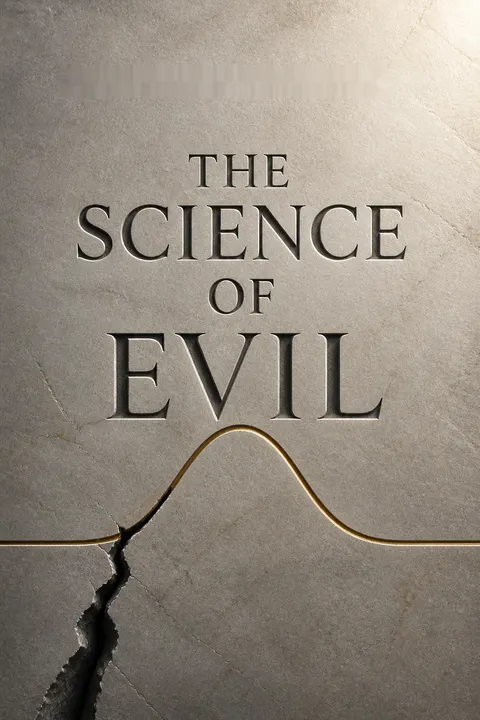


Key Takeaways
Explain cruelty through empathy's collapse, not the label evil.
The label explains nothing. The book begins with Nazi doctors using concentration camp prisoners as experimental material, and an SS guard forcing one prisoner to hang his friend. The acts differ, but both make another person’s inner life disappear. Calling perpetrators evil expresses moral condemnation; it does not explain how cruelty became possible.
A question science can test. Baron-Cohen proposes empathy erosion: a temporary or enduring loss of attention to another person’s thoughts and feelings. This shifts inquiry toward possible causes, including emotion, development, brain function, and social context. It does not establish that every cruel act has one cause, or that explaining a perpetrator removes responsibility.
The reframing is powerful because it turns horror into a question that can be investigated without making it seem less horrifying. It also guards against treating cruelty as a mysterious property of a special class of monsters. But empathy can be selective: a person may care intensely about an in-group while disregarding outsiders. That means empathy erosion alone may not explain the whole process. Ideology, hierarchy, and incentives can help decide whose suffering counts. The book’s lens is most useful as a starting point for causal analysis, not as a complete theory of atrocity.
Treat empathy as a spectrum, not a switch or moral verdict.
Two operations matter. The book defines empathy as keeping another person’s mind in view alongside one’s own, identifying what that person thinks or feels, and responding with an appropriate emotion. Recognition and emotional response both matter. Taking helpful action may follow, but the book treats action as separate from empathy itself.
A dimmer, not a bulb. Empathy varies across people and situations. The Empathy Quotient, or EQ, is a 40-item self-report measure designed to assess aspects of recognizing and responding to others. Brain imaging studies point to an interconnected empathy circuit involving at least ten regions, rather than a single empathy center. The author’s seven levels are a practical way to describe a continuum, not natural boundaries between kinds of people.
This definition usefully separates understanding another person from merely feeling a vague warmth toward them. It also clarifies why a person can notice distress yet remain unmoved, or feel another’s pain without knowing how to respond. A further distinction matters: emotional resonance can support care, but accurate insight into another person can also be used to manipulate them. Empathic capacity is not automatically benevolent. The EQ and brain scans can help study patterns across groups, but neither should be treated as a precise moral score or a stand-alone diagnosis of an individual.
Distinguish enduring empathy problems from temporary shutdowns before judging cruelty.
Different routes, shared risk. Baron-Cohen groups three personality disorders under Zero-Negative, his term for enduring, harmful forms of extremely low empathy. Type B refers to borderline personality disorder, marked in the book by emotional volatility and fear of abandonment. Type P refers to psychopathic or antisocial traits, including callousness and disregard for others. Type N refers to narcissism, with entitlement and relationships organized around personal gain.
Low empathy is not a verdict. The book cites estimates of about 2 percent of the general population for borderline personality disorder, under 1 percent of men for psychopathy, and about 1 percent for narcissism. These are distinct clinical profiles, not interchangeable labels. The author also notes that low empathy can appear temporarily with states such as fatigue, intoxication, or intense anger, and does not always lead to violence.
The framework invites a valuable question: what psychological process might different diagnoses share? It also risks making distinct conditions sound more alike than they are. A common feature does not prove a common cause, and a proposed empathy deficit does not replace the established complexity of diagnosis. The distinction between a lasting trait and a temporary state is especially useful in practice. It encourages attention to context and change over time, rather than inferring a person’s character from one cruel or insensitive act.
Trace biology and childhood together, without treating either as destiny.
Experience can shape risk. The case of Carol, presented as having borderline personality disorder, links her adult instability to severe childhood neglect, rejection, and abuse. Research cited in the book finds strong associations between early adversity and later borderline symptoms, but no simple one-to-one path: the author notes that 80 percent of people with a history of sexual abuse did not become borderline.
Genes are not a script. Twin studies suggest inherited differences contribute to empathy, with one estimate attributing 68 percent of variation in affective empathy to genetic factors. The book also reports gene-environment interactions in antisocial behavior: a genetic vulnerability may raise risk in the presence of maltreatment, but neither factor determines an individual outcome. Heritability describes variation in a population, not the fate of a particular child.
The combination of developmental history and biology is stronger than either a blame-the-parents story or a genetic-destiny story. Attachment theory adds a practical insight: dependable care can help children develop trust, emotional regulation, and interest in other minds. Still, a heritability estimate is easy to misread. It does not tell a parent how much of one child’s behavior is genetic, nor does it mean a trait cannot change. The book’s best contribution here is a risk model, not a prediction machine. Prevention should support families without turning adversity into a diagnosis.
Do not mistake moral reasoning for concern about victims.
Knowing rules is not feeling harm. Paul, a convicted murderer described in the book, insists that his victim deserved the attack because he felt disrespected. His account illustrates how a person can build a self-serving justification while showing little remorse. Research discussed by Baron-Cohen finds that people with psychopathic traits can perform adequately on some abstract moral-reasoning tests, even as their behavior violates others’ rights.
Emotional brakes can fail. Studies cited in the book report weaker physiological responses to distress, difficulty recognizing fear, and reduced learning from punishment in some psychopathic groups. These findings concern patterns, not a diagnostic test for any one person. They also suggest that moral judgment, emotional response, anxiety about punishment, and actual conduct are related but distinct capacities.
This distinction matters well beyond clinical psychology. A person can explain a rule, predict a penalty, or argue that an action is defensible without taking a victim’s perspective seriously. Conversely, distress at another person’s pain does not guarantee fair behavior. The book’s emphasis on emotional response illuminates one missing brake, but it should not turn empathy into the sole foundation of morality. Laws, habits, accountability, and shared norms also constrain conduct. Understanding which capacity is impaired can improve intervention, while responsibility still requires attention to intention and circumstance.
Pair social accommodation with respect for autistic systemizing strengths.
Patterns can be a strength. The book calls Zero-Positive its name for autism-related empathy difficulties occurring alongside strong systemizing. Systemizing is the ability to detect rules in changing information, work out how systems function, and use patterns to make predictions. Michael, a man with Asperger syndrome in the book, struggles with conversation but takes pleasure in mathematical patterns and the regular sequences of church bells.
Predictability has a cost. Strong pattern-seeking can support skill in fields such as mathematics, music, and engineering. It can also make unexpected changes and ambiguous social situations stressful. Baron-Cohen’s framing rejects the idea that low empathy necessarily means cruelty, but it should not be read as a description of every autistic person. Abilities, support needs, and social understanding differ widely.
The account makes an important move: social difficulty does not erase intellectual contribution, and an unusual cognitive style deserves accommodation rather than contempt. It also raises a caution about calling autism a form of zero empathy. That label can flatten a varied group and mistake differences in communication or emotional expression for an absence of care. The most constructive application is practical: make expectations clearer, reduce unnecessary ambiguity, and recognize focused pattern skills without demanding that talent compensate for disability. Respect need not depend on exceptional achievement.
Audit institutions for how they make other people invisible.
Cruelty can be organized. Hannah Arendt’s account of the banality of evil, discussed in the book, directs attention to ordinary people performing small tasks within a vast machinery of harm. A clerk passes a list, a guard moves prisoners, and a driver operates a train. Each person can focus narrowly on a job while losing sight of the people affected by the whole system.
Character is not the only cause. The book also invokes experiments on conformity and obedience to authority, along with the Stanford Prison Experiment, to show how social roles and group pressure can alter behavior. It does not claim that everyone who helps a violent system has permanently low empathy. Rather, divided responsibility and routine can allow people to participate without confronting the human consequences of their actions.
This institutional lens corrects a weakness in explanations focused only on individual pathology. Bureaucracies can distribute responsibility until no one feels like the author of the outcome. A useful audit asks who bears the consequences of a decision, whether decision-makers encounter those people’s accounts, and whether dissent is safe. The book’s empathy framework supports that scrutiny, but empathy alone cannot prevent organized abuse. Clear accountability, independent oversight, and limits on authority matter too. Systems should make human costs visible before harm becomes routine.
Build routes to empathy, but match intervention to the harm.
Learning deserves a chance. Baron-Cohen describes educational tools designed to teach emotion recognition, including software for identifying emotions and animated materials developed for children with autism. He also proposes role-play and perspective-taking as possible approaches for people with harmful empathy deficits. The book presents these as promising avenues, not established cures for every form of low empathy.
Care and safety belong together. The author contrasts prison with more suitable support for some autistic people who offend without understanding the social impact of their actions. Gary McKinnon, whose computer hacking the author attributed to autistic systemizing and social naivety, is one example. That argument does not fit every offense: risk to others, intent, victim impact, and the likelihood of repetition still matter. Humane treatment should not mean abandoning protection or accountability.
The proposal to treat empathy as something that can be taught is hopeful and testable. Yet recognizing an emotion is not the same as caring about it, and a program that improves test performance may not change behavior under pressure. Evaluation should therefore track real-world conduct, not only emotion-labeling scores. The comparison between prison and tailored support is also a reminder that punishment can be poorly matched to a person’s needs. A sound approach combines evidence-based intervention, safeguards for potential victims, and proportionate accountability.
Use empathy across conflict without confusing understanding with agreement.
Shared grief can open a door. The book recounts two bereaved fathers, one Palestinian and one Israeli, who connected through the Parents Circle, an organization that brings together families on both sides of the conflict. Each had lost a son to violence. By listening to each other’s grief, they built a relationship across a political divide that had previously separated them.
Perspective is not surrender. Their encounter illustrates the author’s claim that empathy can help people recognize an opponent’s humanity and loosen cycles of retaliation. It does not resolve the political causes of conflict, erase responsibility, or require either side to give up its account of events. The lesson is narrower and practical: negotiations become harder when each community can see only its own suffering.
The fathers’ encounter gives empathy a concrete political meaning: not approval, but the ability to register another person’s loss as real. That recognition can create room for dialogue where slogans cannot. It should not be romanticized as a substitute for justice or structural change. Conflicts involve power, territory, security, and competing claims, not merely failures of understanding. Empathy is most credible when paired with truthful accounting and institutions that reduce harm. It can make agreement imaginable, but it cannot make difficult interests disappear.
Analysis
The book’s most durable contribution is its insistence that calling cruelty evil is a verdict, not a causal account. Its empathy framework gives researchers and readers a vocabulary for asking what is missing when one person stops registering another’s mind. The distinction between temporary shutdown and enduring difficulty is especially useful, as is the refusal to equate every low-empathy profile with violence. Its account of autism also challenges a narrow equation between social fluency and human worth.
The framework is less convincing when empathy becomes the master explanation. The evidence gathered in the book ranges from case histories and self-report questionnaires to brain-imaging correlations, twin estimates, and social psychology experiments. Those forms of evidence illuminate different questions; together they do not establish one neural pathway that explains all cruelty. A brain region associated with empathy is not a moral meter, and an EQ score cannot identify a perpetrator or forecast a crime. The proposed Zero-Negative and Zero-Positive categories are best read as an organizing hypothesis, not a settled diagnostic map.
The wider account of cruelty must also include how people define the boundaries of moral concern. A person may empathize with relatives or allies while endorsing harm to outsiders, and institutions can turn harm into routine work. Conversely, empathy can deepen understanding without producing fairness, restraint, or repair. These limits do not make empathy unimportant. They show why it works best alongside accountability, rights, and institutional safeguards.
The book’s practical promise is therefore not a simple cure for evil. It is a more disciplined response: investigate developmental and biological risks without treating them as destiny, create conditions that make others’ suffering visible, support people whose social understanding differs, and protect those at risk of harm. Empathy is a necessary human resource, but it is not a complete moral or political system.
Review Summary
The Science of Evil received mixed reviews. Many found it interesting and informative, praising Baron-Cohen's approach to understanding cruelty through empathy erosion. However, some criticized his categorizations as oversimplified and potentially harmful, especially regarding personality disorders. The book's exploration of the brain's empathy circuit and its connection to cruel behavior was generally well-received. Readers appreciated the accessible writing style but questioned whether the theories fully explained human evil. Overall, it sparked thoughtful discussions on empathy, cruelty, and mental health.
People Also Read

Glossary
Empathy erosion
Reduced attention to othersThe book’s term for a state in which a person stops adequately registering another person’s thoughts and feelings. It may be temporary, as during intense anger or exhaustion, or more enduring. Baron-Cohen uses the concept to investigate cruelty as a psychological and biological process rather than treating evil as a self-explanatory cause.
Empathy circuit
Network supporting empathyThe interconnected brain regions that contribute to recognizing other people’s mental states and responding to their emotions. The book describes at least ten regions, including areas involved in self-reflection, emotion processing, pain, and reading intentions. It is a distributed network, not a single brain location or a direct measure of moral character.
Empathy Quotient (EQ)
Self-report empathy measureA 40-item questionnaire developed by Baron-Cohen and colleagues to assess individual differences in empathy, including aspects of recognizing and responding to other people’s thoughts and feelings. The book uses EQ scores to illustrate a population spectrum. Because it relies on self-report, it is a research instrument rather than a definitive assessment of any individual’s behavior or moral standing.
Empathizing Mechanism
Proposed empathy-level scaleBaron-Cohen’s model for describing individual differences in empathy through seven broad levels, from extremely low to unusually high. The levels are intended to make qualitative differences easier to discuss, while the underlying trait is presented as continuous. The author acknowledges that the divisions are practical constructs rather than fixed natural boundaries.
Zero-Negative
Harmful low-empathy profileThe author’s proposed grouping for enduring forms of extremely low empathy associated with significant difficulties for the individual or people around them. The book discusses borderline personality disorder, psychopathy or antisocial traits, and narcissism as three different routes within this category. It is a conceptual reframing, not a replacement clinical diagnosis.
Zero-Positive
Low empathy, strong systemizingBaron-Cohen’s term for autism-related profiles in which difficulties with empathy coexist with unusually strong pattern recognition and systemizing. He emphasizes that low empathy does not make these individuals inherently cruel and that focused abilities can be valuable. The term is the author’s framework and should not be taken as a complete description of autistic people.
Systemizing Mechanism
Pattern-finding capacityThe proposed mental capacity to identify rules in changing information, determine how a system works, and use recurring patterns to predict outcomes. The book describes it as varying across people and connects especially high systemizing with certain autistic profiles. It may support talents in areas such as mathematics, music, technology, and detailed observation.
Internal pot of gold
Resources built through secure careThe book’s metaphor for the confidence, trust, and emotional security a child can carry forward from dependable early relationships with caregivers. Drawing on attachment theory, it presents these inner resources as supporting resilience, intimacy, and curiosity about other people. The metaphor describes a protective influence, not a guarantee against later difficulty.
Violence Inhibition Mechanism (VIM)
Distress-triggered restraint systemA model proposed by James Blair in which seeing another person’s distress automatically triggers a response that inhibits ongoing behavior and helps prevent harm. The book discusses reduced responsiveness to distress cues as one possible feature of psychopathy. The model is not presented as a complete explanation for every form of antisocial behavior.
FAQ
What's "The Science of Evil" about?
- Exploration of Empathy: The book delves into the concept of empathy, its erosion, and how this relates to human cruelty and what is traditionally termed as "evil."
- Scientific Approach: Simon Baron-Cohen uses a scientific lens, incorporating neuroscience, psychology, and genetics, to understand the roots of cruelty.
- Empathy Spectrum: It introduces the idea of an empathy spectrum, where individuals can range from high to low empathy, with zero degrees of empathy being a focal point.
- Types of Zero Empathy: The book categorizes zero empathy into Zero-Negative and Zero-Positive, exploring different personality disorders and autism spectrum conditions.
Why should I read "The Science of Evil"?
- Understanding Human Behavior: It provides insights into why people can act cruelly, offering a scientific explanation rather than a moral or religious one.
- Empathy's Role: The book emphasizes the importance of empathy in human interactions and its potential as a resource for resolving conflicts.
- Interdisciplinary Insights: It combines findings from neuroscience, psychology, and genetics, making it a comprehensive read for those interested in human behavior.
- Practical Implications: The book suggests ways to enhance empathy and addresses how understanding empathy can lead to better societal outcomes.
What are the key takeaways of "The Science of Evil"?
- Empathy Spectrum: Everyone lies somewhere on an empathy spectrum, and understanding this can help explain behaviors traditionally labeled as "evil."
- Zero Degrees of Empathy: The book categorizes zero empathy into Zero-Negative (linked to personality disorders) and Zero-Positive (linked to autism spectrum conditions).
- Empathy Circuit: There is a specific empathy circuit in the brain, and its underactivity can lead to reduced empathy.
- Potential for Change: Empathy can be nurtured and developed, suggesting that interventions can potentially alter empathy levels.
What are the best quotes from "The Science of Evil" and what do they mean?
- "Empathy is a universal solvent." This quote suggests that empathy can dissolve conflicts and misunderstandings, making it a powerful tool for resolving issues.
- "The path to Auschwitz was paved with indifference." This highlights how a lack of empathy and indifference can lead to horrific outcomes, emphasizing the importance of empathy in preventing cruelty.
- "Empathy itself is the most valuable resource in our world." This underscores the book's central theme that empathy is crucial for healthy human interactions and societal well-being.
How does Simon Baron-Cohen define empathy in "The Science of Evil"?
- Dual Focus: Empathy involves suspending single-minded attention to adopt a double-minded focus, considering both one's own and another's mind.
- Recognition and Response: It requires identifying what someone else is thinking or feeling and responding with an appropriate emotion.
- Empathy Circuit: The book discusses a specific circuit in the brain responsible for empathy, involving multiple interconnected regions.
- Dimmer Switch Concept: Empathy is not binary but varies like a dimmer switch, with different levels of intensity across individuals.
What is the empathy spectrum discussed in "The Science of Evil"?
- Range of Empathy: The empathy spectrum ranges from high to low, with individuals exhibiting varying degrees of empathy.
- Zero Degrees of Empathy: At the low end, individuals may have zero degrees of empathy, leading to behaviors that can be harmful or cruel.
- Zero-Negative and Zero-Positive: The book categorizes zero empathy into Zero-Negative (linked to personality disorders) and Zero-Positive (linked to autism spectrum conditions).
- Empathy as a Dimmer Switch: Empathy is not simply on or off but can vary in intensity, much like a dimmer switch.
What are Zero-Negative and Zero-Positive types in "The Science of Evil"?
- Zero-Negative: This includes personality disorders like borderline, narcissistic, and psychopathic, where empathy is severely lacking.
- Zero-Positive: Linked to autism spectrum conditions, where empathy is low, but individuals may have enhanced systemizing abilities.
- Different Outcomes: While Zero-Negative can lead to harmful behaviors, Zero-Positive individuals may not act cruelly and can have unique talents.
- Empathy Circuit Differences: Both types show underactivity in the empathy circuit, but the outcomes and behaviors differ significantly.
How does "The Science of Evil" explain the role of genetics in empathy?
- Genetic Influence: The book discusses how certain genes are associated with empathy levels, affecting how individuals respond to emotional stimuli.
- Twin Studies: Research on twins shows a genetic component to empathy, with identical twins showing more similarity in empathy levels than fraternal twins.
- Specific Genes: Genes related to serotonin, oxytocin, and other neurotransmitters are linked to empathy and social behavior.
- Interaction with Environment: Genetics interact with environmental factors, influencing the development of empathy and related behaviors.
What is the empathy circuit in the brain according to "The Science of Evil"?
- Ten Brain Regions: The empathy circuit involves at least ten interconnected brain regions, including the medial prefrontal cortex and amygdala.
- Role in Empathy: These regions are responsible for processing social information and emotional responses, crucial for empathy.
- Underactivity and Cruelty: Underactivity in this circuit is linked to reduced empathy and can lead to cruel behaviors.
- Potential for Intervention: Understanding the empathy circuit opens possibilities for interventions to enhance empathy.
How does "The Science of Evil" address the potential for change in empathy levels?
- Developmental Delays: The book suggests that empathy can develop later in life, even if it was missing in childhood or adolescence.
- Interventions: Educational tools, role-playing, and therapies can potentially enhance empathy in individuals with low levels.
- Empathy as a Trait: While some individuals may have a permanent lack of empathy, others may experience temporary fluctuations that can be addressed.
- Hope for Improvement: The book emphasizes the potential for change, suggesting that empathy can be nurtured and developed.
How does "The Science of Evil" redefine the concept of "evil"?
- Empathy Erosion: The book replaces the term "evil" with "empathy erosion," focusing on the scientific explanation of reduced empathy.
- Beyond Moral Judgment: It moves the discussion from moral and religious explanations to a scientific understanding of human cruelty.
- Empathy Spectrum: By placing individuals on an empathy spectrum, the book provides a framework for understanding behaviors traditionally labeled as "evil."
- Focus on Empathy: The emphasis is on understanding and addressing empathy deficits rather than labeling individuals as inherently evil.
What practical implications does "The Science of Evil" suggest for society?
- Empathy in Education: The book advocates for incorporating empathy training in educational curricula to nurture this valuable resource.
- Conflict Resolution: Empathy is presented as a tool for resolving conflicts, from interpersonal disputes to international relations.
- Policy and Leadership: The book suggests that empathy should be prioritized in politics, business, and other areas of leadership.
- Empathy as a Resource: By recognizing empathy as a powerful resource, society can work towards more cohesive and compassionate communities.
About the Author
Other books by Simon Baron-Cohen

Download PDF
Download EPUB
.epub digital book format is ideal for reading ebooks on phones, tablets, and e-readers.








