

Plot Summary
Six Flowers, Six Months
Àn’yīng1 returns from a dangerous mountain spring with six light lotuses, enough to keep her mother5 alive for six more months. At the spring, she kills a young demon with her father’s6 enchanted crescent blades, but the flowers are dwindling, and her mother’s5 soul remains badly damaged. Nine years earlier, demons invaded the mortal Kingdom of Rivers, killed her father,6 and left her mother5 alive but nearly mindless.
Now Àn’yīng1 cares for her mother5 and fourteen-year-old sister, Méi’zi,4 within their village’s failing protective wards. Light-lotus elixir buys time, not a cure. To restore her mother,5 Àn’yīng1 believes she must reach the immortal realm and win a pill of immortality, whatever the journey demands.
The opening makes survival feel like a household task measured in doses: six flowers mean six months, and each trip to the spring risks the life she is trying to preserve. Àn’yīng’s violence is not a taste for battle so much as a practical answer to a world that has made caregiving dangerous. Her mother’s condition complicates the usual boundary between life and death. She is present enough to be loved, but not present enough to recognize that love, leaving Àn’yīng to sustain hope without receiving comfort in return.
A Note Beneath Silk
As Àn’yīng1 prepares to leave, her mother5 briefly reacts to the elixir, then slips back into confusion. Méi’zi4 begs her older sister1 not to go, but Àn’yīng1 insists that only advanced training and the immortality pill might repair their mother’s5 soul. In her father’s6 old book, she finds a half-finished embroidered handkerchief and a hidden note directing her to seek the truth at the Temple of Dawn and find the One of the Vast Sea.
Her jade pendant has already provided years of practical guidance through a mysterious correspondent.3 Neighbor Fú Róng13 promises to help Méi’zi4 protect their mother.5 At the village gate, Àn’yīng1 gives Méi’zi4 her defensive blade, Shield, and sets out for the convoy that will cross the demon-haunted wilderness.
Àn’yīng’s departure is both an act of devotion and a rupture with the only life she has left. Méi’zi’s fear exposes the cost of Àn’yīng’s self-appointed role as protector: keeping her sister safe also means leaving her behind. The father’s note complicates a seemingly straightforward rescue mission by placing family need inside a larger mystery. Yet Àn’yīng has no room to pursue mystery for its own sake. Every clue must justify itself against the immediate danger to her mother and sister.
Blood on the Convoy Road
At Gods’ Fingers, Àn’yīng1 finds the promised convoy massacred. A red-cloaked man stands among the bodies, so she attacks before he can explain himself. He catches her blades, pins her down, and survives her bite, which reveals that he bleeds like a mortal rather than like a demon. His name is Yù’chén,2 a powerful practitioner traveling toward the Temple of Dawn.
Before they can sort out their uneasy encounter, armed candidates emerge from the trees. Their leader, Yán’lù,12 admits he killed the convoy’s strongest members to thin the competition for the trials. Yù’chén2 defeats Yán’lù’s12 attack and saves Àn’yīng1 from a sword blow. The survivors scatter, leaving the two strangers to face the dangerous route ahead together.
Their first meeting turns suspicion into a test of evidence. Àn’yīng has learned that beauty can conceal lethal intent, so she trusts her blades more readily than appearances; Yù’chén’s human blood unsettles the categories that have kept her alive. Yán’lù then reveals a human cruelty shaped by the trials themselves: candidates kill one another before the official contest even begins. The scene makes alliance less a matter of shared ideals than of immediate survival, while Yù’chén’s intervention gives Àn’yīng reason to accept help she has spent years training herself not to need.
The Red Cloak’s Command
A winged Qióng’qí attacks the pair before they can leave the Way of Ghosts. Yù’chén2 orders Àn’yīng1 to stay hidden, then runs to draw the beast away. She flees toward Yán’lù’s12 group, but a fall leaves her facing the monster alone. When Yù’chén2 returns, he uses his strange command magic to ease her fear, the weakness Qióng’qí hunts, and the beast retreats.
He heals her injured ankle, and Àn’yīng1 proposes an alliance in exchange for his help surviving the trials. They exchange names, but she keeps her doubts. Soon the Temple sends them invitations to the Immortality Trials, confirming that the first test is already underway: they must cross the monster-filled route and reach the immortal realm.
Yù’chén’s rescue offers Àn’yīng something more complicated than physical protection: he changes her relationship to fear by treating it as a force that can be managed rather than merely endured. She accepts his alliance, but makes it transactional because dependence feels more dangerous than the beast. Her willingness to bargain shows how trauma can turn intimacy into accounting. Even so, the alliance begins to loosen her certainty that self-reliance is the only safe form of strength.
Foxfire at the Forest Edge
On the journey onward, Àn’yīng1 encounters Lì’líng,9 a fox-spirit halfling, being dragged off by the flesh-eating Áo’yīn. Though halflings are feared and shunned, Àn’yīng1 remembers the child’s terror and intervenes.
She sings to call up a cherished memory of her mother5 sewing, then drives Striker into the beast’s mouth. Golden light surges through the blade and destroys Áo’yīn, though Àn’yīng1 cannot explain the power she has unleashed. Yù’chén2 tends her ichor-burned hands and covers her with his cloak rather than taking advantage of her vulnerability.
At Heavens’ Gates, he ties them together with his sash and teaches her to use spirit energy as they climb. A Yán’lù12 follower attacks; Àn’yīng1 is stabbed protecting Yù’chén,2 but they reach the summit together.
Saving Lì’líng is a decisive moral choice because Àn’yīng acts before she can make compassion fit her survival plan. Her memory of sewing becomes both emotional refuge and a source of power, linking the self she abandoned to the fighter she has become. Yù’chén’s care deepens their bond through restraint rather than possession. On the cliff, their physical dependence becomes literal: the sash keeps Àn’yīng alive, while her choice to shield him makes the alliance reciprocal.
Forty-Fourth at Dawn
From the summit, Àn’yīng1 sees the ocean for the first time, then freezes when a vision of the red-lipped demon who killed her father8 overwhelms her. Yù’chén2 uses his command magic to pull her back from the edge, but she realizes that such power belongs to demons. Yán’lù’s12 followers cut their tether, and Àn’yīng1 plunges into the sea.
A mysterious rescuer carries her through the water; she wakes on the Immortals’ Steps and races toward the Temple of Dawn as the final gong sounds. The immortals debate whether to admit her, but one judge7 supports her claim that she arrived in time. Yù’chén2 steadies her, and Àn’yīng1 confronts him afterward. He admits he is half demon and half mortal.
The fall places Àn’yīng between two kinds of dependence: the magic that saves her also threatens the beliefs she built around danger. Her admission to the trials is earned through persistence, not approval, and arriving last makes her feel both included and marked as an outsider. Yù’chén’s revelation breaks the simple distinction between human and demon that has organized her grief. Her instinctive response is revulsion, but the fact that he has repeatedly protected her prevents that revulsion from settling into an easy judgment.
The Sewing Kit’s Price
At the welcome banquet, Àn’yīng1 meets Lì’líng9 again, the shapeshifting Fán’xuān,10 and the guarded Tán’mù,11 other candidates treated as outsiders because they are halflings. Yán’lù’s12 hostility follows her into the gardens, but an immortal guard3 intervenes before he can attack. Later, Àn’yīng1 finds a sewing kit outside her room, a gift that revives the craft she abandoned when her family’s world collapsed.
She does not yet know that Yù’chén2 stole it for her. She begins repairing her torn dress and secretly sews gloves for Méi’zi,4 hoping to send proof that she has reached the immortal realm. As the candidates settle in, the temple’s beauty offers comfort, but its rules and rivalries make clear that this sanctuary is not safe.
The new friendships expose how prejudice persists even in a realm that claims to judge candidates by merit. Àn’yīng’s growing regard for halflings challenges the inherited stories that taught her to fear them. The sewing kit matters because it returns a piece of identity she had treated as expendable. Her attempt to send gloves home is more than a message: it is a private effort to remain a sister, not only a weapon or caretaker, while she enters a contest designed to reduce people to competitors.
A Gate Made of Lilies
To help Àn’yīng1 send Méi’zi’s4 gloves across the sealed boundary, Yù’chén2 uses dark magic to weave a passage through the immortal wards. A shadowcrane carries the gloves to Xī’lín, where Méi’zi4 finds them beneath the plum tree and recognizes her sister’s stitches. Yù’chén2 asks Àn’yīng1 to learn water-walking in return, and his image of spirit energy as sewing threads finally makes the technique possible.
Their lessons bring them close, but Àn’yīng1 remains unsettled by his magic and by her attraction to him. She later finds the gate’s scorpion lilies still rooted in the ward, though Yù’chén2 claims to have closed it. The living trace leaves open a dangerous possibility: his passage may not be fully gone.
The gate turns a tender gesture into a breach of political and physical security. Àn’yīng’s need to reach Méi’zi is genuine, but the method places the entire protected realm at risk. At the same time, Yù’chén teaches through the very skill she thought she had lost, allowing sewing to become a way of understanding magic rather than merely remembering the past. Their intimacy grows through collaboration, yet the unresolved gate makes trust inseparable from accountability.
Xiù’chūn’s Stolen Heart
Àn’yīng1 discovers Xiù’chūn,15 the top-ranked candidate, dead among the flowers, her chest torn open. She suspects a demon may have entered through the gate Yù’chén2 made, but cannot reveal her involvement without endangering her own place in the trials. The immortals announce the murder and tighten security, yet proceed with the Second Trial.
Candidates are sent to Péng’lái Island, where each must recover a golden bracelet within an hour. The island’s painted-skin monsters turn their deepest fears into living attackers. Àn’yīng1 faces visions of Méi’zi,4 her mother,5 and the demon who killed her father.8 She destroys the monster with Striker, then joins Lì’líng,9 Tán’mù,11 and Fán’xuān10 as they find their way back.
The murder reveals the temple’s central contradiction: it calls itself a sacred institution, yet treats a candidate’s death as insufficient reason to stop its recruitment contest. Àn’yīng’s silence about the gate is not simple cowardice; it is a choice made under pressure to protect her only chance at curing her mother. The painted skins make trauma operational, forcing fear into the same physical space as the trial. Passing requires more than courage: it requires distinguishing a remembered wound from a present threat.
The Mortal Guard’s Lesson
After the island, the immortals publicly lash Yù’chén2 for stealing the sewing kit, and Àn’yīng1 learns the gift came from him. She checks the ward and finds the gate closed, then meets Hào’yáng,3 the mortal guard captain who saved her from Yán’lù.12 Hào’yáng3 reveals that he is mortal, that Shī’yǎ7 is his adoptive mother, and that Àn’yīng’s father6 once saved his life.
He trains Àn’yīng1 in combat and water-walking, while confirming that investigators believe a demon killed Xiù’chūn15 and that Yù’chén2 had an alibi. Before the Third Trial, Àn’yīng1 finds candidate Xī’xī under attack by a demonic beast. She fights, is badly wounded, and hears the gong announcing the next test.
The sewing kit’s theft recasts Yù’chén’s kindness as deliberate and costly, while his punishment demonstrates the temple’s willingness to enforce rules without regard for motive. Hào’yáng offers Àn’yīng a different model of help: disciplined instruction, bounded by institutional duty. The father connection gives her quest a history beyond her own household, but she remains focused on the immediate need to survive. Her intervention for Xī’xī repeats her choice with Lì’líng, showing compassion becoming a pattern rather than an exception.
One Bracelet, Two Guardians
The Third Trial pairs candidates at zodiac-marked battlegrounds, where each must seize an opponent’s pendant. Despite her fresh injuries, Àn’yīng1 uses Heart to locate and take her opponent’s token. Yán’lù12 then corners her with armed followers and poisons her with a paralyzing spike. Rather than let him capture her, she leaps from the cliff into the sea.
Hào’yáng3 dives after her and revives her with his life energy. Their broken jade pendants join, revealing that he has been the voice guiding her through the stone for nine years. The immortals grant Àn’yīng1 a pass because she entered the trial already injured. Hào’yáng3 admits he owes her father6 his life and begins to show her the world beyond the temple.
The reunion of the jade pieces transforms an unseen relationship into a bodily one. For Àn’yīng, the guardian has been a source of orientation through years when nearly every human bond was damaged; learning his identity makes comfort suddenly reciprocal. Her leap from the cliff is not surrender but refusal to let Yán’lù decide what happens to her. Yet the rescue also shifts the emotional balance: she now has to reckon with the possibility that being protected can mean being known.
Home Through Shadow
While Àn’yīng1 recovers, Yù’chén2 brings news that Méi’zi4 is dangerously ill. He reopens his hidden passage through the wards and takes Àn’yīng1 home, where she helps him draw sickness from her sister’s4 body. Yù’chén2 gives Méi’zi4 some of his own life energy, leaving him weak. A demon breaks into the house after Àn’yīng1 temporarily lowers its wards; together they drive it away, and she kills it with Striker.
When they return to the temple, they find Fán’xuān10 murdered. Àn’yīng1 and Yù’chén2 track the killer to Yán’lù,12 who is revealed as a demon halfling and responsible for the candidates’ deaths. They fight him until Hào’yáng3 kills him with a golden arrow, then the guards seize Yù’chén2 as another suspected infiltrator.
The rescue at home tests Àn’yīng’s ability to accept help without turning it into a debt she must immediately repay. Yù’chén’s sacrifice saves Méi’zi but exposes the cost of his care, while the demon’s attack proves that the supposedly secure boundary has failed. Fán’xuān’s murder makes the danger personal to the group Àn’yīng has chosen. Yán’lù’s exposure confirms that the enemy can hide inside human institutions, and Yù’chén’s arrest shows how easily suspicion attaches to the person whose difference is most visible.
The Emperor’s Hidden Daughter
In the healing wing, Shī’yǎ7 explains that the trials changed after the invasion: the immortals now recruit warriors instead of training mortals to return home. She reveals that Àn’yīng1 is her daughter by birth, left in the mortal realm with Zhàn’fēi6 and the woman who raised her.5 Shī’yǎ7 gives Àn’yīng1 part of her own immortal core as a pill that can restore her mother.5
She also explains that Zhàn’fēi6 helped protect Hào’yáng,3 the surviving heir to the Kingdom of Rivers, and that a rebellion is forming to reclaim the mortal realm. Àn’yīng1 agrees to join it. But Hào’yáng3 warns that the High Court intends to interrogate and execute Yù’chén,2 whose existence as a half-demon challenges the laws they trust.
The revelations revise Àn’yīng’s identity without erasing the relationships that formed it. Shī’yǎ’s birth does not displace the mother who raised her; it adds a second history of love and sacrifice. The pill offers the exact remedy Àn’yīng pursued, while the rebellion asks her to widen the scale of her responsibility from one family to a threatened people. That choice is not a conversion from private loyalty to public duty. It grows from the same conviction that survival should not be reserved for the powerful.
Sansiran’s Family Bargain
Before Yù’chén’s2 execution, Àn’yīng1 visits him in confinement. They acknowledge their love and the ways fear has shaped their treatment of each other. Then Sansiran,8 the Demon Queen who killed Àn’yīng’s father,6 enters and reveals that Yù’chén2 is her son and the late mortal emperor’s child.
She sent him to gain Àn’yīng’s1 trust and open the wards from within, hoping to reach Hào’yáng,3 the hidden heir. Yán’lù12 was her second spy. Yù’chén2 admits his mother’s8 plan but says he never learned Hào’yáng’s3 identity. Sansiran8 forces Àn’yīng1 to summon him through the jade pendant. Yù’chén2 restrains her as Hào’yáng3 arrives, and the demon queen8 prepares to seize the heir.
The revelation does not make Yù’chén’s tenderness false, but it makes every sincere act inseparable from a scheme that endangered Àn’yīng’s world. Sansiran exploits the very structure of intimacy: she turns care into a route to political access and uses her son’s longing as leverage. Àn’yīng’s betrayal is devastating because her trust was neither foolish nor wholly misplaced. The crisis asks whether someone can be responsible for the harm done through their origin and assignment, even when they resist the purpose imposed on them.
War Reaches Heaven
Hào’yáng3 fights Sansiran8 with a power drawn from the dragon blood in his lineage, while Shī’yǎ7 arrives to shield him. Àn’yīng1 tries to strike Yù’chén,2 but her blade turns away from his heart; he allows it to wound him while shielding her from the magical clash. Shī’yǎ’s7 defenses fail, and she spends her remaining power protecting Àn’yīng1 and Hào’yáng.3
The demon army floods the temple grounds through Yù’chén’s2 gates. Hào’yáng3 and Àn’yīng1 fight their way to the surviving candidates, then lead them out through the passage to the mortal realm. Yù’chén2 remains behind in the besieged temple. Shī’yǎ’s7 death leaves the rebellion without its most powerful ally, while the Kingdom of Sky is no longer safe.
The battle collapses the distinctions between personal and political consequence: the hidden gate, opened for private rescue, becomes a route for invasion. Àn’yīng’s failed attempt to kill Yù’chén exposes the limits of the hatred she has used to protect herself. Shī’yǎ’s sacrifice is not a victory over Sansiran but a costly act that buys others time to escape. The retreat matters because it refuses the immortals’ assumption that preserving their institution is the same as protecting everyone within it.
Lotus, Home, and Promise
Hào’yáng3 and Àn’yīng1 return to Xī’lín with the pill Shī’yǎ7 gave her. Àn’yīng1 and Méi’zi4 place it in their mother’s5 mouth, and Mā5 slowly regains recognition and speech. The cure fulfills the purpose that first sent Àn’yīng1 toward the Temple of Dawn, but the mortal realm remains under threat.
Hào’yáng3 tells her that dragon blood gives his lineage a claim to rule and that he intends to rally mortals, immortals, and dragons against the Kingdom of Night. He proposes a political marriage that could secure the immortal army’s support, while leaving Àn’yīng1 free to choose her own life. She accepts the alliance and promises to fight beside him. The book closes with their campaign still ahead, not with the war won.
The ending grants a real restoration without confusing it for a complete resolution. Mā’s recovery answers the intimate promise that began the story, while the invasion and Shī’yǎ’s death make clear that a private cure cannot repair a whole kingdom. Àn’yīng’s choice to join Hào’yáng’s cause extends her protective instinct beyond her household without abandoning it. The proposed marriage is framed as political strategy rather than romantic destiny, leaving her agency central. Her future remains dangerous, but she no longer has to face it alone.
Analysis
The novel’s central conflict is not only between the Kingdom of Rivers and the Kingdom of Night. It is also between institutions that classify people by blood and individuals who try to judge one another by action. Àn’yīng1 begins with a necessary but punishing rule: she must be strong enough to protect her family alone. Her encounters with Lì’líng,9 Fán’xuān,10 Hào’yáng,3 and Yù’chén2 repeatedly challenge that rule, though accepting help carries real risks and sometimes makes her complicit in danger.
The trials sharpen this problem by making survival a competition. Their design rewards individual prowess while weakening the solidarity needed to resist an invading power. The immortals’ claim to order is therefore unstable: they maintain borders and punish breaches, yet abandon the mortal realm and continue their contest after candidates are murdered. Àn’yīng’s1 choices expose the gap between obeying rules and acting ethically. Her decision to rescue halflings or trust Yù’chén2 does not make her naïve; it makes her responsible for seeing people whom the system has rendered disposable.
Sewing provides the story’s most intimate counterpoint to violence. Àn’yīng1 once believed that becoming a protector required abandoning the craft she loved. Instead, her knowledge of threads helps her understand magic, and her stitches carry messages across distance. The skill was never a weakness or a retreat from the world. It was another way to connect what had been torn apart.
The ending fulfills Àn’yīng’s1 original promise by restoring her mother,5 but it refuses to pretend that one family’s healing ends a war. Her new commitment to the rebellion extends the same protective impulse outward. The resolution is therefore a beginning: she has recovered a piece of home and must now fight for the conditions under which others might recover theirs.
Review Summary
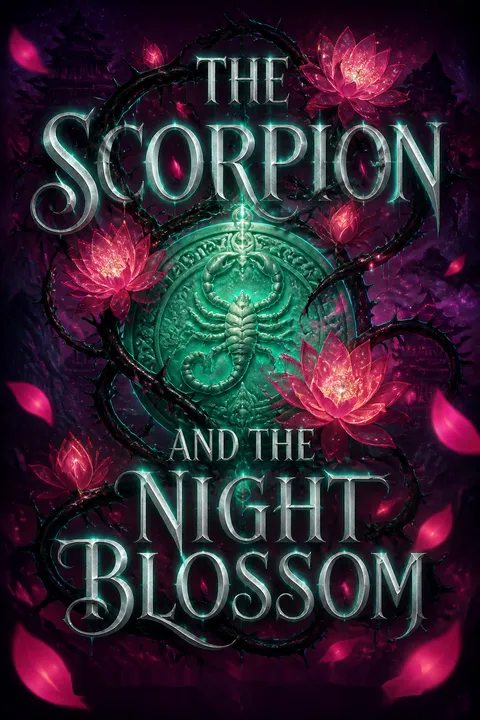
The Scorpion and the Night Blossom received mixed reviews. Many praised the fast-paced plot, Chinese mythology-inspired world-building, and intriguing magic system. Readers enjoyed the tension between the main characters and the high-stakes trials. However, some found the protagonist inconsistent and overly dependent on male characters. Critics noted predictable plot twists and underdeveloped side characters. The romance was polarizing, with some finding it compelling and others rushed. Overall, reviewers were split on whether they would continue the series, with opinions ranging from enthusiastic to disappointed.
Characters
Àn’yīng
The blade-bearing caretakerA nineteen-year-old practitioner raised in the ruined Central Province, Àn’yīng has spent nine years keeping her mother5 alive and protecting her younger sister, Méi’zi4. Her crescent blades and self-taught magic make her a resourceful fighter, but vigilance has narrowed her sense of self: she has treated tenderness, art, and dependence as luxuries she cannot afford. Her old love of sewing survives in hidden forms, especially in the gifts she makes for Méi’zi4. Àn’yīng is driven by fierce loyalty and a refusal to let the vulnerable be abandoned. Her developing courage is not simply learning to fight harder; it is learning to accept help, question inherited prejudice, and imagine a future larger than immediate survival.
Yù’chén
The dangerous red-cloaked allyA striking, highly skilled practitioner in a crimson cloak, Yù’chén meets Àn’yīng1 on the road to the Temple of Dawn and becomes her uneasy ally. His humor and flirtation conceal a disciplined fighter, while his acts of care repeatedly challenge Àn’yīng’s1 suspicion. He is capable of both spirit magic and a more unsettling power that makes others question what he is. Yù’chén is shaped by divided loyalties and by the belief that his birth has already determined what he deserves. He wants to be seen as a person rather than judged by his nature, but he often uses teasing and distance to protect himself from rejection.
Hào’yáng
The guarded immortal guardA disciplined guard captain at the Temple of Dawn, Hào’yáng first appears as a quiet authority who protects candidates while keeping his own history closely guarded. He becomes Àn’yīng’s1 combat trainer and offers a steadier, more institutional kind of support than Yù’chén’s2 improvisational aid. His restraint is not indifference: he carries deep concern for the mortal realm and for the people endangered by the temple’s political choices. Hào’yáng has grown up among powers that do not fully regard him as one of their own, and his discipline reflects both ambition and a wish to belong. His bond with Àn’yīng1 develops through trust, shared danger, and mutual recognition.
Méi’zi
Àn’yīng’s hopeful younger sisterFourteen-year-old Méi’zi is warm, expressive, and skilled with needle and thread. She helps care for her mother5 and fears losing Àn’yīng1, the sister who has protected her1 since childhood. Though she has little memory of life before the invasion, Méi’zi keeps their family’s habits of making and sharing small gifts alive. Her gentleness is not passivity; she can argue fiercely when someone she loves takes a dangerous risk. She represents both Àn’yīng’s1 strongest reason to leave and the home she hopes to return to.
Mā
The mother Àn’yīng fights to saveÀn’yīng1 and Méi’zi’s4 mother was once a lively seamstress who filled their home with stories, music, and handmade beauty. After a demon consumes part of her soul, she remains alive but loses recognition and much of her independence. The girls’ care for her turns each day into a painful balance between hope and grief. Mā’s former love of sewing shapes Àn’yīng’s1 memories of a world that existed before violence narrowed her life.
Zhàn’fēi
The father who taught herÀn’yīng1 and Méi’zi’s4 father was a scholar-practitioner who trained his eldest daughter, crafted her enchanted blades, and prepared his family for the invasion. His death left Àn’yīng1 with a practical education in survival and a legacy of carefully hidden clues. Even absent, his choices continue to shape her journey and her understanding of what a practitioner can owe to others.
Shī’yǎ
The mortal-sympathizing judgeOne of the Eight Immortals, Shī’yǎ is a judge whose sympathy for mortal candidates distinguishes her from the more detached members of the temple. She intervenes when Àn’yīng’s1 timely arrival is challenged and maintains a private interest in the mortal realm’s fate. Her calm manner conceals strong convictions about justice, responsibility, and the cost of eternity. Shī’yǎ is connected to Hào’yáng3 and to the history that Àn’yīng1 is trying to uncover, though she chooses carefully when and how to reveal what she knows.
Sansiran
The ruler of the Kingdom of NightThe Demon Queen Sansiran is a formidable ruler whose beauty and command magic make her especially dangerous to mortals. She is associated with the invasion that destroyed Àn’yīng’s1 home and with the cruel power struggles between kingdoms. Sansiran presents herself as a force acting against a world that has denied her, but her grievances do not temper her willingness to use other people as instruments. Her ambitions make her both a political antagonist and a deeply personal source of Àn’yīng’s1 trauma.
Lì’líng
The fox-spirit candidateA fox-spirit halfling competing in the trials, Lì’líng is sociable, energetic, and quick to welcome Àn’yīng1 into her circle. Her cheerful interest in food and conversation contrasts with the suspicion other candidates direct toward her kind. Lì’líng is also capable under pressure, and her friendship helps Àn’yīng1 test the difference between inherited prejudice and lived experience.
Fán’xuān
The shapeshifting wild cardA shapeshifting halfling with white hair and green eyes, Fán’xuān is irreverent, hungry, and delighted by the freedom to take different forms. Beneath his humor lies a history of captivity that he rarely explains. His playful presence gives Àn’yīng1 a glimpse of the life halflings might claim when they are not being treated as curiosities or threats.
Tán’mù
The watchful spear fighterA guarded candidate who fights with a two-pronged spear, Tán’mù is sharp-eyed, dryly funny, and slow to trust. She often acts as the practical counterweight to Lì’líng’s9 enthusiasm and watches closely for danger within the trials. Her reserve reflects hard experience rather than a lack of care; once she accepts Àn’yīng1, she treats her safety as part of the group’s responsibility.
Yán’lù
The brutal rival candidateA physically imposing candidate, Yán’lù believes strength entitles him to decide who deserves a place in the trials. He uses intimidation and violence to remove competitors, treating the contest as an excuse to prey on people with less power. His cruelty makes him a direct threat to Àn’yīng1 and the other candidates, while his hunger for status mirrors the ruthless incentives of the temple itself.
Fú Róng
The village’s steadfast auntÀn’yīng’s1 older neighbor is a bereaved widow who has survived the invasion and helped care for the sisters. Fú Róng offers practical support, but also preserves the village’s belief that its people can still shape their future. Her resilience gives Àn’yīng1 reassurance that leaving does not mean abandoning her family to strangers.
Meadowsweet
The loyal dragonhorseA rare dragonhorse who serves as Hào’yáng’s3 companion, Meadowsweet can travel between water, land, and sky. She is intelligent and independent, and her loyalty is expressed through action rather than words. Her presence connects the mortal candidates’ dangerous journey with the older magic of the realms.
Xiù’chūn
The leading candidateA confident and physically formidable candidate from the Western Province, Xiù’chūn stands out among the entrants as a serious contender. Her high standing makes her presence a source of both admiration and rivalry in the competition.
Plot Devices
The Broken Jade Pendant
A voice across the realmsÀn’yīng’s1 pendant carries brief messages from a distant guardian3, who teaches her practical skills and directs her toward the Temple of Dawn. The jade also stands for a bond that exists before the characters can meet in person. Its broken form makes separation visible, while its messages help connect the family’s desperate present to the larger political history of the realms. Its full identity and significance are revealed late in the story.
The Crescent Blades
Weapons with individual magicÀn’yīng’s father6 gives her eight crescent blades, each equipped with a distinct talisman. They conceal her attacks, increase her speed, shield her from magic, guide her aim, or heal injuries. Their practical use reflects the knowledge Àn’yīng1 inherited and developed alone. The blades also carry emotional weight: Shield is the first she learned to use and the one she leaves with Méi’zi4, turning a weapon into a promise of protection.
The Immortality Trials
A contest disguised as sanctuaryThe Temple of Dawn’s trials draw mortal candidates through a deadly wilderness and into a sequence of tests that reward strength, courage, and competition. The promise of a pill of immortality brings Àn’yīng1 to the temple, but the trials also expose the immortals’ decision to recruit useful warriors rather than train mortals to defend their own realm. Their structure repeatedly forces candidates to choose between self-preservation and solidarity.
The Wards and Scorpion Lilies
Barriers with a hidden breachMagical wards separate the mortal and immortal realms and are meant to keep demons out. Yù’chén’s2 dark magic can leave scorpion lilies woven into the wards, creating a passage from the protected side. The flowers connect his magic to his red-cloaked persona and to the threat that grows around Àn’yīng’s1 attempt to help her family. A gate opened for one private act later becomes a route through which the demon army can enter.
Life Energy and the Pill
Healing at a moral costMortals depend on life energy, while spirit energy and immortal power can restore what ordinary medicine cannot. Light lotuses preserve Àn’yīng’s mother5 but cannot repair her damaged soul; an immortality pill can. Yù’chén2 also gives life energy to Méi’zi4, accepting the physical cost of saving her. The system makes healing inseparable from sacrifice, turning care into a force that may burden the healer as much as the person being saved.
About the Author
Other books by Amélie Wen Zhao




Download PDF
Download EPUB
.epub digital book format is ideal for reading ebooks on phones, tablets, and e-readers.








