

Key Takeaways
Use Scrum to turn rapid change into a source of possibility
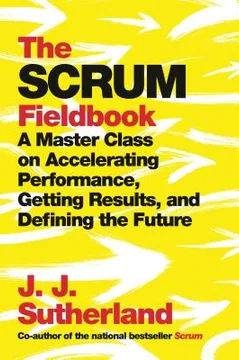
Change outruns fixed plans. The book opens with a pond covered by lilies that double daily: wait until half the surface is covered, and only one day remains before the pond is full. The image captures the challenge of accelerating technology and complexity. Scrum is presented as a way to respond through short cycles of work, feedback, and adjustment rather than betting everything on a forecast years ahead.
The framework is practical. A Product Owner ranks what is most valuable, a Team chooses what it can complete in a short Sprint, and a Scrum Master helps clear obstacles. The Team shows finished work, gathers feedback, and improves how it works. At Saab, that approach informed a modular fighter aircraft designed for upgrades instead of a costly, tightly coupled redesign.
What's compelling is the shift from treating change as an interruption to treating it as information. Short cycles make assumptions visible while there is still time to act on them. The approach is strongest when teams can produce something meaningful enough to evaluate, not merely hold more frequent meetings. Some work, including safety-critical engineering, cannot be tested casually in the marketplace. In those settings, the same logic depends on carefully bounded experiments, rigorous standards, and feedback that does not put people at risk.
Make changing direction cheaper than defending a plan reality disproves
Learning changes the requirements. The book cites research suggesting that 67 percent of project requirements change during development. Tom Auld, who renovates houses in Minneapolis, plans the work in weekly Sprints, inspects what has actually been completed, and adjusts the remaining work when a hidden problem or cost appears. If a customer changes their mind after seeing a small piece of work, the loss is limited rather than spread across a finished project.
Build in room to revise. During a six-month integration of Scott Safety, 3M used weekly planning and reviews to respond to new information. The team changed course to pursue three market opportunities identified during the work. Scrum's purpose here is not to eliminate planning, but to make plans revisable before mistaken assumptions become expensive commitments.
This resembles the logic of a real option: a small early investment buys information and preserves the ability to choose again. The approach also changes how a team defines competence. Revising a plan after learning is not evidence that planning failed; refusing to revise can be. Still, frequent change has a cost of its own. Teams need a stable near-term commitment and a clear decision-maker, or adaptability can become a polite name for constant disruption.
Move decisions to the people closest to the evidence
Delay consumes project value. Standish Group founder Jim Johnson calls the time between recognizing a needed decision and making it decision latency. In his sample of hundreds of projects, 58 percent of projects with decisions made in under an hour succeeded on time and on budget. When decisions took more than five hours, the success rate was 18 percent. The book describes a city project where sixty contractors waited six weeks for one decision.
Put authority near the work. A Japanese automaker's paper-based approval process could require about thirty-five signatures and take four to five months, even for already budgeted equipment. Scrum instead gives the Product Owner and Team authority over many work-level choices. In a Navy explosive-ordnance unit, the author reports that measured Team Velocity rose from four to fifty points a day after Scrum was introduced.
Decision speed improves when authority, information, and accountability sit close together. That principle appears in many forms of decentralized problem-solving: the person who sees the fault can often respond before a distant committee finishes assembling its context. But speed alone is not a sufficient test of good governance. Decisions involving legal duties, public safety, or irreversible consequences may properly require review. The useful distinction is not local versus central control in every case, but which decisions need escalation and which are being delayed by habit.
Choose one priority, and stop rewarding teams for looking busy
Activity is not delivery. Scrum Inc.'s assessments found that roughly 30 percent of work examined should not be done at all. Of the remaining work, the author says, 64 percent concerned features customers rarely or never used. At Confirmation.com, teams were pulled among sales requests, marketing changes, and leadership concerns while executives measured success by deadlines rather than useful delivery. A ranked backlog forced the company to decide what mattered most.
No is a leadership job. In one research division, more than a hundred projects competed for attention, but the available names ran out around project seventy. Leaders cut the list to twelve. Within ten weeks, productivity doubled, and two products reached customers in six weeks, compared with a typical development cycle of two and a half years. Finishing valuable work beats keeping every project nominally alive.
A single ordered list turns strategy into a constraint people can act on. Without it, prioritization still happens, but by interruption, status, or whoever happens to be available. The distinction between output and outcome is especially useful: a team can produce many features while creating little customer value. Yet customer use is not the only legitimate outcome. Compliance, resilience, and maintenance may matter before they show up in usage figures. The discipline is to make those purposes explicit, not to confuse visible busyness with impact.
Design teams and products so one change does not break everything
Communication becomes architecture. Conway's law describes how the design of a system tends to reflect the communication structure of the organization that creates it. When groups are siloed and tightly coupled, their products often become difficult to adapt. Saab took the opposite direction with the Gripen E: its systems were designed as modules that could be replaced without rebuilding the whole aircraft. The book reports that the plane can be refueled and rearmed in under ten minutes, and its engine can be replaced in about an hour.
Stable interfaces create room to change. A stable interface is an agreed boundary between components. Teams can improve what sits on either side without disrupting the whole product, provided they preserve that boundary. The same principle applies to how teams coordinate: make responsibilities and handoffs clear, then let each group work independently where possible.
Modularity is more than a technical convenience. It limits the blast radius of change, a valuable property in systems where requirements evolve and components have different lifecycles. The organizational version can also reduce the number of decisions that require central coordination. It is not free, however. Interfaces need maintenance, and poorly chosen boundaries can create awkward handoffs or duplicate work. The goal is not maximum separation, but separation at points where independent change creates more value than coordination costs.
Make problems safe to expose, then remove rules that preserve them
Fear hides useful information. The book argues that blame and insecurity teach people to conceal mistakes, while transparency lets a team see what is slowing it down. At a utility company, ordinary work was split among scheduling, dispatch, equipment, and field crews. During hurricane response, those barriers fell and people coordinated rapidly to restore power. Afterward, they returned to the old silos. The contrast showed that their normal structure, not lack of ability, was part of the problem.
Retire obsolete controls. A rule at NPR that prohibited consecutive interviews had survived long after the tape-machine limitation behind it disappeared. The book calls such accumulated rules organizational scar tissue. Scrum's values of commitment, focus, openness, respect, and courage support a climate where teams can question controls and raise problems without making the messenger the problem.
A rule often records a past failure, so removing it requires understanding what risk it once contained. That makes the NPR example more instructive than simply declaring bureaucracy bad: the old constraint had a rationale, but its conditions changed. Psychological safety matters here because employees need room to report both new risks and ineffective rules. Safety should not mean immunity from accountability. It means separating honest disclosure from blame, then holding people responsible for addressing what they have learned.
Keep teams stable, finish together, and improve one bottleneck per cycle
A few habits reinforce one another. The book gathers practical patterns for teams that want to deliver reliably:
1. Keep teams dedicated and stable so members learn one another's strengths.
2. Use the previous Sprint's completed work to set a realistic next commitment.
3. Swarm on the most important item instead of starting everything at once.
4. Reserve capacity for interruptions, and make their cost visible.
5. At each retrospective, choose one impediment to remove and check whether the change helped.
Finish, then accelerate. A Team that completes early can pull in more work; a Team that repeatedly overcommits risks unfinished work, shortcuts, and discouragement. The book also recommends maintaining quality as work proceeds and tracking Team Happiness as a signal of whether conditions support sustainable performance.
These patterns address a common systems problem: work in progress can look productive while remaining unavailable to customers. Stability builds shared knowledge, swarming reduces handoffs, and a realistic commitment makes failure informative rather than routine. The patterns are interdependent, which is why adopting a visible board alone may change little. Velocity also needs careful use. It is a team's planning aid, not a fair basis for ranking teams whose work differs or pressuring them into inflated estimates.
A Scrum rollout is fragile when leaders keep old habits
The operating system must change. At PatientKeeper, a CEO supported Scrum and helped the company bring hospitals live every Sprint. After the experienced engineering leader left, a replacement returned to traditional project management. Delivery faltered, and revenue eventually fell. The example shows how quickly a new practice can disappear when it depends on one champion instead of becoming part of leadership's own work.
Avoid ceremony without purpose. The book describes project managers renamed Scrum Masters whose job was only to run meetings. They followed rituals but did not help teams improve delivery or remove obstacles. It also warns against outsourcing the organization's core Scrum capability. A Product Owner must be available, empowered, and responsive to customers; otherwise a fast team can efficiently build the wrong product, as Nokia did after the iPhone changed the market.
A transformation is credible when leadership accepts the same transparency and discipline it asks of teams. Otherwise, rituals can become a compliance layer that leaves incentives, authority, and priorities untouched. The Nokia example also places an important limit on process: execution speed cannot compensate for a failure to notice what customers value. Leaders have to protect the conditions for delivery while Product Owners keep checking whether the destination remains worth reaching.
Scale through connected autonomous teams, not a larger approval pyramid
Coordinate only what needs coordination. Scrum@Scale applies short feedback loops across networks of teams. Team-level impediments move upward through brief coordination meetings until they reach someone able to remove them. Saab used successive fifteen-minute meetings to connect teams and leaders, coordinating about two thousand people in less than an hour.
Schlumberger changed the work, not the workforce. Its SAP implementation had grown from six hundred people to thirteen hundred without increasing output. After introducing Scrum, the company reported a 25 percent productivity increase, a 40 percent reduction in external contractors, and a 25 percent cost reduction. The goal is not to copy one organization's chart. It is to connect teams through clear interfaces, push decisions to the people with relevant knowledge, and adjust the structure as work reveals what is needed.
Scaling is not simply multiplying team rituals. It requires a way to align priorities, surface dependencies, and resolve impediments without recreating the approval queues the team-level method is meant to remove. The Schlumberger example makes the cost of adding people without improving coordination visible. Its results are a case study, not a guarantee: organizational complexity, regulation, and starting conditions differ. The transferable lesson is to scale feedback and decision capacity alongside the work itself.
Analysis
The book's strongest contribution is not a set of meetings but a theory of organizational learning. It argues that complex work cannot be specified completely in advance, so organizations should expose small pieces of work, inspect what happens, and update both the product and the system that produces it. The stories make this claim concrete across software, aircraft, restaurants, hospitals, and military operations. Their variety matters: Scrum is presented as a response to uncertainty in human coordination, not as a software-only technique.
The core mechanism is a reinforcing loop. Clear priorities reduce simultaneous work. Stable teams build shared knowledge. Short delivery cycles reveal errors and customer preferences early. Visible work makes delay and interference harder to disguise. Retrospectives turn observed friction into changes in process. Leadership then has to remove obstacles and preserve the conditions that let teams act. Break any link and the framework can collapse into ceremony, activity metrics, or faster production of the wrong thing.
The book's rhetoric sometimes treats speed as a near-universal good and presents striking company examples as proof of broad potential. Those cases are persuasive illustrations, but they do not establish that every setting can adopt the same cadence or that reported productivity gains generalize. Safety, regulation, research uncertainty, and long production cycles impose real constraints. The framework is most credible when iteration is paired with explicit quality standards, decision rights, and careful treatment of irreversible choices.
Its deeper challenge is political: who gets to choose priorities, see problems, and make decisions? Scrum redistributes authority, which can threaten managers whose status rests on controlling information or approvals. The method therefore depends less on motivational language than on structural choices: stable teams, empowered Product Owners, leaders who act on impediments, and incentives tied to outcomes. The book's most durable principle is empirical humility: make a useful move, learn from its consequences, and change the system before sunk costs turn a mistaken plan into an institution.
Glossary
Scrum
Iterative work frameworkA framework for organizing people around short cycles of work, frequent feedback, visible progress, and continuous adjustment. A Product Owner orders the work by value, a team selects and completes a manageable portion, and a Scrum Master helps remove obstacles and improve how the group works. The method is intended for complex work where detailed long-range prediction is unreliable.
Sprint
Short work cycleA fixed period, typically one to four weeks, in which a Scrum Team works toward a defined goal and produces a completed increment of value. At the end, the team reviews its work with stakeholders and reflects on how it worked together. The next Sprint begins with updated priorities and lessons from the previous cycle.
Product Backlog
Ordered work possibilitiesA living, prioritized list of possible work for a product, service, or other effort. The Product Owner orders its items according to value and changing information. The backlog is not a complete fixed specification: it is revised as customers respond, the team learns, and conditions change. A team selects a limited portion for a Sprint.
Product Owner
Value and priority leadThe Scrum role accountable for deciding what work matters most and explaining why. The Product Owner gathers input from customers, stakeholders, and the team, then orders the Product Backlog. The role requires enough authority and availability to make timely choices. A team can deliver quickly and still fail if its Product Owner prioritizes the wrong work.
Scrum Master
Team improvement coachThe Scrum role focused on helping the team use Scrum effectively, improve its performance, and remove impediments that slow delivery. The role is not merely meeting administration or conventional supervision. The Scrum Master works with the team and organization to make problems visible and help create conditions for faster, higher-quality work.
Velocity
Team delivery measureA measure of how much estimated work a particular team completes in a Sprint. It helps the team understand its capacity and make more realistic plans. The book treats Velocity as a way to assess and improve a team's flow, not as a measure for comparing unlike teams or as a substitute for evaluating customer value.
decision latency
Time to decideThe interval between recognizing that a decision is needed and actually making it. The book uses this measure to show how approval chains and delayed choices can stall projects, increase costs, and reduce the chance of success. Its proposed remedy is to give decisions to people with relevant knowledge whenever the stakes and responsibilities allow.
Cynefin framework
Problem-context guideA framework for distinguishing types of problems and choosing an appropriate response. Simple problems have clear cause and effect and can use established practice. Complicated problems require expertise. Complex problems demand action and feedback because outcomes cannot be reliably predicted in advance. Chaotic situations call for immediate action to stabilize conditions before a more deliberate response is possible.
Scrum@Scale
Networked Scrum coordinationAn approach for coordinating multiple Scrum Teams through short feedback loops, shared priorities, and clear interfaces. Teams resolve local issues where possible and raise cross-team impediments to the people able to address them. The intent is to extend team autonomy across an organization without recreating slow layers of centralized approval.
Yesterday's Weather
Plan from recent capacityA Scrum pattern that uses a team's recent completed work as the basis for its next Sprint commitment. Rather than promising an ambitious amount based on hope or pressure, the team plans from observed capacity, often using the average of recent Sprints to smooth variation. The aim is reliable completion, quality, and room to improve.
Swarming
Team focus on one itemA pattern in which the whole team concentrates its effort on completing the most important backlog item before spreading attention across other work. It aims to reduce work in progress, handoffs, and delays between partially completed tasks. In the book's account, cross-functional skills make it easier for teammates to help one another finish.
Interrupt Buffer
Capacity for urgent workA planned portion of a team's capacity reserved for unexpected requests or urgent problems during a Sprint. The Product Owner decides whether an interruption is important enough to use that reserve. If interruptions exceed the buffer and invalidate the Sprint plan, the team should stop and re-plan rather than quietly accept an impossible commitment.
ba
Shared space for meaningA Japanese term used in the book for a shared context between people that supports meaning and knowledge creation. The concept emphasizes that collaboration produces something beyond isolated individual contributions. In a team, recurring interaction and shared experience can create trust, common understanding, and the ability to coordinate without spelling out every action.
Conway's law
Products mirror communicationThe observation that the systems an organization designs tend to reflect the communication structures of that organization. The book applies this to products and services: siloed, slow, or rigid communication can produce systems that are similarly difficult to change. Aligning team boundaries and communication with modular product architecture can make adaptation easier.
Download PDF
Download EPUB
.epub digital book format is ideal for reading ebooks on phones, tablets, and e-readers.








