

Key Takeaways
Treat midlife symptoms as clues to investigate, not proof of testosterone deficiency
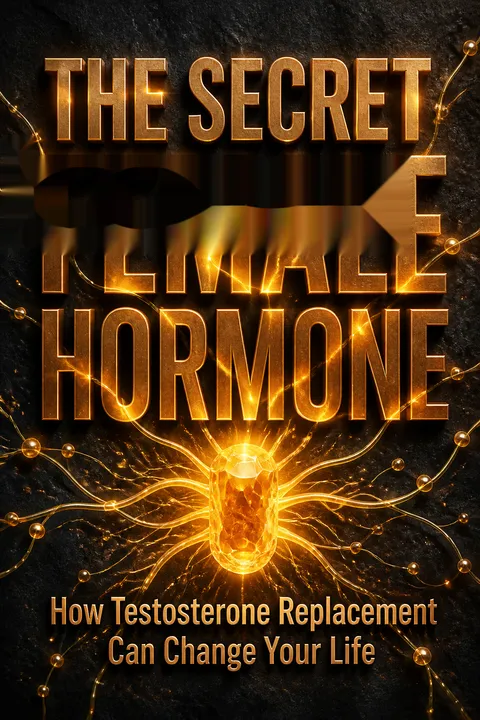
A doctor's crisis became a theory. Kathy Maupin recounts how, in her early 40s, fatigue, insomnia, weight gain, low mood, migraines, and a vanished sex drive overwhelmed her despite treatment with other hormones. Several doctors dismissed her as healthy or simply aging. After surgery and a difficult recovery, she tried testosterone pellets and says her energy, sleep, and libido returned. That experience became the book's central argument: testosterone matters to women, and low levels may be behind some symptoms attributed to aging.
Start with investigation, not assumption. These symptoms can have many causes, including medications, sleep disorders, thyroid problems, depression, and other medical conditions. The story makes a strong case for taking symptoms seriously, but one person's improvement cannot establish a diagnosis or show that testosterone is the cause for other women.
What's compelling is the way the memoir gives language to symptoms that can otherwise feel isolating. Feeling heard is itself clinically meaningful: it can improve disclosure, trust, and follow-through. But the narrative also illustrates a familiar reasoning trap, the leap from personal recovery to a general explanation. A treatment can help one person without proving the proposed mechanism or predicting who else will benefit. The most durable lesson is not that every midlife change signals a hormone deficit, but that persistent changes deserve careful, respectful assessment.
Ask whether fatigue, sleep, mood, and libido changes deserve a joined-up assessment
Symptoms can overlap. The book calls its proposed condition testosterone deficiency syndrome, or TDS: a cluster of symptoms the authors associate with low testosterone, including reduced desire, fatigue, insomnia, mood changes, abdominal weight gain, reduced muscle strength, and difficulty concentrating. Because these signs can resemble other health problems, the authors urge readers to consider their timing, severity, and possible triggers rather than treating each complaint in isolation.
A questionnaire is only a starting point. Maupin offers symptom checklists and suggests blood tests, emphasizing free testosterone, the portion not bound to proteins. The book also lists possible contributors such as ovarian surgery, menopause, diabetes, and medications, including some antidepressants and birth control pills. Readers should not use the checklist or its laboratory cutoffs to diagnose themselves or change prescribed medication. A clinician can assess alternatives and interpret results in context.
The joined-up approach fits a broader principle in medicine: symptoms often cross the boundaries between specialties, while health care systems divide expertise into separate departments. A clear timeline and medication review can help connect those dots. However, a cluster is not automatically a syndrome. Fatigue and low mood, for example, are common and nonspecific, and a questionnaire can raise a question without answering it. A useful assessment keeps several explanations open, rather than letting one appealing diagnosis crowd out sleep, mental health, medication effects, or other medical causes.
Use the aging cascade as the book's model, not settled endocrine law
Three hormones, one proposed sequence. The authors describe an “aging cascade,” their model in which testosterone declines first, progesterone becomes less predictable as ovulation changes, and estradiol falls with menopause. They connect this sequence to changes in sexual desire, mood, body composition, sleep, and bone health. Their distinction matters: the book argues that some problems commonly called menopause symptoms may, in its view, begin before menopause and involve testosterone.
A model is not a verdict. The book uses patient stories, physiological explanations, and studies to argue that hormone loss can influence many body systems. It also presents this sequence as a broad explanation for conditions ranging from migraines to dementia. Those wider causal and preventive claims are much stronger than the personal anecdotes can establish. The model can prompt questions for a clinician, but it should not replace established evaluation or be treated as proof that one hormone causes a particular illness.
The cascade is memorable because it turns a long list of changes into a chronological map. Such models can help patients notice when symptoms began and ask more precise questions. Their simplicity is also their risk: biological aging is not a single-file procession, and hormones vary among individuals and across time. A useful model should organize inquiry, not close it. The distinction between a hormone's plausible influence on a body system and proof that replacing it prevents disease is especially important when the proposed effects reach from sleep to dementia.
Treat lost desire as a health and relationship issue, not a character flaw
Desire affects two people. The book follows couples whose sexual patterns change when one partner loses interest. A therapist coauthor describes a couple who initially feared their problem was depression or marital failure; the book says a medical assessment and hormone treatment helped restore their sex life. The authors also explain how partners may interpret reduced desire as rejection, while the person experiencing it may feel confused, guilty, or pressured.
Biology is not the whole relationship. The book links testosterone to desire and sexual response, but it also stresses communication, emotional safety, past experiences, stress, medication effects, and mismatched expectations. It encourages partners to discuss what has changed rather than assume they can read each other's minds. Hormonal treatment, if appropriate, cannot by itself undo years of hurt or rebuild intimacy. Those concerns may require direct conversation or professional support.
This is one of the book's strongest human insights: a bodily change can acquire a relational meaning that neither partner intended. Couple research and clinical practice both emphasize the difference between desire itself and the story partners tell about its absence. Replacing blame with curiosity can reduce defensiveness and make room for medical and relational explanations at once. The nuance is crucial: no partner owes sex, and restoring libido is not the sole measure of a healthy relationship. Consent and mutual comfort remain central, whatever the cause of changed desire.
Separate plausible hormone effects from claims that testosterone prevents major disease
The book makes sweeping promises. Maupin argues that testosterone can improve energy, sleep, muscle, mood, libido, and other symptoms. It also attributes preventive or therapeutic effects to testosterone for osteoporosis, autoimmune disease, heart disease, diabetes, and dementia. The authors point to individual patient stories and studies of particular hormone effects, and report a 95 percent success rate in their practice. That figure describes their own experience as presented in the book, not a controlled trial establishing how well treatment works generally.
Evidence has different levels. The book describes a study comparing estrogen plus testosterone with estrogen alone on sexual responses, but a narrow result does not validate every claim about aging or chronic disease. Current medical guidance does not recognize TDS as a standard diagnosis. Testosterone may be considered in carefully assessed cases of postmenopausal low sexual desire, but evidence does not support using it as a general anti-aging treatment or to prevent the many diseases listed here.
The book is right to distinguish a patient's lived symptoms from a dismissive label like “just aging.” It is less convincing when that concern becomes a single-hormone explanation for diseases with many interacting causes. Clinical evidence is indication-specific: evidence for a limited sexual-health use cannot be carried over to dementia prevention or autoimmune disease. This is a useful test for any health claim: ask which outcome was studied, in whom, against what comparison, and for how long. The distinction protects both scientific rigor and patients from false hope.
Match each hormone to the problem, and protect the uterus when using estrogen
The hormones are not interchangeable. The book distinguishes testosterone, progesterone, and estradiol. It presents testosterone as its central focus, describes progesterone as relevant to menstrual symptoms and as protection for the uterine lining when systemic estrogen is used, and associates estradiol with menopausal symptoms such as hot flashes and vaginal dryness. It also explains that the authors reserve progesterone after menopause mainly for women who still have a uterus and need endometrial protection.
The distinction has practical stakes. Estrogen can stimulate the lining of the uterus, so systemic estrogen use in someone with an intact uterus requires a clinician's plan to protect that lining and investigate unexpected bleeding. The book favors bio-identical hormones and describes synthetic progestins negatively, but it overstates the certainty that one formulation is universally safer or better. Treatment choice depends on a person's health history, symptoms, and risks, not the book's formula alone.
This section's most useful contribution is the reminder that “hormone therapy” is not one treatment. The tissue exposed, the dose, the route, and whether a uterus is present all matter. That is consistent with a basic principle of pharmacology: delivery changes exposure and can change risks. Yet the book's sharp division between natural and synthetic products can mislead. “Bio-identical” describes molecular structure, not a guarantee of safety, purity, or superior outcomes. Formulation and monitoring deserve a clinician's attention, not a marketing label's reassurance.
Choose hormone delivery with a clinician, not by the book's pellet preference
Pellets are the authors' preferred method. The book describes testosterone and estradiol pellets as small implants placed under the skin, intended to release hormones over several months. Maupin favors them for convenience and stable delivery, and presents them as more effective than creams, tablets, or injections. She also notes insertion risks, including bruising, infection, scarring, and pellet expulsion, and says treatment requires trained clinicians and follow-up testing.
The preference is not a universal finding. The book's claims that pellets resolve nearly all symptoms and offer the best risk profile come chiefly from the authors' practice experience. Compounded hormone products are not FDA-approved for the uses described, and they are not proven superior to regulated treatments simply because they are compounded or plant-derived. Readers should ask about evidence, dose control, monitoring, alternatives, costs, and how a treatment can be stopped or adjusted if unwanted effects occur.
Convenience is a real clinical benefit: a treatment that does not require daily application may fit some patients better. But long-acting delivery has a tradeoff. Once an implant is placed, the dose cannot be removed as easily as a patch or a pill can be stopped, so reversibility and dose adjustment matter. The book's preference for pellets should therefore be read as the authors' practice-based judgment, not a settled comparison across all patients. Shared decision-making means discussing the least burdensome option that also has appropriate evidence and monitoring.
Challenge dismissive care while staying skeptical of one-cause explanations
The authors identify a recognition gap. They argue that testosterone has been culturally treated as a male hormone, that research and clinical training have overlooked women's symptoms, and that approval and insurance systems can leave treatments unavailable. They explain off-label prescribing as a clinician's use of an approved medication for a purpose that has not itself received FDA approval. Their practical advice is to ask informed questions, bring symptom histories and test results, and seek another qualified opinion if concerns are brushed aside.
Advocacy needs guardrails. The book presents gender bias as a major reason women do not receive testosterone treatment and describes the lack of approval as evidence of neglect. Funding, limited evidence, safety concerns, and difficulty studying a broad symptom cluster can also shape regulatory decisions. Patients deserve respectful care, but a clinician's skepticism about a treatment may reflect uncertainty rather than dismissal. Ask for the reasoning, alternatives, and evidence, and do not stop a prescribed medication without medical guidance.
The book's call for patients to be taken seriously is valuable, especially in areas where symptoms have historically been minimized. Its account of regulatory history, however, sometimes treats absence of approval as proof of political suppression. Drug development also depends on demonstrable benefit, safety, and commercial incentives; a neglected research question can be both gendered and scientifically unresolved. Advocacy is strongest when it demands better studies and transparent explanations without assuming the desired treatment has already been vindicated. Respectful disagreement is different from disbelief.
Compare the cost of treatment with the cost of leaving symptoms unexplored
Inaction is also a choice. The authors ask readers to weigh possible treatment harms against the burden of symptoms and the consequences of doing nothing. They frame this as a decision about quality of life, medical risks, costs, and personal priorities. Their examples include a hypothetical monthly bill for several medicines and compare it with the cost of hormone pellets, arguing that treatment might reduce spending if other prescriptions can be stopped.
Do not assume the savings. The book's comparison depends on a particular set of medications, prices, and the possibility that symptoms improve enough to change other treatment. Those conditions will not apply to everyone. A practical decision should include out-of-pocket costs, follow-up visits and testing, uncertain benefits, side effects, and the risks of stopping existing medication. A clinician can help assess whether a symptom has an alternative cause and whether a proposed treatment has evidence for that specific problem.
Putting inaction on the decision table is a sound habit. Patients often hear only a treatment's risks, while the costs of continued symptoms or an untreated condition remain invisible. Decision science calls this omission bias: people can perceive an action as more dangerous than doing nothing, even when both options carry consequences. Still, a cost comparison is only as good as its assumptions. A treatment should not be credited with eliminating other drugs before that outcome is demonstrated for the individual, and relief of symptoms should not be confused with prevention of future disease.
Analysis
The book is part memoir, part patient guide, and part argument for changing medical practice. Its organizing story is Maupin's own unexplained decline in her forties, her recovery after testosterone pellet treatment, and her conviction that women with similar experiences have been overlooked. The personal account gives urgency to the book's central point: symptoms that disrupt sleep, sexual desire, mood, energy, and self-understanding deserve serious investigation, not reflexive dismissal as normal aging.
The text's most useful contribution is its insistence that sexual health, emotional life, and physical health can interact. The therapist coauthor shows how a change in desire can be misread by partners as rejection, then compound into conflict and distance. The book also offers a practical vocabulary for discussing symptoms, medication effects, and treatment choices with clinicians. Its broad symptom map may help readers prepare for an appointment, provided it is treated as a prompt rather than a diagnostic instrument.
Its central weakness is evidentiary overreach. The authors define testosterone deficiency syndrome as a broad condition and connect testosterone loss to numerous diseases, then present pellets as a near-universal solution. Anecdotes and the reported 95 percent practice success rate do not establish population-wide effectiveness or prove prevention of dementia, cardiovascular disease, autoimmune disorders, or frailty. A proposed biological mechanism is not the same as demonstrated clinical benefit. The book's account of regulatory neglect also gives too little weight to uncertainties in safety, efficacy, and study design.
A careful reader can retain the book's strongest impulse while questioning its certainty: take symptoms seriously, investigate multiple causes, and make shared decisions based on evidence specific to the problem. Testosterone is not simply a male hormone, but that fact alone does not establish that broad replacement is appropriate for women after 40. Hormonal treatment requires individualized risk assessment and qualified medical care. The book is best read as a forceful patient-advocacy narrative and a historical snapshot of one clinician's approach, not as a current clinical protocol.
Glossary
Testosterone Deficiency Syndrome
The authors' proposed symptom clusterThe book's name for a proposed condition linking low testosterone with symptoms such as reduced sexual desire, fatigue, sleep problems, mood changes, reduced muscle strength, and difficulty concentrating. The authors present it as a distinct syndrome affecting women, especially in midlife. It is not a standard, formally recognized medical diagnosis, and its symptoms can have many other causes.
aging cascade
A proposed sequence of hormone lossThe authors' model of female aging as a sequence in which testosterone declines first, progesterone becomes less predictable as ovulation changes, and estradiol falls with menopause. The book uses this model to distinguish symptoms it associates with testosterone loss from symptoms it associates with menopause. It is an organizing framework in the book, not a settled clinical rule that applies identically to every woman.
bio-identical hormones
Hormones structurally matching human hormonesHormones whose molecular structure is identical to hormones produced in the human body. The book describes compounded versions of testosterone, estradiol, and progesterone made from plant-derived ingredients and favors them over synthetic formulations. The term describes molecular structure; by itself, it does not establish that a product is FDA-approved, safer, more effective, or more consistent in quality.
first-pass effect
Metabolism before a drug reaches circulationThe process in which a medication taken by mouth is absorbed through the digestive system and metabolized by the liver before reaching the general bloodstream. The book argues that this can alter hormone products and contribute to unwanted effects. The degree and consequences depend on the particular medication, dose, and formulation, so the term does not mean every oral hormone is unsuitable.
Women’s Health Initiative
Large study of postmenopausal healthA major research program that included trials of menopausal hormone therapy and reported findings that influenced public and clinical views of estrogen and progestin use. The book discusses its early results and subsequent analyses, arguing that initial interpretations caused excessive fear of hormone therapy. Its findings concern specific populations, formulations, and outcomes, and should not be treated as a single verdict on every hormone or treatment method.
Download PDF
Download EPUB
.epub digital book format is ideal for reading ebooks on phones, tablets, and e-readers.








