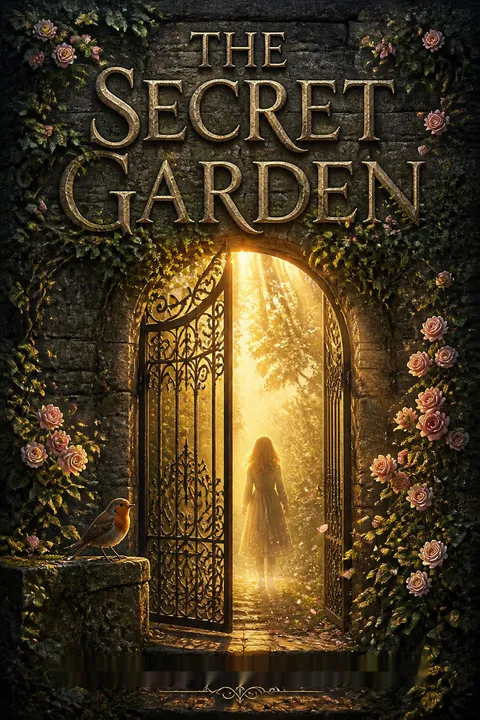


Plot Summary
Cholera Takes Mary’s World
Nine-year-old Mary Lennox1 has grown up in India attended by servants but scarcely noticed by her parents. When cholera sweeps through their household, her Ayah12 dies and Mary’s mother11 and father are carried away while the frightened survivors flee. Mary1 wakes alone in a silent bungalow, expecting someone to return.
Officers eventually find her and explain that no one is left. After a brief stay with an English clergyman’s family, Mary1 is sent to Yorkshire to live with her uncle,4 Archibald Craven,4 whom she has never met. The journey begins not with a child mourning loved ones she barely knew, but with a child confronting, for the first time, what it means to be unwanted and alone.
Mary’s orphaning is both catastrophe and exposure. Her parents’ deaths do not produce conventional grief because their emotional absence preceded their physical disappearance. The officers’ discovery of her makes neglect visible as a concrete failure: the household’s child has been forgotten along with its dead. This history explains Mary’s defensive self-absorption without excusing it. She has learned that people are chiefly servants who accommodate her, not companions who respond to her needs. The move to Yorkshire therefore relocates her geographically while also removing the social arrangement that has kept her incapable of reciprocity.
A House Full of Locked Rooms
At Misselthwaite Manor, housekeeper Mrs. Medlock8 warns Mary1 that most rooms are shut and her uncle4 keeps to himself. Archibald4 is grieving the death of his wife, and Mary1 is unlikely to see him. Housemaid Martha5 unsettles Mary1 by expecting her to dress herself and by speaking without servility, but her stories about a lively moorland family gradually draw Mary1 out of her sulk.
Mary1 begins going outside, where running in the wind gives her an appetite and the redbreasted robin becomes her first friendly presence. Gardener Ben Weatherstaff6 admits that a walled garden has been closed since Mrs. Craven died. That night Mary1 hears a child2 crying somewhere inside the vast house, while Martha5 awkwardly denies that anyone is there.
The manor’s locked rooms give physical form to a household organized around avoidance. Archibald’s grief has sealed off the garden, while the servants’ silence keeps Colin’s existence concealed. Martha interrupts Mary’s expectation of unquestioned service by treating her as capable of dressing and entertaining herself. The change is modest but consequential: Mary must act rather than wait to be attended. Her first pleasure in the robin offers a different model of contact, one based on patience and mutual attention. The crying complicates the manor’s apparent emptiness, suggesting that its secrets are not merely historical but still shaping the lives inside it.
The Key Under Ivy
On a rainy day, Mary1 explores the corridors and again hears the crying, but Mrs. Medlock8 catches her and hustles her back to her room. With the weather improved, Mary1 follows the robin along the garden wall. A gust lifts the ivy, exposing a door; the old key she found buried in freshly turned earth fits its lock.
Inside, she discovers tangled roses, brown grass, and spring bulbs pushing up through the soil. Mary1 begins clearing weeds around the shoots with a stick, returning each day to make them room. Her work gives her a private purpose, and she keeps the entrance secret. The garden is neglected, not dead, and the first green growth answers Mary’s1 own newly awakened curiosity.
The key turns curiosity into responsibility. Mary could have treated the hidden place as another forbidden room to inspect and abandon, but the living bulbs give her a reason to return and care for what she finds. Her early gardening is instinctive rather than expert: she notices that the shoots need space and removes the growth crowding them. That practical attention marks a shift from entitlement to stewardship. The garden’s condition also resists the manor’s assumption that whatever has been shut away is finished. Its life persists without permission, waiting for someone to notice.
Dickon Enters the Secret
Martha5 arranges for her brother Dickon,3 a boy trusted by wild animals, to bring Mary1 gardening tools and seeds. Mary1 shows him the hidden garden, and Dickon3 recognizes living wood beneath the tangled branches. Together they prune dead growth, loosen soil, and protect the spring bulbs, while the robin and Dickon’s3 animals keep them company.
Mary1 also meets Archibald,4 who grants her freedom to play outdoors and as much earth as she wants after Martha’s mother,7 Susan Sowerby,7 urges him to take her needs seriously. He leaves for a long absence, unaware of the garden’s true identity. Dickon3 promises to return, and Mary1 now has both a practical partner and a guardian’s permission to grow stronger outside.
Dickon brings knowledge without taking ownership away from Mary. He can distinguish living branches from dead ones, but he also recognizes that she has already been caring for the bulbs well. Their partnership makes the garden communal while preserving its secrecy. Archibald’s brief permission is similarly important: he offers Mary freedom because Susan has interpreted the child’s needs more accurately than he has. Yet he remains emotionally distant and does not learn what his permission makes possible. The story links care to attention: Dickon sees the plants, Susan sees Mary, and Archibald begins to respond only when someone else helps him look.
The Crying Boy Revealed
During a stormy night, Mary1 follows the familiar crying through a concealed corridor door and finds Colin Craven,2 her cousin, in a lavish bedroom. Colin2 has been kept apart from other children because his father4 fears he may inherit a crooked back. He believes he is destined to die, and his attendants have allowed him to command the household rather than challenge his fears.
Mary,1 who did not know Archibald4 had a son, talks with him about India and the garden his mother loved. When Colin2 learns that a hidden garden may still exist, he wants to see it, but Mary1 insists it must remain secret. She agrees to keep visiting him, and he asks Martha5 to help conceal their friendship.
Mary and Colin recognize one another through parallel forms of isolation. Mary has been neglected; Colin has been overprotected and hidden. Both have mistaken the arrangements imposed on them for the natural limits of life. Colin’s belief in imminent death has become part of his identity because adults whisper around him instead of giving him trustworthy information. Mary’s account of the garden introduces a future he can imagine without requiring him to face the entire world at once. Their shared secret creates a relationship based on chosen trust, unlike the family and household ties that have so far confined them.
Mary Refuses the Rajah
Mary1 becomes absorbed in the garden and misses a visit with Colin.2 He threatens to ban Dickon3 from the house, expecting Mary1 to obey as everyone else does. She refuses, and their quarrel forces Colin2 to meet resistance from someone his own age. Later, his terror erupts into a violent tantrum: he believes a lump has appeared on his back and that he is becoming deformed.
Mary1 orders him to let the nurse10 examine him. The nurse10 finds no lump, and Colin2 asks whether he might live to adulthood if he takes the doctor’s9 advice and spends time in fresh air. Mary1 softens, promises to tell him about the garden, and prepares to bring Dickon3 into his life.
The quarrel matters because Mary does not rescue Colin by pleasing him. Her refusal breaks the pattern in which every adult avoids upsetting him, a pattern that has made his fears more powerful and his conduct more tyrannical. The nurse’s examination gives the children concrete evidence against his imagined deformity, though it does not erase his vulnerability. Mary’s own anger is not a model of perfect empathy; it is the force that finally makes contradiction possible. Their later reconciliation begins when she recognizes that opposition alone is insufficient and offers him a reason to turn toward life.
Colin Sees Spring
Mary1 tells Colin2 that Dickon3 will visit with his tame animals, then reveals that she has found the garden door. Dickon3 arrives with a fox, a crow, squirrels, and a motherless lamb, whose feeding captures Colin’s2 attention more effectively than talk of illness. Dr. Craven9 allows Colin2 to go outside with Mary1 and Dickon,3 trusting the sturdy moor boy3 to push his chair.
They follow a carefully concealed route and enter the garden alone. Colin2 sees roses and spring flowers alive around him, breathes the open air, and feels color return to his face. For the first time, he imagines himself living to adulthood. The garden changes from Mary’s1 refuge into a place the cousins can share.
The animals make the outdoor world immediate rather than abstract. Colin does not need to accept a medical argument before he can respond to the lamb’s hunger, the fox’s closeness, or Dickon’s ease among them. His attention shifts outward, and that shift loosens the grip of his illness-centered imagination. The first visit also changes the garden’s meaning: secrecy had protected Mary’s private refuge, but sharing it gives Colin a reason to leave his room. His hope is not a miraculous cure delivered by scenery. It begins as a newly sustained interest in something beyond himself.
Colin Stands Before Ben
Ben Weatherstaff6 discovers the children in the garden and calls Colin2 a cripple, repeating the label the boy has feared for years. Colin2 rejects it, throws off the coverings on his legs, and, with Dickon3 steadying him, rises to his feet. He remains upright while Ben6 studies his back and confirms that there is no deformity.
Ben6 then admits he has secretly climbed over the wall to tend Mrs. Craven’s roses, keeping them alive after the garden was officially closed. With the old gardener’s help, Colin2 turns soil and plants a rose himself, then stands as the sun sets. His first effort is small, but it converts years of imagined helplessness into a physical act he can repeat.
Colin’s first stand is triggered by indignation, not calm confidence. Ben’s careless words force him to defend himself against the identity others have assigned him, and that emotional surge briefly outruns his fear. Dickon’s support makes the attempt safer, while Mary’s insistence has already helped undermine the belief that a lump must be there. Ben’s confession further complicates the garden’s apparent abandonment: its restoration began before the children arrived, through a gardener’s private loyalty to Mrs. Craven. The scene makes recovery cumulative, built from concealed care, practical help, and a child’s decision to test his own body.
A Secret Shared by Three
Colin2 returns to the garden daily, practices walking, and follows exercises Dickon3 learned from a local athlete. He and Mary1 eat the food Susan7 sends, grow stronger, and pretend to remain ill so Dr. Craven9 will not write to Archibald4 before Colin2 can reveal his recovery himself.
Susan7 is eventually welcomed into their secret; when she visits the garden, Colin2 asks whether his father4 might love him, and she gives him the motherly affection he has been missing. Meanwhile, Colin2 stops hiding his mother’s portrait behind its curtain, and the garden fills with flowers. His progress is no longer a single dramatic stand but a routine of effort, nourishment, laughter, and attention to living things.
The children’s improvement is deliberately ordinary in its means: exercise, food, companionship, and repeated practice. The secrecy around Colin’s recovery gives him control over how his father will learn the truth, though their playacting also shows how long the household has been trained to accept his invalid identity. Susan’s visit supplies warmth without replacing his dead mother; she offers an experience of care that he can receive in the present. Uncovering the portrait suggests that Colin can look at his mother’s image without treating it as an accusation. The garden’s growth accompanies these changes, but the children help produce them through daily work.
Father Finds His Son
Far from Yorkshire, Archibald4 begins to feel less trapped in grief as he notices the living beauty around him. A vivid dream places his dead wife in the garden, and Susan’s7 letter urges him to return. At Misselthwaite, he learns that Colin2 spends his days outdoors but does not yet know why. Near the ivy-covered wall, he hears children moving and laughing inside the supposedly sealed garden.
The door opens, and Colin2 runs straight into his father’s4 arms. Archibald4 recognizes his wife in the boy’s eyes and listens as Colin2 explains the garden, Mary,1 Dickon,3 and his recovery. Father and son enter the garden together, then walk back to the manor side by side, while the astonished household sees Colin2 on his own feet.
Archibald’s return resolves the family’s emotional separation through an encounter rather than an explanation alone. His dream and Susan’s letter make home imaginable again, but he still has to travel back and meet the son he has avoided. Colin’s running body answers the fear that has defined their relationship, while his account gives Archibald a way to understand the months he missed. The garden is no longer required to remain secret: it has done its work as a protected space, and its opening now permits a father to enter. The household’s astonishment registers a changed reality that had been hidden in plain sight.
Analysis
The Secret Garden makes recovery visible through changed habits and bodies. Mary1 first encounters a world in which other people exist to serve her or ignore her; the garden gives her work that cannot be completed by commanding someone else. She must notice which shoots are alive, learn from Dickon,3 and return to the same patch of soil. Colin’s2 illness is more complicated. The novel portrays him as physically fragile and socially isolated, but also shows how adults’ whispering, excessive protection, and surrender to his tantrums intensify his fear. Mary’s1 bluntness disrupts that cycle, while Dickon’s3 animals and knowledge give Colin2 experiences not organized around his condition. The story’s confidence in fresh air and optimism reflects its period, and its cure should not be mistaken for a modern account of disability or medicine. Yet the narrative’s strongest psychological insight is relational: fear becomes more absolute when it is kept secret and discussed around a child instead of with him. The garden works because the children participate in a world that answers their efforts. Plants need tending; Colin2 needs practice; friendship requires limits as well as affection. Archibald’s4 parallel movement out of grief completes the pattern. He has not been healed by learning that sorrow was foolish, but by returning to the place and family he abandoned. The ending joins bodily recovery to emotional recognition, and joins wonder to work. Its Magic is most persuasive when it names the courage to notice, begin, and keep going.
Review Summary
The Secret Garden is a beloved children's classic that has enchanted readers for generations. The story follows Mary Lennox, a spoiled and neglected child who discovers a hidden garden and learns the healing power of nature and friendship. Many readers appreciate the book's themes of personal growth, the magic of the outdoors, and the transformative power of positive thinking. While some note dated elements like racism, most find the core message of rejuvenation through nature and companionship to be timeless and heartwarming.
People Also Read








Characters
Mary Lennox
The guarded gardenerMary is a lonely English child raised in India, where adults met her needs without offering much affection or asking anything of her. She begins with a sharp temper, a sense of entitlement, and little practice in noticing other people. Her curiosity gives her a way into the world: she follows the robin, asks questions about the garden, and learns from people who do not flatter her. Mary is stubborn and can be unkind, but she is also observant and capable of fierce loyalty once she trusts someone. Her relationships with Martha5, Dickon3, Colin2, and Ben6 reveal a child learning that companionship requires attention and give-and-take, not command.
Colin Craven
The hidden heirColin is Archibald Craven’s4 son, a boy kept largely inside Misselthwaite Manor and surrounded by adults who fear his fragility. He has absorbed their anxieties and expects illness, deformity, and death, while using his authority to make others obey him. His intelligence and imagination are considerable, but isolation has turned them inward, toward bodily fears and fantasies of power. Colin dislikes being watched because strangers’ pity has made him feel exposed. His connection with Mary1 begins through their shared secrecy, while Dickon3 represents a kind of open, practical friendship he has never experienced. Colin’s role centers on the tension between protection and the chance to act for himself.
Dickon Sowerby
The moor’s animal friendDickon is Martha’s5 twelve-year-old brother, a boy shaped by the moor and trusted by animals. He knows how to handle plants and creatures because he observes them patiently rather than trying to dominate them. His generosity is practical: he brings Mary1 tools and seeds, shares his knowledge, and makes room for Colin2 among his animals. Dickon is neither grand nor self-conscious, and his ease with people contrasts with the guarded manners of Misselthwaite. He helps the children take manageable steps toward the outdoor world, while his loyalty to his family and his respect for secrets make him a steady companion.
Archibald Craven
The grieving guardianArchibald is Mary’s1 uncle and Colin’s2 father, a wealthy man whose wife’s death has left him emotionally withdrawn. He avoids the garden that belonged to his wife and keeps his son2 at a distance because Colin’s2 face recalls her loss. Though he provides for Mary1 and Colin2 materially, he struggles to offer the direct attention they need. Archibald is not indifferent by nature so much as immobilized by grief and fear; he has mistaken retreat for protection. His brief kindness to Mary1, influenced by Susan Sowerby’s7 counsel, suggests that he can still respond when someone helps him see beyond his sorrow.
Martha Sowerby
Mary’s plainspoken guideMartha is a young housemaid from a large, close-knit moorland family. Her direct speech and expectation that children should help themselves initially offend Mary1, but Martha’s warmth and stories give the lonely child a first glimpse of ordinary family life. She serves as the bridge between Mary1 and the Sowerbys, sharing her wages for a skipping rope and encouraging Mary1 to spend time outdoors. Martha is practical and sometimes anxious about her position in the household, yet her affection makes her a reliable source of comfort.
Ben Weatherstaff
The guarded gardenerBen is an elderly, prickly gardener who lives alone and speaks with blunt Yorkshire candor. His crabbed manner conceals a deep attachment to Mrs. Craven and to the robin that visits him. He recognizes Mary’s1 bad temper partly because he sees his own in it, and his knowledge of roses becomes important to her work. Ben distrusts meddling, but his loyalty to the garden and his capacity for tenderness show through his grumbling.
Susan Sowerby
The wise cottage motherSusan is Martha5 and Dickon’s3 mother, a hardworking woman raising a large family on limited means. She understands children through lived experience and speaks to Archibald4 with the confidence of someone who sees what the household overlooks. Her care is practical as well as emotional: she advises that Mary1 needs freedom and fresh air, and she later finds ways to support the children. Susan offers warmth without sentimentality and treats kindness as something that must be made real through action.
Mrs. Medlock
The manor’s housekeeperMrs. Medlock manages Misselthwaite Manor and brings Mary1 from London to Yorkshire. She is brisk, observant, and protective of the household’s rules, especially those concerning Archibald4 and Colin2. Her loyalty to her employer keeps her from explaining the family’s secrets, even when Mary’s1 questions unsettle her. She also respects Susan Sowerby7 and is relieved when Susan’s7 advice gives her a sensible way to care for Mary1.
Dr. Craven
Colin’s cautious doctorDr. Craven is Colin’s2 cousin and physician. He is nervous around Colin’s2 tantrums and tends to approach the boy through caution and medical routines. Though the family’s inheritance could benefit him if Colin2 died, he is not portrayed as scheming or cruel. He recognizes that Colin’s2 condition is changing and is willing to allow an outing when Dickon’s3 strength and steadiness reassure him.
The Nurse
Colin’s weary attendantColin’s2 nurse is a capable but impatient young woman who finds his tantrums exhausting. She has little influence over the household’s treatment of him and is often glad to leave him in Martha’s5 care. When Mary1 challenges Colin2, the nurse recognizes that someone willing to oppose him may help more than another attendant who gives in.
Mrs. Lennox
Mary’s distant motherMary’s mother11 is a beautiful, socially absorbed woman who leaves her daughter in the care of servants. Her emotional distance shapes Mary’s1 early understanding of affection, while her remembered image remains part of the Craven family’s grief.
Mary’s Ayah
Her childhood caretakerMary’s1 Ayah is the Indian nurse who cares for her during childhood. She is one of the few familiar presences in Mary’s1 early life, though their relationship is shaped by the unequal household custom that makes the Ayah serve rather than challenge her.
Basil
The teasing clergyman’s sonBasil is one of the children in the clergyman’s household where Mary1 briefly stays after being orphaned. He teases her and gives her a nickname that captures her prickly manner, making her feel even more out of place among children.
Mr. Roach
The head gardenerMr. Roach oversees the manor’s gardens and is accustomed to Archibald’s4 restrictions. He follows Colin’s2 orders about keeping gardeners away from a particular walk, helping the children preserve their privacy.
Plot Devices
The Secret Garden
A refuge for renewalThe walled garden was made and loved by Mrs. Craven, then closed after her death. Mary1 discovers that its roses and bulbs have survived neglect, and the children restore it through pruning, digging, and daily attention. Its secrecy gives Mary1 and Colin2 a protected place where they can act without the scrutiny that has shaped their lives. As the garden changes, it draws together Mary1, Colin2, Dickon3, Ben6, and eventually Archibald4. The device works through material labor, not enchantment alone: the children’s care helps the garden flourish and gives them a reason to practice care toward themselves and one another.
The Robin and the Key
A guide to hidden lifeThe robin’s movements draw Mary1 toward the wall and the patch of ivy concealing the garden door. A key, uncovered in freshly turned soil, allows her to open it. The bird is not a magical guide in a literal sense, but its curiosity and familiarity with Ben6 model the patient attention Mary1 is beginning to learn. The key converts an old family prohibition into a choice Mary1 can make for herself. Together, bird and key turn observation into access, then access into responsibility.
The Yorkshire Moor
A living counterworldThe moor contrasts with the closed manor: it is expansive, weather-beaten, and full of plants, animals, and seasonal change. Martha5 describes it to Mary1 before the girl learns to enjoy being outdoors, while Dickon’s3 knowledge makes its life vivid to Colin2. Running, skipping, walking, and breathing fresh air support the children’s growing strength, but the moor also supplies relationships and practical knowledge. It challenges the idea that safety requires confinement, without suggesting that outdoor air alone resolves every difficulty.
Magic as Attention
A language for effortThe children use the word Magic to describe the force they sense in sunlight, growth, friendship, and renewed strength. Colin2 turns that belief into a repeated ritual and treats his recovery as an experiment, while Mary1 and Dickon3 encourage him to keep practicing. The book leaves room for wonder, but the children’s progress also has ordinary causes: movement, nourishing food, companionship, and repeated effort. Magic gives them a hopeful vocabulary for actions they might otherwise fear attempting, rather than replacing those actions.
FAQ
Synopsis & Basic Details
What is The Secret Garden about?
- Neglected girl finds solace: After losing her parents, Mary Lennox is sent to a gloomy manor where she discovers a hidden garden and begins to transform herself.
- Secret garden's healing power: The garden becomes a place of healing and growth for Mary and her sickly cousin, Colin, as they nurture it back to life.
- Friendship and transformation: Through their shared secret and the help of a local boy, Dickon, Mary and Colin learn about friendship, nature, and the power of positive thinking.
Why should I read The Secret Garden?
- Timeless tale of transformation: The story explores the power of nature, friendship, and positive thinking to heal and transform lives, making it relevant for all ages.
- Rich symbolism and themes: The novel is filled with rich symbolism, exploring themes of isolation, neglect, and the restorative power of nature and human connection.
- Engaging characters and plot: The characters are complex and relatable, and the plot is filled with mystery, discovery, and emotional depth, making it a captivating read.
What is the background of The Secret Garden?
- Victorian Era Setting: The story is set in the late Victorian era, reflecting the social norms and class distinctions of the time, particularly in the context of British colonialism in India.
- Emphasis on Nature: The novel emphasizes the healing power of nature, a common theme in Victorian literature, reflecting a growing interest in the natural world as a source of solace and renewal.
- Psychological Exploration: The story delves into the psychological states of its characters, exploring themes of grief, neglect, and the impact of environment on mental and emotional well-being.
What are the most memorable quotes in The Secret Garden?
- "At first people refuse to believe that a strange new thing can be done, then they begin to hope it can be done, then they see it can be done—then it is done and all the world wonders why it was not done centuries ago.": This quote highlights the theme of transformation and the power of belief in achieving the seemingly impossible.
- "If you look the right way, you can see that the whole world is a garden.": This quote encapsulates the novel's central theme of finding beauty and wonder in the natural world and within oneself.
- "One of the new things people began to find out in the last century was that thoughts—just mere thoughts—are as powerful as electric batteries.": This quote emphasizes the power of positive thinking and the impact of thoughts on one's well-being, a key theme in the story.
What writing style, narrative choices, and literary techniques does Frances Hodgson Burnett use?
- Third-person limited perspective: The narrative primarily follows Mary's perspective, allowing readers to experience her transformation and discoveries firsthand, while also providing glimpses into the thoughts and feelings of other characters.
- Descriptive and evocative language: Burnett uses rich, sensory language to create vivid images of the settings, particularly the moor and the secret garden, enhancing the reader's emotional connection to the story.
- Symbolism and allegory: The novel employs symbolism, such as the garden representing healing and rebirth, and allegory, with characters embodying different aspects of human nature, to convey deeper themes and meanings.
Hidden Details & Subtle Connections
What are some minor details that add significant meaning?
- The robin's red breast: The robin's red breast is a recurring detail that symbolizes hope, guidance, and the interconnectedness of nature and the characters, often appearing at pivotal moments.
- The locked door and buried key: These objects represent the secrets and emotional barriers that the characters must overcome, and their discovery marks the beginning of the garden's and the characters' revival.
- The color green: The color green, associated with the garden and new life, is used to symbolize growth, healing, and the transformative power of nature, contrasting with the grayness of the manor.
What are some subtle foreshadowing and callbacks?
- The "wuthering" wind: The recurring description of the wind "wuthering" around the manor foreshadows the emotional turmoil and hidden secrets within the house, and later connects to the cries Mary hears.
- Mary's initial dislike of the moor: Her initial aversion to the moor contrasts with her later love for it, foreshadowing her personal transformation and connection to nature.
- The mention of "Riquet à la Houppe": Mary's recollection of this fairy tale about a hunchback and a princess foreshadows her eventual sympathy for Mr. Craven and her connection with Colin.
What are some unexpected character connections?
- Ben Weatherstaff and Mrs. Craven: The revelation that Ben Weatherstaff was fond of Mrs. Craven and tended her roses reveals a hidden connection between the past and present, and adds depth to his character.
- Martha and Mrs. Medlock's shared history: The fact that Martha's mother and Mrs. Medlock went to school together creates an unexpected link between the servants and the upper class, highlighting the importance of human connection.
- Dickon and the animals: Dickon's ability to communicate with and charm animals is not just a quirk but a reflection of his deep connection to nature, which influences his interactions with Mary and Colin.
Who are the most significant supporting characters?
- Dickon Sowerby: Dickon is more than just a supporting character; he is a catalyst for change, embodying the healing power of nature and serving as a guide for Mary and Colin.
- Ben Weatherstaff: Ben's gruff exterior hides a deep connection to the garden and a surprising tenderness, making him a key figure in the garden's revival and Colin's transformation.
- Susan Sowerby: Susan's wisdom and nurturing nature provide comfort and guidance to the children, and her letter prompts Mr. Craven's return, making her a crucial influence on the plot.
Psychological, Emotional, & Relational Analysis
What are some unspoken motivations of the characters?
- Mr. Craven's guilt and grief: Mr. Craven's reclusiveness is driven by his unspoken guilt and grief over his wife's death, which he projects onto his son, Colin.
- Mary's need for belonging: Mary's initial sourness stems from her unspoken need for love and belonging, which she finds through her connection with the garden and her friendships.
- Colin's fear of weakness: Colin's tantrums and hypochondria are rooted in his unspoken fear of being weak and deformed, which he overcomes through his belief in the garden's magic.
What psychological complexities do the characters exhibit?
- Mary's transformation from neglect to agency: Mary's journey is a complex exploration of how neglect and isolation can shape a child's personality, and how positive experiences can lead to self-discovery and agency.
- Colin's struggle with self-perception: Colin's psychological complexities are evident in his struggle with self-perception, his fear of his own body, and his journey from self-pity to self-acceptance.
- Mr. Craven's battle with grief and guilt: Mr. Craven's character is a study in the destructive power of grief and guilt, and his journey towards healing is a complex process of self-forgiveness and acceptance.
What are the major emotional turning points?
- Mary's discovery of the garden: This moment marks a turning point in Mary's emotional journey, as she finds a source of joy and purpose outside of herself.
- Colin's first steps: Colin's first steps in the garden are a major emotional turning point, symbolizing his physical and emotional healing and his newfound belief in himself.
- Mr. Craven's dream and return: Mr. Craven's dream and subsequent return to Misselthwaite represent a significant emotional turning point, as he begins to confront his past and reconnect with his son.
How do relationship dynamics evolve?
- Mary and Colin's initial antagonism to deep friendship: Their relationship evolves from initial antagonism and mutual self-absorption to a deep friendship based on shared secrets, mutual support, and a common goal.
- Mary and Dickon's natural connection: Their relationship is characterized by a natural understanding and mutual respect, highlighting the importance of genuine connection and shared values.
- Colin and Mr. Craven's journey from estrangement to reconciliation: Their relationship evolves from one of neglect and fear to one of love and acceptance, demonstrating the power of healing and forgiveness.
Interpretation & Debate
Which parts of the story remain ambiguous or open-ended?
- The exact nature of the "Magic": The novel leaves the exact nature of the "Magic" open to interpretation, allowing readers to consider whether it is a supernatural force or simply the power of positive thinking and nature.
- The extent of Mrs. Craven's influence: The story hints at Mrs. Craven's continued presence in the garden, but her exact role and influence remain ambiguous, leaving room for speculation about her spiritual connection to the place.
- The long-term impact on Mr. Craven: While the ending suggests a positive change in Mr. Craven, the long-term impact of his grief and guilt is left somewhat open-ended, allowing readers to consider the ongoing nature of healing.
What are some debatable, controversial scenes or moments in The Secret Garden?
- Colin's initial behavior: Colin's spoiled and demanding behavior can be seen as controversial, raising questions about the impact of neglect and privilege on a child's development.
- Mary's initial racism: Mary's initial racist remarks and attitudes towards the native servants in India can be seen as problematic, prompting discussions about the impact of colonialism and prejudice.
- The portrayal of illness and disability: The novel's portrayal of Colin's illness and disability can be debated, with some arguing that it reinforces harmful stereotypes about people with disabilities.
The Secret Garden Ending Explained: How It Ends & What It Means
- Colin's physical and emotional healing: The ending shows Colin walking and running, symbolizing his complete physical and emotional healing, and his newfound belief in his own strength.
- The family's reunion and reconciliation: The reunion of Colin and his father in the garden signifies the healing of the family and the power of love and forgiveness to overcome past hurts.
- The garden as a symbol of hope and renewal: The garden's vibrant state at the end represents the characters' transformation and the enduring power of nature to heal and inspire, leaving the reader with a sense of hope and optimism.
Download PDF
Download EPUB
.epub digital book format is ideal for reading ebooks on phones, tablets, and e-readers.








