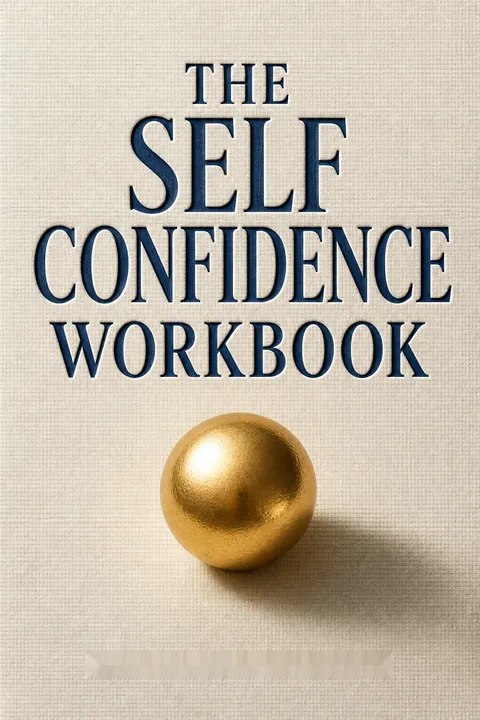


Key Takeaways
Act toward what matters before confidence arrives
Action comes first. The book defines self-confidence as taking steps toward personally important goals even when anxiety remains and the result is uncertain. Darnell, a quiet man worried about public attention, spoke to his city council about a neighborhood issue because it mattered to him. His hands still shook. The point is not to eliminate fear before acting, but to let values guide the action.
Quiet counts, too. Confidence is not loudness, charm, or an extroverted personality. It can look like attending a writing group, speaking once, or asking for help. Temperament, upbringing, discrimination, and mental health can all shape confidence, so struggling with it is not a personal failure.
This definition separates confidence from a pleasant feeling and anchors it in psychological flexibility: the ability to choose behavior by purpose rather than by discomfort. That is a useful shift because waiting for certainty can make avoidance feel like self-protection. It also avoids making confidence another performance standard. Still, action alone is not always wise; fear can signal real danger or insufficient preparation. The practical task is to distinguish a meaningful, manageable risk from a threat that deserves protection or support.
Set goals by your values, not somebody else's scorecard
Make the aim concrete. “Become confident” offers little guidance. A useful goal describes observable steps, such as speaking briefly with a coworker or accepting a lunch invitation, and stays realistic rather than demanding flawless performance. The book asks readers to connect those goals to what they care about in relationships, work, family, health, and community.
A refusal can be confident. Jamal was offered a promotion that brought leadership duties and more travel. He realized family time mattered more than career advancement at that point, and declined the role. Nia, by contrast, wanted a romantic life and began with small steps toward dating. Their choices differ because confidence is measured by alignment with values, not by how impressive an opportunity looks.
Values clarify what a goal is for, which makes them more durable than status-based targets. The distinction resembles self-determination theory, where choices feel more sustainable when they express personally endorsed motives rather than external pressure. Jamal’s example is especially useful because it prevents confidence advice from becoming automatic ambition. A values list is not a perfect compass, however: values can conflict, and obligations or limited resources constrain choices. The aim is thoughtful direction, not a fantasy of total freedom.
Accept reality without mistaking acceptance for approval
Stop adding resistance. Acceptance means noticing what is happening without judging it or pretending it is acceptable. It does not mean approving, giving up, or refusing to act. The book explains the difference with a traffic jam: being late is painful, but repeatedly insisting that it should not be happening adds frustration without changing the traffic.
Start where things are. Anxiety before a meeting, a setback at work, or a weakness in a valued skill can be acknowledged without turning it into a verdict on the self. Acceptance makes room to choose a response: prepare, ask for help, change course, or try again. Fighting the existence of an emotion often consumes attention that could go toward the next useful step.
Acceptance is not passivity; it is an accurate description of the present from which deliberate action becomes possible. This distinction appears in mindfulness-based approaches and in practical problem solving: denial distorts the starting conditions, while resignation abandons agency. The traffic example makes the added cost of mental resistance easy to see. The equation is best treated as a teaching model, not a literal measurement. Some pain cannot be reduced by changing one’s response, especially when the source is ongoing harm or deprivation.
Coach yourself with kindness, not shame, after a stumble
Use a humane inner voice. Self-compassion combines awareness of distress, kindness toward oneself, and recognition that hardship is part of being human. Aikira, exhausted by caring for a restless baby, concluded she was a terrible mother after comparing herself with other parents. A kinder response would name the exhaustion and difficulty without pretending the problem had vanished.
Keep responsibility intact. Guilt can point to a specific action that needs repair; shame turns that action into a sweeping judgment about personal worth. After a mistake, the useful questions are what happened, whether anyone was harmed, and what repair or adjustment is needed. Self-kindness is not permission to avoid accountability. It can make accountability less paralyzing and make it easier to return to valued action.
The book’s self-compassion model makes a strong case for separating correction from self-attack. In learning environments, useful feedback identifies a behavior and a next step; humiliation tends to make attention defensive. The same logic applies to self-coaching. Kindness is not necessarily soothing or indulgent, since it can include apologizing, changing a habit, or accepting a hard truth. A useful caution is that compassionate language can feel artificial at first. Its value should be judged by whether it supports clear action, not whether it produces instant comfort.
Calm your body so anxiety stops running the meeting
Give attention an anchor. Mindfulness means deliberately noticing the present with openness and without judgment. Attention can rest on breathing, sounds, or bodily sensations. When the mind wanders, the practice is simply to notice and return, rather than criticize itself for wandering.
Use the body practically. Diaphragmatic breathing emphasizes abdominal movement, a slower pace of roughly 8 to 10 breaths a minute, and an exhale longer than the inhale. Open posture, relaxed shoulders, and an unhurried voice can also help a person communicate warmth and attentiveness. The book adds sleep, exercise, and gratitude as supports for steadier functioning, not requirements for earning confidence.
These tools target the feedback loop between bodily arousal and attention. A slower exhale or a sensory focus can provide a concrete task when worry starts pulling attention into imagined outcomes. Nonverbal openness can also make interaction easier for other people. The book’s discussion of expansive “power poses” deserves more caution: claims that brief poses reliably alter hormones or performance have been disputed. Posture may still function as a rehearsal cue, but it should not be treated as a proven physiological shortcut or a substitute for preparation.
Treat harsh thoughts as mental events, not court verdicts
Notice the distortion. Automatic negative thoughts are quick interpretations that may be inaccurate or unhelpful. Sasha, who wanted to return to college, predicted that younger classmates would judge her and that she would fail. Common patterns include assuming what others think, turning one mistake into total failure, treating feelings as facts, and imagining the worst outcome as inevitable.
Question or unhook. Cognitive Behavioral Therapy, or CBT, examines evidence for and against a thought and considers a more balanced interpretation. Acceptance and Commitment Therapy, or ACT, puts more emphasis on seeing a thought as a thought rather than obeying it. Sasha could acknowledge her fear, submit her application, and take pride in trying without claiming success was guaranteed.
The two approaches offer complementary tools. Evidence testing can correct a prediction, while distancing from a thought can help when debate becomes another form of rumination. Asking whether a thought is useful is often more productive than trying to prove a global judgment about appearance or worth. Not every negative thought is distorted, though. A realistic concern may call for planning, feedback, or a boundary. The goal is not forced optimism; it is enough mental distance to choose a response based on more than the first frightening interpretation.
Test old self-beliefs against real evidence
Find the root story. Core beliefs are broad assumptions about oneself or the world, such as “I do not belong” or “I am not good enough.” They can turn an isolated event into a general rule. Asking what a feared outcome would mean can reveal the deeper belief beneath a passing thought.
Run a small experiment. Kiara believed that only losers went to movies alone. She went to a screening and noticed six other people sitting by themselves. Once the film began, she stopped monitoring them and realized they were not monitoring her either. The experiment did not prove that everyone is welcoming; it supplied specific evidence against her assumption and helped her try more activities independently.
A behavioral experiment makes a belief testable instead of treating it as a permanent fact. It also shifts attention from imagined evaluation to observable evidence. This resembles scientific reasoning, though everyday experiments are rarely controlled: one movie audience cannot settle a universal claim about social judgment. The useful result is narrower and more credible. A person can discover that a feared situation is tolerable, or that a prediction is exaggerated, without needing to conclude that rejection never happens.
Build a fear ladder and practice each rung repeatedly
Increase difficulty gradually. An exposure hierarchy is a personalized sequence of feared actions, ordered from mildly challenging to highly challenging. Merima, who wanted to drive independently, began by sitting in her car, then practiced around the block, and worked toward driving alone in busier traffic. The first step should be small enough to attempt, yet meaningful enough to bring some anxiety.
Learn by staying. Repetition gives a person a chance to experience anxiety without immediately escaping and to discover that the feared outcome may not occur, or can be handled. “Confidence crutches,” also called safety behaviors, include relying on alcohol, a companion, or constant phone use to get through a feared situation. They can block learning by making success seem dependent on the crutch. Trauma-related fears may call for a trained clinician’s help.
Gradual exposure turns avoidance into structured learning. Contemporary accounts often emphasize not only habituation, or anxiety declining with repetition, but also learning that the feared outcome is less certain and more manageable than expected. Anxiety does not have to fall during every practice for the attempt to be useful. The principle also requires care: exposure should be voluntary, appropriately paced, and directed at situations that are safe to approach. Forcing someone into a high-intensity challenge can reinforce fear rather than build confidence.
Practice the exact skill, then let errors teach you
Prepare what can be prepared. Confidence is not the belief that preparation is unnecessary. Identify the skill a challenge requires, practice it, seek useful feedback, and, when possible, rehearse in the actual setting. A presentation may call for practice with its opening and questions; a social challenge may call for listening cues or ways to start a conversation.
Review without self-condemnation. After a difficult attempt, ask what worked, what did not, and what to change next time. A mistake is an event, not an identity. The book also suggests viewing stress as a signal that something important is at stake, then using realistic preparation rather than treating anxiety as proof that the goal is wrong. Effort matters, but so does learning from the result.
This approach joins deliberate practice with a learning-oriented response to error. Practice is most useful when it targets a specific component and feedback is concrete, rather than when someone merely repeats the whole performance while worrying. Treating stress as meaningful can also redirect attention toward preparation. Still, stress can reflect overload, discrimination, or unsafe conditions, not just personal investment. The interpretation should remain open to context. A useful review asks both what the individual can adjust and what conditions made the task harder.
Keep confidence growing with routines, support, and progress checks
Make practice easier to repeat. The book recommends attaching a brief confidence practice to an established routine, scheduling it, and arranging the environment to reduce friction. It also encourages finding different kinds of support: someone who offers encouragement, honest feedback, emotional care, or practical help.
Expect uneven progress. Confidence is not a permanent state. The workbook suggests revisiting goals and its self-assessment, noticing gains without dismissing small steps, and returning to practice after a setback. If confidence falls sharply or self-help is not enough, reaching out to a trusted person or mental health professional is appropriate. The aim is not to become free of doubt, but to keep choosing useful actions when doubt returns.
Routines and social support turn an individual intention into a more reliable practice. Progress checks can make small changes visible, which matters when memory favors recent setbacks over gradual improvement. At the same time, a self-rating scale is a reflection aid, not a diagnosis or an objective measure of worth. Regular review should illuminate what is changing, not become another test to pass. The invitation to seek professional care is important because persistent anxiety, depression, trauma, or external mistreatment may need more than workbook exercises.
Analysis
The book’s most important move is to redefine confidence as action guided by values, rather than a feeling of certainty that must arrive before action begins. That shift changes the practical question from “How do I stop feeling afraid?” to “What worthwhile step can I take while fear is present?” It also makes room for different temperaments: a quiet person need not become socially dominant to act with confidence.
The workbook builds a coherent sequence from that premise. Values give action direction. Acceptance and self-compassion reduce the extra burden of condemning oneself for discomfort. Mindfulness and bodily practices help manage attention and arousal. Cognitive methods examine interpretations, while ACT-style defusion loosens their grip. Behavioral experiments test broad beliefs, and graded exposure provides repeated contact with feared situations. Together, these approaches address feeling, thought, and behavior rather than pretending that one tool can solve every confidence problem.
Its strongest practical insight is that confidence grows through evidence accumulated in ordinary life. A person who speaks once at a meeting, drives one familiar route, or submits an application gains information about capability and coping. This is more credible than generic affirmation because it is linked to observable action. The workbook also avoids equating confidence with ambition: choosing not to pursue a promotion can be self-trust when that choice fits a person’s priorities.
The framework has limits worth keeping in view. Some barriers arise from discrimination, material constraints, unsafe relationships, illness, or trauma, not just distorted thinking or avoidance. A values-based approach should not imply that every obstacle can be overcome through individual effort. The book acknowledges these influences and recommends professional care when appropriate, though self-help exercises cannot replace treatment in serious or persistent cases. Its best use is as a practical set of skills, adapted to circumstance, not as a promise of constant assurance. Confidence here means a growing capacity to act, learn, and recover, not immunity to fear or failure.
Review Summary
The Self Confidence Workbook receives positive reviews for its practical approach to building self-confidence. Readers appreciate the helpful exercises, strategies, and tools based on psychological therapies like CBT and mindfulness. Many found it empowering, noting improvements in self-esteem and ability to challenge negative thoughts. The book is praised for its clear explanations and actionable advice. While some felt it was lengthy, most reviewers recommend it for those struggling with confidence issues, anxiety, or seeking personal growth.
Glossary
self-confidence
Values-guided action despite doubtThe book uses self-confidence to mean willingness to take steps toward personally valued goals even when anxiety is present and outcomes are uncertain. It is not defined as constant calm, extroversion, or certainty of success. Confidence includes courage, developing competence, and treating oneself with compassion when attempts are imperfect.
Cognitive Behavioral Therapy (CBT)
Examines thoughts and behaviorCBT is a structured therapeutic approach that explores how interpretations influence emotions and actions. It helps people identify unhelpful thinking patterns, assess the evidence for a thought, and develop more balanced responses. In this book, CBT tools are used to loosen predictions and self-judgments that discourage valued action.
Acceptance and Commitment Therapy (ACT)
Act by values despite thoughtsACT is a therapeutic approach that emphasizes accepting the presence of difficult thoughts and feelings rather than trying to eliminate them before living. People learn to create distance from thoughts, identify what matters, and choose actions consistent with those values. The book uses ACT to frame confidence as action despite doubt.
mindfulness
Present-moment, nonjudgmental attentionMindfulness is intentionally attending to present experience with openness, curiosity, and less judgment. Attention may rest on breathing, sounds, or bodily sensations. When the mind wanders, the practitioner notices and gently returns attention. The book presents mindfulness as a way to interrupt rumination and stay engaged with current experience.
automatic negative thoughts
Quick, discouraging interpretationsAutomatic negative thoughts are fast interpretations that arise in response to events and can be inaccurate, exaggerated, or unhelpful. Examples include assuming others are judging, predicting failure, or treating a feeling as proof. Recording and examining these thoughts can reveal patterns that undermine confidence and shape behavior.
core beliefs
Deep assumptions guiding interpretationCore beliefs are broad principles and assumptions about oneself or the world, such as “I do not belong” or “I am not good enough.” They can develop through temperament and life experience, then shape how a person interprets specific events. The book recommends identifying them and testing them against evidence and experience.
self-compassion
Mindful, kind self-supportSelf-compassion involves noticing distress, responding to oneself with kindness, and recognizing that struggle is part of human life. It is not denial of mistakes or avoidance of responsibility. In the book’s account, this stance helps people cope with setbacks without turning a specific difficulty into a judgment of their entire worth.
exposure hierarchy
Ranked steps toward a fearAn exposure hierarchy is a personalized list of actions related to a feared situation, ordered from less challenging to more challenging. A person practices manageable steps repeatedly before moving upward. The aim is to approach rather than avoid the situation and learn that anxiety can be tolerated and feared outcomes may be less likely or more manageable.
confidence crutches
Habits that limit fear-learningConfidence crutches are safety behaviors used to get through a feared situation while preventing a person from learning they may cope without them. Examples include relying on alcohol, constant phone distraction, a companion, or excessive overpreparation. Such behaviors can provide short-term relief while keeping the underlying fear intact.
growth mind-set
Abilities can develop through effortA growth mind-set is the view that abilities can improve through effort, learning, and practice, rather than being fixed at their current level. The book contrasts it with a fixed mind-set, in which mistakes or difficulty can feel like proof of inability. Growth-oriented language leaves room for change without promising effortless success.
FAQ
What's "The Self Confidence Workbook" about?
- Purpose and Focus: "The Self Confidence Workbook" by Barbara Markway is designed to help readers overcome self-doubt and improve self-esteem through practical exercises and strategies.
- Structure: The book is divided into two main parts: setting the stage for understanding self-confidence and providing strategies to build it.
- Approach: It incorporates techniques from Cognitive Behavioral Therapy (CBT) and Acceptance and Commitment Therapy (ACT) to offer a comprehensive guide to building self-confidence.
- Target Audience: It's aimed at individuals who struggle with self-doubt and are looking for actionable steps to boost their confidence.
Why should I read "The Self Confidence Workbook"?
- Practical Tools: The workbook offers actionable exercises and strategies that can be applied in everyday life to build self-confidence.
- Scientific Basis: It is grounded in well-researched psychological methods like CBT and ACT, ensuring the advice is credible and effective.
- Personal Growth: Reading the book can help you understand and dismantle negative thought patterns, leading to personal and professional growth.
- Supportive Guidance: The book provides a supportive framework for readers to explore their self-doubt and work towards a more confident self.
What are the key takeaways of "The Self Confidence Workbook"?
- Action Before Feeling: Confidence is about taking steps toward valued goals, even if you're anxious, rather than waiting to feel confident first.
- Self-Compassion: Practicing self-compassion is crucial for overcoming self-doubt and building a positive self-image.
- Mindfulness and Acceptance: These are essential tools for managing anxiety and fostering a calm, confident mindset.
- Incremental Progress: Building self-confidence is a gradual process that involves setting realistic goals and celebrating small victories.
How does "The Self Confidence Workbook" define self-confidence?
- Willingness to Act: Self-confidence is defined as the willingness to take steps toward valued goals, even when anxious and uncertain about the outcome.
- Inner Resolve: It emphasizes inner resolve over outward bravado, focusing on courage, competence, and self-compassion.
- Process Over Outcome: The book stresses that the process of taking action is more important than the outcome, encouraging readers to focus on their efforts rather than results.
- Trust in Self: Confidence is about acting "with trust" in oneself, even when not completely certain of success.
What strategies does "The Self Confidence Workbook" offer to build self-confidence?
- Cognitive Behavioral Therapy (CBT): The book uses CBT techniques to help identify and reframe negative thoughts that undermine confidence.
- Acceptance and Commitment Therapy (ACT): ACT strategies are employed to help readers accept their thoughts and feelings without letting them dictate actions.
- Exposure Therapy: Gradual exposure to feared situations is recommended to build confidence through habituation and reduced anxiety.
- Mindfulness Practices: Mindfulness exercises are included to help readers stay present and manage anxiety effectively.
What are some of the best quotes from "The Self Confidence Workbook" and what do they mean?
- "Actions come before feelings." This quote emphasizes that confidence is built through action, not by waiting to feel confident.
- "The curious paradox is that when I accept myself just as I am, then I can change." This highlights the importance of self-acceptance as a foundation for personal growth.
- "Stay afraid, but do it anyway." This encourages readers to take action despite fear, reinforcing that courage is a key component of confidence.
- "With the realization of one’s own potential and self-confidence in one’s ability, one can build a better world." This underscores the broader impact of personal confidence on contributing positively to the world.
How does "The Self Confidence Workbook" suggest dealing with negative thoughts?
- Identify and Record: The book advises keeping a log of automatic negative thoughts to become aware of them.
- Reframe and Challenge: It suggests reframing negative self-talk into more positive, helpful statements.
- Defusion Techniques: Techniques like labeling thoughts and letting them float away are recommended to detach from negative thinking.
- Coping Statements: Creating realistic and encouraging coping statements can help manage anxiety and self-doubt.
What role does mindfulness play in "The Self Confidence Workbook"?
- Present Moment Focus: Mindfulness helps readers focus on the present moment, reducing anxiety about past mistakes or future worries.
- Nonjudgmental Awareness: It encourages observing thoughts and feelings without judgment, fostering a more compassionate self-view.
- Calming Techniques: Mindfulness practices, such as breathing exercises, are used to calm the body and mind, enhancing confidence.
- Building Resilience: Regular mindfulness practice builds resilience, making it easier to face challenges with a confident mindset.
How does "The Self Confidence Workbook" address self-compassion?
- Three Components: The book outlines mindfulness, kindness, and common humanity as the three components of self-compassion.
- Self-Compassion Breaks: It suggests taking self-compassion breaks to acknowledge suffering and offer oneself kindness.
- Barriers to Self-Compassion: The book addresses common barriers, such as fear of indulgence, and provides strategies to overcome them.
- Encouragement Over Criticism: It promotes using encouraging self-talk instead of harsh criticism to motivate personal growth.
What is the significance of setting goals in "The Self Confidence Workbook"?
- Specific and Realistic: Goals should be specific, realistic, and aligned with personal values to effectively build confidence.
- Values-Driven: Identifying core values helps in setting meaningful goals that resonate with one's true self.
- Incremental Steps: The book emphasizes breaking down goals into smaller, manageable steps to ensure steady progress.
- Motivation and Direction: Setting goals provides motivation and direction, helping readers focus their efforts on what truly matters.
How does "The Self Confidence Workbook" suggest using exposure therapy?
- Gradual Exposure: The book recommends starting with mildly challenging situations and gradually increasing difficulty.
- Habituation: Repeated exposure helps reduce anxiety through habituation, making feared situations feel more manageable.
- Imaginal Exposure: For some fears, imaginal exposure is suggested as a preliminary step before real-life exposure.
- Confidence Crutches: It warns against relying on safety behaviors that prevent full engagement with feared situations.
What are some practical exercises from "The Self Confidence Workbook"?
- Mindfulness Exercises: The book includes one-minute mindfulness practices to quickly center and calm the mind.
- Diaphragmatic Breathing: Instructions for diaphragmatic breathing are provided to help manage anxiety and stress.
- Progressive Muscle Relaxation: This technique is used to recognize and release muscle tension, promoting relaxation.
- Gratitude Practices: Keeping a gratitude journal is suggested to shift focus from scarcity to abundance, enhancing positivity.
Download PDF
Download EPUB
.epub digital book format is ideal for reading ebooks on phones, tablets, and e-readers.








