

Key Takeaways
Lead by serving legitimate needs, not by collecting power or status.
A retreat begins a reckoning. John Daily appears successful: he runs a large factory and has a comfortable home. But his marriage is in trouble, his children are pulling away, employees are organizing, and even the baseball team he coaches is unhappy. At a monastery, a former executive turned monk, Simeon, helps him see that leadership is not a job title or a set of management tasks. It is influence over people, and everyone exercises it, including parents, coaches, and coworkers.
Service means discernment. Servant leadership is influencing people by identifying and meeting their legitimate needs. It does not mean granting every want. Employees may want an easy day, for instance, but they need fair treatment, useful feedback, safety, and work standards. The starting test is practical: what would a person need to thrive and do the work well?
The book makes a useful distinction between serving people and pleasing them. In organizational psychology, autonomy and respect can strengthen motivation, but effective teams also need structure and clear expectations. Service is therefore not a soft alternative to performance; it is a way of making performance sustainable. The difficult question is who gets to define a legitimate need. A leader's judgment can be self-serving if employees have no voice or safe way to disagree. The strongest application pairs the leader's responsibility to decide with honest input from the people affected.
Earn willing followership through authority, not compliance through fear.
Position cannot manufacture trust. Simeon distinguishes power, the ability to compel someone through a role or threat, from authority, the ability to gain willing cooperation through personal influence. A supervisor can order a task completed; that does not mean the team trusts or respects the supervisor. Power may be necessary to enforce safety rules or address serious misconduct, but repeated coercion can damage relationships and invite resistance.
Influence is earned in ordinary choices. The retreat participants identify traits they admire in people who led them well: honesty, care, reliability, attentive listening, respect, encouragement, and accountability. These are behaviors, not a charismatic personality type. The book connects them to the basic reciprocity of relationships: people are more willing to support leaders who have demonstrated that they take others seriously.
This distinction resembles the difference between formal authority and legitimacy in political science. A rule can be obeyed because punishment is costly, or because people regard the decision-maker as entitled to lead. The second form is usually more resilient, especially when monitoring is weak. Still, influence is not automatically virtuous: a persuasive leader can win loyalty for harmful ends. The book's emphasis on the common good matters because it supplies a moral test, though organizations also need transparent rules and independent checks so that personal charm does not substitute for accountability.
Put customers first by clearing obstacles for the people who serve them.
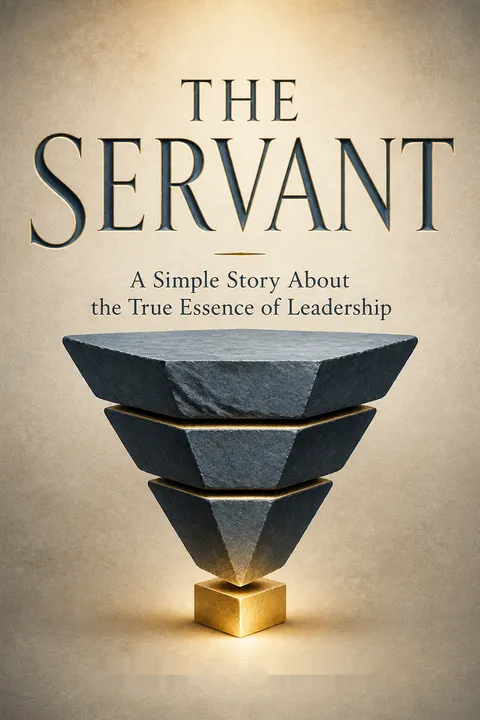
Turn the hierarchy toward the work. Simeon challenges the conventional management pyramid, where executives sit above supervisors and frontline employees. The people closest to customers often do the work that determines whether the service succeeds, yet a top-down culture can teach them to focus on pleasing the boss instead. The proposed alternative is an upside-down pyramid: customers at the point of service, frontline staff supported by supervisors, and senior leaders responsible for enabling the layers below.
Support is not abdication. A supervisor serves employees by removing barriers, providing resources, setting direction, and helping them meet customer needs. The book widens the view beyond customers to employees, owners, and suppliers, arguing that an organization depends on healthy relationships with all four groups. The model asks leaders to treat management less as status and more as responsibility for making good work possible.
This model anticipates modern ideas about frontline empowerment and service operations: decisions should be informed by the people who encounter the problem directly. It can shorten feedback loops and reduce the costly habit of forcing every decision upward. Yet an inverted chart alone changes little. Frontline teams need training, reliable information, and authority within defined limits; otherwise they inherit responsibility without power. Senior leaders still have to allocate resources and resolve conflicts among customers, workers, owners, and suppliers. The useful shift is not that hierarchy disappears, but that hierarchy exists to support value creation rather than its own comfort.
Make love observable through patience, respect, honesty, and follow-through.
Behavior matters more than sentiment. The book uses the Greek term agapé for a deliberate, action-based form of love, rather than a passing feeling or attraction. Simeon applies it to leadership: a person may feel irritated and still choose to listen carefully, speak honestly, or treat someone with dignity. He describes this conduct through patience, kindness, humility, respect, selflessness, forgiveness, honesty, and commitment.
Care includes hard truths. Respect does not require avoiding correction, and forgiveness does not mean pretending a mistake never happened. A leader can state a standard, explain the gap, and hold someone accountable without humiliation or retaliation. The point is not to perform warmth. It is to behave in ways that help people do their work and grow, even when doing so costs the leader time, pride, or convenience.
Separating care from warm feelings is psychologically useful because emotion is variable while chosen conduct can be practiced. It also aligns with the distinction between compassion and indulgence: concern for someone can require a boundary, not just reassurance. The book's language is rooted in Christian teaching, but the behavioral test can be applied in secular settings without requiring religious agreement. One caution is that selflessness can be misread as self-erasure. Sustainable service needs limits, shared responsibility, and protection from exploitation, especially when leaders hold more power than the people they serve.
Pair humane relationships with clear standards, or neither people nor work thrive.
Leadership has two jobs. The retreat repeatedly returns to the balance between accomplishing the task and maintaining the relationship. A leader who focuses only on output may create resentment, turnover, low trust, and poor quality. A leader who focuses only on keeping everyone comfortable may leave problems unresolved and standards unclear. Good leadership pursues results while building relationships that can withstand honest feedback.
Listening is a work skill. John learns that cutting people off signals that their views matter less than his own, even if he privately respects them. Active listening requires setting aside the response forming in one's head and trying to understand the speaker's perspective. The book also stresses specific, sincere recognition and direct feedback. Praise should name the contribution; correction should identify what must change and preserve the person's dignity.
The balance resembles the task-focused and relationship-focused dimensions found in leadership research. Neither dimension reliably replaces the other: trust without competence frustrates teams, while competence without trust makes cooperation brittle. Listening is especially important because leaders often receive filtered information from people who fear consequences. But listening is not the same as agreeing, and praise is not a substitute for fair compensation or good working conditions. Its greatest value is diagnostic: it helps leaders discover whether a performance problem reflects skill, unclear expectations, inadequate resources, or a damaged relationship.
Tend the workplace environment before blaming people for its harvest.
Growth needs conditions. Simeon compares leadership to gardening. A gardener prepares soil, waters, removes weeds, and protects plants, but cannot command a seed to grow. Likewise, a leader cannot directly produce another person's maturity or commitment. The leader can shape the environment through clear expectations, recognition, resources, trust, and consequences, giving people better conditions in which to develop.
Relationships accumulate. The book borrows the idea of a relational bank account: trustworthy actions, kept promises, and attentive listening build credit, while disrespect, broken commitments, and public humiliation spend it. It cites a four-to-one estimate, suggesting that several positive interactions may be needed to offset one negative one. The precise ratio should be treated as an illustration, not a universal law. The practical point is that a leader's repeated small behaviors shape whether people feel safe enough to contribute.
The gardening image shifts attention from blaming individuals to examining systems: incentives, workload, clarity, and the consequences of speaking up. That is a powerful corrective in organizations where managers label people as difficult before checking whether the environment is dysfunctional. The relational-account metaphor also captures why trust can take time to build and little time to damage. Its numerical ratio, however, should not be used as a management formula; reactions vary by context, severity, and history. One public insult may outweigh many routine compliments, so the nature of an interaction matters as much as the count.
Choose your response even when your history and circumstances press hard.
Responsibility means response capacity. The book argues against treating heredity, upbringing, or circumstance as a complete explanation for present behavior. Simeon invokes Viktor Frankl, a psychiatrist imprisoned in Nazi concentration camps, who observed that people facing extreme suffering did not all respond in the same way. The example is used to defend human agency: conditions shape choices, but do not always determine them.
Agency is not blame. John begins to recognize that a union campaign, family conflict, and poor relationships may be signals about his leadership, not merely other people's defects. This does not mean every outcome is a leader's fault. It means leaders can ask what response is available to them instead of waiting for someone else to change first. Even choosing not to act has consequences and is itself a choice.
The emphasis on agency can help people escape the learned helplessness of believing that nothing they do matters. It also makes leadership change possible: a person can take responsibility for conduct without pretending to control every outcome. The necessary nuance is that agency operates inside constraints. Trauma, poverty, discrimination, illness, and organizational power can sharply limit available options. Frankl's example is morally and historically weighty, but extreme suffering should not become a yardstick for judging people in less visible struggles. Responsibility is most constructive when paired with an honest account of what the environment permits.
Turn leadership ideals into habits with feedback, practice, and accountability.
Knowing is only the start. The book describes four stages of skill development: first, a person is unaware and unskilled; then aware but awkward; then increasingly capable with attention; finally skilled enough that the behavior becomes habitual. Leadership traits such as listening, patience, and honest feedback require practice, much like learning an instrument or sport.
Use the Three Fs. Hunter's method begins with Foundation, agreeing on what good leadership requires; Feedback, finding the gaps through self-assessment and other people's observations; and Friction, creating enough accountability to make change consequential. Participants set specific goals and share them with peers. Friction here means healthy pressure, not punishment. The target is continuous improvement rather than perfection: a leader should be able to identify concrete progress, not simply claim good intentions.
This is the book's most operational section. Deliberate practice depends on a clear target, repeated attempts, and useful feedback, and leadership often lacks all three. A 360-degree assessment can reveal blind spots that self-reflection misses, while public commitments can increase follow-through. However, feedback systems are only as sound as their trust and design. Anonymous ratings can reproduce popularity contests, and forced disclosure can become surveillance. Accountability works best when goals are behavior-specific, feedback is confidential where appropriate, and people have time and support to improve.
Choose one concrete act of service, then let purpose grow through practice.
Service offers a return. The book argues that disciplined leadership can bring influence, a sense of mission, spiritual congruence, and joy. Joy is distinct from happiness tied to events; it is described as a deeper satisfaction in living according to principles and contributing to other people. Simeon even admits that serving gives him personal satisfaction, complicating the idea that service must be entirely selfless to count.
John's first step is small. After a week of lessons, he still cannot promise to become a perfect leader. He can choose a different behavior. When his wife arrives, he embraces her and lets go first, something she notices immediately. The ending makes the book's practical claim vivid: change does not begin with a new title or grand declaration. It begins when a person chooses one act that treats someone else as important.
The ending avoids presenting leadership as a technique for extracting loyalty. It frames service as a practice that can give life direction while also benefiting the person who serves. That reciprocal payoff is credible: meaningful contribution often supports a sense of purpose. It is worth resisting, though, the temptation to promise joy as compensation for every sacrifice. Some service is exhausting, invisible, or poorly rewarded. A healthy account of purpose must include limits and collective responsibility, so that the language of calling does not excuse institutions from caring for the people who do the caring.
Analysis
The book's central move is to redefine leadership from a position held to a relationship earned. Its story makes that change concrete by placing John Daily, a technically successful manager whose authority has frayed at home and work, in conversation with Simeon, a former executive who teaches through questions rather than commands. The monastery setting slows the plot enough for John to notice that his failures share a pattern: he has prioritized control and results while neglecting the people whose cooperation those results require.
The argument's strongest feature is its refusal to equate service with permissiveness. Leaders are told to meet legitimate needs, not every want, and to pair respect with standards and accountability. This makes the book more practical than a simple appeal to kindness. Its distinction between coercive power and earned authority also helps explain why formal rank may secure compliance but cannot guarantee commitment, creativity, or trust. The narrative is persuasive as a moral fable, but its examples should not be mistaken for controlled evidence. Historical figures, workplace anecdotes, and John's personal awakening illustrate the thesis; they do not establish that servant leadership alone produces organizational success. The book also places substantial responsibility on individual character. In real institutions, leaders' choices are shaped by staffing, incentives, labor protections, and unequal authority. Service cannot repair every structural failure, and calls for self-sacrifice can be misused when boundaries are absent.
Its most durable contribution is therefore a practice-oriented test, not a universal formula: are people more capable, respected, and able to serve the shared purpose because of this leader's conduct? Answering that requires observable behavior, feedback from those affected, and measurable standards. The story's final gesture matters because it keeps the answer modest. Leadership is not proven by agreement with admirable principles, but by the repeated conduct through which those principles become credible.
Review Summary
The Servant receives mixed reviews, with many praising its accessible approach to servant leadership principles. Readers appreciate the story format and practical lessons on influence, humility, and meeting others' needs. However, some criticize the simplistic writing, stereotypical characters, and overtly Christian themes. Critics also note outdated views on gender and social issues. Despite these flaws, many find the book's core message on leadership through service valuable, particularly for those new to leadership concepts.
People Also Read

Glossary
Servant leadership
Leadership through serviceAn approach to leadership in which influence is built by identifying and meeting the legitimate needs of people entrusted to the leader. It treats service as a responsibility, not submission, and combines care for people with standards, accountability, and attention to the shared purpose.
Power
Coercion through positionThe ability to make someone comply through authority of office, threat, or force, even when that person would prefer not to comply. The book contrasts power with influence earned through personal conduct. Power can secure immediate action, but reliance on it can weaken relationships.
Authority
Influence that earns consentThe capacity to gain willing cooperation through personal influence and character. Unlike formal power, authority is not simply granted by a title. In the book's model, it grows as a leader serves people, acts consistently, and earns trust through behavior.
Agapé
Chosen care expressed in behaviorA Greek term the book uses for deliberate, behavior-based love, distinguished from romantic attraction, family affection, or reciprocal fondness. In leadership, agapé means acting with patience, kindness, respect, honesty, commitment, and concern for others' legitimate needs, even when warm feelings are absent.
Praxis
Behavior shaping feelingThe idea that action can influence thought and emotion as well as follow from them. In the book's account, repeatedly choosing attentive, caring behavior can strengthen positive regard for the person receiving it. The concept explains why waiting to feel kindly before acting kindly can keep change from beginning.
Three Fs
A leadership change processHunter's implementation sequence for developing leadership behavior. Foundation establishes the standards and principles to practice. Feedback identifies the gap between current behavior and those standards, ideally using observations from people affected. Friction adds healthy accountability, such as specific goals shared with peers, to help make change consequential.
Relational bank account
A metaphor for accumulated trustA metaphor for the history of trust between people. Keeping promises, listening, showing respect, and recognizing contributions are treated as deposits; discourtesy, broken commitments, and humiliation are withdrawals. The balance represents accumulated relationship quality, though the book's numerical estimate of how deposits offset withdrawals is illustrative rather than universal.
C.E.O.S.
Four organizational relationshipsAn acronym for Customers, Employees, Owners or stockholders, and Suppliers. The book uses it to emphasize that organizations depend on healthy relationships with all four groups. Leaders must attend to customer needs, employee conditions, fair returns for owners, and sustainable relationships with suppliers.
Four stages of developing new habits or skills
A progression from unawareness to skillThe book's sequence for acquiring a behavior: unconscious and unskilled, when the person does not recognize the skill gap; conscious and unskilled, when the gap is visible but performance is awkward; conscious and skilled, when practice improves performance; and unconscious and skilled, when the behavior has become habitual.
FAQ
What's "The Servant: A Simple Story About the True Essence of Leadership" about?
- Story of Leadership: The book is a narrative about John Daily, a successful businessman who attends a retreat at a monastery to learn about leadership.
- Servant Leadership: It explores the concept of servant leadership, emphasizing that true leadership is about serving others.
- Character Development: Through interactions with a former executive turned monk, John learns about the importance of character in leadership.
- Practical Lessons: The book provides practical lessons on how to apply servant leadership principles in various aspects of life.
Why should I read "The Servant: A Simple Story About the True Essence of Leadership"?
- Unique Perspective: It offers a unique perspective on leadership by framing it as a story, making complex ideas more relatable.
- Timeless Principles: The book discusses timeless principles of leadership that are applicable in both personal and professional settings.
- Character Focus: It emphasizes the importance of character and integrity in effective leadership.
- Practical Application: Readers gain practical insights and actionable steps to implement servant leadership in their own lives.
What are the key takeaways of "The Servant: A Simple Story About the True Essence of Leadership"?
- Leadership as Service: True leadership is about serving others and meeting their legitimate needs.
- Influence Over Power: Leadership is more about influence and authority than power and control.
- Character Traits: Essential leadership traits include patience, kindness, humility, respectfulness, selflessness, forgiveness, honesty, and commitment.
- Continuous Improvement: Leadership requires continuous personal growth and character development.
How does James C. Hunter define leadership in "The Servant"?
- Skill of Influence: Leadership is defined as the skill of influencing people to work enthusiastically toward goals identified as being for the common good.
- Authority vs. Power: Leadership is about building authority through personal influence rather than exerting power.
- Service and Sacrifice: Effective leadership involves serving others and often requires personal sacrifice.
- Character-Based: Leadership is deeply rooted in character and the consistent practice of positive behaviors.
What is the concept of servant leadership as explained in "The Servant"?
- Serving Others: Servant leadership is about identifying and meeting the legitimate needs of others.
- Building Authority: It focuses on building authority through service and sacrifice rather than relying on power.
- Character Development: Servant leaders prioritize character traits such as humility, respect, and selflessness.
- Long-Term Influence: The approach emphasizes long-term influence and relationship building over short-term power.
What are the main character traits emphasized in "The Servant"?
- Patience and Kindness: Leaders should exhibit patience and kindness, showing self-control and giving encouragement.
- Humility and Respectfulness: Being authentic and treating others as important are crucial for effective leadership.
- Selflessness and Forgiveness: Meeting others' needs and giving up resentment are key to building strong relationships.
- Honesty and Commitment: Leaders must be free from deception and stick to their commitments to earn trust and influence.
How does "The Servant" differentiate between power and authority?
- Power Defined: Power is the ability to force or coerce someone to do your will because of your position or might.
- Authority Defined: Authority is the skill of getting people to willingly do your will because of your personal influence.
- Long-Term Impact: Authority is built on service and sacrifice, leading to sustainable influence, unlike power, which can erode relationships.
- Character-Based: Authority is rooted in character and cannot be bought or sold, unlike power.
What role does love play in leadership according to "The Servant"?
- Love as a Verb: Love is defined as a verb, focusing on actions and behaviors rather than feelings.
- Agapé Love: The book emphasizes agapé love, which involves extending oneself for others by meeting their needs.
- Character Traits: Love in leadership is expressed through patience, kindness, humility, and other positive behaviors.
- Foundation of Leadership: Love is the foundation upon which service, sacrifice, and ultimately leadership are built.
What is the leadership model presented in "The Servant"?
- Inverted Pyramid: The model suggests an inverted pyramid where the leader serves those they lead, placing the customer at the top.
- Building Authority: Leadership is built on authority, which is developed through service and sacrifice.
- Character and Will: The model emphasizes the importance of character and the will to align actions with intentions.
- Continuous Growth: Leaders must continuously develop their character traits to effectively serve and influence others.
How does "The Servant" suggest creating a healthy environment for growth?
- Garden Metaphor: The book uses the metaphor of a garden to illustrate the importance of creating a nurturing environment.
- Meeting Needs: Leaders should focus on meeting the legitimate needs of their team to foster growth and productivity.
- Relational Bank Accounts: Building trust and positive relationships is crucial for a healthy environment.
- Legislating Behavior: Leaders can legislate behavior by setting clear expectations and holding people accountable.
What are the stages of developing new habits according to "The Servant"?
- Unconscious and Unskilled: Initially, individuals are unaware and unskilled in the new behavior.
- Conscious and Unskilled: Awareness of the behavior develops, but skills are not yet honed.
- Conscious and Skilled: Individuals become more skilled and comfortable with the new behavior.
- Unconscious and Skilled: The behavior becomes natural and habitual, requiring little conscious effort.
What are the best quotes from "The Servant" and what do they mean?
- "To lead you must serve." This quote encapsulates the essence of servant leadership, emphasizing service as the path to true leadership.
- "Leadership is not about style but about substance." It highlights the importance of character and integrity over superficial traits.
- "Love is as love does." This quote underscores the idea that love in leadership is about actions and behaviors, not just feelings.
- "The only person you can change is yourself." It reminds leaders of the importance of personal responsibility and self-improvement.
About the Author
Other books by James C. Hunter
Download PDF
Download EPUB
.epub digital book format is ideal for reading ebooks on phones, tablets, and e-readers.








