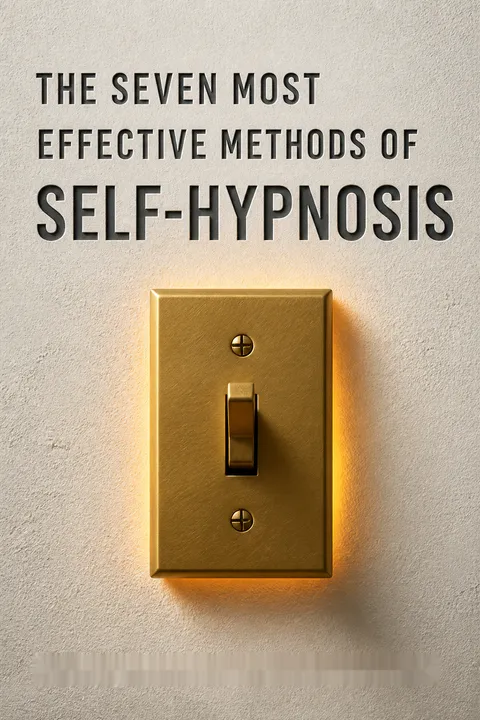


Key Takeaways
Use focused attention to shift into a more useful mental state.
Attention is the mechanism. Nongard presents self-hypnosis not as surrendering control, but as deliberately directing attention toward a helpful state, such as calm, focus, or comfort. People already become absorbed in driving, daydreaming, or a film; the practice is to notice that absorption and guide it toward a chosen purpose. The book reports a study of children ages 6 to 12 with migraines in which the self-hypnosis group reduced headache frequency more than medication and placebo groups. It also describes hypnosis as a possible aid for pain, anxiety, habits, and performance.
Start with a modest aim. Rather than chasing theatrical effects such as forgetting a name, choose a practical target and set aside a few distraction-free minutes to practice. The aim is a useful shift in attention, not a special sensation.
What's striking is the book's demystification of trance: attention is not switched off, it is directed. That framing makes the method more accessible and resembles attentional training used in meditation and pain management, where changing what receives attention can change the felt intensity of an experience. The migraine example is encouraging, but one study cannot establish that self-hypnosis will outperform medication for every child or condition. Readers should treat hypnosis as a skill that may support care, not as proof that serious symptoms can be managed without clinical guidance.
Interrupt the spiral from one setback to a doomed future.
Catch the escalation. Nongard calls a three-part pattern the Depressing Triad: a person first magnifies a setback, then turns it into a verdict about the self, and finally predicts a hopeless future. Running out of morning tea becomes not merely an inconvenience, but supposed evidence of being disorganized and destined to fail. The small event is real; the sweeping conclusions are not established by it.
Replace, do not merely erase. The book's process for dehypnosis is to notice the faulty belief, remove its authority, and substitute a more accurate idea. Reflection, honest feedback from trusted people, and writing down a counterstatement can help. The point is not forced positivity. It is preventing one mistake from becoming a story about permanent personal failure.
This sequence has a close cousin in cognitive behavioral therapy, which distinguishes an event from the interpretation attached to it. That distinction is useful because global self-judgments often make a solvable problem feel like an identity. The book's emphasis on replacement is also practical: a person needs a credible alternative thought, not simply an instruction to stop thinking negatively. The important constraint is accuracy. A counterstatement should acknowledge consequences while resisting exaggeration, rather than recasting every setback as secretly beneficial.
Make your self-suggestions believable, specific, and repeatable.
Repeat an improving direction. Autosuggestion means deliberately giving oneself a suggestion. Nongard introduces the approach through French pharmacist Émile Coué, who encouraged patients to repeat a general message of steady improvement. Coué believed expectation could influence how people responded to treatment. Nongard favors this incremental framing because it asks for progress rather than pretending every problem has vanished.
Personalize the prompt. A useful suggestion names the change that matters, then becomes a repeated reminder. The book proposes adapting the wording to aims such as feeling calmer, improving at golf, or changing eating habits. It suggests saying the phrase aloud and placing it somewhere regularly seen, such as a bathroom mirror. But repetition is not the whole intervention: the intended belief must connect to choices and actions in daily life.
The strength of autosuggestion lies less in magical wording than in rehearsal. Repeated cues can make an intention easier to retrieve when a familiar situation appears, much as a written reminder can interrupt an automatic response. Coué's focus on gradual progress also avoids the brittle promise of instant transformation. Still, affirmations are not equally persuasive to everyone. When a statement feels plainly false, it may provoke resistance; a modest, actionable version is more credible than a sweeping claim of guaranteed success.
Use warmth and heaviness to rehearse a sense of bodily control.
Generate sensations from within. Autogenic Training is a self-hypnosis practice developed by psychiatrist Johannes Schultz and published in 1932. It uses repeated phrases that direct attention toward sensations such as warmth and heaviness in the hands, feet, or limbs, alongside a calm heartbeat or relaxed breathing. The purpose is to notice that attention and suggestion can alter how the body feels.
Practice without forcing. A short version begins with a comfortable seated posture, then focuses on the hands and feet while repeating a simple sensation prompt. The book describes a longer sequence that moves through arms, legs, shoulders, heartbeat, and abdomen. These exercises may help someone feel less helpless during discomfort, but influencing a sensation is not the same as controlling an illness or guaranteeing physical healing.
This method makes the mind-body connection experiential rather than abstract: attention to a body part can alter its perceived warmth, weight, or tension. That is a useful form of embodied learning, especially for people who feel overwhelmed by physical symptoms. The distinction between changing experience and changing disease matters, however. A calmer interpretation of pain can reduce distress without repairing its cause. The technique is best understood as a way to practice bodily awareness and regulation, with medical treatment continuing as needed.
Teach your body relaxation by feeling tension release twice.
Learn the contrast. Progressive Muscle Relaxation Self-Hypnosis, based on physician Edmund Jacobson's work, teaches relaxation by briefly tensing a muscle group and then releasing it. The contrast helps make tension easier to recognize. Nongard begins with a simple example: clench the hands, notice the tightness, release, and attend to the difference. Repeating the sequence can deepen awareness of the relaxed state.
Move through the body. A longer practice can include the forehead, jaw, shoulders, hands, chest, legs, and feet. The book recommends sitting comfortably and working gently, not straining. This gives the practice a practical role when stress has become physical, such as tight shoulders or a clenched jaw. Anyone with an injury or pain in a muscle group should avoid tensing it and choose a safer approach.
The technique relies on contrast, a basic learning principle: a state becomes easier to identify when it is compared with its opposite. That can make relaxation more concrete than simply ordering oneself to calm down. It also trains interoception, the ability to notice internal bodily signals, which can help people catch tension before it becomes overwhelming. The method is not universally comfortable, and the book's sequence should not be treated as a requirement. Gentle awareness matters more than completing every muscle group.
Notice the present without turning each sensation into a prediction.
Separate sensation from forecast. Nongard defines mindfulness as attending to the present without judging each thought or feeling. After foot surgery, he describes immediately projecting that recovery would take longer than expected and worrying about work. Such thoughts may be understandable, but they do not change the present moment. Mindfulness allows a person to notice a thought as a thought instead of treating it as a settled forecast.
Begin with one minute. The book's starter exercise is to focus on breathing for 60 seconds. When attention wanders, notice that it has wandered and return to the breath without scolding oneself. The goal is not to suppress unpleasant realities or stop thoughts altogether. It is to reduce the extra distress created by repeatedly judging, predicting, and rehearsing them.
The useful distinction here is between acceptance and resignation. Observing an anxious thought without obeying it can create room for a deliberate response, a principle shared by mindfulness-based therapies. A brief exercise also lowers the barrier to practice: a minute can be fitted into an ordinary day more easily than an elaborate ritual. Yet present-focused attention should not become avoidance. If a problem requires planning, treatment, or action, noticing it clearly is the beginning of a response, not a substitute for one.
Turn a goal into three rehearsed instructions, then commit.
Make intention behavioral. P.O.W.E.R. Hypnosis is Nongard's structured self-hypnosis routine. In paraphrase, it moves from present-focused attention and willingness, to written suggestions, imaginative exploration, and a final commitment to act. The key is translating a broad desire into a few clear instructions. For greater confidence at work, the book suggests initiating greetings, standing with more open posture, and using a breath to interrupt anxious spirals.
Rehearse the consequences. Write three actions, read them aloud, and imagine what carrying them out would make possible, including obstacles that might interfere. Then affirm the commitment and take a first step outside the exercise. Nongard recommends practicing the routine daily for 21 days. The method is most useful when its suggestions are realistic and tied to behaviors the person can actually choose.
This routine bridges reflective practice and implementation. Behavioral research often finds that intentions are more likely to guide action when they specify what someone will do in a recognizable situation. Written prompts and mental rehearsal can make those choices more available under stress. The book's emphasis on commitment is valuable, but commitment alone cannot remove structural barriers such as illness, lack of time, or limited resources. A sound suggestion identifies both a chosen behavior and any practical condition that needs to change for that behavior to be possible.
Treat mental images as clues to investigate, not commands.
Ask, observe, interpret. Image Streaming is a method for exploring spontaneous mental imagery in response to a question. The practitioner first chooses a problem, relaxes, and describes the images that arise, aloud to a partner or into a recording. Next, the person asks what each image might mean, notices what changes, and looks for recurring themes that may point to a concern or possible solution.
Keep interpretation tentative. Nongard presents the exercise as a route to creativity and self-awareness, not as a test with right answers. For example, a person considering a career change could use a question about the decision, then review the images and descriptions for patterns. The useful outcome is a hypothesis to examine in ordinary life, not an unquestionable message from a hidden authority.
The exercise resembles free association and creative problem solving: loosening deliberate control can reveal connections that focused analysis misses. Speaking images aloud may also make vague impressions easier to inspect. Its main risk is overinterpretation. An image can reflect memory, mood, or randomness, and a compelling metaphor is not evidence that a decision is correct. Treating imagery as material for reflection preserves its creative value while leaving conclusions open to evidence, discussion, and practical testing.
Use a brief cue to enter practice, then carry its skill outward.
Build a repeatable entry. The Light Switch Technique uses a simple physical cue to begin self-hypnosis. In a safe, comfortable position, a person sets a short time limit, raises and lowers an index finger, and closes the eyes as the finger comes to rest. The cue represents entering a focused state. The time limit helps define the exercise, while the practitioner can use the interval for relaxation, a suggestion, or another method in the book.
Practice beyond perfect conditions. Roger Moore recommends learning the basic routine before adding suggestions, then trying it in ordinary settings where distractions may occur. Nongard also cautions that beginners can be held back by impatience, unrealistic expectations, or fear of losing control. The measure of success is not a dramatic trance experience. It is whether practice helps someone respond more usefully in daily life.
A consistent cue can reduce the effort required to begin a routine, much like a familiar start signal in sport or rehearsal. The strongest feature of this approach is its portability: the practice is intended to support ordinary behavior, not just produce a pleasant session in a quiet room. Its simplicity should not be confused with instant change. A cue can help initiate attention, but durable improvement still depends on what the person practices and whether those choices fit the real demands of the situation.
Analysis
The book's most coherent idea is that self-hypnosis is directed attention joined to suggestion and practice. Its seven methods vary in form, but each asks the reader to notice an existing mental or bodily process, guide it, and connect that guidance to a chosen change. This makes the book less a theory of a mysterious trance than a toolkit for self-regulation. Its anecdotes, from childhood migraine treatment to Roger Moore's experience of chronic pain, give the methods human scale, while the exercises make them immediately testable.
The strongest distinction is between changing an experience and changing its cause. Attention may influence perceived pain, anxiety, motivation, or bodily tension. That does not establish that a person can cure a disease, become wealthy through belief, or overcome every obstacle by revising self-talk. At points, the book's language about healing and prosperity outruns the more modest mechanism it explains. Beliefs can shape behavior, but income, health, and performance also depend on opportunity, physiology, training, and material conditions.
A reader can retain the practical core without accepting every claim. Choose a specific problem, select a technique that feels workable, write a realistic suggestion, rehearse it, and observe whether behavior or distress changes. Treat results as feedback rather than proof of a universal law. Self-hypnosis may complement therapy or medical care, especially when it improves relaxation, attention, or coping, but it should not replace needed treatment. The book is most persuasive when it frames change as a learnable skill and least persuasive when it implies that expectation alone can guarantee an outcome.
Review Summary
The SEVEN Most EFFECTIVE Methods of SELF-HYPNOSIS receives mostly positive reviews, with an average rating of 4.17/5. Readers appreciate its practical, actionable techniques and easy-to-understand approach. Many find it helpful for beginners, though some experienced practitioners desire more advanced content. The book is praised for its simplicity and effectiveness, with readers reporting positive results from applying the techniques. Some criticize the frequent references to the author's website and suggest the content could be condensed. Overall, readers find it a valuable introduction to self-hypnosis, encouraging further exploration of the subject.
People Also Read






Glossary
Trance
Focused attentionNongard uses trance to mean a state of selectively directed attention, not unconsciousness or loss of control. Everyday absorption, such as daydreaming or focusing on a task, can be understood this way. Self-hypnosis aims to guide attention toward a more useful state, such as calm, comfort, or concentration.
Dehypnosis
Replacing limiting beliefsDehypnosis is Nongard's term for identifying and loosening beliefs that restrict behavior, then replacing them with more accurate ideas. The process includes recognizing a faulty belief, removing the old interpretation's authority, and installing a realistic alternative. Reflection, feedback, and self-hypnosis are presented as ways to carry out this process.
Autosuggestion
Self-directed suggestionAutosuggestion means deliberately repeating a suggestion to oneself, often as a spoken affirmation. Nongard draws on Émile Coué's approach of emphasizing gradual improvement, then encourages readers to adapt suggestions to particular aims. The book treats repetition as a way to focus attention and reinforce intended behavior, not as a guarantee that words alone produce results.
Autogenic Training
Self-generated bodily sensationsAutogenic Training is a self-hypnosis method associated with psychiatrist Johannes Schultz. Practitioners repeat phrases that direct attention toward sensations such as warmth and heaviness in the limbs, a calm heartbeat, or comfort in the abdomen. The exercise is intended to develop relaxation and awareness of how suggestion can influence bodily experience.
Progressive Muscle Relaxation Self-Hypnosis
Tense and release musclesThis method teaches relaxation by briefly tensing a muscle group, noticing the sensation, and then releasing it. The practitioner works through selected areas of the body, learning to distinguish tension from relaxation. Nongard presents the technique as a way to build bodily awareness and ease stress, with care not to strain painful or injured muscles.
P.O.W.E.R. Hypnosis
Structured suggestion practiceP.O.W.E.R. Hypnosis is Nongard's five-part self-hypnosis routine. It begins with present-focused attention and openness to change, uses written suggestions, invites exploration of their possible outcomes, and concludes by affirming commitment. The method is designed to turn a general goal into a small number of concrete actions that can be rehearsed and practiced.
Image Streaming
Exploring spontaneous imageryImage Streaming is a reflective exercise in which a person focuses on a question, relaxes, and describes the images that arise. The person then asks what the images might mean, observes changes, and looks for recurring themes. Nongard presents the practice as a possible aid to insight and creative problem solving, rather than as a source of certain answers.
Light Switch Technique
Cue-based self-inductionThe Light Switch Technique is a brief self-hypnosis induction associated in the book with Roger Moore and Gerald Kein. A person settles safely, sets a time limit, and uses a simple finger movement as a cue to close the eyes and enter focused practice. The resulting interval can be used for relaxation, suggestions, or another self-hypnosis exercise.
Depressing Triad
Setback to hopeless predictionThe Depressing Triad is Nongard's name for a progression in which a person magnifies a difficult situation, treats it as proof of personal inadequacy, and predicts a hopeless future. The framework shows how a limited problem can become a broader story about the self and what lies ahead. It is used to help identify and challenge escalating self-talk.
FAQ
What's "The SEVEN Most EFFECTIVE Methods of SELF-HYPNOSIS" about?
- Overview: The book by Dr. Richard K. Nongard explores seven self-hypnosis techniques designed to create rapid change in health, wealth, and habits.
- Purpose: It aims to demystify self-hypnosis, making it accessible and practical for anyone looking to improve their life.
- Methods: The book details specific techniques, such as autosuggestion and mindfulness, to help readers harness the power of their subconscious mind.
- Outcome: By mastering these methods, readers can expect to overcome obstacles, enhance creativity, and achieve personal and professional goals.
Why should I read "The SEVEN Most EFFECTIVE Methods of SELF-HYPNOSIS"?
- Expertise: Dr. Richard K. Nongard is a leading expert with over 30 years of experience in hypnosis and therapy.
- Practical Techniques: The book provides step-by-step guides to seven effective self-hypnosis methods, making it easy to follow and apply.
- Proven Benefits: Self-hypnosis is supported by thousands of studies showing its effectiveness in treating medical conditions, changing behaviors, and improving emotional control.
- Personal Growth: It offers tools to help readers make significant and meaningful changes in their lives, from health improvements to financial success.
What are the key takeaways of "The SEVEN Most EFFECTIVE Methods of SELF-HYPNOSIS"?
- Self-Hypnosis is Accessible: The book emphasizes that self-hypnosis is simple enough for anyone, even children, to learn and practice.
- Mind-Body Connection: Techniques like autogenic training demonstrate the mind's ability to influence physical sensations and promote healing.
- Overcoming Limiting Beliefs: The book teaches how to identify and replace limiting beliefs with empowering thoughts through self-hypnosis.
- Diverse Applications: Self-hypnosis can be used for a wide range of issues, including anxiety, weight loss, sports performance, and more.
What are the best quotes from "The SEVEN Most EFFECTIVE Methods of SELF-HYPNOSIS" and what do they mean?
- "Every day, in every way, I'm getting better and better." This quote from Emile Coue highlights the power of positive affirmation in self-hypnosis.
- "Focus equals fuel, and where our attention goes, our energy flows." This emphasizes the importance of selective attention in achieving desired outcomes.
- "The purpose of practicing self-hypnosis is to make life hypnotic." It suggests that the goal is to integrate self-hypnosis into daily life for continuous improvement.
- "You are today where your thoughts have brought you; you will be tomorrow where your thoughts take you." This underscores the impact of mindset on personal success.
How does Dr. Richard K. Nongard define self-hypnosis in the book?
- Natural Phenomenon: Self-hypnosis is described as a natural state of selective attention and trance that everyone experiences daily.
- Resourceful Trance: The book focuses on making trance states resourceful, shifting from unproductive to beneficial states.
- Self-Induction: It involves guiding oneself into a focused state of attention to align thoughts and actions with personal goals.
- Empowerment Tool: Self-hypnosis is a method for taking control of one's mind and body to achieve desired changes.
What is the P.O.W.E.R. Hypnosis technique in "The SEVEN Most EFFECTIVE Methods of SELF-HYPNOSIS"?
- Acronym Meaning: P.O.W.E.R. stands for Present moment, Open Mind, Written Affirmations, Explore, and Ratify.
- Mindfulness Integration: It begins with being present and mindful, setting the stage for effective self-hypnosis.
- Affirmations and Suggestions: The technique involves using written affirmations and direct suggestions to guide personal change.
- Exploration and Commitment: It encourages exploring the implications of suggestions and committing to them for lasting impact.
How does "The SEVEN Most EFFECTIVE Methods of SELF-HYPNOSIS" address limiting beliefs?
- Dehypnosis Concept: The book introduces the idea of dehypnotizing oneself from limiting beliefs that hinder success.
- Three-Step Process: It involves recognizing cognitive errors, removing old ideas, and replacing them with empowering truths.
- Self-Reflection: Techniques like image streaming help uncover subconscious blocks and provide clarity for change.
- Empowerment: By overcoming limiting beliefs, readers can unlock their potential for health, wealth, and personal growth.
What is the role of visualization in "The SEVEN Most EFFECTIVE Methods of SELF-HYPNOSIS"?
- Key Technique: Visualization is a central component of self-hypnosis, used to create mental images that influence physical and emotional states.
- Mind-Body Connection: The book explains how visualizing positive outcomes can activate the body's healing processes.
- Practical Exercises: Readers are guided through visualization exercises to enhance their ability to manifest desired changes.
- Creative Problem-Solving: Visualization is also used to access the subconscious mind's creative resources for solving problems.
How can "The SEVEN Most EFFECTIVE Methods of SELF-HYPNOSIS" help with anxiety and stress?
- Mindfulness Practice: Techniques like mindfulness and progressive muscle relaxation are effective for reducing anxiety and stress.
- Calm and Centered: The book provides affirmations and suggestions to cultivate a state of calm and centeredness.
- Stress Management: Self-hypnosis offers tools to manage stress by shifting focus from anxiety-inducing thoughts to present-moment awareness.
- Empowerment: By practicing self-hypnosis, readers can gain control over their emotional responses and reduce stress levels.
What is the Light Switch Technique in "The SEVEN Most EFFECTIVE Methods of SELF-HYPNOSIS"?
- Instant Induction: The Light Switch Technique is a quick method for entering a deep state of hypnosis by visualizing a light switch turning off.
- Practical Application: It can be used anywhere, even in noisy environments, making it a versatile tool for self-hypnosis.
- Relaxation and Focus: The technique helps achieve relaxation and focus in a short amount of time, enhancing the effectiveness of self-hypnosis.
- Foundation for Other Techniques: It serves as a gateway to other self-hypnosis methods, allowing for deeper exploration and practice.
How does "The SEVEN Most EFFECTIVE Methods of SELF-HYPNOSIS" suggest overcoming fear of hypnosis?
- Demystification: The book clarifies that hypnosis is a natural state of focused attention, not a loss of control or consciousness.
- Empowerment Focus: It emphasizes that self-hypnosis is about taking control of one's mind and body, dispelling fears of external influence.
- Religious Concerns: The book addresses misconceptions about hypnosis being contrary to religious beliefs, highlighting its universal applicability.
- Practical Benefits: By understanding the practical benefits and safety of self-hypnosis, readers can overcome fears and embrace its potential.
What are the practical applications of self-hypnosis according to "The SEVEN Most EFFECTIVE Methods of SELF-HYPNOSIS"?
- Health Improvement: Self-hypnosis can aid in managing medical conditions, reducing pain, and promoting healing.
- Behavioral Change: It is effective for changing habits, such as quitting smoking or losing weight, by aligning actions with goals.
- Emotional Control: Techniques help manage emotions, reduce anxiety, and increase confidence and self-esteem.
- Performance Enhancement: Self-hypnosis can improve sports performance, academic success, and professional achievements.
Download PDF
Download EPUB
.epub digital book format is ideal for reading ebooks on phones, tablets, and e-readers.








