


Plot Summary
Prologue
On New Year’s Eve, 1855, William Covington Hanover follows Ava Oneal through snowy Manhattan, hoping she will lead him to the fortune hidden by the vanished inventors Theresa and Theodore Morningstarr. He pretends to be a gentleman, but Ava recognizes him as a thief and breaks his finger and kneecap when he turns threatening.
She summons nearby police, then enters her home at 354 West 73rd Street with the Morningstarrs’ secrets still hers. The city’s ingenious machines and unfinished treasure hunt have drawn both the curious and the dangerous. Ava can protect herself, but the mystery she guards is only beginning.
The opening makes the city’s history a contest over who gets to tell its story. William sees the Morningstarrs’ mystery as a route to wealth; Ava acts with quick intelligence to keep him from taking what he cannot understand. Her self-possession counters his borrowed gentlemanly image, while the police response hints at how easily power can disguise itself as respectability. Most importantly, the scene anchors the later puzzle in a specific home and a woman whom the historical record has largely overlooked. The treasure hunt begins not as an abstract game, but as something people may exploit or defend.
Thirty Days to Leave
Tess Biedermann has spent the morning worrying that developer Darnell Slant will seize her family’s historic apartment building. Her twin, Theo, dismisses the fear until Slant’s agents, Mr. Stoop and Mr. Pinscher, serve the residents with eviction papers: the city has sold 354 West 73rd Street, and they must leave within thirty days.
Their neighbor Jaime Cruz watches Theo smash his elaborate Lego model in distress as the tenants learn they have few practical ways to fight the sale. Tess, who has always believed the Old York Cipher is real, proposes solving it to uncover its treasure and make the Morningstarr buildings too important to sell. Theo reluctantly joins her, and Jaime agrees because the building is his home, too.
The eviction converts Tess’s habitual anxiety into a concrete problem and gives the mystery an urgent, material purpose. Her fear is not merely a private temperament: she has correctly recognized how vulnerable a rent-controlled home can be when property changes hands. Theo’s shattered model registers a different response, grief expressed through destruction after his usual precision fails him. Jaime’s choice to join them makes the quest communal from its first step. The children are not chasing a puzzle for prestige; they are trying to protect neighbors whose lives cannot be replaced by a new address or a payment from Slant.
A Letter From the Fire
While collecting mail for her grandfather Ben, Tess’s cat Nine carries off an old, gold-sealed envelope marked with a warning to trust no one. Jaime finds it in the hallway and opens it with Tess and Theo at the Liberty Statue.
The letter, apparently written by Theresa Morningstarr to her twin, recalls a stolen letter, a gathering at the Tredwell home, and an effort to enlighten people who need it. Its references suggest the Morningstarrs may have planted a second trail beside the famous Cipher.
At the Merchant’s House Museum, the children search for a clue among the lamps and candlesticks, then realize the servants’ attic is the place where people once lit the house. Tess rubs writing from beneath its heating stove, uncovering a verse that points toward George Washington.
The letter changes the children’s method: they must treat overlooked documents and ordinary objects as evidence, not rely only on the public sequence of Cipher clues. Its damaged, indirect form also makes trust a practical question, since even its authorship cannot yet be proved. The Tredwell House clue shifts attention away from the wealthy family’s elegant rooms toward the servants who made those rooms livable. Tess’s discovery depends on interpreting a pun through labor and architecture. The past becomes legible not because its grand figures left perfect records, but because someone notices what the official tour treats as incidental.
Washington’s Missing Seat
The verse names Watertown, Cambridge, and Washington, and the children connect it to Revolutionary War spy Nathan Hale. At the Old York Puzzler and Cipherist Society, Tess’s uncle Edgar Wellington and the other archivists explain the overlooked history of Washington’s inaugural chair.
Jaime spots that the clue may mean a literal seat, so the trio visits the New-York Historical Society. The chair offers no answer, but a portrait of William Waddell, the man who rescued it from obscurity, is temporarily in the restoration rooms.
The children sneak in during a museum commotion and use a mild chemical solution to reveal invisible writing on a paper painted into Waddell’s pocket. It names the Other Hamilton and says that person can show them the shape of things.
The clue sends the children through several forms of institutional memory: a spy’s verse, a cipher society’s archive, a museum object, and finally a portrait under restoration. The chair matters less as a relic of presidential power than as an object someone once chose to preserve. Jaime’s attention to the small painted paper exposes a message hidden in plain sight, echoing the original Cipher’s logic. Their trespass is risky but not aimless; it follows a developing practice of asking who saved an object, who is absent from its official story, and what a picture might conceal beneath its visible surface.
Eliza’s Octagon
The children first search Alexander Hamilton’s grave, then notice that the neglected marker of his wife, Eliza, bears a small octagon. A phone search connects it to the Octagon on Roosevelt Island, once the entrance to New York City’s asylum. There, a sympathetic employee named Apricot lets them inspect stored papers and discarded objects.
Theo finds a copy of Penelope, the same novel Ava Oneal was reading when she confronted William Hanover in 1855. On its page, a message written in what may be blood says Ava is going home to find her heart; Morningstarr seals border the words. The children recognize Ava as the twins’ elusive companion and understand that the next clue may be waiting in the building she called home: their own.
Eliza’s grave makes remembrance itself part of the puzzle. The children move past the famous Hamilton monument to notice the woman whose work for orphans and whose efforts to preserve her husband’s legacy received less public attention. The Octagon then complicates the language of care: it is presented as a retreat, though its history includes confinement and abuse. Ava’s blood-marked message makes the historical cost personal, linking the cipher’s hidden route to a woman punished for defending herself. The clue does not simply reveal where to search next; it asks the children to reconsider which people institutions have misnamed, confined, or forgotten.
The Building’s Hidden Alphabet
Ava’s message sends the trio back to 354 West 73rd Street, where Stoop and Pinscher have begun removing tiles and fixtures. Tess notices a Morningstarr seal concealed in a window molding, and Jaime compares its position with similar seals in other apartments. Using Mima Cruz’s knowledge of the building and a cipher pattern they saw in the archives, the children map the seals to letters.
The letters are not a word but names of Underway routes. The coinlike seals are tokens, and the Guildmen who operate the trains may know how to read the next part. Meanwhile, little Cricket Moran secretly watches Slant’s agents and their strange leathery creature, recording what they take from the building.
The building becomes an archive whose evidence is distributed among tenants rather than stored in a single institution. Mima’s practical knowledge is as crucial as Theo’s cryptographic precision and Jaime’s visual memory, so the solution emerges from different kinds of expertise. The seals also make the children’s home more than a backdrop: its hidden design has survived beneath paint and routine maintenance. Cricket’s surveillance introduces another child who understands that adults with power may be watched in return. Her private observations prepare the story’s later payoff while showing that attention, not age or official authority, can make someone useful.
The Runaway Underway
Following the route tokens, Tess, Theo, and Jaime ride line after line and offer one to each Guildman. The operators answer only that their journey continues, while the trains grow faster and more violent.
On the final line, a Guildman leaves his booth and tells them to read a map by looking into the lights, then jumps from the moving car. With the brakes disabled, the children climb onto the train roof to escape. Tess catches Theo and Jaime when each slips over an edge, and the train finally stops near an unfinished platform high above the city.
There, the floor-cleaning caterpillar swells, bursts into sparks, and becomes a huge metal moth that flies toward Manhattan. The children descend the precarious stairs and evade police questioning with a cover story.
The route puzzle turns knowledge into physical danger: the Guildmen do not simply guard information, they control the machinery that carries the children. Tess’s anxious imagination becomes useful under pressure, but so do Theo’s quick decisions and Jaime’s willingness to follow when the plan stops making sense. Her grip on both boys reverses the twins’ usual contest over who is more capable. The caterpillar’s transformation breaks Theo’s assumption that Morningstarr inventions are merely machines. Its flight offers no explanation, only a new problem. The adventure’s threshold is crossed when the children realize the Cipher’s mechanisms may act on their own terms.
A Map Made of Lights
After Jaime sees reports of a mysterious metal creature tampering with the city’s power, he suspects the altered lights form the map the Guildman described. Edgar lends the children the Cipher Society’s solarship, and they photograph Manhattan from above.
Overlaying the lights on an old map does not reveal a city landmark; Theo recognizes that the lights may represent stars at a particular moment. The computer identifies December 3, 1844, in Brooklyn, the opening date of the long-buried Atlantic Avenue Tunnel.
As the children research the tunnel, they visit Grandpa Ben, who struggles to recognize them but tells Tess she already has what she needs. An aide reveals that Ben mailed the mysterious letter to himself. Back home, the children find Stoop scanning the building for hidden objects.
This discovery links technological spectacle to historical time. The city’s lights first look like a damaged system, then become a star map whose meaning depends on date and viewpoint. Jaime’s artistic habit of seeing patterns and Theo’s technical reasoning converge, while Tess keeps the search tied to the stakes at home. Grandpa Ben’s fragmented memory makes inheritance painful: he can offer a clue without being able to explain it fully. The revelation that he mailed the letter himself deepens the mystery rather than resolving it. Knowledge has been passed forward through care, but the people who carried it cannot always control how it will be understood.
The Cipherist’s Betrayal
Edgar takes the children into the Atlantic Avenue Tunnel after midnight, where they find a silver suitcase hidden behind a wall. When it will not open, he admits he wants the Cipher’s treasure and plans to leave them trapped while he searches Grandpa Ben’s belongings for a key.
The tunnel shudders as a massive, saw-toothed digging machine bursts through the wall. Jaime and Theo carry an unconscious Tess into a side chamber as the creature pursues Edgar. Rollers later carry Edgar away, leaving his fate uncertain.
The children struggle toward the street through cracking stone and falling debris. Cipherist Delancey DeBrule and Priya Sharma arrive after a talking mynah bird alerted them, and they pull the children to safety just before the street collapses.
Edgar’s betrayal exposes how a shared intellectual pursuit can become possessive when the seeker believes the prize will justify any cost. His conviction that the Cipher must have a final treasure resembles Slant’s faith in acquisition, even though the two men pursue different forms of power. The digging machine makes the city’s hidden past physically unstable, while the Rollers’ quiet removal of Edgar refuses the children a clear account of justice or death. Priya and Delancey’s rescue matters because they act without demanding certainty first. The children survive through cooperation, yet their trust in adults and in the orderly rules of the Cipher has been badly shaken.
The Dragon Key
As the residents finish moving out, Cricket tells Tess that she found her heart-shaped necklace inside the building’s supposedly broken dumbwaiter. Its charm fits the lock on the suitcase. Inside, the children find a dragon-headed cane and instructions to take a coded elevator to a clock.
The elevator reveals a hidden apartment within 354 West 73rd Street, filled with books and objects belonging to Ava Oneal. When Jaime places the cane in the clock, metal moths pour out.
In the lobby, Stoop and Pinscher demand the dragon and release their faceless creature, but Nine kills it. The moth swarm drives the agents into the dumbwaiter, then bursts through the building’s windows. Explosives detonate, and the building collapses inward before the children can stop it.
The key arrives through a child the adults have repeatedly treated as eccentric background. Cricket’s willingness to give away a necklace she treasures is an act of agency, not compliance, and it allows the children to reach Ava’s concealed rooms. Yet the discovery exacts a cost: the clock triggers forces they cannot control, and the home they hoped to save is destroyed. The novel refuses the fantasy that deciphering history guarantees mastery over it. Nine’s defense of the children and the moths’ violence also blur the boundary between helpful invention and threat. Their victory over the agents cannot undo the disaster they helped initiate.
The Door in Shadow
After the collapse, the moonlight reveals a door-shaped shadow on the neighboring wall, visible only because their building is gone. The families scatter to new homes, while the news reports that Stoop and Pinscher were found wandering with no memory and that Edgar has reappeared in Miami without his recent memories.
Slant calls the destruction a planned demolition and promises to rebuild, insisting that people, not buildings, are the city’s treasure. Weeks later, Jaime returns from Hoboken to meet Tess and Theo at the cleared site.
The three friends slip through a gap in the fence and find the hidden doorway beneath a pattern of three pyramids. They fit the dragon handle into the wall and turn it together. The door opens, beginning another unexplained passage.
The aftermath separates the children from the building without dissolving their bond. Slant’s public claim that people matter more than structures is self-serving, but it echoes the story’s deeper question about whether a city belongs to its residents or to whoever can buy and rebuild it. Jaime’s return from Hoboken makes the final discovery an act of chosen loyalty rather than proximity. The door does not restore the lost home or reveal a neat reward. Instead, the friends accept that they must continue without knowing what waits beyond it. Their shared decision turns the open ending into a measure of trust rebuilt after betrayal and loss.
Epilogue
In 1861, Ava Oneal asks Charles L. Reason, a teacher and poet, to carry a letter through his family so it may reach people in the distant future. She gives him the dragon-headed walking stick the Morningstarrs once entrusted to him, explaining that it has another purpose. Reason accepts the task, though Ava cannot tell him everything.
As he leaves her Manhattan home, rumors and strange sounds gather in the dark streets. The Civil War is approaching, but Reason senses another danger as well. The letter, cane, and warning show that the children’s discovery belongs to a much longer history, one Ava has tried to guide without controlling.
The closing movement reaches backward in time after the children have opened the hidden door, widening the story rather than supplying a tidy explanation. Ava’s effort to send a letter through generations mirrors Grandpa Ben’s role as an imperfect custodian of knowledge. She can arrange for the message to travel, but she cannot choose who will receive it or what dangers will surround them. Charles Reason’s identity as teacher, poet, and public-minded intellectual also resists the idea that a person has only one function. The approaching threat suggests the Cipher is not simply a treasure hunt; it is a relay of responsibility across lives and historical upheaval.
Analysis
The novel treats a city as an argument about ownership. Slant’s version of progress measures value through redevelopment, while Tess, Theo, Jaime, Mima, and their neighbors understand the building through work, memory, and daily dependence. The eviction therefore gives the Cipher an ethical test: can a puzzle meant to preserve history protect the people who are living inside that history now?
The children’s method is collaborative because none of them possesses the whole kind of intelligence the search requires. Tess notices threats and refuses to abandon the question; Theo supplies structure and technical reasoning; Jaime reads images and details; Cricket watches adults who underestimate her; Mima contributes the practical knowledge of a building she has maintained. Their different forms of attention challenge the authority of institutions that have overlooked servants, women, Black people, immigrants, and poor residents.
The story also refuses to make discovery equal mastery. The children solve clue after clue, yet the machines behave beyond their understanding, Edgar’s pursuit of the treasure harms the people he claims to help, and the clock’s activation destroys the home they hoped to save. The Cipher may guide its solvers, but it does not spare them consequences. That tension complicates Grandpa Ben’s idea that a puzzle can be its own reward: process matters, but so do the lives caught up in it.
In the end, the lost building cannot be restored by friendship, courage, or cleverness. What the children preserve is their capacity to choose one another and continue asking who has been erased from the city’s story. The final door offers no compensation for the damage; it asks them to carry that unresolved responsibility forward.
People Also Read
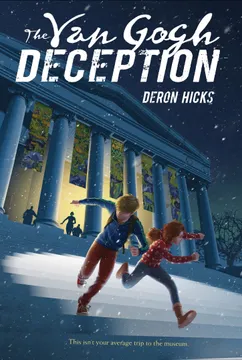
Characters
Tess Biedermann
The anxious pattern-finderTess is a sharp-eyed, outspoken girl who imagines disasters faster than her family can reassure her. Her anxiety is both a burden and a form of attention: she notices Slant’s threat to the building before others take it seriously, and she keeps asking what overlooked details might mean. She loves the Morningstarr home as a living archive of family memory, not just a place to sleep. Her close bond with twin Theo includes constant teasing and a deep understanding of his habits. Tess’s courage does not erase her fear; she acts while frightened, and learns that responsibility means facing consequences as well as pursuing what she believes is right.
Theo Biedermann
The exacting builderTheo is Tess’s twin, a gifted builder whose love of precision extends from Lego models to historical details and cryptography. He often appears calm because he tries to reason through every possibility, but the threat to his home exposes how much he depends on order. Grandpa Ben’s lessons and affection shape his thinking, especially his awareness that a puzzle may matter for its process as much as its answer. Theo’s skepticism protects him from easy conclusions, yet the impossible behavior of the Morningstarr machines forces him to revise what he considers real. His humor and occasional rigidity sit beside genuine loyalty to Tess and their new friend Jaime.
Jaime Cruz
The artist who noticesJaime is a thoughtful young artist and comic-book devotee who lives in the same building as the Biedermanns. He remembers images with unusual precision, sketches people and objects quickly, and often sees a pattern before he can explain it. His father’s work overseas and his mother’s death have left him alert to the ways people leave, even when they believe they are doing what is best. Jaime is raised by his practical, loving grandmother, Mima, and feels strongly attached to the building where his family’s photographs and memories gather. Joining Tess and Theo gives his imagination a public purpose and turns friendship into a shared act of protection.
Ava Oneal
The guarded Morningstarr heirAva is the Morningstarr twins’ trusted companion, a brilliant and self-possessed woman whose history is difficult to trace. She has worked among vulnerable people and refuses to accept the social rules that make women, servants, and Black New Yorkers easy to dismiss. Her reading, physical confidence, and sharp judgment make her difficult to deceive. Ava’s relationship with Theresa and Theodore is intimate but not easily reduced to employee or dependent; she is their confidante and has a life and purpose of her own. Her presence in the story connects the nineteenth-century puzzle to the children’s home while raising questions about whose actions survive in the historical record.
Theresa Morningstarr
The inventive co-creatorTheresa is one of the twin inventors who reshaped New York with unusual buildings, machines, and the Old York Cipher. Her surviving letter suggests political concern, a dry sense of humor, and unease about whether she and her brother are doing enough. She trusts Ava and treats her as family. Though the city remembers Theresa as a genius, the clues reveal someone attentive to overlooked labor and unsure whether her choices will help the people they affect.
Theodore Morningstarr
The inventive co-creatorTheodore is Theresa’s twin and partner in designing the city’s remarkable architecture and machinery. The public often credits him more readily than his sister, an assumption the story exposes as part of its wider concern with who gets recognized. His shared work with Theresa and their trust in Ava anchor the Cipher’s origins. The Morningstarrs’ inventions are ingenious, but their choices leave later generations to interpret the risks and consequences.
Darnell Slant
The developer of progressSlant is a wealthy developer who presents demolition as necessary modernization. He speaks fluently about the city’s future but treats existing homes and their residents as obstacles to redevelopment. His influence comes not only from money, but from his ability to make private profit sound like a civic ideal. Slant serves as a foil to the children: he sees the city as something to acquire and remake, while they understand it through relationships, memory, and shared use.
Cricket Moran
The incognito neighborhood spySix-year-old Cricket invents elaborate identities, dresses to match her moods, and resists the rules adults impose on little girls. Her bluntness can unsettle her exhausted parents, but it also helps her detect when grown-ups are lying. Cricket secretly watches Slant’s agents and records their activity, becoming more observant than they realize. Her attachment to a heart-shaped necklace shows how strongly she values what she considers hers, while her decisions reveal a surprising capacity for generosity and practical courage.
Nine
The formidable house catNine is Tess’s large hybrid cat and registered therapy animal, with the size and instincts to make strangers wary. She comforts Tess when anxiety takes over, retrieves objects others overlook, and reacts to dangers before the children understand them. Her loyalty is physical and unmistakable: she stays close, guards her people, and will confront a threat far larger than an ordinary house cat would. Nine’s presence gives the children both companionship and an unexpected defense.
Mima Cruz
The practical building keeperJaime’s grandmother Estefanía Cruz, whom he calls Mima, manages 354 West 73rd Street and can repair nearly anything in it. She is multilingual, direct, and deeply attached to the building she has maintained for decades. Her practical knowledge helps the children understand the Morningstarr seals, while her caution reflects experience with how quickly a home can be taken away. Mima loves Jaime fiercely, but she also wants him to have security and a future, putting her affection in tension with his wish to remain in New York.
Edgar Wellington
The Cipher Society mentorEdgar is a longtime friend of Grandpa Ben and a prominent member of the Old York Puzzler and Cipherist Society. Warm and energetic, he welcomes the children into the archives and offers access to knowledge and equipment they could not obtain alone. His lifelong fascination with the Cipher gives him an intimate understanding of the Society’s history. He embodies the appeal of expertise and mentorship, while his certainty about the value of the search can make him difficult to read.
Delancey DeBrule
The skeptical cipheristDelancey is a reserved member of the Cipher Society who initially keeps the children at a distance. Her blunt manner can seem dismissive, but she is attentive to the Society’s people and willing to act when they are in danger. She is also a doctor, combining analytical discipline with a practical concern for health. Delancey’s guardedness makes her a useful counterpoint to the Society members who greet everyone with easy warmth.
Priya Sharma
The Society’s steady allyPriya is a Cipher Society member and friend of Grandpa Ben. She is observant, composed, and willing to help the children without insisting that they accept her version of events. Her friendship with Ben gives her a personal stake in protecting his grandchildren, while her caution reflects the risks of handling a mystery that has become dangerous. Priya’s steadiness helps the children navigate the aftermath of betrayal and loss.
Mr. Stoop and Mr. Pinscher
Slant’s unsettling agentsStoop and Pinscher are Slant’s unnerving representatives, dispatched to deliver eviction notices and strip distinctive pieces from the Morningstarr building. Their mismatched heights, flat manners, and unsettling humor make them hard to forget. They treat residents and the building’s history as things to be handled or removed. Their work gives the children a visible face for the pressure Slant’s money exerts on people with fewer choices.
Mrs. Biedermann
The detective and motherTess and Theo’s mother is a New York City detective, accustomed to confronting immediate crimes rather than an old, sprawling mystery. She loves her children but must manage their safety alongside the family’s eviction and the work of finding somewhere else to live. Her skepticism about the Cipher grows from practical concern, not lack of affection. She represents the adult responsibility of dealing with consequences that cannot be postponed for a puzzle.
Mr. Biedermann
The family’s gentle anchorTess and Theo’s father is a school counselor whose humor and patience soften the family’s sharper edges. He understands Tess’s tendency to imagine worst-case outcomes, even when he cannot make the danger disappear. As the move approaches, he tries to help his children understand that family can remain a source of home even when a particular building is lost.
Aunt Esther
The resourceful adventurerAunt Esther is an eccentric relative whose past includes an improbable range of jobs and skills. She offers practical help when the Biedermanns must move and treats the children’s worries with both affection and candor. Her readiness to make room for the family shows how support can come from people who do not fit conventional ideas of stability.
Charles L. Reason
The future letter keeperCharles Reason is a teacher, mathematician, and poet living in New York in 1861. He is thoughtful about education and the nation’s approaching crisis, and he accepts a difficult favor from Ava despite not understanding its full purpose. His many roles reflect the book’s interest in people who cannot be summarized by a single label.
Plot Devices
The Old York Cipher
The citywide puzzleThe Morningstarrs’ treasure hunt begins with a book cipher based on an Edgar Allan Poe story and sends generations of solvers through New York landmarks. Its familiar trail gives the children a method and a public history, while the second branch of clues redirects them toward overlooked people and objects. The Cipher drives the plot, but it also keeps testing whether its solvers value the answer more than the people affected by their search.
The Morningstarr Machines
The city’s living infrastructureSolar glass, Lion batteries, mechanical Rollers, the Underway, and other inventions make the Morningstarr city function in ways that seem both practical and magical. The children initially treat the machines as tools, but their strange movements and transformations undermine that certainty. The machines connect clues across the city, create physical danger, and raise the possibility that the inventors built something more responsive than their successors understand.
The Morningstarr Seals
A building-sized cipher keySmall star-and-sun emblems hidden in window moldings appear decorative until Tess and Jaime chart their positions across apartments. Reading their arrangement through a cipher pattern produces Underway route letters, and the seals themselves resemble the tokens the children need. The device turns the building’s architecture into a message and depends on residents’ accumulated knowledge of a place that outsiders see only as real estate.
Ava’s Letter and Cane
A clue passed through timeA damaged letter sent to Grandpa Ben opens a hidden branch of the Cipher and points the children toward Ava Oneal. Her marked copy of Penelope, the heart-shaped necklace, and the dragon-headed cane each provide another step toward her concealed rooms. These objects move through the story as evidence and inheritance, linking Ava’s choices to the children’s search. The cane also carries a warning that discovery may demand a cost its young finders cannot foresee.
The Shadow Door
The next thresholdAfter 354 West 73rd Street collapses, moonlight and a water tower cast a door-shaped shadow on the neighboring wall. The shape is tied to a pattern of three pyramids and can be opened with the dragon handle from the cane. It appears only after the loss of the building makes it visible, turning destruction into access without pretending that the destruction is harmless. The book ends as the children cross into an unknown space.
Download PDF
Download EPUB
.epub digital book format is ideal for reading ebooks on phones, tablets, and e-readers.








