

Plot Summary
Prologue
At night, an elderly man follows whispering through a hidden passage beneath Plas Helyg, the Welsh estate where he lives. He finds an ancient cavern lit by candles, but the scene cuts away before he can learn what waits there.
The passage, the sulphur in the air, and the unnatural voices establish a question the story will circle from different sides: whether the darkness beneath the house is only a place, or something its occupants have summoned.
The opening gives the supernatural its first foothold before the novel introduces Henry’s scientific habits. Yet the old man’s journey is not explained at once, so dread arrives ahead of certainty. The passage beneath a stately house also makes the estate’s buried history physical: its secrets are not merely family stories but rooms one can enter, and perhaps fail to leave. Sulphur and whispers invite a demonic reading, while the old man’s unfinished discovery leaves room for the reader to question what is real, what is believed, and what belief can make people do.
Henry's Welsh Exile
After a prominent patient dies during Henry Talbot’s operation at Guy’s Hospital, London’s medical establishment turns against him and other appointments vanish. A letter from Lord Tresilian offers him work as physician to the isolated Welsh village of Penhelyg, and Henry accepts because he has run out of alternatives.
The journey carries him from familiar streets into a place where he cannot easily understand the language or customs. At Plas Helyg, Julian Tresilian welcomes him, explains that he must attend to Lady Gwen, who is considered mad, and urges him to watch her daughter, Linette. Henry expects a rural medical post. He does not yet know that Julian has concealed why he was chosen.
Henry arrives already carrying a professional wound: his mistake has become a public verdict on his worth. That makes the Welsh appointment both refuge and humiliation, a chance to practise medicine and a reminder that he has lost control of his own future. Julian’s welcome seems to offer stability, but his instructions turn Henry’s medical role into a surveillance role. The novel therefore begins by making care ethically uncertain. Henry wants to diagnose illness, yet his employer has framed two women as problems to be managed before Henry has met either of them.
The Gatehouse in Ruins
Linette Tresilian, Plas Helyg’s independent young mistress, returns from helping a sick tenant to announce that the gatehouse prepared for Henry has been wrecked. With the house uninhabitable, Henry must stay at the mansion, where Linette’s blunt manner and men’s clothes unsettle the expectations Julian has planted in him.
The next morning Henry inspects the damage: furniture is broken, books scattered, windows smashed from inside. Linette tells him that the former physician, Wynn Evans, died suddenly despite seeming robust. Searching the wreckage, Henry finds a tiny grey vial hidden under a cabinet and keeps it. The ruined house now links the attack on his welcome to the unexplained death of the doctor he replaced.
The vandalism turns Henry’s supposedly secure appointment into an active threat, but it also complicates Linette’s position. She is responsible for the estate and has spent money preparing a home for him, yet she cannot protect it or explain who destroyed it. Henry responds by treating the wreckage as evidence, not merely an insult. His clinical eye converts domestic disorder into a possible case. Linette’s unvarnished manner, meanwhile, counters Julian’s description of her as unstable: her anger has a clear object, and her account of the estate’s needs is grounded in practical responsibility.
A Bullet in the Woods
Linette brings Henry to Tomas Morgan, a young fisherman whose fever and painful breathing have worsened despite rest and herbal remedies. Henry suspects pleurisy and recommends draining fluid from Tomas’s chest, but the frightened family refuses the incision. He instead gives practical instructions that help Tomas begin to recover. On the ride back, a shot strikes a tree at Henry’s head height.
He removes a flattened bullet and concludes the shooter fired at close range. Linette insists no villager would deliberately harm him, although the welcome he has received suggests otherwise. Henry has arrived less than a day earlier, yet someone has already tried to drive him away, and Linette’s denial leaves him more suspicious of what she knows.
The visit to Tomas lets Henry demonstrate what he can offer: close observation, diagnosis, and a willingness to explain treatment rather than impose it. But the family’s refusal also shows that expertise alone cannot create trust. The gunshot sharpens that problem into danger. Linette’s loyalty to her tenants is both a moral strength and a potential blind spot; she would rather protect their reputation than accept that one of them might be threatening Henry. He, in turn, reads their fear as hostility. Both are interpreting the same silence through the injuries they already carry.
A Village Holds Its Ground
Henry tries to visit the villagers alone, using his Welsh dictionary, and most doors close against him. The Reverend Owain Dee offers a rare friendly welcome and hints that Penhelyg’s distrust has a long history. Henry also meets Rowena Carew, a herbalist whose skill and candour challenge his easy dismissal of traditional remedies.
On the road back, Cai Jones and other boys block Henry’s path and frighten his horse; Cai’s limp reflects a mining accident that killed his brother. Linette later explains that English landowners neglected tenants and that her grandfather’s gatherings ended with a village woman dead. The hostility is not simple prejudice: it is inherited memory attached to land, injury, and impunity.
The village’s resistance becomes intelligible once its history is named. Englishness in Penhelyg is not an abstract identity but a reminder of landlords who extracted wealth, abandoned tenants, and escaped consequences. Henry initially experiences rejection as a judgment on his individual character, while Linette sees the community as family and resists indicting it. Rowena and Dee provide alternative forms of contact: one through practical healing, the other through patient listening. Their presence suggests that trust will require Henry to learn the local language and history, not merely prove that his medical methods work.
The Poisoned Predecessor
At Criccieth, Henry questions Dr Beddoe, the wealthy physician who treated Penhelyg before him. Beddoe calls Wynn Evans’s death natural, dismisses the need for an examination, and resists sharing details. Henry also notices a signet ring bearing the same strange mark as Julian’s. Rowena tests the residue in Henry’s vial and identifies a potent tincture of deadly nightshade.
Mrs Evans, Wynn’s sister and Plas Helyg’s housekeeper, recalls his terrified expression when he died. Henry now has reason to suspect murder, though no proof identifies the killer. The matching rings and the bespoke bottle point beyond a private medical rivalry toward a network with money, influence, and an interest in keeping its secrets buried.
The mystery gains force because the evidence is material and contradictory. Beddoe invokes professional certainty while refusing the ordinary procedures that might verify it; Rowena uses embodied botanical knowledge to identify what his authority has obscured. Henry’s suspicion is not yet proof, but it is no longer only instinct. The matching marks suggest that private status may conceal a shared allegiance. This section also unsettles the novel’s hierarchy of knowledge: Henry’s surgical training, Rowena’s herbal expertise, and Mrs Evans’s intimate memory each reveal a different piece of the death.
The Mine's Red Lights
Linette takes Henry to the copper mine, where Lord Pennant and the land agent Matthew Lambeth press plans to expand the workings in search of greater riches. Henry sees children and men laboring in unsafe, cramped tunnels, while Linette challenges the owners’ indifference to injuries and deaths. In a sealed cavern, Henry glimpses three unusual lights, two red and one blue, but accepts no explanation for them.
Later, he and Linette learn from the vicar that Beddoe and other local elites belong to a private society connected to Julian’s occult books. Henry also discovers bottles beneath Gwen’s bed and realizes her dilated pupils may signal drugging. Before he can make sense of the evidence, the mine becomes the site of disaster.
The mine concentrates the novel’s economic and supernatural conflicts in one place. Pennant and Lambeth speak of expansion as investment, while Henry sees the bodies and hazards that make such profit possible. Linette’s objections arise from direct responsibility for the workers, not an abstract dislike of industry. The colored lights complicate Henry’s confidence in rational explanation, but the more immediate hidden danger is human: a secret society has access to power, and Gwen’s condition may be manufactured. The section places occult ambition beside material exploitation, suggesting that the language of magic can serve the same appetite as the language of business.
The Mountain Gives Way
After gunpowder set for new workings triggers a collapse, seventeen miners are initially unaccounted for. Henry treats the injured above ground while Linette organizes food, shelter, and worried families. When Rhodri Jones is brought out with a fractured skull and pressure building on his brain, his son Cai first tries to keep Henry away.
Linette and Rowena persuade Cai to let the doctor attempt trephination. Henry drills into Rhodri’s skull, releases the blood, and sees him stir. The rescue work earns Henry a measure of trust, but the recovered bodies include three miners killed in the deeper caverns. The loss confirms that the mine’s dangers are not theoretical, and Henry remembers the two red lights and one blue.
The emergency transforms Henry’s standing because his competence becomes visible in a form the community can judge directly. Cai’s change from resistance to cooperation is especially important: trust is not granted by status but earned through action under pressure. Linette’s labor is equally essential, coordinating the human consequences while Henry works on bodies. Yet the successful operation cannot redeem the mine’s management or undo the deaths. The three bodies also turn Henry’s earlier vision into an omen in retrospect, without requiring the story to settle whether it was supernatural or coincidence.
Gwen's Uninvited Return
Despite the recent deaths, Julian insists on holding a formal dinner to welcome Henry, gathering Pennant, the Selwyns, Lambeth, and Beddoe. The guests mock local beliefs and belittle Rowena’s herbal practice. Gwen, usually kept upstairs, wanders into the dining room in a confused state and touches the guests’ chairs and jewels as if recalling an earlier life among them.
Rather than help her, several guests encourage the spectacle. When Henry and Linette try to return Gwen to her room, she sobs and strikes Linette before fainting. The scene exposes the cruelty beneath the guests’ polished manners. Henry’s concern deepens, and Linette sees how little protection her mother receives from the people who claim to care about her.
The dinner makes social performance itself a form of violence. The guests can speak of propriety and healing while using Gwen’s confusion for amusement, revealing that their refinement protects power rather than vulnerability. Gwen’s gestures toward jewels and familiar faces suggest a history she cannot articulate, while her daughter is left to manage the consequences in public. Henry’s medical role shifts again: he must assess not only symptoms but the conditions that produce them. Linette’s anger at the guests is also a recognition that family rank has never guaranteed genuine care.
The Sedation Unmasked
Rowena examines a second vial and finds a dangerous mixture of herbs that can produce hallucinations, agitation, and sedation. Henry confronts Enaid with the bottles hidden beneath Gwen’s bed; she admits Julian ordered her to administer them for years, claiming they were a stronger form of laudanum.
Enaid says she feared Gwen would be sent to an asylum and that she might lose her position, but she did not know the mixture contained deadly nightshade. Linette is devastated to learn that the woman who raised her kept her mother drugged and concealed the truth. Henry begins reducing the dose rather than stopping it abruptly. His concern shifts from diagnosing madness to undoing a harm deliberately mistaken for treatment.
The revelation reframes Gwen’s apparent illness as a condition shaped by captivity and chemistry. Enaid’s motives are protective and self-preserving at once: she fears asylum cruelty, yet her silence has prolonged Gwen’s suffering. The novel resists an easy division between innocent care and malicious control, showing how a caregiver can participate in harm while believing herself necessary. Linette’s betrayal is personal because Enaid’s love has been real, but love cannot erase the consequences of deception. Henry’s gradual reduction of the drug recognizes that rescue, too, carries risks.
The Order Beneath Plas Helyg
Henry and Linette trace the matching rings to Julian’s private circle, whose members include Beddoe, Pennant, Selwyn, and Lambeth. In Julian’s study, they break open the locked cabinet and examine the oversized book he keeps behind glass. Its pages are made from skin and marked with blood, diagrams of sacrifice, the name of the Order of Berith, and the same strange symbols found on the rings and the family portrait.
A black hen’s feather rests beside an image of a ritual. Linette recognizes the chant Gwen has repeated for years. The book is not a harmless antiquarian trophy: it records a belief system that has shaped the family’s decisions and the mine’s pursuit of wealth.
The book converts scattered clues into an organized worldview. Its handmade materials make the elite club’s claims feel bodily and costly, not merely theatrical, while the hens connect ritual practice to the household’s ordinary life. Linette’s recognition of Gwen’s repeated words changes the meaning of her mother’s speech: what sounded like incoherence may preserve knowledge that others deliberately obscured. Yet the book does not prove that its magic works. Its certainty belongs to the members who use it, and that belief can have real consequences regardless of any supernatural truth.
The Names in Blood
A hidden alphabet on a torn page yields the names Henry and Linette beside a passage demanding a sacrifice of ancestral blood and a bond between two people. Linette and Henry search the family Bible and find their names recorded as twins, born to Hugh and Gwen. Henry is not the unrelated London doctor he believed himself to be: he is Hugh’s son, separated from his sister as an infant.
The watch he has carried since the Foundling Hospital is his father’s token. Gwen, whose memory is beginning to return as the tincture is reduced, confirms that she and Hugh sent Henry away to save him. The investigation becomes a struggle over their own lives, not only over Wynn Evans’s death.
The family revelation reorganizes Henry’s identity without erasing the life he has actually lived. His education, ambition, and suffering remain his own, yet the watch and the Foundling’s records acquire a new emotional meaning. Linette’s connection to him also answers a quieter feeling of recognition she could not explain. The grimoire’s language turns kinship into a commodity for ritual use, while the family Bible restores it as a relationship. The same idea of blood therefore carries two opposing meanings: a tool of possession and a basis for belonging.
Gwen Recalls the Order
Gwen recounts the Order’s history: her father’s gatherings exploited village women, and one woman, Heledd Einion, died during a gathering without the magistrate pursuing justice. Later, Julian transformed the club into a ritual society and claimed its sacrifices had brought wealth and Gwen’s pregnancy.
When he demanded the newborn twins for Berith, Hugh refused. He arranged for Henry to be hidden at the Foundling Hospital, but Julian pursued the family; Hugh died in a carriage accident, and Gwen was left drugged and unable to protect Linette.
Henry and Rowena grow closer as he trusts her with the investigation, while Linette is increasingly isolated by what she has learned. Julian’s return puts the family’s recovered history within his reach.
Gwen’s testimony gives the novel’s local grievances a specific origin, tying present hostility to sexual exploitation, a death left unpunished, and the immunity of wealthy men. Her account also clarifies that the twins’ separation was an act of desperate protection, though it cost the family decades of connection. The story does not make memory a clean cure: Gwen speaks from a mind damaged by prolonged drugging, and her recovered account must be weighed alongside physical evidence. Henry’s growing trust in Rowena offers emotional shelter just as the conspiracy closes around him.
The Solstice Sacrifice
After Linette discovers Julian entering the hidden tunnels, he drugs and abducts her. Henry follows chanting through the gatehouse passage to the underground temple, where Julian and the Order hold Linette for sacrifice.
Julian admits he engineered Henry’s medical disgrace, intercepted his job prospects, arranged the gatehouse destruction, and poisoned Wynn Evans to make room for him. The ritual begins, but the mine above them collapses, burying members of the Order and killing Julian.
Henry, Linette, and Rowena escape through a concealed route to the Cadwalladr crypt. There Rowena turns on the twins and holds Linette at knife point, revealing she helped drug Gwen and poisoned Henry’s patient and Wynn. She wants revenge for her family’s suffering under the Cadwalladrs.
The climax brings the supernatural claim and the human conspiracy to their sharpest collision. Julian interprets the collapse as part of a cosmic bargain, but the mine’s unstable workings and his own greed offer a material cause. Either way, his pursuit of power destroys the people gathered around him. Rowena’s betrayal complicates the moral relief of escape: she has suffered real violence and dispossession, yet redirects that history toward two people who did not commit it. The novel insists that injury can explain revenge without making its targets responsible or its violence just.
Merlin's Last Charge
Rowena presses the ceremonial dagger to Linette’s throat and explains how she joined Julian to punish the descendants of Emyr Cadwalladr. She says she poisoned the viscount whose death ruined Henry’s career, supplied Gwen’s drug, and helped kill Wynn. Merlin charges from the trees, but Rowena’s blade tears his thigh and belly.
As Henry and Linette try to restrain her, Cadoc Powell arrives with the estate pistol and shoots Rowena dead. He admits that his earlier shot at Henry was meant to frighten him away, not kill him, because Cadoc feared Julian’s instructions would put Linette at risk. Merlin is gravely wounded but survives after Henry and Linette operate on him. Rowena’s revenge ends, but her injury to the dog leaves a lasting cost.
The final violence refuses a tidy moral reckoning. Rowena’s history of abuse and inherited poverty matters, but it does not absolve her of poisoning or of the attack on Linette. Cadoc’s confession likewise reveals how fear can turn protection into a threat, even when he intended to miss. Merlin’s wound makes the cost intimate and visible: the household’s loyal companion bears damage that cannot be undone by exposing the truth. Henry’s medical skill, first used to earn the village’s trust, now becomes the means of preserving a life after the conspiracy’s collapse.
Epilogue
A year later, Henry remains in Penhelyg and chooses the repaired gatehouse as his home and surgery. Julian’s fortune and the mine return to Linette’s control; she closes the dangerous copper workings and restores safer slate mining. Cadoc manages the estate, Cai begins training as Henry’s assistant, and Gwen slowly recovers as the drugs leave her body.
Merlin survives but walks with a limp. Rowena is buried in the valley where Henry first kissed her. The tunnels are sealed, yet Henry still sometimes smells sulphur in the night, an unanswered trace of the power Julian believed he could command.
The ending offers repair without pretending that repair restores what was lost. Henry chooses a modest medical life in Wales rather than reclaiming the status Julian stole from him; Linette reshapes the mine according to the workers’ safety, not an imagined promise of gold. Their home becomes something actively made through care, language, and shared responsibility. Gwen’s recovery is partial, Merlin’s limp permanent, and Rowena’s burial does not erase the injustice that formed her. The final sulphur scent preserves uncertainty, keeping the supernatural question open even as the characters build a life beyond Julian’s certainty.
Analysis
The novel’s central conflict is not simply between science and magic. It is between forms of authority that claim the right to define reality for other people. Henry’s medical training gives him a disciplined way to observe bodies, but his early contempt for Welsh customs limits what he can understand. Linette’s estate management, Rowena’s herbal knowledge, and the village’s oral memory all expose facts that formal institutions overlook or suppress. The story grants reason real value without treating it as omniscient.
That tension is clearest in Gwen’s supposed madness. Her illness is not a mysterious inheritance but the result of a drug administered in the name of protection. Care becomes a method of containment when the patient’s own account is dismissed and her access to light, movement, and memory is controlled. Enaid’s motives complicate blame, while Julian’s power turns a family crisis into a private political arrangement. The novel asks readers to judge care by its effects, not only by the intentions its practitioners claim.
The mine makes the same critique at a social scale. Julian and Pennant describe extraction as prosperity, but the workers absorb its physical costs. A search for magical gold grows from the same appetite that drives unsafe expansion: wealth is imagined as a right, while other people’s bodies become expendable means. The supernatural may be real within the novel’s world, but human choices already explain much of its horror.
Finally, identity is recovered through relationships rather than status. Henry’s watch, the Bible, and the coded page establish his origins, but belonging comes through work, language, and the trust he earns in Penhelyg. Linette’s loyalty is tested by betrayal, then widened into a more honest family bond. Their ending does not erase injury; it gives them a way to live responsibly with its residue.
Review Summary
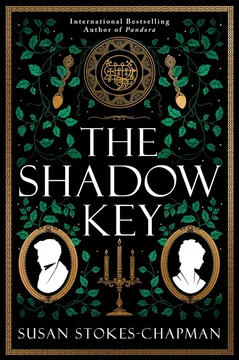
The Shadow Key receives mixed reviews, averaging 3.87 stars. Readers consistently praise its atmospheric Welsh setting, rich folklore, and historical detail. The gothic tone and dual perspectives of Henry and Linette are appreciated, though many feel the story promises more darkness than it delivers. Common criticisms include a slow pace, heavy foreshadowing that dulls surprises, underdeveloped characters, excessive miscommunication, and an unsatisfying climax where villains awkwardly exposition-dump their motivations. Despite its flaws, most readers found it an enjoyable, atmospheric historical mystery.
Characters
Henry Talbot
Disgraced London physicianA gifted surgeon and teacher whose career collapses after a prominent patient dies under his care. Henry is disciplined, observant, and proud of having earned his place through study, so exile to a remote village feels like both punishment and erasure. He trusts anatomy and evidence more readily than folklore, but his medical confidence is not the same as emotional certainty: he can be impatient with patients whose knowledge differs from his own. His attention to physical detail makes him an effective investigator, while his need to prove himself can lead him to press too hard. He wants useful work and a place where his skill matters, even when he cannot yet imagine what home might mean.
Linette Tresilian
Defiant estate mistressLinette manages Plas Helyg and its tenants with an unusual mixture of practical skill, fierce loyalty, and disregard for aristocratic convention. She wears clothes suited to work outdoors, rides astride, and reads estate accounts and agricultural treatises rather than performing gentility for visitors. Her commitment to Penhelyg comes from knowing what neglect costs: she has invested her resources in repairs, flood protection, and fair rents. That devotion also makes her protective of the villagers even when their hostility is difficult to excuse. Linette is direct because she has had to make decisions without dependable support. Beneath her competence lies a long hunger for understanding and affection, especially within her troubled family.
Gwenllian Tresilian
Isolated mother and widowGwen is the fragile mistress of Plas Helyg, a former beauty whose memories and moods appear unreliable to those around her. She spends much of her life confined to her rooms, where music, flowers, and dim light shape her narrow world. Her daughter Linette wants closeness but has grown up without consistent recognition from her. Gwen’s apparent passivity should not be mistaken for an absence of inner life: she retains emotional responses, fragments of memory, and a deep attachment to the past. Her history is entangled with her family’s status and the men who control the estate. She is a woman whose needs have too often been defined by other people.
Julian Tresilian
Absent-minded guardianJulian is Linette’s cousin and guardian, a wealthy Londoner who oversees Plas Helyg and its mines while spending much of his life away. He is learned, polished, and fascinated by rare books, ancient philosophies, and the promise of transforming ordinary matter into wealth. His illness gives his pursuit of influence an urgency that he rarely admits openly. Julian prefers management from a distance, and he often treats both Linette and the villagers as people to direct rather than partners to hear. His affection is difficult to distinguish from possession, particularly when he speaks about responsibility for his relatives. He embodies the confidence of a man accustomed to having money make his interests seem reasonable.
Rowena Carew
Village herbalistRowena is a skilled herbalist who lives alone near the mines and treats Penhelyg’s residents with practical knowledge of plants. She is observant, self-reliant, and careful about how much of herself she reveals. Her beauty draws attention, but her competence and independence are more important to the village, where many prefer her remedies to an outsider’s prescriptions. Rowena understands how plants can ease pain as well as harm the body, and she is accustomed to making a living in a world that gives women few secure choices. Her reserve suggests a history she has not made public. She values autonomy and survival, though she rarely speaks about what those have cost her.
Enaid Evans
Housekeeper and caregiverEnaid is Plas Helyg’s elderly housekeeper and the sister of the former village doctor, Wynn Evans. She has helped raise Linette and remains devoted to Gwen, whom she cares for with habits shaped by years of crisis. Her reserve toward Henry grows from grief and protectiveness, not simple dislike. Enaid trusts familiar routines and fears the institutions that might take Gwen away from the household. Her care is sincere, but her loyalty to those she serves can make her accept arrangements she does not fully understand. She carries the emotional memory of the house and often acts as its quiet guardian.
Cadoc Powell
Watchful Plas Helyg butlerCadoc is the stern butler at Plas Helyg, a Welsh-speaking servant whose formal manner conceals strong loyalties. He watches newcomers closely and rarely explains himself, making him difficult for Henry to read. His long service has given him intimate knowledge of the household and its history. Cadoc is practical, protective, and shaped by a world in which speaking openly can carry consequences. He often appears to enforce Julian’s authority, yet his attention to Linette and Gwen suggests that obedience is not the same as allegiance. His silence is deliberate, a form of caution developed over years within a powerful family’s home.
Owain Dee
Village vicar and confidantThe Reverend Dee is a warm, broad-shouldered vicar who welcomes Henry when much of Penhelyg will not. He is a man of faith who takes local folklore seriously, but he can also discuss history, books, and social power with intellectual care. His carved lovespoons reveal a patient craft and a romantic imagination that contrast with his practical concern for the village. Dee knows many of the people involved in the estate’s past and offers Henry a cautious route into local trust. He is neither an investigator nor an authority capable of compelling the gentry, but his moral steadiness makes him a useful witness and a humane guide.
Elis Beddoe
Criccieth physicianBeddoe is the established doctor across the estuary, a prosperous practitioner with a refined home and a dismissive view of village medicine. He speaks with professional authority and expects other people to accept his judgment, even when he provides little evidence for it. His methods differ sharply from Wynn Evans’s more sympathetic approach and from Rowena’s herbal practice. Beddoe’s history in London gives him social connections that reach beyond his local patients. He is difficult to question because he can make evasion sound like expertise, and Henry’s scrutiny quickly places the two physicians in conflict.
Cai Jones
Injured miner's sonCai is a sharp-tempered young man whose limp follows a mining accident that also killed his brother. With work taken from him and grief embedded in the family, he has little reason to trust another English doctor arriving under the Tresilian name. His hostility masks fear and frustrated energy more than simple malice. Cai is capable of impulsive defiance, but he can also pay close attention when someone proves useful. His relationship with his father and the mine shapes how he judges Henry: actions matter more than credentials, promises, or polite explanations.
Wynn Evans
Beloved former village doctorWynn Evans served Penhelyg for many years and was valued by villagers for his knowledge, steadiness, and willingness to understand local customs. He was the brother of Enaid and a friend of the Reverend Dee. His sudden death leaves a vacancy that Henry inherits, but also a community that measures the newcomer against a trusted predecessor. Wynn’s professional disagreements with Beddoe reflect two competing models of medicine: care rooted in relationships and authority rooted in formal status.
Lord Pennant
Neighboring landownerPennant is a wealthy Welsh landowner, shipbuilder, and local magistrate whose polished manner disguises a narrow concern for profit and status. He has influence over the mines and the people who work them, yet speaks of dangerous expansion as if it were an uncomplicated business opportunity. His social ease helps him move among the elite, while his authority makes it difficult for ordinary villagers to challenge him. Pennant represents local power aligned with English investment and aristocratic networks, despite his Welsh birth.
Matthew Lambeth
Tresilian estate agentLambeth is Julian’s agent, a former stonemason who supervises work at the mines and speaks to the miners in clipped orders. He is blunt, status-conscious, and inclined to treat workers as replaceable. His practical knowledge of construction gives him a role in decisions about the mine, but his loyalty is directed upward toward the estate’s owners rather than toward the people exposed to danger.
Tomas Morgan
Young fisherman and patientTomas is a young fisherman whose illness brings Henry into contact with the Morgan family. Linette knew him from childhood, and he has long been part of the village’s close social world. His condition tests the limits of both traditional remedies and Henry’s medical judgment. Though weak and frightened when Henry first examines him, Tomas’s recovery gives the new doctor an early chance to prove that his presence can help.
Ivor Morgan
Village driver and messengerIvor is Penhelyg’s coachman and errand runner, carrying people and news across difficult roads and water. His gratitude after Henry treats Tomas softens his initial reserve and gives Henry a first direct sign that local opinion can change. Ivor is practical, observant, and closely tied to the village’s everyday networks.
Sir John and Lady Elizabeth Selwyn
Influential neighboring coupleThe Selwyns are aristocratic neighbors who move easily within Julian’s social circle. Sir John is talkative and pleased by status, while Lady Elizabeth is polished, fashionable, and skilled at delivering condescension beneath conventional courtesy. Together they show how social power can make cruelty appear like wit and how the estate’s private interests are supported by a wider class network.
Lady Anne Pennant
Pennant's socially ambitious wifeLady Anne shares her husband’s elite social world and enjoys the performance of fashionable gatherings. Her interest in Gwen’s distress reflects the dinner party’s casual appetite for spectacle. She is confident in company and largely insulated from the consequences of the choices made by the men around her.
Heledd Einion
Remembered village womanHeledd is a woman from Penhelyg’s past whose death became part of the village’s inherited memory. Her story is passed through families as evidence of what can happen when powerful visitors exploit local women and the law refuses to protect them. She is remembered less as a symbol than as a person whose community never received an honest account of her death.
Plot Devices
The Shadow Key
A book of dangerous beliefJulian’s locked grimoire gathers occult diagrams, ritual instructions, coded writing, and references to Berith. Its pages connect the rings worn by members of his circle to the family portrait, the hidden temple, and the chant Gwen repeats. The book also contains the passage that identifies a sacrifice of ancestral blood and two united people, giving Henry and Linette a way to recognize that the family’s history places them in immediate danger. It is both a record of the Order’s beliefs and a material clue to its actions.
Gwen's tincture
A cure that causes illnessThe grey-glass bottles beneath Gwen’s bed contain a mixture of toxic plants that can induce hallucinations, agitation, and sedation. Enaid administers the liquid under Julian’s orders, believing it to be a stronger laudanum. Its effects have helped make Gwen appear irreparably mad, obscuring both her memories and the truth she carries. A separate vial containing deadly nightshade links the same household network to Wynn Evans’s death. The tincture makes care and harm disturbingly difficult to separate.
The Foundling's watch
A token of hidden identityHenry has carried a silver pocketwatch since his childhood at the Foundling Hospital, assuming it was only a keepsake from his unknown family. Its engraved initials and association with his birth date become crucial when a concealed message in Julian’s book points to two united relatives. The watch connects Henry to Plas Helyg’s family history and gives emotional weight to the revelation that his origins were deliberately hidden. It also represents the difference between an identity assigned by circumstance and one recovered through evidence.
The Welsh signs
Folklore as warning systemWhite marks on cottage doors, offerings near mine passages, stories of mine spirits, and the colored corpse candles give Penhelyg a vocabulary for dangers its residents cannot control. Henry initially rejects these beliefs as irrational, while Linette treats them as part of local life without claiming every tale is literally true. The red and blue lights Henry sees before the collapse later correspond to deaths in the mine. Folklore does not replace material explanation, but it lets the community notice patterns and preserve memory where official records fail.
The hidden tunnels
A route between house and minePassages concealed behind Plas Helyg’s bookshelves and fireplace connect the mansion and gatehouse to underground caverns in the mine. Their existence explains how the Order could gather away from the household’s public rooms and provides access to the ritual temple. The tunnels also turn the estate’s architecture into a map of concealed power: respectable rooms above, private rites beneath. During the final collapse, a further passage offers Henry, Linette, and Rowena a route toward the Cadwalladr crypt.
Download PDF
Download EPUB
.epub digital book format is ideal for reading ebooks on phones, tablets, and e-readers.








