

Key Takeaways
Let meaningful signs widen your life without demanding certainty
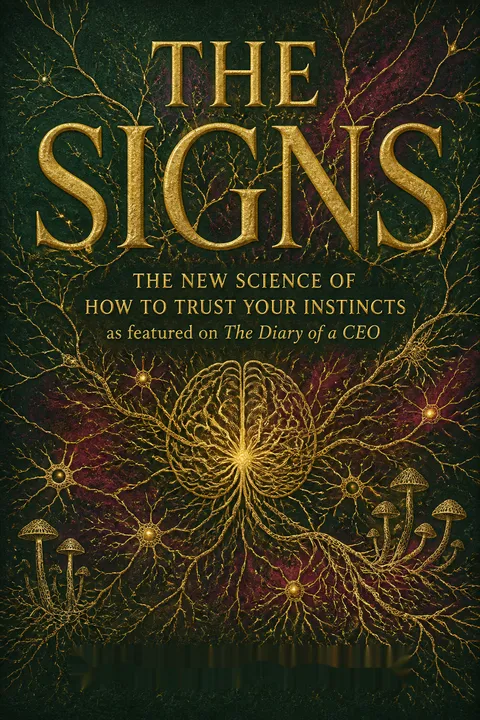
Grief began the inquiry. After her husband Robin died, Tara Swart repeatedly noticed robins in the garden, then experienced a vivid vision of him beside her bed. With medical and neuroscience training, she initially questioned what these events meant. Over time, she came to treat them as possible communication, while recognizing that their source could not be established with certainty.
Meaning can still matter. The book’s central invitation is to stay open to signs, whether understood as messages from beyond, meaningful coincidences, or the mind’s way of surfacing what matters. Swart describes signs as a source of comfort, direction, and renewed purpose during grief. Readers need not adopt her spiritual explanation to explore what an experience brings to their attention.
The book’s most accessible claim is not that every striking coincidence proves supernatural communication, but that people can find meaning and comfort in experiences they cannot fully explain. That distinction matters: a private interpretation can be emotionally useful without becoming a factual claim about the afterlife. Grief research recognizes continuing bonds with the dead as one way people sustain attachment while adapting to loss. Such bonds can support resilience, though they are not a substitute for help when grief becomes overwhelming or disabling. The strongest reading holds wonder and uncertainty together.
Treat after-death accounts as intriguing evidence, not settled proof
The boundary of consciousness is uncertain. Swart considers near-death experiences, or NDEs, reported by people resuscitated after cardiac arrest, and terminal lucidity, a brief return of clarity in some people with severe dementia or brain injury. She also recounts a patient’s claim of encountering a nurse during an NDE and learning details of the nurse’s fatal car crash that he supposedly could not have known.
The cases raise questions. NDE reports often share features such as unusual clarity, peace, out-of-body sensations, and encounters with deceased people. A hospital study cited in the book found six cases of terminal lucidity among 338 deaths. Swart argues these experiences leave room for consciousness beyond the brain, while acknowledging that no definitive answer exists.
These reports are worth studying because they concern vivid experiences at a poorly understood physiological boundary. Their significance depends, however, on careful distinctions: a heart stopping is not the same as proving that every form of brain activity has ceased, and retrospective accounts can be affected by memory, expectation, and incomplete monitoring. A striking anecdote can motivate research, but it cannot establish how consciousness works. The most intellectually generous position is neither dismissal nor certainty. It is to take the reports seriously while asking what evidence would distinguish a paranormal explanation from an ordinary, if still unknown, brain process.
Train attention to notice what a distracted brain filters out
Attention is selective. The ascending reticular activating system, or ARAS, is part of the brain’s largely unconscious filtering process. It helps prioritize information considered relevant and ignore the rest. Swart illustrates this with a familiar experience: after buying a particular car, a person may suddenly notice that model everywhere. The cars were already there; attention has been primed to spot them. This effect is also known as the frequency illusion.
Give noticing a record. Swart recommends journalling recurring symbols, numbers, animals, or coincidences, and noting what was happening when they appeared. She also suggests defining what would count as a sign, such as requiring a meaningful recurrence, rather than treating every event as confirmation. This practice can reveal patterns in personal concerns and make attention more deliberate.
The useful insight is that noticing is partly trainable: attention responds to what a person considers important. This helps explain why a journal can make overlooked patterns visible and clarify which experiences carry personal meaning. The same mechanism can also inflate apparent frequency. Once someone expects a sign, selective attention may make matching examples vivid while mismatches disappear from memory. A balanced journal can record the request, the event, and alternative explanations, not to drain the experience of meaning, but to make interpretation more honest and less vulnerable to confirmation bias.
Pair gut signals with experience, reflection, and reality checks
Intuition draws on accumulated learning. Swart describes intuition as a form of knowing that can involve both thought and bodily sensation. Brain research cited in the book links intuitive judgments to non-conscious processing, including activity in the orbitofrontal cortex. In one example from her medical work, she kept pressing for help when a patient’s severe nosebleed felt abnormal, despite an initial dismissal. The patient needed emergency specialist care.
Build a track record. Journalling decisions and later reviewing their outcomes can help distinguish useful pattern recognition from fear or wishful thinking. Swart also offers physical and reflective exercises, including asking the head, heart, and gut for different responses to a decision. Tarot cards can serve as prompts for reflection, she says, rather than authorities that dictate a choice.
Intuition is most dependable when experience supplies relevant patterns and feedback. A seasoned clinician may detect a worrying departure from familiar cases before being able to explain it; a novice has fewer patterns to draw on. That makes Swart’s recommendation to review past judgments especially valuable. Bodily sensations deserve attention, but they are signals to interpret, not verdicts: anxiety, bias, illness, or a familiar but misleading pattern can all shape them. Combining intuitive impressions with evidence and consultation preserves their speed without mistaking confidence for accuracy.
Calm your body to reclaim the bandwidth that stress consumes
The body informs attention. Interoception is the perception of signals from inside the body, such as breathing, heartbeat, and hunger. Swart argues that stress can narrow attention and make it harder to reflect, notice surroundings, or access intuitive judgments. She recommends becoming aware of cues such as shallow breathing or tension, then using simple practices to settle the body. One is a mindful sigh: a slow inhale, a second brief inhale, then a longer exhale.
Practice with the senses. Slow attention to sound, taste, sight, or smell can bring focus back to the present. Swart notes that the body has many more sensory processes than the familiar five, including balance, body position, and internal bodily signals. The aim is not to decode every sensation as a message, but to become more aware of the information already being filtered out.
This is a practical bridge between physiology and attention. When threat responses dominate, perception tends to prioritize immediate demands, leaving less room for reflection and curiosity. Breathing and sensory exercises can create a pause in which a person notices what is happening before reacting. The caution is that specific exercises do not work identically for everyone, and bodily sensations can have medical as well as emotional causes. Practices that feel calming can complement, but should not replace, medical assessment or evidence-based treatment when symptoms persist.
Use beauty and creativity to train attention beyond survival
Art is more than decoration. Swart draws on neuroaesthetics, the study of how art, beauty, and creative activity affect the brain and body. She describes how returning to a ballet performance after isolation and bereavement moved her deeply and helped her imagine a life beyond grief. The book argues that making art, listening to music, reading, cooking, or simply noticing beauty can reduce stress and encourage flexible attention, regardless of skill.
The health evidence is suggestive. One study cited in the book associated arts engagement every few months with a 31 percent lower risk of death, and even one or two visits a year with a 14 percent lower risk. These are associations, not proof that art itself prevents death. Swart’s practical point is smaller and more immediate: make room for enjoyable creative activity and notice what it brings into focus.
The case for everyday creativity does not depend on believing that art has a mystical effect. Creative attention interrupts habitual scanning for threats and tasks, while shared aesthetic experiences can give people a language for feelings that are difficult to state directly. The mortality figures are compelling but observational, so they may also reflect differences in health, income, mobility, or social connection among arts participants. The more defensible takeaway is that creative activity is accessible, potentially restorative, and worth protecting in a life organized around productivity.
Spend 20 minutes in nature before trying to solve everything
Nature changes the setting. Swart describes walking in the woods after Robin’s death and finding that fuller immersion helped her more than simply trying to keep busy. Research cited in the book suggests that stress reduction can be especially efficient during 20 to 30 minutes in urban nature. Another study found that a 90-minute nature walk reduced activity in a brain region associated with rumination.
Notice the environment directly. A walk can become a simple practice in attention: listen for birds, feel changing textures, look closely at plants, or watch the light. Swart also points to gardening and bringing plants into a home as accessible ways to engage with nature. The broader lesson is that surroundings can affect mood and bodily state, sometimes before a person consciously registers the change.
Nature offers an unusually low-cost way to combine movement, sensory variety, and a break from routine. Those elements can support mood and attention without requiring a spiritual explanation. The reported benefits are also shaped by access: safe parks, mobility, time, and disability affect who can take a walk and how restorative it feels. Claims about particular natural materials or grounding practices should not be treated as established medical treatments. The strongest practical case is for spending time in a setting that feels safe and restorative, then noticing its effect.
Build a supportive tribe where unusual experiences can be discussed
Connection offers a witness. After visiting the tree planted in Robin’s memory, Swart and a friend heard a Justin Bieber song in the car. Robin’s surname was Bieber, so the moment felt significant to both of them. Sharing the experience helped her feel less alone in interpreting it. The book argues that relationships can provide emotional support, a sense of belonging, and a safer setting for discussing experiences others might dismiss.
Community affects well-being. A global survey cited by Swart found that nearly one-quarter of adults across 142 countries felt very or fairly lonely. She also discusses evidence linking social isolation with poorer health. Practical steps include nurturing reciprocal friendships, joining communities organized around shared values, and making small gestures of kindness. Supportive relationships can also help a person find purpose through contribution to others.
A trusted listener can help someone process grief and make a private experience less isolating. That does not require the listener to confirm a supernatural explanation; compassionate curiosity and respectful questions can support meaning-making without turning agreement into a test of loyalty. Social belonging is a genuine human need, but tight groups can also amplify shared assumptions. Healthy support leaves room for both emotional validation and uncertainty, especially when an interpretation could influence major decisions or someone’s safety.
Make openness a small daily practice, not a supernatural test
Small actions build receptivity. Swart organizes the practical work around four steps: raised awareness, focused attention, deliberate practice, and accountability. These can begin with modest actions rather than dramatic lifestyle changes. When daily yoga felt too demanding, she adopted the idea that even five minutes on the mat could count as practice. The same principle applies to journalling, art, sensory attention, and time outdoors.
Choose what helps. The practices are intended to create more room for reflection, curiosity, and connection. A reader might record a dream, take a short walk, draw an image that caught the eye, or share a meaningful memory with a friend. Signs, in this approach, are not something to force or a test that must be passed. The useful result may be greater self-understanding, comfort, or a clearer sense of what matters.
The book’s range of practices becomes manageable when treated as experiments rather than a spiritual checklist. A small routine lowers the cost of beginning and gives a person repeated chances to learn which activities actually improve attention or mood. This also guards against turning missed signs into personal failure. A practice should be judged by its effects on daily life, not by whether it produces paranormal confirmation. The approach is strongest when openness remains voluntary, flexible, and compatible with ordinary sources of evidence and support.
Analysis
The book moves from a personal bereavement story to a practical case for attention, embodiment, beauty, nature, and social connection. Its emotional engine is Swart’s effort to live with the death of her husband while remaining open to experiences she cannot explain. The organizing claim is that signs can offer guidance and comfort, whether they arise from a spiritual source or from the mind’s capacity to detect personally meaningful patterns.
That flexibility gives the book broad appeal. A committed spiritual reader can interpret a robin, song, or repeated number as communication from a loved one. A skeptic can use the same event as a prompt to examine grief, values, and decisions. Journalling, sensory attention, creative activity, and supportive relationships are useful even if no supernatural explanation is accepted. The book’s strongest contribution is therefore less a demonstration that signs come from beyond than a practical argument for noticing more of life and making space for meaning.
Its central intellectual tension is that it often places two different claims close together: that signs can improve well-being, and that consciousness might survive death. The first can be supported by ordinary psychological mechanisms such as attention, memory, social support, and meaning-making. The second remains an open metaphysical question. NDE accounts and terminal lucidity are intriguing topics for research, but anecdotes and reported experiences do not settle whether consciousness exists independently of the brain. The reader benefits from keeping these claims distinct.
The book is most persuasive when it treats intuition as a resource to combine with reflection, rather than as a replacement for evidence. Its advice to record impressions and review outcomes can help calibrate judgment. The same discipline is needed when reading signs: attention makes patterns easier to notice, but expectation also makes coincidences feel more frequent. A mature practice can preserve wonder while asking what else might explain an event and whether its interpretation leads to a wise action. The book’s practical message is ultimately grounded: slow down, notice what matters, care for the body, seek connection, and allow uncertainty without surrendering judgment.
Review Summary
The Signs by Dr. Tara Swart receives mixed reviews (3.71/5). Readers appreciate her blend of neuroscience and spirituality, particularly regarding intuition, grief, and signs from deceased loved ones. Many found comfort after personal loss and valued practical exercises. However, critics cite repetitive, superficial writing that could be more concise. Several expected deeper scientific evidence given Swart's credentials, finding the content more spiritual than research-based. The book resonates most with open-minded readers exploring manifestation and synchronicity, though some felt her podcast interviews were more compelling than the book itself.
People Also Read



Glossary
Synchronicity
Meaningful coincidenceCarl Jung’s term for two or more events that seem meaningfully connected despite having no evident causal link. Swart uses the idea to describe coincidences that feel personally significant, while emphasizing that their source may remain unclear. A synchronicity can be interpreted spiritually, psychologically, or simply as an event that draws attention to something important.
Ascending reticular activating system (ARAS)
Attention filtering systemA brain system involved in regulating alertness and selecting information for attention. It helps prevent the brain from processing every incoming sensation equally, allowing relevant signals to take priority. Swart uses the ARAS to explain why a person may overlook familiar surroundings, and why deliberately focusing on a subject can make related details easier to notice.
Salience
Perceived importanceThe process by which the brain prioritizes information it treats as important or relevant. Novelty, personal value, and focused attention can make a stimulus more salient, while repeated exposure can make it less noticeable through habituation. In the book, salience helps explain both why people notice certain signs and how attention can be deliberately directed.
Interoception
Sensing internal body signalsThe perception of signals arising within the body, including heartbeat, breathing, hunger, temperature, and bodily tension. Many interoceptive processes operate outside conscious awareness, but attention can bring some of them into focus. Swart presents interoception as one way to notice stress and bodily states that may inform reflection and decision-making.
Near-death experiences (NDEs)
Reported experiences near deathExperiences reported by people who approach or undergo a life-threatening event and survive, sometimes after resuscitation. Accounts may include peace, heightened clarity, out-of-body sensations, encounters with deceased people, or a sense of entering another realm. Swart discusses NDEs as evidence that raises questions about consciousness, while acknowledging that their interpretation remains unresolved.
Terminal lucidity
Brief return of clarityA reported episode of unexpectedly clear communication or cognitive function shortly before death in a person with severe cognitive impairment or brain damage. The phenomenon has not been widely studied, and its frequency and causes are uncertain. Swart discusses it as a potentially important challenge to assumptions about the relationship between brain function and consciousness.
Neuroaesthetics
Study of art and the brainAn interdisciplinary field examining how art, beauty, and creative activity affect the brain, body, and behavior. In Swart’s account, neuroaesthetics helps explain why making or experiencing art may influence stress, emotion, attention, and social connection. The book applies the field broadly, including to music, reading, cooking, dance, and noticing beauty in everyday settings.
Gut-microbiome-brain axis
Gut-brain communication systemThe two-way communication among the digestive system, the gut’s microbial communities, and the brain. Signals travel through nerves, hormones, and immune pathways, influencing digestion and potentially affecting mood and cognition. Swart links this system to stress and intuitive judgment, while noting that some proposed links between gut health and intuition remain less established than the basic communication pathways.
Collective unconscious
Shared inherited mental patternsCarl Jung’s theory that people share deep mental patterns shaped by ancestral experience and inherited psychological structures, rather than only by individual life histories. Jung associated these patterns with recurring archetypes found across cultures. Swart also considers a broader spiritual interpretation in which the shared patterns might point to a universal consciousness, while presenting this as a possibility rather than a proven mechanism.
Download PDF
Download EPUB
.epub digital book format is ideal for reading ebooks on phones, tablets, and e-readers.








