

Key Takeaways
Treat a silent artery problem before it announces itself as a heart attack
The danger develops quietly. Atherosclerosis is the gradual buildup of plaque and damage inside arteries. It can progress for years without obvious symptoms, then cause a heart attack or stroke. Crandall learned this as a patient: at 48, despite lacking several familiar risk factors, he developed shoulder and chest pain. Tests found his left anterior descending coronary artery was 99 percent blocked; doctors opened it and placed two stents. His friend Jack ignored worsening discomfort for hours and died before treatment could help.
Looks can mislead. Crandall’s stories make the book’s central point vivid: fitness, youth, and feeling well do not prove that arteries are healthy. The book’s three-part approach is to understand risk, treat existing disease, and make lasting changes that may improve it. That is a reason to assess risk with a clinician, not a promise that every case can be prevented or reversed.
What's striking is the contrast between a cardiologist who recognized his own symptoms late and a patient whose denial proved fatal. It makes risk feel human rather than statistical. Yet anecdotes illustrate possibilities, not probabilities: a dramatic case cannot tell an individual how likely a heart attack is. The practical lesson is to use symptoms and risk factors as reasons to seek appropriate assessment, not to diagnose oneself from another person's story.
See plaque as a body-wide process, not a single cholesterol number
Arteries respond to repeated injury. Crandall describes atherosclerosis as a process in which irritation and inflammation in an artery wall help plaque form. Plaque can narrow the passage, stiffen the vessel, or rupture and trigger a clot. The consequences depend on where blood flow is interrupted: the heart, brain, kidneys, eyes, or limbs can all be affected. He particularly emphasizes visceral fat, the fat stored around abdominal organs, as a source of inflammatory signals.
Risk accumulates from several directions. The book connects artery disease with blood pressure, blood sugar, cholesterol, smoking, inactivity, and diet. It uses a highway analogy: a modest narrowing may not greatly impede flow, while a severe blockage can cause symptoms. A small improvement may matter, but old, calcified plaque is not simply washed away by lifestyle changes.
The system-level framing helps explain why a normal-looking person may still have disease and why heart health overlaps with brain and kidney health. It also avoids reducing cardiovascular risk to one lab result. The inflammation story is useful, but it should not displace the strong role of LDL cholesterol and blood pressure in clinical risk assessment. Inflammation is part of a larger causal picture, not a single explanation for every blockage.
Investigate hidden risks, especially diabetes, sleep apnea, and women's warning signs
Look beyond the obvious checklist. Alongside familiar risks such as smoking and high blood pressure, Crandall highlights stress, gum disease, rheumatoid arthritis, lupus, sleep apnea, elevated homocysteine, and hormone changes. He also flags some cancer treatments and common medicines as possible cardiovascular concerns. The evidence is not equally firm for every item, so these are prompts for a medical conversation, not proof that a condition will cause heart disease.
Diabetes can hide in plain sight. The book explains that insulin resistance and type 2 diabetes often develop without clear symptoms, while increasing cardiovascular risk. Blood glucose and A1C tests can help identify problems. Women deserve particular attention: they may develop heart disease later than men and may have symptoms such as unusual fatigue, nausea, back discomfort, or breathlessness rather than prominent chest pain. A history of pregnancy-related hypertension or gestational diabetes can also signal future risk.
The chapter's broad view of risk is valuable because health problems rarely arrive in tidy categories. Sleep apnea, diabetes, and autoimmune disease can affect several body systems at once, making coordinated care important. The caution is that a list can make every proposed link seem equally established. For example, the book itself notes uncertainty about homocysteine. Readers should prioritize well-supported risks with clinicians rather than self-treating hormones or supplements based on a screening result.
When heart attack or stroke signs appear, call emergency services immediately
Time protects tissue. A heart attack is usually a blockage that deprives part of the heart of blood; cardiac arrest is a sudden failure of the heart's pumping rhythm. One can lead to the other, but they are not the same event. Symptoms may include chest pressure, pain in the arm or jaw, breathlessness, nausea, sweating, weakness, or sudden fatigue. They do not always resemble a dramatic movie scene. The book's advice is to call 911, rather than drive to the hospital, because emergency teams can begin care and alert the hospital.
Recognize a brain attack. Stroke symptoms can include sudden facial weakness, difficulty raising an arm, slurred speech, confusion, vision changes, severe headache, or loss of balance. The FAST reminder means face, arms, speech, and time to call emergency services. A transient ischemic attack, or TIA, is a temporary interruption of brain blood flow and still needs urgent evaluation. The book also advises aspirin for suspected heart attack; because it is not safe for everyone, follow emergency dispatcher or clinician instructions.
The strongest practical contribution here is replacing hesitation with a rehearsed action. Emergency response depends on decisions made before a crisis, when denial and embarrassment are less powerful. FAST works because it converts a complex neurological event into observable checks. The same principle applies to heart symptoms, which can be atypical. Aspirin is a useful example of why general advice needs context: allergies, bleeding risk, and other medications can change what is appropriate.
Use tests to answer clinical questions, not to collect reassuring numbers
No single test tells everything. Crandall presents a broad menu he calls the Fabulous 15 Heart Tests. It includes blood pressure checks, cholesterol and triglyceride panels, glucose and A1C tests, an electrocardiogram, echocardiography, and selected imaging or exercise tests. A resting EKG records electrical activity, but a normal result does not rule out a blocked artery. A1C reflects average blood sugar over roughly three months, while a fasting glucose is a snapshot.
Choose tests for a reason. Other tests described include carotid ultrasound, which examines arteries in the neck, and the ankle-brachial index, which compares blood pressure at the arm and ankle to assess leg artery disease. These tests can inform care, but the book's list should not be treated as a mandatory panel for everyone. Symptoms, age, medical history, and prior results help a clinician decide what is useful and what could create needless follow-up.
The book is right that patients benefit from understanding what a test measures and what it cannot establish. Testing is most useful when its result could change a decision. In an otherwise well person, broad screening can produce false alarms or incidental findings that lead to further procedures without clear benefit. The modern lesson is not to demand every available test, but to ask what question it answers, how reliable the result is, and what would happen next.
Pair proven treatment with lifestyle change, and question major procedures carefully
Treatment has more than one tool. Crandall recognizes that statins lower LDL cholesterol and reduce cardiovascular risk, while also encouraging patients to discuss whether lifestyle changes can improve their numbers. The book's goal of living statin-free is not appropriate for everyone. People should not stop or alter prescribed medication without the clinician managing their care. The same caution applies to supplements, which can interact with medicines.
Match procedures to the situation. Angioplasty uses a balloon to open a narrowed artery; a stent helps keep it open. Bypass surgery reroutes blood around blockages and is major surgery. Crandall urges a second opinion when time and stability allow. He cites the COURAGE study, in which patients with stable coronary disease had similar rates of major outcomes with medication and lifestyle treatment or with added stenting, although stenting relieved angina more. An emergency heart attack is a different situation.
This section's useful insight is that intervention should be proportional to the clinical problem, and that patients can ask about benefits, risks, alternatives, and timing. A second opinion can improve decision quality when there is time to obtain one. But a general preference for less invasive care cannot replace anatomy, symptoms, or proven indications. The book's statin-free framing is especially easy to misread: medication may remain essential even when a person eats well and exercises.
Build meals around whole plants, while treating weight loss as a medical lever
Change the pattern, not just one ingredient. Crandall favors meals built around vegetables, fruit, beans, and whole grains, with less processed food, salt, added sugar, and red meat. He discusses Mediterranean and plant-based approaches, while acknowledging that the strictest versions may be difficult to sustain. His practical advice is to plan meals, shop for foods that support the plan, and reduce reliance on restaurant portions and packaged products.
Weight can change disease risk. The book connects excess weight with high blood pressure, insulin resistance, and type 2 diabetes. It cites a study of nearly 300 people with type 2 diabetes: after a year, 46 percent of those assigned to a weight-loss program were in remission, compared with 4 percent receiving usual care. That is evidence of possibility, not a guarantee. Diabetes management and diet changes should be planned with a healthcare professional.
The most durable dietary idea is to make minimally processed plant foods the default, rather than searching for a single superfood. This is both a nutritional strategy and an environmental one: what is stocked and served shapes what becomes easy to eat. The book's competing diet recommendations also reveal an important truth: adherence matters. A sustainable pattern tailored to a person's health, culture, budget, and preferences is more useful than a theoretically perfect plan that cannot be maintained.
Turn the 90-day plan into repeatable walking, strength, and tracking habits
Start smaller than the final target. Crandall's 90-day program builds routines in stages. It begins with 15 minutes of walking a day, then increases to 30 minutes, 45 minutes, and eventually an hour. It adds food planning, a journal, weight tracking, review of personal risk factors, and follow-up lab work. By week ten, the plan introduces strength training two or three times a week. The point is to make activity and food choices part of a schedule rather than a burst of effort after a scare.
Keep the plan measurable. The book recommends checking progress with a clinician and adjusting the routine as health, fitness, or symptoms change. Walking is presented as accessible, while resistance exercise helps preserve muscle and function with age. The author's one-hour daily target is a recommendation from this book, not a universal prescription. People with symptoms or known heart disease should ask their healthcare team what activity is safe.
The staged structure is a behavioral strength: it turns an intimidating overhaul into a sequence of manageable commitments, then adds tracking and clinical feedback. That resembles effective behavior-change programs, where specific goals and self-monitoring support follow-through. Still, one hour daily is not a necessary threshold for everyone. A plan should fit the person's capacity and medical status, with consistency and gradual progression valued over copying a single target.
Treat stress, sleep, and connection as part of cardiovascular care
The body carries chronic strain. Crandall describes stress hormones such as adrenaline and cortisol as part of the body's response to perceived danger. Brief responses can be protective, but persistent strain may affect blood pressure, sleep, and health behaviors. He highlights sleep apnea, in which breathing repeatedly stops during sleep, as a risk that can go unnoticed and may need clinical diagnosis and treatment. Loud snoring, daytime sleepiness, or waking up gasping are reasons to ask about assessment.
Connection is a health resource. The book links loneliness and social isolation with stress and worse outcomes, and recommends support from family, friends, or faith communities. It also recounts a study of bypass patients in which reporting loneliness was associated with mortality. These observations support taking emotional health seriously, but prayer, companionship, or stress management should complement rather than replace treatment for heart disease, sleep disorders, or mental illness.
This view expands prevention beyond food and exercise, recognizing that behavior is shaped by sleep, workload, relationships, and emotional strain. Social connection can make practical changes easier as well as offering comfort. The evidence should be interpreted carefully: an association between loneliness and mortality does not prove that loneliness alone causes the outcome. It does, however, justify asking about isolation and treating supportive relationships as part of a patient's real-world care environment.
After a diagnosis, insist on follow-up that measures function and adjusts care
Recovery is a continuing process. Heart failure means the heart cannot pump enough blood for the body's needs; it does not mean that the heart has stopped. Breathlessness, swelling, fatigue, and rapid weight gain can signal worsening and need medical attention. Crandall describes treating Clark, a 75-year-old man with severe heart failure, with hospital care, medication adjustments, and cardiac rehabilitation. After losing about 40 pounds of excess fluid, Clark returned to an active life.
Rehabilitation adds structure. The book describes cardiac rehab as supervised exercise plus education and peer support, often organized as 36 sessions over 12 weeks. It also explains that abnormal rhythms and valve problems may require specific testing, medicines, or procedures. Symptoms such as fainting, new palpitations, worsening breathlessness, or leg swelling should not be written off as ordinary aging. Long-term monitoring helps clinicians decide whether treatment is working and when it needs to change.
The Clark story makes a useful correction to fatalism: serious heart failure can sometimes improve substantially with careful treatment and rehabilitation. Its deeper lesson is that recovery depends on a system, not just a prescription: medication, monitoring, supervised activity, and patient support all matter. The story is not a forecast for every patient, however. Heart failure has different causes and trajectories, so decisions about fluid, activity, and medication require individual clinical supervision.
Analysis
The book's organizing strength is its movement from recognition to treatment to long-term behavior change. Crandall's own near-fatal event gives that structure credibility without pretending that expertise makes a person immune to denial. Jack's death supplies the counterexample: a diagnosis and prescription cannot protect someone who refuses to act. The strongest practical message is therefore not that lifestyle replaces medicine, but that care requires both clinical tools and the patient's sustained participation.
The medical material is broad and memorable, but the book was published in 2013 and includes claims that should not be read as current universal guidance. Its suggested test panels, routine stress testing, aspirin use, supplements, hormone treatment, and goal of stopping statins are not appropriate for everyone. Some recommendations are stated more confidently than the evidence warrants, and the book's language about reversing disease can imply more than its examples establish. Improving symptoms or risk markers does not mean that all arterial damage has disappeared.
A careful reader can retain the durable framework while treating specific interventions as questions for a qualified clinician. Measure risk in context, know emergency warning signs, use medication when indicated, and build routines that can be maintained. The book's emphasis on follow-up is particularly sound: health behavior is difficult to sustain, and measurable progress with professional support is more dependable than a dramatic promise to change everything at once. This summary is educational, not individualized medical advice.
Review Summary
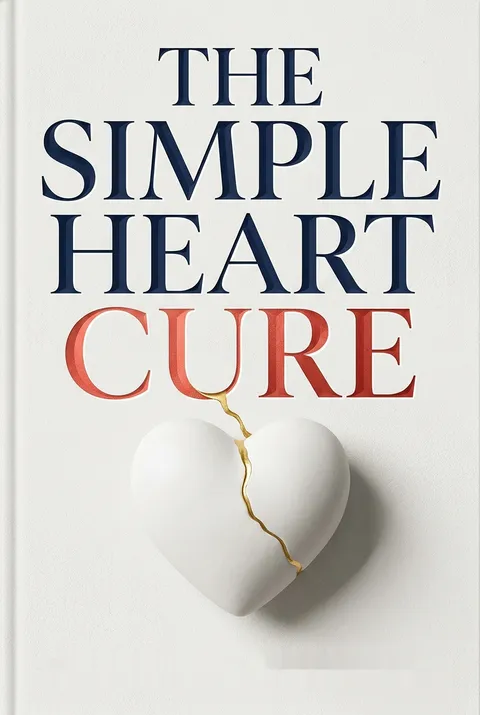
The Simple Heart Cure receives mostly positive reviews for its comprehensive yet accessible information on heart health. Readers appreciate the author's explanations of heart function, preventative measures, and treatment options. The 90-day program is seen as simple but effective. Some criticize the repetitiveness and outdated dietary guidelines. Many find the book informative and useful, especially for those with heart conditions or concerns. The meal plans are considered unrealistic by some, but overall, readers value the practical advice and clear explanations provided.
Glossary
Atherosclerosis
Plaque disease of arteriesAtherosclerosis is the gradual buildup of plaque and associated changes in artery walls. In the book, it is the central process behind many heart attacks and strokes: plaque can narrow an artery, stiffen it, or rupture and trigger a clot. The author also stresses that arteries supply the brain, kidneys, limbs, and other organs, so the effects can extend beyond the heart.
Metabolic syndrome
Cluster of metabolic risksMetabolic syndrome is a combination of conditions associated with diabetes and cardiovascular disease. The book groups insulin resistance, high blood pressure, elevated blood sugar, and abnormal blood fats under this term. Their combination can increase the likelihood of artery disease and blood clots. The term describes a cluster of risks, not a single disease with one cause or treatment.
Fabulous 15 Heart Tests
A menu of cardiac assessmentsThe Fabulous 15 Heart Tests is Crandall's name for a collection of tests he discusses for assessing cardiovascular health. It includes blood pressure, cholesterol and glucose measurements, EKGs, echocardiograms, stress testing, and selected imaging and circulation tests. The book presents the list as a way to understand possible risks, but it should not be treated as a required screening panel for every person.
Dr. Crandall's 3-Point Plan to Keep Your Heart Young
Movement, strength, and stress managementThis is the author's exercise-centered framework for heart health. Its three elements are sustained walking, resistance exercise to preserve muscle, and using physical activity to help manage stress. Crandall argues that regular movement supports cardiovascular fitness and function with age. The plan is a general framework; the amount and type of exercise need to be adapted to a person's health and abilities.
Dr. Crandall's Life Plan Diet
A plant-forward eating patternCrandall's Life Plan Diet combines features of plant-based and Mediterranean eating. It emphasizes vegetables, fruit, legumes, and whole grains, while allowing modest amounts of selected animal foods and some fats. The book contrasts this flexible long-term approach with stricter plant-based diets that it recommends initially for some people with established disease. It is the author's dietary framework, not a universally required prescription.
90-Day Plan
A staged lifestyle programThe book's 90-Day Plan is a week-by-week program for building heart-health routines. It begins with short daily walks and food tracking, then progressively increases walking, develops planned meals, reviews personal risks with a doctor, and adds strength training. It also encourages weight tracking and follow-up testing. Its purpose is to turn broad lifestyle advice into scheduled actions rather than to guarantee reversal in three months.
collateral circulatory system
Alternate small-vessel blood routesCrandall uses this term for a network of small blood vessels that he says can enlarge with sustained physical activity and provide alternate routes for blood flow. He connects this idea to the sensation of a second wind during exercise and suggests that alternate routes may help blood pass around blockages. The phrase reflects the author's explanation and should not be taken to mean that exercise removes a dangerous blockage.
COURAGE study
Trial of stents for stable diseaseThe COURAGE study, as summarized in the book, compared treatment with medication and lifestyle changes against that approach plus angioplasty and stenting in people with stable coronary artery disease. The author reports similar rates of major cardiovascular outcomes between groups, while people receiving stents had greater relief from angina. The result concerns stable disease and does not mean that urgent treatment is unnecessary during an acute heart attack.
Lyon Diet Heart Study
Trial of Mediterranean-style eatingThe Lyon Diet Heart Study is presented as a comparison of a Mediterranean-style diet with a typical American diet among people who had survived a first heart attack. The book reports substantially fewer recurrent cardiovascular events among those following the Mediterranean-style pattern and says the study ended early. It uses the findings to support diet as part of secondary prevention, not as proof that diet alone treats every patient's disease.
Download PDF
Download EPUB
.epub digital book format is ideal for reading ebooks on phones, tablets, and e-readers.








