Plot Summary
Homeless Girl's Discovery
In the icy predawn of Chicago, a homeless teen named Tray is kicked awake by a stranger, narrowly escaping a dangerous encounter. Fleeing into Rose Hill Cemetery, she discovers a chilling scene: a woman's corpse, posed as if in prayer, with blood streaming from her face and three white boxes tied with black string. A sign reads "FATHER, FORGIVE ME." This macabre tableau is the latest in a series of ritualistic murders haunting the city. Tray's terror and the cold, indifferent city set the stage for a story where innocence is lost and evil is both intimate and systemic. The discovery triggers a cascade of investigations, drawing in detectives, the FBI, and a web of victims and perpetrators whose lives are bound by trauma, secrets, and the search for redemption.
Porter Under Suspicion
Detective Sam Porter, once a respected cop, is now at the center of suspicion. Found at a crime scene with gunshot residue on his hands and surrounded by evidence linking him to the notorious Four Monkey Killer (4MK), Porter is interrogated by Special Agent Poole and his own colleagues. His mental state is fragile, haunted by memories and manipulated by the killer, Anson Bishop. Porter's insistence on reading Bishop's diaries, convinced they hold the truth, only deepens doubts about his innocence. The lines between hunter and hunted blur, as Porter's past and present actions are scrutinized. His relationships with his team—Nash, Clair, and Klozowski—are strained, and the possibility that he is more involved than anyone suspects casts a shadow over the investigation.
Hospital on Lockdown
Stroger Hospital becomes ground zero for a biological threat. After two girls, victims of abduction, are found infected with what appears to be the SARS virus, the hospital is locked down by the CDC. Detective Clair Norton and IT specialist Klozowski are trapped inside, along with dozens of potential victims and staff. Fear, illness, and suspicion spread as quickly as the virus. The hospital's isolation becomes a crucible, exposing the vulnerabilities of everyone inside. The threat of a mass outbreak is used as leverage by Bishop, who manipulates events from the shadows. The lockdown amplifies the sense of claustrophobia and desperation, as the characters race to find answers before the virus—or the killer—claims more lives.
The Praying Victims
Across Chicago and as far as South Carolina, bodies are discovered posed on their knees, hands clasped in prayer, with eyes, ears, and tongues removed and placed in white boxes. The phrase "FATHER, FORGIVE ME" is found at each scene, sometimes carved, sometimes written. The victims are connected by their involvement in a failed medical case, a foster home, or the criminal underworld. The ritualistic nature of the murders suggests a message or penance, but the meaning is elusive. Investigators struggle to determine whether the killings are the work of Bishop, a copycat, or a network of conspirators. The city is gripped by fear, and the detectives are haunted by the possibility that the evil they chase is both ancient and personal.
The Salted Murders
The victims' bodies are covered in salt—sometimes road salt, sometimes table salt—hinting at biblical allusions and attempts to preserve or obscure evidence. The salt connects the murders to the story of Lot's wife and the idea of looking back on sin. Forensic analysis reveals that the salt is also used to manipulate time of death and confuse investigators. The symbolism deepens the mystery, suggesting that the killer sees himself as both judge and executioner, punishing those he deems guilty. The detectives' search for meaning in the salt mirrors their search for truth in a case clouded by lies, trauma, and the unreliability of memory.
The Diary's Secrets
Central to the investigation are a series of diaries, allegedly written by Anson Bishop, but possibly forged or manipulated by others. The diaries recount Bishop's childhood in the Finicky House for Wayward Children, his relationships with other foster kids, and the abuse and corruption that shaped him. They also contain confessions, accusations, and clues to the present-day murders. Porter becomes obsessed with deciphering the diaries, convinced they hold the key to everything. But the diaries are a labyrinth of truth, half-truth, and fabrication, designed to mislead as much as to reveal. The detectives must decide what to believe, knowing that the answers may damn or save them.
Bishop's Game Unfolds
Anson Bishop, the Four Monkey Killer, is both a puppet master and a victim. He orchestrates events from the shadows, turning the investigation into a game of cat and mouse. He surrenders to police, only to accuse Porter of being the real killer. He uses the threat of the virus, the diaries, and the ritual murders to control the narrative and force the detectives into impossible choices. Bishop's motives are rooted in childhood trauma, betrayal, and a desire for retribution against those who failed him. His manipulations expose the corruption and complicity of the system, implicating not just individuals but entire institutions.
The Children of Finicky
The story of the Finicky House for Wayward Children is the dark heart of the novel. The children—Anson, Libby, Paul, Vincent, Tegan, Kristina, Klozowski ("The Kid"), and others—are victims of abuse, trafficking, and systemic neglect. As adults, some become killers, some victims, some avengers. Their fates are intertwined with the present-day murders, and their childhood traumas echo in every crime scene. The diaries reveal their suffering and resilience, and the investigation uncovers the extent of the crimes committed against them. The children's quest for justice, revenge, or escape drives the narrative to its tragic and cathartic conclusion.
The Virus Threat
The threat of a deadly virus—first believed to be SARS, later revealed as a potent flu—is used by Bishop and his allies as a weapon and a distraction. The fear of contagion paralyzes the city, isolates the hospital, and forces the authorities into desperate measures. The virus is a metaphor for the spread of evil, the contamination of innocence, and the difficulty of containing trauma. It is also a literal tool for the killers, used to manipulate, threaten, and control. The revelation that the virus was a hoax, a trial run for something bigger, underscores the theme of deception and the power of fear.
The Mayor's Disappearance
The mayor of Chicago vanishes under mysterious circumstances, his blood found in a hotel room, his involvement in the trafficking ring exposed. His fate is intertwined with that of other powerful men—police, politicians, doctors—who used their positions to exploit and abuse. The investigation into his disappearance reveals the depth of the conspiracy and the complicity of those sworn to protect. The mayor's downfall is both a victory and a tragedy, as it exposes the rot at the heart of the city but also the cost of seeking justice in a corrupt world.
The Hunt for Truth
As the body count rises and the city teeters on the brink of panic, the detectives—Porter, Nash, Clair, Poole—race to uncover the truth. They are hampered by false leads, betrayals, and their own doubts. The investigation takes them from Chicago to Charleston, from hospitals to abandoned hotels, from the present to the haunted past. Each clue leads to more questions, and the detectives must confront their own complicity, trauma, and limitations. The hunt for truth becomes a hunt for redemption, as they struggle to save not just the city, but themselves.
The Past Resurfaces
The investigation uncovers a decades-old trafficking ring, run through the Finicky House and protected by corrupt cops and officials. The children who survived are now adults, some seeking revenge, others trying to escape their past. The sins of the fathers—and mothers—are visited upon the children, and the cycle of abuse threatens to repeat. The detectives must confront the reality that justice may be impossible, and that the past can never truly be buried. The revelation of old crimes forces a reckoning for everyone involved.
The Escape and Pursuit
In a chaotic sequence, Bishop and Porter both escape custody, aided by hacked security systems and inside help. The city is thrown into chaos as the killers and the detectives race toward a final confrontation. Loyalties are tested, alliances shift, and the line between good and evil blurs. The pursuit leads to revelations about the true nature of the crimes, the identities of the killers, and the possibility of redemption or damnation. The escape is both literal and metaphorical, as the characters try to break free from the past and the roles assigned to them.
The Charleston Connection
The trail leads to Charleston, where Porter's own past is called into question. Old partners, forgotten memories, and buried evidence come to light. The connection between the Chicago murders and the Finicky House is made explicit, and the full extent of the trafficking ring is revealed. Porter must confront the possibility that he is not just a victim or a hero, but a participant in the crimes he seeks to solve. The Charleston connection is the key to understanding the present, but it comes at a terrible cost.
The Trafficking Web
The investigation uncovers a vast web of human trafficking, involving foster homes, hospitals, politicians, and law enforcement. The children of Finicky are both products and casualties of this system. The web is maintained by violence, silence, and complicity, and its exposure threatens to bring down powerful men and women. The detectives must navigate a world where everyone is compromised, and the price of truth is often death. The trafficking web is both the engine of the plot and the source of its deepest horror.
The Betrayal Within
The greatest betrayals come from within. Klozowski, the trusted IT specialist, is revealed as "The Kid," a survivor turned avenger, responsible for many of the recent murders. Warnick, from the mayor's office, is implicated in the killings of the Finicky children. Even Porter's own memories and actions are suspect, as evidence is planted, files are forged, and the truth becomes almost impossible to discern. The betrayal within the team mirrors the betrayal of the children by the adults who were supposed to protect them. Trust is shattered, and the cost is measured in blood.
The Final Confrontation
The story culminates in a public confrontation at the Guyon Hotel, where Bishop threatens to release the virus on a crowd of civilians and police. Porter, Poole, and the others race to stop him, but the lines between guilt and innocence, justice and revenge, are hopelessly blurred. In the chaos, Porter is shot, Bishop is arrested, and the truth is only partially revealed. The final confrontation is both a spectacle and a tragedy, as the survivors are left to pick up the pieces and wonder if anything has truly changed.
Justice and Aftermath
In the aftermath, the trafficking ring is exposed, but many of the perpetrators escape justice. Bishop is acquitted, thanks to lack of evidence and the destruction of Porter's credibility. The children of Finicky, presumed dead, are revealed to have survived, reinventing themselves and escaping the system that failed them. Porter is left broken, haunted by guilt and loss, but also by the knowledge that the fight for justice is never truly over. The story ends with a sense of ambiguity—evil is punished, but not eradicated; the past is confronted, but not healed; and the survivors must find their own way forward in a world where the line between good and evil is forever blurred.
Characters
Sam Porter
Sam Porter is the emotional and moral center of the novel, a detective whose pursuit of justice is complicated by trauma, memory loss, and manipulation. Once a respected cop, Porter becomes a suspect himself, accused of being the Four Monkey Killer or at least complicit in the crimes. His obsession with Bishop's diaries and the Finicky children drives him to the edge of sanity. Porter's relationships—with his team, his late wife, and the victims—are fraught with guilt and longing. He is both a hunter and a hunted, a man whose search for truth is as much about self-redemption as it is about solving the case. Porter's journey is one of descent into darkness, confrontation with his own complicity, and the painful realization that justice is never simple.
Anson Bishop
Anson Bishop, the Four Monkey Killer, is both a product and an architect of evil. Raised in the abusive Finicky House, Bishop is shaped by trauma, betrayal, and a desire for vengeance. He is a genius at manipulation, orchestrating events to implicate others, especially Porter, and using fear, ritual, and the threat of a virus to control the narrative. Bishop's motives are complex—he seeks retribution for the children who suffered, but his methods are monstrous. He is both a victim and a villain, capable of empathy and cruelty. Bishop's psychological depth lies in his ability to blur the line between justice and revenge, forcing others to confront their own darkness.
Clair Norton
Clair Norton is Porter's colleague and one of the few characters who maintains her integrity throughout the chaos. Trapped in the hospital during the lockdown, she becomes a leader, trying to protect the innocent and maintain order. Clair's empathy and determination make her a counterpoint to Porter's obsession and Bishop's nihilism. She is also a survivor, enduring illness, captivity, and betrayal. Clair's relationship with Nash provides a glimmer of hope and humanity in a world otherwise defined by violence and mistrust.
Brian Nash
Nash is Porter's partner and friend, a detective whose humor and decency mask his own trauma and doubts. He is fiercely loyal to Porter, even as evidence mounts against him. Nash's journey is one of disillusionment, as he confronts the reality of corruption within the system and the betrayal of those he trusted most. His relationship with Clair offers solace, but he is ultimately changed by the violence and loss he witnesses. Nash represents the ordinary person caught in extraordinary evil, struggling to do the right thing.
Edwin Klozowski ("The Kid")
Klozowski, the IT specialist known as "Kloz," is revealed to be "The Kid," one of the Finicky children and a survivor of horrific abuse. Outwardly nerdy and harmless, Kloz is in fact a brilliant hacker and the architect of many of the recent murders. His actions are driven by a desire for justice—or revenge—for the children who suffered and died. Kloz's betrayal is the novel's most devastating, as he turns on his friends and colleagues to expose the trafficking ring. His suicide is both an act of defiance and a final, tragic statement on the impossibility of healing.
Anthony Warnick
Warnick, from the mayor's office, is a shadowy figure who manipulates events behind the scenes. He is implicated in the murders of the Finicky children and the cover-up of the trafficking ring. Warnick represents the institutional rot at the heart of the city, a man who uses power to protect the guilty and silence the innocent. His death is both a victory and a reminder that justice is often incomplete.
Libby McInley
Libby is one of the Finicky children, a victim of abuse and exploitation. Her story, as revealed in the diaries, is one of suffering, resilience, and longing for escape. Libby's fate is central to Bishop's motivations and Porter's guilt. She represents the cost of systemic failure and the possibility of survival, even in the face of overwhelming evil.
Paul Upchurch
Paul is another Finicky child, whose adult life is marked by illness, poverty, and complicity in the crimes of others. He is manipulated into forging diaries and documents, and his death is both a consequence of his own choices and the system that failed him. Paul's story is one of wasted potential and the enduring scars of childhood trauma.
Tegan Savala and Kristina Niven
Tegan and Kristina are Finicky girls whose lives are shaped by abuse, exploitation, and the struggle for agency. Their fates are manipulated by Bishop, Warnick, and others, and their deaths (later revealed to be faked) are used as tools in the larger game. They represent the countless children lost to trafficking and the hope that some may escape and reclaim their lives.
Mayor Barry Milton
The mayor is both a perpetrator and a casualty of the trafficking ring. His disappearance and gruesome death symbolize the collapse of the old order and the exposure of the city's darkest secrets. The mayor's story is a cautionary tale about the cost of power without accountability.
Plot Devices
Unreliable Narration and Memory
The novel's structure is built on unreliable narration, shifting perspectives, and the manipulation of memory. Porter's amnesia, Bishop's diaries, and the forged files all serve to blur the line between truth and fiction. The characters—and the reader—are forced to question what is real, what is planted, and what is forgotten. This device heightens suspense, deepens psychological complexity, and mirrors the trauma experienced by the characters.
Ritual and Symbolism
The ritualistic posing of victims, the use of salt, and the repeated phrases ("FATHER, FORGIVE ME," "I am evil") imbue the murders with symbolic weight. These devices connect the crimes to biblical stories, the idea of penance, and the cycle of abuse. The symbolism is both a clue and a red herring, forcing the detectives to look beyond the surface for meaning.
The Diary as Puzzle
The diaries are both a plot device and a metaphor for the investigation itself. They contain confessions, accusations, and clues, but are also designed to mislead. The detectives' obsession with deciphering the diaries mirrors their struggle to make sense of a world where nothing is as it seems. The diary structure allows for flashbacks, multiple timelines, and the gradual revelation of secrets.
Multiple Killers and Shifting Blame
The novel employs multiple killers—Bishop, Klozowski, Warnick, and others—each with their own motives and methods. The shifting blame keeps the reader off balance and underscores the theme that evil is systemic, not individual. The use of copycats, conspiracies, and planted evidence complicates the search for justice and forces the characters to confront their own complicity.
Technology and Hacking
Hacked security systems, manipulated video footage, and digital forensics are central to the plot. Klozowski's skills as a hacker allow the killers to escape, plant evidence, and control the narrative. Technology is both a tool for justice and a weapon for evil, reflecting the modern world's dependence on information and the ease with which it can be corrupted.
Public Spectacle and Media
The final confrontation at the Guyon Hotel is staged as a public spectacle, with media, police, and civilians all present. The manipulation of public opinion, the use of the press, and the spectacle of justice are recurring themes. The novel critiques the way media shapes perception and the difficulty of achieving true justice in a world obsessed with appearances.
Analysis
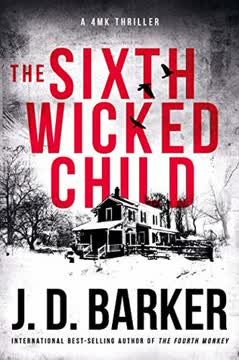
The Sixth Wicked Child is a labyrinthine thriller that uses the conventions of the serial killer genre to explore deeper questions about memory, trauma, and systemic evil. At its core, the novel is about the legacy of abuse—how the sins of the past echo into the present, shaping lives and destinies. The characters are all haunted, not just by what they have done or failed to do, but by what has been done to them. The unreliable narration, shifting blame, and ambiguous morality force the reader to confront uncomfortable truths: that justice is often elusive, that evil is rarely isolated, and that the line between victim and perpetrator is perilously thin. The novel's use of ritual, symbolism, and the diary as a puzzle reflects the human need to find meaning in chaos, even when that meaning is painful or incomplete. In the end, The Sixth Wicked Child offers no easy answers—only the hard-won realization that healing requires confronting the past, accepting complicity, and choosing, again and again, to seek the truth, however fractured it may be.
Last updated:
Review Summary
The Sixth Wicked Child, the conclusion to J.D. Barker's 4MK trilogy, receives mostly enthusiastic reviews with a 4.48 rating. Readers praise its complex plotting, numerous twists, and masterful character development of detective Sam Porter and serial killer Anson Bishop. Common criticisms include excessive length, slow pacing in the first half, and an overwhelming number of characters and storylines. Many reviewers emphasize reading all three books consecutively to fully appreciate the intricate connections. The diary entries particularly captivate readers. Most agree the finale satisfyingly resolves loose ends, though some found plot elements predictable or overly convoluted.