

Key Takeaways
Recognize anti-Black racism as a Canadian system, not an imported exception
A local pattern. Cole begins 2017 with the police raid on John Samuels’s Toronto art gallery. Officers had repeatedly scrutinized the young Black owner, then tasered him, arrested him, and damaged his space. The gathering place he had built for artists soon closed. Cole connects this episode to a 1785 Shelburne bylaw that prohibited Black people from holding dances and social gatherings. The settings differ, but the recurring suspicion of Black people assembling is unmistakable.
History stays operational. The book argues that anti-Black racism is not just individual prejudice or a few bad encounters. It is reinforced by institutions that treat Black people as threats, regulate their movement, and deny them equal standing. Cole places this pattern within Canada’s history of enslavement and settler colonialism, rather than using the United States as the default comparison.
What's striking is how the gallery makes an abstract argument legible: scrutiny can constrict a life without beginning with a dramatic act of violence. The historical comparison also punctures national exceptionalism, the comforting idea that injustice belongs elsewhere. This lens is strongest when it identifies patterns across time without claiming every incident is identical. Distinguishing a shared structure from identical experiences keeps historical analysis precise and leaves room for evidence about particular institutions, places, and people.
Treat routine police data collection as a form of racial control
A stop leaves a record. Cole defines carding as police stopping people without reasonable suspicion of a crime and recording their personal information. Toronto officers filled out 1.8 million contact cards between 2008 and 2012, involving more than a million people, usually without an arrest or charge. Black residents were stopped at three times their share of the city’s population. In one mostly white area, they were seventeen times more likely than white residents to be stopped.
The record travels. Police data can affect people long after a stop ends. A young Somali woman, Ayaan Farah, lost her airport security clearance after authorities used carding records to suggest she had criminal associates, without identifying them. A court later found the decision unreasonable, but it could not return her lost income or reputation.
The important shift is from asking whether a stop produces a charge to asking what the collected information does afterward. A database can turn an encounter without evidence of wrongdoing into a durable suspicion that follows someone into employment or travel. That makes data retention, access, and deletion questions of civil rights, not merely administrative housekeeping. Counts alone cannot show each record’s full effect, but personal cases reveal why the absence of arrest does not make surveillance harmless.
Keep armed police out of schools where punishment already follows Black children
Discipline starts early. Cole recounts the case of Symone, a six-year-old Black girl handcuffed at school by police. Her mother said the school had suspended her repeatedly and called police before. Toronto school data showed Black children in junior kindergarten through grade six were suspended more than three times as often as white children. Black students accounted for 48 percent of expulsions over five years while making up 13 percent of the student population.
Presence changes the room. Toronto introduced armed School Resource Officers without a public vote. Students described feeling watched or intimidated, and some stayed away from school. After years of organizing and a review that gathered community testimony, the Toronto District School Board voted to remove officers in 2017. The Catholic board continued its program, showing that one board’s decision did not settle the wider debate.
Schools can turn ordinary developmental difficulties into disciplinary records, and police presence can make that escalation more consequential. Cole’s account also distinguishes safety from the appearance of control: a program may reassure some students while alienating others. The strongest test is not whether selected students enjoy positive contact with an officer, but whether the institution protects those who fear surveillance. The board’s equity-focused review offers a practical model: hear from affected students, including those least likely to feel safe speaking in a police setting.
Demand care, not force, when mental distress meets police
Crisis is not a verdict. Abdirahman Abdi was in a mental health crisis when Ottawa police pursued and beat him in 2016. Witnesses described him speaking with a civilian before the first officer arrived. He died after the encounter. The Special Investigations Unit charged one officer with manslaughter and other offences, but the book places this case within a system where charges against officers are rare.
The numbers raise questions. A CBC investigation cited by Cole examined 461 fatal civilian encounters with police between 2000 and 2017. Seventy percent of those who died had mental health or substance-use issues, or both. Eighteen officers faced criminal charges, and two were convicted. These figures do not establish the cause of every death. They do make it difficult to dismiss the need for alternatives to force, especially when a person is visibly in crisis.
The central question is not whether officers can diagnose someone in seconds. It is whether a system built around threat response can reliably handle situations that call for patience, communication, or specialized care. Cole’s cases show the cost of treating vulnerability as irrelevant to police decisions. At the same time, a national pattern does not explain every individual encounter on its own. Transparent investigations and careful case evidence are essential to accountability, as is building responses that do not make armed police the automatic first option.
Use disruption to make institutions answer questions they would rather evade
Polite requests can stall. In 2017, Cole refused to leave a Toronto police board meeting until members addressed the continued police access to carding records. The board adjourned rather than respond. The Toronto Star then warned him that his protest violated its journalism rules. Cole left the paper, arguing that its demand for neutrality treated his activism differently from other columnists’ public causes.
Public pressure shifts terms. At a later meeting, Cole challenged the board over the attack on Dafonte Miller and was arrested for trespassing. Community members returned in force, and organizers kept the case in public view. Direct action did not guarantee immediate policy change or erase professional costs. It did make it harder for officials to keep the underlying issue off the agenda.
Disruption is often described as a failure of dialogue, yet this story asks who controls the agenda and who gets to decide when discussion is appropriate. A meeting can be technically open while its procedures keep urgent concerns out of view. Direct action changes that calculation by making avoidance visible. It is not a substitute for evidence, negotiation, or durable policy, and it can expose participants to retaliation. Its value here lies in forcing institutions to confront the gap between public accountability and controlled access.
Make queer liberation answerable to Black queer and trans people
Pride has a history. Black queer organizers had spent decades creating space at Toronto Pride, including Blockorama, a celebration of Black queer culture. In 2016, Black Lives Matter Toronto halted the parade to demand change. Removing official police floats was one demand, but the group also called for funding, accessible interpretation, support for Black queer youth, and greater representation of marginalized communities.
Recognition needs follow-through. Pride’s executive director signed the demands, then said he lacked authority to honor them. After public pressure and an organizational apology, Pride members voted to proceed with the demands. Cole emphasizes that organizers challenged official police participation, not the right of individual queer officers to attend. The distinction matters in a festival whose history includes resistance to police raids and whose Black participants still report being treated as suspicious.
This account challenges the habit of treating queer identity and racial identity as separate political concerns. An institution can celebrate inclusion while leaving its most marginalized members to fight for space, funding, and basic safety. The wider lesson is that symbolic recognition is a weak measure of belonging; control over resources and decision-making is more revealing. There is also a productive tension: Pride can offer community while carrying institutional compromises. Accountability requires asking who shapes the celebration, not only who appears in it.
Build Black and Indigenous solidarity without flattening distinct histories
The land is part of the story. Cole links the enslavement of Black people and the colonization of Indigenous territories through British imperial history, while stressing that the struggles are distinct. During Canada’s 150th anniversary celebrations, Indigenous land and water defenders erected a tipi on Parliament Hill and were met by the RCMP. Their action challenged the celebration of a country built on land claims that remain unresolved.
Solidarity means listening. Cole also describes Indigenous families criticizing the national inquiry into missing and murdered Indigenous women, girls, and two-spirit people for excluding voices and failing to address police accountability. The inquiry’s eventual report described the violence as part of ongoing genocide and issued 231 Calls for Justice. For Cole, solidarity means attention to Indigenous leadership and demands, not using one group’s history as a metaphor for another’s.
The distinction between connection and equivalence is crucial. Shared colonial structures can create grounds for cooperation without making Black and Indigenous histories interchangeable. Cole’s examples also show why solidarity must be judged by practice: whose analysis leads, whose demands shape the response, and whether institutions surrender any control. A broad coalition can be powerful, but only if it resists turning difference into a convenient slogan. Listening is not a ceremonial preface to action; it affects which action is chosen and who remains accountable.
Judge welcome by whether families can stay, not by official slogans
Belonging can be revoked. Cole follows Abdoul Abdi, who arrived in Canada as a refugee child and was taken into government care. The province, which controlled his citizenship application, never applied. After years in foster placements and a prison sentence, he faced deportation to countries where he had no legal status. Public organizing helped secure his release from immigration detention, and a court overturned his deportation order.
One case exposes a system. Jamaican mother Beverley Braham also faced removal while her Canadian-born infant and husband remained in Canada. Activists won a temporary pause, but her final residency victory came only after sustained advocacy. Cole connects these stories to a longer history of restricting Black migration while recruiting Black workers for low-paid jobs. A warm national welcome means little if families remain vulnerable to separation or removal.
Immigration status is often presented as a technical matter, but these cases reveal how administrative decisions can determine whether a person belongs to the family and country they know. Abdoul’s story is especially striking because the state first assumed responsibility for his care, then failed to secure his citizenship. Case-by-case advocacy can save lives, yet it places an exhausting burden on families and organizers. The more durable question is whether policy prevents the same administrative failure from producing another person at risk.
Fund community care before stereotypes become public policy
Support is already happening. After police attacked John Samuels, his friends, artists, and Black Lives Matter organizers helped with legal support, court appearances, and replacement space. In North Preston, Nova Scotia, sisters LaMeia Reddick and Kardeisha Provo created youth programming in a family basement, paying for food themselves and shaping activities around what young people wanted.
Care counters the official story. North Preston is often portrayed through stereotypes of danger, while residents build relationships, share knowledge, and support young people. The contrast is material as well as rhetorical: Cole cites a child poverty rate of 40 percent in North Preston and 4 percent in nearby, mostly white Fall River. Community care is not a substitute for public investment. It demonstrates what local leadership can do and what institutions leave unsupported.
These examples shift attention from communities as sites of need to communities as producers of knowledge, safety, and belonging. Their work is politically significant even when it happens in a gallery or basement rather than a government program. But celebrating resilience can quietly excuse neglect if public institutions treat unpaid care as an adequate replacement for resources. The sharper response is to respect community expertise while asking why organizers must supply spaces, food, and support from their own limited means.
Ask who gets to represent a community, and who can challenge them
A title is not a mandate. At a 2017 national Black Canadians summit, the Federation of Black Canadians presented itself as a unified advocacy voice, though many attendees knew little about its structure, membership, or goals. Cole questioned a process that elevated political and professional leaders while giving ordinary participants little time or influence. The organization’s leadership included people with close ties to government, raising questions about conflicts and accountability.
Test policy by its effects. Scholar Rinaldo Walcott offered what he called the Black test: does a policy reduce Black dispossession and make Black life more possible? Cole uses that standard to resist the idea that one organization or a few prominent Black officials can speak for everyone. Representation matters, but it cannot replace transparent membership, disagreement, or measurable benefits for people most affected.
The tension between access and independence is real. People inside institutions may gain meetings and influence, while organizers outside them can apply pressure that insiders cannot. Neither position automatically guarantees useful outcomes. The key questions are procedural and substantive: who authorized the representative, who can dissent, and what changes for those facing harm? Walcott’s test keeps attention on consequences rather than visibility. It also leaves room for multiple strategies, provided each group remains answerable to the people it claims to serve.
Analysis
The book’s month-by-month structure makes political argument cumulative. A gallery raid, a shackled child, a fatal police encounter, a protest at Pride, a threatened deportation, and a school board vote are not presented as isolated news events. Together they show how ordinary institutions can sort people into categories of suspicion, vulnerability, and conditional belonging. Cole’s first-person reporting gives these systems a human scale, while statistics and historical records challenge the idea that the stories are exceptional.
The narrative’s central strength is its refusal to separate contemporary policy from the histories that made it possible. Canadian self-image, built partly on comparison with the United States, becomes an object of scrutiny rather than a neutral backdrop. Cole also treats resistance as more than protest: community members provide material support, preserve culture, produce evidence, and force institutions to answer publicly. The book’s scenes of organizing help prevent its account of state power from reducing Black people to its targets.
Its structural argument is deliberately forceful. That force clarifies patterns that a narrow focus on individual intent can obscure, but it also asks readers to distinguish systemic explanation from claims about every individual event. Cole frequently supplies evidence for the patterns he identifies, yet particular cases still involve contested testimony and legal processes. Holding both levels in view strengthens rather than weakens the argument: institutional tendencies need scrutiny, and individual claims need careful examination.
The book’s deepest practical lesson is that recognition is not the same as redistribution of power. Apologies, diversity language, and access to officials can matter, but they are inadequate when affected people lack control over data, policy, resources, and representation. The recurring measure is concrete: did a decision make life safer and more self-directed for the people most exposed to harm? That question turns solidarity from sentiment into an ongoing test of institutional and community practice.
Review Summary
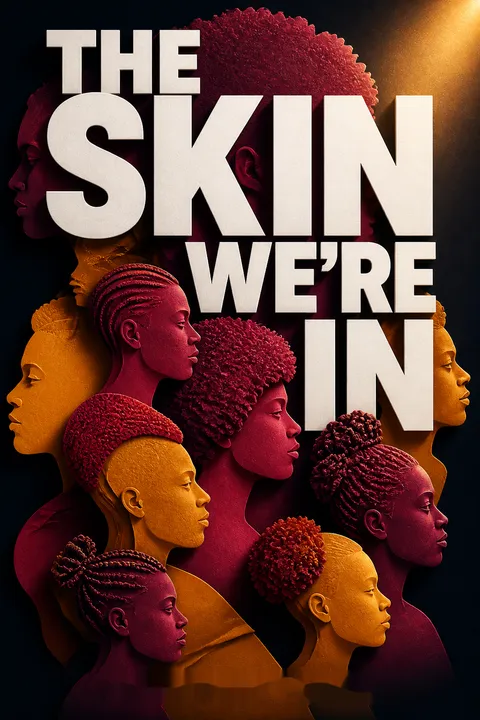
The Skin We're In is a powerful examination of anti-Black racism in Canada, challenging the myth of Canadian racial harmony. Cole's month-by-month account of 2017 exposes systemic racism in policing, immigration, and education. Readers praise Cole's insightful analysis, personal stories, and call to action. The book is considered essential reading for Canadians, offering a raw look at Black experiences and dispelling notions of Canadian exceptionalism. While some found it Toronto-centric, most reviewers commend Cole's passionate writing and thorough research, urging readers to confront their own biases.
People Also Read

Glossary
carding
Suspicionless police documentationA police practice of stopping people who are not reasonably suspected of a crime and collecting identifying or personal information. Cole uses the term for encounters that can leave people in police databases even when no arrest or charge follows. He describes the practice as a form of surveillance with potential effects on privacy, mobility, and employment.
white supremacist improv
Improvised excuses for racismCole’s term for the explanations people invent to minimize or reinterpret racist conduct when facts are uncomfortable or incomplete. In the case of school trustee Nancy Elgie, supporters proposed explanations that were not established by reporting, including that a head injury caused her racial slur. The term describes how speculation can protect an institution or person from accountability.
Black test
A policy impact standardA standard proposed by scholar Rinaldo Walcott and discussed by Cole. A policy passes the Black test if it reduces Black dispossession and makes Black life more possible. The standard shifts attention away from a policy’s stated intentions or broad claims of inclusion and toward its concrete effects on Black communities.
School Resource Officer (SRO) program
Police stationed in schoolsA program that places police officers, often armed and in uniform, inside schools. Toronto’s program was promoted as a way to improve safety and relationships between students and police. Cole recounts concerns that it subjected Black and other marginalized students to surveillance, intimidation, and criminalization, and describes the 2017 decision by the Toronto District School Board to end its program.
Special Investigations Unit (SIU)
Ontario police oversight agencyThe Ontario agency that investigates incidents involving police officers, including deaths, serious injuries, and allegations of sexual assault. Cole examines the SIU’s decisions about when to investigate, what information becomes public, and whether charges follow. He argues that limited disclosure and the rarity of convictions make independent oversight difficult for affected families and the public to assess.
wake work
Labor of confronting anti-BlacknessA term Cole attributes to scholar Christina Sharpe for work that responds to the enduring conditions of Black life shaped by slavery and its afterlives. In the book, the term points beyond a job title such as activist or journalist. It describes sustained attention, resistance, care, and community action in a world where anti-Black violence remains present.
FAQ
What's The Skin We're In about?
- Focus on Black Resistance: The book chronicles Desmond Cole's experiences and observations of anti-Black racism in Canada throughout 2017, highlighting incidents of police brutality and systemic discrimination.
- Monthly Structure: Each chapter corresponds to a month in 2017, detailing significant events and protests, such as the Black Lives Matter movement and the police killing of Andrew Loku.
- Intersectionality: Cole emphasizes the interconnectedness of Black struggles with those of Indigenous peoples and other marginalized groups, advocating for solidarity in the fight against systemic oppression.
Why should I read The Skin We're In?
- Insightful Perspective: The book provides a personal and poignant perspective on the realities of living as a Black person in Canada, challenging the notion that racism is solely an American issue.
- Calls for Action: It encourages readers to engage with social justice issues and understand the importance of activism in combating racism.
- Cultural Relevance: Given the ongoing discussions about race and policing in Canada, this book is timely and relevant, contributing to the broader conversation about race relations.
What are the key takeaways of The Skin We're In?
- Systemic Racism Exists: Cole illustrates that systemic racism is deeply embedded in Canadian institutions, including law enforcement and education.
- Importance of Community: The book emphasizes the strength found in community solidarity and collective action, particularly within Black and Indigenous communities.
- Historical Context: Cole connects contemporary issues of racism to historical injustices, such as slavery and colonialism, providing a comprehensive understanding of their ongoing impact.
What are the best quotes from The Skin We're In and what do they mean?
- “Black lives have no borders.”: This quote underscores the universality of the Black experience and the shared struggles against racism globally.
- “Survival alone is worth celebrating.”: Cole reflects on the resilience of Black communities in the face of systemic oppression.
- “Whiteness is an unimpeachable rubber that deflects collective human failing.”: This statement critiques how white supremacy operates by avoiding accountability for its actions.
How does The Skin We're In address police brutality?
- Personal Accounts: Cole shares firsthand experiences of police violence against Black individuals, humanizing the statistics and highlighting the real impact.
- Critique of Policing: The book critiques the role of police in maintaining systemic racism, arguing that policing often serves to discipline and control Black bodies.
- Call for Accountability: Cole advocates for greater accountability and transparency within police forces, urging communities to demand justice for victims of police violence.
What role does community activism play in The Skin We're In?
- Empowerment Through Action: Cole illustrates how community activism empowers individuals and fosters resilience among marginalized groups.
- Black Lives Matter Movement: The book details the activities of Black Lives Matter–Toronto and other activist groups, showcasing their efforts to address police violence.
- Solidarity with Indigenous Peoples: Cole stresses the importance of solidarity between Black and Indigenous communities in their respective struggles against oppression.
How does The Skin We're In connect Black and Indigenous struggles?
- Shared Histories: Cole draws parallels between the historical and ongoing struggles of Black and Indigenous peoples in Canada.
- Mutual Support: The book advocates for mutual support and collaboration between Black and Indigenous communities in their fight against oppression.
- Intersectional Approach: Cole's narrative encourages an intersectional approach to activism, recognizing that the struggles of different marginalized groups are interconnected.
What specific incidents does The Skin We're In highlight?
- John Samuels' Assault: Cole recounts the police assault on John Samuels, illustrating the brutality faced by Black individuals in public spaces.
- Andrew Loku's Killing: The book details the circumstances surrounding the police killing of Andrew Loku, emphasizing the lack of accountability for law enforcement.
- Symone's Handcuffing: Cole discusses the shocking incident of a six-year-old Black girl, Symone, being handcuffed by police in her school.
How does The Skin We're In challenge Canadian identity?
- Myth of Multiculturalism: Cole critiques the notion of Canada as a multicultural utopia, arguing that systemic racism undermines this narrative.
- Colonial Legacy: The book confronts the colonial legacy of Canada, urging readers to acknowledge the historical injustices that continue to affect Indigenous and Black peoples.
- Call for Reflection: Cole encourages Canadians to reflect on their own complicity in systemic racism and to actively engage in the fight for justice.
What impact has The Skin We're In had on discussions about race in Canada?
- Raising Awareness: The book has contributed to increased awareness of anti-Black racism and police violence in Canada, sparking conversations in various communities.
- Encouraging Activism: By sharing his experiences and the stories of others, Cole inspires readers to engage in activism and advocate for change.
- Influencing Policy Discussions: Cole's insights have influenced discussions around policing and race relations in Canada, encouraging policymakers to consider the implications of systemic racism.
What specific methods does Desmond Cole suggest for combating racism in The Skin We're In?
- Community Organizing: Cole emphasizes the importance of grassroots movements and community organizing as effective methods for enacting change.
- Education and Awareness: The book advocates for increased education about the history and impact of racism in Canada.
- Engagement with Institutions: Cole encourages individuals to engage with political and social institutions to demand accountability and reform.
How does Cole connect personal experiences to broader societal issues in The Skin We're In?
- Narrative Interweaving: Cole uses his own experiences, alongside those of others, to illustrate the impact of systemic racism on individual lives.
- Historical Context: The book provides historical context for contemporary issues, linking past injustices to present-day realities.
- Emotional Resonance: By sharing personal stories, Cole evokes empathy and understanding from readers, motivating action and fostering solidarity.
Download PDF
Download EPUB
.epub digital book format is ideal for reading ebooks on phones, tablets, and e-readers.








