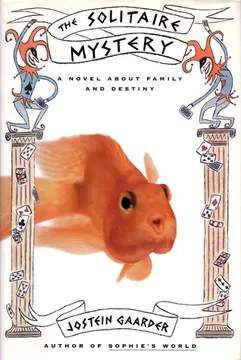


Plot Summary
The Road to Athens
Hans Thomas1 and his father,2 Otto,2 leave Arendal in an old Fiat to search for Anita,3 who abandoned them eight years earlier. A Greek fashion magazine shows her modelling in Greece, giving Otto2 a destination and his son1 a faint hope of reunion.
The journey also exposes the family history Otto2 returns to whenever he drinks: his mother,9 Line,9 loved a German soldier,4 Ludwig,4 during the occupation. After Ludwig4 was sent to the eastern front, Line9 gave birth to Otto,2 and neighbours shaved and assaulted her for her relationship with the enemy.
Otto2 grew up persecuted, left Arendal at seventeen to go to sea, and returned years later to build a life with Anita.3 Now he fears she is disappearing into the fashion world just as his own family has repeatedly lost someone.
The journey begins as a rescue mission, but its emotional pressure comes from inherited absence. Otto treats Anita’s departure as the latest turn in a family pattern, while Hans Thomas sees it more simply as the loss of a mother he can barely remember. The account of Line’s punishment gives that pattern a social history: private love becomes public shame, and a child inherits the consequences. Otto’s stories also reveal his coping strategy. He turns pain into grand questions about creation and fate, giving his son a way to think beside him even when neither can repair the past.
The Village Detour
At a remote Swiss garage, a tiny man11 gives Hans Thomas1 a magnifying glass and directs the travellers away from the highway toward Dorf. Otto2 later decides the detour was pointless, but the village’s small guesthouse gives them a night’s stop. While Otto2 drinks with locals, Hans Thomas1 wanders into a bakery and meets a white-haired baker4 who recognizes his Arendal origins and hints at a hidden drink.
The baker4 gives him four sticky buns, insisting he save the largest for last. Hans Thomas1 finds a tiny book baked inside it and uses the magnifying glass to decipher its miniature writing. Its opening is addressed to an unknown son who will one day continue a story begun decades earlier.
The plot’s machinery arrives as a sequence of objects with practical uses: a detour creates time, the glass makes tiny writing legible, and the bun conceals a message. Each object also changes Hans Thomas’s role. He is no longer simply the child following his father toward a reunion; he becomes the keeper of a secret his father cannot yet share. The baker’s recognition of Arendal makes the ordinary bakery feel uncannily personal, while Otto’s absence, caused by drinking, leaves his son alone at the threshold of the nested story.
A Book Inside Bread
The miniature book shifts to 1946, when Ludwig,4 an exhausted former German soldier, reaches Dorf after the war and is taken in by its baker, Albert Klages.7 Albert7 tells him how his mother died when he was young, his father drank himself to death, and Baker Hans8 became the first adult to protect him from village bullies.
Before his own death, Baker Hans8 introduced Albert7 to Rainbow Fizz, a drink that seemed to make the whole world present in the body. He also showed the boy a bottle of the luminous drink and a box of worn cards belonging to a sailor named Frode.5 Albert’s7 account ends with the story of Frode,5 a shipwrecked seaman who survived alone on an uncharted island.
The book links two forms of inheritance: material survival and the transmission of a story. Albert’s loneliness makes Baker Hans’s protection more than charity; it gives him a future in a trade and a place within a community. Ludwig, arriving after war has broken the world around him, receives that history in turn. Rainbow Fizz complicates the comfort of inheritance. Its promise is total sensation, yet the more completely it absorbs a person, the less clearly that person can recognize himself as separate from the world.
Frode’s Living Cards
Frode’s5 ship is wrecked in 1790, and he reaches a strange island where forests, lakes, animals, and unfamiliar fruits seem to multiply as he explores. Alone, he uses a pack of cards to invent companions, giving each suit a distinct appearance and occupation: clubs farm, diamonds blow glass, hearts bake, and spades build.
In time, the figures step out of his imagination and form a village, though they do not understand their origin. Frode5 also creates Rainbow Fizz from flower nectar and river water. It first sharpens sensation, then blurs identity and memory. One creation resists the drink’s dulling effect: the Joker,6 an outsider who asks who made the island’s people and why they exist.
Frode’s solitude gives imaginative life a double edge. The cards begin as companions he needs in order to endure isolation, but their arrival as independent beings turns comfort into an ethical problem: a creator can love what he makes and still deny it the truth of its origin. The Joker’s outsider status enables perception rather than belonging. Because he has no suit or assigned task, he can question the system that gives everyone else a place. The island thus makes self-awareness feel both liberating and dangerous.
Jokers on the Road
As the Fiat travels through Switzerland and Italy, Otto2 uses each stop to turn scenery into questions about life, chance, and the universe. His collection of jokers reflects his own sense of being an outsider, a feeling rooted in his childhood as the son of a German soldier.2
In Como, a fortune-teller12 lays out cards that appear to describe Hans Thomas’s1 absent mother3 and his father’s2 troubled past. Her reading unsettles him, especially when the Joker6 appears beside the card representing the boy.
The dwarf11 also reappears at the fair and later in Venice, though Otto2 dismisses the sightings. On the Adriatic, Otto2 explains how countless ancestral accidents made their present lives possible, while Hans Thomas1 privately recognizes how closely the cards resemble the figures in his book.
The journey’s coincidences are not presented as proof so much as pressure on the characters’ habits of explanation. Otto argues that people notice winning coincidences and forget the far greater number that mean nothing; Hans Thomas suspects that his own encounters form a pattern. The fortune-teller’s spread intensifies their disagreement without settling it. Otto’s joker collection gives the question a personal dimension: he has made a symbol of his exclusion into a hobby, while his son begins to see that the same figure may represent the capacity to notice what others overlook.
A Calendar of Cards
In the book, Frode5 explains that his islanders organize time through their fifty-two cards: each card governs a week and a month, and the extra day becomes Joker Day. Every four years, the villagers assemble their separate sentences into a story, with the Joker6 arranging them into a coherent sequence.
Their latest prophecy describes a northern boy arriving with a magnifying glass, finding a baker,4 and uncovering the island’s secret in a sticky bun. Hans Thomas1 recognizes himself in the prediction.
He also connects Frode’s5 lost fiancée, Stine,10 with the family history Otto2 told him, and realizes that the white-haired baker4 in Dorf may be tied to his own ancestry. The matching calendar calculations fascinate Otto2 too, especially when he learns his son1 was born on a leap day.
The calendar turns a game into an architecture for memory. Its extra day, outside the ordinary sequence, gives the Joker a place in time just as his lack of a suit gives him a place outside the village’s social order. For Hans Thomas, the prophecy makes family history feel less like a chain of random injuries and more like a story still being assembled. Yet the narrative does not simply replace chance with fate. Recognition requires the boy to interpret fragments, and his confidence grows through attention rather than certainty.
The Oracle’s Unclear Answer
On the way to Athens, Otto2 takes Hans Thomas1 through Delphi, where they visit the ruins of Apollo’s sanctuary and stage their own playful consultation of the oracle. Otto’s2 improvised prediction suggests a meeting with a beautiful woman near an ancient temple, and a coin toss leaves them with hope but no assurance.
He tells his son1 the story of Oedipus,15 whose efforts to escape prophecy lead him directly into its fulfillment. In Athens, Otto2 finds Anita’s3 modelling agency through a magazine advertisement, then admits he is afraid of meeting her.
After he gives Hans Thomas1 strong drinks on the hotel roof, the boy confronts his father2 about his drinking. Otto2 accepts the rebuke and agrees to stop, so their search proceeds with greater honesty between them.
Delphi gives the father and son a language for uncertainty, but not a reliable instrument for controlling it. Their mock oracle is both affectionate play and an attempt to soften the risk of rejection. Oedipus’s story sharpens the distinction between knowing a possible future and being able to master it. Hans Thomas’s challenge to Otto shifts the journey from speculation to responsibility. The boy’s concern is not that his father has imperfect answers, but that alcohol is diminishing the person whose curiosity has helped him endure a fractured family.
Cape Sounion Reunion
At the Temple of Poseidon, Hans Thomas1 spots Anita3 among photographers and walks toward her before his father2 can move. She recognizes him, rushes to embrace him, and then draws Otto2 into the reunion. Back in Athens, the family struggles to move beyond the shock of seeing one another. Anita3 meets Hans Thomas1 alone at a pastry shop, where he forces her to face the eight years without a letter or visit.
He explains how her absence shaped his life, including his habit of seeing her in the ace of hearts when he played solitaire. Anita3 cannot offer a simple reason for leaving, but she asks him to forgive her. She cancels her work, and the three begin travelling north together, uncertain but no longer separated.
The reunion resolves the physical distance while exposing the emotional work that distance has postponed. Anita’s embrace is immediate, but Hans Thomas refuses to mistake affection for explanation. His card imagery gives him a way to express loneliness without reducing it to accusation: the absent mother has become a place in a game he could play alone. The pastry shop conversation makes reconciliation conditional on truth and sustained presence. Her return matters not because it erases eight years, but because she chooses to begin repairing what those years damaged.
The Island Falls Apart
On the return journey, Hans Thomas1 reads the book’s account of Joker Day. At the banquet, the Joker6 assembles the islanders’ strange sentences into a prophecy: they are Frode’s5 imagined creations, and their growing knowledge will endanger their maker.
When the Joker6 exposes their dependence on Rainbow Fizz, the villagers attack Frode,5 who dies before Hans Thomas1 can save him. The island begins to collapse. The Joker6 helps the sailor’s grandson flee through shrinking landscapes, and Hans Thomas1 carries away a goldfish, the old card box, and Frode’s5 remaining Rainbow Fizz.
The Ace of Hearts, who has long felt she belongs elsewhere, vanishes into a playing card as the island sinks. The Joker6 and Hans Thomas1 escape by lifeboat and are rescued by an Arendal schooner.
The island’s collapse is the cost of a truth withheld until it becomes explosive. Frode’s figures have been granted life but denied the knowledge needed to understand that life, while Rainbow Fizz offers sensation as a substitute for reflection. The Joker breaks that arrangement, but awakening does not produce a peaceful community; the villagers turn their new understanding into violence. The Ace of Hearts’ disappearance makes the ending intimate as well as cosmic. She is both a person shaped by Frode’s imagination and a figure pointing beyond his private world.
The Missing Sticky Bun
After Hans Thomas1 tells his parents2 about the book, a small stranger slips into their locked Fiat in Bellinzona and steals it. Hans Thomas1 believes the thief is the dwarf11 who has followed them, while his parents2 finally accept that the boy has not invented every part of the mystery.
They continue to Dorf, where the bakery’s goldfish bowl has a chip that matches Hans Thomas’s1 magnifying glass. Outside the guesthouse, Line9 reveals that Ludwig4 has just died.
He had returned to the village, recognized that the boy who visited his bakery1 was his grandson,1 and spent his final days with Line.9 Otto2 never meets his father,4 but he learns that the German soldier4 he has long believed dead had survived and lived nearby. Ludwig4 leaves his possessions to Hans Thomas.1
The missing book converts certainty into a problem of memory. Hans Thomas has shared the secret and lost its physical evidence at the same moment, so the adults must decide whether to treat his account as fantasy or as testimony. The matched chip and magnifying glass offer one small, concrete confirmation, but Ludwig’s death closes the possibility of a direct explanation. His late recognition repairs the family’s history only partially: Otto gains knowledge of his father, while losing the chance to speak with him.
A Family Comes Home
Otto,2 Anita,3 Hans Thomas,1 and Line9 return to Norway together, but the sticky-bun book is gone and the family cannot verify the tale in full. Hans Thomas1 grows up carrying both the memory of the book and doubts about whether he read every page exactly as it happened. Years later, he writes the story from memory, aware that the Joker6 may have stolen the original to keep Frode’s5 island from becoming ordinary news.
The family’s life on Hisøy has changed: Anita3 is home, Otto2 has put drinking aside, and Hans Thomas1 has a younger sister, Tone Angelica. The old questions remain. What matters to him now is that the world still feels capable of surprising them, and that a Joker6 may still be asking people to notice it.
The ending refuses to make evidence the sole measure of truth. The book’s disappearance leaves Hans Thomas with an unstable memory, but it also prevents the mystery from becoming a specimen safely filed away. His family’s reunion is more tangible: four generations’ worth of absence has been interrupted by people choosing to stay together. Tone Angelica’s arrival renews the child’s position as the novel’s clearest witness to wonder. The continuing Joker is less a supernatural answer than a safeguard against habituation, a reminder that curiosity can survive even when certainty cannot.
Analysis
The novel’s central question is not simply whether the supernatural events are real. It asks what happens when people stop experiencing the world as something astonishing. Otto2 approaches that question through philosophy, Hans Thomas1 through observation, and Frode5 through invention. Their methods differ, but each encounters the same risk: a person can become so absorbed in explanations, grief, or sensation that the living world disappears from view.
The card structure makes this problem visible. The islanders have defined roles, assigned work, and a calendar that gives every card its place, yet they do not know who created them. The Joker’s6 lack of a place in that order becomes the condition of his insight. He can see the system because he is not wholly enclosed by it. That insight brings no easy rescue. The islanders attack Frode,5 and the island itself is lost. Awakening is valuable, but it can also destroy the comfort of an unquestioned world.
The family story gives the philosophical pattern emotional stakes. Line9 and Otto2 inherit the consequences of wartime shame; Hans Thomas1 inherits their sense that someone is always missing. The prophecy seems to organize those accidents into destiny, but the reunion with Anita3 depends on action, not supernatural certainty. She must choose to return, and Otto2 must confront his drinking. The characters cannot undo the past, yet they can interrupt its repetition.
Finally, the lost book makes the reader share Hans Thomas’s1 predicament. He remembers enough to feel the story’s force, but not enough to prove every detail. That uncertainty is not a defect to be solved. It preserves the novel’s distinction between possessing an answer and remaining awake to the question. The enduring Joker6 is the figure of that attention: the one who keeps asking who we are and how this improbable world came to be.
Review Summary
The Solitaire Mystery receives enthusiastic praise for its imaginative blend of philosophy and fantasy. Readers admire Gaarder's ability to weave profound existential questions into an engaging narrative about Hans Thomas and his father's journey to Greece. The story-within-a-story structure, featuring magical playing card dwarves and a mysterious tiny book, captivates readers across ages and cultures. Many highlight the Joker as a standout symbol representing the philosophical outsider. Some critics note occasional pacing issues, but most agree the book's themes of identity and wonder leave a lasting impression.
People Also Read
Characters
Hans Thomas
The curious sonHans Thomas is a thoughtful boy travelling with his father2 from Norway to Greece in search of his missing mother3. He watches closely, reads signs backward, plays solitaire, and asks questions adults often leave unasked. His curiosity is not merely cleverness; it helps him make sense of family pain that he cannot control. He loves his father2 while noticing how drinking can blunt the man’s warmth and judgment. The magnifying glass and the tiny book draw him into a story that seems to mirror his own life. He is imaginative but not immune to doubt, and he tries to distinguish what he has witnessed from what he hopes is true.
Otto
The sailor philosopherOtto is Hans Thomas’s father1, a mechanic, former sailor, joker collector, and self-appointed philosopher. He turns roadside pauses into reflections on creation, chance, and the smallness of human beings, often with humour that makes difficult questions approachable. Beneath his restless talk is a history of childhood persecution as the son of a German soldier4 and a mother9 condemned by her community. Alcohol is his way of revisiting that pain, though it also threatens his connection with his son1. He loves Anita3 and wants to bring her home, but his need to explain the world sometimes masks how little he can explain about his own family.
Anita
The absent motherAnita is Hans Thomas’s mother1 and Otto’s estranged wife2. She left Norway to pursue work in dance and fashion, eventually building a public image far removed from the mother her son1 remembers. Her absence shapes the journey before she appears in person, because Hans Thomas1 and Otto2 must imagine what she wants and whether she will return. Anita is not easily reduced to either villain or victim: she has sought a life beyond her family, yet that pursuit has left her son1 without an explanation. Her beauty is repeatedly noticed, but the deeper question is whether she can be seen as a person rather than as an image.
Ludwig
The wandering GermanLudwig is a German soldier and sailor whose life is shaped by war, displacement, and a love he cannot protect. After the war, he seeks refuge in Switzerland and becomes attached to the stories and traditions of Dorf. He is observant enough to recognize how grief and stigma can travel through a family, yet his own choices are constrained by distance, danger, and shame. His life connects the island’s old history to the Norwegian family at the centre of the journey. Ludwig’s restraint is part of his character: he carries a powerful story for years, unsure when telling it would heal and when it might deepen an old wound.
Frode
The stranded creatorFrode is a shipwrecked sailor who survives alone on an island and uses a pack of cards to imagine company. He is practical and inventive, learning to cultivate food, make glass, and use the island’s plants. His creations answer his loneliness, but their vividness raises questions he cannot comfortably face. Frode cares for the figures he has brought into being and wants to protect them from the truth of their origin. His affection therefore carries a paternal contradiction: he offers his creations a home while concealing the fact that they depend on his imagination.
The Joker
The questioning outsiderThe Joker belongs to none of the island’s suits, ranks, or trades. His outsider position makes him restless and perceptive: he asks about the island’s structure and the source of its inhabitants’ lives, questions that the others cannot sustain. His bells and clowning disguise a serious hunger to know who he is. He is drawn to truth even when it threatens the community he lives among, and he understands that awareness can be painful. The Joker also embodies a refusal to become accustomed to existence, challenging both the card people and the human characters to notice the strangeness of being alive.
Albert Klages
The village bakerAlbert is a lonely boy raised in Dorf after his mother dies and his father becomes an alcoholic. Baker Hans8 gives him food, protection, and a path into the baking trade. As an adult, Albert becomes the village baker and a keeper of Frode’s5 story. His loyalty grows from gratitude, but his life also shows how care can interrupt inherited hardship. He understands the value of giving a young person both practical security and a story large enough to imagine beyond the village.
Baker Hans
The keeper of wondersBaker Hans is an older seafarer who settles in Dorf and befriends Albert7 when the boy is hungry and bullied. His bakery becomes a refuge, and his wide travels give him objects and stories that make the village feel connected to the world. He guards Frode’s5 cards and the remaining Rainbow Fizz, passing their history to Albert7 rather than turning it into public gossip. Baker Hans is both protector and teacher, though his most lasting gift is the invitation to wonder.
Line
The punished young motherLine is Otto’s mother2 and Hans Thomas’s grandmother1. As a young woman during the occupation, she falls in love with a German soldier4 and bears a child after he is sent away. Her neighbours punish her publicly, even though she is neither a Nazi nor the cause of the war. Line’s resilience is expressed through her care for Otto2 and her refusal to make his origins a source of shame. Her story gives the family’s sense of loss a concrete beginning.
Stine
Frode’s fiancéeStine is Frode’s fiancée5 in Germany, the woman he leaves behind when he sails. Her life on shore becomes a distant but essential part of his island story. For Frode5, she represents the home, love, and future lost to the sea; for the generations after him, her name becomes a clue linking private longing to family history.
The dwarf
The strange guideThe tiny stranger at the Swiss garage gives Hans Thomas1 a magnifying glass and directs the family toward Dorf. He appears again during the journey, always briefly and at moments when the boy is close to a new clue. His cold hand and unchanging appearance make him difficult to dismiss, though Otto2 offers a joking explanation for him. He functions as a guide whose intentions remain uncertain.
The fortune-teller
The card readerThe fortune-teller at the Como fair lays out cards that seem to reflect Hans Thomas’s1 family history. Her reading deepens his suspicion that the journey is linked to forces beyond coincidence, while her performance leaves room for doubt.
The fortune-teller’s daughter
The fairground girlThe fortune-teller’s12 beautiful daughter takes Otto’s2 money and leads Hans Thomas1 toward the tent. Her brief presence heightens the boy’s awareness of how adults and children can read the same encounter differently.
Socrates
The questioning philosopherSocrates appears through Otto’s2 account of ancient Athens as a thinker who questions people rather than claiming certainty. His example helps Hans Thomas1 understand that recognizing what one does not know can be a form of wisdom.
Oedipus
The doomed seekerOedipus features in Otto’s2 retelling of a Greek tragedy about prophecy, mistaken identity, and an attempt to escape fate. His story gives the family a cautionary example of how pursuing certainty can bring a person face to face with painful truths.
Plot Devices
The Sticky-Bun Book
A story inside a storyThe tiny book hidden in a sticky bun carries Frode’s5 island history across generations. Hans Thomas1 can read it only with the magnifying glass, and its prophecies increasingly resemble the events of his own journey. The book joins the family plot to the fantasy plot without explaining how their connection works. Its eventual disappearance leaves Hans Thomas1 with a story he cannot prove, preserving the novel’s tension between memory, invention, and belief.
The Magnifying Glass
A lens for hidden cluesGiven to Hans Thomas1 by the tiny stranger11 at the Swiss border, the magnifying glass first seems like an odd keepsake. It makes the microscopic writing in the book legible and later matches the chip in the bakery’s goldfish bowl. It links the strange guide11, the book, and the village through a small physical object, while also reflecting Hans Thomas’s1 habit of looking more closely than the adults around him.
Rainbow Fizz
Wonder with a costMade from the island’s flowers and water, Rainbow Fizz floods the drinker with sensations from across the world. At first it can make someone feel intensely alive; repeated drinking blurs memory, identity, and the boundary between self and surroundings. Frode’s5 creations become absorbed in it, while the Joker’s6 rejection of it allows him to think more clearly. The drink embodies the difference between experiencing the world and losing oneself inside sensation.
The Card Calendar
Time arranged as a gameFrode5 organizes the island’s year around the fifty-two cards: each card corresponds to a week and a month, while an extra day belongs to the Joker6. The system shapes the island’s seasons and its four-year gatherings, when the villagers contribute sentences and the Joker6 assembles them into a story. The calendar turns play into a way of measuring time, preserving memory, and imagining how separate lives might form a larger pattern.
The Joker Game
Prophecy through fragmentsAt the island’s gathering, each card figure contributes a sentence. The Joker6 rearranges these fragments into a continuous account that describes Frode’s5 creations, the island’s collapse, and events in Hans Thomas’s1 family. The game lets people speak truths they cannot understand individually, turning chance utterances into apparent prophecy. Its meaning depends on interpretation, however, and the recovered story remains incomplete until Hans Thomas1 reads the final pages.
Download PDF
Download EPUB
.epub digital book format is ideal for reading ebooks on phones, tablets, and e-readers.








