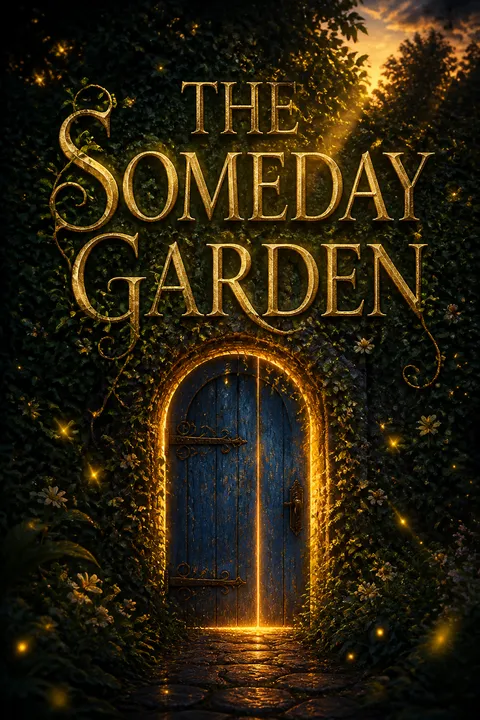


Plot Summary
Prologue
On the Maine cliffs, Lilymoor is more than a house surrounded by flowers. Its owners, Henry and Eula Beck, turn the estate into a public garden after deciding to build a family in a different way.
They shape paths through the seasons, tend what grows, and give the house a name. Years later, Sophie Drear will arrive there with her closest friend, carrying a promise neither of them yet knows how much it will matter to keep.
The opening makes Lilymoor a place built from care rather than inheritance alone. Henry and Eula do not simply preserve an old estate; they invite strangers into it and make the garden a form of family. That distinction prepares the novel’s central tension: what people leave behind can become either a sealed memorial or something others are allowed to tend. By placing the house before Sophie’s story, the prologue gives the garden its own quiet authority. It is not merely a romantic backdrop. It is a living record of choices, losses, and unfinished intentions.
A Promise Beneath the Oak
Sophie Drear meets Harriett Fisher in a college study group after they discover they share an obsession with Lilymoor, a fabled garden on the Maine coast. Harriett collects words that resist translation and dreams of writing; Sophie studies plants and trusts what she can grow with her hands. Their differences feel complementary, and they become inseparable.
For graduation, they drive up the East Coast and spend their final afternoon together at Lilymoor, wandering its maze and arguing over whether its legends are magic or wind. Under the garden’s ancient oak, they promise to return in ten years, imagining books, children, and careers that have not yet taken shape. Sophie leaves believing that whatever changes, the friendship will endure.
The promise gives the novel its time structure before grief can alter what the future means. Sophie and Harriett imagine ten years as a generous container, a span in which adulthood will fill in naturally. Their different temperaments matter: Harriett treats possibility as an invitation, while Sophie prefers plans she can verify. The pledge asks Sophie to trust an uncertain future, but she makes it in the safety of a shared moment. In retrospect, the promise is both a source of pain and a form of continuity. Returning to Lilymoor will not restore the future they pictured, but it will let Sophie act on the love that made the promise.
Sophie Returns to Lilymoor
Ten years later, Sophie comes back as a horticulturist on loan from the New York Botanical Garden. She has been asked to revive Lilymoor before its two-hundredth anniversary, though she is privately unsure she still wants her career. Harriett died the previous year, and the anniversary of their visit leaves Sophie working harder rather than facing what she has lost.
The estate is overgrown, its records gone after a greenhouse fire, and its owner, Eula Beck, is recovering from a broken hip. Eula unexpectedly returns from rehabilitation on a fire truck, then tells her staff she plans to retire at the bicentennial and name a successor. As Sophie searches the hedges for invasive vines, a blue door appears where no door should be.
Sophie’s return joins professional uncertainty to a private obligation. She has chosen the garden as work, but the ten-year promise makes that choice emotionally charged: Lilymoor is one of the few places where her memories of Harriett are not dominated by illness. Eula’s retirement announcement adds a second form of transition, forcing the staff to imagine the estate without its longtime steward. Sophie responds to both pressures by returning to tasks she can control, especially pruning and diagnosis. The impossible door disrupts that strategy. Its appearance suggests that Lilymoor’s disorder is not simply neglect, and that the past may be active rather than safely contained.
The Stranger Behind the Door
Inside the hidden garden, Sophie finds a copper-haired man asleep beneath a willow. He wakes disoriented and dismisses her, insisting he has come from a party, while Sophie knows she last saw him the previous day. Sirens interrupt their quarrel. Sophie leaves to check on the staff, and when she looks back, both the man and the door have vanished.
That evening, Oliver Hale arrives at Sophie’s cottage with a key, unaware that Eula has placed her there. He is Eula’s great-nephew, an architect who restores old houses, and his awkward apology gives way to easy flirtation. His arrival makes the stranger’s existence harder to explain: the Beck family has two nephews, but no one seems concerned that one is missing.
The first encounter establishes a mystery through conflicting perceptions rather than a clear supernatural spectacle. Sophie’s practical account of time clashes with the stranger’s insistence that only an hour has passed, and then the doorway itself refuses to remain evidence. Oliver’s arrival shifts the problem from a solitary hallucination to a family context, but it does not solve it. Sophie must now distinguish between two Beck nephews while also deciding whether to risk telling anyone what she saw. The scene mirrors her emotional habits: she would rather investigate privately than invite other people into uncertainty. The garden makes that isolation literal, enclosing a man whom the rest of Lilymoor believes is elsewhere.
Two Clocks, One Garden
The blue door returns, and the stranger accuses Sophie of leaving him trapped for days, although she remembers only brief visits. She tries to help him climb the garden wall, but the space distorts around them; Cyrus falls, and Sophie tumbles into the hedge maze, where Oliver catches her. Later, a photograph in Eula’s bedroom identifies the stranger as Cyrus Beck, Oliver’s cousin.
Sophie learns that Eula still speaks with Cyrus and expects him at the bicentennial, while Oliver says he has not visited in years. In the hidden garden, Cyrus confirms the party is happening in his present, August, while Sophie is still in July. Hoping to keep him from being trapped, Sophie sends him a letter warning that Lilymoor will waste his time.
The time discrepancy turns the garden into a relationship with an asymmetrical clock: Sophie accumulates days and choices, while Cyrus experiences her visits as fragments of one evening. The family’s conflicting accounts make the paradox more unsettling, because Cyrus is simultaneously present in Eula’s life and absent from the ordinary estate. Sophie’s attempt to prevent the future by letter reveals her instinct to solve danger through control. Yet she knows little about Cyrus’s motives and misjudges how he will respond to a challenge. Her intervention is caring, but it is also a way to avoid the more difficult task of accepting that she cannot manage every consequence.
The Greenhouse's Hidden Record
Sophie’s letter fails to keep Cyrus away; its warning only sharpens his resolve to attend. Meanwhile, the leak soaking Lilymoor’s wildflower beds leads Sophie and Oliver through an old opening in the Rose Court to the greenhouse ruins.
Oliver explains that he and Cyrus started a bonfire there as teenagers after Henry Beck died. The fire destroyed Henry’s greenhouse and workshop. Cyrus was badly burned, took the blame, and left Lilymoor, while Oliver kept their shared responsibility secret.
Beneath a charred workbench, Sophie finds Henry’s water-damaged journal. Its sketches include a half-built garden with a gazebo, a willow, and a name: the Someday Garden. Cyrus recognizes Henry’s plan and believes the garden has trapped him so he can finish it.
The ruined greenhouse makes the family’s silence tangible. The fire was not merely an accident; it became the event around which the cousins organized their adult identities. Cyrus made himself responsible for the damage, while Oliver carried guilt for letting him do so. The journal complicates that history by showing that Henry’s work survived in fragments, even when the family stopped speaking about it. The Someday Garden is therefore both a supernatural puzzle and a material archive. Its unfinished state draws Cyrus back toward a self he has tried to replace with professional discipline, while Sophie’s discovery gives her a task that joins her horticultural knowledge to the emotional work neither nephew has managed alone.
A Garden Takes Shape
Cyrus works from Henry’s journal while Sophie searches Lilymoor for the garden’s real location. The plants respond to Cyrus’s care, and the hidden space slowly gains its gazebo, flower beds, and paths. He tells Sophie that the fire made him feel he had ruined the only place that accepted him.
Sophie, who has avoided speaking openly about Harriett, finally breaks down and lets him hold her. She explains that her closest friend died before they could keep their promise to return together. Cyrus listens without trying to tidy her grief into reassurance.
Their growing trust is tested when Sophie confesses she wants to help him partly because she hopes saving him might prove she can still save something. He urges her to keep living beyond Lilymoor, though she is not ready to imagine that future.
The garden’s visible progress parallels the first movement in Sophie’s grief: she lets another person witness what she has been carrying instead of turning pain into private labor. Cyrus’s response is important because he does not treat her grief as a problem to correct. He offers presence, which is more demanding than a comforting formula because it leaves her feelings intact. At the same time, his own guilt surfaces through the work. Cultivating Henry’s plan lets him care for a place he believes he forfeited, but it also risks becoming another way to remain trapped in the past. The garden advances only as both characters begin to question the stories they tell about what they deserve.
The Kiss Sophie Refuses
Sophie brings Cyrus strawberries, and their teasing turns into a kiss that has been gathering across their visits. The flowers around the gazebo burst into bloom, but Sophie pulls away, frightened by how much she wants him and by the possibility that he may never leave the garden.
She escapes before they can decide what the kiss means. Outside, she helps Juliette through a disastrous date with Myke, whose rejection exposes Juliette’s lingering hurt over her ex, Rob.
Later, Sophie and Juliette retrieve a heavily drunk Oliver from the Wharf, and their late-night rescue deepens their friendship. Rain then keeps Sophie from visiting Cyrus for several days. When she returns, she admits the truth about Harriett, and Cyrus tells her his own account of cowardice and regret.
Sophie’s retreat is not a rejection of Cyrus so much as a refusal to risk another attachment while grief still feels like the only remaining bond to Harriett. She mistakes emotional movement for disloyalty, as though loving someone new might overwrite the person she lost. The parallel with Juliette makes this fear less solitary: Juliette is also trying to interpret rejection without turning it into proof of her own inadequacy. Their friendship grows through practical care, especially the unglamorous business of getting Oliver home safely. By returning to Cyrus after the rain, Sophie makes a small but decisive change. She does not become unafraid; she chooses to speak despite the fear.
The Summer They Choose
With August approaching, Sophie and Cyrus tell each other more of what they have concealed. Sophie describes Harriett’s death and her guilt at still being alive; Cyrus admits he returned to Lilymoor believing he was wanted, then hid in the garden after saying things he regretted.
They begin to understand that both have used work and self-punishment to avoid choosing a future. Sophie stops fleeing their attraction, and they become lovers in the garden as its flowers reach full bloom.
Outside it, she supports Juliette after the failed date, and a Scrabble night gives Juliette and Oliver room to move from irritation toward affection. Wykofski and Sophie clear the Willow Grove for the celebration, while Cyrus helps complete Henry’s garden, each accepting that care can be pleasurable rather than another debt to repay.
This section links romantic consent to a broader permission to live. Sophie’s intimacy with Cyrus matters not because romance cures bereavement, but because she stops treating pleasure as evidence of betrayal. Cyrus likewise begins to distinguish responsibility from punishment: he can acknowledge the fire without allowing it to define every later choice. The supporting relationships make that shift social rather than purely private. Juliette and Oliver discover a possible connection through conflict and shared work, while Wykofski offers Sophie companionship without demanding disclosure. The garden’s bloom is not a reward for suffering. It registers sustained attention, suggesting that meaningful change comes from repeated acts of care, not from a single breakthrough.
Eula's Last Summer Party
As the bicentennial nears, Sophie and Wykofski restore the Willow Grove for more than five hundred guests, while Juliette wrestles with food, music, and Oliver’s unsolicited efforts to expand the guest list.
A Scrabble game finally makes him apologize for treating her work as his to manage, and their attraction becomes harder to ignore. Eula tells Sophie she arranged the retirement announcement to draw both nephews home, since Henry and she had always intended them to inherit Lilymoor together. She gives Sophie the estate’s old key and asks her to consider staying another season.
Sophie also finds a new will in which Cyrus has removed himself as heir and named Oliver alone. On the celebration day, Sophie’s mother and stepfather arrive unexpectedly, but Sophie is still searching for the real Someday Garden.
The party gathers the novel’s competing forms of inheritance: a public garden, a family history, and the emotional labor of caring for people who may leave. Eula’s plan is loving but controlling; she tries to reunite her nephews by shaping the occasion, much as she has shaped the estate. Oliver’s meddling comes from concern, yet he must learn that care without listening becomes another form of control. Cyrus’s rewritten will shows the other side of the same family pattern: he gives away what he wants because guilt has convinced him he should not claim it. Sophie receives both a key and an invitation to stay, but neither can decide her future for her.
The Wall Finally Breaks
At the party, the Cyrus who arrives is polished, distant, and unaware of the tenderness he shared with Sophie inside the garden. After Damnit drives him up the veranda steps, Sophie retrieves his dropped glasses, but he leaves to wander the grounds with Oliver.
The cousins argue, and Cyrus disappears into the hedge maze. Sophie cannot find the moving blue door before clouds cover the sunset. Then Eula’s words about every path returning home give Sophie a new idea: the honeysuckle wall in the Central Garden may conceal the missing space.
She takes a sledgehammer to the stones and uses Eula’s key on the blue door behind them. Inside, she finds Cyrus asleep among vines. He wakes, recognizes her, and she leads him out. Oliver punches him, then admits they share the blame for the fire.
The climax depends on Sophie changing her method. For weeks she has searched the mapped garden as though the answer must be found by better observation; at the crucial moment, she recognizes that the map itself reflects what the family has chosen to acknowledge. Breaking the wall is not a rejection of Lilymoor but an act of refusing its silence. Eula’s key turns inherited trust into practical access, while the honeysuckle that seemed like an invasive nuisance becomes a trail. Cyrus’s recognition of Sophie confirms that their intimacy was real to him, even though the ordinary timeline had not yet allowed it. Oliver’s punch releases anger, but his admission begins the repair.
A Future Beyond Golden Hour
After the party, Sophie and Cyrus spend the night together in her cottage. The next morning, she tells him she wants to stay at Lilymoor and asks him to imagine a life there with her. He admits that the place could hold a future after all.
Oliver arrives with coffee, and Cyrus apologizes for changing Eula’s will without speaking to him. Oliver says he wants to share the inheritance, as they once planned, and the cousins reconcile. Sophie accepts the chance to remain for another season.
Later, in the hedge maze, she hears Harriett’s voice and asks for the word she once taught her for waking early to listen to birds. Sophie tells Harriett she loves her, then lets the voice fade without chasing it. She returns to Cyrus carrying grief, but no longer alone with it.
The resolution refuses to make healing equivalent to forgetting. Sophie’s conversation with Harriett gives her a final moment of closeness, but the crucial action is that she does not follow the voice or demand its return. She can love the dead and still choose the living. Cyrus and Oliver’s agreement similarly transforms guilt into shared responsibility: the estate no longer has to be a prize one nephew forfeits and the other bears alone. Sophie’s decision to stay is not a return to the future she once imagined with Harriett. It is a new commitment made with full knowledge that seasons change and people leave. The novel’s hope rests in choosing again, not in securing permanence.
Epilogue
Sophie stays at Lilymoor, and Cyrus joins her there, sharing responsibility for the estate with Oliver. The years bring ordinary changes: Juliette and Oliver travel, Wykofski leaves to follow a new dream, and Eula remains at Lilymoor for another decade.
Sophie and Cyrus build the Someday Garden in the real grounds and learn its changing seasons together. Sophie never hears Harriett’s voice again, and Lilymoor’s magic keeps its distance. The garden still gives them what they need: a place to remember, to grow, and to begin again.
The epilogue tests the promise of the ending against time itself. Sophie and Cyrus do not preserve the summer as a perfect, enchanted interval; they live through ordinary seasons, departures, aging, and new work. That movement matters because the magical garden initially offered Sophie the temptation of suspended time, a place where loss could be postponed. Her later life accepts change without treating it as erasure. Harriett remains present through memory rather than supernatural visitation, and Lilymoor’s magic becomes less necessary once Sophie can carry love forward herself. The conclusion makes permanence less important than continuity: what endures is not an unchanged garden, but the practice of tending it.
Analysis
The Someday Garden builds its romance around a problem of timing, but its deeper concern is the way grief can make time feel morally dangerous. Sophie has not simply lost Harriett; she has begun to treat ongoing life as a possible betrayal of their friendship. Cyrus makes a parallel error. He converts one adolescent mistake into a permanent verdict on who he is, then uses work and self-denial to keep that judgment intact. The magical garden gives both characters a physical form for these habits: it preserves Cyrus in an evening he cannot leave, while Sophie can visit only by crossing the threshold between ordinary days and sunset.
Lilymoor’s supernatural rules are meaningful because they do not offer an escape from responsibility. Sophie cannot rescue Cyrus by wishing, and Cyrus cannot finish the garden by remaining the same person who entered it. Their work requires attention to history: the greenhouse fire, Henry’s lost plans, Oliver’s silence, and Eula’s reluctance to reopen painful places. The hidden garden is not a perfect refuge. It is unfinished, initially bare, and dependent on labor. Its transformation suggests that memory becomes sustaining when it is tended rather than sealed away.
The novel also gives care a communal shape. Wykofski’s practical optimism, Juliette’s vulnerability, Oliver’s gradual accountability, and Eula’s complicated stewardship all prevent healing from becoming a private romantic cure. Sophie’s grief remains, but she learns to speak Harriett’s name and accept other people’s care. Her eventual choice to stay is not a rejection of her old life or a replacement for her lost friend. It is an act of authorship: she allows the future to differ from the one she and Harriett planned, while carrying their bond into it. The garden’s seasons make that change legible. Beauty does not last by remaining untouched; it lasts through renewal, shared work, and the willingness to begin again.
Review Summary
Reviews for The Someday Garden are largely positive, averaging 4.05 out of 5. Readers consistently praise Ashley Poston's seamless blend of magical realism and emotional depth, particularly her tender portrayal of grief following the loss of a best friend. The enchanting Lilymoor setting, whimsical secret garden, and relatable protagonist Sophie Drear resonate strongly. Common criticisms include slow pacing, underdeveloped romance, and insufficient explanation of the magical elements. Many readers call it among Poston's best work, frequently comparing it favorably to The Seven Year Slip and The Dead Romantics.
Characters
Sophie Drear
The grieving horticulturistSophie is a skilled horticulturist who understands plants more easily than people. Practical, responsible, and quick to bury herself in work, she has built a life around tasks with visible answers: water, soil, pruning, repair. Her loyalty to Harriett is profound, but grief has made Sophie wary of new attachments and doubtful that she deserves happiness. She is not naturally persuaded by magic or romance; she needs to see what care produces. At Lilymoor, her knowledge of plants becomes a way to engage with uncertainty rather than escape it. Her defining strength is persistence, though she must learn that continuing to live is not a betrayal of the people she has lost.
Cyrus Beck
The guarded heirCyrus, whom close friends call Rus, is Eula Beck’s great-nephew and a high-powered lawyer. He is meticulous, intellectually sharp, and practiced at keeping emotion outside the boundaries of his work. Beneath that control is a man who loves gardening and remembers Lilymoor as a place of freedom, but who has tied one youthful mistake to his entire sense of worth. He is haunted by family comparisons and by the fear that returning to the estate means becoming the irresponsible boy he worked to outgrow. Sophie’s directness unsettles his defenses because she recognizes his care without excusing his avoidance. His central struggle is whether competence can include vulnerability, pleasure, and the willingness to belong.
Harriett Fisher
Sophie’s word-loving confidanteHarriett is Sophie’s closest friend from college, an aspiring novelist who collects words whose meanings resist easy translation. Curious, romantic, and attentive to the wonder in ordinary life, she balances Sophie’s skepticism without trying to make her into someone else. Harriett is also a vivid presence in Sophie’s memories, associated with shared jokes, college rituals, and their promise to return to Lilymoor. Her love of stories and strange words gives Sophie a language for feelings she would otherwise leave unnamed. Harriett’s influence is not simply inspirational; it is intimate and particular, formed by the habits and memories the two friends made together.
Oliver Hale
The charming architectOliver is Eula’s other great-nephew, a talented architect who restores old houses and knows how to put people at ease. He is playful, sociable, and inclined to involve himself in whatever needs doing, sometimes before asking whether help is wanted. His easy charm contrasts with Cyrus’s restraint, but both men are shaped by the same family history and by their childhood bond. Oliver carries guilt about the greenhouse fire and resentment over the distance that followed it. He wants Lilymoor protected, even as he resists being asked to take sole responsibility for it. His warmth is genuine, but his growth requires him to listen as carefully as he acts.
Eula Beck
Lilymoor’s indomitable stewardEula owns and tends Lilymoor with the force of someone who has spent a lifetime making a home from a difficult old estate. She is generous, theatrical, stubborn, and far less willing to accept physical limits than her doctors would prefer. Her husband Henry’s memory is woven through the house, and her love for their nephews shapes her hopes for Lilymoor’s future. Eula can be impulsive and secretive when she believes she is helping, but she is also capable of recognizing when grief has kept her from caring for the living garden. Her stewardship is an act of love, though she must learn to share both the work and the decisions.
Juliette
The overextended event plannerJuliette runs events and relations at Lilymoor and keeps its many moving parts in order with a clipboard, lists, and sheer determination. She is competent, colorful, and emotionally open, though she often tries to solve romantic disappointment by making excuses for the people who cause it. The bicentennial pushes her beyond her careful plans, while her growing connection with Oliver challenges her tendency to keep work and desire neatly separated. Juliette becomes one of Sophie’s first new friends at Lilymoor. Their bond develops through practical kindness, shared frustration, and the realization that being capable does not mean having to manage every problem alone.
Wykofski
The garden’s resourceful fixerWykofski oversees maintenance, landscaping, and a remarkable range of improvised repairs at Lilymoor. A cheerful bricoleur, he makes do with what is at hand, plays banjo, brews unpredictable lemonade, and gives coworkers affectionate nicknames. His optimism is not naïveté; it is a deliberate way of making room for possibility when circumstances are difficult. Wykofski notices when Sophie is struggling and offers company without demanding an explanation. His own experience of making a home after loss gives his encouragement weight. He provides Lilymoor with humor, practical skill, and a model of belonging that does not depend on owning the place.
Eddie
Sophie’s devoted stepfatherEddie is Sophie’s stepfather, a county accountant married to Sophie’s mother. Warm and good-humored, he joins her mother on the long drive to Lilymoor and is quick to turn a family trip into a joke. His easy affection helps Sophie feel the comfort of home without asking her to explain every difficulty.
Sophie’s mother
Her steady parental anchorA former travel nurse, Sophie’s mother raised her while moving from place to place and taught her to care for living things even when circumstances were unstable. She is loving, anxious, funny, and direct about the need to treat oneself with the same patience one gives a plant. Her phone calls keep Sophie connected to home, while her eventual visit shows that she is willing to make a long journey when Sophie needs her. She offers advice without taking over Sophie’s choices.
Henry Beck
Lilymoor’s visionary gardenerHenry was Eula’s husband and the gardener who understood Lilymoor’s rhythms better than anyone. He designed paths, experimented with plants, and left sketches and unfinished plans throughout the estate. His affection for the garden was matched by his affection for his nephews, whom he welcomed into its work and play. Even in absence, Henry shapes the choices of Eula, Oliver, and Cyrus. His journals make clear that an unfinished project can be an invitation rather than a failure.
Yafir
Lilymoor’s exacting bookkeeperYafir manages Lilymoor’s accounts and prefers clear budgets to Eula’s sudden expansions of the guest list. His careful, anxious approach makes him a useful counterweight to the estate’s more improvisational personalities. He is also a devoted husband and father, and his family obligations sometimes pull him away from work.
Sanchez Belo
Harriett’s former fiancéSanchez was Harriett’s fiancé and a person Sophie struggled to get along with, though their shared love for Harriett kept them connected. His news that he is engaged again forces Sophie to confront how differently people move through grief. He is not a villain; his choice simply arrives at a moment when Sophie is still measuring her life against the one Harriett might have had.
Damnit
The territorial garden gooseDamnit is a Canada goose who refuses to migrate and treats several Lilymoor workers as personal enemies. She repeatedly chases Sophie and Cyrus, disrupts the garden’s peaceful image, and sends people scrambling for stairs or shelter. Her comic aggression becomes part of the estate’s familiar daily disorder.
Reggie
The ineffectual goose dogReggie is the border collie Eula acquired to keep Damnit in line. He is gentle, devoted, and almost entirely unsuccessful at chasing the goose, so Lilymoor’s staff end up managing the conflict themselves. His loyalty to Damnit gives the pair an unexpectedly tender place in the garden’s comic ecosystem.
Nicole
Odette’s familiar grocerNicole works at her family’s grocery store and has known Oliver and Cyrus since their childhood summers in Odette. She remembers their old fondness for strawberries and still treats Oliver with easy familiarity. Her small kindnesses show how a close-knit town keeps a place in its memory even for people who leave.
Myke
Juliette’s disappointing dateMyke is a dentist Juliette dates briefly. His decision to pursue someone else, after encouraging Juliette’s interest, leaves her feeling foolish and hurt. His role is small but clarifies the difference between Juliette’s sincere openness and the evasions she has learned to excuse.
Rob
Juliette’s unresolved exRob is Juliette’s former partner, with whom she had an on-and-off relationship. His impending marriage brings back her fear that she has been the problem in their years of indecision. He represents the emotional residue Juliette must face before she can risk a more reciprocal connection.
Plot Devices
The Someday Garden
A pocket outside timeA hidden, unfinished garden appears behind a blue door that moves around Lilymoor. Sophie can enter it near sunset, while Cyrus experiences the place as a prolonged evening connected to the night of the bicentennial. Their visits therefore unfold at different speeds: Sophie lives through weeks of work and discovery, while Cyrus remembers only short intervals between her arrivals. The garden’s shifting location conceals its real position inside the estate, and its completion depends on Cyrus recovering Henry’s plans and accepting a future beyond his guilt. Its magic literalizes emotional suspension, especially the wish to stay in one moment rather than face what comes next.
The Blue Door and Key
A passage through silenceThe blue door is the unstable entrance to Henry’s unfinished garden. It appears in different parts of Lilymoor, then disappears when the weather or light changes, making the garden difficult to locate by ordinary mapping. Eula’s old key, given to her by Henry, eventually opens the real door behind a wall of honeysuckle in the Central Garden. The door’s shifting position reflects the family’s avoidance of the greenhouse fire and of the plans that survived it. The key becomes useful only when Sophie recognizes that the route home may require breaking through what the estate has hidden.
Harriett’s Magic 8 Ball
Grief made tangibleSophie carries a heavy Magic 8 Ball containing Harriett’s ashes and consults it when she feels unable to choose. She knows the answers are generated by the toy, yet treats the ritual as a way to address the friend whose judgment she misses. The object gives Sophie a private bridge to Harriett’s humor and belief in small enchantments. As Sophie begins to share her memories with other people, the 8 Ball becomes less a substitute for conversation and more a reminder that love can remain present without controlling every decision. Its playful answers soften the novel’s grief without making loss disappear.
Untranslatable Words
Names for difficult feelingsHarriett’s collection of words gives Sophie a vocabulary for experiences she struggles to describe, including longing for a distant place, grief for a lost home, and the sound of wind through leaves. Each chapter’s word offers a small lens on the events that follow, connecting the garden’s physical details to the characters’ emotional lives. The words do not solve their problems; they let Sophie recognize what she is feeling without reducing it to a simple explanation. The device also preserves Harriett’s way of noticing the world, so Sophie can carry her friend’s curiosity into conversations and choices Harriett never witnessed.
The Language of Flowers
Feelings carried by plantsSophie reads flowers through their traditional associations, from remembrance and patience to devotion and longing. These meanings shape how she understands Lilymoor’s plants and the gestures surrounding them, including the blossoms Eula receives beside contracts and the honeysuckle that threads through the hidden garden. Plant knowledge also gives Sophie a concrete way to care for people when direct emotional language feels difficult. The flower symbolism is not a code that determines the characters’ choices; it is an expressive vocabulary that helps them notice what they are already trying to say. The garden’s growth makes that emotional language visible.
About the Author
Other books by Ashley Poston






Download PDF
Download EPUB
.epub digital book format is ideal for reading ebooks on phones, tablets, and e-readers.








