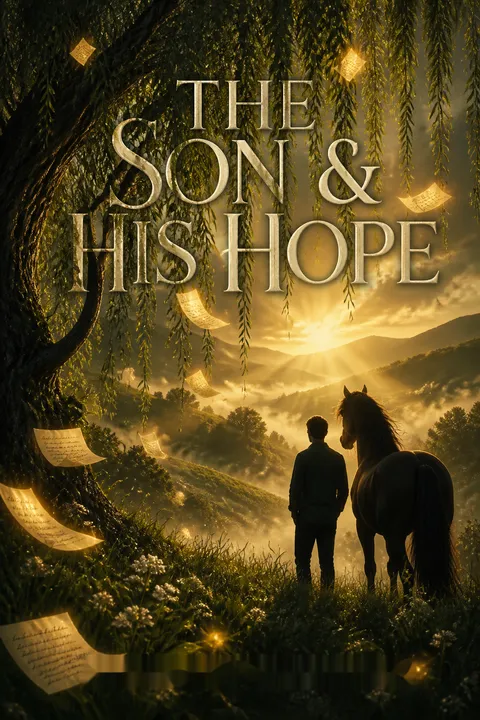


Plot Summary
Prologue
Della Wild, widowed after a celebrated love story, dreads watching the film made from her and Ren’s life. The public retelling has made private grief a spectacle, but her greater worry is their son Jacob.
He has inherited Ren’s fierce independence along with the pain of losing him, and Della fears he has mistaken emotional distance for strength. As Jacob begins his own story, she sees Hope, the daughter of the actor playing Ren, as someone who might reach him. Della knows, however, that loving a Wild has never been painless.
The prologue frames the novel as a story about inheritance, but what passes from parent to child is not only land, temperament, or family legend. Jacob inherits a way of understanding love as inseparable from bereavement. Della’s perspective also establishes the cost of turning private lives into public stories: the film repeats her grief while simplifying it for an audience. Her hope for her son is tender but not neutral; she wants another person to reach him because she cannot undo the losses that shaped him. This anticipation invites readers to question whether love can change Jacob without pretending his fear is merely a romantic obstacle.
The Premiere Collision
At fourteen, Jacob Wild attends the premiere of a film about his parents, Ren and Della, because he believes he must protect his widowed mother from the people turning their history into entertainment. The film’s invented ending, in which Della dies, has already worsened his nightmares.
Actor Graham Murphy, who plays Ren, arrives with his ten-year-old daughter, Hope, whose mother also died. Hope studies Jacob, asks about his horse, and offers him comfort he cannot accept.
Della invites Graham to bring Hope to Cherry River for riding lessons during summer. Jacob resents the intrusion, but the invitation sets their lives on a shared course: Hope will return to the farm, and Jacob will have to face someone who recognizes grief without treating him as a spectacle.
The premiere makes grief public before Jacob has learned how to bear it privately. His fury at the film is not simply hostility to Hollywood; its false ending converts his deepest fear into a paid-for image, leaving him unable to separate representation from anticipated reality. Hope’s curiosity unsettles him because she approaches loss directly rather than through adult euphemism. Their first connection is therefore asymmetrical: she seeks understanding, while he reads closeness as a threat to the mother he has promised to protect. The farm invitation begins the plot by bringing that mismatch out of the theater and into the landscape that formed Jacob.
Forrest’s Reckless Lesson
A year later, eleven-year-old Hope arrives at Cherry Equestrian for her first lesson. She wants to gallop immediately, but Jacob puts her on Binky, a steady pony, and she becomes frustrated when the basics prove difficult. Hope admits she has no friends and tells Jacob that she found her mother dead after her suicide.
Jacob, who has been told by the film that his mother died the same way, angrily corrects her: Della is alive. He then takes Hope onto Forrest, his difficult roan, and lets her experience a canter under his control. The ride frightens her before it exhilarates her. She leaves knowing horses are not a fantasy and that she wants to ride, while Jacob discovers that her bold questions conceal a loneliness like his own.
The riding lesson binds emotional risk to physical risk. Jacob gives Hope a dangerous experience because he understands that a sanitized version of riding would not answer her desire; yet his method also repeats his own impulsive search for freedom. Hope’s disclosure exposes how adults have mistaken her morbid questions for misbehavior instead of attempts to make sense of abandonment. Jacob’s correction about Della reveals how thoroughly the film has distorted his family in his mind. The two children do not resolve their grief, but they begin an unusually candid exchange in which neither is required to pretend that loss is too adult to discuss.
The Compass and Locket
At sixteen, Jacob leaves school to work full time at Cherry River, and Della gives him ownership of the land his father helped build. He also delivers the first of Ren’s four milestone gifts to her: a blue ribbon pin and a message that revives her grief. Hope arrives at the same diner with Graham, interrupting the family’s private exchange.
Jacob opens his own gift, a compass meant to help him find his own direction. Hope later leaves behind a fragment of her mother’s black lace. Jacob sends it to Scotland in a silver locket, giving her a safe place to carry it. Hope writes often; Jacob answers only occasionally, but the locket and his letters preserve a thin connection as their lives diverge.
The inherited objects function as intimate instructions that cannot control their recipients. Ren’s gifts give Della and Jacob a way to encounter his care after his absence, but they also make each milestone an occasion for renewed grief. The compass carries a particularly difficult tension: Jacob is encouraged to seek a path of his own while feeling bound to remain beside his mother. The locket answers a practical problem for Hope, yet its emotional meaning grows because Jacob has recognized what her mother’s lace represents. Their correspondence becomes a form of closeness neither can comfortably name, especially as distance protects Jacob from intimacy and leaves Hope to interpret his silences.
Letters Across Scotland
At seventeen, Jacob moves into a small cabin on the farm, trying to escape the memories that crowd his childhood home while still remaining close enough to help Della. He reads Hope’s letters from Scotland but rarely replies.
Hope rides, takes small acting roles in Graham’s television work, and breaks her arm after trying a risky bareback jump inspired by Jacob’s example. Her growing dislike of acting slowly clarifies a different ambition: she wants to write scripts.
She dates Brian, but ends the relationship rather than have sex simply to meet his expectations. Years later, at twenty-one, she remains restless and lonely, while Jacob has become a self-contained farmer. Della quietly gives Hope Jacob’s new address, hoping the young woman can reach her son.
Distance develops both characters, but not evenly. Hope uses new experiences to distinguish her own desires from the career and lifestyle assumed for her, while Jacob turns solitude into a carefully maintained structure. His short replies leave Hope vulnerable to reading practical kindness as emotional promise, yet his retreat is not indifference so much as an attempt to keep love from becoming another source of helplessness. Della’s decision to pass along the address shows her willingness to intervene without forcing an outcome. Hope’s choice to refuse Brian’s expectations also matters: she is not merely waiting for Jacob but learning to act on her own boundaries.
Back at Cherry River
When Hope returns to Cherry River at twenty-one, Jacob collects her from the airport and she embraces him before he can retreat. He stiffens, then takes her suitcase to Della’s house, where Hope is given his old room. She notices how easily he laughs with his mother, though he still avoids letting affection settle between them.
Della takes Hope riding, and Hope admits she does not want to pursue acting; she hopes to become a scriptwriter. Jacob keeps his distance until Hope sees him race Forrest bareback across a field and crash after the horse trips over a fallen tree. She cradles his head, keeps him still, and helps him back to his cabin. He hides the injury from Della, making Hope his reluctant accomplice.
The adult reunion shifts the relationship from childhood fascination toward mutual physical awareness, but Jacob still treats contact as something to endure rather than welcome. Hope’s embrace makes that conflict visible immediately. Her conversation with Della also marks an emerging identity independent of Graham’s fame: she wants to create stories, not perform them. The fall forces a practical intimacy that Jacob cannot dismiss as sentiment. Hope’s care is useful, but it also exposes his vulnerability and his habit of concealing danger to protect others from worry. Their first adult bond is therefore built through care that Jacob accepts only because injury temporarily overrides his defenses.
The Hospital Revelation
After Jacob faints again from his back injury, Hope refuses to let him manage it alone. She struggles through the gears of his old truck and gets him to the hospital, where he panics at memories of his father’s treatment.
While he is examined, Hope overhears townspeople mocking Jacob’s childhood grief and defending rumors that his parents were related. She confronts them, then learns why he is there when his grandfather, John Wilson, arrives for oncology care and admits he has only a limited time.
Jacob demands details, but John postpones the conversation. Overwhelmed by the news and furious that his family kept it from him, Jacob drives home without Hope. She waits for him to return, carrying both the secret of his injury and the knowledge of another approaching loss.
The hospital gathers the novel’s central pressures into one place: illness, remembered helplessness, public judgment, and the limits of secrecy. Hope’s defense of Jacob is morally generous, but it also shows how easily she enters conflicts on his behalf without knowing what he wants. John’s diagnosis activates Jacob’s deepest fear, yet his anger is directed not only at death but at being denied information. That distinction matters: he wants control over the timing and terms of loss because he believes preparation might make grief survivable. His departure leaves Hope with a choice between respecting his defenses and continuing to care for him.
A Kiss in the Tractor Shed
After disappearing into the forest to recover, Jacob returns to Cherry River. Hope proposes working beside him while his back heals, promising to leave if she proves more trouble than help. He agrees to a trial week. As she learns the machinery and labor, her delight in the farm becomes impossible to dismiss.
During an argument about whether she belongs there, Hope admits she loves him; Jacob kisses her with a force that surprises them both. He later regrets losing control and asks for distance, but does not send her away. In the tack-room office, he admits he cannot keep shutting everyone out and asks Hope to be his friend, while warning that he cannot offer romance. Hope accepts, even though her feelings have not changed.
The tractor shed kiss makes explicit what their earlier acts of care had kept unresolved: desire does not automatically undo fear. Jacob’s retreat after kissing Hope is not a denial of attraction but an effort to restore emotional control after discovering how quickly touch can become attachment. His offer of friendship is a genuine, limited step rather than a disguised promise of romance. Hope accepts partly because she wants his company and partly because she believes patient closeness might change him. The bargain over farm work gives her a place through competence, not merely through Jacob’s permission, complicating his assumption that she is a visitor who cannot belong.
The Cost of Closeness
For a month, Jacob and Hope work together, and his family begins to see more of him. He takes Hope camping in the forest where he and Ren once spent time together. There, he speaks plainly about fearing the deaths of everyone he loves, while Hope offers comfort without demanding a promise.
Later, John explains that his illness has progressed, and Jacob reacts by drinking alone. Hope finds him and challenges his belief that life can be made safe by refusing attachment.
They kiss again, but Hope’s flu-triggered cough sends Jacob into panic because it recalls Ren’s lung disease. Hope hides how sick she is, afraid the sound will undo their progress. Their fragile friendship is now entangled with desire, shame, and a fear neither can simply reason away.
This section distinguishes insight from recovery. Jacob can name his fear during the camping trip, but disclosure alone does not extinguish the bodily response that follows Hope’s cough. The novel portrays trauma as a learned alarm, not a mistaken idea that disappears once corrected. Hope’s compassion is powerful, but her decision to conceal illness shows the danger of becoming responsible for managing another person’s triggers. Their second kiss takes place amid intoxication and emotional distress, so it offers contact without resolving what either can safely promise. The relationship advances, but the cost of pretending they can bypass fear becomes increasingly clear.
Della’s Last Promise
While Della tends two severely abused horses, a frightened blue roan breaks loose and kicks her in the chest. Jacob reaches her as she struggles to breathe; he calls for an ambulance and holds her while she asks him to leave Cherry River, travel widely, and take Hope with him. Della dies before help can save her.
Jacob walks away from the rescue attempt and disappears into the forest. Too sick with flu to follow him, Hope grieves with Cassie and Graham. At Della’s funeral, Jacob returns only long enough to scatter her ashes beside Ren’s. When Hope approaches him and coughs, he orders her off the property and uses her old promise to make her leave. Then he disappears again.
Della’s death turns the novel’s recurring fear into an irreversible event, while the circumstances sharpen Jacob’s sense of culpability: he believes a small, ordinary gesture preceded the horse’s attack. Her final request directly challenges the vow he has treated as his life’s purpose. Yet grief overwhelms the instruction before he can act on it. At the funeral, Hope’s cough is innocent, but Jacob experiences it through the accumulated trauma of Ren’s illness and Della’s death. His expulsion of Hope is therefore both self-protection and a reenactment of abandonment. The scene makes clear that understanding the origin of his fear has not yet given him control over its consequences.
The Fisherman Called Sunyi
For four years, Jacob wanders and sends occasional letters to Cassie’s family, eventually working as a fisherman in a remote Balinese village. The villagers call him Sunyi, a name that reflects his isolation. Hope returns to acting briefly, then becomes a scriptwriter and builds a life with Michael, a kind actor.
When Cassie learns John is near death and Jacob is in Indonesia, she asks Hope to find him. Hope leaves Michael and follows the address on Jacob’s letter, searching hotels and coastal villages. A local driver’s warning about a remote bay leads her to the beach, where children recognize Jacob in her photograph and point toward a fishing boat. As he comes ashore in a storm, she finally sees him again.
The four-year separation tests whether love can survive without contact, but it also exposes the cost of organizing one’s life around another person’s possible return. Hope has made real choices: she has pursued writing and formed a relationship with Michael. Her decision to leave him for the search is not framed as consequence-free; it forces her to confront the difference between affection and the life she actually wants. Jacob’s adopted name makes his withdrawal legible even to strangers. He has found work and community, yet continues to use labor and intoxication to numb the memories he cannot resolve. The storm reunites them before either has repaired the past.
One Night, Then Departure
Jacob shelters Hope from the storm in his hut, and their old arguments quickly return. Hope steps outside to end her relationship with Michael rather than continue a partnership while still loving Jacob. Jacob smokes marijuana to blunt his fear and desire; after they argue, they kiss and sleep together.
Before dawn, Cassie calls Jacob, who answers Hope’s phone and learns John is dying. He leaves immediately for Cherry River without waking Hope. She finds his suitcase and the compass he left behind, then learns from Cassie that he has gone home.
Jacob reaches Cherry River too late; John has died. When Hope returns the compass, Jacob refuses her and says he has tried to love her but cannot. She leaves devastated, then crashes her car and is taken to hospital.
The night in Bali is not a stable reconciliation. Both characters act from genuine desire, but Jacob’s intoxication and Hope’s unresolved commitment to Michael make the encounter ethically and emotionally precarious. His departure is driven by family emergency, yet the way he leaves repeats the very abandonment that has shaped Hope’s insecurity. The compass becomes a concrete measure of what remains unsaid: Jacob can return his father’s object but cannot yet offer Hope a reliable future. Their exchange at Cherry River forces her to stop interpreting his contradictions as evidence of hidden commitment. The subsequent accident makes the cost of their unresolved bond literal without making her suffering a reward for persistence.
The Hospital’s False Report
After Hope’s car accident, Graham calls Jacob and says she is in hospital. Jacob rushes to the emergency department, where a nurse mistakes her record for another patient and tells him Hope has died. The news triggers a severe panic attack; he fights staff until they sedate him.
A doctor corrects the mistake and confirms Hope is alive, though injured. In the aftermath, Jacob finally lets himself grieve for Ren, Della, and John instead of converting every loss into anger or flight.
The doctor identifies signs of unresolved post-traumatic stress and gives him a therapist’s details. Jacob accepts the referral. He then goes to Hope’s room and admits he loves her, but she cannot yet trust a declaration from the man who has repeatedly sent her away.
The false report is a cruelly precise confrontation with Jacob’s governing belief: that loving someone makes their loss unbearable and therefore must be prevented through distance. For a few minutes, he experiences the catastrophe he has spent years rehearsing, and his body collapses rather than protecting him from it. The revelation that Hope is alive does not erase the attack; it exposes how much unresolved grief has accumulated. The doctor’s intervention is important because the story does not treat romantic recognition as a substitute for care. Jacob’s decision to seek therapy begins a practical process of change, while Hope’s refusal to trust him preserves her agency.
A Promise Put to Proof
Hope refuses Jacob’s first confession because his past behavior has repeatedly contradicted his feelings. He takes her to his cabin, cares for her injuries, and tries to explain that the hospital’s false report made him face the loss he had been avoiding.
They argue about whether his change can last; Hope says she cannot keep risking her heart on promises alone. Their renewed intimacy does not settle the question. When Graham arrives to collect her, Jacob stands before them and admits his failures, his fear, and his intention to seek therapy.
He asks Hope to marry him, accepting that love means living with the possibility of grief rather than preventing it through solitude. Hope believes his commitment and says yes, while Graham gives them his cautious support.
The proposal matters because it translates emotional insight into a public, consequential commitment. Jacob does not simply claim that fear has vanished; he acknowledges the harm his avoidance has caused and identifies therapy as part of his response. Hope’s acceptance is not a reward for suffering or proof that persistence always succeeds. She weighs his history, sets the terms of trust, and chooses only after his conduct begins to match his words. Graham’s presence adds an external witness to Jacob’s accountability. The scene revises the romance’s central question: not whether love can prevent loss, but whether two people can choose intimacy while knowing loss remains possible.
A Home Reclaimed
Hope and Jacob marry in a simple meadow ceremony beside the place where Ren and Della’s ashes were scattered. Their rescued dog, Arlo, joins the family, and Jacob begins therapy while learning to support Hope’s work with abused horses. Two years later, they expect a daughter.
Jacob returns to his parents’ house to prepare it for a new family and finds Ren’s final gifts: a wedding frame and a bracelet for the child, alongside Della’s letters and an unpublished story imagining the parents reunited after death. The manuscript names the coming girl Wren. Hope agrees to the name, linking their daughter to Ren and to the stories that shaped the family. Jacob meets the future without pretending grief has disappeared.
The ending expands the meaning of inheritance. The farm is no longer only Jacob’s refuge or a landscape saturated with loss; it becomes a shared home capable of sheltering a new generation. Therapy and Hope’s equestrian work show that commitment requires ordinary practices, including managing fear and respecting another person’s autonomy. The gifts and Della’s manuscript do not prove an afterlife, but they preserve the family’s competing ways of imagining one. Naming the daughter Wren joins memory to futurity without making the child responsible for repairing her parents. Jacob’s movement into the old house signals not a return to the past as it was, but a willingness to let the past coexist with new life.
Epilogue
Hope and Jacob marry in the meadow, with their family and the rescued dog Arlo nearby. Jacob attends therapy and learns to live with Hope’s work among frightened horses rather than treating every risk as a prelude to loss. Two years later, as they prepare for a daughter, he enters his parents’ empty house and finds Ren’s last gifts and Della’s private letters.
Her unpublished story imagines a reunion beyond death and anticipates a granddaughter named Wren. Hope accepts the name, and the couple ride out together, carrying their parents’ memory into a life they have chosen to build.
The epilogue resolves the novel through practice rather than a claim that Jacob has been cured. He still faces fear, but therapy, marriage, and shared work give him ways to remain present when fear rises. The parents’ gifts and Della’s imagined reunion preserve spiritual hope without requiring the narrative to establish that her vision is objectively true. The name Wren turns memory into a gift rather than a burden: the child is connected to her grandparents but is not tasked with replacing them. Returning to the old house also reworks the opening conflict. The story that once became a public film and a source of pain can now be held privately as part of a growing family history.
Analysis
The novel organizes its romance around an argument about what grief permits a person to do. Jacob treats loss as a forecast: because loved ones can die, he tries to reduce the future’s power by withholding attachment in the present. That strategy is psychologically coherent, but it is also self-defeating. He experiences anticipatory grief repeatedly, while his withdrawal creates additional, avoidable injuries for Hope and his family. The cough trigger and hospital panic make the distinction between belief and bodily response especially important. Jacob cannot simply decide that death is natural and become well; he needs to recognize trauma and accept professional help.
Hope offers a contrasting response to bereavement. Her mother’s suicide leaves questions without satisfying answers, yet Hope continues to form attachments. Her willingness to love does not make her invulnerable, and the novel becomes strongest when it shows the cost of her persistence. She repeatedly crosses into caretaking, sometimes at the expense of her own boundaries. Her final hesitation is therefore essential: Jacob’s declarations cannot erase his history, and Hope must judge whether his actions have changed enough to warrant trust. The farm gives these emotional conflicts a material setting. Hay must be cut, horses fed, and frightened animals approached carefully whether or not the characters have resolved their grief. This work makes belonging tangible: Hope earns a place through attention and labor, not merely through romantic destiny. Ren’s gifts, the compass, and the locket carry memory without resolving the question of what survives death. Della’s imagined afterlife offers hope as a personal faith, while Jacob’s growth rests on accepting uncertainty rather than adopting her belief. The ending’s deepest change is not that loss becomes harmless. It is that Jacob stops confusing love with control and accepts that a life worth living cannot be made safe from sorrow.
Review Summary
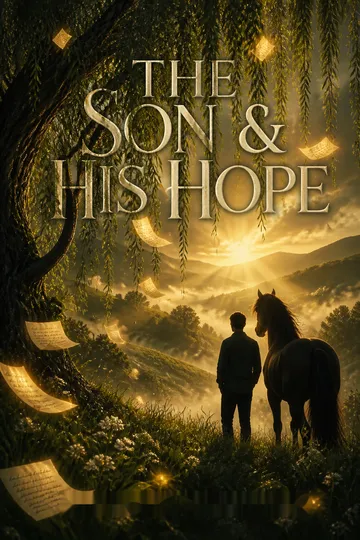
The Son & His Hope received mostly positive reviews, with readers praising its emotional depth and powerful storytelling. Many found it a heart-wrenching but ultimately rewarding conclusion to the series. Reviewers appreciated the complex characters of Jacob and Hope, though some found Jacob's behavior frustrating at times. The slow-burn romance and exploration of grief resonated with many readers. While some felt the book was too long or depressing, most agreed it was a moving and memorable story that brought closure to the beloved characters.
People Also Read



Characters
Jacob Wild
The guarded farm heirJacob is Ren and Della’s son, raised on Cherry River among horses, fields, and the long illness that shaped his childhood. Practical and capable, he trusts the land more easily than people. He takes responsibility for Della after Ren’s death and mistakes that duty for a reason to deny his own needs. Coughing, hospitals, and physical affection can trigger intense fear, while work and solitude offer temporary control. His relationship with Hope challenges his belief that distance can prevent grief. Jacob’s central struggle is not whether he feels love, but whether he can accept its risks without making others bear the cost of his avoidance.
Hope Murphy
The searching storytellerHope is Graham Murphy’s daughter and a child of a mobile, high-profile acting life. Her mother’s suicide leaves her with urgent questions that adults often discourage, so she seeks frankness and connection wherever she can find it. Horses and farm work give her a sense of competence beyond her father’s career, while writing gradually offers a vocation of her own. Hope is persistent and emotionally brave, but her devotion to Jacob can lead her to overstep boundaries and neglect her own hurt. Her growth depends on recognizing that compassion does not require unlimited self-sacrifice, and that trust must be supported by action.
Della Wild
The widowed family anchorDella is Jacob’s mother, Ren’s beloved partner, and a writer whose family story becomes public through a film. She balances deep grief with practical care, running the farm and helping rescue abused horses. Della respects Jacob’s need for space even when she longs for closeness, and she sees Hope’s persistence as a possible source of connection for him. Her own faith in enduring love differs from Jacob’s fear that death ends everything. Della’s tenderness can shade into matchmaking, but her underlying motive is to help her son imagine a life not organized entirely around loss.
Ren Wild
The remembered fatherRen is Jacob’s father and Della’s husband, present in the story through memories, letters, and gifts prepared before his death. He teaches Jacob practical skills and treats him as someone capable of learning difficult truths. His illness shapes the household long before he is gone, leaving Jacob with a strong association between coughing and impending loss. Ren’s milestone gifts are meant to guide Della and Jacob through future moments he will not witness. His legacy is both loving and complicated, because Jacob turns Ren’s request to care for Della into a burden he struggles to set down.
Graham Murphy
Hope’s protective fatherGraham is a successful actor who raises Hope while working on location and plays Ren in the film about the Wild family. He is affectionate and protective, though his effort to shield Hope from painful subjects sometimes leaves her feeling unheard. He notices her attachment to horses and eventually recognizes that acting is not the life she wants. His relationship with Della grows from shared loss and professional proximity, while his concern for Hope makes him wary of Jacob’s volatility.
John Wilson
The generous grandfatherJohn is Della’s father and Jacob’s grandfather, a practical, affectionate man who helped make Cherry River a family home. He expresses care physically and openly, even when Jacob struggles to receive it. Having endured his own losses, John believes that attention belongs on the days people still share, not only on the manner of their eventual deaths. His conversations with Jacob test the younger man’s rigid division between living and dying.
Cassie Collins
The horse-rescue auntCassie is Della’s sister, a skilled equestrian, and the co-owner of the riding and rescue operation at Cherry River. Direct and energetic, she gives children practical opportunities to learn horse care and takes in animals others have mistreated. She often mediates between Jacob and Della, but she is not afraid to challenge Jacob’s isolation. Later, she serves as a link between Hope and the family when Jacob disappears.
Chip Collins
Cassie’s steady partnerChip is Cassie’s husband and Nina’s father. He belongs to the affectionate family circle Jacob both loves and keeps at a distance. His presence offers an example of ordinary, durable family life, particularly in the way he shares responsibility with Cassie. Chip supports the farm and rescue work without competing for attention.
Nina Collins
Jacob’s younger cousinNina is Cassie and Chip’s daughter and Jacob’s cousin. She grows up within the family’s close, lively circle and represents a younger generation continuing beyond its losses. Her affection helps make the family’s warmth visible even when Jacob withdraws.
Keeko
Hope’s longtime tutorKeeko tutors Hope while she travels with Graham and helps maintain her education across countries and film sets. She is a consistent adult presence in a childhood otherwise shaped by temporary homes and adult schedules. Her teaching supports Hope’s eventual confidence as a writer.
Michael
Hope’s gentle partnerMichael is an actor Hope meets while writing for a television production. He treats her kindly and offers the possibility of a quieter, more conventional relationship. His presence makes Hope confront the difference between appreciating someone and being fully committed to him. He is not an antagonist, but his trust raises the stakes of her choices.
Brian
Hope’s Scottish boyfriendBrian dates Hope during her years in Scotland. When he expects their relationship to become sexual, Hope recognizes that she does not want that intimacy with him and ends the relationship. His brief role helps clarify her boundaries and lingering feelings.
Carter
The local suitorCarter works at a local supply store and offers to show Hope nearby attractions. His attention gives Jacob a chance to reveal how possessive he has become, while Hope uses the encounter to challenge Jacob’s contradictory claims that he neither wants nor cares about her.
Dr. Jorge
Hope’s hospital doctorDr. Jorge treats Hope after her car accident, explains her injuries, and helps arrange her care. His practical role places Jacob and Hope together again while she is vulnerable, but he does not decide what she should do about their relationship.
Forrest
Jacob’s wild roanForrest is a difficult roan horse whom Jacob takes in after other trainers fail to handle him. Their bond grows from patience, shared volatility, and trust rather than force. Riding Forrest bareback gives Jacob a rare sense of freedom, but his recklessness with the horse also puts his body at risk.
Arlo
The rescued farm dogArlo is a neglected dog Hope rescues from an abusive farm. Initially wary, he gradually trusts Jacob and becomes part of the household. His recovery echoes Hope’s instinct to approach frightened creatures with patience, while giving Jacob daily practice in caring for a vulnerable life.
Plot Devices
Ren’s milestone gifts
Love carried forwardBefore his death, Ren prepares gifts for Della and Jacob to open at specific milestones. The objects, including a ribbon pin, a compass, and later keepsakes, turn family memory into a sequence of encounters across time. The compass represents Jacob’s search for a direction beyond inherited duty, while the gifts also complicate that search by keeping Ren’s voice present. Their delayed delivery creates recurring emotional turning points, and the final discoveries connect Jacob’s marriage and future child to the parents who cannot be there.
The lace and locket
A portable inheritanceHope keeps a fragment of her mother’s lace as a tactile link to someone she lost too young. When she leaves it at Cherry River, Jacob sends it back secured inside a silver locket. The object gives Hope a way to carry her mother’s memory without relying on uncertain answers about the afterlife. It also becomes a lasting sign of Jacob’s practical attention, which Hope interprets as evidence that their connection matters even when his letters remain sparse.
Coughing and hospitals
Trauma’s alarm systemJacob associates coughing and hospitals with Ren’s illness and the helplessness of watching his father die. These sensory reminders can trigger panic even when the person coughing is not seriously ill. The film premiere intensifies the association, and Hope’s cough later exposes how unresolved the fear remains. The story uses the trigger to distinguish intellectual understanding from bodily recovery: Jacob can know that Hope has a common illness and still react as if he is losing her.
Horses and farm work
Trust made practicalThe farm provides a shared language for Jacob and Hope. Lessons, rescues, machinery, haymaking, and riding let them learn each other through specific actions rather than declarations alone. Hope’s competence challenges Jacob’s assumption that she is merely a visitor from Hollywood, while her partnership gives him opportunities to accept help. Horses also reflect the story’s distinctions between control and trust: a frightened animal cannot be made safe by force, and Jacob’s bond with Forrest depends on attention and mutual response.
Letters and written stories
Voices beyond absenceLetters connect characters who cannot speak easily face to face. Ren’s instructions guide his family through future milestones; Hope’s letters keep Jacob informed about Scotland even when he rarely replies; and Della’s later writing preserves her private reflections. Writing also anticipates Hope’s own vocation as a scriptwriter. The device makes communication both intimate and incomplete: a message can carry care across distance, but it cannot guarantee that the recipient will answer or understand it as intended.
Ribbon Series Series


About the Author







Download PDF
Download EPUB
.epub digital book format is ideal for reading ebooks on phones, tablets, and e-readers.








