

Plot Summary
The Four Block World
Jessica Davis has built a compact life around raising seven-year-old Juno, freelancing as a statistician, and leaning on the grandparents who helped raise her. Dating feels like an extra job she cannot afford, especially after a string of dreary first dates. Her best friend, romance novelist Felicity Chen, keeps urging her to stop treating her own happiness as expendable.
Juno adds a more potent nudge with a family goals board that asks Jess to try new things and do what scares her. At their neighborhood coffee shop, Jess also keeps noticing River Peña, a striking, silent regular she assumes dislikes everyone. When the barista reveals River is launching a genetic matchmaking company, Fizzy persuades Jess to investigate.
Jess's small world is not simply a retreat from romance. It is a competent system built after early motherhood, financial precarity, and an unreliable parent taught her that depending on others can be costly. Her reluctance therefore has practical and emotional logic. Juno's goals board quietly alters the frame: trying something new becomes part of the family's shared life, not a demand that Jess abandon it. River's introduction as a familiar stranger makes the coming romance grow from the habits of her actual neighborhood rather than from an escape into a different world.
Spit Into the Unknown
At GeneticAlly, River explains little, leaving customer-relations lead Lisa Addams to present the DNADuo system. It combines genetic analysis with relationship research to assign compatibility scores, from ordinary matches to rare Diamond results.
Jess is impressed by the scale of the study but doubts that biology can predict love. Meanwhile, Fizzy tests low-scoring matches for fun, while Jess's own life tightens: a client asks her to distort a report, and she refuses, losing a major contract.
After another exhausting day leaves her lonely and worried about money, she finally mails the test kit Fizzy gave her. The sample is an impulsive attempt to make room for possibility, but the financial blow makes the idea of a reliable match feel newly consequential.
The dating technology enters as both a scientific proposition and a tempting promise of efficiency. Jess's skepticism is informed by her profession: she knows numbers can be manipulated and that a compelling result is not the same as a trustworthy conclusion. Her decision to submit a sample follows a precise collision of motives, not sudden belief. She wants to honor Juno's invitation to take a risk, but she also wants to stop feeling that every resource must be reserved for everyone else. The book makes her first step toward romance inseparable from questions of labor, evidence, and economic security.
Ninety-Eight on Paper
On her thirtieth birthday, Jess opens the DNADuo app and finds a message summoning her to GeneticAlly. There, the executives reveal a compatibility score of ninety-eight, higher than any the company has recorded, between Jess and River, its lead scientist. River is client number one; Jess is the unknown match. She laughs in disbelief and leaves before the room can turn her private life into a spectacle.
Outside, River admits the result matters to the company as well as to them, and asks whether she will explore it. She deletes the app, but a birthday dinner brings another blow when her largest client terminates her contract. With a third of her income gone, she must reconsider the paid opportunity to spend time with River.
The score arrives as a double exposure: intimate news presented in a corporate room, with Jess simultaneously a person and a potentially valuable data point. Her laughter and flight are defenses against being assigned a destiny in public. The result also places River in an uncomfortable position, since the technology he built now makes his private life part of its launch story. Jess's lost contract complicates any simple account of consent. The offer that follows can provide real security, but accepting it risks making every later feeling look purchased or engineered.
Ten Thousand a Month
At dinner with River, company CEO David Morris, and marketing chief Brandon Butkis, Jess learns GeneticAlly will pay her ten thousand dollars a month to spend time with River until the May IPO. The company wants the unusually high match to help validate its research and draw attention to the launch.
River says he wants to test the science, not that he is certain they belong together. Jess turns to her grandparents, Ronald and Joanne Davis, and to Juno; their support helps her see the arrangement as a choice she can make without neglecting her family.
She signs a contract requiring regular meetings and limited publicity, while protecting Juno from company appearances. River then draws her blood to confirm the result, and she begins to see the guarded scientist more clearly.
The contract makes the romance's central ethical tension explicit. Money can buy time, not affection, yet it changes the conditions under which affection develops. Jess negotiates boundaries, especially around Juno, instead of accepting the company's terms as a rescue she must repay with compliance. River's insistence on no required physical contact signals respect, even as his clinical language keeps him emotionally difficult to read. The deal gives Jess room to breathe while creating a question that neither can settle by good intentions alone: how will they distinguish an authentic choice from a choice shaped by the experiment?
Dinner Without a Script
The blood test reproduces the ninety-eight, and River invites Jess to dinner at a Thai restaurant beside her apartment. They trade stories about work and family: she explains how numbers help her find reliable patterns, while he describes the research that grew from a graduate-school debate about whether attraction could be studied.
Their conversation is easier than either expected. River remembers her preferences, takes her questions seriously, and lets his dry humor surface. Juno appears at the table after hearing Jess laugh from the courtyard, meets River, and quickly warms to him.
He treats her as a person rather than an obstacle to the experiment. When a reporter later interviews the pair, River and Jess agree to appear open to what may happen, though neither can tell how much of their closeness is already real.
The date turns compatibility from a chart into observable attention. River's care appears in small acts of listening, while Jess's curiosity lets her see past the severe manner she had mistaken for contempt. Juno's spontaneous entrance matters because the relationship cannot remain an abstract experiment separate from Jess's responsibilities. The scene also shifts the question from whether they can tolerate each other to whether ease and attraction can be trusted. The interview that follows begins transforming private uncertainty into a public story, adding an audience just as their own understanding is taking shape.
A Kiss for Investors
The newspaper interview becomes a prominent profile after a photographer captures River wrapping Jess in his coat against the cold. The image makes them look like a couple before either has decided what to call themselves.
At an investor gathering hosted by Trevor and Caroline Gruber, the guests quiz them about attraction, sex, and marriage, treating their relationship as proof of GeneticAlly's promise. Jess and River escape the crowd briefly, where he learns more about her absent father and her mother Jamie's addiction, and tells Jess that her past does not diminish her.
Later, when the room urges them to kiss, they choose to do it. The kiss begins as a performance for the investors, but its intensity leaves them both startled by how much they want to continue.
Publicity functions here as a pressure chamber. The investors' questions reduce two complicated people to evidence for a product, yet the role they are asked to perform gives Jess and River a socially permitted way to act on attraction. Their kiss is neither wholly staged nor wholly free of context; its meaning lies in the gap between those categories. The quieter exchange about Jess's family offers a counterweight to the spectacle. River responds to her history without treating it as damage, and Jess begins to experience intimacy as being understood rather than merely desired.
The Hospital Hand-Off
Jess's grandmother Nana Jo fractures her femur in a fall, and Jess rushes to the hospital, leaving her without childcare as Nana's surgery approaches. River answers her call, picks Juno up from school, takes her to ballet, and brings food and sunflowers to the waiting room for Jess and her grandfather Pops. He stays long enough to meet both grandparents and asks after Nana later.
When he walks Jess to her car that night, she chooses to kiss him, and their careful affection gives way to a hungry, private embrace. She pulls back when she remembers Juno is asleep in the back seat. The crisis has shown Jess that River can enter the practical, messy parts of her life, but it also makes her fear how much her family could lose if he leaves.
River's care becomes credible because it is useful before it is romantic. He takes on a real responsibility, attends a child's ballet class, and feeds a worried family without asking for credit. For Jess, that competence is both soothing and dangerous. She has built security around a dependable circle, and letting River into it creates the possibility of another attachment that could be lost. Her kiss expresses desire, while her retreat beside Juno's car expresses the protective vigilance that has shaped her life. The scene makes intimacy a question of reliability, not just chemistry.
The Door Opens
As Nana begins rehabilitation, River brings coffee and roller-coaster research for Juno, while Jess struggles to accept care without feeling indebted. He tells her he wants ordinary time with her, not just contractually required dates, and she admits she is frightened of letting Juno grow attached.
Fizzy recognizes that Jess is using responsibility to avoid wanting anything for herself and offers to stay with Juno. Jess goes to River's home and they sleep together for the first time, discovering an intensity that neither attributes solely to the score.
The next evening, Jess meets River's sisters, Natalia and Pilar, who tease him about his awkward youth and reveal his closeness to their late grandmother. Their warmth lets Jess imagine a wider family life without losing her own.
Jess's choice is not a rejection of motherhood but a revision of what good motherhood requires. Fizzy helps her see that receiving support is not the same as abandoning Juno. The sexual encounter gives bodily force to a connection that had been filtered through numbers and public performance, but it does not erase uncertainty. Meeting Natalia and Pilar extends River beyond the polished scientist: his tenderness toward family has roots in childhood and grief. Jess is beginning to want not merely an exciting match, but a place in a network of ordinary mutual care.
A Family in Public
River and Jess continue seeing each other, and their public appearances grow more demanding. They travel to New York for a Today show segment about GeneticAlly, where River explains the research and both acknowledge their attraction without promising a future they have not yet chosen.
At home, their relationship becomes harder to conceal: Juno notices River's belongings and asks whether he is Jess's boyfriend. Jess tells her the truth, reassuring her that their bond as mother and daughter will not change.
River joins Jess, Juno, Nana, and Pops at the zoo and begins fitting into the family's routines. When a People magazine crew arrives at GeneticAlly, Jess waits in CEO David's office and finds raw data bearing her and River's client numbers.
The relationship moves from controlled dates into the social fabric of Jess's life. Juno's question forces Jess to replace secrecy with a child-sized account of what is changing, while her reassurance names the fear beneath her caution: love must not make her daughter feel displaced. The media appearances increase the stakes by making the couple a symbol of the company, but their family routines offer a more persuasive test of fit. The final discovery in David's office turns the plot sharply from emotional uncertainty to evidentiary crisis, threatening the foundation on which the public romance rests.
The Numbers Were Altered
While reviewing the papers, Jess notices that her and River's data carries the same assay completion time as an older Diamond result from Johan and Dotty Fuchs. The printed values match almost everywhere, while a few circled gene scores differ in ways that inflate Jess and River's result from ninety-three to ninety-eight.
She photographs the sheets and realizes their celebrated match was manipulated. Before confronting River, she rushes to Fizzy, who has just learned that Rob, the man she liked, is married.
Fizzy is devastated and fears their submitted samples may produce a match score that will only deepen the hurt. Jess supports her, then asks River to come over with his data plot. He has not yet seen the incriminating records and believes the result was genuine.
Jess's professional habits become the instrument that breaks the romantic illusion: she notices metadata, compares records, and refuses to let a persuasive summary outrank the underlying evidence. The discovery does not prove that her feelings are false, but it exposes how easily scientific authority can be recruited to manufacture certainty. The parallel with Fizzy's deception is pointed. Both women are confronted with a system that promises reliable knowledge about love, while a man has concealed information that changes the meaning of their choices. Jess now has to protect her friend and tell River a truth that may destroy his trust.
Two Betrayals Surface
When River studies Jess's copies, he immediately recognizes that the data has been tampered with and insists he knew nothing about it. He goes to confront David and Brandon, the executives responsible, but does not return or call.
River later tells Jess they admitted fabricating the score and that their samples were never allowed to finish; he has removed his own profile from the system. As he withdraws to investigate, Jess faces another crisis: Jamie calls after drinking at a friend's house and asks for rescue from trouble over ten thousand dollars of unpaid skincare inventory.
Jess drives out with Juno, gives her mother the money, and ends their relationship, telling Jamie not to contact them again. River's silence leaves Jess to carry both losses alone.
The fraud and the silence are separate injuries. David and Brandon exploit River's faith in the project, while River's retreat repeats a relational pattern Jess knows too well: a loved person becomes unreachable just when she needs support. His crisis is real, but so is its cost to her. Jamie's demand brings the old family imbalance to its limit, forcing Jess to protect Juno by ending a relationship she has repeatedly tried to repair. The section tests Jess's emerging independence: she can set a boundary with her mother, but she still needs to learn that endurance is not the same as being cared for.
Eight Days of Silence
After eight days without contact, River arrives at Jess's home, and she confronts him for disappearing after saying he loved her. He explains that he was consumed by the company's crisis, reviewing thousands of matches and helping rerun samples, but admits that he should have reached out.
Jess tells him about rescuing Jamie and cutting her mother off, and makes clear that she wanted him beside her through it. River says he loves both Jess and Juno and wants to stay, while promising to work on his habit of vanishing into work.
The company confirms that the executives manipulated only their result; David and Brandon are removed, Tiffany is dismissed, and the remaining team begins rebuilding. River reruns Jess and his samples himself, but she chooses not to learn their new score.
Reconciliation depends not on restoring the fantasy of an uncontaminated match, but on naming the behavior that made love unsafe. Jess does not excuse River because his work crisis was serious; she tells him that his absence affected her and Juno. His apology gains weight because he accepts responsibility rather than arguing that his intentions should erase the impact. Her refusal to open the new score marks a crucial shift: evidence may inform a relationship, but it cannot choose or maintain one. The company can repair its methods; the couple must repair trust through communication.
A Future Without Scores
Two months later, River and Juno present the elaborate roller coaster they built together for her school science fair. GeneticAlly is preparing for its IPO with new leadership, retested samples, and River serving as CEO; he plans to leave for the company's dinner after the awards.
Surrounded by Jess's grandparents, Fizzy, and Juno, he tells Jess he wants a shared home that can hold the whole family, including space for the grandparents. Jess agrees they can look for a place that summer.
The fair's ceremony rewards Juno's curiosity, but the deeper resolution is in the crowded row of people who have become her village. Jess no longer needs the original score to make sense of loving River. What began as a measurement has become a deliberate family choice.
The ending answers the opening's central fear with a concrete change in Jess's daily life. She once treated her own wants as luxuries that might endanger Juno's security; now she can imagine a larger home because River has demonstrated care in repeatable, ordinary ways. The science fair lets Juno's curiosity echo the book's interest in evidence, while refusing to make a child's project a verdict on adult love. GeneticAlly may still use data, but Jess and River's future rests on negotiated commitment. Their family is not a proof produced by an algorithm. It is a structure they choose to build.
Analysis
The novel uses a romance plot to examine how people make decisions when evidence, desire, and need do not point in the same direction. Jess is a statistician, so the DNADuo's score is neither magical proof nor an abstract gimmick to her. She understands that data depends on collection, interpretation, and honest reporting. When the result is exposed as manipulated, the crisis is therefore epistemic as well as romantic: people she trusted have used scientific authority to manufacture certainty. The eventual answer is not to reject evidence, but to refuse its claim to decide what a relationship means.
Jess's caution also has a material basis. She is raising Juno, protecting a fragile household budget, and carrying the emotional consequences of Jamie's unreliability. Her fear of selfishness comes from a life in which she has often had to be the adult for other adults. The book's most persuasive counterargument is not a declaration of destiny but a sequence of practical acts: River picks up Juno, attends ballet, brings food to the hospital, and makes room for Jess's family. Care becomes credible through repetition.
River's central difficulty is the reverse of Jess's. He is comfortable analyzing relationships at scale, but when work overwhelms him, he retreats from the person he loves. His silence shows that intelligence and good intentions do not automatically produce emotional availability. Jess's confrontation insists on a standard beyond attraction: a partner must communicate through a crisis, not merely return after it.
Fizzy's parallel romance plot sharpens the same concern from another angle. A compatibility score cannot make a married man honest, just as a forged score cannot make Jess and River's feelings false. By the end, Jess declines to learn the number attached to their retested samples. That choice does not make love irrational. It places responsibility where the novel believes it belongs, in the daily, revisable acts through which people choose one another and build a family.
Review Summary
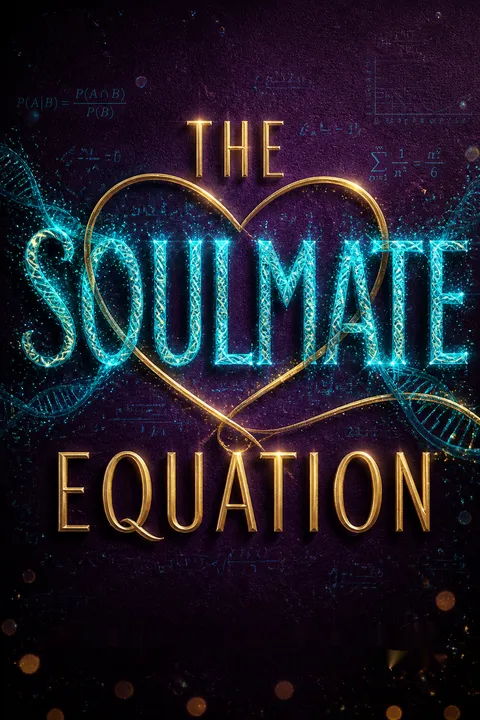
The Soulmate Equation is a contemporary romance about a single mom who participates in a DNA-based dating app and matches with the company's founder. Readers praised the unique premise, charming characters, and humor, particularly enjoying the protagonist's daughter and best friend. Some found the romance lacking chemistry or predictable, while others swooned over the nerdy elements and emotional depth. Overall, it's a sweet, enjoyable read with mixed opinions on its execution, garnering mostly positive reviews for its blend of science and romance.
People Also Read









Characters
Jessica Davis
The guarded statisticianJess is a freelance statistician, a devoted mother to Juno, and a young woman whose life is held together by work, routines, and help from her grandparents. Numbers appeal to her because they can be tested, even when people disappoint her. Her caution about dating is rooted in practical pressures as well as a fear that her own desires might make her a less reliable mother. She is perceptive, funny, and quick to challenge claims that do not survive scrutiny, but she is slower to believe she deserves support. Her relationship with River asks her to distinguish responsibility from self-erasure and attraction from proof. Jess's intelligence is not just professional; it shapes how she reads people, evidence, and the costs of trust.
River Peña
The guarded geneticistRiver is a geneticist, cofounder of GeneticAlly, and the inventor of its DNA-based matching system. His intense focus and reserved manner make him seem arrogant, but he is more shy and socially awkward than cold. He has devoted much of adulthood to studying how people form lasting relationships while keeping his own emotional life at a distance. His sisters remain close, and memories of his grandmother reveal a tenderness beneath his disciplined exterior. Jess unsettles his belief that scientific understanding can keep experience at arm's length. River's challenge is not to abandon reason, but to remain present with another person when work and uncertainty make withdrawal feel easier.
Juno Davis
The curious daughterJuno is Jess's seven-year-old daughter, a bright, inquisitive child who collects facts about animals, dreams up ambitious projects, and regards Try Something New Sunday as a family institution. Raised with the steady help of Nana and Pops, she is affectionate and observant, often noticing emotional shifts adults try to hide. Juno's questions about River matter because she is not a decorative part of Jess's romance; she is the person whose security Jess most wants to protect. Her enthusiasm and directness invite River into the family on her own terms.
Felicity Chen
The romance-writing best friendFelicity, called Fizzy, is Jess's best friend and a successful romance novelist whose confidence and impulsive energy often pull Jess into new experiences. She is perceptive about Jess's defenses, but she is not merely a matchmaker for her friend; she has her own complicated relationship with dating and commitment. Fizzy values pleasure, humor, and the freedom to experiment, and she uses those values to challenge Jess's assumption that putting herself first is selfish. Her loyalty is practical as well as emotional, especially when Jess needs help caring for Juno.
Joanne Davis
The nurturing grandmotherJoanne, whom Jess and Juno call Nana Jo, is Jess's grandmother and one of the anchors of the family home. She and her husband, Ronald, helped raise Jess and remain deeply involved in Juno's life. Warm, direct, and quietly adventurous, Nana Jo offers support without trying to make Jess's decisions for her. Her long marriage gives Jess a lived example of affection built through shared years, rather than a statistic or a romantic ideal.
Ronald Davis
The steady grandfatherRonald, known as Pops, is Jess's grandfather, Joanne's husband, and a dependable presence in the daily life of Jess and Juno. A retired Navy man with a dry sense of humor, he helps with school pickups, errands, and the practical work of family life. His confidence in Jess is generous but not controlling; he encourages her to consider opportunities while leaving the decision to her. His devotion to Joanne shows a kind of partnership Jess has rarely experienced firsthand.
Jamie Davis
Jess's unreliable motherJamie is Jess's mother, a charismatic but unstable woman whose struggles with addiction and money have repeatedly made her unreliable. She can be affectionate and entertaining, but her warmth often arrives alongside requests Jess cannot safely ignore. Jamie's history has taught Jess to anticipate disappointment and to become the responsible adult in the room. Their relationship complicates Jess's ideas about parenting, generosity, and boundaries, as she works to give Juno the steadiness she herself lacked.
David Morris
The research company's CEODavid is a scientist and the CEO of GeneticAlly, as well as a longtime collaborator of River's. He is confident in the company's research and invested in its public launch. His role places him between the original science and the pressures of commercialization, where decisions about evidence can affect both the business and the people represented by its results.
Brandon Butkis
The polished marketing chiefBrandon leads marketing at GeneticAlly and is the company's most comfortable public advocate. His easy charm contrasts with River's reserve, and he helps organize the couple's appearances as interest in their match grows. Brandon understands the persuasive power of a compelling story, making his role central to the tension between scientific findings and their presentation to investors and the public.
Lisa Addams
The customer-relations leadLisa heads customer relations and app development at GeneticAlly. She presents the DNADuo process to Jess and Fizzy, translating technical research into a system potential customers can understand. Her enthusiasm reflects the hope invested in the company's work, while her position gives her a view of the distance between complex science and the clean promises made in a presentation.
Tiffany Fujita
The lead data analystTiffany is GeneticAlly's lead data analyst, responsible for examining the results that underpin the company's matching system. She contributes technical expertise and is present when the exceptional compatibility result is discussed. Her work represents the analytical labor behind the app's simple scores.
Sanjeev Jariwala
The assay-development scientistSanjeev leads assay development at GeneticAlly and is one of River's close colleagues. He works on the laboratory process that turns submitted samples into usable data, grounding the company's matchmaking claims in technical practice.
Daniel
The neighborhood baristaDaniel works at Twiggs, the coffee shop where Jess and Fizzy spend their workdays and River appears each morning. Friendly and observant, he connects their neighborhood gossip to GeneticAlly and becomes an informal sounding board about the matching app.
Natalia Peña
River's older sisterNatalia is one of River's older sisters, a research analyst who lives in Northern California. She is affectionate, confident, and unapologetically willing to tease her brother. Her stories reveal the family closeness that helped shape River before he became a guarded scientist.
Pilar Peña
River's teasing sisterPilar is River's other older sister, a nursing student who lives in Oakland with her girlfriend. She is quick-witted and openly affectionate, and she enjoys revealing the awkward younger brother behind River's polished adult appearance. Her ease with Jess helps make River's family feel welcoming rather than formal.
Johan Fuchs
A longtime Diamond MatchJohan is an elderly man who, with his wife Dotty, represents one of GeneticAlly's earliest celebrated Diamond matches. He has a fondness for science jokes and a warm, playful manner that makes Jess feel welcome at the investor gathering.
Dorothy Fuchs
Johan's longtime partnerDorothy, usually called Dotty, is Johan's wife and one of the first older couples associated with GeneticAlly's highest compatibility results. Gentle and affectionate, she offers Jess a glimpse of a long partnership that is lived rather than theorized.
Alec
Juno's absent fatherAlec is Jess's former partner and Juno's biological father. He made clear before Juno's birth that he did not want to become a parent, and Jess raised their daughter without him. His absence shapes Jess's vigilance about introducing new adults into Juno's life.
Rob
Fizzy's promising dateRob is a banker whom Fizzy meets through Daniel's social circle. He initially seems funny and appealing, giving Fizzy a rare reason to imagine a serious connection beyond the dates she has treated as experiments.
Caroline Gruber
The welcoming investorCaroline is a pediatric orthopedist, a GeneticAlly investor, and the wife of Trevor Gruber. She hosts the gathering where Jess and River meet the company's backers. Her warmth and humor help Jess feel less like an exhibit in a room full of people studying their relationship.
Trevor Gruber
The investor hostTrevor is a technology entrepreneur and GeneticAlly investor who cohosts a gathering with his wife, Caroline. He is friendly toward Jess and River and understands that the company's launch has turned their personal connection into a public interest.
Plot Devices
The DNADuo
A score that invites beliefGeneticAlly's DNADuo analyzes DNA alongside other research to assign compatibility scores to potential partners. Its levels range from ordinary matches to rare Diamond results, encouraging users to treat biological patterns as evidence about romantic possibility. For Jess and River, the initial score of ninety-eight creates pressure from the company, investors, media, and their own expectations. Later, the discovery that the score was manipulated reveals the danger of treating a scientific-looking number as self-authenticating. The device keeps asking whether data can identify compatibility, while the story tests whether a number can replace the choices and behaviors that make a relationship real.
The dating contract
Paid time togetherGeneticAlly offers Jess ten thousand dollars each month to spend time with River until the company's IPO. The agreement requires regular interactions and limited publicity, but does not obligate either person to physical contact. It gives Jess financial breathing room after she loses a major client, while making it difficult to know whether her growing attraction is independent of the arrangement. The contract establishes the romance's central conflict between material incentive and personal agency. Jess's insistence on keeping Juno outside the publicity agreement also makes clear that she will not let the company treat her family as part of its marketing package.
The public romance
Private feelings under scrutinyNewspaper coverage, investor events, and television interviews turn Jess and River into the public face of GeneticAlly's most remarkable match. Their appearances require them to hold hands, pose for photographs, answer questions about attraction, and sometimes perform closeness before they have privately defined the relationship. The attention advances the company's launch and repeatedly brings them into contact, but it also makes sincerity harder to assess. The contrast between staged gestures and unscripted care, particularly River helping Jess's family during Nana's hospitalization, becomes a way to judge what the cameras cannot establish.
Raw assay records
Evidence beneath the headlineThe underlying laboratory records contain details absent from the public compatibility score, including assay times, machine identifiers, and gene-level values. Jess's statistical training leads her to compare these records with an earlier Diamond match and notice that most values are identical while selected ones have been altered. The records overturn the claim that she and River received a genuine ninety-eight, exposing the difference between a polished result and auditable evidence. They also force River to confront the vulnerability created by trusting his colleagues and the system he built.
FAQ
Synopsis & Basic Details
What is The Soulmate Equation about?
- Science meets romance: The Soulmate Equation follows Jessica Davis, a pragmatic single mom and statistician, who is skeptical about love until she takes a DNA-based matchmaking test from a new company, GeneticAlly.
- Unexpected perfect match: To her astonishment, Jess is matched with the company's brilliant but socially awkward founder, Dr. River Peña, at an unprecedented 98% compatibility score, deemed a "Diamond Match."
- Contractual relationship: Facing financial difficulties, Jess agrees to a lucrative contract to publicly date River and promote GeneticAlly, navigating the blurred lines between a fake relationship, genuine attraction, and the pressures of media scrutiny.
Why should I read The Soulmate Equation?
- Engaging blend of genres: It offers a unique mix of contemporary romance, scientific intrigue, and emotional depth, exploring themes of fate versus choice in love.
- Relatable, flawed characters: Readers connect with Jess's struggles as a single parent and her journey to overcome past trauma, as well as River's hidden vulnerability beneath his stoic exterior.
- Thought-provoking premise: The novel prompts reflection on what truly constitutes a "soulmate" and whether love can be quantified or predicted by data.
What is the background of The Soulmate Equation?
- Biotech boom setting: The story is set against the backdrop of San Diego's thriving biotech industry, providing a realistic context for a company like GeneticAlly to emerge and gain investment.
- Post-online dating era: It taps into the contemporary landscape of dating apps and the search for connection in a digital age, offering a speculative evolution of matchmaking technology.
- Authored during pandemic: The acknowledgments reveal the book was written during the COVID-19 pandemic, serving as an "escapist and rewarding" distraction for the authors during a "dark time for the world," which may subtly influence its themes of finding hope and connection amidst uncertainty.
What are the most memorable quotes in The Soulmate Equation?
- "You don't have to make, serve, or clean up after this meal. The dishes alone are worth at least one more bitter ex-wife story.": This quote from Jess's internal monologue in Chapter One perfectly captures her weary, pragmatic approach to dating and the mundane realities of her life as a single mom, highlighting her low expectations for romance.
- "Biological compatibility is independent of whether or not we like each other.": River's blunt statement in Chapter Six encapsulates his initial, purely scientific view of their match, starkly contrasting with Jess's emotional skepticism and setting up the central conflict between data and human feeling.
- "I love you because I love you, whether or not I'm supposed to.": River's declaration in Chapter Twenty-Five signifies the pivotal shift from relying on the algorithm's validation to choosing love based on genuine feeling, underscoring the novel's core theme that love is ultimately a choice, not a predetermined outcome.
What writing style, narrative choices, and literary techniques does Christina Lauren use?
- First-person, conversational POV: The story is told primarily from Jess's first-person perspective, using a witty, internal monologue that feels relatable and conversational, drawing the reader into her thoughts and anxieties.
- Alternating humor and emotional depth: The authors skillfully balance laugh-out-loud moments (often through dialogue with Fizzy or internal snark) with poignant explorations of trauma, vulnerability, and the complexities of family relationships.
- Integration of technical detail: Scientific concepts related to genetics and statistics are woven into the narrative in an accessible way, grounding the speculative premise and reflecting the characters' professional expertise without overwhelming the reader.
Hidden Details & Subtle Connections
What are some minor details that add significant meaning?
- Mr. Brooks's stoop obsession: The recurring mention of the neighbor, Mr. Brooks, meticulously guarding his stoop and complaining about college kids (Chapter One, Chapter Six) initially seems like quirky neighborhood color, but it subtly reinforces the insular, protective nature of Jess's small world and the comfort she finds in its predictable boundaries before River disrupts it.
- The specific time of River's arrival: River's consistent arrival at Twiggs coffee shop at precisely 8:24 a.m. (Chapter One, Chapter Two) establishes a pattern that Jess notices even before they formally meet, highlighting her observational skills and the subtle ways she already incorporates him into her routine, foreshadowing his eventual integration into her life.
- Jess's old car: The description of Jess's ten-year-old Corolla with low mileage (Chapter One) symbolizes her limited geographic and emotional radius, contrasting sharply with River's sleek Audi (Chapter Two, Chapter Four) and representing the practical constraints and cautious choices that have defined her life since becoming a mother.
What are some subtle foreshadowing and callbacks?
- River's "entirely average" comment: River's overheard description of Jess as "entirely average" (Chapter Three) is a seemingly throwaway, insulting line that becomes a running joke and a point of contention, but also subtly foreshadows his scientific perspective where "average" can be a desirable trait for a test subject, hinting at his initial view of her through a data-driven lens.
- Fizzy's "dick tattoo" note: Fizzy's casual mention of writing "Dick tattoo" in her notebook after a date (Chapter Five) is a humorous detail that later serves as a callback when Jess uses it to gauge Fizzy's genuine interest in Banker Rob (Chapter Nine), showing how Fizzy processes her dating experiences by turning them into potential story material.
- The repeated phrase "I am not my mother": Jess's internal mantra "I am not my mother" (Chapter Six) is a direct callback to her deep-seated fear of repeating Jamie's patterns of addiction, unreliability, and putting relationships before her child, underscoring the core motivation behind her cautiousness and self-doubt throughout the story.
What are some unexpected character connections?
- River's connection to Juno's school: River's casual mention of knowing what a plié is due to his sisters' ballet recitals (Chapter Seventeen) is a small detail that unexpectedly connects him to Juno's world and makes his offer to take her to ballet feel more genuine and less like a mere contractual obligation.
- Johan and Dotty Fuchs's significance: The introduction of Johan and Dotty Fuchs (Chapter Fifteen) as the very first "Diamond Match" (at 93%) provides a tangible, long-term example of the DNADuo's potential success, grounding the abstract science in a heartwarming human story and offering Jess and River a glimpse of a possible future.
- River's Abuela and soap operas: River's confession about watching soap operas with his Abuela (Chapter Twenty) is an unexpected revelation that softens his image, connects him to his family history, and provides a surprising parallel to Fizzy's romance writing, hinting at a hidden romantic or emotional depth beneath his scientific exterior.
Who are the most significant supporting characters?
- Fizzy Chen: More than just a best friend, Fizzy serves as Jess's foil, emotional catalyst, and unwavering support system. Her adventurous spirit pushes Jess out of her comfort zone, while her loyalty and willingness to step in (like watching Juno or helping hide newspapers) highlight the theme of chosen family.
- Nana Jo and Pops: Jess's grandparents are the bedrock of her life and Juno's, representing stability, unconditional love, and resilience. Their enduring marriage provides a model of lasting compatibility, and their support allows Jess the freedom to explore new possibilities, even when she feels overwhelmed.
- Juno Davis: Jess's daughter is the emotional core of the story. Her presence dictates many of Jess's choices, and her innocent observations and growing bond with River highlight the stakes of the relationship and the potential for building a new family unit.
Psychological, Emotional, & Relational Analysis
What are some unspoken motivations of the characters?
- Jess's fear of abandonment: Beneath Jess's stated desire for stability for Juno is an unspoken, deep-seated fear of abandonment, stemming from her mother's unreliability. This motivates her cautiousness in relationships and her tendency to push people away before they can leave her, as seen in her initial resistance to River and her reaction to his temporary disappearance.
- River's need for validation: While River is genuinely passionate about his science, there's an unspoken motivation driven by a need for validation, perhaps from his family or the scientific community who initially doubted his work. The "Diamond Match" with Jess, especially as the company founder, offers a powerful, albeit complicated, form of this validation.
- David and Brandon's desperation: David and Brandon's decision to fabricate the data, while framed as a business strategy, is likely driven by an unspoken desperation to ensure the success of their multi-million dollar venture and protect their own reputations and investments, leading them to prioritize financial gain over scientific integrity.
What psychological complexities do the characters exhibit?
- Jess's trauma response: Jess exhibits psychological complexities related to trauma from her childhood, manifesting as hyper-independence, difficulty accepting help, and a tendency to anticipate the worst-case scenario in relationships, particularly fearing that any new partner will eventually abandon her or Juno.
- River's emotional repression: River displays traits of emotional repression, struggling to articulate his feelings and defaulting to logical or scientific explanations even in personal situations. His awkwardness and intensity are less about arrogance and more about a lack of practice in navigating emotional landscapes, a complexity he must overcome to connect deeply with Jess.
- The executives' ethical blind spots: David and Brandon exhibit a psychological complexity where their ambition creates ethical blind spots. They rationalize their data manipulation, seemingly convinced that the end (a successful IPO and potentially helping many people find love) justifies the means, highlighting how pressure can distort moral judgment.
What are the major emotional turning points?
- The Diamond Match reveal: The moment Jess and River are told their 98% score (Chapter Five) is a major emotional turning point, shifting their dynamic from mutual irritation to stunned disbelief and forcing them to confront the possibility of a connection they both initially resist.
- The Scripps Mercy parking lot kiss: The kiss in the hospital parking lot (Chapter Sixteen) is a significant emotional turning point, moving their relationship beyond the contractual and public performance into genuine, undeniable physical and emotional intimacy, revealing the depth of their mutual attraction when free from external pressure.
- Jess's discovery of the data fabrication: Jess finding the manipulated data (Chapter Twenty-One) is a devastating emotional turning point that shatters her trust in the science and forces her to question the authenticity of her relationship with River, leading to a period of heartbreak and separation.
How do relationship dynamics evolve?
- From professional obligation to genuine partnership: Jess and River's dynamic evolves from a wary, contractual business arrangement (Chapter Six) to a tentative, then passionate, romantic relationship built on mutual attraction and shared vulnerability (Chapters Eight, Sixteen).
- From guarded independence to mutual support: Jess's relationship with River challenges her fierce independence, as she gradually learns to accept his help and lean on him during difficult times (Chapter Seventeen), transforming their dynamic into one of mutual support and chosen family integration.
- From scientific curiosity to emotional investment: River's initial view of Jess as a "perfect test subject" (Chapter Ten) evolves into deep emotional investment and love, demonstrating his growth beyond a purely data-driven perspective to embrace the unquantifiable aspects of human connection.
Interpretation & Debate
Which parts of the story remain ambiguous or open-ended?
- The true nature of the DNADuo's success: While the book asserts the DNADuo's validity based on studies and other matches, the core mechanism remains somewhat ambiguous – is it truly genetic destiny, or does it simply identify biological factors that make compatibility easier, leaving the actual success up to the individuals?
- The long-term impact of the data fabrication: The novel resolves the immediate crisis (firings, rerunning data), but the long-term consequences for GeneticAlly's reputation and the public's trust in the technology remain open-ended, especially regarding how they will handle the revelation of the initial deception.
- Jess and River's actual compatibility score: The decision for Jess and River not to look at their actual compatibility score leaves their numerical match ambiguous. This reinforces the theme of choice over destiny but leaves the reader (and the characters) wondering if their genuine connection aligns with the science after all.
What are some debatable, controversial scenes or moments in The Soulmate Equation?
- The decision to accept the contract: Jess's choice to accept the lucrative contract to "fake date" River for money (Chapter Five) is debatable. While driven by financial need and a desire to provide for Juno, it raises questions about the ethics of commodifying a potential relationship and participating in a potentially misleading marketing scheme.
- The data fabrication by executives: The act of David and Brandon fabricating Jess and River's score (Chapter Twenty-One) is a controversial moment, representing a significant ethical breach in the pursuit of profit and raising questions about the integrity of the scientific community and corporate ambition.
- River's disappearance after the reveal: River's decision to retreat and go silent for eight days after learning about the data fabrication (Chapter Twenty-Three) is debatable. While he was processing a personal and professional crisis, his lack of communication with Jess, who was also deeply affected, can be seen as a failure in their nascent relationship, testing the reader's sympathy for his character.
The Soulmate Equation Ending Explained: How It Ends & What It Means
- Choosing love over data: The Soulmate Equation ending explained shows Jess and River choosing to be together, not because of a fabricated "Diamond Match" score, but because they genuinely fell in love through shared experiences, vulnerability, and mutual support. This signifies the novel's core message that love is a choice and a journey, not a predetermined outcome dictated by science.
- Building a chosen family: The final scene depicts Jess, River, Juno, Nana Jo and Pops, and Fizzy together at Juno's school event (Chapter Twenty-Six), highlighting the formation of a strong, blended, chosen family unit. This reinforces the theme that meaningful connections extend beyond romantic partners and are built on love, loyalty, and showing up for each other.
- Future based on hope, not certainty: While GeneticAlly is poised for success, Jess and River's personal future is presented as open-ended ("when you're ready to take the next step—whatever it is—I'm in"). They choose not to know their actual compatibility score, symbolizing their commitment to building their relationship based on trust and hope rather than relying on a scientific prediction, emphasizing free will and the courage to embrace uncertainty in love.
Download PDF
Download EPUB
.epub digital book format is ideal for reading ebooks on phones, tablets, and e-readers.








