

Plot Summary
The Hippo and the Ghost
In 2009, news of the escaped hippos from Pablo Escobar's abandoned estate, and the killing of one, pulls Antonio Yammara back toward Ricardo Laverde, a man he knew briefly in Bogotá. The story returns to 1995, when Antonio is a young law lecturer who spends his evenings playing billiards downtown.
He first notices Laverde watching a report about the neglected zoo and worrying about its animals. Laverde is thin, tentative, and recently released after a long prison sentence; billiards seems to be his only way of staying among people. Antonio, accustomed to treating violence as another item on the news, begins to wonder what kind of life prison has left behind.
The hippos connect private memory to Colombia's public history: Escobar's extravagance has outlived him, leaving animals and people to bear consequences they did not choose. Antonio's recollection begins with an image rather than an explanation, matching the way trauma often returns through sensory associations before it can be organized into a story. His first curiosity about Laverde is also a form of distance. He sees an ex-prisoner as an intriguing case, not yet as a person whose losses might alter his own life.
The Photograph for Elaine
As Antonio and Laverde begin sharing tables and drinks, Laverde reveals that he once worked as a pilot and that his American wife, Elaine Fritts, may come to Bogotá. He has just paid a street photographer to make a formal portrait, hoping to give it to her when she arrives. Laverde speaks of their separation as something he caused and believes he might still repair, though he refuses to explain what happened.
One evening, drunk and unusually open, he invites Antonio into his rented room. Antonio declines, telling himself they can talk another time. Soon Laverde leaves on an unexplained trip, while Antonio turns toward his own new responsibility: former student Aura Rodríguez tells him she is pregnant.
Laverde's portrait is an attempt to present a self that his shabby room and prison years seem to contradict. He wants reconciliation, but he can approach it only through gestures and rehearsed hope, not a full account of his past. Antonio's refusal of the invitation is ordinary rather than cruel, which makes its later weight sharper: he does not yet understand that intimacy sometimes arrives in a narrow window. Meanwhile, Aura's pregnancy forces Antonio toward adulthood just as he is beginning to look backward at another man's lost years.
A Daughter and a Crash
Antonio agrees to spend the holidays with Aura, and an ultrasound confirms that their unborn daughter is healthy. They choose the name Leticia as news spreads that American Airlines Flight 965 has crashed near El Diluvio, killing most aboard. Antonio absorbs the disaster only briefly; the future of his own child occupies his attention.
On the first working day of 1996, he finds Laverde back at the billiards club, carrying a cassette and urgently seeking a player. Laverde says the recording is private. Antonio takes him to the Casa de Poesía, where the staff lends them headphones and a machine. As Antonio listens to a poetry recording, Laverde breaks down beside him, but Antonio stays at his own station.
The plane crash places two kinds of future side by side: Antonio's anticipated fatherhood and the sudden extinction of passengers whose plans are unknowable to him. His limited response is not indifference so much as a young man's inability to imagine the catastrophe entering his personal life. The cassette gives Laverde a private way to confront grief, while Antonio's decision not to interrupt preserves his comfort at the cost of understanding. The scene makes listening itself an ethical choice: attention could create connection, but it also exposes the listener to another person's pain.
The Motorbike at Dusk
When Antonio catches up with Laverde outside, the older man tells him that Elaine was aboard the crashed flight. A motorbike approaches through the evening traffic. Its riders fire at the two men; Laverde falls dead, while a bullet passes through Antonio's abdomen and lodges near his hip.
Bystanders carry them to a pickup truck, leaving Antonio beside the body of the man he had only just begun to know. In hospital, Antonio learns that Laverde has died. The attack is one of many killings across Bogotá that night, and no one can tell Antonio what Laverde did to bring it on. His father's questions about the murder find no answer.
The shooting fuses two apparently unrelated losses: Elaine's death in a plane accident and Laverde's death by deliberate violence. Antonio is injured not because he understands the danger but because he happens to stand beside Laverde. That contingency becomes the novel's central mechanism, making history intimate without making it legible. The anonymous assailants and the city's routine acceptance of murder deny Antonio the satisfying logic of a conventional mystery. His unanswered question is not merely who killed Laverde, but how a life becomes entangled with forces its witnesses cannot see.
A Body Afraid of Night
Antonio survives surgery and months of recovery, but the bullet leaves him dependent on crutches and vulnerable to panic, insomnia, and sudden tears. He refuses his family's company, then returns to teaching and breaks down in front of his students. Aura cares for him while carrying their daughter, but Antonio's fear narrows his world and makes him miss the changes in her pregnancy.
Leticia is born by cesarean, and Antonio feels an immediate, consuming tenderness toward her. Yet his anxiety does not ease. He avoids the downtown streets where Laverde was killed, stops playing billiards, and treats ordinary noises as warnings. The city he once crossed freely becomes a place he can barely enter.
The injury does not end when the wound closes. Antonio's body continues to interpret the city as an active threat, and this survival response reorganizes his relationships: he rejects care even as he depends on it, and his love for Leticia becomes mixed with vigilance. Aura's pregnancy and his recovery proceed on different tracks, leaving her increasingly alone in the work of becoming a parent. The novel refuses the neat distinction between physical and psychological damage. Antonio's lost access to familiar streets is also a loss of identity, routine, and civic belonging.
The Cassette's Dead Voices
More than two years later, Antonio returns to the plaza where Laverde was shot and visits Consuelo Sandoval, his former landlady. At first she suspects he is another journalist. When he shows her his scar, she lets him explain what happened and then gives him Laverde's cassette player. The tape contains cockpit audio from Flight 965.
Antonio hears the pilots lose their bearings, descend over mountainous terrain, and fail to pull the plane clear of the mountain. He finally understands why Laverde wept: the recording held Elaine's last minutes. The tape's voices become part of Antonio's own memory. Nine months later, Consu's referral brings a call from Maya Fritts, Laverde's daughter, who asks him to visit her.
The recording supplies information but not closure. It lets Antonio imagine the accident with painful precision, yet it cannot reveal what Elaine thought or why Laverde's murderers chose him. The black-box audio was designed to explain mechanical failure, but in Antonio's hands it becomes an instrument of grief, transferring the dead pilots' final experience to someone who never knew them. His unease about having access to their private last moments shows that knowledge is not neutral. The tape also changes his relation to Laverde: curiosity begins to give way to sympathy.
Maya's Wicker Archive
Antonio drives to Las Acacias, a rural property near La Dorada, where Maya tends beehives and lives apart from Bogotá. She has assembled a wicker chest of letters, photographs, and family records to reconstruct the father she barely remembers. A magazine article from 1938 leads them further back: Maya's grandfather Julio survived a disastrous air exhibition in which pilot César Abadía tried to seize a flag with his aircraft and crashed into the stands.
Julio's burned face became a permanent family reminder of aviation's cost. Maya explains that Ricardo gave her mother the article as a guide to his family and his own fascination with flying. Antonio recognizes that Laverde's ambitions were inherited as well as chosen.
Maya's archive turns family history into material evidence: bills and photographs preserve details that memory and family stories distort. The 1938 accident does not mechanically cause Ricardo's later choices, but it gives aviation an emotional inheritance, binding heroism, injury, and masculine expectation across generations. Maya's work is both historical research and an effort to claim a relationship that absence has made uncertain. Antonio, who had mistaken Laverde's secrecy for a lack of depth, begins to see that the older man's life was shaped long before their brief friendship.
Elaine Chooses Colombia
Maya's letters carry Antonio back to 1969, when Elaine Fritts arrives in Colombia as a Peace Corps volunteer and lodges with the Laverde family. She and Ricardo fall in love despite their different expectations: Elaine wants to serve rural communities, while Ricardo is determined to become a pilot and escape his family's financial decline.
They marry and settle near La Dorada, where Elaine works with local communities and Ricardo begins flying small planes. With Mike Barbieri, an American volunteer, Ricardo starts transporting marijuana for growing networks in the region.
The flights bring money, a house, and a sense of possibility. Elaine accepts the prosperity, even as Ricardo's work takes him farther from the public service she had imagined.
Elaine and Ricardo initially see in each other an escape from inherited limits: she wants a life beyond the narrow social world of her childhood, and he wants to reclaim a family identity built around aviation. Their marriage joins these hopes without reconciling them. Elaine's development work and Ricardo's illicit flights both depend on local relationships, but the ends diverge: one seeks collective improvement, the other private ascent. Their shared household disguises that divergence for a time, showing how intimacy can survive on unexamined assumptions even as partners inhabit increasingly different moral worlds.
The Cargo Turns White
As marijuana profits shrink beside the new cocaine trade, Mike persuades Ricardo that carrying coca paste and finished cocaine can make them rich quickly. Ricardo imagines one final run before retiring to his family, but federal agents are waiting at the delivery point. He tries to flee, breaks an ankle, and fires a shot that wounds an agent; the injury helps lengthen his sentence.
Mike reaches Villa Elena while Ricardo is away, knowing that Ricardo has been arrested, but he hides the news from Elaine. He spends the night drinking with her, then leaves before morning. Elaine understands later that Mike came to tell her what had happened, though he never managed to say it plainly.
The shift from marijuana to cocaine transforms a risky livelihood into a machinery of immense profit and far greater exposure. Ricardo's belief that he can control the danger by making one last trip repeats the novel's larger critique of autonomy: his plan is shaped by a market and law enforcement forces beyond his command. Mike's visit compounds the betrayal. His affection for the family does not make him honest, and his silence leaves Elaine to live inside uncertainty. The private costs of the drug economy arrive before its full public history can be named.
The Death Maya Was Told
After Ricardo disappears into prison, Elaine tells young Maya that her father died when his small plane became lost over the sea. In 1977, Mike is found murdered by the river, and Elaine leaves Villa Elena for Bogotá with Maya, their belongings, and the money Ricardo had hidden. She raises her daughter among Peace Corps and embassy acquaintances, keeping Ricardo's real fate from her.
As an adult, Maya learns to live without her parents, inherits the rural property, and builds a life around beekeeping. Her archive and her search for Laverde's past grow from the sense that her family has been removed from her twice: first by absence, then by a story designed to conceal it.
Elaine's lie is protective and damaging at once. By making Ricardo dead, she spares Maya the stigma and confusion of having a father imprisoned for drug trafficking, but she also removes the possibility of knowing him as a living person. The fiction becomes a family structure, shaping Maya's memories before she can question them. Her later archival work is not simply a search for facts; it is an attempt to recover the right to interpret her own childhood. The story asks whether protection can become another form of abandonment when it denies a child the truth.
A Zoo From Two Childhoods
On their second day together, Maya and Antonio drive toward Hacienda Nápoles in the old Nissan Ricardo bought for Elaine. They discover that both secretly visited the estate as children in December 1982, each defying parental warnings to see its famous zoo. As adults, they walk past broken dinosaurs, empty cages, and the decaying mansion.
A young hippopotamus appears through the rain, still roaming the neglected grounds. Maya worries about its fate, echoing the concern that first drew Antonio's attention to Laverde. Their shared discovery gives them an unexpected intimacy, but the ruined estate also exposes the common inheritance that neither childhood visitor understood: Escobar's private paradise has become public wreckage.
The coincidence of their childhood visits does not solve the mystery of Laverde, but it gives Antonio and Maya a shared memory from before either knew the other existed. The zoo compresses the novel's historical argument into a physical landscape: luxury decays, animals outlast their owner, and children inherit consequences without understanding their source. The hippopotamus is neither a symbol detached from events nor a simple emblem of innocence; it is a living creature stranded inside a human project. Its presence returns the narrative to the image that began Antonio's recollection.
The Tape's Other Passenger
After the trip, Antonio and Maya share a night of grief and closeness. Before dawn, she plays the cockpit tape and explains what she had never told him: shortly before the crash, Elaine revealed that Ricardo was alive, released from prison, and hoping to reunite with his family. Maya angrily refused to see him.
Elaine flew to Colombia anyway, unwilling to leave the matter unresolved, and died before they could meet. Maya has replayed the tape for years, unable to alter its ending. She also reveals that Ricardo obtained it through a friend at the geographical institute, where he had found work as an aerial survey pilot after prison. His last paid job remains unexplained, leaving the reason for his murder uncertain.
The revelation changes the crash from a remote catastrophe into the consequence of a decision made under pressure: Elaine boarded the plane because Maya's refusal left her trying to repair the family alone. Maya's guilt is not proof that she caused the crash, but the tape gives her a repeated scene in which she can punish herself for not knowing the future. Antonio's listening becomes a form of witness, not rescue. The unresolved final job resists a tidy explanation for Laverde's killing, preserving the distinction between understanding a life and solving every event in it.
The Apartment Without Toys
Antonio leaves Las Acacias and drives back to Bogotá, carrying the story of Ricardo, Elaine, and Maya with him. At home, he finds no toys in Leticia's room and hears four unanswered messages. The university asks why he missed class; Aura's messages say she and Leticia are safe, but that she cannot keep living with his fear and disappearances.
She has taken their daughter away, though Antonio does not know where they are. He walks through the emptied apartment, struggling for breath in Bogotá's thin air, and lies on Leticia's small bed. He wants to protect both of them, but the novel ends before he can call Aura, find them, or learn whether their family can be repaired.
The ending converts the historical story into an immediate domestic consequence. Antonio has spent the weekend guarding Maya's family history from oblivion, while neglecting the people who need him in the present. His wish to protect Aura and Leticia repeats the logic that shaped Elaine's lie to Maya: love can become controlling when fear dictates what others are allowed to know or do. The empty room offers no verdict, only absence. The novel closes on the limits of insight: Antonio understands more about the past, but understanding has not yet taught him how to return to his family.
Analysis
The novel treats memory as an incomplete form of evidence. Antonio's account is shaped by bodily trauma, Maya's research by childhood absence, and Elaine's version of family history by a mother's wish to protect her daughter. None can restore the past unchanged. Documents and recordings bring events closer, yet each also exposes the limits of what can be known: the black box explains a crash but cannot recover a passenger's thoughts, while the archive identifies Ricardo's work without settling why he was killed.
That uncertainty is inseparable from Colombia's political history. Drug trafficking is not a distant backdrop to private life; it alters work, marriage, geography, and the stories adults tell children. The consequences arrive unevenly. Ricardo's ambition gives his family prosperity and then imprisonment, while Antonio is wounded by violence aimed at someone else. Their generation inherits danger as ordinary weather, even when its members make different choices about staying, leaving, or shielding their children from it.
The novel also questions protection when it becomes a substitute for trust. Elaine's invented death gives Maya a manageable explanation, but it deprives her of knowledge and complicates her grief. Antonio's fear likewise appears as care, yet his withdrawal leaves Aura and Leticia to bear its effects. The story does not condemn these acts as simple failures: each grows from a real attempt to survive. It asks instead what survival costs when the past remains unspeakable, and whether learning the truth can help someone return to the living. Its ending offers no clean recovery, only the possibility that understanding must be followed by presence.
Review Summary
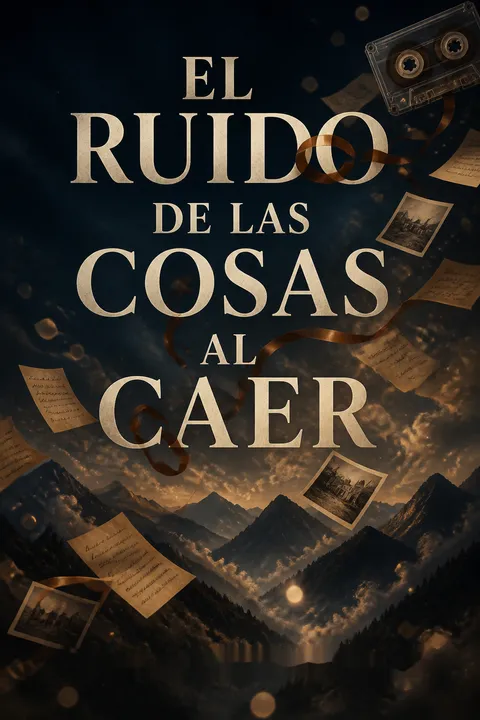
The Sound of Things Falling is a powerful novel set in Colombia, exploring the impact of drug violence on individuals and society. Readers praise Vásquez's captivating storytelling, vivid descriptions, and ability to weave personal stories with historical events. The book delves into themes of fear, memory, and the lasting effects of trauma. While some found the narrative structure complex, many were deeply moved by the poetic prose and emotional resonance. Critics highlight the author's skill in portraying Colombia's turbulent past and its lingering consequences on characters' lives.
People Also Read

Characters
Antonio Yammara
The wounded witnessAntonio is a young law lecturer in Bogotá whose orderly life includes teaching, billiards, and an unsettled relationship with Aura. He is intelligent and observant, but his early confidence in analysis can make him mistake emotional distance for judgment. He is drawn to Ricardo Laverde partly by curiosity about the man's past, then finds himself compelled to reconstruct it. Antonio's experience of violence challenges his belief that danger can be managed by reasoning about it. His struggle is not only to understand what happened, but to remain present to the people who depend on him while fear narrows his world.
Ricardo Laverde
The pilot with a pastRicardo is a reserved former pilot whose prison years have left him physically depleted and socially uncertain. He has a careful manner and a deep attachment to aviation, but he guards the history that would explain his long absence from ordinary life. His affection for Elaine and his hopes for family life coexist with ambition and secrecy. He wants to believe that past mistakes can be repaired, though he rarely explains what repair would require. To Antonio, he first appears as a mystery; to those who know him more fully, he is a man shaped by family legends, personal longing, and choices whose costs reach beyond himself.
Maya Fritts
The keeper of evidenceMaya is Ricardo and Elaine's daughter, raised between an American family history and a Colombian childhood she later tries to understand. Independent and practical, she has built a life tending bees near La Dorada, away from the city she associates with danger and loss. Her collection of letters and documents reflects a historian's patience and a daughter's hunger for connection. Maya is frank about discomfort and wary of easy consolations, yet she carries grief in private rituals of research and repetition. She asks Antonio to help restore a father she barely remembers, while also offering him a perspective on the country and generation they share.
Elaine Fritts
The volunteer turned wifeElaine arrives from the United States as a Peace Corps volunteer, committed to practical work and to the possibility that service can make a difference. Her relationship with Ricardo draws her into a Colombian family and a rural life she learns to navigate with energy and adaptability. She is perceptive about class, money, and the gap between what people say and what they do. Her ideals are tested by marriage, motherhood, and the compromises surrounding Ricardo's work. Elaine's fierce concern for her daughter and her own need for belonging shape the choices she makes, sometimes in conflict with her commitment to honesty.
Aura Rodríguez
The partner asking for presenceAura is Antonio's former student and the mother of their daughter, Leticia. Having grown up moving among countries, she chooses law partly because she wants the stability of a place she can call home. Her bright, intuitive personality makes her attentive to others, but she is not simply a caretaker: she wants mutual desire, trust, and a partner who shares responsibility. As Antonio becomes absorbed by fear and memory, Aura struggles to reach him without surrendering her own needs. Her sensitivity to the emotional climate of their household makes her a counterweight to Antonio's tendency to treat private pain as a problem he must solve alone.
Leticia
Antonio and Aura's daughterLeticia is the daughter Antonio and Aura anticipate and then raise together. As a small child, she is playful, curious, and vulnerable to ordinary fears, including the dark hallway at home. Her presence gives Antonio a new sense of responsibility, but it also exposes how his trauma affects the family around him. Leticia matters less as a developed viewpoint than as a real child whose needs cannot be postponed until the adults have resolved their histories.
Julio Laverde
The scarred family patriarchJulio is Ricardo's father, an actuary from a once-prosperous family who survived the 1938 air-show disaster that injured him and killed many spectators. He is preoccupied with probabilities, futures, and the authority of numbers, while his scar makes the past permanently visible. His experience becomes part of the family mythology that surrounds Ricardo's ambitions. Julio's relationship with his son carries both pride and tension, especially around the younger man's choice to pursue aviation.
Mike Barbieri
The charismatic volunteerMike is an American Peace Corps volunteer whose warmth and ease win trust among rural Colombians and fellow volunteers. His open manner makes him an appealing companion to Ricardo and Elaine, and his agricultural knowledge connects him to local communities. Mike is also adaptable, able to move between public service and less legitimate opportunities. That flexibility makes him both useful and difficult to read. His presence tests Elaine's judgment of the people she welcomes into her home.
Consuelo Sandoval
Laverde's protective landladyConsuelo, usually called Consu, rents rooms in her La Candelaria boarding house and becomes one of the few people who cared for Ricardo during his years in Bogotá. She is suspicious of journalists and outsiders because the press once exposed her household without regard for her privacy. Beneath that defensiveness, she has a strong attachment to the people who live under her roof. Her practical kindness allows Antonio access to an object that would otherwise remain locked inside Laverde's past.
Francisco Iragorri
The aerial photographerFrancisco, known as Pacho, works with Ricardo at the geographical institute and shares his interest in aerial photography and maps. He offers a glimpse of Ricardo's post-prison working life, where technical skill and patient observation replace the illegal flying that once defined him. Pacho is discreet, cautious, and reluctant to probe into matters that may be dangerous or shameful. His memories help Maya and Antonio understand how Ricardo's last years connected to aviation without providing a complete explanation.
César Abadía
The daring stunt pilotAbadía is the celebrated pilot whose spectacular maneuver at a 1938 air exhibition ends in disaster. His skill and audacity make him a hero to spectators, including the young Julio Laverde, but his performance also reveals the lethal boundary between mastery and overreach. His place in the family's history helps explain why flight becomes more than a profession to later generations.
Pablo Escobar
The absent drug baronEscobar does not appear as an active character, but his former estate and imported zoo shape the novel's landscape. Hacienda Nápoles embodies the wealth and power created by the drug trade, while its neglected animals and decaying attractions reveal the long aftermath of that power. The property links childhood curiosity, public spectacle, and the criminal history that surrounds Antonio and Maya's generation.
Plot Devices
The Flight 965 recording
A machine that remembersThe cockpit recording preserves the pilots' final conversation before the crash that killed Elaine Fritts. Laverde obtains a copy, Consu keeps it among his belongings, and Antonio's discovery lets him understand the grief behind Laverde's tears. Maya later listens to it repeatedly, turning the recording into a ritual that keeps her mother's final journey present. The device can report what happened inside the cockpit, but it cannot explain what Elaine thought, why Laverde was murdered, or what the dead would have wanted others to know.
Maya's wicker chest
An archive of family livesMaya's collection of letters, photographs, magazine articles, hotel bills, and other papers gives Antonio access to a history Laverde never shared with him. The documents do not form a complete account by themselves. Maya's memories and interpretations connect their fragments, while the gaps reveal where her mother concealed or altered the past. The chest turns family memory into an investigation, showing how ordinary records can preserve emotional facts even when their original owners are gone.
The 1938 air-show article
A family myth takes flightThe magazine account of the fatal air exhibition introduces the accident that scarred Julio Laverde and made aviation part of the family's inherited story. Ricardo gives the article to Elaine as a guide to his background, and Maya later uses it to explain why her father was drawn to planes. Its account blends public spectacle with private family memory, showing how an event can become a legend that shapes ambitions long after the original witnesses are gone.
The escaped hippopotamuses
A living link to EscobarThe hippos left behind at Hacienda Nápoles survive the collapse of the estate and wander beyond its boundaries. Reports of their damage and the decision to kill one reopen Antonio's memories of Laverde, whose first remembered concern was for the animals. A young hippo appears when Antonio and Maya visit the abandoned property, joining their childhood histories to the novel's present-day frame. The animals are concrete survivors of a criminal's private kingdom, not a simple symbol of innocence.
Download PDF
Download EPUB
.epub digital book format is ideal for reading ebooks on phones, tablets, and e-readers.








