

Plot Summary
The Andes Takes Cristóbal
Puri has persuaded her quiet husband, Cristóbal, to leave their life in Seville and accompany her to Ecuador, where her father's inheritance may offer a new future. Their marriage is already strained by her urgency and his absorption in a novel, and their argument on the ship's deck leaves Puri alone by the rail.
A scarred stranger attacks her with a rope. Cristóbal intervenes, fighting the man despite his gentleness, but the attacker stabs him and Puri strikes the assailant with an oar. Both men fall into the sea. The search finds neither. Puri is left with grief, guilt, and no husband to protect her on the unfamiliar journey she insisted they make.
The murder grows directly from the couple's unresolved conflict, but the novel refuses to make Puri's ambition a simple moral cause of Cristóbal's death. She is not punished for wanting a larger life; instead, she is forced to live with the unknowable gap between her choices and the violence that follows. Cristóbal's sudden courage also revises Puri's private image of him. In losing him, she loses not only a beloved person but the familiar division of labor that had made her feel safe.
Evidence Beneath the Mops
Captain Blake rules Cristóbal's death an accident, citing the lack of evidence and his need to run the ship. Puri refuses to accept the decision, especially after Montserrat, the doctor's wife, tells her that a valise belonging to the attacker has been found hidden near the galley. Puri searches it and finds clothes, a Bible, a check drawn on a Vinces bank with the beneficiary left blank, and a paper bearing her name.
The captain's indifference turns suspicion into a private investigation. With no family or reliable authority to protect her in Ecuador, Puri decides to continue toward her father's plantation. She cuts her hair, alters Cristóbal's clothes, and prepares to travel as her dead husband.
Puri's disguise begins as a practical response to danger, but it also lets her test the gender rules that have governed her life. She has often been called too forceful or unfeminine, yet the clothes and beard give her access to spaces where men move without explanation. The valise matters because it is evidence the official inquiry chooses not to use. Puri's decision to investigate herself is therefore both an act of agency and a consequence of institutional abandonment.
A Dead Wife's Arrival
At Guayaquil's harbor, Puri, dressed as Cristóbal, meets Tomás Aquilino, the lawyer who summoned her to Ecuador. She tells him that his client, María Purificación, died of influenza aboard ship, turning her own survival into a lie she must maintain. Aquilino accepts the story and takes her to his home, where his maid Mayra serves a meal Puri can barely enjoy for fear of being discovered.
In conversation, Aquilino explains that her father left three other children in Ecuador: Angélica and Catalina, his daughters, and Alberto, a son who became a priest and renounced his inheritance. The revelation wounds Puri more deeply than the news of her father's death. He had built a family while she waited in Spain for him to return.
The arrival scene makes Puri's grief inseparable from an older injury: she discovers that her father did not merely leave, he created a life that excluded her. Her false account of her death mirrors the family's own long silence about her, though she uses the lie to stay alive rather than to erase someone else. The meal at Aquilino's house offers a small counterpoint to bereavement. Puri's interest in local flavors hints that her vocation as a chocolatier may become a way to belong where blood ties cannot immediately do the work.
The Estate Names Her
Aquilino takes Puri upriver to Vinces, where the plantation gate bears the name La Puri, her father's unexpected tribute to the daughter he left behind. She meets Angélica, the elegant eldest daughter, Angélica's French husband Laurent, the quiet Catalina, and Martin Sabater, the plantation administrator.
When Aquilino reads the will, Puri learns that her father made her the principal heir to the cacao estate, leaving her a share large enough to give her control. The news unsettles her sisters, while Puri conceals her identity and claims she has no interest in staying. Catalina nevertheless urges the supposed widower to remain as family. Puri accepts, knowing she can investigate the household more safely from inside it.
The estate is both an inheritance and a delayed message from a father who failed to offer his daughter ordinary affection. Naming the plantation after Puri cannot repair the years of absence, but it gives her a material claim to the life he built. The will also turns private abandonment into a legal conflict: the siblings must now confront the unequal distribution of recognition and property. Puri's choice to stay is not simply greed. She needs proximity to the people who may know why someone tried to kill her.
A Snake in the Bedroom
Martin takes Puri through cacao groves and explains how the pods are harvested, fermented, and dried. Their tour turns alarming when her horse bolts and carries her to a fire-damaged house. Martin says the foreman's son, Franco Duarte, survived the blaze with severe burns to one side of his face. The description matches the attacker on the ship.
Puri checks the valise's bank check and learns that it bears her father's signature, though Martin also had authority to sign company documents. She cannot identify the payer. Later, a venomous snake appears on her bed. Julia, the housemaid, removes it calmly, but Puri cannot tell whether it escaped by chance or was placed there to frighten her into leaving.
The plantation's beauty does not make it a refuge. Each new discovery ties the lush landscape to human vulnerability: a burned home, a possible assassin, a snake in a private room. Puri's investigation is constrained by incomplete evidence, so she must read gestures and relationships as carefully as documents. Her disguise deepens this uncertainty. She can observe a household from within, but she cannot safely ask direct questions without exposing herself, which turns ordinary curiosity into a risk.
Catalina's Borrowed Halo
Puri meets Soledad Duarte, Franco's mother, who says her son has vanished and had become consumed by a woman he hoped to please. Soledad believes Don Fernando del Río may have caused the fire that killed her husband, after a land dispute over a creek.
Puri also learns that Catalina's reputation as a saint began in childhood, when she pretended that the Virgin had visited her to conceal a secret meeting with a girl named Elisa. The lie drew pilgrims and became a public identity Catalina could not easily shed.
Years later, Franco gave Catalina a carved miniature violin and tried to turn their friendship into love. She rejected him. During a fire at his home, he helped her escape before returning to save his father, and he emerged badly scarred.
The flashbacks reveal how public reputations can be built from private improvisations. Catalina's saintliness began as a child's cover story, then hardened into a role maintained by family and community. Franco's attachment to her grew in the space between friendship and imagined romance, where he mistook years of companionship for a promise. His burn scars carry both literal and emotional history. Puri's investigation now involves not only identifying a possible attacker but understanding how humiliation, class, and unreturned affection may shape his choices.
The Letters Armand Buried
Searching her father's study, Puri discovers a journal in which Armand admits he fathered another daughter, Elisa, with a maid. His wife sent the maid and child away, and Armand's account suggests the girl disappeared from his daily life.
Puri then learns that Mayra, Aquilino's former maid, is pregnant. Mayra tells her that the father is Alberto, who is torn between his religious vocation and responsibility for the child. Aquilino dismissed Mayra after catching her examining his papers, leaving her without work or security.
Puri persuades Martin to give her a place in his household. The news reopens Puri's grief over her miscarriages, while the discovery of another daughter makes her father's family tree feel less like a record than a field of omissions.
Puri's discoveries expose repetition across generations: Armand's choices around an unacknowledged child echo in Alberto's uncertainty about his own. The family inheritance is therefore not only a division of money. It is a system for deciding which children receive a name, a home, and protection. Puri's help to Mayra comes from compassion, but also from recognition. She knows how easily a woman's future can be narrowed by decisions made by men and by the institutions that claim to govern them.
Chocolate Gives Her Away
Martin offers to buy Puri's share of the estate, explaining that he knows the land and wants to run it himself. Before giving him an answer, Puri prepares real chocolate from the plantation's prized cacao, grinding the roasted beans with milk, sugar, cinnamon, and salt. Martin tastes a use for the crop he has spent years cultivating, and Puri sees a partnership neither of them had considered.
He then reveals that he has suspected her disguise since she fell from a horse and confirmed it after hearing her sing and swim at the creek. Puri tells him about Cristóbal's murder and her search for the person who arranged it. Martin promises to keep her secret, but cannot identify a culprit among the family.
Chocolate becomes the scene's most persuasive form of self-disclosure. Puri's expertise reveals her more clearly than her disguise conceals her, and Martin recognizes that the plantation's wealth has been separated from the knowledge that gives cacao value. Their exchange shifts the relationship from performance to trust, though not to certainty. Martin has a financial interest in the land, and Puri knows that affection and ambition can coexist. The scene resists treating intimacy as proof of innocence.
The Chessboard's Price
Puri continues helping Mayra, then strikes Don Fernando when he attacks Martin during a dispute over a cacao buyer. Martin tends to Puri's bruised face and reveals that Armand won his family's plantation from Martin's father in a chess bet. Martin's mother could not bear the loss of their home and died after the family was displaced.
The story explains his hunger for the land, though it does not settle whether he wants it for justice, ambition, or both. In Armand's locked desk, Puri finds the old chess set connected to the bet and a second key. She also discovers a childhood notebook in Franco's ruined home, where his handwriting identifies Catalina as his closest friend.
Martin's grievance gives his ambition a history, but it does not absolve him of the possibility of self-interest. The chessboard condenses a complex transfer of power into a game whose loser paid with a home and a future. Puri's own position is similarly unstable: she has inherited control without earning familiarity with the land or the people who work it. The notebook changes the murder inquiry by placing Catalina closer to Franco than appearances suggested, while leaving motive unresolved.
Silvia Returns to Vinces
At the Vinces festivities, Angélica and Catalina perform together before a wealthy crowd. Silvia, Angélica's former friend, returns to town, and their strained greeting sends Martin and Puri away from the party.
In a cantina, Puri tells Martin about her marriage and her work as a chocolatier; their guarded conversation becomes intimate, and she spends the night at his house. The next morning Angélica arrives searching for Silvia, mistakenly believing the woman is there with Martin.
Puri realizes that Martin and Angélica have a private history, and Angélica later explains that they remain lovers despite her marriage to Laurent. She also admits that Martin once became intimate with Silvia, the rupture that helped push Angélica toward marrying Laurent.
The party makes Vinces's social polish feel like a stage set: music and elegant clothes conceal old injuries that still govern who can approach whom. Puri's intimacy with Martin is emotionally real to her, but it unfolds inside a network of prior attachments she did not understand. Angélica's marriage to Laurent is shown as an arrangement shaped by status and paternal approval, not a simple romance. The revelations complicate Puri's judgment of her sister and expose how women negotiate desire within narrow social choices.
A Watch Points North
Soledad finds an expensive pocket watch hidden among Franco's belongings and lets Puri borrow it. The Guayaquil maker recognizes the watch as one stolen years earlier by a young employee named Elisa, who had worked alongside the watchmakers and joined a theft ring with her stepfather. Puri also opens Armand's safe deposit box with the key from the chess set.
Inside are letters from Elisa, written over years as she moved around Ecuador and begged her father to remember her. On a trip to Guayaquil, Aquilino reveals that Mayra once read the telegram detailing Puri's travel dates, but Mayra is not the thief the watchmakers describe. Puri now has a likely name, a payment clue, and a way the attacker learned her itinerary.
The clues converge through objects that carry different kinds of memory. The watch records a theft and a possible payment, while the letters preserve a daughter's effort to remain visible to a father who did not answer. The travel telegram supplies a practical route from household access to the ship's attack. Puri is close to solving the crime, but the evidence also forces her to confront a familiar wound: Elisa's longing for recognition resembles her own, even as their responses to exclusion may be radically different.
The Maid's True Name
Aquilino receives word from Captain Blake that Cristóbal's body has been found, and the news exposes the contradiction in Puri's story. With the family gathered, Puri removes the beard and spectacles and identifies herself. She accuses Julia, the quiet maid, of being Elisa, using the puppets in her room, a song from her childhood, and Ramona the cockatoo's repeated warning as clues.
Elisa admits that she hired Franco, gave him the watch, and promised him money, believing that Puri's death would let Angélica secure a fair share for her. She had learned that Angélica wanted to find her, but Armand died before he could acknowledge her. Aquilino calls the authorities. Elisa is taken into custody, while Puri leaves to bury Cristóbal.
The unmasking resolves the mystery but does not make its moral categories comfortable. Elisa's scheme grows from a real history of rejection and from a belief that the family would never make room for her while Puri lived. That history explains her grievance without excusing the attempt on Puri's life or Cristóbal's death. Puri's own disguise has also harmed trust, though she used it to survive. The two women mirror one another as daughters denied uncomplicated belonging, but only one turns that injury into a plan to kill.
A Key After the Blight
Puri gives Cristóbal a proper burial in Panama, then returns to Ecuador to learn that the court has upheld Armand's will. The victory is hollow: witches' broom and frosty pod rot are spreading through the cacao groves, and workers are leaving as the region's crop collapses. Angélica, Laurent, and Catalina have moved away from La Puri.
Puri visits them in their modest home, admits that her deception injured them, and recognizes that their father's unequal will helped create the conflict. She gives them the hacienda key and asks them to decide what to do with it. The gesture cannot restore their shared childhood, but it offers a way to stop treating inheritance as proof of who mattered most.
The blight strips the inheritance of its promised permanence. Puri's legal claim survives, but the cacao wealth that made the estate desirable is dying, revealing how little a title can protect against ecological change. Her reconciliation does not erase her siblings' resentment or her own grief. Instead, she relinquishes the assumption that possession alone can repair a family. Giving them the key converts authority into an invitation, a small attempt to build a relationship without pretending that their father's choices were fair.
Epilogue
Two years later, Puri runs a chocolate shop in Vinces with cacao supplied by Martin's new plantation in Colombia. She lives with Catalina, while Alberto has chosen to marry Mayra and raise their son, Armandito. Angélica and Laurent have gone to Europe, and Fernando is replanting land devastated by disease.
Elisa sends Puri the old doll she once gave Catalina, along with an apology. Puri places it beside Cristóbal's typewriter, then returns to her sleeping son, whom everyone believes to be Cristóbal's child. At last, Puri has a business, a family life, and time to enjoy the place she once came only to claim.
The ending restores the novel's central materials to new uses. Cacao becomes a livelihood rather than an inherited fortune, and the grandmother's roaster, once kept as a relic, returns to work. Puri's son carries Cristóbal's name in public, but the story does not hide his biological connection to Martin from the reader. That tension makes the ending neither a clean replacement nor a denial of grief. Elisa's doll offers a modest peace offering, not absolution. Puri's life improves because she builds daily forms of care and commerce that her father's estate could never guarantee.
Analysis
The novel makes inheritance a material version of family memory. Armand's will does not simply divide cacao acreage; it assigns value to children according to legitimacy, geography, and the attention he chose to give them. Puri arrives believing the plantation can repair the absence of her father, while her half-sisters have lived inside the world his fortune created. Elisa, even more thoroughly excluded, shows the danger in treating recognition as a prize that can only be won by removing a rival.
Puri's disguise gives the story its sharpest method of social inquiry. As Cristóbal, she experiences the ease with which men occupy public space, but she also has to counterfeit habits that make masculinity credible. The performance is comic at times, yet it changes her understanding of her own marriage and of the women around her. She learns that her desire to manage other people's lives can resemble the control she resents in others. Her growing capacity to listen matters as much as her ability to investigate.
Chocolate offers a countermodel to inherited wealth. The plantation produces a valuable crop, but Puri understands the labor and imagination required to turn it into something people can taste and share. When the cacao diseases destroy the estate's economic promise, that knowledge remains usable. The ending therefore does not restore the old fortune. It shifts value from ownership to craft, from a father's name to relationships chosen and maintained in daily life. Puri's final life is not free of grief or family damage, but it is built from work she understands and care she can actively offer.
Review Summary
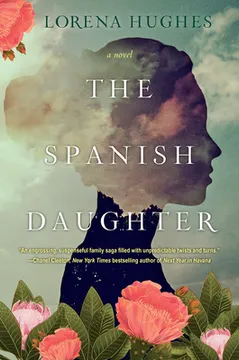
The Spanish Daughter received mostly positive reviews, with readers praising its unique setting in 1920s Ecuador, engaging plot, and compelling protagonist. Many enjoyed the historical aspects of cacao plantations and chocolate-making. The mystery element and family drama were well-received, though some found certain plot points implausible. Readers appreciated the exploration of gender roles and class differences. Criticisms included an abrupt ending and underdeveloped characters. Overall, reviewers found it an entertaining and atmospheric historical fiction with elements of mystery and romance.
People Also Read









Characters
María Purificación de Lafont y Toledo
The disguised heiressPuri is a Spanish chocolatier whose quick mind, appetite for enterprise, and discomfort with confinement have shaped her marriage and her decision to travel to Ecuador. She is generous with customers and servants, but her determination can become insistence, especially when she believes a larger opportunity will solve private pain. Grief forces her to act without the support she once relied on, while her disguise gives her an unfamiliar view of male freedom and female constraint. Puri's curiosity makes her an effective investigator, but her emotional intensity can lead her to decide what others feel before she has enough evidence.
Cristóbal de Balboa
The gentle novelistCristóbal is Puri's husband, an educated and considerate man who dreams of writing a novel. He is patient where Puri is restless, and he often avoids difficult conversations rather than risk conflict. His care is real, but he can retreat into his work at moments when Puri wants companionship and reassurance. Their marriage contains affection alongside frustration, particularly around Puri's ambitions and their losses as a couple. Cristóbal's quietness should not be mistaken for weakness; he has convictions and reserves of courage that Puri has not fully seen.
Martin Sabater
The cacao stewardMartin manages La Puri and understands its cacao trees, workers, and business better than anyone in the household. Blunt, physically capable, and intellectually curious, he resists the polished manners of Vinces's wealthy families. His history with the Lafonts gives him both professional loyalty and reasons to question the family's entitlement to land. He prizes independence and distrusts domestic arrangements that restrict a man's choices, yet he is more reflective than his rough humor first suggests. His attraction to Puri develops alongside a serious financial interest in the estate, making trust between them complicated.
Angélica de Lafont
The polished firstbornAngélica is Armand's eldest daughter in Ecuador, a socially skilled woman who dresses elegantly, hosts gatherings, and knows how to hold a room's attention. She has spent much of her life trying to earn a father's approval that seemed to favor a daughter she had never met. Her ambition and pride can make her controlling, especially with Catalina, but beneath her composure is a hunger for adventure and recognition. Angélica has learned to turn social performance into influence. The demands of reputation shape her choices, even when her private wishes pull in another direction.
Catalina de Lafont
The town's living saintCatalina is Angélica's younger sister, a gifted violinist whose reserved manner contrasts with her sister's social ease. Vinces treats her as a holy figure, a reputation that leaves little room for ordinary desires or mistakes. She reads novels, sews, and observes family life from the margins, often yielding to Angélica while quietly resenting the pressure to be obedient. Catalina longs for affection and companionship, but her idealism can blur the difference between loving someone and feeling responsible for them. Her public image is more restrictive than her private self.
Alberto de Lafont
The questioning priestAlberto is Armand's son and a priest with a curious, philosophical mind. He entered religious life through a search for answers rather than unquestioning certainty, and he enjoys ideas that unsettle easy moral judgments. His light humor makes him less forbidding than the role suggests, though his inward struggles are not always visible to his family. Alberto is intellectually attentive and compassionate, but the tension between personal desire and public duty makes him vulnerable to avoidance.
Armand Lafont
The absent patriarchArmand is Puri's French father, a cacao planter whose ambition carried him from Spain to Ecuador. He is remembered as brilliant about the business and difficult in private, capable of generosity as well as neglect. His affection for his children is unevenly expressed, often through gifts, property, or comparisons rather than sustained attention. Armand's decisions shape the family long after his death, especially the way inheritance gives material form to old distinctions of legitimacy, class, and belonging.
Elisa
The overlooked shadowElisa enters the story through a childhood connection, old correspondence, and a name largely absent from family memory. She is resourceful, observant, and determined to educate herself despite poverty and an unsettled life. Her history raises questions about who is allowed to count as family and how long a person can endure being treated as an embarrassment. Elisa's desire for recognition is understandable, but longing and intelligence do not always lead to wise or humane choices.
Laurent Dupret
The cultivated husbandLaurent is Angélica's French husband, polished in dress and conversation and attentive to European art, fashion, and status. He enjoys social life and values the prestige his marriage gives him. His refinement can make him seem more substantial than he is, while his relationship with Angélica rests on expectations that neither spouse fully articulates in public. He is adept at performing the role of a cultured gentleman.
Franco Duarte
The scarred foreman's sonFranco is the son of Pedro and Soledad Duarte, raised near La Puri and accustomed to living outside the plantation family's privileged circle. He is solitary, skillful with his hands, and capable of deep attachment, but he carries resentment about the class divide surrounding him. His friendship with Catalina gives him a rare connection across that divide. After a devastating fire, his appearance and prospects change, intensifying his isolation.
Soledad Duarte
The grieving healerSoledad is Franco's mother, a curandera who treats illness with local knowledge and herbs. Scarred by the fire that destroyed her home and killed her husband, she is both resilient and physically fragile. Her love for her son makes her vulnerable to believing the best of him, even as she fears that something has gone badly wrong. She approaches Puri as one of the few people willing to listen.
Mayra
The vulnerable messengerMayra is Aquilino's young maid and Julia's cousin. Soft-spoken and economically insecure, she is caught between affection, social judgment, and the practical need to support herself. Her lack of power makes her dependent on employers and on the promises of people with greater standing. Mayra is not merely a plot informant; her situation brings Puri's grief about motherhood and the limits placed on women into sharp focus.
Tomás Aquilino
The cautious attorneyAquilino is Armand's lawyer, responsible for notifying Puri of the inheritance and guiding the family through its legal disputes. Formal and observant, he prefers orderly procedure, but he does not always reveal everything he knows at once. His decisions influence how quickly the truth can be established and whether the family can turn its conflicts into a lawful settlement.
Julia
The household's quiet maidJulia works at La Puri, serving the family and tending to practical needs with quiet competence. She has been in the household long enough to know its routines and its silences. Her careful movements and limited speech make her easy for the family to overlook, an invisibility that gives her a distinctive place in the home's social order.
Fernando del Río
The rival landownerFernando is a neighboring cacao landowner who has a long, bitter history with Armand's family. He is proud, volatile, and willing to press a boundary dispute into public conflict. His resentment is tied to land, marriage, and business competition, making him an unpredictable presence around La Puri. He embodies the old power struggles that continue beneath Vinces's polished social surface.
Silvia
The returning confidanteSilvia is Angélica's former close friend, a fashionable woman whose return to Vinces unsettles old relationships. Her presence brings unresolved memories into a social world that prefers to disguise conflict as courtesy.
Captain Blake
The case-closing captainCaptain Blake commands the Andes and oversees the inquiry into the violence aboard his ship. He is not cruel, but he prioritizes jurisdiction, workload, and the limits of available evidence over Puri's demand for justice.
Montserrat
The helpful passengerMontserrat is the wife of the doctor traveling aboard the Andes. Friendly and curious, she shares information about the hidden valise that the captain has not disclosed to Puri, giving the investigation its first tangible lead.
Ramona
The watchful cockatooRamona is Angélica's white cockatoo, a familiar presence at meals and gatherings. She repeats scraps of phrases and songs, sometimes revealing how much a household's private life leaks into its public rooms.
Plot Devices
Cristóbal's disguise
A shield and a testPuri wears her husband's clothes, spectacles, and false facial hair after his disappearance at sea. The disguise lets her travel through Ecuador and live among the people she suspects without immediately exposing herself to another attack. It also gives her access to male social spaces, from bars to business discussions, and forces her to navigate expectations that had previously seemed natural. Its practical protection has a cost: each act of friendship is built on concealment, and the more Puri cares for the people around her, the more difficult it becomes to sustain the lie.
Armand's will
Inheritance as accusationThe will turns Armand's private history into a public contest over land and legitimacy. Its unequal shares make Puri the principal heir, despite her absence from Ecuador for most of her life, and leave her half-siblings to confront the father's attention and property she received from afar. The document gives Puri a reason to stay at La Puri, but it also creates a motive for anyone who hopes the estate will pass differently. Its legal force cannot repair the emotional inequity that produced the conflict.
The check and watch
Payment leaves a trailA blank-beneficiary check bearing Armand's signature and a valuable pocket watch connect the attack to Vinces. At first, the check points toward anyone with access to the family or the plantation's accounts. The watch appears to be a separate object until its maker recalls a theft years earlier. Together with Aquilino's travel telegram, the objects turn Puri's suspicions into a chain of evidence about payment, identity, and how the attacker learned her route.
Cacao and chocolate
Work becomes belongingCacao is the source of the Lafont fortune, but its commercial value initially obscures the craft that made Puri's life meaningful. She understands how roasting, grinding, and seasoning transform beans into chocolate, knowledge the plantation's administrators do not possess. When she prepares chocolate for Martin and her sisters, the crop becomes more than an inheritance or export commodity. It becomes a skill she can share, a possible livelihood, and a way to connect with people whose family ties remain uncertain.
The doll and the wolf
Memory hides in plain sightA handmade doll, a puppet story, and a cockatoo's repeated fragments preserve traces of childhood relationships inside the adult household. Their meaning is easy to dismiss as decoration or animal mimicry, but each clue points back to Elisa's presence and the history of who was allowed to live openly at La Puri. The objects make the mystery depend on memory rather than a single confession. They also connect the novel's private family secrets to stories that children perform and adults reshape.
Download PDF
Download EPUB
.epub digital book format is ideal for reading ebooks on phones, tablets, and e-readers.








