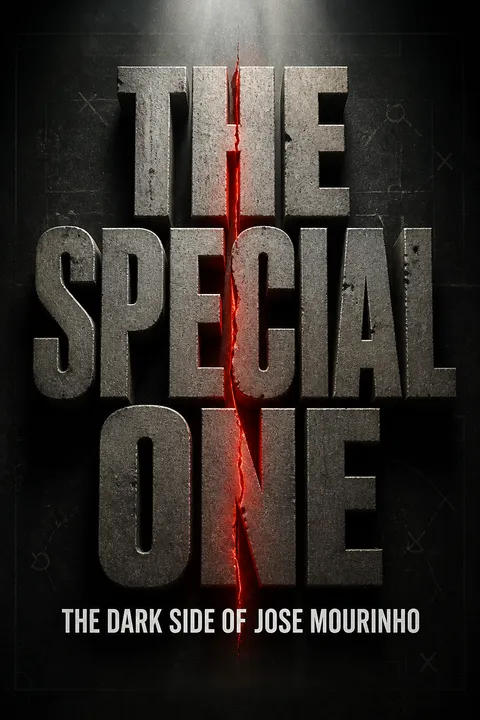


Key Takeaways
Madrid hired Mourinho to stop Barcelona, then mistook trophies for a system
A saviour was the pitch. Real Madrid appointed José Mourinho in 2010 after Barcelona’s rise made the club’s leadership feel it was losing its place at football’s summit. Mourinho had won major titles, including two Champions Leagues, and was presented as the force who could halt Pep Guardiola’s team. The case for him leaned heavily on reputation and charisma, not a detailed account of how his methods would fit Madrid’s structure. Barcelona, by contrast, chose Guardiola through a selection process that weighed playing style, youth development, and fit with the club.
Success looked like magic. Madrid’s executives treated Mourinho’s record as if it could be transferred intact, although victories depend on more than a celebrated coach. The book links this belief to Madrid’s wider marketing ambition: turn football figures into symbols that sell a story as well as a match.
What's striking is how a club can confuse a leader’s track record with a reproducible operating model. The halo effect, a tendency to assume one impressive quality predicts competence elsewhere, makes this especially tempting when pressure is high. Mourinho’s victories were real evidence of ability, but they could not guarantee that his approach would suit Madrid’s internal politics, players, or opponents. The comparison with Barcelona is useful because it shifts the question from “Who is the greatest?” to “Who fits the system being built?”
Demanding control of players and publicity turns coaching into a power contest
The job kept expanding. Mourinho arrived seeking authority over team selection and transfers, along with unusual influence over what the press heard about the club. Real Madrid’s executives appeared to promise broad support, but President Florentino Pérez did not hand over every lever. The resulting uncertainty made the coach’s relationship with sporting director Jorge Valdano increasingly hostile. Mourinho wanted Valdano removed and sought a trusted spokesperson, while Pérez delayed firm decisions.
The agent blurred boundaries. Mourinho’s agent, Jorge Mendes, had an unusually visible presence at the training complex and represented several Madrid players. Torres reports that players saw a hierarchy forming around those with Mendes connections. The Pedro León episode made the imbalance public: after a 0 – 0 draw, Mourinho accused the young winger of arrogance, then excluded him from the next squad. León’s later attempts to smooth matters publicly did not restore his place.
This is a governance problem as much as a personality clash. When the same network influences hiring, player access, and the public account of events, it becomes difficult to distinguish a sporting decision from a commercial or political interest. Organizations reduce that ambiguity by defining decision rights and requiring transparent explanations. Yet formal boundaries are not enough if the chief executive privately signals that one powerful employee can ignore them. The book’s account suggests that Madrid’s vague promises helped make the conflict possible.
Fear can secure obedience while destroying the information a team needs
Uncertainty became pressure. Players feared the professional cost of not playing, but Torres presents uncertainty about why they were being dropped as especially corrosive. Mourinho could be warm with one player, then abruptly stop acknowledging him; Kaká, for example, reportedly could not understand the sudden change in treatment. Exclusion, public criticism, and control over interviews all kept the squad alert to the coach’s reactions.
Silence hid useful signals. Players were often expected to repeat prepared messages or avoid speaking without approval. That left less room to challenge tactics, explain problems, or tell the coach what was happening inside the group. Torres describes a team that grew suspicious not only of Mourinho but also of his assistants, club employees, and one another. Fear did not simply make players compliant. It made honest communication risky.
A team needs more than discipline. It needs reliable upward communication, especially when the people closest to the work notice a problem first. The organizational concept of psychological safety describes whether people can raise concerns without expecting humiliation or punishment. That does not mean avoiding standards or criticism. It means separating accountability from arbitrary treatment. Mourinho’s approach may have sharpened attention in the short term, but a culture in which silence feels safer can deprive a leader of the very information needed to make better decisions.
Mourinho’s counterattack thrived in open space and faltered against packed defenses
Defence drove the attack. Mourinho’s teams often defended in a compact shape, invited opponents forward, then tried to win the ball and break quickly. A low-block placed the defensive and midfield lines near their own penalty area; a medium-block moved them farther upfield; a high-block pressed near the halfway line. The approach could punish opponents who advanced carelessly, but it depended on space for fast attackers to exploit.
Madrid lacked another answer. Against teams that defended deep, Madrid had to construct patient attacks in crowded areas. The players believed they had not practised this enough. Mourinho’s preferred “trivote,” a midfield with three defensive-minded players, reinforced the team’s protection but could reduce creativity. In the 2010 clásico, Barcelona beat Madrid 5 – 0 after exploiting the defensive plan; the match also helped push Mourinho toward an even more cautious approach against them.
The tactical issue is not that counterattacking is inherently inferior. It is that every strategy depends on what the opponent gives away. A model built to exploit open grass can become self-defeating when rivals refuse to advance. Adaptive teams need complementary capabilities, not just a preferred weapon. The book’s sharpest tactical criticism is that Madrid’s enormous talent could not reliably turn possession into chances against a set defence. Its account is less persuasive when it treats a few matches as proof of a permanent limitation.
A humiliating defeat can become political leverage when leaders control its story
The 5 – 0 changed the stakes. Barcelona’s victory in November 2010 was not merely a tactical defeat for Mourinho. It threatened the image of the coach as Madrid’s answer to Guardiola. Torres describes Mourinho responding with demands for greater power, attacks on Valdano, and repeated complaints about referees, television schedules, and institutional bias. The conflict helped turn a football failure into a dispute over who had authority at the club.
The account moved outward. Mourinho’s public explanations and the club’s support for them made it harder to focus on the team’s errors. Madrid’s leaders eventually removed Valdano, and Mourinho gained more control over football matters. The book argues that the defeat strengthened the coach politically even as it exposed the limits of his tactical plan. Its story is a warning about how quickly an organization can debate blame instead of learning from a loss.
People often respond to threatening failure by searching for an explanation that protects identity. That can be productive when it identifies a genuine external obstacle, but damaging when it makes the leader’s own choices untouchable. Here, control of the public narrative became a form of organizational power: the person who defined the defeat could shape who was blamed and what changed. Still, the book’s interpretation deserves scrutiny. A forceful response to a loss can reflect both strategic self-protection and sincere conviction, and the evidence may not settle which motive dominated.
Do not confuse loyalty to a manager with loyalty to the team
The conflict crossed the touchline. Mourinho’s campaign against Barcelona included accusations about referees and demands that players follow a tightly controlled communications line. Some Madrid players resisted because they were also teammates with Barcelona’s Spanish internationals. After the 2011 Super Cup, Iker Casillas called Barcelona captain Carles Puyol and Xavi Hernández to apologize for the hostility between the clubs. Mourinho viewed the gesture as a challenge to unity; Casillas saw it as repairing relationships that mattered to the national team.
Belonging had several layers. Players owed duties to their club, their coach, teammates, and country. Mourinho’s approach treated public allegiance to him as proof of commitment to Madrid. Torres shows how that demand divided the dressing room, with players perceived as close to Mendes or Mourinho receiving different access and treatment from others.
This is a conflict between loyalty to a person and loyalty to a community with multiple identities. Social identity can deepen commitment, but it becomes brittle when one leader demands that every other affiliation be disavowed. Casillas’s apology was not simply an act of personal kindness. It asserted that professional rivalry need not erase trust between teammates. A qualification matters: teams sometimes need a shared message during competition. The danger appears when message discipline becomes a test of character rather than a tool for coordination.
Player dissent exposed blind spots that trophies alone could not reveal
The squad finally answered back. In September 2011, after Mourinho publicly blamed Sami Khedira for a defeat, senior players confronted the coach about perceived favoritism, public criticism, and inconsistent treatment. They asked him to stop using them as instruments in disputes with referees and the media. Mourinho said the pressure was a psychological tactic and agreed to change some of his methods. The confrontation did not dissolve the mistrust, but it limited his freedom to act without resistance.
Results improved, but not everything did. Madrid won the 2011 – 12 league with a record 100 points and scored 115 goals. The team also won the 2011 Copa del Rey, yet Mourinho’s three seasons ended without the Champions League title Madrid wanted. The book credits the players’ quality and their own adjustments alongside the coach’s methods, complicating any claim that one leader alone produced the success.
Dissent can function as feedback when people with different roles see different parts of a system. In this case, players were not rejecting competition or high standards; they were objecting to practices they believed damaged performance and trust. The episode also cautions against treating a trophy as a complete measure of organizational health. A team can deliver exceptional results while carrying unresolved conflict. Conversely, player complaints do not automatically prove a coach is wrong. The useful question is whether disagreement produces better decisions and clearer responsibilities.
Judge Mourinho’s reign by the team he built, not only the trophies it won
The final campaign exposed limits. Madrid lost 4 – 1 to Borussia Dortmund in the 2013 Champions League semi-final. The players felt Mourinho’s deep defensive setup had made them vulnerable, while Dortmund used coordinated pressure to win the ball and attack. Madrid did not reach the final. Mourinho left that spring after three seasons, a Copa del Rey, and a league title, but no Champions League victory. Torres puts the total cost of the relationship to the club at more than €70 million.
The argument survived the coach. After Mourinho departed, the book describes a dressing room expecting a fresh start, then feeling puzzled as Higuaín left, Casillas lost his place, and Mesut Özil was sold. The author portrays Pérez as still influenced by Mourinho’s view of the squad. His larger point is that a coach’s legacy includes the institutions, habits, and relationships left behind, not just his win-loss record.
Leadership is often judged through visible outputs because trophies, revenue, and public attention are easy to count. The harder questions concern whether people can make good decisions without the leader, whether expertise has been developed across the organization, and whether trust survives disagreement. Those are not excuses to discount results: Madrid’s league records mattered. They are reminders that a strong season can coexist with institutional fragility. The book is most compelling when it treats performance and power as connected, rather than forcing a choice between sporting achievement and organizational cost.
Analysis
Diego Torres’s book is an investigative sports biography, but its real subject is the way a football club turns a coach into a political institution. Its narrative moves from the shock of Mourinho’s disappointment over Manchester United in 2013 back through his recruitment, his struggle for control at Madrid, the players’ resistance, the league title, and the final collapse. The recurring contrast is between football as a game of tactical decisions and football as a contest over who gets to define those decisions publicly.
The strongest analytical thread is the collision between Madrid’s executive culture and Mourinho’s demand for personal authority. Pérez and his advisers recruited the coach partly as an answer to Barcelona and partly as a powerful symbol. Once the coach wanted influence over transfers, communications, and personnel, the organization had no clear way to separate sporting leadership from institutional control. The book’s portrait of Mendes’s network makes that ambiguity especially vivid. It suggests a principal-agent problem: the club hired a coach to serve its goals, but the coach’s personal brand and professional network could pull decisions toward other interests.
The tactical story gives the power struggle a concrete test. Mourinho’s defensive organization and rapid counters could produce dominant results, including Madrid’s 100-point league season. Yet the reported difficulty against deep defences and the defeats to Barcelona and Dortmund challenge the idea that his approach was universally effective. Tactical systems are contingent. A method can be excellent against one opponent and predictable against another.
The account also needs to be read as a reported interpretation, not a neutral audit. It relies heavily on anonymous players, employees, agents, and directors, and some claims about motives, favoritism, and private conversations cannot be independently tested from the text alone. Its strongest evidence comes when reported behavior is paired with observable outcomes, such as lineups, scores, and transfer decisions. Its weakest points arise when it converts those outcomes into certainty about private intent. The book’s lasting insight is not simply that Mourinho was difficult. It is that a club’s appetite for a saviour can make concentrated power seem like a strategy, until the cost becomes impossible to ignore.
Review Summary
The Special One receives mixed reviews, with an average rating of 3.49/5. Critics praise its insight into Mourinho's management style and Real Madrid's inner workings, while others view it as biased and exaggerated. Some readers find it engaging and revealing, detailing Mourinho's controversial tactics and personality. However, many question its accuracy and objectivity, citing a strong anti-Mourinho bias. The book's focus on behind-the-scenes drama and Mourinho's psychological tactics divides readers, with some finding it fascinating and others dismissing it as unreliable or even libelous.
Glossary
trivote
Three defensive midfieldersA midfield arrangement with three players assigned chiefly defensive responsibilities. In Torres’s account, Mourinho used it to add protection, press opponents, and limit the space available to dangerous teams, especially Barcelona. The extra defensive presence could help disrupt attacks, but it could also leave Madrid short of creativity when the team needed to build chances against opponents defending deep.
high-pressure triangle
A three-player pressing shapeMourinho’s preferred description for a three-man midfield arrangement designed to apply pressure and cover substantial ground. The players would help close down opponents, while the team tried to win the ball and launch a quick attack. The name presented the system as an attacking innovation, though Torres notes that players often associated it with the more defensive trivote.
tactical periodisation
Training through game situationsA training approach associated in the book with Portuguese professor Victor Frade. It emphasizes exercises built around football situations, where players must solve tactical problems while using the ball, rather than relying mainly on repetitive, isolated athletic drills. Mourinho and Guardiola drew on this broad theoretical tradition, though the book distinguishes their approaches to organizing attack and defence.
low-block, medium-block, and high-block
Three defensive pressing depthsTerms for where a team organizes its defensive pressure. A low-block keeps the defensive and midfield lines near the team’s own penalty area. A medium-block applies pressure farther upfield, while a high-block pushes the defensive line toward the halfway line and presses opponents in their half. Mourinho adjusted among these shapes according to the opponent and match situation.
Peking Manual
Players’ joke about missing trainingA mocking nickname invented by Madrid players for an imagined manual on organized attacking movement. Mourinho publicly said the team had worked on such attacks during pre-season trips to the United States and China, but players said they did not remember receiving that instruction. They used the phrase sarcastically when Madrid struggled to create chances against compact defences.
FAQ
1. What is The Special One: The Dark Side of Jose Mourinho by Diego Torres about?
- In-depth look at Mourinho: The book explores José Mourinho’s tenure at Real Madrid, focusing on his complex personality, leadership style, and the internal conflicts that defined his era.
- Behind-the-scenes revelations: It provides detailed accounts of Mourinho’s relationships with players, agents, club executives, and the media, exposing power struggles and psychological tactics.
- Football and politics intersection: The narrative situates Mourinho’s story within the broader context of Spanish football, highlighting the interplay between sport, institutional politics, and media manipulation.
2. Why should I read The Special One: The Dark Side of Jose Mourinho by Diego Torres?
- Unveils Mourinho’s complexity: Readers gain a nuanced understanding of Mourinho beyond his public persona, learning about his vulnerabilities, ambitions, and controversial methods.
- Insight into football industry: The book exposes the intricate relationships between agents, club executives, players, and media, illustrating football as both business and spectacle.
- Cultural and political context: Through vivid storytelling, it situates Mourinho’s story within the rivalries, nationalism, and media battles of Spanish football, appealing to fans interested in the sport’s socio-political dimensions.
3. What are the key takeaways from The Special One: The Dark Side of Jose Mourinho by Diego Torres?
- Leadership’s dark side: Mourinho’s authoritarian and manipulative leadership style created division, fear, and mistrust within Real Madrid.
- Agent influence and favoritism: The book highlights the powerful role of agent Jorge Mendes, whose clients received preferential treatment, fueling internal conflict.
- Tactical rigidity and controversy: Mourinho’s defensive tactics and media strategies often backfired, leading to rebellion among players and mixed results on the pitch.
4. What were the main conflicts between José Mourinho and Real Madrid players according to Diego Torres?
- Favoritism and agent ties: Mourinho’s close relationship with Jorge Mendes led to perceived favoritism toward Mendes’s clients, creating divisions within the squad.
- Tactical disagreements: Many players, including stars like Casillas and Ronaldo, opposed Mourinho’s defensive ‘trivote’ system, preferring a more attacking style.
- Public criticism: Mourinho’s habit of publicly criticizing players damaged trust and morale, contributing to a toxic atmosphere and internal unrest.
5. How did Diego Torres describe José Mourinho’s leadership style at Real Madrid?
- Use of fear and control: Mourinho maintained discipline through fear, unpredictably punishing players and controlling information flow.
- Division and psychological manipulation: He fostered factions within the squad, favoring those close to Mendes, and used theatrical behavior to keep players off balance.
- Media orchestration: Mourinho carefully crafted his public persona, using controversy and conflict to maintain dominance and influence.
6. What is the ‘trivote’ system in The Special One: The Dark Side of Jose Mourinho by Diego Torres?
- Definition and purpose: The ‘trivote’ is a tactical formation with three defensive midfielders, designed to stiffen the midfield and focus on deep defending and counter-attacks.
- Mourinho’s adaptation: He used the system to control games, pressing high and defending compactly, often with players like Alonso, Lass, and Khedira.
- Controversy and impact: While it reduced goals conceded, it limited offensive creativity and was unpopular with many players and fans, fueling internal dissent.
7. How did Jorge Mendes influence Real Madrid during José Mourinho’s tenure, according to Diego Torres?
- Agent and power broker: Mendes was deeply involved in club operations, influencing player signings and contract negotiations, and even having an office at the training complex.
- Favoritism and squad dynamics: His clients, including Ronaldo, Pepe, and Coentrão, received preferential treatment, creating a ‘club within a club’ and causing resentment.
- Media and commercial influence: Mendes helped manage media narratives and shaped the club’s sporting and communication strategies, blurring lines between sporting and business interests.
8. How did José Mourinho’s relationship with Iker Casillas evolve in The Special One: The Dark Side of Jose Mourinho by Diego Torres?
- Initial trust, later suspicion: Mourinho started with respect for Casillas but grew suspicious, accusing him of disloyalty and leaking information.
- Public criticism and demotion: Casillas was publicly criticized and eventually benched, which was seen as a humiliation and a message to the squad.
- Symbol of internal conflict: The rift with Casillas exemplified the broader power struggles and toxic environment within the team.
9. How did Mourinho’s tactics and leadership style affect Real Madrid’s performance in key matches, according to Diego Torres?
- Defensive, conservative approach: Mourinho often used a low-block, counter-attacking style, especially in high-stakes matches, which limited attacking potential.
- Psychological manipulation: His use of public criticism and media campaigns created tension and division, undermining team morale and cohesion.
- Mixed competitive results: While he won domestic trophies, his teams struggled in crucial European matches, with internal conflicts contributing to failures.
10. What were the key moments of rebellion and conflict within the Real Madrid squad under José Mourinho, as described by Diego Torres?
- Champions League semi-final team talk: Mourinho’s instruction to prepare to lose against Barcelona for propaganda purposes shocked and alienated players.
- September 2011 revolt: Senior players confronted Mourinho after public criticism and controversial team selections, demanding respect and fairness.
- Ongoing dissent: Players like Lass Diarra openly defied Mourinho, and staged conflicts were leaked to the press, reflecting a toxic and divided atmosphere.
11. How did José Mourinho’s relationship with club president Florentino Pérez influence his time at Real Madrid, according to Diego Torres?
- Initial strong backing: Pérez gave Mourinho unprecedented control over transfers and club operations, seeing him as key to modernizing the club.
- Growing tensions: Public controversies, internal conflicts, and Champions League failures led Pérez to doubt Mourinho’s methods, despite public support.
- Final rupture: The disastrous defeat to Dortmund and ongoing unrest led Pérez to terminate Mourinho’s contract, marking the collapse of their alliance.
12. What are the best quotes from The Special One: The Dark Side of Jose Mourinho by Diego Torres and what do they mean?
- “I am José Mourinho …” – Highlights Mourinho’s self-perception as the ultimate authority and his absolutist leadership style.
- “I score and I win.” – Reflects his pragmatic, results-oriented philosophy, prioritizing effectiveness over aesthetics.
- “This is the worst season of my career.” – Reveals Mourinho’s vulnerability and the emotional toll of his struggles, contrasting with his public image.
- “You are sons of bitches.” – Illustrates his use of fear and intimidation to control players, showcasing the darker side of his management.
- Quotes on loyalty and Madridismo: Mourinho’s statements often positioned himself as the true guardian of the club, using rhetoric to justify actions and shift blame.
Download PDF
Download EPUB
.epub digital book format is ideal for reading ebooks on phones, tablets, and e-readers.








