

Key Takeaways
Treat the earth as sacred, then make that belief practical
Divinity is present here. The book’s central idea is immanence: the sacred exists within the living world, not outside it as a ruler judging it. The Goddess is a way to name this presence in soil, stars, bodies, emotions, and other species. That view dissolves the usual split between spirit and matter. Eating, making love, grieving, and caring for land can all carry spiritual significance because none takes place outside the sacred whole.
Belief carries obligations. If the earth is sacred, pollution and habitat destruction are not merely technical problems. They damage a community to which humans belong. The book therefore links reverence with practical care, from growing food and restoring land to opposing environmental harm.
What's powerful here is the ethical consequence of the metaphysics: if nature is not a backdrop but a living community, stewardship becomes a spiritual duty rather than an optional political preference. This resonates with systems thinking, which traces how local actions affect networks of interdependent life. Yet a sacred worldview does not automatically produce ecological behavior. Its value depends on whether it changes habits, institutions, and resource use. The book is strongest when it insists that ritual and hands-on care belong to the same practice.
Use divine images to widen gender, not prescribe it
Images can liberate. The Goddess challenges traditions in which spiritual authority and divine imagery are overwhelmingly male. For women, her image can make the body, sexuality, anger, aging, and creativity feel spiritually worthy. The God also matters in many Craft traditions, as a figure of feeling, change, and life-giving wildness rather than patriarchal command.
No image is a gender rule. Starhawk’s later reflections complicate her early presentation of feminine and masculine forces as cosmic poles. She rejects assigning qualities such as nurture or aggression to one gender, and argues that desire and connection take many forms. Deities are better understood as doors into experience than as templates for how women or men must behave.
The section shows both the political force and the risk of religious symbols. A feminine divine image can make excluded experience visible, while a fixed feminine-versus-masculine scheme can quietly restore the very limits it challenges. The author’s self-correction is important: symbols can open possibilities, but they should not become personality tests or biological destinies. This distinction gives the book room to honor gendered histories without treating any one model of gender or desire as universal.
Let myth create possibility without pretending it proves history
A story can orient life. The book presents a mythic account of ancient Goddess-centered religion, tracing ritual and belief from prehistoric hunters through farming communities and into later European traditions. It uses this narrative to challenge the assumption that patriarchal religion is humanity’s only imaginable past. The author later stresses that this history blends oral tradition, interpretation, and scholarship, and is not a definitive archaeological account.
Meaning need not depend on antiquity. A Solstice ocean plunge began as a spontaneous dare among friends, then became a recurring communal rite. Knowing its recent origin did not make it less powerful. In this view, a tradition earns meaning through the way it helps people make sense of life now, not through an unbroken ancient pedigree.
The useful distinction is between historical evidence and mythic truth. A community can draw courage from a story without presenting that story as settled archaeology. Keeping those categories clear protects both scholarship and spiritual imagination. The author’s own revisions make this tension visible, including her acknowledgment that claims about Witch-trial death tolls were uncertain and that some proposed ancient continuities are disputed. Myth can help people imagine alternatives, but it should not be used to erase the complexity of the past.
Make ritual a sensory language for what ordinary speech cannot hold
Symbols reach beyond explanation. The book treats Witchcraft as a religion of poetry and experience rather than fixed doctrine. Chants, gestures, objects, and stories give shape to emotions and ideas that abstract language cannot fully express. A ritual can invite several valid interpretations at once: one participant may feel unity, another individuality, and another simply a sense of being loved.
Play can open attention. In one Maypole rite, eleven people tried to weave a pattern that normally depends on an even number. Their movement first became comic confusion, then developed into a shared rhythm and an unexpectedly absorbing experience. The lesson is not that every ritual must be solemn or perfectly designed. Humor, movement, and improvisation can make people more receptive to one another and to their own imaginations.
Ritual works partly through embodied cognition: people do not only think about belonging or change, they enact those ideas with breath, movement, sound, and touch. Shared symbols can coordinate attention and emotion without requiring everyone to hold identical beliefs. That flexibility is a strength, especially in diverse groups. It also calls for care: a powerful experience is not proof that every interpretation is objectively true. The book’s allowance for multiple readings helps prevent ritual from hardening into a test of orthodoxy.
Build small circles where power circulates instead of accumulating
Community is the practice. A coven is a small, autonomous group for ritual, learning, mutual support, and personal development. The traditional model keeps membership to thirteen or fewer, so each person’s presence can affect the whole. The book’s Compost coven began informally, then developed structure, initiation, and shared leadership. Its members learned by taking turns leading rituals and by giving one another honest feedback.
Shared power still needs responsibility. The author distinguishes power that develops within a person from power used to dominate others. Leadership is not eliminated; it is treated as a responsibility that can move among capable members. The group should support independence rather than isolate people from the wider world. New members need time to build trust, and intimate commitments should not be rushed.
Small groups can create the trust needed for candor, experimentation, and mutual accountability. The design resembles participatory organizations that distribute authority while preserving clear roles. But informality does not guarantee equality. Influence can collect around charismatic or experienced members even when no title exists, so groups need explicit feedback, transparent decisions, and permission to dissent. The book’s insistence that leadership remains necessary is a useful corrective to the fantasy that simply removing hierarchy removes power.
Train imagination as a skill, then pair spells with real action
Magic is trained attention. Starhawk uses a definition of magic as deliberately changing consciousness. Practice includes relaxation, concentration, visualization, and the ability to direct attention toward an intention. A spell is a symbolic act performed in an altered state, using an image or object to focus that intention. The object itself does not cause the change; it helps make an idea tangible and emotionally legible.
Intention needs a route. A job spell may increase confidence, but the person still has to seek work and meet an employer. The author presents psychological suggestion as one plausible way spells can affect outcomes, while describing broader claims about external influence as a useful metaphor rather than proof. She warns against spells meant to control specific people and says magic cannot replace medical care or practical effort.
This is the book’s most grounded account of magic: a ritual can focus attention, strengthen motivation, and help someone notice opportunities without requiring a supernatural explanation. That makes the practice compatible with ordinary goal-directed behavior. The more ambitious claim that concentrated energy can alter external events remains difficult to test, a limitation the author acknowledges. Her practical safeguards matter: clarify the intention, consider consequences, and take material steps that give change a realistic path.
Meet the shadow with support, curiosity, and a route back
Disowned feelings still shape us. The Shadow is the book’s term for impulses and qualities pushed out of conscious awareness because they seem unacceptable. In the opening trance story, a covener encounters a frightening figure, discovers it represents her own anger, and begins to integrate rather than reject it. The purpose is not to celebrate every impulse, but to recognize what is present before it distorts perception or behavior.
Go slowly and stay grounded. The author describes this work as requiring preparation, trust, and a supportive group. She warns against untrained people turning trance into amateur therapy, and against confusing vivid inner imagery with unquestionable external truth. Participants should be able to return to ordinary awareness, and a group should not force anyone into a confrontation for which they are not ready.
The insight resembles a basic principle of psychological integration: feelings that cannot be acknowledged often leak into reactions, relationships, and projections. Treating anger as information can make it possible to choose what to do with it rather than letting it dictate behavior. At the same time, intense guided imagery can surface distress, and not everyone benefits from group-led inner work. The book’s emphasis on pacing, consent, and grounding is essential; spiritual language should not be mistaken for clinical care.
Raise collective energy, then ground it before people leave
The circle contains attention. A circle is a deliberately created ritual space that concentrates participants’ focus and marks a shift from ordinary time. The Cone of Power is the group’s gathered energy, visualized as rising toward a shared purpose through chant, breath, or movement. The image gives people a common focal point, while the ritual’s sequence provides a beginning, a peak, and an ending.
Closure is part of the work. Grounding means releasing the raised energy back into connection with the earth, often through breath, touch, or lying down. The ritual then includes food, social connection, formal thanks, and opening the circle. Starhawk argues that ending abruptly or letting people drift away can leave a group unsettled. In political gatherings as in covens, a quiet closing can help turn emotional intensity into a sense of completion.
Collective rituals can heighten arousal and synchronize attention, which helps explain why a clear ending matters even for participants who do not share the book’s metaphysics. A deliberate close gives people time to shift roles and return to ordinary responsibilities. The author also makes an important ethical point: group energy should not be aimed at an undisclosed private goal. A shared practice is most empowering when participants understand what they are being invited to support.
Let seasonal rituals teach change through eight turning points
The year becomes a story. Sabbats are the eight seasonal festivals associated with solstices, equinoxes, and the points between them. Their rituals mark beginnings, growth, fulfillment, loss, and renewal. Moon-centered gatherings, called Esbats, offer another rhythm for reflection and magical work. A waxing-moon rite might focus on beginnings; a dark-moon gathering might make room for endings and remembrance.
Tradition stays alive by changing. The book offers ritual outlines, not unalterable scripts. Seasonal ceremonies can be adapted to a local climate, the needs of children, or the concerns of a community. One spontaneous Solstice swim became an annual custom; other rites are revised each year. Repetition creates shared memory, while adaptation keeps a ritual connected to the actual land and lives of its participants.
Seasonal ritual joins personal time to ecological time. It can make change tangible by giving communities recurring occasions to grieve, begin projects, celebrate harvest, or remember the dead. This also makes local observation important: a generic calendar may not reflect the weather, plants, and cycles of a particular place. Repetition builds continuity, but the book wisely refuses to equate continuity with exact replication. A living tradition needs both memory and revision.
Measure spiritual practice by whether it serves life beyond the circle
Inner work should face outward. The book treats care for the earth, healing, and political action as connected parts of spiritual commitment. Starhawk recounts Pagan involvement in environmental campaigns, antiwar work, feminist causes, and support for communities facing injustice. Ritual can help people imagine change and build solidarity, but it is not a substitute for organizing, practical service, or sustained attention to material conditions.
Values need a community form. Reclaiming’s Principles of Unity emphasize that life is interconnected, spiritual authority is not monopolized by a leader, and justice includes environmental, racial, gender, social, and economic concerns. They also call for accessible, participatory practice and shared decision-making. The book’s test of spirituality is therefore not private ecstasy alone, but whether care becomes visible in relationships, collective choices, and work that helps others live.
This standard resists a common escape hatch: using personal transformation to avoid public responsibility. The book links spiritual meaning to actual consequences, a move that aligns with traditions of liberation theology and engaged ethics, where belief is evaluated partly by whom it protects and empowers. The challenge is implementation. Communities can proclaim inclusion while reproducing barriers of money, race, disability, or informal status. The book’s emphasis on accessibility and justice gives its ideals a concrete test, rather than treating good intentions as sufficient.
Analysis
The book’s most durable contribution is its fusion of spiritual practice, feminist critique, and ecological responsibility. It does not ask readers to accept a creed before entering the circle. Instead, it offers ritual as a way to experience the world differently, then asks whether that altered perspective changes how people treat bodies, communities, and land. This makes the book part theology, part practical manual, and part proposal for building a culture.
Its form matters. The vivid ritual scenes are followed by exercises, ethical arguments, and seasonal ceremonies. Readers move from imaginative encounter to repeatable practice, then from private experience to communal responsibility. The circle is both a sacred space and a political model: authority can exist without being permanently concentrated, and individuality need not be sacrificed for belonging. The book’s account of covens is especially valuable because it neither romanticizes leaderlessness nor treats hierarchy as inevitable.
The work is also productively self-critical. The 20th anniversary material distinguishes mythic history from archaeological proof, revises claims about persecution, rejects simplistic male and female energies, and questions older accounts of consciousness based on brain hemispheres. Those revisions reveal a tension at the heart of the book: potent symbols can free people from inherited assumptions, but they can also harden into new explanations that exclude others. The author’s willingness to revisit her framework is therefore part of the argument for a living religion, not an appendix to it.
Some claims about magic remain metaphysical and cannot be established by the practical examples offered. The book is most persuasive when it describes how imagery, rhythm, commitment, and group attention can affect experience and action. Its broader claims are better read as a spiritual cosmology than as scientific findings. That distinction does not erase the book’s value. It clarifies where its authority comes from: not proof of an ancient universal system, but a sustained invitation to create meaning, community, and responsibility in the present.
Review Summary
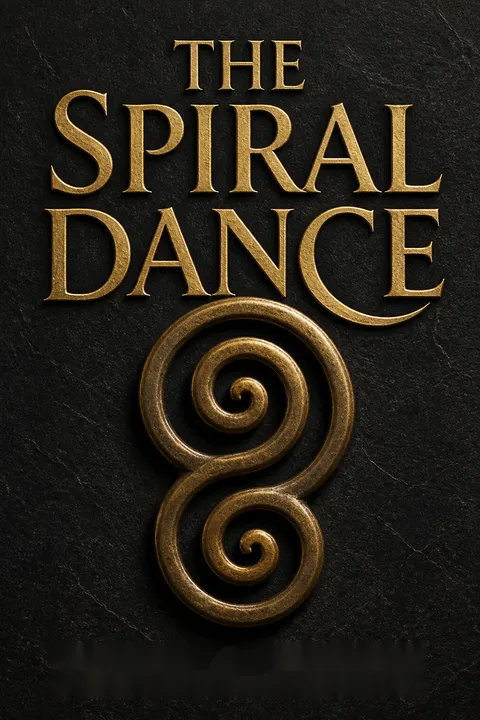
Reviews of The Spiral Dance are generally positive, averaging 4.04/5. Many readers praise its foundational role in modern Paganism and Wicca, appreciating its practical exercises, rituals, and poetic spirituality. The 20th anniversary edition's updated notes are frequently highlighted as valuable. Common criticisms include questionable historical claims, heavy feminist framing, and occasionally dense or wandering writing. Readers often recommend the anniversary edition for Starhawk's evolved perspectives on gender and politics. The book is widely considered essential reading for those interested in earth-based spirituality, regardless of personal agreement with its content.
People Also Read
Glossary
Immanence
The sacred within lifeIn Starhawk’s account, immanence means that divinity is present within the material world rather than existing separately from it. Nature, human bodies, culture, and other forms of life are sacred manifestations of the divine. This belief grounds the book’s ethics: spiritual practice should engage with and care for the living world.
Thealogy
Reflection on the GoddessThealogy is a term for theological reflection centered on the Goddess. In the book, it names an evolving way to think about divinity, ethics, ritual, and human life from a Goddess-centered perspective. It does not describe a single fixed doctrine; the author presents myths and symbols as tools for exploration rather than final answers.
Younger Self
The sensory, intuitive selfIn the Faery tradition described by Starhawk, Younger Self is the part of a person that directly experiences sensation, emotion, bodily drives, images, dreams, and intuition. It is said to communicate more readily through symbols and physical experience than through abstract language. The term is a spiritual-psychological model, not a clinical diagnosis.
Talking Self
The verbal, analytical selfTalking Self is the name given to the conscious, language-oriented aspect of awareness. It classifies experience, forms concepts, and makes verbal judgments. The book contrasts it with Younger Self to explain why ritual uses imagery, movement, and sensation as well as words. These selves are elements of a spiritual model, not fixed scientific brain divisions.
Deep Self
The divine inner essenceThe Deep Self, also called the God Self in the Faery tradition, is understood as the deepest spiritual source of wisdom, compassion, and connection. It is not identical to the ordinary conscious mind. In the book’s model, symbolic experience and the intuitive awareness associated with Younger Self provide a pathway toward it.
Raith
Vital elemental energyRaith refers to subtle vitality associated with the elements and with plants, animals, and the physical body. The book describes it as a source of bodily and emotional energy that can be strengthened through exercise and contact with nature, and depleted by intense magical work. This is an occult concept, not a scientifically established form of energy.
Power-from-within
Personal creative capacityPower-from-within means a person’s ability to act, create, develop integrity, and face personal limits without controlling others. Starhawk contrasts it with power-over, which relies on domination. In a coven, members are meant to strengthen one another’s capacities so that leadership and influence can be shared.
Cone of Power
Focused group ritual energyThe Cone of Power is a ritual image for energy gathered by a group and directed toward an intention. Participants may build it through chanting, breathing, drumming, or dancing, then release and ground it. The term describes the Craft’s ritual model of collective power, not a measurable physical force.
Esbat
A moon-centered gatheringAn Esbat is a coven meeting associated with the moon, often held at the full moon but also possible at other lunar phases. The book describes these gatherings as occasions for healing, reflection, magical work, and community. Their specific rituals vary rather than following a single required liturgy.
Sabbat
A seasonal solar festivalA Sabbat is one of the eight annual festivals in the Wheel of the Year, associated with solstices, equinoxes, and the seasonal points between them. The festivals connect changes in the natural year with human experiences such as beginning, growth, harvest, loss, and renewal. Their meanings and ceremonies can be adapted to local conditions.
Book of Shadows
A personal Craft journalA Book of Shadows is a Witch’s record of rituals, spells, dreams, exercises, poems, and personal responses to practice. The book describes it as a working journal rather than simply a secret rulebook copied from a teacher. Keeping one can help practitioners track their experiences and notice how their practice changes.
Download PDF
Download EPUB
.epub digital book format is ideal for reading ebooks on phones, tablets, and e-readers.








