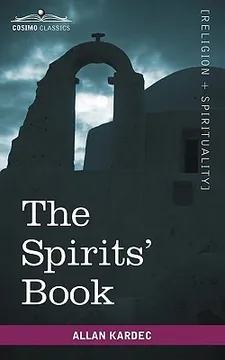


Key Takeaways
Investigate strange events patiently before deciding what caused them.
A table started the inquiry. Kardec describes how table-turning, knocks, and writing through small devices first drew public attention to spirit communication. He did not treat a moving table as an explanation in itself. He organized questions, compared answers from different mediums, and tried to distinguish physical effects from signs of intelligence. The book presents this patient investigation as its starting point, not as a claim that every unusual event has a spiritual cause.
Observation needs discipline. Kardec argues that unfamiliar phenomena deserve sustained study rather than automatic ridicule. He also warns that communications can be mistaken, deceptive, or trivial, and that casual curiosity is a poor way to investigate them. His method is to gather reports, compare them, and judge their substance.
The strongest methodological instinct here is the separation of an observed event from an explanation for it. That distinction remains useful whenever evidence is surprising or emotionally charged. Yet reports that resemble one another do not, by themselves, prove a shared supernatural cause. Similar expectations, social contact, or interpretation can also produce convergence. The book rightly asks readers not to dismiss unfamiliar claims in advance, but its own standard of patient comparison should also apply to its favored explanation.
Spiritism says death changes the body, not the soul's identity.
A person has three parts. Spiritism is Kardec's term for the claimed relationship between the material world and spirits, understood as intelligent beings who have left bodily life. The book describes a person as a body, an individual spirit or soul, and a perispirit, a semi-material envelope said to connect the two. At death, the body ends, while the spirit retains its individuality and continues to develop.
The universe has two orders. Kardec's account places material beings in the visible world and spirits in a lasting, invisible world. God is the first cause of both. Spirits differ in knowledge and moral character, but the hierarchy is not fixed: every spirit can advance. These claims make personal identity after death central to the book's explanation of duty, suffering, and hope.
This framework is more specific than a general belief in an afterlife: it insists that individual identity survives, that moral character develops, and that the two worlds interact. The perispirit supplies a proposed bridge between mind and matter, giving the system an explanatory shape. But a bridge described in specialized terms is not automatically evidence that the bridge exists. Readers can understand the model's internal logic while keeping its metaphysical claims distinct from established observation.
Treat moral development as a journey with more than one lifetime.
Growth continues across lives. Reincarnation, in this book, means that the same individual spirit enters successive human lives to learn, repair wrongdoing, and move toward greater moral and intellectual development. A single lifetime, Kardec argues, cannot explain why people begin life with sharply different abilities and circumstances, or how divine justice could fairly judge people with unequal opportunities.
The path is progressive. Spirits may advance at different speeds, but the doctrine rejects permanent damnation and says they do not regress to animal bodies. A person does not remember earlier lives while living on earth; the book says this protects freedom and prevents past knowledge from dominating present relationships. Conscience and recurring tendencies are presented as faint traces of prior learning, not explicit memories.
Reincarnation gives the book a long moral timescale: failure is consequential, but not final. It also offers a solution to unequal starting points by treating them as parts of a larger history. The cost is that past-life explanations are difficult to check, especially when they are used to account for another person's hardship. The framework is most constructive when it motivates present responsibility and hope, rather than turning inequality into a verdict about what someone supposedly deserved.
Assess spirit messages by character and consistency, not famous names.
Communication is not authority. The book says spirits vary as much as people do: some are wise and benevolent, others confused, vain, mischievous, or dishonest. A message does not become trustworthy because its speaker claims to be a famous figure. Kardec warns that lower spirits may borrow respected names, and that even sincere mediums can receive contradictory or mistaken communications.
Judge what is said. The proposed test is the quality of the message: does it show sound reasoning, humility, and concern for others, or does it flatter, confuse, and encourage selfishness? The book treats moral character and coherence as more revealing than a spirit's announced identity. It also presents disagreement among communications as a reason for careful study, not for accepting every statement uncritically.
This is a valuable safeguard within a belief system that grants authority to invisible speakers. It shifts attention from charisma and credentials toward the content and consequences of a claim. The standard also exposes a difficulty: a message can sound ethical and coherent without proving who, or what, produced it. Moral quality may help assess whether advice is worth following, but it cannot settle the separate question of a communication's source.
Keep moral choice alive without pretending circumstances do not matter.
Influence is not compulsion. Kardec's account allows spirits to suggest thoughts, intensify temptations, and draw attention toward opportunities, but it insists that a person remains responsible for choosing how to act. In one example, a person finds money by the roadside: an influence might nudge someone toward keeping it, while another might encourage returning it. The decision remains the person's own.
Limits still count. The book says bodily conditions can restrict how a spirit's abilities are expressed, and that serious mental impairment can reduce responsibility. It distinguishes this from treating every impulse or difficult circumstance as an excuse. Its model combines external pressures, personal habits, and free choice, although it often gives moral will the greatest weight.
The distinction between influence and control helps explain how temptation can matter without erasing agency. It also resists the opposite mistake of treating people as mere products of their circumstances. The tension is that the book sometimes describes choices as free while also assigning their conditions to prior spiritual decisions. That can make responsibility seem nearly unlimited. A careful reading holds both ideas in view: agency matters, and the real constraints on agency deserve serious attention.
Make charity practical by sharing resources and respecting equal human worth.
Justice begins with reciprocity. The book's moral center is a practical rule: treat another person's rights and needs as seriously as one's own. Charity means more than giving money. It includes patience with others' faults, forgiveness, useful help, and refusing to humiliate people who are poor or dependent. Property is legitimate when acquired without harming others, and wealth is a responsibility as well as a personal resource.
Power creates duties. The strong should protect rather than exploit the weak; family, work, and public life should serve mutual welfare. Kardec condemns slavery, cruelty, and unjust privilege, and argues that social conditions can create or deepen hardship. Equal human worth is not dependent on rank, race, wealth, or sex, even though the book also assigns men and women different social functions.
The book's moral test is not private sincerity but the treatment of people with less power. That gives charity a structural meaning: laws, employment, and ownership matter because they shape who can live securely and with dignity. A notable tension appears in its treatment of women. It supports equal rights while prescribing distinct traditional roles. The tension does not erase the equality claim, but it shows how moral principles can coexist with assumptions inherited from their period.
Judge civilization by justice and care, not inventions alone.
Progress has two measures. The book distinguishes intellectual advances, such as science and invention, from moral progress, such as reduced selfishness and greater concern for others. The first can help produce the second, but it does not guarantee it. A society with impressive technology can remain unjust if its laws protect the powerful, tolerate preventable deprivation, or treat people as less than equals.
Useful work binds society. Labour is described as both a material necessity and a way to develop intelligence and contribute to others. Kardec argues that education should shape habits and character, not merely transmit information. Human laws, unlike natural law, change with society; he expects them to become fairer as people challenge abuses and organize life around justice and mutual support.
This account refuses to equate sophistication with moral maturity. Its measure of a developed society is concrete: whether people can meet basic needs, whether law protects the vulnerable, and whether work contributes to shared life. That standard makes technological achievement morally incomplete on its own. The book's confidence that progress is inevitable is less secure than its demand that progress be judged by its effects. Institutions can improve, but improvement depends on choices and collective effort.
Meet suffering with resilience while challenging the conditions that cause it.
Hardship has several sources. The book interprets some trials as opportunities for growth and some as consequences of earlier wrongdoing, but it does not say that every misfortune is caused by a person's present choices. It also points to poor judgment, unjust social arrangements, and failures of care. Natural disasters may expose human vulnerability, while preparation and knowledge can reduce some of their damage.
Endurance is not enough. Kardec praises patience and courage under hardship, yet also argues that society should support people unable to work and prevent avoidable deprivation. He criticizes systems that leave people without necessities and stresses education, practical planning, and mutual aid. The framework asks readers to respond to adversity inwardly and collectively, rather than treating resignation as a substitute for changing harmful conditions.
The dual emphasis is important: personal resilience can help someone endure what cannot immediately be changed, while social responsibility addresses suffering that institutions can prevent. The book's past-life account of hardship, however, is speculative and can invite victim-blaming if treated as fact. Its own insistence on compassion and public support pushes in a different direction. The humane use of the framework is to let suffering prompt care, not to presume that the sufferer has earned it.
Turn belief into daily self-examination and useful action.
Review the day honestly. The book recommends an evening examination of conscience: revisit the day's choices, ask whether anyone was treated unfairly, and compare one's conduct with what one would expect from another person. It presents this repeated review as a practical route to self-knowledge, especially because pride can make personal faults look like virtues.
Practice outranks display. Prayer is valuable when sincere, but words and ritual cannot substitute for changed conduct. The book rejects self-denial that serves only the person performing it, and instead praises restraint when it frees resources for others. Useful work, kindness, and repair are treated as better evidence of moral growth than dramatic gestures or public piety.
The daily review turns an expansive spiritual system into a repeatable habit of ethical attention. Asking how the same act would look when performed by someone else is a simple check against self-serving interpretation. The book also distinguishes discipline from spectacle: sacrifice matters when it benefits others, not merely when it hurts. The method has a limit, though. Introspection can reveal motives, but it works best alongside honest feedback from people affected by one's actions.
Do not treat suicide as escape from suffering.
Death is framed as transition. The book says that personal identity survives bodily death and that relationships continue in a spiritual life. It treats grief as natural, while warning that prolonged despair can weigh on both the living and the dead. It also rejects the idea that suicide brings a person closer to a happier state; within its doctrine, taking one's life interrupts a life that could still have been used for growth and repair.
The claim is spiritual, not a diagnosis. Kardec presents suicide as a grave moral error, while also recognizing confusion and diminished understanding in some cases. He says that people who pressure someone toward suicide share responsibility. The book's practical emphasis is on courage, support, and finding useful work, but its claims about post-death consequences should be understood as religious doctrine rather than established fact.
The section aims to counter despair with continuity, purpose, and the possibility of repair. Its insistence that a person in crisis should not be abandoned is compatible with its broader ethic of care. Yet moral condemnation can deepen shame if applied without compassion, and metaphysical claims cannot establish what any individual experiences after death. The most life-preserving reading is to treat suicidal distress as a call for immediate human support, not as evidence of weakness or spiritual failure.
Analysis
The Spirits' Book is simultaneously a religious argument, a proposed account of unusual phenomena, and a manual of moral reform. Its distinctive move is to connect all three. Table-turning and mediumistic writing are presented as evidence for an invisible population; that population supplies a model of personal survival and reincarnation; and the model, in turn, gives ethical conduct consequences beyond one lifetime. The book is not merely asking readers to behave well. It argues that moral development is built into the structure of reality.
Its strongest internal logic is the connection between justice and continued opportunity. If people begin with unequal abilities and circumstances, a single earthly life can appear to make permanent outcomes unfair. Reincarnation answers by giving each spirit more than one chance to learn and repair. This produces a notably hopeful moral universe: wrongdoing matters, but punishment aims at improvement rather than endless exclusion. The same framework also makes self-examination, charity, and social reform part of a shared project rather than isolated virtues.
The central evidentiary leap remains substantial. Reports of communication, even when numerous and morally appealing, do not alone establish that their source is the dead. Kardec urges patience and comparison, but the book's preferred interpretation often serves as both hypothesis and confirmation. Its accounts of prior lives and spiritual consequences are also difficult to verify, which matters when they explain suffering or inequality. Readers can therefore separate the book's ethical force from the certainty of its cosmology.
That separation reveals a productive tension. The text insists on individual freedom while assigning lives to chosen trials, and it advocates equal dignity while retaining some inherited social assumptions. These tensions make the work historically situated, not worthless. Its enduring challenge is sharper than its paranormal claims: judge belief by the conduct it produces, judge progress by whether it reduces cruelty and deprivation, and make moral conviction answerable to lived consequences.
Review Summary
Reviews of The Spirits' Book are largely positive, with many readers finding it a profound, eye-opening exploration of spirituality, morality, and the afterlife. Fans praise its logical question-and-answer format, philosophical depth, and timeless relevance despite being written in 1857. Several readers report transformative personal experiences after reading it. Critics, however, cite logical flaws, circular reasoning, outdated science, and problematic racist, sexist, and elitist views. Some find it contradictory or poorly argued. Overall, it resonates strongly with open-minded spiritual seekers while drawing skepticism from more scientifically-oriented readers.
Glossary
Spiritism
Doctrine of spirit communicationKardec's term for the doctrine that spirits, understood as individual intelligences surviving bodily death, communicate with people in the material world. The book connects this claim to immortality, reincarnation, moral development, and a system of natural laws. It distinguishes Spiritism from spiritualism, a broader belief that humans possess something beyond matter.
Perispirit
Spirit's connecting envelopeThe book's term for a semi-material envelope surrounding a spirit and linking it to a physical body. It is said to persist after bodily death, preserve the spirit's individuality, and mediate sensation and action between spirit and matter. Kardec presents it as a proposed explanation for apparitions and other spirit phenomena.
Reincarnation
Successive human livesThe doctrine that an individual spirit lives through multiple human bodily existences, using each life to gain experience, repair wrongdoing, and advance morally and intellectually. In Kardec's account, these lives may occur on different worlds. Progress is always possible, although spirits advance at different rates, and they do not return as animals.
Erraticity
Waiting between incarnationsThe interim state of a spirit that has left one body and has not yet entered another. The book describes spirits in this state as retaining individuality, reflecting on their past, and preparing for a new existence. Its duration varies, and it is not necessarily a sign of moral inferiority.
Medium
Intermediary for communicationsA person whom the book describes as having a faculty for serving as an intermediary between spirits and the living. Communications may occur through writing, speech, or other forms of perception and physical manifestation. Kardec stresses that mediums differ in ability and that messages received through them require judgment.
Vital principle
Principle associated with lifeThe book's proposed principle that distinguishes living, organized beings from inert matter. It is described as a modification of universal matter, necessary for bodily life but distinct from intelligence and individual spirit. When an organism dies, its material components are reused and the vital principle returns to its general source.
Download PDF
Download EPUB
.epub digital book format is ideal for reading ebooks on phones, tablets, and e-readers.








