

Plot Summary
A Ghost Ship Wins Attention
Lucy Richardson, a Harvard-trained librarian rebuilding her life in the Outer Banks, helps decorate the Bodie Island Lighthouse Library for Halloween. The centerpiece is an intricate model of the wrecked Rebecca MacPherson, its tiny crew rendered as skeletons.
When local-born millionaire Jay Ruddle arrives with his granddaughter, Julia, and curator Greg Summers, library director Bertie James recognizes him as a possible benefactor. Jay is seeking a home for his prized collection of old maps, ship logs, and coastal documents, and the library has made his shortlist.
A gift would bring money for a purpose-built archive, but Blacklock College is competing for it. Jay leaves impressed by the library’s proposal, while his granddaughter’s interest in history and Greg’s strict standards suggest the family has its own disagreements about the collection.
The model ship establishes the book’s double register: historical artifact and Halloween spectacle, scholarship and folklore occupying the same room. Jay’s collection makes preservation a material question, since a gift could transform the library but also force it to compete with a college. Lucy’s attachment to the library is more than professional pride. It is the home she chose after refusing a life mapped out by her Boston family. The proposed donation therefore threatens and promises change at once, giving the mystery a civic stake before anyone is harmed.
A Donor's Rivals Surface
At dinner, library board member Curtis Gardner confronts Jay over an unnamed business dispute, then storms out after warning that he would rather see Jay dead than lose his company. The scene gives Lucy an early glimpse of Jay’s enemies, though she does not yet know the history behind the threat.
The next day, Julia returns to the library and joins Lucy’s outdoor book club, where rare-book collector Theodore Kowalski falls instantly under her spell. He competes with Greg for her attention, while Julia reveals a lively interest in stories and local history.
Lucy’s own romance with Mayor Connor McNeil is less certain: his election campaign keeps them apart, and she cannot tell whether her hesitation comes from fear of commitment or from wanting a life beyond politics.
The public threat and the book-club flirtation create parallel forms of rivalry. Curtis treats business as a contest in which humiliation and ruin demand retaliation; Theodore turns attraction into a competition he can manage through manners, gifts, and careful proximity. Julia’s ease with the book club offers her a space outside her grandfather’s decisions and Greg’s professional authority. Lucy, meanwhile, recognizes the difference between choosing a partner and falling into an expected role. Her uncertainty is not a lack of feeling for Connor, but a defense against repeating the passive choices she made in Boston.
The Lecture Ends in Murder
The library’s outdoor lecture on Outer Banks legends draws far more people than expected. While local storyteller Louise Jane McKaughnan describes the Rebecca MacPherson, Lucy glimpses a pale horse forming in the marsh fog, then loses sight of it as the talk ends.
During the refreshments, Jay remains upstairs examining the library’s maps. Lucy goes to tell him his granddaughter is ready to leave and finds him slumped over a desk, a velvet stair rope tightened around his neck.
The busy public event has left the building loosely supervised, so almost anyone could have slipped inside. Julia, Greg, and Theodore enter the room after Lucy discovers the body. Police treat the death as murder, and the collection that brought Jay to the lighthouse now gives the crime a clear but uncertain context.
The murder turns a communal celebration into an evidentiary problem. The library’s openness, usually a source of welcome, becomes a security weakness, while the crowd makes presence impossible to equate with access. Lucy’s glimpse of the horse arrives at the same moment that local legend is being narrated, making perception itself unstable without proving anything supernatural. Jay’s death also interrupts a transfer of ownership before it can be formalized. The collection is now both a cultural inheritance and a possible motive, and the library’s hope of receiving it is inseparable from the fact that a man died there.
Julia's Necklace, A Suspect
The next morning, Theodore calls Lucy from the police station after Julia is taken in for questioning. She is soon released but barred from leaving Dare County. At breakfast, Julia explains why police found her broken gold necklace in Jay’s fingers: she had gone upstairs during the lecture to challenge his decision to give the collection away.
She wanted to learn its care and keep it within the family, but Jay dismissed her ambitions and angrily seized the snapped chain. Their argument gives investigators a reason to suspect her, while Julia’s grief is sharpened by the knowledge that those were their last words to each other. She insists the collection was not worth killing for. Lucy believes her, yet recognizes that Julia had both access and a plausible motive.
The necklace is an intimate object turned into circumstantial evidence. Its presence in Jay’s hand records a real conflict, but not the conflict’s meaning: the same fact can imply violence or a painful attempt to reclaim agency. Julia’s wish to manage the archive exposes how her grandfather’s affection coexisted with paternalism. Lucy’s sympathy gives her access to Julia’s account, but it also risks narrowing her judgment. The section makes grief ethically complicated: Julia must mourn a beloved guardian while facing the suspicion that her final confrontation may have ended in murder.
Two Men Circle Julia
Lucy tries to identify other motives while Julia remains under suspicion. Theodore learns through collector networks that Greg was not leaving Jay’s employ for a better post; Jay had told him his curator job would end when the collection moved.
Greg might therefore lose his position if Julia took charge. At dinner, Julia’s flamboyant mother, Anna Makarova, arrives with her new husband, Dave White. Anna admits she and Jay had a bitter history, and Julia explains that Jay paid her to stay away after blaming her for his son’s fatal car crash.
The allowance ended two years earlier, leaving Anna financially vulnerable. Lucy sees possible reasons for both Greg and Anna to resent Jay, but neither clue yet accounts for who could have entered the library unseen.
The suspect field expands through relationships structured by dependence. Greg’s professional identity is attached to a collection he may no longer control; Anna’s estrangement from Julia has been shaped by money as well as grief. Jay’s decisions, presented as protection or stewardship, have constrained both women and men around him. Lucy’s investigation begins to resemble the archive itself: fragments acquire meaning only when placed in context, and context can mislead. Her impulse to protect Julia is humane, but the growing list of plausible motives warns that affection cannot substitute for evidence.
Blacklock's Desperate Bid
Bertie and Lucy visit Blacklock College and learn that Jay’s collection could save its underfunded North Carolina history department from closure. Professor Edward McClanahan confirms that professors Elizabeth McArthur and Norman Hoskins had pushed hard for the gift.
Back at the library, Charlene reveals that McArthur offered her a better-paid curator job if she spied on the library’s bid. The offer makes Blacklock’s urgency personal, not merely academic.
Meanwhile, Lucy hears that Curtis believes Jay deliberately undercut his beachwear stores, and Aunt Ellen supplies a longer history: Jay and Curtis’s father once competed for the same woman, who married Curtis’s father. Curtis’s failing business and old resentment give him a motive, but his grievances may be less trustworthy than his anger makes them seem.
The competing institutions expose how noble language can conceal self-preservation. Blacklock invokes scholarship, yet its department’s future and its professors’ careers depend on winning the archive. Charlene’s offer of employment makes that pressure concrete, while her refusal to spy distinguishes professional ambition from complicity. Curtis’s story adds a different inherited burden: he reads current business losses through a family rivalry that began before his own business life. The section resists a simple distinction between respectable motives and selfish ones. Institutions, careers, and families all make claims on the past, but only some claims are supported by reliable evidence.
Halloween Holds Every Suspect
The library keeps its Halloween celebrations, drawing Julia, Greg, Anna, Dave, the Blacklock professors, Curtis’s board ally Diane Uppiton, and Detective Sam Watson into the same rooms. Julia spends time with Charlene, showing genuine interest in taking responsibility for the archive.
Anna tries to steer the collection toward a sale, but Julia rejects her mother’s authority over the decision. Watson quietly tells Lucy that Anna was on a flight from Rome when Jay was killed, eliminating her as the person in the rare-books room.
Diane, however, lets slip that she believes Jay’s death may have been deserved, reinforcing the possibility that Curtis’s resentment has spread to her. Lucy shares her suspicions with Watson, who reminds her that motive alone is not proof.
The party turns the library into a social cross-section of the case, but proximity still offers no certainty. Julia’s refusal to let Anna negotiate for her shows a new boundary: she can care about her mother without surrendering judgment. Watson’s confirmation of Anna’s location demonstrates the value of disciplined verification, in contrast to Lucy’s tendency to build theories around people she likes or distrusts. Diane’s remark is emotionally revealing but evidentially incomplete. The scene asks the reader to distinguish confession-like language from actual confession, and communal familiarity from knowledge of what someone did in private.
The Husband's Knife
After Halloween, Lucy notices that Dave keeps leather gloves in his pocket, then realizes he had reason to hide his presence at the library and gain control of Julia’s inheritance through Anna.
When Julia and Theodore take an evening walk by the marsh, Dave rushes toward them with a knife, intending to kill Julia and make the attack appear to be Theodore’s work. Theodore steps between them and is stabbed in the arm. Lucy reaches the boardwalk in time to stop Dave from forcing the knife into Theodore’s hand.
Julia and Lucy fight him, Theodore strikes him with his phone, and the knife falls into the water. Police arrive and arrest Dave. He admits that he had gone upstairs to confront Jay about giving the collection to Anna, then strangled him when Jay laughed and ordered him away.
The climax converts the case’s misleading objects into a coherent chain. Gloves, access, inheritance, and Dave’s warning about Theodore all point toward a plan to redirect suspicion. His stated motive dresses greed in the language of restoring a mother-daughter bond, exploiting the very estrangement Jay created. Theodore’s intervention is a costly act of care, while Julia’s resistance makes her an active participant in her own survival rather than merely the heiress everyone is trying to manage. Lucy’s decisive action matters, but only because she recognizes the frame before Dave can complete it.
A Staged Specter
Dave is charged with Jay’s murder and Theodore’s attempted murder, while Julia stays in the Outer Banks to make her statement and support Theodore through his recovery. At a small gathering in the library, she says she and Anna will try to rebuild their relationship slowly.
Later, as Julia, Greg, and Theodore leave, a misty horse shape appears beside the lighthouse. Greg shields Julia and advances; Theodore flees in terror. Lucy finds wheel grooves and human boot prints rather than hoof marks, and connects the spectacle to Louise Jane and Greg, whose secret understanding had seemed suspicious.
Their trick has been designed to frighten Theodore away from Julia. It explains this final apparition, but not Lucy’s earlier visions, the unexplained horse tracks, or the blank photographs on her phone.
The staged apparition makes performance itself part of the mystery. Louise Jane’s folklore and Greg’s theatrical timing can manufacture fear, but the explanation does not erase Lucy’s earlier experiences. The novel leaves a seam between the fabricated and the unresolved, allowing skepticism to remain intelligent without becoming total certainty. Theodore’s fright also punctures the persona he has built as a serious collector: his vulnerability is not a flaw, though others exploit it. Julia’s plan to approach Anna gradually is the quieter resolution here. Unlike the men who have managed her life, she chooses the pace and terms of her next relationship.
Nags Head Chooses Connor
Connor wins reelection by a wide margin, and Lucy joins him onstage at the victory celebration instead of remaining safely in the crowd. She has spent the campaign uneasy about being absorbed into a politician’s life, but accepts his public acknowledgment and the intimacy they have built through the crisis.
Theodore arrives in his old book-collector attire and tells Lucy that Julia and Greg are engaged. He is disappointed, yet accepts that he did not belong in Julia’s world. Julia has promised him access to Jay’s private library and sent him several rare first editions in gratitude for his help.
Her choice of Greg, her plans for Anna, and her control of the collection now belong to her. The lighthouse library returns to its ordinary work, though Lucy remains unsure whether its strange horse has truly gone.
The ending resolves the book’s human choices without making every future certain. Lucy’s step onto the stage is not a promise to become a politician’s wife; it is a decision to be visible beside Connor on her own terms. Theodore accepts Julia’s engagement without converting disappointment into grievance, and her gift of books recognizes his care while respecting the limits of their bond. Julia, long treated as someone to be protected or directed, now makes decisions about love, family, and scholarship herself. The election restores civic continuity, while the unresolved horse keeps the world slightly larger than the evidence can contain.
Analysis
The novel makes the library a place where competing forms of custody meet. Lucy and Bertie defend public access; Jay’s collection promises both scholarship and prestige; Julia wants the authority to inherit knowledge rather than merely receive it. These disputes echo the intimate arrangements around the archive. Jay’s control over Julia and Anna was maintained through money and paternal judgment, while Greg’s career depended on decisions made by others. The murder grows from this network of access, dependence, and entitlement, not from a simple contest between good institutions and bad people.
The mystery also distinguishes evidence from interpretation. Julia’s necklace establishes that she was present and angry, but not that she killed Jay. Curtis’s history of grievance is real, yet his explanation of business failure is distorted by resentment. Lucy’s loyalty helps her notice overlooked details, but Watson’s insistence on verification exposes how easily sympathy can become a theory. The plot rewards attention to physical particulars, especially the rope, gloves, and the movements of people through an inadequately watched building.
At the same time, the book resists making rational explanation total. The final staged horse is exposed through wheel tracks and boot prints, yet Lucy’s earlier encounters remain unresolved. This ambiguity does not cancel the detective plot. It places empirical certainty beside an emotional and cultural world shaped by inherited stories, coastal history, and the charged atmosphere of a lighthouse. Folklore can be used to deceive, but it can also preserve what official records overlook.
The characters’ emotional arcs turn on agency. Julia moves from being discussed as an heir to making decisions about her mother, the archive, and her own future. Theodore’s romantic disappointment does not erase his generosity, and Lucy’s willingness to stand beside Connor marks a choice rather than a surrender to expectation. The book’s deepest claim is modest but precise: care becomes ethical when it leaves other people free to choose what comes next.
Review Summary
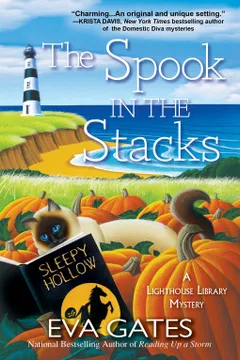
The Spook in the Stacks is the fourth book in the Lighthouse Library Mystery series, set during Halloween at the Bodie Island Lighthouse Library in North Carolina's Outer Banks. Readers consistently praise the charming setting, well-developed characters, and the lovable library cat, Charles. Most reviewers were surprised by the killer's reveal, appreciating the well-constructed mystery with its red herrings and plot twists. Minor criticisms include some repetitive elements and pacing issues. The series' unique premise — a library and apartment inside a lighthouse — delights readers despite its geographical implausibility.
Characters
Lucy Richardson
The library's reluctant sleuthLucy is the assistant librarian at the Bodie Island Lighthouse Library, a careful reader of books and people who has come to the Outer Banks after refusing an engagement arranged by habit and family expectation. She values the library as a genuine community, not merely a storehouse for books, and takes its risks personally. Her curiosity repeatedly draws her toward mysteries even when she knows the police would prefer her to stay out of them. Lucy’s instincts are strongest when she attends to concrete details, though her affection for people can color her theories. Her central tension is whether intimacy requires surrendering independence. She wants connection, but only if she can choose its shape herself.
Julia Ruddle
An heir seeking authorshipJulia is Jay Ruddle’s granddaughter, an English literature graduate with a quiet manner and a serious curiosity about maritime history. Raised largely by her grandfather, she has learned to read rooms carefully and to soften disagreement, but she is not without conviction. Her interest in the archive is more than family sentiment: she wants to understand its contents and be trusted with its care. Julia’s relationship with her estranged mother carries both longing and justified suspicion. She is often surrounded by people claiming to protect her, so her defining need is the right to make her own decisions, even when grief makes those choices difficult.
Connor McNeil
A mayor who loves homeConnor is Nags Head’s mayor, a dentist by profession and a committed public servant whose affection for the Outer Banks shapes his work. He is warm with Lucy but stretched thin by the campaign, and political visibility repeatedly intrudes on their private time. Connor dislikes the machinery of campaigning even as he accepts its demands to protect the town’s future. His relationship with Lucy asks him to balance public duty with personal attention, while Lucy must decide what kind of closeness she can accept. He is neither a distant politician nor a flawless romantic ideal, but a tired man trying to serve a place he loves.
Theodore Kowalski
A collector with a tender heartTheodore is a local rare-book collector who performs the role of an English gentleman through tweed, a false accent, and elaborate scholarly manners. Beneath the self-conscious costume is a lonely, generous man whose enthusiasm is genuine and whose awkwardness often exposes how much he wants to be taken seriously. He is particularly vulnerable to romantic hope, and his attention to Julia sometimes becomes intrusive before Lucy urges him to give her space. Theodore also knows the small world of collectors, making his social connections useful beyond his personal life. His fear of ghosts comes from childhood cruelty, not simple cowardice.
Jay Ruddle
A tycoon turned archivistJay is an Outer Banks native who turned his father’s small furniture business into a far-reaching chain before retiring to focus on historical documents. He is wealthy, disciplined, and intensely protective of the archive he assembled. His respect for preservation coexists with old-fashioned ideas about who is qualified to manage it, especially within his own family. Jay’s choices have shaped the lives of his granddaughter and her mother, as well as the institutions competing for his collection. He is remembered locally with a mixture of pride and resentment, a man whose success brought both admiration and lasting grievances.
Greg Summers
The curator under pressureGreg is Jay’s polished, capable curator, accustomed to treating the collection as a professional responsibility rather than a family possession. He values accuracy and believes historical materials must be protected from careless interpretation. His confidence can harden into condescension, particularly when Julia tries to assert her own expertise. Greg is also attentive to Julia and often positions himself as her protector, though his assumptions about what she needs can conflict with her independence. His career is tied to the future of the archive, making his professional interests inseparable from the family’s decisions.
Anna Makarova
A mother on uncertain termsAnna is Julia’s mother, a gifted classical violinist whose theatrical style and volatile reputation make her difficult to read. She is accustomed to commanding attention, whether through performance, fashion, or insistence, and she speaks as if certainty can replace intimacy. Her long absence from Julia’s upbringing leaves a painful distance that neither sudden affection nor extravagant gestures can immediately repair. Anna’s dependence on others has shaped her choices, but she is also a person whose artistic identity has been damaged by professional instability. Her arrival forces Julia to confront the difference between wanting a mother and trusting this particular one.
Bertie James
The library's steady directorBertie directs the Lighthouse Library with calm authority, practical judgment, and a commitment to making the institution serve its community. She knows that a major collection could secure the library’s future, but she refuses to let ambition erase its everyday responsibilities. Her background in library science informs her respect for both preservation and public access. Bertie’s composed manner can conceal deep feeling, especially when old relationships or the library’s survival are involved. She relies on Lucy while giving her room to act, even when Lucy’s investigative curiosity exceeds the job description.
Charlene Clayton
The archive's expertCharlene is the library’s research and reference librarian, a highly qualified preservation specialist with experience at the Bodleian Library. She returned to the Outer Banks to care for her mother and has built a professional life around making difficult material accessible. Charlene is candid, energetic, and devoted to her work, with a taste for hip-hop that she cheerfully shares whether colleagues ask or not. Her expertise makes her central to the proposed archive, but she is not simply a credential for the library’s bid. She has her own career choices and weighs money against community, purpose, and the life she has made.
Louise Jane McKaughnan
The keeper of local legendsLouise Jane is an enthusiastic volunteer and storyteller whose deep family roots connect her to generations of Outer Banks lore. She treats local legends as a form of inherited knowledge and resists being dismissed as a fabricator, even when she embellishes or dramatizes. Her theatrical instincts make her a natural center of attention, while her prickly relationship with Lucy gives her stories a teasing edge. Louise Jane wants the community to value what cannot be found in official records. Her certainty about the supernatural is both a source of comic friction and a challenge to Lucy’s strictly practical worldview.
Dave White
Anna's accommodating husbandDave is Anna’s husband, a comparatively plainspoken Midwesterner whose casual manner contrasts with her stage-ready presence. He tries to make himself useful in a family relationship that predates him, and his easy conversation can make him seem less formidable than the people around him. He is attentive to Anna’s needs and follows her lead in social settings, though his place in Julia’s life remains uncertain. Dave’s ordinary appearance and unshowy manner make him difficult to place among the more vivid personalities at the library.
Sam Watson
The evidence-first detectiveWatson is the local detective investigating Jay’s death, a seasoned former homicide officer with a blunt manner and a habit of testing people’s assumptions. He distrusts amateur theorizing, especially when Lucy’s loyalty to a suspect begins to shape her questions. His impatience does not mean he ignores useful information; he weighs each lead against what can be established. Watson’s insistence on evidence provides a counterweight to the library’s web of rumors, old grudges, and supernatural tales.
Curtis Gardner
A businessman nursing grievancesCurtis is a library board member and owner of a small chain of beachwear stores inherited from his father. He sees his business as a family legacy and interprets competition through that emotional history. Under financial pressure, he is quick to blame powerful rivals for his losses, sometimes overlooking his own management problems. His clashes with Jay expose how old loyalties can distort present-day judgment. Curtis wants respect as a businessman and guardian of his family’s work, but his resentment makes his perspective difficult to trust.
Diane Uppiton
A board member with influenceDiane is a library board member whose loyalty to the institution is complicated by resentment over her late husband’s connection to it. She is polished, socially forceful, and accustomed to having her preferences taken seriously. Her relationship with Curtis brings her into his business concerns as well as library politics. Diane knows how to present herself as a civic participant, but Lucy senses that her public manner does not reveal the whole of her private judgment.
Ronald Burkowski
The children's librarianRonald is the library’s children’s librarian, a former theater professional whose warmth and showmanship make young patrons feel welcome. He builds programs with the energy of a performer and takes children’s safety seriously, even when that responsibility pulls him away from other duties. His theatrical background also makes him a natural partner in the library’s Halloween events. Ronald is a friend to Lucy and a steady presence when the library’s ordinary routines are disrupted.
Josie O'Malley
Lucy's cousin and confidanteJosie is Lucy’s cousin, a talented pastry chef and owner of a popular local bakery. She works punishing hours alongside her fiancé, Jake, but keeps a generous place for friends and family in her life. Josie is practical without being severe, and she recognizes Lucy’s romantic evasions before Lucy is ready to name them herself. Her bakery anchors several of the story’s conversations, offering a warm, familiar setting amid police questions and grief.
Stephanie Stanton
Lucy's lawyer friendStephanie is a defense attorney and one of Lucy’s closest friends, a small, high-energy presence with a sharp sense of justice. She is willing to give sound legal advice but knows when a case falls outside her professional role. Her relationship with police officer Butch Greenblatt joins two very different temperaments, and she brings both humor and legal caution to Lucy’s circle.
Grace Sullivan
A loyal friend and readerGrace is one of Lucy’s close friends and a longtime companion of Josie. She enjoys books, local life, and teasing her friends without losing sight of when a joke should end. Grace helps make Lucy’s adopted circle feel like a true home rather than a temporary refuge.
Ellen O'Malley
Lucy's rooted, watchful auntEllen is Lucy’s aunt and Josie’s mother, an Outer Banks native with a long memory for local families and their histories. She offers Lucy practical affection rather than indulgence and helps her understand the grudges that newcomers might miss. Her knowledge of the community becomes valuable when Lucy tries to separate old stories from current motives.
Edward McClanahan
Bertie's old academic flameEdward is a professor of Latin at Blacklock College, a brilliant, disorderly academic whose attention is easily captured by books and ideas. He and Bertie share a history from graduate school, and his continued affection for her reveals a more personal side beneath his scholarly eccentricity.
Doug Whiteside
Connor's development-minded rivalDoug is Connor’s opponent in the Nags Head mayoral race. He favors development and treats the library as expendable when it does not fit his vision for revenue and growth. His campaign relies on easy promises and attacks on Connor’s priorities.
Dorothy
Connor's campaign managerDorothy manages Connor’s campaign with disciplined efficiency, coordinating volunteers and keeping him moving through a crowded schedule. She is protective of his time and alert to political risks, while her work makes clear how much public life intrudes on private moments.
Plot Devices
The Rebecca MacPherson
Folklore made tangibleThe detailed model of the shipwrecked Rebecca MacPherson gives the library’s Halloween display a vivid object around which history and legend gather. Its skeletal sailors and damaged hull invite speculation about the real vessel and its fate, while Louise Jane uses it to animate her stories. Its figures seem to shift position, helping Lucy question whether the lighthouse holds something beyond ordinary explanation. The model also embodies the novel’s tension between historical accuracy and imaginative reconstruction: Julia wants history to feel human, while Greg fears that embellishment can obscure truth.
Jay's historical collection
A prize with many claimantsJay’s collection of maps, ship logs, and early coastal documents gives the mystery its central institutional prize. The Lighthouse Library wants it because the archive could enrich local scholarship and bring funds for a purpose-built facility. Blacklock College needs it to preserve its history department, while Jay’s family debates whether it should remain in private hands. The collection therefore connects professional ambition, family authority, and public access. After Jay’s death, the proposed gift becomes an uncertain inheritance, creating reasons for several people to seek influence over its future.
Julia's broken necklace
An intimate false leadJulia’s thin gold necklace breaks during her argument with Jay, and he holds the chain when Lucy finds his body. The object links Julia to the rare-books room and gives police a reason to question her. Its meaning is not what it first appears to be: the chain records a painful family confrontation, not proof of a killing. As a clue, it makes the distinction between access and guilt concrete, while also preserving the emotional cost of Julia’s final disagreement with her grandfather.
The open library
A crowd without controlThe library remains open during Louise Jane’s outdoor lecture, while staff members move between the event and their regular duties. The large crowd and informal entrances make it possible for someone to enter the building without attracting notice, and the rare-books room is not continuously monitored. This practical weakness gives several suspects plausible access and forces Lucy and Watson to reconstruct movements from incomplete memories. The library’s openness is a source of community value, not negligence by design, but the case shows how a welcoming public space can be exploited.
The ghostly horse
A haunting left uncertainLucy sees a pale horse in the marsh more than once, along with strange lights, and later finds hooflike marks that deepen her uncertainty. The sightings occur amid Halloween storytelling and her investigation, so stress and suggestion remain possible explanations. A later horse-shaped apparition is deliberately staged by Louise Jane and Greg to frighten Theodore, but that trick does not account for Lucy’s earlier experiences. The device allows the book to support both practical skepticism and the possibility that the lighthouse’s legends contain something unexplained.
Download PDF
Download EPUB
.epub digital book format is ideal for reading ebooks on phones, tablets, and e-readers.








