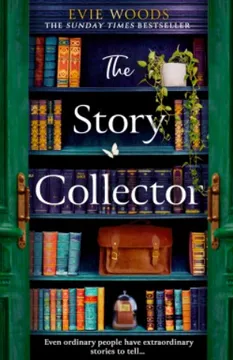


Plot Summary
Prologue
Local legend says Thornwood House was built after Lord Hawley ignored a warning and cut down an ancient hawthorn tree, a dwelling place of the fairies. For a time the family prospered. Then Lady Hawley gave birth to twins and became convinced they were not her children.
A local seeress called them changelings, replacements left by the fairies in revenge. Lady Hawley died after throwing herself from an upper window, and the village came to regard the house as cursed.
The legend gives the house a history before Sarah or Anna ever enters it, making Thornwood seem less like a setting than a place that remembers its injuries. Its facts arrive as village testimony, not settled truth. That uncertainty matters: the same fear of changelings can become a way to interpret unexplained suffering, or a permission to harm the vulnerable. The prologue plants both possibilities. It also establishes the novel’s central tension between rational explanation and inherited belief, while warning that stories can shape a family’s fate even when their truth remains unprovable.
The Wrong Christmas Flight
Sarah Harper leaves New York on Christmas Day, ending a marriage that has become a house of silence. She means to fly to Boston and stay with her sister Megan, but the airport feels unreal, and she keeps adding whiskey to her coffee. A newspaper story about an Irish hawthorn tree that forced a motorway to change course brings back memories of making things with her father.
When she notices a Shannon flight at the nearby gate, she acts on impulse, boards on standby, and falls asleep. Her decision is not a considered search for Ireland or its folklore. It is an escape made possible by grief, alcohol, and one small image that catches her attention.
Sarah’s wrong flight is both comic accident and emotional truth: she cannot yet name what she needs, so her body chooses distance before her mind can make a plan. The newspaper gives her an accidental bridge from her former life to the story’s Irish setting, while the memory of her father briefly reconnects her with her own artistic beginnings. Her escape is not presented as a cure. It exposes how completely grief and marital accommodation have narrowed her choices, even as the impulsive detour creates room for new ones.
A Tin Box in the Tree
Sarah wakes at Shannon Airport to discover that she has crossed the Atlantic in the wrong direction. With the airport nearly empty, she takes a room at Butler’s cottage in Thornwood, where owner Brian Sweeney leaves her to settle in. That night, a panic attack sends her outside with a torch and the dwindling whiskey from her bag.
A donkey startles her beside an old hawthorn; when she leans against its stone wall, it gives way and she falls into the field. Moonlight reveals a hollow in the tree. Sarah reaches inside and pulls free a tin box containing a diary, a torn piece of lace, and an unused 1911 ticket from Ireland to New York. The diary belongs to Anna Butler.
The box turns Sarah’s accidental arrival into a relationship with a past she cannot dismiss as scenery. Her discovery comes through disorder: panic, drink, a failing torch, and a collapsing wall. Yet the act of reaching into the hawthorn is also a choice to follow curiosity rather than retreat indoors. The ticket anticipates a crossing that may never happen, while the diary gives the hidden object a human voice. Sarah’s first connection to Thornwood is not a local person but an interrupted life, preserved in fragments and waiting to be read.
The American Story Collector
In Anna Butler’s 1910 diary, an American scholar, Harold Griffin-Krauss, arrives at her family’s farm with a punctured bicycle and a plan to document the fairy faith. Anna offers to help translate and introduce him to Thornwood’s people, despite her father’s doubts. The work gives her an unusual freedom, but she has another hope: she wants Harold’s knowledge to help her understand what happened to her older sister, Milly.
Together they visit elders who recount fairy encounters, healing customs, and warnings about dangerous places. Cathal describes a child’s death foretold by a coffin built at a fairy fort; Johnny recalls a strange figure who aged before his eyes. Harold records each account without ridicule, earning Anna’s trust.
Harold’s notebooks make oral testimony legible to institutions, but Anna’s translations show that recording is never neutral. She selects the people, interprets their language, and carries private loyalties into what appears to be scholarly work. Her hidden motive is not simply belief. It is the hope that stories might answer a grief her family has left untouched. Harold’s respectful listening offers her a model of attention, while his systematic classifications reveal the risk of turning lived experience into evidence without understanding its emotional cost.
Hazel Opens the Archive
In modern Thornwood, Sarah meets Oran Sweeney, a reserved conservation officer, after he catches her picking snowdrops planted in memory of his late wife. His daughter Hazel soon visits Sarah with tea, cookies, and a copy of Harold Griffin-Krauss’s book, The Fairy Study. Hazel knows the folklore and explains that she and her father once lived in Butler’s cottage.
Sarah and Oran later climb the wall around abandoned Thornwood House, where their teasing eases into genuine warmth. Sarah sketches the derelict estate, then notices a creature in the drawing that she does not remember putting there. The diary, Harold’s book, Hazel’s interest, and the unexplained figure make Sarah feel that Thornwood’s stories have begun to converge around her.
Hazel acts as a living link between the archive and the present, not merely a guide to local lore. Her gift gives Sarah a route into Harold’s research, while Oran’s first reaction to the snowdrops exposes how private grief can harden into rules. Their later visit to Thornwood loosens that defensive posture through play rather than confession. The strange figure in Sarah’s sketch complicates her preference for interpretation: art has registered something she cannot consciously explain. The section lets intimacy and uncertainty grow side by side, neither one cancelling the other.
A Sprained Ankle at Cnoc
As Anna guides Harold through Thornwood, she encounters George Hawley, the wealthy heir to the estate, and is captivated by his attention. When Olivia’s horse knocks Anna down near Cnoc na Sí, George carries her to Thornwood House and summons a doctor. The visit to his library feels like entry into a world Anna has only watched from outside.
George’s tenderness and flirtation intensify her hopes, while Harold notices the Hawley twins’ isolation and their unsettling closeness. Anna’s mother warns that George belongs to a class that will never accept a farmer’s daughter, but Anna dismisses the warning. Harold’s awkward account of the twins’ loneliness cannot compete with the future Anna imagines for herself.
Anna’s attraction is shaped by both desire and social distance. George’s house offers the glamour of a life beyond farm labor, so his attention feels like personal recognition and a possible escape at once. Her mother sees the structural imbalance more clearly: charm does not erase the power George holds over her. Harold’s doubts arrive in a form Anna cannot yet use, because she is invested in the gentler version of George she has encountered. The sprained ankle becomes a literal vulnerability that opens the door to an emotionally risky intimacy.
The Changelings' Buried Secret
George and Olivia invite Anna and Harold to their twenty first birthday celebration, and Anna and her friend Tess hurry to make her a gold lace dress from a plain cotton one. Before the party, Harold visits Maggie Walsh, the local seeress, while Anna secretly listens outside. Maggie claims Lady Hawley once came to her convinced that her twins were changelings.
She says she put the babies in a small box and hid them in the ground on Cnoc na Sí, hoping the fairies would exchange them for the human children. A maid panicked and alerted Lord Hawley, who retrieved the twins. Maggie says Lady Hawley was beaten afterward and died the next day. Anna cannot tell whether the story is truth or a dangerous woman’s invention.
Maggie’s account transforms the prologue’s legend from distant family lore into an alleged act with human victims. Its horror lies partly in the uncertainty: the story may be a confession, a lie, or a desperate attempt to explain a mother’s breakdown. Anna’s choice to eavesdrop shows that she is no longer merely collecting stories for Harold. She is trying to protect her imagined future with George from evidence that might disturb it. The handmade dress echoes that effort: she can stitch herself into the world she wants, but cannot control what waits there.
Jack's Call Reopens Grief
When Jack calls from New York to check on her, Sarah first insists that she is managing, then turns his concern into the argument they have avoided for years. She tells him that after their daughter Emma was stillborn, he said he could not carry her pain, and that she spent the following years hiding her grief to spare him.
Jack answers that he lost their daughter too, then the call ends before either can repair the wound. Sarah buys wine and cigarettes and returns to Butler’s cottage intending to shut out the village. The exchange does not resolve their marriage. It breaks the false calm they maintained by treating their shared loss as something too dangerous to name.
The call exposes the asymmetry beneath the couple’s polite distance. Both parents grieve, but Sarah has experienced Jack’s withdrawal as a demand that she make her pain easier for him to bear. Her anger is not proof that she no longer cares; it is evidence that she has stopped translating her experience into terms designed to preserve his comfort. The drinking and cigarettes show that speaking honestly does not instantly make her well. Still, the silence has changed: what was hidden between them is now an explicit conflict that can be faced.
The Bees at Thornwood
At the birthday party, Anna arrives in the gold dress she and Tess made, wearing her mother’s pearls. George asks her to leave the ballroom with him, then kisses her and presses on after she tries to stop. He tears her dress and strikes her head against stone. Anna cannot fight him off. A swarm of bees suddenly covers George, driving him away from her and into the fast river.
Anna then sees Milly, changed and surrounded by dark winged creatures, who tells her she is safe and must stop searching for her. Harold finds Anna injured and wraps her in his coat. He takes her to the barn instead of the house, where she can recover beside the familiar warmth of the family cow.
The scene overturns Anna’s romantic reading of George with brutal speed. His social status and practiced gentleness have concealed entitlement, and her earlier trust makes the violence harder to interpret in the moment. The bees offer a supernatural intervention, but the story does not turn the assault into a simple triumph: Anna remains injured, frightened, and unsure what she has seen. Milly’s return provides both rescue and a boundary. She comforts Anna while insisting that love cannot mean endless pursuit of the dead.
The Dead Sister's Promise
After reading Anna’s account, Sarah takes Hazel to a library talk by Ned Delaney, the local storyteller whose campaign helped protect the motorway hawthorn. Sarah asks him about bees, and he explains that folklore links them to the otherworld and to fairies. Oran is angry that Sarah brought Hazel, who has spoken of seeing her mother Cathy.
But when Sarah visits him afterward, he admits that he has tried to suppress those visions to protect his daughter. Hazel tells him a dream has changed how she experiences her mother’s presence. Oran stops treating her grief as something to correct, and father and daughter remember Cathy together. The change lets Sarah see how fear can silence love as effectively as loss.
The folklore talk gives Sarah a practical reason to ask about bees, but its deeper function is relational: it brings Hazel’s inner life into conflict with Oran’s protective rules. Sarah does not prove that Hazel’s visions are supernatural. Instead, she helps Oran recognize that disbelief can become another form of refusal to listen. Their reconciliation is not based on certainty about Cathy’s presence; it rests on a shared willingness to speak about her. This is the novel’s quiet counterpoint to Anna’s world, where belief can both comfort the bereaved and endanger them.
Harold Takes the Blame
In the barn, Anna tells Harold how Milly died of consumption, how she avoided the funeral, and how a fever once brought her sister back in a vision. She explains that Milly appeared again after George attacked her, then describes the bees and the river. Harold believes that she was assaulted, but Anna cannot make the event intelligible as evidence.
The next morning, police take Harold away after George’s body is found and Olivia tells them she saw Anna leave the party with him. Harold has admitted to a struggle, hoping to shield Anna. Anna visits Olivia and begs her to correct the accusation, but Olivia blames her and has her removed from Thornwood House.
Anna’s disclosure is an act of trust after an experience that has left her unable to trust her own perceptions. Harold’s response recognizes the human fact of the assault even where he cannot verify the supernatural explanation. The legal danger turns their private intimacy into a public contest over credibility. Olivia’s accusation is especially potent because the class hierarchy already makes Anna vulnerable to being judged as deceitful or morally compromised. Harold’s decision to take responsibility protects Anna in the immediate moment, but it transfers the cost of her silence onto him.
The Train to Freedom
Anna falls ill with fever while Harold is held and sent toward Dublin for trial. Her brother Paddy, aided by men from the Irish Republican Brotherhood, helps him escape at a railway station amid a commotion involving loose pigs and a cloud of steam. Harold reaches Cork and leaves for America.
Before departing, he sends Anna a letter confessing that he loves her and offering to arrange her passage. The family later learns that tickets arrived from America for years, but Anna never used them. After her mother dies, Anna stays to care for her father and brothers; she eventually marries a man called Danny. Harold’s offer remains a real possibility that duty and circumstance slowly close.
Harold’s escape resolves the immediate injustice without giving Anna the life she imagined. The letter makes love explicit, but it cannot undo the consequences of the accusation, the distance, or the obligations that bind her to her family. Anna’s refusal of repeated passage is not framed as a simple rejection of romance. It is a decision made inside a world where women’s labor sustains households and departure carries a high cost. Paddy’s risky rescue and Anna’s later choice both reveal how loyalty can be an act of courage and a limit on personal freedom.
A Story Finds Its Artist
Sarah finally tells Fee that the daughter she and Jack expected, Emma, was stillborn after seven months of pregnancy, and that their marriage became organized around a loss they could not discuss. Fee listens without asking Sarah to move on and gives her a hawthorn and rose petal preparation as a small ritual of care.
Later, Oran shares what his grandfather knew about Anna: she never left for America, and Olivia was eventually found dead alone in Thornwood House. Sarah and Oran kiss, while Sarah begins drawing the Good People as complex, sometimes frightening figures rather than pretty decorations. She returns to her own work with a purpose: to give these stories a visible form and make room for grief without erasing it.
Sarah’s confession marks a change from performing recovery to acknowledging the specific life she lost. Fee’s response matters because it does not demand a lesson or cure; her herbal ritual gives care a physical, ordinary form. Anna’s history then prevents Sarah from mistaking an open door for a guaranteed happy ending. Anna’s choice and Olivia’s isolation show the cost of lives shaped by duty, power, and silence. Sarah’s art becomes a way to hold stories rather than escape into them, and her emerging relationship with Oran begins from that more honest ground.
The Gallery Door Opens
Sarah returns to New York and exhibits her drawings of the Good People in Jack’s gallery. Jack helps curate the show, and the two visit Emma’s grave and look through the keepsakes they once collected for her. Their marriage does not resume, but they can finally share the loss without pretending it never happened.
At the gallery opening, Sarah expects her parents and sister, then finds Oran outside instead. He has crossed the Atlantic without her sending the tickets he claims she arranged. Sarah lets him in and embraces him. The last image is not of a woman choosing between Ireland and America, or between two men, but of Sarah inhabiting her work and allowing a new relationship to meet her there.
The gallery makes Sarah’s recovery visible without turning it into a clean break from the past. Jack’s participation and their visit to Emma’s grave show that they can honor their daughter while accepting that their marriage has changed. Sarah’s work carries Thornwood’s folklore into a public space, converting private discovery into shared artistic practice. Oran’s arrival is a surprise rather than a rescue: Sarah has already returned to her own life before he appears. The ending therefore treats intimacy as something that can join a recovered self, not replace one.
Analysis
The Story Collector builds its supernatural uncertainty around two women who inherit stories without inheriting certainty. Anna translates local belief for Harold, yet her own desire for answers makes her an unreliable guide to her feelings, even when she is careful with other people’s testimony. Sarah, in turn, reads Anna’s diary as both historical evidence and a possible map through her own grief. The novel refuses to make either woman’s recovery depend on proving that fairies exist. Its most consequential contrast is between care and control. Oran tries to protect Hazel by discouraging her visions, while Sarah’s own family and marriage have often treated grief as something best softened or hidden. Anna’s world offers a harsher version: George’s status shields him, and Olivia uses the village’s assumptions to make Anna suspect. Against those forces, listening becomes an ethical act. Harold records without mockery; Fee receives Sarah’s loss without prescribing a timeline; Oran learns to let Hazel remember her mother in her own way.
The parallel romances also resist a simple fairy tale pattern. Anna and Harold love one another but cannot make love override family duty, class, illness, and political danger. Sarah’s relationship with Oran begins only as she reclaims the artistic self she had set aside. Her return to New York therefore does not cancel Thornwood. She carries its stories into the gallery, where private folklore becomes visible to others.
The novel’s deepest claim is not that belief is always true or that reason is always cold. It is that human experience becomes impoverished when only what can be proved is allowed to matter. The diaries, the tree, the drawings, and the family’s acts of remembrance all preserve lives that might otherwise be reduced to rumor or silence. Stories cannot reverse loss, but they can give loss a form people are able to share.
Review Summary
The Story Collector receives generally positive reviews, averaging 3.96 stars. Readers consistently praise the enchanting Irish setting, rich Celtic folklore, and the dual timeline connecting Anna (1910) and Sarah (2010). Most prefer the historical timeline, finding Anna's story more compelling. Common criticisms include Sarah's underdeveloped character arc, the diary format feeling unrealistic, and an unnecessary romantic subplot. Reviewers frequently compare it favorably to the author's later work, The Lost Bookshop, and highlight the magical realism as a particular strength.
People Also Read


Characters
Sarah Harper
The returning artistSarah is a Boston raised artist whose marriage and work have gradually narrowed around other people’s expectations. She is perceptive, funny, and drawn to objects that seem to carry hidden histories, but anxiety and grief have made it difficult for her to trust her own impulses. Drawing gives her a way to notice without having to explain everything at once. Her movement through Thornwood is not a straightforward search for romance or for proof of fairies. She wants room to feel and make things again, and she slowly learns that honest connection does not require her to minimize her pain.
Anna Butler
The village story keeperAnna is an eighteen year old farmer’s daughter in early twentieth century Clare. Capable, curious, and deeply attached to her family and landscape, she understands the local customs that an outsider like Harold can only record. Her ambition is constrained by gender and class, but she is alert to opportunities that might widen her world. She is also shaped by an old bereavement she has struggled to speak about. Anna’s diary makes her more than a source of folklore: her beliefs, hopes, and choices reveal how a young woman negotiates desire, duty, and the authority others claim over her story.
Harold Griffin-Krauss
The careful folkloristHarold is an American anthropologist studying at Oxford who travels through the Celtic countries to record belief in fairies. His formal notebooks and scholarly habits might suggest distance, yet he approaches the people he meets with patience and respect. In Thornwood, Anna’s translations teach him that the stories depend on trust as much as classification. He is observant but not omniscient, and his personal feelings can complicate the objectivity he values. His own early loss helps explain why he wants stories preserved, while his willingness to listen makes him a rare companion for Anna.
Oran Sweeney
The guarded conservationistOran is Thornwood’s conservation officer and Hazel’s father. He is practical, conscientious, and more comfortable protecting places than discussing private pain. His strictness can make him seem forbidding, especially when he believes he is shielding his daughter from distress. Beneath that control is a man whose memories are still active and whose attachment to family is profound. Sarah’s arrival unsettles the routines he has built around loss. Oran’s story turns on whether care means keeping difficult feelings at a distance or making enough room for his daughter and himself to face them together.
Hazel Sweeney
The fearless young readerHazel is Oran’s thirteen year old daughter, a reader of supernatural stories with an unusually direct way of seeing adults. She is bright, imaginative, and stubborn enough to follow her questions even when her father would rather she did not. Her interest in fairies connects her to local history, but it also gives her a language for feelings that her family has not always discussed. Hazel is not simply a child Sarah befriends; she often recognizes what the adults are trying to hide. Her independence tests Oran’s protectiveness and opens a path for their family to speak more openly.
Jack Zaparelli
The charming gallery ownerJack is Sarah’s husband and a New York gallery owner whose charisma first draws her into both a romance and an art world. He is socially adept and generous with professional opportunity, yet his instinct to manage difficult feelings leaves Sarah feeling alone. Their shared loss affects him too, though he and Sarah respond to it differently. Jack is neither a simple villain nor an uncomplicated source of comfort. His capacity to help with Sarah’s exhibition and face Emma’s memory shows the possibility of care after a marriage has changed.
Milly
Anna's beloved sisterMilly is Anna’s older sister and childhood companion, remembered as a gentle guide who taught Anna to climb trees and face frightening tasks. Their bond gives Anna a private measure of safety that persists beyond ordinary family conversation. Milly’s presence in Anna’s memory is not only sentimental. It shapes Anna’s understanding of the fairies, her grief, and the difference between loving someone and refusing to let them go.
George Hawley
The polished heirGeorge is the handsome son of Thornwood House’s Anglo Irish landowning family and Olivia’s twin. His manners, wealth, and easy confidence make him an object of fascination in Anna’s village, where class divisions sharply limit ordinary contact with the estate. He can appear generous and attentive, but his position insulates him from the consequences that other people would face for similar conduct. George’s role exposes how charm and social power can disguise entitlement.
Olivia Hawley
The watchful twinOlivia is George’s twin sister, raised in the same isolated, privileged household. She is quick witted, socially assured, and fiercely protective of her place within the family. Her sharpness toward Anna reflects both class contempt and a household where affection is tangled with rivalry. Olivia understands how to use reputation and authority, though her confidence conceals a deep dependence on the world that status has built around her.
Fee Devine
The grounded farm keeperFee is a farmer who inherits and tends her family’s land, living with an ease that comes from knowing where she belongs. She is practical, humorous, and unsentimental about work, yet attentive to emotional pain. Her welcome gives Sarah a place to speak without being hurried toward a solution. Fee’s knowledge of hawthorn and household remedies links care for the body with care for the heart, without asking Sarah to treat folklore as unquestionable fact.
Marcus O'Brien
The hospitable hotelierMarcus manages the Shannon Airport Hotel and knows how to make a stranded visitor feel looked after. His cheerful efficiency and local connections lead Sarah to Thornwood and introduce her to the people who become important in her stay. He is devoted to his work and shares an affectionate, independent partnership with Fee. His warmth is practical rather than grand: he offers transport, food, and introductions when Sarah has arrived with little plan.
Brian Sweeney
The cottage's careful ownerBrian owns Butler’s cottage and is Oran’s father and Hazel’s grandfather. He is reserved, rooted in rural routines, and less expressive than the bustling Marcus. His understated welcome helps Sarah settle into Thornwood, while his memories and local knowledge later help connect the present to Anna’s time. Brian’s presence shows how family history can remain available through ordinary conversation, even when no formal archive records it.
Ned Delaney
The public storytellerNed is a folklorist and storyteller known locally as the Fairy Whisperer. His public talk attracts families and makes old Irish accounts vivid without reducing them to cute fantasy. He helped defend the motorway hawthorn, putting his beliefs into public action rather than keeping them as private curiosity. Sarah turns to him for knowledge about bees, and his response connects folklore to her reading of Anna’s diary.
Maggie Walsh
The feared seeressMaggie lives in a poor, isolated cottage beyond Cnoc na Sí and is feared as much as she is sought out. She claims a gift for seeing what others cannot, but people also accuse her of exploiting the bereaved. Her testimony about Thornwood’s history is unsettling precisely because her motives and reliability remain uncertain. Maggie embodies the danger of treating belief as either certain truth or obvious fraud.
Paddy Butler
Anna's resourceful brotherPaddy is Anna’s eldest brother, skilled with wood and increasingly drawn to Irish nationalist politics. He is protective without being gentle in every moment, and his loyalty can push him toward reckless risks. He understands the injustices of class and colonial rule more readily than his father does. His bond with Anna combines teasing, practical care, and a willingness to act when her safety is threatened.
Tess Fox
Anna's inventive friendTess is Anna’s lifelong friend and fellow lace maker. She is lively, proud, and sometimes prone to jealousy, but her loyalty becomes tangible when she helps Anna create a dress for the Hawley party. Tess brings craft, humor, and companionship to Anna’s constrained village life. Their friendship gives Anna a place to test hopes and fears before facing the wider community.
Anna's mother
The watchful matriarchAnna’s mother is an educated woman from Dublin who married a farmer and works hard to keep both family and household steady. She sees the danger in the class gap between Anna and George before Anna can accept it. Her warnings come from care and experience, though they cannot control her daughter’s choices. She balances practical work with an appetite for books and learning.
Cathy
Hazel's remembered motherCathy is Oran’s wife and Hazel’s mother, known through family memories and the habits she left behind. She loved books and the fairy lore of Cnoc na Sí, and her influence remains part of how Hazel understands the world. Cathy also shaped the family’s approach to home, birth, and nature, giving Sarah glimpses of the intimate life that preceded her arrival.
Emma
Sarah's hoped for daughterEmma is the daughter Sarah and Jack expected and prepared to welcome. Though she has little presence beyond their memories and keepsakes, the future they imagined for her continues to shape their marriage and Sarah’s sense of herself.
Father Peter
The village priestFather Peter is Thornwood’s priest and a trusted intermediary between the Butler family and the authorities. His discretion helps Anna navigate a crisis that she cannot safely explain to the village.
Plot Devices
Anna's diary and ticket
A century crossed in inkSarah finds Anna Butler’s diary, a fragment of lace, and an unused 1911 passage to New York in a hawthorn hollow. The objects establish the novel’s alternating timelines and let Anna tell her own story rather than survive only as a name in local memory. The ticket becomes a question about whether a journey was ever taken, while the diary gradually links the historical and modern characters. Its incomplete ending also gives Sarah a reason to seek information from Thornwood’s living residents.
The hawthorn tree
A threshold between worldsThe hawthorn is both a physical landmark and a contested sacred place. Thornwood’s legend says that Lord Hawley’s destruction of an older fairy tree brought misfortune upon his family, while a modern motorway is rerouted to protect another hawthorn. Sarah’s own discovery of the diary in a tree hollow makes the landscape an active container for memory. The novel does not settle whether fairies exist as an objective fact. Instead, the tree shows how stories, ecological care, and human grief become attached to particular places.
Harold's folklore study
Memory made into evidenceHarold’s notebooks organize accounts of abductions, changelings, and fairy appearances, turning village knowledge into material that can travel beyond Thornwood. Anna’s role as translator makes the process intimate: she decides whom to approach and carries her own questions into each interview. In the present, Sarah reads Harold’s published study and uses it to connect Anna’s experience with the beliefs she encounters. The research device links oral tradition to books, while exposing a tension between preserving a story and claiming authority over its meaning.
Bees and fairy lore
Folklore with a stingThe novel introduces bees first as a subject of traditional customs: people were expected to inform hives of important household events, and folklore connected bees with the otherworld. Ned Delaney’s account gives Sarah context for an extraordinary event in Anna’s diary. During George’s attack on Anna, a swarm intervenes and drives him into the river. The bees join a researched body of lore to a moment that remains open to interpretation, allowing supernatural belief to act within the plot without being explained away.
Sarah's drawings
The unseen given formSarah sketches Thornwood House and discovers a creature in the image that she does not remember drawing. The unexplained figure draws her attention back to the landscape and to the folklore she has been reading. After her return to New York, she develops the drawings into an exhibition of the Good People, depicting them as varied and unsettling rather than decorative. Art becomes a bridge between Sarah’s earlier identity and her new life, transforming private attention into public work.
Download PDF
Download EPUB
.epub digital book format is ideal for reading ebooks on phones, tablets, and e-readers.








