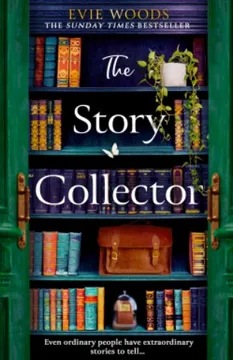


Plot Summary
Prologue
Before Thornwood House stood, a hawthorn tree marked a place the local people considered sacred. Lord Hawley ordered it cut down despite warnings that the fairies would retaliate. Years later, his wife gave birth to twins and became convinced they were not her children.
The physician called her ill; a local seeress believed the babies were changelings, replacements sent by the fairies. Lady Hawley died after throwing herself from a high window, leaving the house with a story of violated ground, stolen children, and a family touched by misfortune.
The opening legend teaches the reader to hold two explanations at once. A mother’s distress can be understood as illness, yet the story’s community reads it through a supernatural language shaped by land and inherited fear. The felled hawthorn makes the house’s history feel less like a private tragedy than a broken relationship between people and place. Its uncertainty matters: the novel never treats folklore as merely decorative, but neither does it offer a simple test that separates supernatural truth from human interpretation.
A Ticket to Ireland
On Christmas Day in New York, Sarah Harper packs her belongings and leaves Jack, her husband, after years of distance and the grief neither of them can speak about. She intends to fly to Boston, but at the airport a report about an Irish hawthorn tree saved from a motorway recalls her father and his love of woodworking and nature.
Drinking whiskey in her coffee, Sarah lets impulse overtake her plan and boards a flight to Shannon instead. She wakes in Ireland with a hangover, no place to stay, and her sister Megan furious that she missed their Christmas arrangements. The accidental arrival gives Sarah the isolation she asked for, but also leaves her confronting how little she knows about what she needs.
Sarah’s flight is a mistake only in the logistical sense. Emotionally, it is her first action not organized around managing Jack’s reactions or reassuring her family. The newspaper story reaches her through an object tied to her father’s way of seeing the world, so Ireland becomes more than an escape destination: it offers a route back to a self she has neglected. Her drunken spontaneity is not yet liberation. It is a desperate interruption, and the novel lets both truths stand.
The Box in the Hawthorn
Hotel manager Marcus O’Brien finds Sarah a room in Butler’s cottage, a thatched home near the village of Thornwood. Alone on her first night, Sarah suffers a panic attack and walks into the dark with a torch and the whiskey she brought from the airport. A donkey startles her, then a crumbling wall leaves her beside an old tree.
When her empty bottle drops into its hollow with a metallic sound, she reaches inside and retrieves a tin containing a red leather diary, lace, and an unused 1911 ticket from Ireland to New York. The diary belongs to Anna Butler. Sarah has stumbled into a life rooted in the same cottage and the same landscape, and begins reading by the fire.
The cache gives Sarah a form of company that asks nothing of her. Anna’s handwriting is intimate, but the diary is also evidence: a material object preserved by the tree and carried across a century. Sarah’s discovery begins while she is intoxicated and frightened, yet curiosity keeps her working at the hollow after common sense tells her to stop. The scene quietly establishes the book’s method. Objects, places, and inherited stories connect people without proving exactly what kind of force connects them.
Anna Hires the Story Collector
Anna’s diary begins on Christmas in 1910, when she is eighteen and living with her family on a farm in Thornwood. The day after Christmas, an American scholar named Harold Griffin-Krauss arrives because his bicycle has two punctures. He is collecting accounts of fairy belief for his research, and Anna offers to guide him through the village and translate Irish stories.
Her parents allow it after checking his character, and the work gives Anna a rare chance to leave her usual chores. She has another motive she keeps from them: she hopes Harold’s investigations might help her find Milly, her beloved older sister, whom she believes lives with the fairies on Cnoc na Sí.
Anna’s offer joins ambition to grief. The job is a small opening beyond the farm’s narrow routines, but she accepts it partly because scholarly inquiry might give shape to a private hope she cannot discuss at home. Harold’s presence also changes who gets to ask questions. In a village where custom governs what may be said aloud, an outsider’s curiosity creates permission for testimony. Anna is not merely his guide; she becomes an interpreter of both language and local silences.
Hazel Opens the Archive
Sarah meets Brian Sweeney and his granddaughter Hazel while seeking mousetraps, and learns that a diary entry links her cottage to the American scholar she has been reading. In the woods, she irritates Oran Sweeney, Hazel’s father and the local conservation officer, by picking snowdrops planted in memory of his wife.
Hazel later visits with a copy of Harold’s published study, The Fairy Study, and explains that she has long collected books about the supernatural. Sarah recognizes the name from Anna’s diary. The book’s serious scholarship makes the old account harder to dismiss as a romantic invention, while Hazel’s easy interest gives Sarah a first connection in Thornwood that is not based on her marital crisis.
Hazel acts as a bridge between archive and living community. She treats folklore as knowledge worth pursuing, while Oran’s resistance reflects a protective instinct formed around family loss. Sarah is drawn to both positions because she, too, is unsure whether belief comforts or exposes a wound. The scholar’s printed book converts Anna’s diary from an isolated curiosity into part of a documented life. At the same time, Sarah’s interest begins to pull her toward people whose grief has its own rules.
The Village Tells Its Fears
Anna takes Harold from house to house, where villagers describe fairies as unpredictable beings who may appear in the fields, alter a journey, or punish disrespect. An old man recounts fairies making a child’s coffin before the child dies; a labourer describes a warning from a strange figure; and a healer tells of a midwife who loses the ability to see a fairy after touching its world.
The stories are not all wondrous. At a gathering, the schoolmaster recounts a husband who tortured and burned his sick wife after deciding she was a changeling. Harold records the accounts carefully, treating each teller with respect. Anna sees that the old beliefs can offer explanations, but can also be used to excuse cruelty.
The interviews make folklore ethically complicated. Some accounts preserve local memory and offer language for experiences that formal institutions overlook. The story of the murdered wife shows the danger when belief is converted into certainty and used to authorize violence. Harold’s careful method does not resolve which stories are true; it protects the speakers from being dismissed before their meaning can be examined. Anna, meanwhile, begins to understand that collecting stories is not neutral. What the village remembers can comfort, warn, or condemn.
Past the Locked Gates
After Oran apologizes for his sharpness in the woods, Sarah persuades him to help her see the abandoned Thornwood estate. They climb the boundary wall and explore gardens overtaken by nettles and ivy, where Oran recalls bringing dates there as a teenager. His jokes loosen Sarah’s guardedness, and she laughs freely for the first time in years.
She sketches the house, then resumes drawing in the cottage, discovering that concentrated work quiets her anxiety. Later, she notices a small figure in her drawing that she does not remember making. The unexplained mark unnerves her, but the act of sketching has already restored a measure of pleasure and attention she had lost while working in Jack’s gallery.
The overgrown estate mirrors the novel’s view of memory: what is abandoned does not vanish, but changes form and persists beneath new growth. Oran’s humor makes contact possible without demanding immediate confession, while Sarah’s drawing gives her a way to inhabit the present through attention rather than avoidance. The figure in the sketch unsettles the boundary between perception and invention, yet it also signals that making art can receive what ordinary explanation cannot. Sarah is beginning to create rather than merely observe.
The Hawleys' Buried Story
Anna remembers watching the Hawley twins, George and Olivia, torment a baby hare until George threw a stone at it under his sister’s taunts. The sight once left Anna unable to speak, and she has since been drawn to George despite his unsettling capacity for cruelty.
After he helps her when Olivia’s horse knocks her down, Anna visits Thornwood House and becomes captivated by his charm; her mother warns that his wealth and attention do not make him a safe match. Meanwhile, Harold interviews Maggie Walsh, a local seeress. Hidden outside, Anna overhears Maggie claim that Lady Hawley believed her twins were changelings and that a desperate attempt to return them to the fairies ended in Lady Hawley’s death.
The chapter of the twins’ childhood gives the changeling tale a disturbing human counterpart. George’s action is already visible before any supernatural explanation appears, and Olivia’s role shows how cruelty can be rehearsed as a social game. Anna’s attraction makes her vulnerable to reading charm as character, even after her mother recognizes the danger. Maggie’s account does not settle the Hawleys’ origins; instead, it sharpens the novel’s central uncertainty about whether monstrous conduct is evidence of enchantment or a human choice.
A Hawthorn Offering
Marcus brings Sarah to visit his partner, Fíona Devine, known as Fee, who takes her to the hawthorn tree that forced the motorway to bend around it. Fee explains the tree’s place in local belief, then shows Sarah the farm where her family has worked the land for generations.
Sarah helps feed geese and sheep, and Fee tells her that hawthorn has long been associated with the heart. Sarah leaves a euro near the tree as an offering. She remembers that she and Jack once refused to toss a coin at Rome’s Trevi Fountain, unwilling to promise a return. This time she makes the gesture herself, though she cannot yet say whether it means she will stay.
The coin is a modest act, not a bargain with fate. Sarah once treated promises of return as sentimental gestures she and Jack could jointly reject; now she chooses a small ritual without needing anyone’s permission. Fee’s rootedness offers a contrast to Sarah’s feeling that she belongs nowhere, but the novel avoids presenting rural life as a cure. Its value lies in participation: feeding animals, walking the land, and making an offering let Sarah enter a relationship with place rather than merely consume its scenery.
The Birthday Ball
Anna and her friend Tess transform an old cotton dress with lace and onion-skin dye so Anna can attend George and Olivia’s birthday party. At Thornwood House, Harold escorts her, and their dance reveals a tenderness Anna has not recognized. George cuts in, takes her outside, and uses champagne and flattery to draw her close.
When Anna refuses to go further, he ignores her protests, tears her dress, and strikes her head against a stone seat. A swarm of bees suddenly surrounds him. Anna cannot move to help, and George falls into the river. Milly appears beside the shaken Anna, offers the childhood reassurance they shared, and tells her to stop searching for her. Harold finds Anna injured and gets her away from the estate.
The scene strips the romance of its protective fantasy. Anna has mistaken class, beauty, and practiced gentleness for moral safety, while George treats her refusal as an obstacle he can override. The torn dress makes the assault’s cost visible: Tess and Anna’s labor cannot shield her from his power. The bees and Milly’s appearance offer a supernatural counterforce, but neither erases Anna’s terror or confusion. Her sister’s message changes the meaning of their bond from a promise of return to permission to live beyond the search.
Harold Takes the Blame
At the Butler farm, Anna tells Harold about Milly’s illness, her own feverish vision of her sister, and the assault at the party. Harold believes her and promises to search the estate for her mother’s missing pearls. When George’s body is found in the river, Olivia reports seeing Anna leave with him.
Harold tells the police that he struggled with George and that George fell into the water, shielding Anna from accusations and public disgrace. The authorities arrest him. Anna goes to Olivia to ask her to correct the story, but Olivia blames her and refuses. Lord Hawley has Anna thrown out, leaving Harold in custody and Anna unable to make the truth public without exposing what George did to her.
Harold’s choice is both loving and ethically costly. He understands that the social order will judge Anna more harshly than George, so he accepts a version of events that may place his own freedom at risk. Olivia uses the same class power that protected her brother to redirect suspicion toward Anna. The truth is not simply hidden; it is made socially unusable. Anna’s silence reflects the constraints placed on women who must weigh being believed against being shamed.
Bees Become Evidence
Sarah finally speaks with Jack by phone, accusing him of withdrawing from their shared grief and asking her to conceal her pain. The argument leaves her shaking and drinking again, but she does not retreat into the cottage for long.
Hazel persuades her to attend a library talk by Ned Delaney, the storyteller who helped protect the modern hawthorn tree. Sarah asks him about bees after reading Anna’s account. Ned explains that Irish custom treated bees as a link between the living world and the otherworld, and that neglecting to inform them of major events could bring consequences.
The folklore offers Sarah a context for what happened to George, though it cannot prove the cause. Her questions have moved from curiosity toward active investigation.
Jack’s call breaks the politeness that has kept Sarah trapped in a marriage-shaped silence. Her anger is painful, but it restores her ability to name what she experienced rather than absorb blame for it. Seeking Ned’s knowledge is a different kind of response: she turns toward inquiry instead of numbing herself. The bee tradition parallels Sarah’s struggle to acknowledge loss. In both cases, mourning requires telling what has happened; silence does not preserve the bond, it distorts it.
A Father Lets Go
Oran confronts Sarah for taking Hazel to Ned Delaney without his permission, afraid that the girl’s interest in fairies is deepening her grief. Sarah apologizes but challenges his attempt to protect Hazel by forbidding the subject. Oran admits that Hazel’s visions of her mother, Cathy, frighten him because he cannot tell whether they are comforting or harmful.
After Sarah leaves, he visits Hazel and tells her he no longer wants her to hide her memories. Hazel explains that Cathy appeared to her in a dream and said she would remain close even if Hazel could no longer see her. Father and daughter cry together, then share memories of Cathy and her kindness, including how she secretly saved mice from Oran’s traps.
Oran’s change is not a sudden conversion to belief. He stops treating uncertainty as a danger that can be controlled by silence. Sarah’s intervention matters because she recognizes how protection can become a demand that the bereaved perform recovery on someone else’s timetable. Hazel’s dream gives the family a language for continued attachment that does not require either parent or child to prove the supernatural. Their shared memories make grief a relationship they can inhabit together.
A Train Through Smoke
After Anna falls ill with fever, Harold is transferred toward Dublin for trial, and her brother Paddy decides he cannot leave an innocent man to be condemned. With help from Daniel Freeman and other members of the Irish Republican Brotherhood, Paddy waits near the station. A herd of escaped pigs and a cloud of steam from the arriving train distract the police, allowing the group to lead Harold away across the fields.
Harold heads for Cork and passage back to America. Before leaving, he writes Anna a letter confessing that he loves her and offering to arrange her journey to join him. Anna is grateful, but the promise arrives just as family duty and the danger surrounding Harold make their future uncertain.
Paddy’s rescue links private loyalty to the political network already present in the novel’s background. The escape succeeds through confusion, timing, and collective action rather than heroic force. Harold’s letter gives Anna what she had wanted without making the choice simple: love now asks her to leave the people who depend on her and enter a dangerous, unfamiliar future. The moment refuses the convention that a declaration automatically resolves the plot. Anna must decide what she can bear to abandon.
Emma's Name Spoken
Sarah visits Fee after deciding she can no longer keep her loss hidden. She tells Fee that her daughter, Emma, was stillborn after a placental abruption, and that the expected advice to try again made her feel as though Emma’s brief life should be forgotten. Sarah and Jack could not talk honestly about their daughter, and their marriage became a place where both avoided the other’s pain.
Fee listens without trying to fix the story, then prepares a tea of hawthorn and rose petals, which she uses as a practical ritual for easing heartache. Sarah does not leave cured, but she has finally spoken Emma’s name without apology. Her grief becomes something she can carry rather than suppress.
This disclosure clarifies the wound behind Sarah’s flight and her distrust of comforting language. The phrase about trying again had turned a child into a replaceable outcome, while Sarah needed someone to recognize Emma as a person in her family’s history. Fee’s tea is not presented as magical treatment; its importance lies in the care and attention surrounding it. Sarah’s movement is from isolation to testimony, a change that allows memory to remain painful without being denied.
A Life Drawn Forward
When Oran shares what his grandfather remembers, Sarah learns that Anna’s mother died soon after Harold escaped. Anna stayed to care for her father and brothers, never collected the annual passage tickets Harold sent, and eventually married a man called Danny. Harold could not safely return to Ireland. The story does not end with the reunion Sarah wanted.
In the present, she returns to New York and turns her recovered drawing practice into an exhibition of the Good People, with Jack helping to curate it. She and Jack visit Emma’s grave and speak more honestly than they could before. At the gallery opening, Oran arrives from Ireland. Sarah embraces him, while her work and her new relationships give her a future not dictated by grief.
Anna’s ending prevents Sarah from treating the past as a romance that could be repaired by a belated reunion. Anna’s choice to remain with her family has dignity, but it also carries the cost of a love left unfinished. Sarah responds differently: she returns to New York without returning to the old silence. Her exhibition transforms collected stories into images, joining Harold’s preservation of oral memory to her own artistic practice. Oran’s arrival does not erase her history with Jack or Emma; it marks a future built with those histories acknowledged.
Analysis
The Story Collector builds its structure around two women who inherit different forms of silence. Anna’s rural community has a language for the supernatural, but that language can become dangerous when fear is used to justify harm. Sarah’s modern world offers medical and therapeutic vocabularies, yet the people closest to her often use reassurance to hurry her past grief. Neither era possesses a complete account of suffering. The novel’s alternating timelines ask whether stories can hold what official explanations leave out without turning belief into unquestionable fact.
Place is the mechanism that lets private pain become shareable. The hawthorn, the tree hollow, Cnoc na Sí, and the abandoned house are not interchangeable symbols; each gathers a history of human choices. Lord Hawley’s decision to cut a sacred tree and Sarah’s offering at another hawthorn frame opposing relationships to the land: command and reciprocity. Harold’s fieldwork makes this distinction explicit by preserving the voices of people whose knowledge would otherwise disappear. Sarah’s drawings extend that work, translating oral accounts into a form that belongs to her own life.
The novel also scrutinizes how protection can become control. Anna’s family tries to guard her from danger, Harold accepts blame to shield her from public shame, and Oran initially suppresses Hazel’s visions because he fears they will deepen her grief. Each act is loving, but love cannot remove another person’s experience. Sarah’s recovery begins when she names Emma and refuses the pressure to treat her daughter as replaceable. The ending does not erase loss or restore the past. Instead, Sarah returns to art, speaks more honestly with Jack, and allows a new relationship with Oran to begin. The lasting lesson is not that folklore explains grief, but that carefully told stories let people remember without being trapped inside what happened.
Review Summary
The Story Collector receives an overall rating of 4.04/5, with readers praising its enchanting dual timeline set in rural Ireland, rich Celtic folklore, and the magical connection between protagonists Sarah (2010) and Anna (1910). Most reviewers preferred the historical timeline for its vivid atmosphere and fairy lore. Common criticisms include Anna's diary reading more like a novel than a journal, Sarah's romantic subplot feeling unnecessary, and underdeveloped character consistency. Many readers also enjoyed comparisons to the author's later work, The Lost Bookshop.
People Also Read



Characters
Sarah Harper
Grieving artist abroadSarah is a Boston-born artist who has spent years assisting her husband Jack in his New York gallery while her own work receded. She is perceptive and imaginative, but anxiety and bereavement have made her wary of her own needs and inclined to manage other people’s discomfort. Ireland gives her distance from familiar expectations and a landscape that recalls her connection to her father and to making things by hand. Her curiosity about the diary draws her into the village’s history, while her growing relationships with Hazel, Oran, and Fee help her speak about loss without treating recovery as a performance.
Anna Butler
Village story keeperAnna is an intelligent, observant young woman raised on a farm in early twentieth-century Thornwood. Her responsibilities are constant, but she longs for education, wider experience, and a life that includes more than family work. She is drawn to folklore partly because it gives form to her grief for her sister Milly, and she is sensitive to the way class and gender determine whose accounts are believed. Anna’s warmth and curiosity make her a natural interpreter for Harold, though her hopes and romantic idealism sometimes cloud her judgment.
Harold Griffin-Krauss
Folklore's careful witnessHarold is an American anthropologist studying at Oxford who travels through Celtic regions to record belief and oral tradition. His formal education does not make him dismissive; he listens carefully to people whose knowledge rarely enters academic records. The loss of his Irish mother informs his interest in stories and cultural memory. Courteous and methodical, he can seem more comfortable documenting experience than exposing his private feelings. Anna’s trust challenges that distance and gives his research a human intimacy he cannot obtain from notebooks alone.
Oran Sweeney
Guarded conservation rangerOran is Thornwood’s conservation officer, a practical man whose fierce care for the landscape is shaped by personal history. He can come across as abrupt, especially when he thinks someone is disregarding a place that matters to him. His humor and attentiveness emerge more readily around Hazel and, gradually, around Sarah. As a father, he wants to protect his daughter from pain, but that instinct can make him wary of the ways she chooses to remember. His connection with Sarah grows through shared candor rather than a simple rescue of one person by another.
Hazel Sweeney
Young folklore seekerHazel is Oran’s perceptive teenage daughter, an avid reader with a strong interest in fairies and the supernatural. She is direct, independent, and more comfortable discussing difficult questions than her father expects. Her knowledge of local stories and books makes her Sarah’s first guide into Thornwood’s living culture. Hazel also carries memories of her mother and seeks ways to keep that connection present. Her curiosity is not a childish distraction; it is part of how she makes sense of family, place, and the unseen.
Jack Zaparelli
Gallery-owning husbandJack is Sarah’s husband and a successful New York gallery owner, charismatic in public and accustomed to shaping the world around his professional ambitions. He admires Sarah’s talent but has also helped draw her into supporting other artists rather than pursuing her own work. His manner of coping with pain differs from hers, and his concern can feel like control when he expects her to remain within familiar routines. He is neither simply a villain nor an uncomplicated refuge; his relationship with Sarah is marked by affection, avoidance, and the need to speak more honestly.
Fíona Devine
Grounded farm matriarchKnown as Fee, Fíona runs the family farm and is Marcus’s long-term partner. Practical, observant, and generous without fuss, she is deeply connected to the land her family has worked for generations. She speaks plainly about hardship and offers care through ordinary actions, whether sharing food, explaining local plant lore, or making room for someone else’s grief. Fee’s wisdom does not depend on supernatural certainty. She trusts lived experience and gives Sarah a model of attention that is warm without being intrusive.
Marcus O'Brien
The village's gracious hostMarcus manages the Shannon Airport Hotel and takes pride in making visitors feel looked after. His polished manners and talkative energy contrast with Brian Sweeney’s reserve, and he uses practical kindness to help Sarah settle in Thornwood. He is devoted to his work and to Fee, with whom he shares an unconventional, durable partnership. Marcus is a social connector: he knows who belongs where, notices when someone needs help, and makes introductions that open the village to Sarah.
Milly Butler
Anna's beloved sisterMilly, also named Emily in the family account, is Anna’s adored older sister and an early model of courage and tenderness. She teaches Anna to climb the oak tree and gives her a private reassurance for frightening moments. Her absence shapes Anna’s choices and her attraction to stories about the otherworld. Milly remains central to Anna’s emotional life even when the family avoids discussing her, embodying the difficulty of loving someone whose memory cannot be made ordinary.
George Hawley
The charming estate heirGeorge is the son of Lord Hawley and Olivia’s twin brother. Handsome, socially confident, and accustomed to deference, he attracts Anna despite the gulf between their families. His position gives him access to privilege and protection, while his complex bond with Olivia shapes the atmosphere around him. The villagers see him through rumor and spectacle, and Anna initially sees the polished gentleman he can present to the world. His presence tests the difference between charm, status, and character.
Olivia Hawley
The watchful twinOlivia is George’s twin sister, raised within the isolation and privilege of Thornwood House. Proud, sharp-tongued, and alert to social boundaries, she treats Anna as an intruder in a world she believes belongs to her. Her behavior suggests both entitlement and a deep attachment to her brother. Olivia’s early life has left her with little ordinary intimacy beyond the household, and she guards her position with cruelty and control.
Maggie Walsh
The feared village seeressMaggie lives beyond Cnoc na Sí and is regarded by some as a seeress, by others as a fraud or a dangerous eccentric. She claims knowledge of the Good People and of the dead, attracting people who are desperate for comfort. Her life at the margins gives her access to stories the respectable villagers might suppress, but her motives and reliability remain uncertain. Maggie embodies the difficult overlap between spiritual authority, exploitation, and the community’s need for explanations.
Brian Sweeney
The cottage's reserved ownerBrian owns Butler’s cottage and is Oran’s father and Hazel’s grandfather. Practical and sparing with words, he is a farmer whose sense of hospitality appears through food, shelter, and useful advice rather than elaborate welcome. His knowledge of Thornwood’s past connects Sarah to the village’s older generations. Brian’s dry humor and steady routines make him a quiet counterweight to Marcus’s exuberance.
Tess Fox
Anna's inventive confidanteTess has been Anna’s closest friend since childhood and shares her skill as a lace maker. Lively, proud, and sometimes jealous, she is more socially confident than Anna and quick to notice romantic possibilities. When Anna needs a dress for the Hawley party, Tess turns their craft into a collaboration, dyeing and altering a plain garment with resourcefulness. Her friendship gives Anna companionship beyond her family and helps her imagine herself in unfamiliar settings.
Paddy Butler
Anna's protective elder brotherPaddy is Anna’s eldest brother, skilled with wood and increasingly engaged with Irish political causes. His practical affection appears in the crutch he makes for Anna, while his political convictions bring danger close to the family. He is impulsive but loyal, and his respect for Anna deepens when he recognizes the harm she has suffered. Paddy bridges family obligation and the broader unrest surrounding Ireland’s struggle for self-government.
Kitty Butler
Anna's discerning motherKitty is Anna’s mother, a Dublin-born woman who brought education, books, and a wider outlook into a farming household. She encourages Anna’s intelligence while remaining alert to the social dangers her daughter may face. Kitty’s warnings about the Hawleys arise from experience rather than simple prejudice. Her practical tenderness is expressed through daily care, but she is also willing to confront her husband and insist that Anna be treated as capable.
Joe Butler
The steadfast farm fatherJoe is Anna’s father, a hardworking farmer who trusts the rhythms of land and labor more than books or politics. He is protective of his children and cautious about letting Anna travel with a stranger, yet he recognizes Harold’s good character and supports his daughter’s opportunity. Joe’s pragmatism anchors the family, while his willingness to help a hunted political activist reveals a compassion that exceeds his stated reluctance to engage in public affairs.
Ned Delaney
The fairy-story advocateNed is a local folklorist and storyteller known for campaigning to protect a hawthorn tree from a motorway project. Animated and theatrical before an audience, he treats traditional tales as living knowledge rather than quaint entertainment. His talk draws children and adults into stories of danger, bargains, and the otherworld. Ned gives Sarah a framework for understanding the cultural significance of bees, while his public work shows how folklore can shape modern decisions.
Daniel Freeman
A Republican allyDaniel is an Irish Republican Brotherhood member whom Paddy shelters after a raid on a goods train. Grateful for the Butlers’ help, he remains alert to the danger that political resistance brings to the family. His network later offers Paddy a way to help an innocent man escape official custody.
Father Peter
The village's trusted priestFather Peter is Thornwood’s priest and a familiar moral presence in the Butler family’s life. He helps Anna reach Harold in custody and tries to protect her confidence while navigating the limits of his role. His concern is sincere, though his measured pace can frustrate Anna when events demand immediate action.
Rosie Gallagher
A neighbor's steady kindnessRosie is Anna’s neighbor and a young mother whose home offers warmth when Anna is unwell. She recognizes the signs of Anna’s distress without demanding a full explanation, and her own experience gives her a quiet understanding of women’s vulnerability. Rosie’s practical care helps keep Anna safe when she cannot return home.
Cathal O'Shaughnessy
Thornwood's oldest witnessCathal is an elderly villager who speaks Irish and has watched Thornwood change over a long life. His stories give Harold early testimony about the Good People and the consequences of building too close to a fairy fort. He is blunt, funny, and rooted in a local knowledge that resists tidy academic categories.
John O'Conghaile
The village healerJohn is a respected healer whose remedies and practices are treated as part of ordinary village life. He is discreet about private cases but willing to speak with Harold about fairy lore. His account of supernatural beings is reflective rather than sensational, presenting respect and caution as practical habits.
Jimmy Lenihan
A man haunted by lossJimmy is one of three elderly Lenihan siblings and a keeper of a painful personal story. He believes his dead wife tried to return from the otherworld, and his account reveals how grief can remain vivid for decades. His estrangement from his brother Ned shows how family conflicts may outlast the reasons that began them.
Cathy Sweeney
Hazel's remembered motherCathy is Oran’s wife and Hazel’s mother, remembered as a book lover with a strong affection for nature and animals. Her preferences shaped family life, including Hazel’s early connection to Cnoc na Sí and the snowdrop grove. Even in her absence from the household, Cathy remains present through shared memories and the ways Oran and Hazel understand care.
Plot Devices
Anna's diary in the tree
A past held in placeSarah finds Anna Butler’s diary inside a hawthorn hollow, wrapped with lace and accompanied by an unused passage ticket. The diary alternates the novel between Sarah’s contemporary stay in Thornwood and Anna’s life in 1910 and 1911. Its physical location links the women across time, while its incomplete record leaves Sarah dependent on local memory to learn what happened after the final entry. The diary turns reading into an act of investigation and gives the parallel plots a shared landscape.
Harold's folklore archive
Testimony across generationsHarold interviews people from different ages and social positions, classifying accounts of fairy sightings, changelings, and abductions. His field notes and published book show how oral testimony can survive beyond the person who first told it. Sarah’s discovery of the book confirms that Harold’s stay in Thornwood was real and lets her compare his public scholarship with Anna’s private diary. The archive preserves stories without resolving whether the supernatural explanations are literal, psychological, or both.
Hawthorn and sacred ground
Land as living memoryThe hawthorn tree appears in both the old legend of Thornwood House and Sarah’s contemporary journey to the tree protected from a motorway. Cnoc na Sí, the abandoned estate, the river, and the woods also hold stories that guide the characters’ choices. The repeated connection between land and memory keeps folklore embodied in particular places rather than abstract superstition. Sarah’s offering at the tree becomes a small act of participation, while Anna’s walks to the fairy hill give shape to her longing for Milly.
The bees
A supernatural interventionBees appear at the moment George attacks Anna, interrupting his violence and driving him toward the river. The event is first experienced through Anna’s shock, then revisited through Sarah’s questions to Ned Delaney about the custom of telling the bees and their association with the otherworld. The folklore gives the incident a cultural context but deliberately stops short of proving a single cause. Bees thus connect the novel’s central assault, its oral traditions, and the uncertainty that persists after the witnesses are gone.
Sarah's sketches
Art as recovered attentionSarah’s sketchbook begins as a familiar tool from the artistic life she has abandoned. Drawing the cottage and Thornwood House helps her focus through anxiety and gradually restores her sense of creative purpose. The unexplained figure that appears in a drawing complicates her understanding of perception, just as Anna’s diary complicates the boundary between folklore and fact. In the ending, Sarah turns her renewed practice into an exhibition of the Good People, giving visual form to stories Harold recorded in words.
About the Author


Download PDF
Download EPUB
.epub digital book format is ideal for reading ebooks on phones, tablets, and e-readers.








