

Key Takeaways
Treat the plan as a test of whether this business deserves your years
Start with the decision. A business plan is not merely a document for a banker. Building one forces the entrepreneur to examine whether the business is worth committing time, money, and a substantial portion of a working life to. It can reveal that the original idea needs changing, that the business is not viable yet, or that the founder should not proceed. The plan also helps coordinate crucial decisions about marketing, operations, staffing, and finances before daily demands crowd them out.
Use planning to gain control. A useful plan clarifies goals, identifies obstacles, and establishes ways to measure progress. It serves as a map, not a promise that the route will remain unchanged. Its value comes from thinking through the business, not from producing polished pages or pleasing a funding source.
The distinction between planning and plan-writing is important. A document can be persuasive while the assumptions beneath it remain weak, so the value lies in the disciplined scrutiny that precedes presentation. This resembles a pre-mortem, a technique in which a team imagines failure and works backward to identify its causes. Both approaches make hidden assumptions discussable. The limit is that analysis cannot eliminate uncertainty: a thoughtful plan can still meet an unexpected market shift. Its strongest purpose is not prediction, but making assumptions visible enough to test and revise.
Sell into a ready, reachable market before betting on a brilliant product
Need is not demand. A product can solve a real problem and still arrive before customers are willing to adopt it. The book points to the early automatic teller machine: the technology existed years before it became popular, partly because customers were not yet ready to trust machines with banking. The entrepreneur must assess both the need and the market's readiness to buy.
Make the market concrete. A useful target market is definable, meaningful to the purchase, large enough to support the business, and affordable to reach. Describe customers by relevant traits, location, purchasing habits, and what they value. If a business sells through retailers or distributors, it must understand both the intermediary buyer and the eventual consumer. Broad labels like “everyone” offer little guidance for sales or forecasting.
This is a practical antidote to the inventor's bias: seeing a product's usefulness can make its creator assume that adoption is inevitable. Diffusion research distinguishes early interest from broad uptake, and the ATM example captures the gap between technical availability and social acceptance. Market readiness also depends on trust, switching costs, and compatible infrastructure, not just stated enthusiasm. The discipline of defining a reachable segment makes experimentation cheaper. Still, narrow targeting should remain a starting hypothesis, not a permanent fence, especially when a new product helps create the market it needs.
Focus on one clear advantage, and know who can imitate it
Stand apart deliberately. A business needs a reason customers will choose it, such as a better offering, a useful new feature, an underserved niche, or a more integrated way to deliver products and services. A vague claim of having no competition signals either inadequate research or no meaningful market. Competition includes substitutes as well as companies selling the same thing: a new copying machine, for example, competes with older ways of duplicating documents.
Study the whole contest. Compare what customers notice, including price, quality, convenience, service, and image. Also assess competitors' deeper strengths: money, staff, marketing reach, production efficiency, and distribution. Estimate who holds market share, how that position could change, and what barriers slow new entrants. Patents may help, but they rarely guarantee lasting protection.
The chapter's strongest competitive insight is that product superiority is only one part of the contest. A technically better offer can lose to a familiar brand, convenient channel, or lower total cost. This is consistent with strategy research that treats advantage as a relationship among customer value, rival capability, and the firm's ability to deliver. Barriers to entry matter, but they can create false confidence when treated as permanent. A more durable question is whether the business can keep learning and responding faster than competitors can copy its visible features.
Let research change the business idea, not merely decorate the plan
Investigate to decide. Research begins with a claim about the business, then asks questions that could disprove it. Entrepreneurs can combine government and industry data with observation, interviews, surveys, and focus groups. A neighborhood shop might observe competitors and speak with nearby customers; a manufacturer might ask suppliers about costs, delivery, and customer preferences. Use recent, credible information, compare sources carefully, and favor conservative estimates when evidence is uncertain.
Revise when evidence demands it. Ariel Vineyards tested its product with prospective customers in settings ranging from stores to gatherings, then changed the product repeatedly in response to what people did and said. That willingness to adapt matters more than defending an early concept. The plan is strongest when research informs a real choice about product, customer, price, location, or operations.
The key is the feedback loop, not the volume of research. Customer interviews can expose unmet needs, while actual behavior and purchases provide stronger evidence than compliments alone. This connects to lean experimentation: test the riskiest assumption with the smallest credible trial, then update the offer. The book's mix of observation and interviews is useful because each method catches a different blind spot. Yet small samples can mislead, and customers may describe preferences they do not act on. Evidence should be triangulated, and uncertainty should be stated rather than disguised as precision.
Earn the next five minutes with a sharp summary, credible numbers, and capable managers
Design for hurried readers. The book describes funders scanning a plan quickly, often beginning with the Executive Summary, financials, and management credentials. It reports that a venture capitalist might review more than 1,000 plans in a year, so the central case must be apparent fast. Write the summary last, after the business has been fully examined. Keep it brief, state what the company sells, who will buy, why the team can deliver, and what funding is sought.
Make claims earn trust. Specific facts are more persuasive than self-praise. A plan should use realistic projections, clearly explain the assumptions behind its numbers, and show how lenders or investors can recover their money. Keep the main document focused, readable, and professionally edited. Put supporting details in an appendix, but do not hide information essential to understanding the business there.
The advice recognizes that a business plan is both an analytical instrument and a designed communication. Readers under time pressure rely on signals of coherence, competence, and credibility before investing attention. Clear summaries and traceable assumptions reduce the effort required to evaluate a proposal. This resembles information design: the order and presentation of evidence shape whether the evidence is encountered at all. A short screening process can nevertheless overvalue polished storytelling or familiar credentials. Strong presentation should improve access to sound reasoning, not substitute for independent scrutiny of the underlying market and financial assumptions.
Market the benefit customers value, then make every interaction reinforce it
Sell the outcome. Customers care about more than a product's features. They also consider its effect on their finances, convenience, feelings about themselves, and confidence in future service. A company should identify which benefit matters most to its target customer and communicate it consistently through its name, materials, packaging, location, staff, and service. A restaurant, for instance, can make its distinctive atmosphere tangible through details customers notice, not simply through a claim that it is different.
Separate awareness from orders. Marketing builds recognition and conveys a message; sales directly seeks and secures purchases. The plan should specify suitable channels, spending, repetition, and the people responsible for selling. It should also consider repeat purchases, referrals, partnerships, promotions, and follow-up. A campaign succeeds only if it reaches the right customers at a cost the business can sustain.
The useful extension here is to treat the customer experience as the message, not just the advertisement. Service design research makes a similar point: every contact point can confirm or contradict a brand's promise. A company claiming ease, for example, undermines itself with confusing ordering or slow support. Aligning the promise with the delivery builds trust and makes word of mouth more credible. However, the benefit that motivates a purchase can differ across customer segments. A single message may create consistency, but research should determine whether it speaks to the actual buyer rather than the founder's preferred identity.
A profitable-looking business can still fail when cash and operations fall behind
Profit is not cash. An income statement shows whether revenues exceed expenses; a cash-flow projection tracks money actually received and paid. A company can appear profitable yet lack cash to meet bills because customers pay late or money is trapped in inventory. That is why the book recommends close, regular attention to cash, billing, collections, expenses, and financial statements, rather than leaving the numbers entirely to an accountant.
Make daily work economical. Examine staffing, production steps, equipment, order fulfillment, and inventory. Holding too much stock ties up funds; holding too little can delay orders and lose customers. Just-in-time inventory aims to replenish materials as needed, but depends on accurate information and dependable suppliers. Strong customer service, quality checks, and clear financial procedures are not minor housekeeping. They protect sales and reduce avoidable losses.
This section joins accounting to operations in a particularly useful way. Cash is a constraint on action, while inventory and delayed collections are often invisible until the constraint becomes urgent. The distinction between earnings and cash is fundamental to financial literacy, yet it is easily blurred by a single headline figure. Operational improvements can release working capital as well as reduce cost. Just-in-time methods, however, trade inventory expense for dependence on reliable supply and communication. Efficiency should therefore be judged against resilience: a system with no buffer may be cheap in ordinary conditions and fragile under disruption.
Choose a growth path that fits your ambitions and management capacity
Define success personally. The book identifies four concerns entrepreneurs should weigh: control over decisions, challenge, room for creativity, and the cash they need now or hope to earn later. These motives affect the size and financing of a business. A founder who wants close control may not want rapid expansion or outside investors; someone seeking substantial growth may need to share ownership and decision-making.
Build a team for execution. Investors scrutinize management because a promising concept still depends on people who can sell, operate, manage finances, and adapt. Evaluate relevant experience, past results, strengths, gaps, and how responsibilities are divided. Clear authority and fair treatment matter, as do communication, recognition, and employee input. A plan should identify positions that must be added and the resources required to fill them, rather than presenting the current team as complete by wishful thinking.
The connection between founder preference and company design is a form of organizational fit. A mismatch can create predictable conflict: an entrepreneur who prizes personal autonomy may resent investor oversight, while a company that needs rapid scaling may be constrained by a founder who refuses to delegate. Naming these preferences early improves both financing choices and role design. The framework also guards against treating growth as an unquestioned good. One caution is that motives change as circumstances change, so a plan should be revisited as family needs, financial pressures, and leadership capabilities evolve.
Turn uncertainty into milestones, risk responses, and a credible investor exit
Make progress observable. Long-term goals become useful when translated into dated milestones, such as completing a product, winning an initial customer, reaching a sales target, or opening a location. Milestones let managers and funders judge whether execution is on track. They should be realistic, since hiring, construction, and product development often take longer than expected. The plan should also name major risks, rate their seriousness, and describe how the company might reduce or respond to them.
Match funding to the bargain. Debt preserves ownership but requires repayment and may put collateral at risk. Equity avoids fixed loan payments but gives investors a share of ownership and often influence. Investors also need a plausible way to realize returns, commonly through a sale or public offering. The founder should choose funders carefully, considering not only money but also control, expectations, expertise, and the relationship required.
Milestones turn a broad ambition into a sequence of decisions, making it easier to notice when evidence calls for a change in course. This is valuable for investors and operators alike because it links capital use to observable progress. Risk analysis further counters the tendency to treat forecasts as certainties. The exit discussion is also a reminder that financing is a governance choice, not merely a cash transaction. A credible exit can help align expectations, but not every sound small business is built for an acquisition or public listing. The appropriate funding structure depends on the owner's goals and the business model.
Analysis
Abrams organizes entrepreneurship as a chain of connected judgments rather than a search for a perfect document. The entrepreneur starts with an idea, tests whether a market can support it, studies the surrounding industry and competition, and then translates the chosen strategy into marketing, operations, people, and financial commitments. The resulting plan has two audiences at once: the founder who needs a decision system, and the funder who needs evidence of credible execution and a route to repayment or return.
That dual purpose explains the book's unusual breadth. It moves from customer interviews and store observations to inventory controls, management incentives, cash-flow projections, and investor exits. These are not separate administrative topics. A market choice determines sales methods; sales timing affects cash; cash constrains hiring and stock; management capacity limits expansion. Its most durable lesson is therefore integration: assumptions in one part of the business should be visible in the consequences elsewhere.
The guide also contains a productive tension. It urges founders to use conservative numbers and established planning conventions, yet recognizes that genuinely new products may not appear in historical trends. The tension cannot be solved by choosing optimism or caution. It calls for separating what is known from what must be tested, then tying uncertain assumptions to milestones and limited experiments. Projections are useful as conditional statements, not as prophecies.
Because the text was published in 1991, some of its research directories and presentation conventions are period-specific. Its core method remains applicable, but current entrepreneurs can gather information more quickly and face faster feedback cycles. That speed raises the value of a plan that is revisable, not merely comprehensive. A finished plan should preserve its central purpose while inviting updates as customers, costs, competitors, and the team's capacity become clearer. The book's enduring contribution is to make planning a repeated act of disciplined attention, not a ceremonial document created only when money is needed.
Review Summary
Readers generally find The Successful Business Plan helpful for entrepreneurs, praising its comprehensive coverage and practical advice. Many appreciate the worksheets and sample plans provided. Some criticize its focus on large businesses and venture capital, feeling it's less relevant for small startups. The book is seen as detailed and informative, though potentially overwhelming. Readers value its insights on market research, adaptability, and personal aspects of business. While some find it lengthy, most consider it a valuable resource for creating business plans and understanding entrepreneurship.
Glossary
The Five F's
Customer benefit checklistA framework for considering the benefits a buyer seeks beyond product features and price. It groups customer concerns into practical function, financial effects, convenience and freedom, personal feelings or self-image, and confidence about future use and support. Businesses use the categories to identify which benefits matter most to a target market and shape a consistent marketing message.
The Four C's
Entrepreneurial motivation frameworkA framework for examining the personal aims that shape an entrepreneur's preferred business. The four concerns are control over decisions and time, challenge, creative expression, and cash needs or rewards. Considering them helps founders judge whether their desired business size, growth rate, financing, and ownership structure fit the life and work they actually want.
Abrams Method of Flow-Through Financials
Planning worksheets feed projectionsA worksheet-based approach that gathers financial information while the entrepreneur plans marketing, staffing, equipment, operations, and other activities. The figures are then transferred into standard statements, including income projections, cash-flow projections, and balance sheets. The method links financial forecasts to specific business decisions rather than treating figures as standalone estimates.
Exit Plan
Investor return pathwayA description of how an investor may convert an ownership stake into a financial return. The plan considers possible outcomes such as the sale of the company or a public offering, while recognizing that these paths can change the founder's role or control. A credible exit plan helps investors assess how and when their investment could be realized.
Synopsis Executive Summary
Brief plan overviewA concise, section-by-section account of a business plan's main conclusions. It typically covers the company, mission, products, customers, marketing, competition, management, operations, financial outlook, funding request, and long-term aims. It is designed to communicate the business clearly and quickly, particularly to a reader deciding whether to examine the full plan.
Narrative Executive Summary
Story-led plan overviewAn Executive Summary that presents the business through a more connected account of its origins, concept, market opportunity, distinguishing advantages, management, milestones, and funding needs. It is useful when the company's background or innovation needs explanation, or when one especially strong feature deserves emphasis. Unlike a synopsis, its topics need not receive equal space or appear in a fixed order.
FAQ
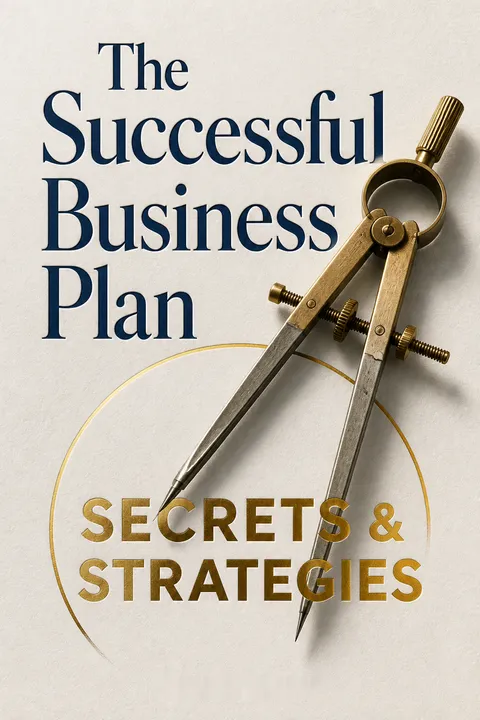
What's The Successful Business Plan: Secrets & Strategies about?
- Comprehensive Guide: The book is a detailed manual for entrepreneurs on crafting effective business plans, covering everything from concept to execution.
- Step-by-Step Process: It breaks down the planning process into manageable sections, making it easier for readers to develop their own plans.
- Expert Insights: Rhonda Abrams includes tips from successful entrepreneurs and venture capitalists, offering real-world perspectives on compelling business plans.
Why should I read The Successful Business Plan: Secrets & Strategies?
- Practical Application: Designed for action-oriented entrepreneurs, the book helps create a comprehensive and actionable business plan.
- Expert Contributions: Features advice from industry experts to help avoid common pitfalls and leverage best practices.
- Interactive Tools: Includes worksheets and forms that guide readers through the planning process, making it a hands-on resource.
What are the key takeaways of The Successful Business Plan: Secrets & Strategies?
- Importance of a Business Plan: A well-structured plan is essential for articulating goals and securing financing, serving as a roadmap for the future.
- Understanding Your Market: Emphasizes the need to thoroughly understand your target market and competition for effective positioning.
- Financial Projections: Highlights the importance of realistic financial projections and their influence on funding decisions.
What are the best quotes from The Successful Business Plan: Secrets & Strategies and what do they mean?
- "If you don’t know where you are going, how will you know when you are lost?": Stresses the necessity of having clear direction and goals in business planning.
- "A good business plan helps you realize your dreams.": Emphasizes that a well-thought-out plan is a tool for funding and achieving aspirations.
- "You must have ongoing contingency plans to allow for miscalculations, disappointments, and bad luck.": Highlights the importance of being prepared for unexpected challenges.
How does The Successful Business Plan: Secrets & Strategies define a successful business plan?
- Clear Objectives: Articulates clear, achievable objectives and outlines steps to reach them.
- Market Understanding: Demonstrates a thorough understanding of the target market and competitive landscape.
- Financial Viability: Includes realistic financial projections showing potential for profitability and growth.
What are the main sections of a business plan as outlined in The Successful Business Plan: Secrets & Strategies?
- Executive Summary: Provides a concise overview of the business, including its mission, products, and financial projections.
- Company Description: Details the business's structure, ownership, and nature of operations.
- Market Analysis: Examines the target market, industry trends, and competitive landscape.
How does The Successful Business Plan: Secrets & Strategies suggest I analyze my competition?
- Identify Competitors: Advises identifying both direct and indirect competitors to understand the competitive landscape.
- Evaluate Strengths and Weaknesses: Encourages assessing competitors' strengths and weaknesses to find differentiation opportunities.
- Market Share Distribution: Understanding market share distribution among competitors helps strategize market entry.
What specific methods does Rhonda Abrams recommend for financial planning?
- Flow-Through Financials: Introduces a method to compile financial data consistently and accurately across the business plan.
- Cash Flow Management: Emphasizes the importance of regular cash flow monitoring to prevent shortages and meet obligations.
- Use of Spreadsheets: Recommends using spreadsheet software for effective financial data management and easy updates.
What are the recommended marketing strategies in The Successful Business Plan: Secrets & Strategies?
- Targeted Messaging: Craft messages that resonate with your target market's needs and desires.
- Diverse Marketing Channels: Suggests using a mix of marketing vehicles like print media, direct mail, and online advertising.
- Customer Relationships: Highlights building strong relationships through quality service and follow-up for retention and growth.
What role does market analysis play in a business plan according to The Successful Business Plan: Secrets & Strategies?
- Identifying Opportunities: Helps identify potential market opportunities and gaps for business exploitation.
- Understanding Competition: Provides insights into the competitive landscape, informing strategies for differentiation.
- Informed Decision-Making: Equips with information for informed decisions on product development, pricing, and marketing.
How does The Successful Business Plan: Secrets & Strategies suggest handling risks in business planning?
- Risk Assessment: Encourages thorough risk assessment to identify potential challenges impacting the business.
- Contingency Planning: Emphasizes developing contingency plans to address identified risks.
- Regular Review: Advises regular review and update of risk management strategies as the business environment changes.
What tools and resources does The Successful Business Plan: Secrets & Strategies provide for business planning?
- Worksheets and Forms: Includes various worksheets and forms to help organize thoughts and data throughout the planning process.
- Expert Tips: Features insights and tips from successful entrepreneurs and venture capitalists, providing practical advice.
- Sample Plans: Offers sample plans to help readers visualize how to structure their own business plans effectively.
Download PDF
Download EPUB
.epub digital book format is ideal for reading ebooks on phones, tablets, and e-readers.








