

Plot Summary
Prologue
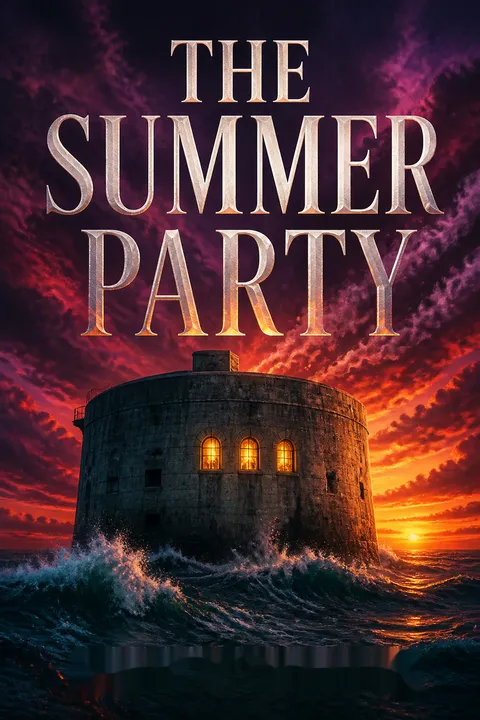
At dawn on June 21, rescuers reach Point Grey through smoke and find a body inside the isolated sea-fort hotel. Ash falls over the roof where Flavour’s annual summer party had been held only hours earlier.
The first discovery is not the last: more dead are still hidden inside, and the arriving police do not yet know how the guests were trapped there. The party was meant to bring colleagues together. Instead, the fort has become a crime scene, its walls holding back both help and the truth.
The opening turns the hotel into a sealed crime scene before the reader knows who is inside or why. That reversal makes the later celebration feel precarious from the start: the gathering’s promised togetherness is already framed by isolation, smoke and bodies. The prologue also withholds the identities of the dead, so suspense comes not merely from asking who caused the catastrophe but from watching ordinary choices acquire fatal consequences. Its most unsettling promise is that rescue will uncover more than the fire can explain.
Mel Wins the Sea-Fort Stay
Mel Robinson manages HR at Flavour, where she keeps the office running while caring for her mother, whose dementia has made home life demanding and unpredictable. Months earlier, graduate Holly Mills died after the agency Christmas party; Mel handled the condolences and still feels responsible for what happened.
When CEO Rohan Ali proposes an extravagant summer celebration at Point Grey, Mel asks him to postpone it, but he insists the staff need to move forward. Later, a drawing grants eight employees overnight stays at the hotel. Mel, who rarely expects good fortune and hopes her crush Charlie King might notice her, is stunned when her name is selected. She decides to go, though guilt follows her onto the boat.
Mel’s conflict begins in a familiar but consequential form: she is the person who manages other people’s needs, yet her own grief and care burden remain largely private. Her objection to the party is partly ethical, but it is also an attempt to keep the past from being reopened. Winning the stay complicates that refusal. The opportunity promises pleasure, recognition and time away from her mother, while also placing her among colleagues whose version of Holly’s death she has never fully questioned. Mel’s longing to belong is therefore not a decorative subplot. It makes her vulnerable to both the office’s approval and its silences.
The Fort’s Missing Pistol
At Point Grey, Mel is struck by the fort’s distance from shore and the knowledge that no one can simply leave once the boat departs. Her bedroom is too cold, and its unlabelled perfume smells exactly like the scent Holly used to wear. During a guided tour, general manager Gus Raynor describes the fort’s military past, including its cramped lower passages and a soldier said to haunt them.
Mel also notices an empty place among antique pistols displayed in the lounge. Gus brushes off her question, claiming a guest probably took the weapon as a souvenir, but his evasive manner stays with her. The party’s polished rooms and historical curiosities now seem less like decoration than a set of doors that could lock.
The hotel’s luxury is built over a military structure designed for containment, and the contrast gives the setting practical force. Thick walls, narrow passages and a remote pontoon shape what the characters can do once danger begins. Mel’s senses also connect the present to Holly before anyone openly discusses the past: the perfume makes memory feel physically present, while the missing pistol converts historical display into a concrete threat. Neither clue proves anything yet. Together, they unsettle Mel’s instinct to treat the evening as an uncomplicated reward and establish how easily attractive surfaces can conceal functional hazards.
Jonty Gets Promoted
At dinner, Rohan unexpectedly promotes account director Jonty Aspinall, despite the complaints Mel has repeatedly handled about his treatment of junior women. The announcement angers Charlie, who now reports to Jonty, while Mel feels her HR role has been bypassed.
Rohan then asks the room to remember Holly, making the toast more painful than the celebration around it. Later, IT manager Tom Beckett quietly tells Mel that an email accusing staff of fraud has appeared to come from Holly’s deleted work account.
The message alleges a fictitious client, inflated expenses and sold ideas. Tom cannot yet explain how the email surfaced, but Mel knows Holly had wanted to speak with her before she died. The party now contains both office resentment and a warning from beyond Holly’s grave.
The promotion exposes how institutional power can convert repeated complaints into administrative inconvenience. Mel knows Jonty’s record, yet Rohan’s public decision gives him greater authority and makes her own responsibility harder to exercise. At the same time, the purported email turns grief into evidence, though its impossible sender encourages doubt rather than immediate action. The scene links two forms of suppressed knowledge: employees’ reports about conduct and Holly’s possible discovery of financial wrongdoing. Mel is caught between confidentiality, loyalty to her employer and the growing sense that the official story of Holly’s death cannot contain everything she knew.
The Party Turns on Jonty
After dinner, Mel tries to impress her colleagues by opening champagne with a ceremonial sword, but the blade cuts her wrist when her concentration fails. In the bathroom, she overhears younger staff mocking her and speculating that Charlie is leaving; a drunk Scarlett adds that colleagues resent Mel’s constant efforts to organise and comfort them.
Dominique Sanchez, Holly’s former manager, then takes the DJ’s microphone to mourn Holly and accuse Flavour of pretending to be a family. When Jonty tries to silence her, Dominique strikes his head with the microphone.
Rohan sends her back to shore, while Mel tends Jonty’s bleeding nose and challenges the promotion. At ten, the boat carries the other employees away. Seven overnight guests remain with the hotel staff.
The evening’s humiliations strip away Mel’s assumption that helpfulness naturally creates intimacy. She learns that colleagues interpret her care as pressure, while her failed sword stunt gives their private judgments a public image. Dominique’s outburst makes the unresolved grief visible, but it also gives management an excuse to remove the person disrupting the party. Mel’s objection to Jonty shows a first, imperfect attempt to speak plainly; Rohan’s response leaves the hierarchy intact. When the boat departs, the social performance ends and the party becomes a closed system in which the remaining guests must depend on one another.
No Boat Is Coming
The remaining guests gather in the lounge and try to extend the party. Nicole burns her foot on the hot tub, then slips on the wet floor and injures her arm. The group looks for night manager Edward Mills, but the hotel phones have no working line.
At reception, Mel and Charlie find no return boat or other bookings listed for the coming week. In Nicole’s room, Mel discovers an old Flavour magazine opened to Holly’s profile and a Polaroid of the overnight guests with every face violently scratched out.
Mel and Bonnie search the staff quarters for Edward and find his bank card, confirming his surname is Mills, along with a newspaper report of Holly’s inquest marked with an accusation of lying. Before they can understand the message, they discover Wesley unconscious in his bathroom.
The first clear change is practical: an injured guest cannot reach medical help, and the expected route home seems to have disappeared. The clues then give that logistical failure a possible human author. The altered photograph and marked inquest report imply that someone is addressing the guests through objects, while Edward’s connection to Holly narrows the field of suspicion without proving his intentions. Mel and Bonnie search together because the group has lost trust in its ordinary systems. Their discovery of Wesley shifts the danger from insinuation to immediate bodily risk, making every unexplained detail harder to dismiss as a prank.
Two Bodies, One Missing Gun
Mel and Charlie find Wesley beside vomit in his bathroom. He is barely breathing, and Mel tries to clear his airway, but he dies before help can reach the fort. The guests notice an open champagne bottle in his room with white powder around its rim, suggesting his collapse was not simply drunkenness.
During the search for Edward and a phone signal, Mel enters the wine cellar and finds Jonty dead beside a pool of blood, with a bullet wound in his chest. His death gives new meaning to the missing pistol in the lounge. The surviving guests retreat to the residents’ room, where they begin to suspect that someone has deliberately stranded them and is killing them one by one.
The two deaths invite competing explanations, and that uncertainty becomes a weapon in itself. Wesley’s known drinking and drug use offer an easy account of his collapse, but the powder on the bottle suggests someone has exploited the group’s willingness to blame him for his own vulnerability. Jonty’s gunshot is harder to naturalise; it connects the earlier empty display to a deliberate killing. The group’s retreat does not produce solidarity so much as a contest over interpretation. They have to decide whose observations to trust while fear, guilt and old workplace grievances distort what each person is willing to say.
Westways Names the Suspects
Back in the residents’ room, Mel tells the others that Edward is Holly’s brother and that no boat is scheduled to collect them. They find a second clue in Wesley’s room: a hotel-complementary champagne bottle dusted with white powder.
As the group tries to explain why they were chosen, Nicole admits Holly brought Point Grey to Flavour, but Nicole claimed the account and the credit for winning it. Mel adds that Tom traced Holly’s fraud allegation to a fictional client called Westways.
Charlie, Jonty and Wesley all worked on that account, and Charlie confirms that Jonty had previously stolen credit for his work. Charlie later admits he argued with Holly on the night she died and threatened her while drunk, though he claims not to remember the reason.
The company’s cheerful rhetoric of family gives way to an economy of appropriation: Nicole took Holly’s client, Jonty took Charlie’s credit, and the Westways account may have converted false work into private gain. These disclosures make the guests’ selection appear purposeful, but the group still cannot distinguish Edward’s revenge from a genuine effort to expose wrongdoing. Charlie’s admission adds a personal threat to the financial motive, yet it does not establish murder. Mel’s HR knowledge is suddenly useful, but the confidences she shares also reveal how often she has been expected to manage harm without the authority to stop it.
The Lifeboat Is Ruined
As the guests search for a way off the fort, Charlie tells Mel that he quarrelled with Holly at the Christmas party and later found an apologetic voice message he had never delivered. He fears Edward may blame him. Mel and Charlie inspect the lifeboat, only to find its interior stripped, its radio and equipment gone, and a hole cut through its hull.
Their last obvious escape route is useless. The group decides to search the lower passage for the dinner siren, hoping to attract a passing vessel. Zander leads, followed by Bonnie and Charlie. In the dark, Zander touches exposed live wiring and is electrocuted. Bonnie is injured in the confusion, and Charlie is accused of pushing or stabbing her.
The ruined lifeboat converts isolation from a condition into an apparent plan: someone has taken the time to disable the very equipment that might have saved the guests. Charlie’s confession makes him more suspect, but his fear also exposes how easily a plausible motive can be mistaken for proof. The lower passage then literalises the danger of moving through a system whose workings are hidden from view. Zander’s death is caused by neglected wiring rather than a visible attacker, but the chaos leaves the survivors ready to assign blame. In a crisis, certainty can feel safer than the truth.
Edward Lies in the Freezer
While searching the kitchen for a weapon, Mel finds Edward dead inside the walk-in freezer, with a knife wound in his neck. Charlie arrives and sees the body; he had earlier gone to the freezer for frozen peas, so Mel fears he may have hidden Edward there.
He then emerges onto the roof carrying the missing pistol. Charlie denies killing anyone and says he took the gun for protection. Pressed about Westways, he admits that he, Jonty and Wesley diverted company money through the fake client, and that Holly had uncovered their scheme.
He still denies killing her or Edward. When Mel spots Edward’s bloodied name badge in Charlie’s pocket, Bonnie’s accusations seem confirmed. Mel lunges for the weapon, and it fires during their struggle, killing Charlie.
This sequence shows how evidence can be both real and misleading. Charlie did steal from Flavour, and the badge in his pocket is genuine, but neither fact proves that he killed Edward. His confession supplies the motive Holly had exposed, while Mel’s fear turns that motive into a verdict before she can test it. The gun makes her judgment physically consequential: she acts to disarm a man she believes dangerous, and the shot kills him. Her old habit of suppressing anger has become an inability to pause under pressure. Protection and violence meet in the same impulsive movement.
Bonnie’s Story Breaks Apart
Mel, Nicole and Bonnie build a large rooftop fire to summon help, then descend to the pontoon as rain threatens to smother it. Nicole falls down the wet stairs and lies unconscious, leaving Mel and Bonnie waiting beside her.
Bonnie confesses that Edward hired her to find Holly’s necklace, then paid her to search Flavour for evidence. She had found Holly’s journal, which recorded workplace bullying and the Westways suspicions, and passed it to Edward. Bonnie says Edward attacked her, but Mel realises Bonnie killed him and planted his badge on Charlie.
Bonnie admits she also misled the others about Zander and her own injury. She attacks Mel, knocks her unconscious and pushes both women into the water. Rescuers save Mel and Nicole, while Bonnie escapes under Dominique’s name.
Bonnie’s confession overturns the group’s final explanation by revealing how carefully evidence has been rearranged. Her need to fund treatment for her son gives her choices a desperate context, but it does not excuse her decision to frame Charlie or let the others believe he was a killer. She understands the power of being underestimated and uses the group’s assumptions about a cleaner’s access and vulnerability to conceal her actions. Mel’s judgment falters because she keeps treating visible distress as proof of innocence. The rescue arrives, but it cannot restore the trust lost through the night’s competing stories.
Holly’s Necklace Exposes Rohan
In hospital, Mel tells police what she remembers, while Nicole confirms that Charlie’s fatal shot was accidental. Investigators establish that Westways was fictional and that Charlie, Jonty and Wesley had siphoned money from Flavour.
Mel then recognises Holly’s missing sapphire necklace in an online photograph and tells police she believes Rohan has it. The necklace was a gift to Rohan’s wife, Rumi, but police find it belonged to Holly. Their inquiry uncovers Rohan’s secret affair with Holly and his delay in returning home on the night she died.
Holly had lied about being pregnant to force a conversation; Rohan drove her to the woods, pushed her down an embankment and staged her death as an accident. He later confesses and is convicted of murder.
The final reversal relocates responsibility from the remote fort to the respectable office at its centre. Edward’s revenge was built on a false certainty about Holly’s death, but his suspicion that the official account concealed a person’s actions was justified. Rohan’s public identity as a generous mentor had made his authority difficult to question; the necklace, hidden in plain sight, gives investigators a material link between his private life and Holly’s death. The novel’s chain of harms is therefore not a simple story of one villain. It grows from power protecting itself, then from grief mistaking vengeance for justice.
Mel Leaves the Coat Behind
A month after the fire, Mel begins rebuilding her life with Tom, whose steady attention contrasts with the office friendships she had mistaken for closeness. She refuses to sell her story and plans to attend Nicole’s postponed wedding. Preparing for a charity job interview in September, Mel finds Holly’s coat hidden in her wardrobe.
Inside its lining is a torn page from Holly’s journal, where Holly reconsidered her harsh opinion of Mel and noticed the kindness others took for granted. Mel tears the page up and decides to donate the coat. In December, news reports that Rohan has been jailed and Flavour has gone into administration. Bonnie, living under a false identity in Cardiff, is recognised by police and arrested.
Mel’s recovery is expressed through ordinary choices rather than a declaration that she is healed. She accepts Tom’s companionship, considers a new job and stops treating self-punishment as the only honest response to Holly’s death. The journal page matters because it complicates Mel’s belief that Holly judged her as harshly as the office did. Donating the coat does not erase the accident that began her guilt, but it turns concealment into release. Bonnie’s arrest closes the flight from accountability, while Mel’s decision to keep living gives the ending its quieter resolution.
Analysis
The novel’s central question is not simply who is dangerous, but how people decide what counts as evidence when they already want a particular person to be innocent or guilty. Mel begins with an intimate, misplaced certainty: she believes she caused Holly’s death by taking the wrong coat. At Point Grey, she repeatedly encounters information that could correct or complicate that belief, yet fear and desire shape what she accepts. She romanticises Charlie, trusts Bonnie’s apparent vulnerability and interprets Edward’s grief through the narrow frame of revenge. The suspense arises from the gap between seeing a clue and understanding what it can actually prove.
The story also treats workplace harm as cumulative rather than abstract. Holly’s record of petty humiliations and stolen credit sits beside the larger financial fraud, showing how an organisation can normalise small acts of appropriation until more serious misconduct becomes easier to hide. Rohan’s language of family makes loyalty feel personal, but his leadership protects reputation and rank more reliably than employees. Mel’s role in HR places her near the machinery meant to address harm, yet repeated complaints and her own need for acceptance limit what she can change.
The fort gives these dynamics physical form. Guests are enclosed in a place built for defence, surrounded by modern luxuries that conceal old infrastructure and failing safeguards. As systems fail, the survivors’ social assumptions fail too. The novel’s most painful insight is that being kind, grieving, or frightened does not make someone trustworthy, just as a person’s guilt over one mistake does not make them responsible for every later tragedy. Mel’s recovery begins when she stops using self-blame as a substitute for understanding. The final image of Holly’s coat released from hiding is modest, but it marks a necessary distinction: accountability belongs to the person who caused the harm, not to whoever has been carrying its weight.
Review Summary
The Summer Party is a thrilling locked-room mystery set on a remote sea fort hotel. Readers praise the tense atmosphere, twists, and engaging plot, though some found the pacing slow at times. The main character Mel divides opinion, with some finding her relatable and others frustrating. Many reviewers appreciated the inclusion of police interviews and newspaper articles. Overall, it's considered an entertaining summer read with an intriguing premise, despite some predictable elements and occasionally far-fetched plot points.
People Also Read



Characters
Mel Robinson
The dutiful HR keeperMel is Flavour’s HR and operations manager, a capable organiser who remembers colleagues’ needs while keeping her own life carefully out of view. At home she cares for her mother, whose dementia makes ordinary routines fragile; at work she finds structure and a sense of usefulness. Mel longs to be liked and often mistakes service for intimacy, which leaves her exposed to colleagues who accept her labour without knowing her. Her compassion is real, but so is her fear of making a mistake or becoming a burden. The story places her beside grief, office secrecy and physical danger, testing whether her instinct to keep everyone else safe can coexist with speaking honestly about what she needs.
Holly Mills
The ambitious graduateHolly is a young graduate at Flavour, energetic and ambitious enough to take detailed notes on both the work she contributes and the treatment she receives. She wants her ideas and labour to be recognised, but her junior position makes it difficult to challenge colleagues with more authority. Holly’s records show a mind attentive to patterns: she notices questionable expenses as well as the small humiliations that others dismiss as office banter. Her relationships with coworkers are more complicated than their public memories of her suggest. She represents the risks of speaking up inside an organisation that praises initiative but does not always protect the person who acts on it.
Bonnie McCulloch
The overlooked cleanerBonnie cleans Flavour’s offices and is used to moving through spaces after others have left. She is observant, practical and careful not to take up more social space than colleagues allow her. Her adult son is central to her private life, and she is deeply anxious about his wellbeing. Bonnie’s working-class position affects how others read her: they often overlook her presence, skills and access to information. She can be warm and reassuring, but the gentle manner does not make her simple. Her character draws attention to the difference between being underestimated and being harmless, and to the moral compromises people make when family need becomes urgent.
Rohan Ali
The celebrated founderRohan is Flavour’s polished chief executive, a public success story who likes to describe the agency as a close-knit family. He can be generous with staff, particularly when they face personal hardship, and Mel regards him as a mentor. His confidence and impulsiveness also let him make consequential decisions without consulting the people responsible for implementing them. Rohan understands the value of reputation, awards and public warmth; he presents leadership as personal care as well as commercial ambition. That combination makes him persuasive to employees who want to believe in the company and difficult to challenge when his decisions harm them.
Charlie King
The magnetic account leadCharlie is Flavour’s charming account director, valued for bringing in clients and admired for his ease with people. Mel has built a quiet romantic hope around him, reading his warmth as a possible invitation. In the office, however, his charm sits beside competitiveness and a tendency to dismiss ideas when he feels threatened. He has a complicated history with Jonty and is more entangled in the agency’s culture than Mel initially understands. Charlie’s appeal lies partly in how effortless he seems; the story asks Mel, and the reader, to separate attraction from trust and public confidence from private conduct.
Edward Mills
The hotel night managerEdward works as the night manager at Point Grey, where he is responsible for the small overnight staff and guests in the isolated fort. He appears composed and helpful when Mel meets him, tending to her injury with professional care. The military building’s old systems and remote setting place him at the centre of the guests’ dependence on hotel staff. Edward is also connected to a family marked by bereavement, though the full weight of that history is not immediately apparent. His presence shifts the story’s focus from office tensions to the fragile boundary between hospitality and control.
Nicole Williams
The polished client chiefNicole leads client services and presents herself with the polish of someone accustomed to being watched. Her confidence can read as vanity, but it also protects a more anxious concern about status and approval. She is ambitious, image-conscious and alert to the rewards attached to winning important accounts. Her relationship with Mel begins in workplace distance, shaped by gossip and assumptions, but danger forces the two women into franker conversation. Nicole understands how colleagues perform competence and glamour, even as she struggles to acknowledge the cost of her own choices.
Jonty Aspinall
The divisive directorJonty is a senior account director whose youthful clothes and self-assured manner mask a long record of friction with colleagues. Mel has handled complaints about his treatment of younger women, while management repeatedly avoids decisive action. He knows how to turn criticism into a dispute over personalities, allowing problems to persist without becoming formal findings. Jonty’s promotion makes the agency’s hierarchy visible: influence can grow even when trust has not. His presence keeps workplace grievances alive beneath the party’s cheerful surface.
Wesley Nelson
The gym-minded creativeWesley is a young digital and creative lead who enjoys social media, fitness and the attention his energetic persona attracts. He is comfortable bending social rules and uses banter to test other people’s limits. His youth and apparent confidence make colleagues treat him as carefree, though his work is tied to the agency’s competitive client culture. Wesley helps show how a lively office persona can obscure less visible choices and loyalties.
Zander Sims
The boss’s brisk assistantZander is Rohan’s personal assistant, flamboyant in dress and quick with a cutting aside. He manages the chief executive’s schedule and knows how information travels through the office, yet he can make colleagues feel small when they approach him. His sharpness gives him social power, especially around employees he considers less stylish or influential. Zander’s confidence is partly performance: he likes to control a room and dislikes being excluded from its secrets.
Dominique Sanchez
Holly’s former managerDominique is an elegant copywriter and Holly’s former line manager. She is polished in public but carries unresolved discomfort about her role in the workplace and in Holly’s final months. Alcohol lowers the restraint she usually uses to navigate office politics, allowing anger and grief to spill into the party. Dominique’s response to Holly’s death is tangled with her own memories of how the agency treated its junior staff.
Tom Beckett
The observant IT managerTom looks after Flavour’s IT and maintenance systems, a technical role that gives him access to records other employees cannot easily inspect. He is thoughtful and somewhat self-conscious, with a dry sense of humour and a willingness to approach Mel without the office’s usual assumptions. His discovery of a message connected to Holly makes him an early source of unsettling information. Tom’s steady concern contrasts with the agency’s more performative version of care.
Gus Raynor
Point Grey’s genial managerGus is the general manager of Point Grey, a seasoned hotel operator who knows its history, routines and shortcomings. He presents the fort as a luxurious destination while taking pride in its old military character. His hospitality is warm, but he is also inclined to minimise awkward questions when they threaten the hotel’s image. Gus understands that remote venues depend on careful procedures, making his choices and explanations important to the guests’ sense of safety.
Rumi Ali
Rohan’s polished wifeRumi is Rohan’s wife, seen by Mel through the elegant photograph in his office and the public life they share. Her image represents the family success that Rohan has carefully cultivated. She is not part of Flavour’s everyday workplace, but her relationship to its founder makes her relevant to the boundary between business reputation and private life. Rumi’s own perspective remains largely outside Mel’s view until the investigation reaches beyond the agency.
Leonora
Mel’s mother’s carerLeonora cares for Mel’s mother and sometimes stays beyond her usual hours, making Mel’s work and social plans possible. Her practical support gives Mel rare periods of respite, though it cannot erase the strain of caregiving.
Dylan
Bonnie’s adult sonDylan is Bonnie’s son, a young man whose health and future are a source of deep worry for his mother. Bonnie’s devotion to him shapes how she thinks about money, risk and the limits of what she can endure.
Scarlett
The outspoken juniorScarlett is a young Flavour employee whose drunken candour gives Mel a painful glimpse of how some colleagues perceive her. Her comments are blunt and incomplete, but they expose the distance between Mel’s helpful intentions and the way her coworkers receive them.
Lisa
The office gossipLisa works in reception and is socially observant, quick to repeat rumours about the company and its leadership. She can also offer Mel practical kindness, showing how office gossip and genuine support can coexist in the same person.
Plot Devices
Point Grey’s isolation
The sealed settingThe former sea fort stands several nautical miles from shore and can be reached only by boat. Once the staff and most party guests depart, the remaining employees cannot rely on an easy exit, and the hotel’s failed phones, cancelled transport and damaged lifeboat intensify their dependence on its systems. The circular layout, thick walls and lower passages complicate movement and communication. Point Grey is not simply atmospheric scenery: its geography controls the pace of discovery and makes each failure of safety procedures consequential.
The missing pistol
A clue with teethMel notices an empty mount among the antique pistols displayed in the hotel lounge. Gus minimises the absence, but the weapon later connects the guests’ early suspicions to a fatal shooting. Its introduction allows the reader to register a concrete threat before anyone knows who has taken it or what it will be used for. The pistol also makes later decisions under pressure more dangerous: when it appears in Charlie’s hands, Mel must judge whether he is protecting himself or threatening the survivors.
Holly’s records
The evidence trailHolly’s messages and journal preserve what the office’s public accounts leave out. Her notes record workplace grievances and suspicions around the Westways account; a delayed email surfaces after a system reset, while a page from her journal remains hidden in her coat. These records make the plot’s hidden histories recoverable, but they do not immediately explain every death. The difference between a written allegation and proven responsibility matters throughout: the characters repeatedly mistake incomplete evidence for a complete story.
Holly’s coat and necklace
Objects carrying guiltMel’s accidental exchange of coats at the Christmas party leaves Holly without her warm outerwear and becomes the private source of Mel’s prolonged guilt. Holly’s missing sapphire necklace, meanwhile, leads Edward to search for information and ultimately links the past to Rohan. Each object travels through a different kind of concealment: the coat is hidden by Mel, while the necklace appears in a public photograph and in Rumi’s possession. Together they show how small physical traces can outlast the stories people build around them.
The false VIP draw
A trap dressed as luckThe eight overnight places are presented as a fair drawing, making Mel and her colleagues believe they have won an extravagant perk. In reality, the chosen guests are connected to Holly’s records and to the grievances surrounding her work. The apparent randomness keeps the selection from looking like a threat until the group is stranded and discovers the clues left around the hotel. This device turns a workplace reward into a mechanism of forced confrontation, exposing how easily trust can be recruited by an institution’s ordinary rituals.
Download PDF
Download EPUB
.epub digital book format is ideal for reading ebooks on phones, tablets, and e-readers.








