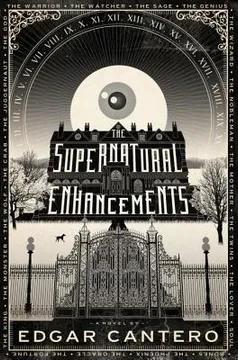


Plot Summary
Prologue
The story arrives as a bundle of diaries, letters, notepads, recordings, and surveillance footage, assembled after the fact by an unnamed editor. Its first page is missing.
In the surviving account, a young European heir and his Irish friend are already on their way to a remote Virginia mansion, carrying more curiosity than caution toward the family fortune and its unexplained history.
The documentary form makes uncertainty part of the reading experience. A diary offers private interpretation, a camera records behavior without explaining it, and a letter may conceal as much as it reveals. The missing first page is a small but effective warning: this is not a complete record, and the reader must reconstruct events from partial, differently motivated witnesses. That method suits a story about dreams, memory, and evidence, where seeing something is not the same as understanding it.
The Inheritance at Axton House
At twenty-three, A. abandons his studies in Europe and flies to Virginia with Niamh Connell, his close friend, after learning that a distant cousin has left him Axton House and its contents.
The lawyer, Glew, drives them to the estate and explains that its former owner, Ambrose Wells, died by jumping from the same bedroom window as his father, at the same age. Mark Strückner, the longtime butler, has disappeared after finding the bodies. The mansion is vast, neglected, and difficult to navigate; A.
and Niamh enter it without staff, instructions, or much sense of what they have inherited. A. expects an eccentric family house. Instead, its dead owners and missing servant make the inheritance feel less like a windfall than an unfinished problem.
The inheritance begins as an invitation to freedom for a young man who sees ordinary commitments as temporary, but its terms immediately complicate that freedom. A. receives property without family intimacy, wealth without a clear purpose, and a house whose previous occupants have died in a repeating pattern. Strückner’s absence matters as much as the mansion’s scale: the person who could explain its routines is gone, leaving the new heirs to interpret both architecture and history themselves. The estate is not simply a setting; it makes inheritance feel like responsibility arriving before knowledge.
The House Makes Contact
A. and Niamh begin learning the town through church, local visits, and the Brodies, neighboring farmers who remember Ambrose’s generosity and his family’s strange December gatherings.
Their accounts introduce Curtis Knox, an associate who arrives hoping to learn what Ambrose left behind, and Caleb Ford, a friend currently somewhere in Africa. Knox warns that the house’s reputation has troubled Wells men before. That night, A. sees a figure behind the bathtub curtain; the lights fail, and he wakes with blood vessels burst across both eyes.
The clinic can offer no explanation. Niamh, who sleeps beside him, is unharmed, but the bedroom is the same one from which Ambrose and his father fell. The estate’s first apparent haunting turns family history into an immediate threat.
The first supernatural disturbance refuses to settle into either proof or dismissal. A. has a bodily injury that outlasts the encounter, yet no witness can confirm what stood in the tub. His skepticism does not protect him from fear; it merely gives him a vocabulary for resisting it. Niamh’s attention to risk supplies a counterweight to his curiosity, especially because they are sleeping in the room tied to the Wells deaths. The town’s gossip also establishes that the mansion’s mystery is social, not private. Its history has shaped how neighbors see the heirs before the heirs can decide what they believe.
Aeschylus Behind the Painting
In Ambrose’s public office, A. finds an empty envelope marked with the Greek playwright Aeschylus. Niamh recognizes that the letters can be rearranged to spell Strückner’s name, turning the envelope into a key for a simple cipher.
Before they can learn what the message said, someone breaks into the office at night and opens the safe. Niamh hears the glass, frightens the intruder with loud music, and finds the room in disarray. The safe’s contents remain, but the watercolor above it has been disturbed. A.
notices tacks on its back and discovers Ambrose’s letter hidden behind the canvas. It asks Strückner to send other letters and grants him the painting. The failed break-in and recovered letter show that several people are searching for Ambrose’s final instructions.
The clue chain turns the house into a puzzle whose difficulty depends on knowing the intended recipient. Aeschylus is not a clever code in isolation; it works because Strückner would recognize the name. A. and Niamh succeed only by noticing how the message’s wording interacts with its hiding place, while the intruder’s certainty about the safe leads nowhere. The contrast establishes a recurring distinction between possessing information and understanding its context. The break-in also changes the heirs from curious investigators into custodians of something others believe they need, even before they know what that something is.
The Ngara Girl
A. and Niamh ask the Brodies what lies behind Axton House’s reputation. They recount the story of Charles Axton, a nineteenth-century plantation owner who abused and bred enslaved people in pursuit of a stronger workforce.
A girl from one of his forced pairings was reportedly sent to his imprisoned son and died after the encounter; local people later called her the Ngara girl. The Brodies say the ghost was known before Horace Wells bought the estate. Meanwhile, Niamh’s recordings capture a female voice emerging from static, matching the melody A.
heard in the bathroom. A note left there asks whether the two occupants can coexist. The legend does not prove the apparition’s identity, but it connects the house’s supernatural rumor to its history of human cruelty.
The ghost story is inseparable from the property’s material history. Axton’s violence is not atmospheric decoration; it is the reason the local community remembers the house differently from the Wells family. That distinction prevents the mansion’s glamour from erasing the people harmed on its land. Niamh’s recording adds evidence without providing a neat explanation, and the small note gives the presence a playful, almost conversational quality that complicates the legend’s terror. A. wants a mystery worthy of belief, but the history underneath it is not an entertaining puzzle. It demands that curiosity acknowledge who paid for the house’s grandeur.
Strückner Returns in the Storm
A tornado drives Strückner back to Axton House, where A. and Niamh learn why he left: after Ambrose’s death, he could no longer bear living among memories of the Wells family. He confirms that the estate hosts a yearly gathering on December 21.
Twenty men arrive, dine, perform an unknown ritual, and leave before Christmas; the servants are sent away during the central event. Their research can involve travel and what Strückner describes as a kind of hunt.
He also recalls that Ambrose’s code name for him was Aeschylus, confirming the message’s purpose. A. gives Strückner the watercolor Ambrose intended for him. The letter’s remaining riddle points to a childhood book, but Strückner cannot identify it, so A. and Niamh must solve the next clue themselves.
Strückner’s return restores a human relationship to a house that has been treated as an archive. His grief is not just loyalty to an employer; the Wells and Strückners have lived within the same walls for generations, with service and kinship intertwined. Yet his account also shows the limits of inherited knowledge. He witnessed the Society’s routines without being told their purpose, and even Ambrose’s personal code could not overcome the misleading reference to a safe. Returning the watercolor is a small ethical correction by A., who chooses to honor a dead man’s intention rather than treat every object as his own. The larger mystery remains, but trust has begun to replace suspicion.
Dreams Cross the Atlantic
A. and Niamh decode the childhood-book clue through a German pun and find three letters hidden inside a copy of The Magical Monarch of Mo. One letter asks a therapist to stop their sessions; another tells Knox that the Society should be dissolved and names Caleb as secretary.
A ciphered letter to Caleb remains unread. At the same time, A.’s dreams grow more vivid and violent, repeating a stolen eye, a pitchfork, a red-haired girl, and strange lives across the world.
In Midburg, Dr. Vanessa Belknap confirms that Ambrose also discussed shared dreams and discredited research into electrical thought transmission. A.’s symptoms now resemble Ambrose’s closely enough that he fears inheriting more than the estate. The letters point toward a Society, while the dreams suggest its work may be reaching him.
The documents transform a family mystery into a problem of transmission. Ambrose’s letters have been designed to survive his death, yet their safeguards repeatedly delay the message; at the same time, A.’s dreams seem to pass from one Wells generation to another without explanation. Dr. Belknap gives the phenomenon a scientific vocabulary, but not a resolution. Her clinical skepticism and A.’s appetite for evidence pull in opposite directions, while his fear makes the distinction between research and personal danger harder to maintain. The unciphered letter is especially important because it preserves the possibility that the Society’s secrets can still be understood before they become another inherited burden.
The Brass Canopy
A.’s health deteriorates as electrical surges in Axton House explode bulbs and leave him badly injured and temporarily unable to see. Niamh traces an abnormal current to the brass canopy above their bed, then finds a concealed passage behind a library shelf by pulling a volume of Strabo.
In the narrow room, they discover a crystal sphere connected to a disused copper pipe. A. touches it and is overwhelmed by sensory scenes from the dreams: a torturer, a musician, a child, a survivor, and impossible events.
He recognizes the visions as recorded experience rather than ordinary dreams. The sphere’s position suggests that current from it reached the bedroom through the pipe and brass frame, exposing A. to its contents while he slept. One mystery has a mechanism, but the object raises a larger question.
The bed’s brass frame converts the supernatural into an intimate physical hazard. A. has not merely imagined a pattern; Niamh follows the voltage from the room’s wiring to the hidden chamber, turning care into practical investigation. Yet the discovery does not reduce the experience to something safely mundane. The sphere produces a flood of sensations too coherent and detailed for A. to dismiss, and its contact leaves him more vulnerable rather than more informed. The scene also reverses their usual roles: Niamh’s ingenuity protects A., while his desire to experience the inexplicable nearly overwhelms him. Evidence clarifies the cause of his nightmares without settling what kind of world could contain such an object.
The Minotaur’s Hidden Eye
Niamh studies the ciphered letter to Caleb and realizes its pattern may be mapped against the estate’s hedge maze. After charting the maze, she and A. find a sealed section and a statue of a minotaur with a hexagonal opening between its shoulders.
The unusual key from the hidden room opens the statue, revealing another crystal sphere. Niamh touches it and collapses under the intensity of what she perceives. Caleb Ford then arrives from Africa, carrying a revolver and searching for Ambrose.
He recognizes the sphere as an Eye, not a recorder, and explains that Niamh’s collapse followed an overwhelming influx of impressions. He reads Ambrose’s concealed letter and mourns his friend. The heirs have found the Society’s central object, but they still need Caleb to explain its history and rules.
Niamh’s map turns patient observation into a route through physical and coded space. She does not solve the cipher by guessing what Ambrose intended; she compares its structure with a landscape that can be walked, corrected, and tested. The minotaur statue makes that method tangible: a mythic guardian conceals an object whose effects exceed ordinary explanation. Caleb’s arrival then complicates ownership. He believes the Eye belongs to him through Ambrose’s instructions, while A. controls the house and has already encountered its dangers. Their disagreement is not yet a simple contest of greed. Both men are trying to decide whether inherited duty grants authority over something that may be capable of harming everyone who approaches it.
The Twenty Visions
Caleb explains that the Eye becomes briefly accessible each winter solstice and records twenty people or events from the preceding year. The Society assigns one vision to each member, who spends the year identifying its subject; some visions are ordinary, others horrific or impossible.
The crystal spheres in Ambrose’s archive are human-made devices that preserve those annual encounters, while the Eye itself selects the visions. Caleb describes the Society as a fellowship built around investigation, obsession, and secrecy, not a conventional order with a clear doctrine.
A. recognizes people and events from his dreams in the folders they have found, including a tortured man in Rwanda. He and Caleb agree to contact the Society and prepare for the solstice gathering, though A. insists that the members must decide whether the game should continue.
The revelation changes the scale of the narrative without making the Eye morally legible. It does not choose only heroes or only tragedies; it seems to register human actions without judging them by any shared ethical standard. The Society’s research therefore offers recognition, not control. Its members can locate people and understand circumstances, but cannot make the visions meaningful to those selected. Caleb’s explanation also exposes the psychological machinery of the group: secrecy and ritual help its members manage an obsession that has outgrown ordinary scholarship. A. sees the appeal because the Eye enlarges his world, yet Ambrose’s letters have already shown the cost of treating that enlargement as a duty.
The Solstice Guests Arrive
On December 21, A. and Niamh host the Society at Axton House, with Caleb, Knox, Edward Cutler, Ken Matsuo, and other members arriving for the annual encounter. Knox presents evidence that he has identified a sixth vision, and the group celebrates its strongest year in decades.
Then a Louisiana officer calls: Philip Beauregard, another member, has been murdered with a pitchfork, matching one of A.’s recurring nightmares. The news breaks the party’s scholarly excitement.
Silas Long argues that the Society’s pursuit of visions has led its members toward danger; Knox insists Beauregard died by chance. The gathering splits over whether to continue. A. refuses to dictate the members’ choice, but announces that the vault will open at the appointed time and leaves each guest free to attend.
The dinner forces the Society to confront the difference between identifying danger and being responsible for it. Members have treated successful searches as victories, but Beauregard’s murder gives the year’s research a cost that cannot be contained in a ledger. Knox’s appeal to chance protects the group’s method and its identity; Long’s accusation threatens both. A.’s decision not to command the room is a meaningful departure from the authority Ambrose inherited as host. He offers hospitality without making participation compulsory, though his own curiosity still draws him toward the Eye. The scene shows how a supposedly intellectual pursuit becomes ethically unstable when its discoveries lead investigators into the lives of vulnerable people.
The Eye and the Siege
The Society touches the Eye during its annual pause and receives the new set of visions, including one in which Niamh has a place. Before dawn, armed intruders enter the house, kill many sleeping guests, wound A., and seize Niamh.
The attackers work for Glew, who has been searching for the Eye on behalf of a wealthy buyer. He takes the wrong sphere from the vault; A., handcuffed in the basement, breaks nested boxes until he reaches the real Eye and smashes it. Its electrical force surges through Axton House.
In the bedroom, the lights blind the mercenary Kraus long enough for Niamh to use a live lamp against him and throw him through the window. She then shoots him in the garden. Help has been killed protecting the house, while A. and Niamh survive the raid gravely injured.
The climax makes the Eye’s power inseparable from the violence organized around possession. Glew’s language of investment reduces an object that has shaped generations to a commodity, while the mercenaries turn the Society’s private ritual into a massacre. A. cannot defeat them by solving another code; he can only deny them the object, even at terrible personal cost. Niamh’s survival depends on the same electrical anomalies that once endangered A., suggesting that the house’s strange forces can protect without becoming benevolent or controllable. Help’s death gives the attack its most intimate consequence. The survivors escape, but the Society’s fascination has now produced grief that no explanation can undo.
Epilogue
As A. recovers from his wounds, he and Niamh identify her in an old Society file as the child who once prevented a bombing in London, a clue to why Aunt Liza arranged for her to accompany him. Liza explains that she had made a bargain with Ambrose to learn who was watching her and why. She also reveals that the Eye has selected her repeatedly across decades.
Help is buried at Axton House, and Niamh gives A. a small Rubik’s cube as a Christmas present, renewing their bond without pretending the losses can be solved. The final pages leave the Eye destroyed, the Society shaken, and its surviving members facing a future no longer governed by Ambrose’s plans.
The closing revelations recast Niamh’s presence as more than companionship while preserving her agency: she chose to protect A., and the evidence of her earlier act exists independently of the Society’s interpretation. Liza’s explanation also shows how much of the story has been shaped by people watching one another from a distance, trying to intervene without full control. The Rubik’s cube is a modest counterimage to the Eye. One offers an answer through patient manipulation; the other exposes lives without offering a solution. Burying Help and leaving the Society’s future unsettled acknowledge that survival does not restore the world as it was. A. and Niamh must build meaning from choices made after the machinery of inheritance has broken.
Analysis
The novel’s central tension is between knowledge as enlargement and knowledge as possession. A. wants evidence that the world exceeds the narrow boundaries of conventional belief, while the Society has spent generations converting that desire into a disciplined pursuit. Its members locate people chosen by the Eye, but locating someone does not grant them the right to interpret that person’s life. The Eye offers revelation without ethics, selecting tenderness and violence within the same system. The Society’s mistake is not curiosity itself; it is the assumption that repeated access creates authority.
Axton House gives this problem a physical form. The heirs inherit a property whose objects are legally theirs but morally entangled with the dead, the servants, the neighbors, and the people recorded by the Eye. A. repeatedly claims the right to decide because the house is his, then discovers that ownership cannot explain what the objects do or what they demand. Niamh provides a different model of knowledge. She observes, tests, maps, and acts, often without the spoken authority A. assumes belongs to him. Her silence is not a lack of interpretation; it exposes how much communication depends on attention rather than speech.
The documentary structure reinforces the novel’s skepticism. A camera can show a figure without identifying it; a dream can preserve a real experience while distorting its source; a letter can be faithfully written and still reach the wrong reader. Evidence is necessary, but no single medium is sufficient. The story’s most humane answer arrives not through the Society’s classifications or the Eye’s cosmic selections, but through choices among living people: Niamh protects A., A. refuses to let the Eye become a prize, and the survivors mourn Help. Their actions do not solve the universe. They establish a limit on what curiosity is allowed to take.
Review Summary
The Supernatural Enhancements received mixed reviews. Many readers enjoyed its unique storytelling format, intriguing mystery, and quirky characters. The book was praised for its blend of gothic elements, cryptography, and supernatural themes. However, some found the narrative disjointed and confusing, with criticisms of the relationship between the main characters. The ending was divisive, with some finding it unsatisfying or rushed. Overall, readers appreciated the book's creativity and originality, even if not all aspects resonated with everyone.
Characters
A.
Reluctant manor heirA. is a twenty-three-year-old European geography student who comes to Virginia after inheriting Axton House from a cousin he never met. Curious, irreverent, and attached to the possibility that life can still surprise him, he approaches the mansion’s mysteries as both a puzzle and an argument against a world he finds too settled. His skepticism is genuine, but it is not simple disbelief; he wants evidence that reality is larger than the categories he has been given. His dependence on Niamh, which he disguises with jokes and protective habits, exposes the limits of his self-image as the rational one. A. is most compelling when curiosity makes him brave and foolish at once.
Niamh Connell
Mute, resourceful companionNiamh is a seventeen-year-old Irish girl who communicates through notes, gestures, whistles, and a practiced reading of other people’s expressions. Her silence is not passivity: she makes decisions quickly, notices practical details A. misses, and turns recording equipment, maps, and household objects into investigative tools. She is playful and sometimes mischievous, but her teasing sits alongside a fierce instinct to protect the people she loves. Her friendship with A. contains attraction, frustration, and mutual dependence, sharpened by his tendency to treat her care as a duty rather than a choice. Niamh resists being reduced to either her disability or her youth; she is an active interpreter of the strange world around them.
Ambrose Wells
Absent, secretive heirAmbrose is the recently deceased Wells heir whose house, papers, and unfinished plans drive the story. A scholar with a wide-ranging interest in geography and history, he lived privately but maintained close, carefully coded relationships with a small circle of associates. His habits of hiding letters and assigning classical code names suggest someone who found secrecy both useful and pleasurable. Yet his correspondence reveals a man who understood that his family’s inherited pursuits could consume those who served them. Ambrose’s central contradiction is that he tries to end a legacy through one last elaborate act of preservation. The people who inherit his plans must decide which parts deserve loyalty and which should be abandoned.
Caleb Ford
Society’s wandering secretaryCaleb is Ambrose’s close friend and a long-serving member of the group that gathers at Axton House. A measured, courteous man, he has spent years pursuing clues across distant countries and accepts discomfort as part of the work. His calm can make him seem detached, but beneath it lies the weariness of someone who has organized his life around an obsession shared with friends. He respects Ambrose’s judgment while believing the Society’s discoveries still matter. His discussions with A. expose the gap between a member’s ability to identify a vision and his ability to decide what it means. Caleb embodies both the discipline and the cost of a life built around an unanswered question.
Curtis Knox
Ambrose’s guarded associateKnox is a polished, old-fashioned Virginian who knew Ambrose well and arrives at Axton House eager to understand the inheritance. His questions make him seem possessive to A. and especially to Niamh, who suspects him of involvement in the break-in. Knox is intelligent, socially skilled, and protective of the Society’s traditions, though his confidence can harden into certainty. He approaches its work as an obligation that deserves continuity, not merely a private hobby. His interactions with A. reveal a man who can argue for restraint in one moment and defend the group’s risky pursuits in another.
Mark Strückner
The house’s loyal witnessStrückner served the Wells family for decades, following his father, who had also worked at Axton House. He and Ambrose grew up together within the estate, though their different roles shaped how freely they could share its life. Tall, gentle, and deeply private, Strückner sees service as a relationship built on loyalty rather than mere employment. After Ambrose’s death, the house becomes too painful for him to remain in, even though it holds his family history. His knowledge is valuable but incomplete: he witnessed the Society’s routines without being trusted with their full purpose.
Aunt Liza
Distant family guardianAunt Liza is a trusted older relative whose letters connect A. and Niamh to a life beyond the estate. Though physically distant, she pays close attention to their safety and offers practical guidance when they face a danger they do not yet understand. Her intelligence is matched by a readiness to act, but she does not dominate the younger characters’ choices. A. values her as family and as one of the few people who can challenge his self-assurance without making him retreat into jokes. Her relationship with Niamh suggests a deeper history of care and responsibility.
Glew
The inheritance lawyerGlew is the local lawyer who delivers the news of Ambrose’s death and manages the transfer of Axton House. He is practical, familiar with the Wells family, and able to explain the estate’s legal arrangements without offering much insight into its private history. His professional manner makes him part of the machinery that brings A. and Niamh into the house. He appears to know when to answer a question and when to leave it alone, a quality that makes his presence difficult to read.
Help
Niamh’s devoted dogHelp is a dark, mixed-breed dog adopted from a county shelter after Niamh chooses him from among the loudest animals. Once home, he grows quiet around her and learns to follow her whistles and gestures. He is affectionate, energetic, and more attuned to the household’s routines than A. expects. Help’s name begins as Niamh’s joke about having a guard dog, but his companionship gives the house a living presence distinct from its human history. He becomes a source of comfort and a practical member of their small household.
Frank Brodie
Neighboring farmerFrank Brodie farms land bordering the Wells estate with his wife, Monique. He is less eager than she is to welcome the newcomers, but his directness and local knowledge help A. understand the property’s past. Frank is cautious about gossip and unwilling to turn every rumor into a fact. His familiarity with Ambrose’s generosity sits uneasily beside the more brutal stories attached to earlier owners.
Monique Brodie
Keeper of local memoryMonique Brodie welcomes A. and Niamh and speaks with warmth about Ambrose, whom she remembers as generous despite his reputation for isolation. Her curiosity and frankness help draw out the town’s account of the Ngara girl and the Axton family. She is compassionate toward both the living and the dead, but not so reverent that she avoids uncomfortable history. Alongside Frank, she represents a community memory that the mansion’s inhabitants cannot supply.
Dr. Vanessa Belknap
Ambrose’s psychotherapistDr. Belknap treated Ambrose and later meets A. when he seeks help understanding their similar dreams. She is professionally careful and skeptical of claims that outrun available evidence, yet she listens closely rather than dismissing what she cannot explain. Her knowledge of Ambrose’s interests gives A. a bridge between private symptoms and the Society’s research. She also shows the limits of professional confidentiality: she can offer context, but cannot simply hand over another person’s inner life.
John Wells
Ambrose’s troubled fatherJohn Wells was Ambrose’s father and the previous Wells heir to die by falling from the bedroom window. A cryptographer during the Second World War, he valued scholarship and passed both his household and its private traditions to his son. Ambrose’s memories and Strückner’s accounts suggest a close father-son bond, complicated by the intensity of John’s work. His death becomes the pattern Ambrose fears repeating.
Sam
Local electricianSam works at the Point Bless hardware store and is called to inspect Axton House’s electrical system. His practical caution gives A. the first local hint that the mansion has a reputation beyond ordinary wiring problems. He is friendly, but the house’s history makes him uneasy.
Edward Cutler
Society’s music hunterCutler is an older Society member who follows a vision connected to a musician and sends Ambrose a record he believes captures her work. He is sociable and enthusiastic, with a willingness to defend popular music as seriously as any classical composition. His warmth makes the Society’s aging membership feel less like a faceless order and more like a circle of friends.
Ken Matsuo
The modern Society memberMatsuo is one of the Society’s younger members and approaches its work with a contemporary, open-minded sensibility. His interest in technology and changing culture puts him at odds with older members who prefer established hierarchies. He is cordial with A. and willing to question inherited assumptions, particularly when the group debates what the Eye values.
Silas Long
The Society’s dissenterLong, known within the Society by a classical code name, has become exhausted by its work and is willing to say so aloud. His letters and conduct show a man who once accepted the group’s rules but no longer trusts the rewards they promise. He gives voice to the fear that the Society’s pursuit has become more consuming than enlightening.
Daniel Vasquez
The twins’ investigatorVasquez is a Society member who pursues a vision involving red-haired twins and helps locate them in Canada. Friendly and energetic, he enjoys the group’s rituals and its competitive tally of successful investigations. His enthusiasm sometimes outruns his sensitivity to the human cost of the work, making him one of the characters through whom the Society’s excitement becomes visible.
Philip Beauregard
The missing Society memberBeauregard is a well-traveled member of the Society who devotes himself intensely to identifying his assigned visions. He has little interest in conventional domestic life and is remembered by his colleagues as a high-stakes investigator. His absence becomes a source of concern as the solstice approaches.
Kraus
A hired mercenaryKraus is a physically imposing mercenary who treats violence as paid work and other people as obstacles. His confidence and cruelty make him dangerous, particularly when he believes his employer’s demands place him beyond consequence.
Plot Devices
Axton House
A mansion of hidden historiesThe estate’s architecture makes investigation physical. Its immense rooms, concealed passages, maze, archive, strange wiring, and repeated references to the same bedroom force A. and Niamh to explore rather than simply ask for answers. The house also holds several histories at once: the Axtons’ violence, the Wells family’s scholarship, the servants’ generations of labor, and the Society’s private rituals. Because its contents include both mundane records and objects with unexplained effects, the mansion repeatedly blurs the line between evidence and atmosphere. Its rooms do not merely hide clues; they determine who can find them and what each discovery costs.
The coded inheritance
Clues hidden in ordinary thingsAmbrose’s messages use several levels of concealment: a name rearranged into a key, a personal riddle about a childhood book, a Playfair cipher, and a message concealed through a deck of cards. Each requires a different kind of knowledge, from Strückner’s relationship to Ambrose to Niamh’s ability to map the maze. The sequence makes solving a clue depend on understanding its intended audience and physical setting. It also delays the Society’s plans, because the people who inherit the messages are not always the people Ambrose expected to read them.
The Eye of Amr
A window onto twenty livesThe Eye is a crystal artifact that briefly pauses each winter solstice and selects twenty people or events from the preceding year. Its visions can be ordinary, horrific, or physically impossible, and the Society assigns members to identify the people involved. Touching it at other times produces an overwhelming flood of sensations. The man-made crystal spheres in the archive record prior encounters, but they are not the Eye itself. The distinction drives the mystery, explains A.’s dreams, and makes the final struggle about more than possessing a rare object: the Eye offers access to events without giving its witnesses a reliable moral explanation.
The Society of Twenty
A game that consumes its playersThe Society turns each solstice encounter with the Eye into a yearlong investigation. Twenty members receive roles tied to a canon of figures, pursue the corresponding visions, and report their findings at the next gathering. Codes, ranks, secret archives, and formal hospitality make the work feel like a club, but members suffer nightmares, isolation, and exhaustion. The structure helps them share an obsession while also deepening it. Ambrose’s attempt to dissolve the Society forces the members to confront whether their fellowship has made the experience safer or merely given their compulsion a schedule and a language.
The documentary record
Evidence with missing piecesThe narrative is assembled from A.’s diary, Niamh’s notes, letters, recordings, security footage, reports, and extracts from books. These forms reveal different kinds of truth: Niamh’s notes preserve exchanges A. cannot hear, cameras capture actions without motives, and archival documents provide context while concealing the larger design. The format encourages the reader to compare accounts instead of trusting one voice completely. It also makes the characters’ investigations visible as they happen, so that mistakes, delayed conclusions, and changing beliefs remain part of the story rather than disappearing behind a polished retrospective.
Download PDF
Download EPUB
.epub digital book format is ideal for reading ebooks on phones, tablets, and e-readers.








