

Key Takeaways
Build wealth by improving a proven, unglamorous business, not inventing one.
Boring can be valuable. As a Cornell student, Nick Huber proposed collecting and storing students’ belongings over summer. Classmates dismissed it as crowded and unscalable. He started anyway, improved on a local competitor’s clunky service, and built Storage Squad. The company eventually operated across campuses and sold for $1.75 million in 2021.
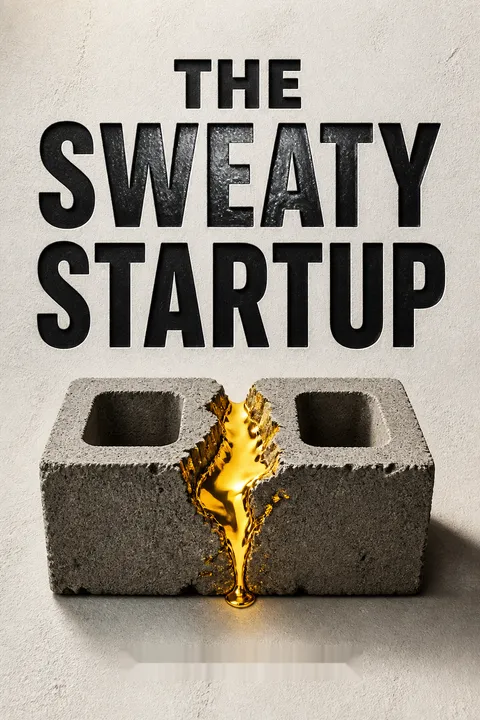
Sweaty startup means a business built on a proven model, often through hands-on work at the start. It could be lawn care, moving, bookkeeping, or web services. The point is not that every ordinary business succeeds. It is that a founder can study existing demand, get paid early, and improve a model without betting everything on an untested invention.
The book usefully separates entrepreneurial value from novelty. In markets with established customers, the hard problem is often not inventing demand but serving it more reliably. That shifts attention toward execution, where a small operator can plausibly compete. Still, a proven category is not a proven opportunity in every town. Local demand, costs, regulation, and the founder’s capabilities matter. The argument is strongest as a corrective to startup glamour, not as a claim that established models are automatically safe.
Choose work by its time leverage, not its prestige or headline salary.
Define the win first. Huber describes a lawyer earning seven figures who faced missing his child’s birth for work. His income was high, but his schedule belonged to his firm. The book defines wealth less as a number in an account than as control over time and choices.
Return-on-time asks what an hour of effort earns now, in a year, and in a decade, and whether income stops when work stops. The path toward leverage can begin with a side business or asset producing a modest monthly surplus, then grow through a network, skills, and capital. A business that can function without its founder’s daily labor offers more potential leverage than a job that pays only for hours worked.
This lens exposes a common accounting error: salary is visible, but control over time and downside risk are less so. It also resembles the economic idea of an option, since recurring income and transferable skills can create more choices when circumstances change. Yet ownership is not automatically freedom. Businesses can concentrate risk, create debt, and tether founders to emergencies. The useful test is not simply whether income continues without labor, but whether the owner has built a resilient operation that can actually run that way.
Test a local market for weak service before committing capital.
Study the competition directly. Huber recommends caution for inexperienced founders considering a venture-funded startup, an untested model, or manufacturing a physical product. Instead, examine businesses with existing customers and look for gaps in price, speed, or quality. He suggests listing ten possible businesses, then calling local competitors as a prospective customer to ask about availability, pricing, and service.
A quick test helped a friend abandon residential painting: several firms answered promptly and could start almost immediately, signaling ample supply. Calls about tree removal revealed higher prices and waits of weeks, suggesting stronger demand relative to local capacity. These are clues, not guarantees. The book also asks founders to assess startup cost, personal finances, local conditions, and any advantage they bring.
Calling competitors is a compact form of field research: it replaces imagined market conditions with observable behavior. It is especially useful for local services, where response times and booking delays reveal operational capacity. But a handful of calls cannot establish durable demand, true margins, or customer acquisition costs. Competitors may behave differently by season, neighborhood, or job size. The method works best as a cheap filter that tells a founder what to investigate next, rather than as a complete market study.
Collect revenue quickly, then let real customer behavior teach you.
Trade plans for evidence. Huber urges new founders to try collecting $500 over a weekend by selling a service, taking a deposit, or doing paid work. His rule of thumb is that an early business should become profitable within six months; if customers will not pay, the offer may not solve a real problem or earn their trust. This is not permission to take reckless risks: he recommends more preparation when a decision involves significant money or equipment.
He also describes writing down a venture’s worst plausible outcome, what would happen next, and whether the damage could be managed. This “fear setting” turns vague dread into specific risks and possible responses. The broader lesson is to move quickly on reversible, inexpensive tests, learn from rejection, and reserve deliberation for decisions with lasting consequences.
This approach combines experimentation with risk sizing. Small tests generate information while limiting the cost of being wrong, a principle also used in scientific inquiry and product development. Asking for payment is particularly informative because praise is cheap while a purchase requires commitment. The six-month profitability rule, however, is a personal heuristic, not a universal law. Some sound businesses need longer investment cycles. The more general advice is to establish milestones tied to evidence, then stop or adapt when the evidence fails to justify continued spending.
Copy proven operations, then make ordinary service unusually reliable.
Execution beats novelty. Huber contrasts struggling independent restaurants with Texas Roadhouse, which he presents as a large, successful operator in the same difficult industry. The difference, in his account, is not the basic idea of serving food but decisions about staffing, systems, and day-to-day execution.
At Storage Squad, Huber and his partner studied competitors and adapted useful practices rather than inventing a new storage model. They borrowed scheduled campus collection points, coordinated truck swaps, and used shared digital schedules so crews could respond to late bookings. This combination of borrowed methods is what he calls a franken business. Once a workable system existed, the company made its own improvements. The practical sequence is to learn from what already works, adapt it to local conditions, and refine the details customers notice.
The case makes innovation less mystical. Many improvements come from recombination: transferring a useful practice from one organization or industry into another. That is compatible with genuine creativity, even if it lacks the drama of disruption. The important discipline is adaptation, not imitation for its own sake. A competitor’s process may depend on different labor, demand, or geography. Copying visible tactics without understanding the operating logic can import someone else’s problems along with their apparent advantage.
Sell by clarifying risks and fit, not manufacturing pressure.
Sales means earning cooperation. A mentor told Huber that running a business requires persuading customers, employees, partners, investors, and vendors. The book’s premise is that each party must see a reason to participate, so sales begins by understanding the other person’s needs rather than centering the founder’s ambitions.
Huber recommends demonstrating expertise through specific knowledge, explaining risks and realistic timelines, adding useful advice before asking for a sale, and screening out poor-fit customers. In investor conversations, he describes spelling out a scenario in which returns disappoint before asking why the person still wants to invest. He also recommends reviewing recorded sales calls and directly asking for the business. Honesty is not passivity: trust-building and a clear request can coexist.
This resembles informed consent: people make better decisions when uncertainty and downside are visible, not buried beneath optimistic claims. It can also improve matching, because a salesperson who asks questions learns whether the offer fits the customer at all. The approach is most credible when warnings are specific and proportional. Manufactured scarcity or exaggerated pessimism would simply replace one manipulation with another. The durable advantage comes from accurate expectations, useful expertise, and a willingness to decline a transaction that is likely to damage either side.
Reach customers where they already are before paying for reach.
Do the work that does not scale. Before buying ads, Storage Squad used flyers, sidewalk chalk, and direct outreach on college campuses where its customers lived and studied. Huber describes distributing thousands of flyers and writing simple chalk messages at busy campus locations. The same tactics helped recruit workers when the company needed them.
The principle is practical: identify the customer’s physical or social setting, then show up there with a clear offer. Huber gives other examples, including lawn-care signs placed around town and door-to-door pest-control sales. These methods are labor-intensive and can invite rejection, but they let a small business test its message without a large marketing budget. Paid promotion may make sense once the company has a working offer and knows which customers respond.
Direct outreach can reveal more than whether an advertisement gets attention. It exposes the offer to real questions, objections, and buying contexts, which helps refine both the pitch and the service. It also exploits a less obvious resource: founder effort can substitute for cash during a company’s earliest phase. The tradeoff is scale and measurement. Some tactics are difficult to attribute, and rules about signs, solicitation, or campus access vary. Scrappy marketing is best treated as a learning channel, not an excuse to ignore compliance or customer experience.
Reserve your best hours for growth, not the fires you can delegate.
Separate urgent from valuable. Huber applies a four-quadrant time-management matrix: tasks can be important or unimportant, urgent or not urgent. He argues that hiring, sales, training, planning, and technology improvements often matter greatly without demanding attention today. Owners tend to postpone them because answering the phone or completing a job feels more immediately productive.
A consultant he advised improved a confusing online sign-up process in about thirty hours. New leads doubled, and the business grew over the following two years. Huber also distinguishes delegating tasks from delegating decisions. The first buys back labor; the second allows other people to solve problems and prevents the owner from becoming the company’s bottleneck. He recommends reviewing a week of work to find time that could be eliminated or reassigned.
The matrix helps distinguish activity from progress. Interruptions create a strong feeling of usefulness, while hiring and process design often have delayed payoffs. This is a familiar challenge in operations: the system rewards whoever handles today’s exception, even when preventing tomorrow’s exceptions would create more value. Still, not every urgent task is low-value, and delegation requires training, authority, and follow-up. A calendar audit is useful only if it leads to concrete changes in ownership and process, not merely a more accurate record of overload.
Hire for judgment and character, then delegate decisions as well as tasks.
People create leverage. Huber looks for urgency, integrity, sound judgment, a willingness to do hands-on work, and the courage to challenge the boss. He argues that capable hires are often already employed, so recruiting means noticing how people work and offering a role that improves their prospects. Clear expectations matter: employees generally need structure, defined goals, and timely decisions more than entrepreneurial chaos.
Delegation should be taught, not dumped. When an employee brings a problem, Huber asks what they would do and why. He calls a problem that transfers from employee to manager a monkey on the back. The manager’s job is to help the employee reason through it, then build the employee’s ability to handle similar problems independently. The book also emphasizes promptly addressing persistent poor performance so strong employees are not left carrying the load.
The advice connects hiring with organizational design: authority must move alongside responsibility, or every decision returns to the founder. Asking employees to explain their reasoning also makes their judgment visible, which is more informative than evaluating confidence alone. The book’s blunt screening philosophy can protect a team from chronic dysfunction, but performance problems are not always simple evidence of fixed character. Role clarity, training, health, and management quality can matter. Fair evaluation separates a poor fit or inadequate support from unwillingness to improve.
Name the life your business must finance before growth becomes the goal.
Make freedom measurable. Huber asks readers to describe an ideal week, calculate its monthly cost, and decide how much income and work time would support it. At twenty-five, he set a target of $20,000 a month after taxes while working five hours a week; he says he reached it by thirty, and later revised the target to about $30,000 in current dollars. The number makes the goal more concrete than chasing status or an undefined fortune.
The book also stresses that entrepreneurship brings strain, missed leisure, and responsibility to employees and customers. Huber’s own relocation to Athens, Georgia, followed a comparison of practical needs and preferences with his wife. His wider point is that a business is a means to a life: relationships, health, community, and time outdoors deserve deliberate choices too.
A specific freedom target can act as a stopping rule: it helps distinguish enough from endless expansion. That matters because businesses can absorb every available hour, especially when growth becomes its own measure of success. Yet the author’s income and lifestyle outcomes are personal, not a reliable forecast for readers with different responsibilities, markets, or starting resources. The exercise is valuable even when the target changes. It forces tradeoffs into view and treats time, relationships, and place as parts of the plan rather than leftovers.
Analysis
The book’s central contribution is a change of entrepreneurial reference point. Instead of asking whether an idea is novel, scalable, or impressive to outsiders, it asks whether customers already pay for the service, whether local competitors leave room for better execution, and whether ownership can eventually separate income from the founder’s hours. That is a useful correction to a media environment that overrepresents venture-backed outliers. Huber’s own path, from student storage to self-storage and larger acquisitions, gives the argument a coherent narrative: an ordinary service business can generate operating experience, cash, relationships, and access to better opportunities.
Its strongest practical insight is the sequence of low-cost learning. Call competitors, quote real jobs, ask for payment, and test demand before taking on serious overhead. The book also treats management as a skill rather than a personality trait. Sales, hiring, expectation-setting, and delegation are not decorative duties around the idea; they are the mechanisms that make a business work without its founder doing every task.
The evidence is primarily anecdotal and drawn from Huber’s network and portfolio. Successful examples can make ordinary-business success seem more probable than it is, while failed businesses and less favorable local markets receive less narrative space. Several sweeping claims about professions, industries, and failure rates should therefore be read as the author’s heuristics, not general laws. Boring businesses can still face thin margins, labor shortages, regulation, seasonality, and intense competition.
The book is most useful as a decision framework, not a promise of wealth. It asks readers to define what they need, compare opportunities by risk and time leverage, gather evidence cheaply, and keep improving operations. Its final standard is not simply a large company or bank balance. It is whether the business creates more control over the life the owner actually wants.
Review Summary
The Sweaty Startup receives mixed reviews, with an overall positive reception. Many praise its practical, no-nonsense approach to entrepreneurship, focusing on "unglamorous" businesses and challenging conventional startup wisdom. Readers appreciate the author's real-world experience and actionable advice on mindset, market strategies, and team building. Critics argue the book oversimplifies success, ignores privilege, and relies heavily on the author's personal experiences. Some find the writing style repetitive, while others consider it a refreshing perspective on building sustainable businesses.
Glossary
sweaty startup
Hands-on proven businessA small business based on a model that already has customers and revenue, often involving practical service work at the outset. Examples in the book include lawn care, moving, storage, and home services. The phrase emphasizes starting with real work and customer payments, rather than relying on an untested idea, outside funding, or a promise of rapid scale.
return-on-time
Income relative to timeA way to evaluate an opportunity by asking what each hour of effort earns now and how that return might change over time. It also asks whether income stops when the owner stops working. A job paid by the hour usually ties earnings directly to labor, while a staffed business or managed asset may continue producing income with less owner involvement.
franken business
Adapted mix of proven practicesA business assembled by selecting and adapting effective practices from existing companies, competitors, or other industries. In Huber’s example, Storage Squad borrowed operational ideas for campus collection, scheduling, and vehicle coordination, then combined them into a more efficient service. The term describes recombination and practical adaptation, rather than copying an entire company unchanged.
business curiosity
Everyday business analysisA habit of observing ordinary businesses and asking how they earn revenue, what their costs might be, how they operate, and where service or efficiency could improve. Huber recommends practicing this on local streets and online. The aim is to recognize patterns in demand, competition, and operations, then use those observations to identify business opportunities worth testing.
Four quadrants of time management
Urgency and importance matrixA framework that sorts activities by whether they are important and whether they are urgent. The book uses it to distinguish immediate problems from important work that can shape future growth, such as hiring, sales, training, and planning. It also identifies urgent but less important tasks that may be delegated, and nonurgent distractions that can be removed.
monkey on the back
Transferred work problemHuber’s metaphor for what happens when an employee brings a problem to a manager without proposing a solution. The problem effectively moves from the employee’s responsibility to the manager’s. Instead of automatically taking it over, a manager can ask the employee to reason through options and risks, building the employee’s decision-making ability and reducing dependence on the owner.
fear setting
Written worst-case analysisA technique for reducing vague anxiety by writing down the worst plausible outcome of a decision, its likely consequences, and what could be done afterward. Huber uses it before stressful conversations and business risks. The exercise does not guarantee safety or eliminate fear; it makes the feared outcome specific enough to judge whether the risk is manageable.
FAQ
1. What is "The Sweaty Startup" by Nick Huber about?
- Alternative Path to Wealth: The book challenges the popular narrative that entrepreneurship requires revolutionary ideas or tech startups, instead advocating for building wealth through "boring," proven business models.
- Focus on Boring Businesses: Huber highlights how most wealthy people in local communities got rich by running small, unglamorous businesses—what he calls "sweaty startups."
- Practical Entrepreneurship Guide: The book is a step-by-step manual for identifying, starting, and scaling service-based or operational businesses with high odds of success.
- Personal Experience: Huber draws on his own journey, including founding Storage Squad and building a $50 million net worth, to illustrate his principles.
2. Why should I read "The Sweaty Startup" by Nick Huber?
- Realistic Approach: It offers a grounded, practical alternative to the high-risk, high-failure world of tech startups and venture capital.
- Actionable Advice: The book is filled with concrete steps, exercises, and frameworks for evaluating and launching businesses that anyone can follow.
- Debunks Myths: Huber dispels common entrepreneurship myths, such as the need for passion, innovation, or massive funding to succeed.
- Long-Term Wealth Focus: The book emphasizes building freedom and wealth over time, not chasing quick wins or status.
3. What are the key takeaways from "The Sweaty Startup" by Nick Huber?
- Boring Businesses Win: Proven, low-status, and often overlooked businesses offer the best odds for wealth and freedom.
- Leverage is Essential: Building leverage through network, skills, and capital is the path to true wealth and control over your time.
- Execution Over Ideas: Success comes from operational excellence, sales, and management—not from having a unique idea.
- Delayed Gratification: Building wealth is a long-term game that requires sacrifice, patience, and consistent effort.
4. How does Nick Huber define a "sweaty startup" and why does he recommend them?
- Definition: A "sweaty startup" is a business that is unglamorous, service-based, and often physically or operationally demanding—think lawn care, cleaning, storage, or trades.
- Low Competition: These businesses typically have less sophisticated competition, making it easier to stand out by simply being reliable and professional.
- Proven Models: They are based on business models that already work, reducing risk and the need for innovation.
- Scalable with Time: While starting small, these businesses can be scaled by hiring, delegating, and improving operations.
5. What is Nick Huber’s concept of "leverage" in "The Sweaty Startup"?
- Leverage Defined: Leverage is the ability to maximize your output and income relative to your time and effort, often by building systems, teams, and assets.
- Three Keys: Huber identifies network, skills, and capital as the three main sources of leverage.
- Freedom Through Leverage: True wealth is defined as having the freedom to do what you want, when you want, which is only possible with leverage.
- No-Asshole Rule: As you gain leverage, you can choose who you work with and avoid toxic clients, partners, or investors.
6. How does "The Sweaty Startup" by Nick Huber suggest you choose the right business to start?
- Avoid New Ideas: Don’t chase unproven, venture-backed, or product-based businesses unless you have significant experience and capital.
- Look for Boring, Low-Status Opportunities: The best businesses are often those with low status, little glamour, and weak competition.
- Analyze Supply and Demand: Use practical exercises like the "ten-minute drill" to assess local competition, pricing, and demand.
- Play the Odds: Choose businesses where average people succeed, profit margins are healthy, and failure rates are low.
7. What is the "ten-minute drill" and how does it help in business selection according to "The Sweaty Startup"?
- Quick Market Research: The ten-minute drill involves calling local competitors to assess their pricing, availability, and professionalism.
- Identify Saturation: By gauging how busy and responsive competitors are, you can quickly determine if a market is oversupplied or ripe for entry.
- Data-Driven Decisions: This method helps you avoid investing time and money in saturated or unprofitable markets.
- Practical Application: Huber provides examples of using this drill to eliminate bad business ideas and focus on high-potential ones.
8. What skills does Nick Huber emphasize as critical for success in "The Sweaty Startup"?
- Operational Excellence: Being a great operator—managing people, systems, and processes—is more important than technical skill in the service itself.
- Sales Ability: Every entrepreneur must master sales, not just to customers but also to employees, partners, and investors.
- Delegation and Management: Learning to hire, train, and delegate is essential for scaling and achieving leverage.
- Decision-Making Under Stress: The ability to handle discomfort, make tough decisions, and have difficult conversations is a recurring theme.
9. How does "The Sweaty Startup" by Nick Huber address the role of people and hiring in business growth?
- People as Leverage: Hiring and building a team is the ultimate form of leverage, allowing you to step back and focus on higher-level growth.
- Always Be Recruiting: Huber advocates for constantly seeking out talent, even outside traditional channels, and not waiting until you’re overwhelmed.
- Cultural Fit and Performance: He stresses the importance of hiring for attitude, urgency, and decision-making ability, and being quick to remove poor performers.
- Delegation Levels: The book distinguishes between delegating tasks and delegating decisions, with the latter being key to true freedom.
10. What mindset shifts does Nick Huber recommend in "The Sweaty Startup" for aspiring entrepreneurs?
- It’s Not About You: The market doesn’t care about your passions or ideas; focus on solving real problems for others.
- Embrace Boredom and Discomfort: Success comes from doing the hard, boring, and uncomfortable work that others avoid.
- Long-Term Thinking: Wealth is built over years, not months; delay gratification and play the long game.
- Personal Responsibility: Reject the victim mentality—your results are a direct outcome of your decisions and actions.
11. What are some of the most actionable strategies or frameworks in "The Sweaty Startup" by Nick Huber?
- Business Idea Matrix: Build a list of potential businesses across three levels (easy, intermediate, advanced) and use structured criteria to evaluate them.
- Time Management Quadrants: Focus on important but non-urgent tasks (like hiring and sales) to drive long-term growth.
- Sales Habits: Practice seven habits of highly effective salespeople, including adding value first, managing expectations, and letting prospects sell themselves.
- Fear Setting: Regularly assess worst-case scenarios to reduce anxiety and make bold decisions.
12. What are the best quotes from "The Sweaty Startup" by Nick Huber and what do they mean?
- "Do common things uncommonly well." – Success doesn’t require innovation; it requires excellence in execution.
- "You do not need a revolutionary idea to become an entrepreneur." – Proven business models are the safest path to wealth.
- "Leverage is the key to life." – Building systems, teams, and assets that work for you is the only way to achieve freedom.
- "If you aren’t willing to do this, you should forget about entrepreneurship." – The journey is hard and requires sacrifice; it’s not for everyone.
- "Nobody gave me permission to get rich." – Don’t wait for external validation; take action and give yourself permission to succeed.
Download PDF
Download EPUB
.epub digital book format is ideal for reading ebooks on phones, tablets, and e-readers.








